
MAHIPALA (PALA EMPIRE)
MAHIPALA (PALA EMPIRE) was one of the most significant and powerful rulers of the Pala dynasty, an influential medieval imperial power that dominated eastern India from the 8th to the 12th century CE. The Pala Empire stretched across the fertile Gangetic plains and encompassed large parts of present‑day Bengal (West Bengal and Bangladesh) and Bihar, forming one of the principal political and cultural forces of early medieval South Asia.
The Pala dynasty is named after the suffix “Pala” meaning “protector,” which appeared in the names of all its monarchs. Founded around 750 CE by Gopala I, the dynasty is noted for its patronage of Buddhism, establishment of major monastic universities like Nalanda and Vikramashila and the flourishing of a distinctive Pala school of art.
Mahipala I, often simply referred to as Mahipala, ascended the Pala throne in the late 10th century during a critical period of revival. After decades of decline caused by weak successors and external pressure, Mahipala restored the empire’s former glory, recovering lost territories and stabilizing the state. His reign saw the reassertion of Pala influence across Bengal and Bihar, and possibly as far west as Varanasi.
Despite facing challenges such as invasions from the powerful Chola Emperor Rajendra I Mahipala maintained the resilience and dignity of his empire through shrewd diplomacy and military strategy. His accomplishment as a restorer of Pala dominance makes him one of the dynasty’s most memorable rulers.
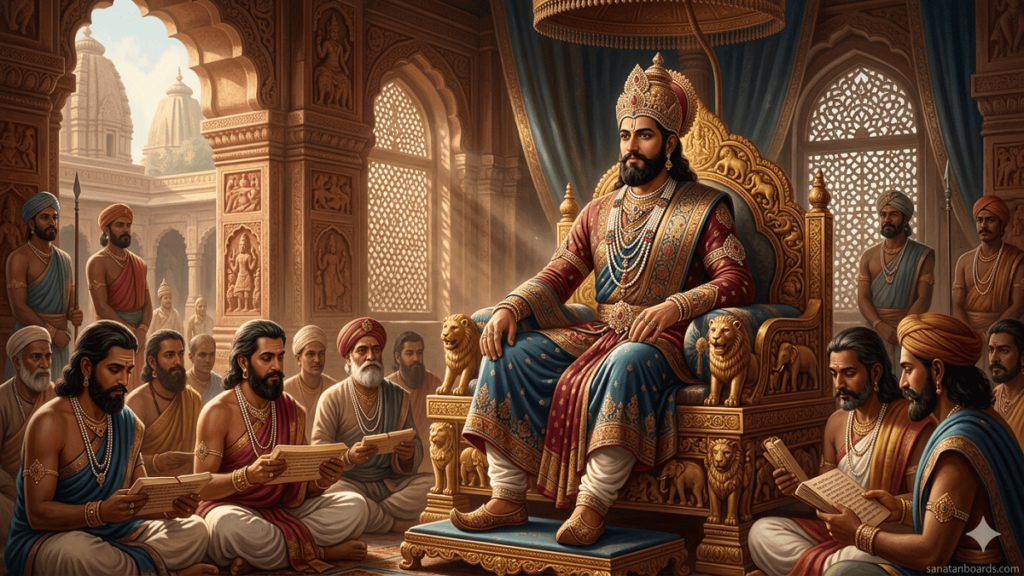
What Is Mahipala (Pala Empire) ?
MAHIPALA (PALA EMPIRE) refers specifically to Mahipala I, a major emperor of the Pala dynasty who reigned from approximately 978 to 1026 CE. Mahipala is remembered for leading one of the most important periods of revival in the empire’s history, bringing back stability and territorial strength after a lengthy phase of fragmentation.
The Pala dynasty itself was an imperial Indian power that ruled for over four centuries, from around 750 to 1161 CE, over regions corresponding to modern Bengal and Bihar. Founded by Gopala I, the empire is notable for its contributions to art, education, Buddhist thought, and imperial administration.
Mahipala was the son and successor of Vigrahapala II. When he became emperor, the empire was fragmented and its territories partially lost to regional challengers and rival dynasties. Within a few years, he successfully restored much of the Pala domain, including recovering key northern and eastern regions of Bengal and Bihar, advancing the political reach that had waned under his predecessors.
Mahipala reinstated central authority and revitalized the empire’s military and administrative structures. He also maintained cultural patronage that had long been a trademark of the Pala dynasty, contributing to the continuity of Buddhist educational and religious institutions.
Although his empire faced renewed challenges – including a significant expedition by Rajendra Chola I of the southern Chola Empire – Mahipala’s reign stands out as a period of resurgence that secured the Pala legacy for the following generations.
Who Is Required Mahipala (Pala Empire) ?
Mahipala I was the most prominent ruler of the Pala dynasty at a time when the empire was in decline. As the son of Vigrahapala II, he inherited a realm that was fragmented and vulnerable. His role was not merely ceremonial; he was required to rebuild and reassert Pala unity, power, and administration at a time when rival kingdoms were expanding their influence.
Politically, Mahipala was required to act as a strong monarch with both military competence and administrative skill. The Pala throne demanded vigorous leadership due to persistent internal strife and external threats from regional powers such as the Cholas in the south, and rival northern dynasties.
Culturally, he was required to uphold the traditions of the Pala dynasty, which was renowned for its patronage of Buddhism and learning. Although later sources suggest Pala rulers often blended Shaivism and Buddhism in religious life, Mahipala contributed to the preservation of monastic institutions and the intellectual vibrancy for which the Pala era is remembered.
Mahipala was also required to engage in diplomacy, particularly when dealing with other emperors like Rajendra I, whose northern campaigns challenged Pala authority but also reshaped the political landscape of early medieval India.
When Mahipala (Pala Empire) Is Required ?
Mahipala I became the ruler of the Pala Empire in the late 10th century, at a time when the empire required strong and decisive leadership to reverse decades of decline. His accession around 978 to 988 CE came at a critical juncture: the Pala dynasty, which had once dominated eastern India, had gradually lost territories and influence due to weak rule, regional insurrections, and increasing pressure from neighboring powers.
The Pala Empire was founded in 750 CE by Gopala I and had established itself as one of the major Indian dynasties by maintaining control over Bengal, Bihar, and parts of the Gangetic plains. However, by the late 900s CE, its grip on power weakened as rival kingdoms expanded and internal coherence fractured.
It was during this moment of fragmentation that Mahipala was required to take the helm. His era of revival began in earnest shortly after he ascended the throne. Within the first few years of his rule, Mahipala succeeded in recovering northern and eastern Bengal, lands that had been lost or weakened under his predecessors.
This period, c. 978–1026 CE, was required because the Pala Empire needed to restore central authority, reorganize military defenses, and strengthen governance structures across its vast territory. Mahipala’s leadership was necessary not just to reclaim territory, but to reaffirm the empire’s stature in the wider subcontinental power structure.
It was also a time when the Pala Empire engaged with other major powers of India, including facing expeditions by the Chola Empire under Rajendra I between 1021–1023 CE. These conflicts required Mahipala’s strategic and diplomatic skills in order to preserve Pala autonomy even when military setbacks occurred.
The longevity of his reign – extending for nearly fifty years – also reveals that Mahipala was required to provide continuity at a time when stability was scarce. His ability to maintain rule and to leave a more coherent and fortified state for his successors demonstrates why his era is considered a pivotal chapter in the history of the Pala Empire.
Where Mahipala (Pala Empire) Is Required ?
The reign of MAHIPALA (PALA EMPIRE) was required primarily in the regions of eastern India, particularly in Bengal and Bihar, which formed the heart of the Pala domain. During his time, the empire was fragmented due to earlier weak rulers, and control over these core regions had been compromised by rival kingdoms, local chieftains, and external invasions. Mahipala’s leadership was therefore required “where” the empire needed restoration and consolidation. (en.wikipedia.org)
The Pala Empire had once extended from the Ganges basin in the north to parts of Odisha and Bihar in the south, and Mahipala’s rule focused on reclaiming lost territories while defending key strategic centers such as Varanasi, Pataliputra, and regional trade hubs. Control over these areas was critical for maintaining the political, economic, and cultural cohesion of the empire. (geeksforgeeks.org)
Beyond the core territories, Mahipala’s influence was also felt in adjacent regions threatened by external powers, such as the Chola expeditions from southern India and incursions from the Rashtrakutas and other northern kingdoms. The requirement of Mahipala’s leadership in these border regions was to maintain a buffer zone, safeguard trade routes, and protect Buddhist monasteries and universities that had been centers of learning for centuries. (en.wikipedia.org)
Religious and cultural centers also defined “where” Mahipala was required. Monastic institutions like Nalanda, Vikramashila, and Somapura Mahavihara were not only educational hubs but also symbols of Pala legitimacy and influence. Mahipala’s attention to these areas reinforced both political authority and cultural supremacy. (
How Mahipala (Pala Empire) Is Required ?
MAHIPALA (PALA EMPIRE) was required through a combination of political strategy, military action, administrative reforms, and cultural patronage. His reign offers a model of how leadership was exercised in a medieval Indian empire that faced both internal fragmentation and external threats. (en.wikipedia.org)
Military strategy was one of the foremost methods by which Mahipala restored the Pala Empire. The empire’s prior decline had allowed local rulers and rival dynasties to occupy lost territories. Mahipala conducted campaigns to reclaim these lands, particularly in northern and eastern Bengal. Even when faced with formidable foes like Rajendra Chola I, Mahipala’s strategic acumen preserved key Pala strongholds. (en.wikipedia.org)
Administrative reforms were equally important. Mahipala restructured the central bureaucracy, reinstated revenue systems, and reinforced provincial governance. This helped reassert central authority over fragmented regions and ensured a steady flow of resources necessary to sustain both the army and civil administration. (geeksforgeeks.org)
Cultural and religious patronage formed another dimension of Mahipala’s rule. The Pala dynasty was known for its support of Buddhism, and Mahipala ensured that major institutions such as Nalanda, Vikramashila, and Somapura Mahavihara continued to flourish. This not only solidified his legitimacy but also reinforced the intellectual and cultural identity of the empire. (en.wikipedia.org)
Diplomacy also played a role. Mahipala engaged with neighboring rulers to maintain relative stability, using treaties and alliances where possible. This prevented further overextension and allowed the empire to consolidate its recovered territories.
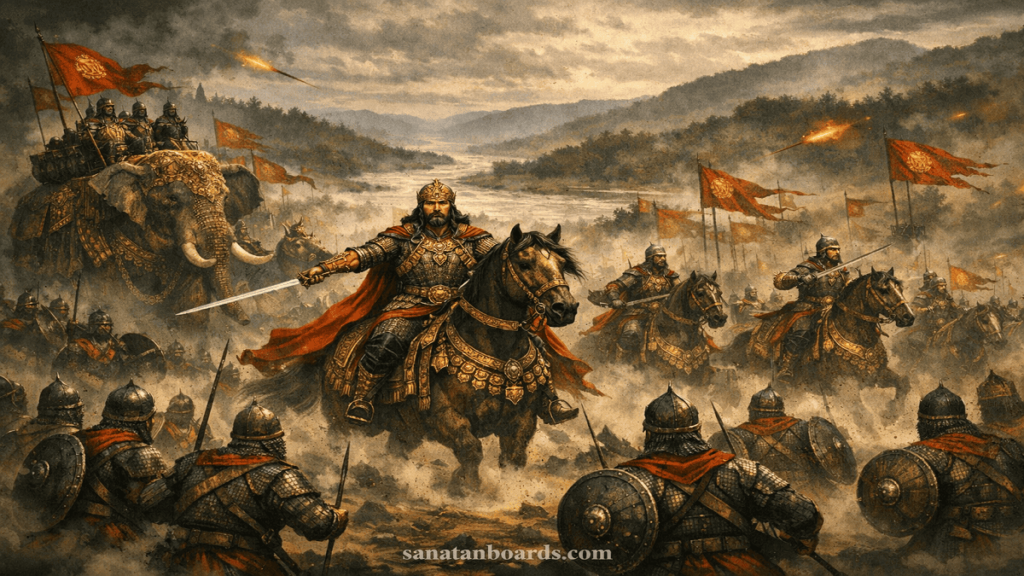
Case Study On Mahipala (Pala Empire)
Introduction:
Mahipala I’s reign (978–1026 CE) serves as a textbook example of how a declining empire can be restored through visionary leadership. Following decades of fragmentation, Mahipala’s interventions not only recovered lost territories but revitalized administrative, military, and cultural structures. This case study examines the political, military, and cultural strategies employed by Mahipala to revive the Pala Empire. (
Political Context:
The Pala dynasty, founded by Gopala I, had dominated eastern India but began weakening due to internal succession crises and external invasions. By the time Mahipala ascended the throne, Bengal and Bihar had fragmented into smaller fiefdoms, some under semi-independent chieftains. This presented both a challenge and an opportunity. Mahipala was required to restore central authority without alienating local rulers.
Military Campaigns:
Mahipala focused first on regaining northern and eastern Bengal. Using a combination of local alliances and well-planned military operations, he recovered key towns and regions. Notably, Mahipala faced southern threats from Rajendra Chola I, whose northern campaigns temporarily weakened Pala control over parts of the Ganges valley. Despite these incursions, Mahipala’s defensive and offensive strategies allowed the empire to retain its core territories.
Administrative Reforms:
Mahipala strengthened administrative mechanisms by reinstating provincial governors and enhancing the revenue system. These reforms ensured a steady income for the empire, enabling military campaigns and the maintenance of infrastructure. By emphasizing accountability among local officials, Mahipala also minimized corruption and dissent.
Cultural Contributions:
Mahipala was a patron of Buddhism, continuing the Pala tradition of supporting major monasteries and universities. Institutions like Nalanda and Vikramashila flourished, attracting scholars from across Asia. This patronage enhanced Mahipala’s legitimacy and reinforced cultural unity across the empire. (
Diplomacy and Alliances:
Mahipala’s diplomacy included forging alliances with smaller kingdoms to counterbalance larger adversaries. He effectively used marriage alliances, tribute arrangements, and negotiations to stabilize relations with neighboring powers, reducing the need for constant military engagement. (
Outcome and Legacy:
By the end of his reign, Mahipala had restored the Pala Empire to a stable and prosperous state. His focus on military strength, administrative efficiency, and cultural patronage ensured long-term resilience. Subsequent rulers inherited a more coherent and influential empire, demonstrating Mahipala’s enduring impact.
Conclusion:
Mahipala I exemplifies how strategic leadership can revive a declining empire. His integrated approach combining political, military, cultural,#mahipapaempireindelhi and diplomatic strategies provides a valuable model for understanding medieval statecraft in South Asia
White Paper On Mahipala (Pala Empire)
Executive Summary:
MAHIPALA (PALA EMPIRE) represents a pivotal phase in the history of early medieval India, specifically in the revival and consolidation of the Pala dynasty during the late 10th and early 11th centuries. Mahipala I’s reign demonstrates how political resilience #Sanatandharmaaccreditationboardsinmumbai , military strategy, and cultural patronage can revive a declining imperial power. This white paper examines the historical significance, administrative mechanisms, cultural contributions, military strategies, and enduring legacy of Mahipala I.
Historical Background:
The Pala dynasty, originating in 750 CE with Gopala I as its founder, ruled the Bengal and Bihar regions for over four centuries. The dynasty is renowned for its contributions to Buddhist education, art, and architecture, and its influence extended across northern and eastern India. By the late 10th century, however, internal strife, weak rulers, and external pressures had significantly weakened the empire. It was in this context that Mahipala ascended the throne. (en.wikipedia.org)
Leadership Challenges:
Mahipala faced multiple challenges. The empire’s territory had fragmented, administrative control was inconsistent, and neighboring powers such as the Cholas and Rashtrakutas threatened stability. Mahipala’s leadership was required to address both internal inefficiencies and external threats, balancing military campaigns with diplomatic negotiations.
Military Strategies:
A key element of Mahipala’s success was his military strategy. He organized expeditions to reclaim lost territories in Bengal and Bihar while defending the core regions from southern incursions by Rajendra Chola I. Mahipala emphasized strategic fortifications, mobilization of local militias, and tactical alliances with smaller neighboring rulers to consolidate power. These measures allowed the Pala Empire to regain its former territorial extent and assert political dominance. (geeksforgeeks.org)
Administrative Reforms:
Mahipala instituted administrative reforms to stabilize governance. He reinstated provincial governors and strengthened the revenue collection system, ensuring efficient management of state resources. The reforms promoted accountability among officials and reduced the prevalence of corruption and local dissent. Central authority was reinforced, creating a sustainable structure for long-term governance.
Cultural and Educational Patronage:
Mahipala continued the Pala tradition of cultural and religious patronage. Buddhist institutions such as Nalanda, Vikramashila, and Somapura Mahavihara received continued support, attracting scholars from India and abroad. This cultural investment not only reinforced Mahipala’s legitimacy but also fostered intellectual continuity in the empire, supporting advancements in art, literature, and education.
Diplomacy and Alliances:
Mahipala’s diplomatic efforts were crucial in reducing conflicts and maintaining stability. By forming alliances and negotiating with rival kingdoms, he minimized the necessity for constant warfare. Tribute arrangements and strategic marriages were used to strengthen alliances, allowing Mahipala to focus on internal consolidation and territorial recovery.
Impact and Legacy:
Mahipala’s reign is considered one of the high points of Pala history. By restoring territories, reinforcing administration, supporting cultural institutions, and stabilizing governance he ensured the survival and prominence of the Pala Empire into the 11th century. His strategies and policies provide a historical model for effective empire management under challenging conditions.
Conclusion:
Mahipala I exemplifies strategic leadership in early medieval India. His ability to combine military acumen, administrative efficiency, cultural patronage, and diplomacy enabled the revival of the Pala Empire, securing its legacy as a major political and cultural power in South Asia
Industry Application On Mahipala (Pala Empire) ?
1. Leadership and Organizational Management:
Mahipala’s approach to restoring a fragmented empire offers insights for corporate leadership. Just as he strengthened administrative structures and centralized authority, modern organizations can implement structured governance, ensure accountability, and maintain a coherent organizational vision. His balanced use of strategic planning, delegation, and oversight mirrors best practices in contemporary corporate management.
2. Strategic Recovery and Crisis Management:
Mahipala revived the Pala Empire after territorial and political decline, illustrating how targeted interventions and resource optimization can restore competitiveness. Industries facing disruptions can apply similar principles in business recovery plans, market expansion strategies, and risk mitigation, focusing on core strengths and strategically reclaiming lost ground.
3. Cultural and Knowledge Management:
Mahipala’s patronage of educational and cultural institutions such as Nalanda and Vikramashila reflects the importance of knowledge as a strategic asset. Modern organizations, especially in education, research, and technology sectors, can draw lessons on fostering innovation, preserving intellectual capital, and promoting continuous learning.
4. Diplomacy and Stakeholder Engagement:
Just as Mahipala used diplomacy to manage neighboring states, modern industries benefit from stakeholder management and strategic alliances. Effective negotiation, partnership-building, and conflict resolution remain key for industries dealing with complex ecosystems, including government relations, supply chain coordination, and cross-border collaborations.
5. Resource Allocation and Efficiency:
Mahipala’s administrative reforms ensured efficient revenue collection and governance. In industries, optimizing resource allocation, streamlining operations, and minimizing inefficiencies can significantly improve sustainability and profitability.
6. Legacy Building:
Finally, Mahipala demonstrates the long-term impact of a leader who invests in culture, education, and strategic stability. Organizations focused on corporate social responsibility, brand heritage, and cultural preservation can take inspiration from his integrated approach.
source : LearningTab
ASK FAQ
Who was Mahipala in the Pala Empire?
Mahipala I was a major ruler of the Pala dynasty (978–1026 CE) known for restoring the empire’s territories, strengthening administration, and supporting Buddhist institutions like Nalanda and Vikramashila.
When did Mahipala rule the Pala Empire?
Mahipala I ruled the Pala Empire during the late 10th and early 11th centuries, approximately from 978 to 1026 CE.
What were Mahipala’s contributions to the Pala Empire?
He revived the empire’s political and military strength, improved administrative systems, and patronized cultural and educational institutions, ensuring the dynasty’s stability and legacy.
Where was the Pala Empire under Mahipala’s reign?
The Pala Empire under Mahipala primarily covered Bengal and Bihar, with influence extending into northern and eastern India, including major trade and cultural centers.
Why is Mahipala important in Indian history?
Mahipala is remembered for restoring the Pala Empire after a period of decline, defending it from invasions, and promoting Buddhist culture and education, leaving a lasting historical legacy.
Table of Contents
Disclaimer
The information provided above on MAHIPALA (PALA EMPIRE) is based on historical records, scholarly research, and publicly available sources. While efforts have been made to ensure accuracy, some details may be subject to interpretation based on historical evidence. This content is intended for informational purposes only and should not be considered as professional or academic advice.