Mahendrapala I (Gurjara-Pratihara)
Mahendrapala I was one of the most notable rulers of the Gurjara-Pratihara dynasty, which was a dominant power in northern India during the 9th and 10th centuries CE. He ruled approximately from 885 to 910 CE, succeeding his father, Ramabhadra and continuing the expansionist policies of the dynasty that had been established by his grandfather, Nagabhata I. Mahendrapala I’s reign marked the consolidation and extension of Gurjara-Pratihara power in northern and central India.
One of the most remarkable features of Mahendrapala I’s rule was his territorial expansion. He inherited a strong kingdom, but under his leadership, the Gurjara-Pratiharas extended their influence over regions including present-day Rajasthan, Gujarat, parts of Madhya Pradesh, and the Gangetic plains. Inscriptions and historical records suggest that he maintained control over Kanauj, which was a major political and cultural center during this period, emphasizing the dynasty’s prominence in northern India. His rule strengthened the political stability of the Pratihara state, which had faced challenges from neighboring powers like the Palas of Bengal and the Rashtrakutas of the Deccan.
Mahendrapala I is also noted for his administrative efficiency and central authority. Like his predecessors, he maintained a hierarchical administrative system with regional governors or feudatories, but he ensured loyalty through regular oversight. The Gurjara-Pratihara administration under him was characterized by well-organized revenue collection and military organization, which enabled sustained campaigns and the defense of the kingdom’s frontiers. Coins and inscriptions from his reign indicate his adoption of the traditional Pratihara symbols of power and prosperity, such as depictions of deities and royal insignia.
Culturally, Mahendrapala I contributed to the patronage of religion and the arts, continuing the Gurjara-Pratihara tradition of supporting Hindu temples and scholars. The dynasty during his time became associated with promoting Sanskrit literature, temple architecture, and Brahmanical rituals. Some inscriptions from his reign highlight his devotion to Hindu deities, particularly Vishnu and Shiva, reflecting the religious landscape of the period. The construction and embellishment of temples under his rule helped spread the Gurjara-Pratihara style of art and architecture, which combined intricate carvings with grand structural designs.
Mahendrapala I also played a role in diplomatic and military relations. His reign was marked by both defensive and offensive campaigns to protect his kingdom from rivals. While records indicate some conflicts with the Palas and the Rashtrakutas, he maintained a balance that allowed the Pratihara dynasty to emerge as a central power in northern India during the tripartite struggle for control over Kannauj.
In conclusion, Mahendrapala I’s reign represented a period of political stability, territorial consolidation, and cultural prosperity for the Gurjara-Pratihara dynasty. His ability to maintain authority over a vast and diverse empire, alongside his patronage of religion and culture, ensured that the Pratiharas remained a formidable power in early medieval India. His rule set the stage for the subsequent rulers, who continued to play a key role in the historical narrative of northern India.
What is Mahendrapala I (Gurjara-Pratihara)?
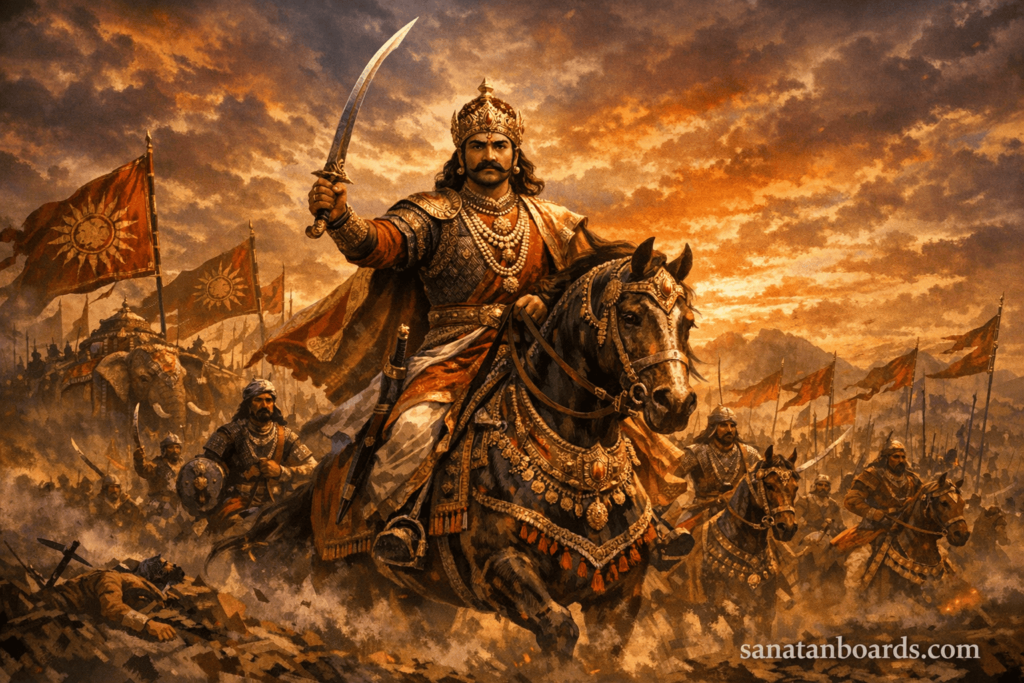
Mahendrapala I was a prominent king of the Gurjara-Pratihara dynasty, which ruled large parts of northern and central India during the early medieval period (roughly 8th–11th centuries CE). He reigned approximately from 885 to 910 CE and was the son of Ramabhadra and the grandson of Nagabhata I, one of the founders of the dynasty.
Key Points about Mahendrapala I:
- Dynasty and Kingdom
- He belonged to the Gurjara-Pratihara dynasty, which was a powerful northern Indian kingdom known for resisting Arab invasions and competing with the Palas in the east and Rashtrakutas in the south.
- His kingdom included regions of present-day Rajasthan, Gujarat, Madhya Pradesh, and parts of Uttar Pradesh. The capital was Kannauj, a major political and cultural center.
- Expansion and Military
- Mahendrapala I continued the expansionist policies of his grandfather and father, consolidating Pratihara control over northern India.
- He maintained a strong army and oversaw campaigns against rival kingdoms, helping the dynasty emerge as a dominant power.
- Administration
- He strengthened the central administration and ensured loyalty among local governors and feudatories.
- Revenue collection, law enforcement, and military organization were carefully managed under his rule.
- Religion and Culture
- Mahendrapala I was a Hindu ruler and a patron of religious institutions and Sanskrit scholarship.
- Temples were built and expanded, contributing to the distinctive Gurjara-Pratihara style of architecture with elaborate carvings and structural designs.
- Significance
- His reign marked a period of political stability, territorial consolidation, and cultural prosperity for the Gurjara-Pratiharas.
- He helped secure the dynasty’s position in the tripartite struggle for control of Kannauj among the Pratiharas, Palas, and Rashtrakutas.
Who is Required Mahendrapala I (Gurjara-Pratihara)?
Mahendrapala I was a king of the Gurjara-Pratihara dynasty who ruled northern India around 885–910 CE. He was the son of Ramabhadra and grandson of Nagabhata I, one of the dynasty’s founders. He is known for:
- Expanding and consolidating the Gurjara-Pratihara kingdom, including regions like Rajasthan, Gujarat, Madhya Pradesh, and Kannauj.
- Maintaining a strong army and defeating rivals, helping his dynasty remain a major power in northern India.
- Patronizing Hindu religion and culture, supporting temple building, Sanskrit learning, and art.
- Strengthening administration and governance, keeping his empire stable and prosperous.
When is Required Mahendrapala I (Gurjara-Pratihara)?
Mahendrapala I was a prominent king of the Gurjara-Pratihara dynasty, which dominated northern India during the early medieval period. He ruled approximately from 885 CE to 910 CE, succeeding his father Ramabhadra. His reign falls in the late 9th century, a critical period in Indian history marked by the tripartite struggle between the Gurjara-Pratiharas, the Palas of Bengal, and the Rashtrakutas of the Deccan for control over the strategic region of Kannauj.
The Gurjara-Pratiharas, under Mahendrapala I, had already established a strong base in northwestern India, covering areas of present-day Rajasthan, Gujarat, Madhya Pradesh, and parts of Uttar Pradesh. Mahendrapala inherited this vast territory, but the late 9th century required capable leadership to maintain stability and fend off rival dynasties. The exact dates of his reign are derived from inscriptions and coins, which confirm his rule in the final decades of the 9th century and the early years of the 10th century.
During this period, northern India was politically fragmented. Mahendrapala I’s rule coincided with intense military and diplomatic activity. The Gurjara-Pratiharas were engaged in defending their territories from Rashtrakuta invasions from the south and countering the influence of the Palas, who were expanding westward from Bengal. The struggle for Kannauj, the political and cultural center of northern India, defined much of his reign. While his predecessors had already laid the foundations of control over Kannauj, Mahendrapala I strengthened the dynasty’s hold on the city, ensuring that it remained a key seat of power during his time.
Mahendrapala I’s reign is also important for understanding the administrative and cultural context of late 9th-century India. The Pratihara administration during his period was hierarchical, with local governors and feudatories managing different regions under the king’s oversight. This system allowed Mahendrapala to maintain political stability despite potential internal and external threats. His reign also saw the continuation of the Gurjara-Pratihara style of temple architecture, which flourished in this period. Temples built or patronized by Mahendrapala I were centers of religion, art, and education, reflecting the prosperity and cultural priorities of the late 9th century.
In terms of historical chronology, Mahendrapala I’s reign can be situated within the later phase of the Gurjara-Pratihara dynasty’s dominance, just before the kingdom reached its peak under his successors in the 10th century. Coins and inscriptions from his rule provide evidence of his authority and the continuity of the Pratihara dynasty’s power during this time. He managed to maintain a stable and prosperous kingdom for roughly 25 years, a significant duration in the context of medieval Indian politics.
In conclusion, Mahendrapala I ruled the Gurjara-Pratihara dynasty from around 885 to 910 CE, a period of consolidation, military vigilance, and cultural patronage. His reign ensured the stability of northern India’s largest kingdom at the time, strengthened Pratihara control over Kannauj, and laid the groundwork for subsequent rulers to continue the dynasty’s influence in the 10th century. His period is thus a key chapter in the history of early medieval India, illustrating the interplay of politics, warfare, administration, and culture in the late 9th century.
Where is Required Mahendrapala I (Gurjara-Pratihara)?
Mahendrapala I was a prominent ruler of the Gurjara-Pratihara dynasty, which controlled large parts of northern and central India during the early medieval period. His reign lasted approximately from 885 to 910 CE, and he ruled from the strategically important city of Kannauj, which served as the political and cultural center of his kingdom. Kannauj, located in present-day Uttar Pradesh, was a key city during the tripartite struggle among the Gurjara-Pratiharas, the Palas, and the Rashtrakutas. Controlling Kannauj allowed Mahendrapala I to assert influence over the fertile Ganges plains, which were vital for agriculture, trade, and military logistics.
The territory under Mahendrapala I extended across a significant portion of northern India. To the west, his control included areas of present-day Rajasthan and Gujarat, which were strategically important for defending against western invasions and for controlling trade routes connecting northern India with the Arabian Sea. These regions also provided access to rich resources and allowed him to maintain a strong cavalry, which was crucial for military campaigns.
To the south and central parts of his kingdom, Mahendrapala I had influence over parts of Madhya Pradesh, including regions near the Malwa plateau. These areas were important for controlling the trade and communication routes between northern India and the Deccan. The central location of his kingdom enabled him to engage diplomatically and militarily with rival dynasties such as the Rashtrakutas, who ruled the Deccan, and the Palas in Bengal and Bihar.
The geographic spread of Mahendrapala I’s kingdom highlights the strategic thinking of the Gurjara-Pratiharas. By controlling the Ganges plains, western trade routes, and central Indian corridors, he ensured both economic prosperity and military security. The terrain under his rule included fertile river valleys, arid plains, and forested regions, which required careful administration and regional governance. He appointed loyal governors to oversee distant provinces while maintaining central authority from Kannauj.
In addition to political and military importance, the regions under Mahendrapala I became centers of religion, art, and culture. Temples and inscriptions from his reign are found in Rajasthan, Madhya Pradesh, and Uttar Pradesh, reflecting the spread of Hindu religious and cultural influence across his kingdom.
How is Required Mahendrapala I (Gurjara-Pratihara)
Mahendrapala I was a powerful and effective king who strengthened the Gurjara-Pratihara dynasty in northern India. Here’s how he ruled and what made him significant:
- Military Strength – He maintained a strong army, defended his kingdom against rivals like the Palas and Rashtrakutas, and expanded Pratihara territory.
- Administrative Skill – He organized his empire efficiently, ensured loyalty from governors, collected taxes, and maintained law and order.
- Cultural Patronage – He supported Hinduism, Sanskrit scholarship, and temple-building, contributing to art and architecture.
- Political Influence – By controlling Kannauj, a key city, he secured his dynasty’s position in northern India during the tripartite struggle for power.
- Legacy – His reign was marked by stability, prosperity, and territorial consolidation, making the Gurjara-Pratiharas a dominant force of the time.
Case Study On Mahendrapala I (Gurjara-Pratihara)?
source: Bookstawa
Introduction
Mahendrapala I was a prominent ruler of the Gurjara-Pratihara dynasty, ruling northern India approximately from 885 to 910 CE. He was the son of Ramabhadra and the grandson of Nagabhata I, the dynasty’s founder. His reign is notable for territorial consolidation, cultural patronage, and administrative efficiency, which strengthened the dynasty during the early medieval period.
Political and Military Achievements
- Territorial Expansion: Mahendrapala I expanded the Pratihara empire over Rajasthan, Gujarat, Madhya Pradesh, and parts of Uttar Pradesh, including the strategic city of Kannauj.
- Military Strength: He maintained a powerful army and conducted campaigns to defend against the Palas of Bengal and the Rashtrakutas of the Deccan.
- Tripartite Struggle: By holding Kannauj, Mahendrapala I played a key role in the tripartite struggle for control of northern India, maintaining Pratihara supremacy over rivals.
Administration
- Centralized Governance: Mahendrapala I strengthened central authority and oversaw the administration of regional governors (feudatories).
- Revenue System: Efficient tax collection and resource management helped maintain the kingdom’s economic stability.
- Law and Order: His governance ensured political stability, allowing the dynasty to flourish culturally and economically.
Cultural Contributions
- Religion: Mahendrapala I was a patron of Hinduism, supporting temple construction and Brahmanical rituals.
- Art and Architecture: Temples built during his reign reflected the Gurjara-Pratihara style, known for elaborate carvings and durable structures.
- Literature: He encouraged Sanskrit scholarship, contributing to the cultural and intellectual growth of the period.
Significance and Legacy
- Mahendrapala I’s reign marked a period of political stability and territorial consolidation for the Gurjara-Pratiharas.
- His support for religion, culture, and education strengthened the dynasty’s cultural identity.
- By maintaining a strong army and administration, he ensured that the Pratihara dynasty remained a dominant northern Indian power.
- His reign set the stage for successors to continue the dynasty’s prominence in the 10th century.
Conclusion
Mahendrapala I was a capable and influential ruler whose reign combined military prowess, administrative skill, and cultural patronage. His leadership not only secured the territorial and political strength of the Gurjara-Pratihara dynasty but also promoted religion, arts, and literature, leaving a lasting impact on early medieval India.
White Paper On Mahendrapala I (Gurjara-Pratihara)?
Executive Summary
Mahendrapala I (r. 885–910 CE) was one of the most notable rulers of the Gurjara-Pratihara dynasty, which dominated northern and central India during the early medieval period. His reign is distinguished by political consolidation, military strength, administrative efficiency, and cultural patronage. This white paper examines his contributions to the dynasty, territorial expansion, governance, cultural advancements, and historical significance.
1. Historical Background
The Gurjara-Pratiharas were a prominent dynasty in northern India, known for resisting Arab invasions and engaging in the tripartite struggle with the Palas and Rashtrakutas for control over Kannauj. Mahendrapala I succeeded his father, Ramabhadra, and was the grandson of Nagabhata I, the founder of the dynasty. His reign represents a period of consolidation and stability following decades of expansion.
2. Political and Military Leadership
- Territorial Consolidation: Mahendrapala I extended the Pratihara kingdom to include Rajasthan, Gujarat, Madhya Pradesh, and parts of Uttar Pradesh, with Kannauj as the political center.
- Military Prowess: He maintained a strong army, defended the kingdom from rivals, and ensured the dynasty’s influence in the tripartite struggle.
- Diplomacy and Governance: Strategic alliances with feudatories and careful management of relations with neighboring powers maintained political stability.
3. Administration
- Central Authority: Mahendrapala I strengthened governance by overseeing regional governors and ensuring loyalty from feudatories.
- Revenue Management: A structured taxation system provided resources for administration, army maintenance, and cultural projects.
- Law and Order: The administration ensured stability across a vast territory, allowing the kingdom to thrive economically and socially.
4. Cultural and Religious Contributions
- Religious Patronage: He supported Hinduism, constructing temples and promoting Brahmanical rituals.
- Art and Architecture: His reign saw the development of Gurjara-Pratihara architectural style, characterized by intricate carvings and monumental temple structures.
- Literature and Education: Encouragement of Sanskrit scholarship contributed to intellectual growth and preservation of classical texts.
5. Significance and Legacy
- Mahendrapala I reinforced the political, cultural, and military strength of the Gurjara-Pratihara dynasty.
- His reign ensured stability in northern India, securing the dynasty’s role in the tripartite struggle.
- His cultural patronage laid the foundation for a flourishing of arts, literature, and temple architecture.
- The dynasty under his rule became a central pillar of early medieval Indian politics, influencing subsequent rulers and regional dynamics.
6. Conclusion
Mahendrapala I was a visionary ruler whose reign exemplified effective governance, military strategy, and cultural stewardship. He consolidated the Gurjara-Pratihara dynasty’s power in northern India while promoting religion, arts, and education. His leadership left a lasting imprint on the political and cultural landscape of early medieval India, making him a pivotal figure in Indian history.
Industry Application On Mahendrapala I (Gurjara-Pratihara)?
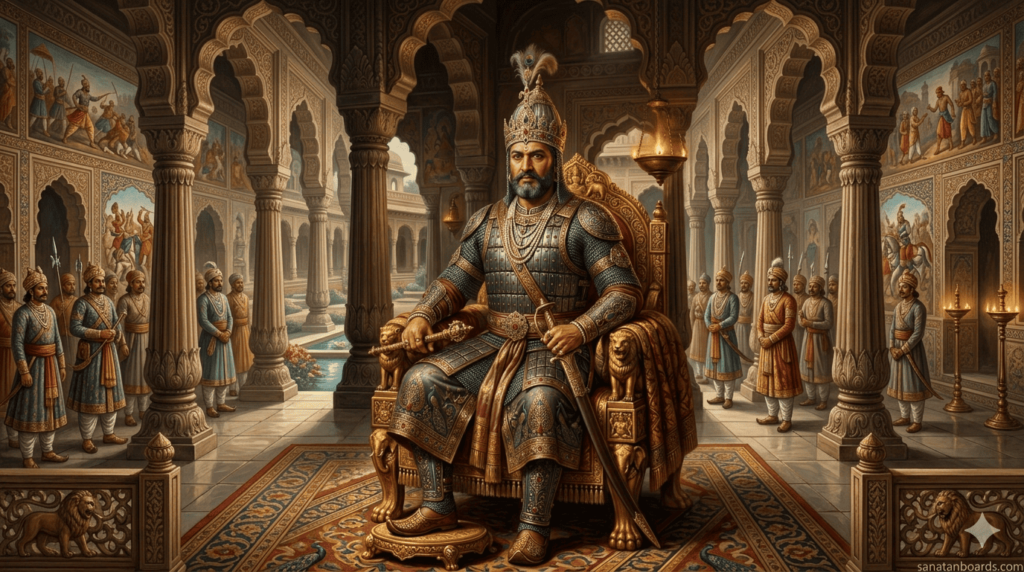
Leadership and Organizational Lessons from Mahendrapala I (Gurjara-Pratihara)
1. Strategic Leadership
- Application: Mahendrapala I expanded and consolidated a large kingdom through strategic planning and foresight.
- Industry Lesson: Modern CEOs and managers can emulate strategic leadership by assessing competition, identifying growth opportunities, and consolidating resources.
- Example: His securing of Kannauj parallels market dominance or acquisition strategy in business.
2. Organizational Structure
- Application: He maintained an efficient administrative hierarchy with loyal governors (vassals), effective tax collection, and oversight of operations.
- Industry Lesson: Effective delegation and centralized control combined with accountability are key for corporate governance and large organizations.
- Example: Regional managers reporting to headquarters resemble modern corporate divisions under a central office.
3. Resource Management
- Application: Mahendrapala I ensured proper revenue collection and allocation to sustain his army, administration, and cultural projects.
- Industry Lesson: Resource allocation and budgeting are essential for operational efficiency in modern industries.
- Example: Funding cultural projects mirrors corporate social responsibility (CSR) programs in companies today.
4. Risk Management and Defense
- Application: He maintained a strong military to defend against external threats and rivals.
- Industry Lesson: Businesses face competition and market risks; proactive risk management, security, and crisis planning are critical.
- Example: Military preparedness can be compared to cybersecurity and disaster recovery planning in companies.
5. Cultural and Brand Building
- Application: His patronage of temples, arts, and scholarship promoted cultural growth and enhanced the dynasty’s prestige.
- Industry Lesson: Building a strong organizational culture and brand reputation is vital for long-term success.
- Example: Corporate branding, sponsorships, or thought leadership initiatives reflect how culture and influence enhance recognition.
6. Legacy and Sustainability
- Application: Mahendrapala I ensured the dynasty remained politically stable and culturally strong for successors.
- Industry Lesson: Sustainable practices and long-term planning help organizations maintain competitive advantage across generations.
Conclusion
Mahendrapala I’s reign provides valuable lessons in strategic leadership, resource management, organizational hierarchy, risk mitigation, and brand building. While ancient, his methods mirror modern industry practices and leadership principles, showing that effective governance and vision are timeless concepts.
ASK FAQ
Who was Mahendrapala I?
Mahendrapala I was a powerful Gurjara-Pratihara emperor who ruled northern India in the 9th century, known for expanding his kingdom and promoting art and culture.
What were the achievements of Mahendrapala I?
He strengthened the Gurjara-Pratihara empire, expanded territories, maintained strong administration, and supported Hindu temples and cultural activities.
When did Mahendrapala I rule?
Mahendrapala I ruled approximately from 885 CE to 910 CE in northern India as part of the Gurjara-Pratihara dynasty.
Which regions were under Mahendrapala I’s control?
His empire included parts of present-day Rajasthan, Madhya Pradesh, Uttar Pradesh, and northern India, forming a powerful northern kingdom.
Why is Mahendrapala I important in Indian history?
He preserved and expanded the Gurjara-Pratihara dynasty, promoted art and culture, and defended northern India against foreign invasions.
Table of Contents
Disclaimer:
“All images and content related to Mahendrapala I (Gurjara-Pratihara) on this website are created for educational and informational purposes only. Any artwork, illustrations, or reconstructions are AI-generated or artist interpretations and may not represent historical accuracy. © sanatanboards.com”