
LAKSHMANASENA (SENA DYNASTY) was one of the most significant monarchs of medieval India, ruling the eastern Ganges plains during a period of cultural dynamism and political transition. He belonged to the Sena Dynasty, which established its prominence in Bengal and parts of northern India after the decline of the Pala Empire. Lakshmanasena reigned at a time when regional powers were emerging, trade routes were expanding, and philosophical traditions like Vedanta and Tantra were flourishing.
His rule marked a synthesis of administrative strength, cultural patronage, and literary achievement. It was an era in which Sanskrit literature received considerable royal support, and scholars, poets, and theologians found patronage in Sena courts. Lakshmanasena is especially noted for encouraging the writing and preservation of classical texts, contributing to both secular and religious scholarship.
Under his leadership, the Sena Dynasty fortified its territorial boundaries, managed agrarian systems, and interacted diplomatically with neighboring states. His reign reflects both stability and adaptability as he navigated the internal challenges of governance and external pressures from rising regional powers.
LAKSHMANASENA (SENA DYNASTY) also played a key role in the evolution of regional identity. In Bengal, his rule strengthened the influence of Hindu traditions in a region with a long history of Buddhist and indigenous practices. Through temple patronage and endorsement of Brahmanical rites, he shaped the cultural contours of eastern India.
By exploring his governance, cultural contributions, and historical context, one gains insight into a period crucial for understanding the transition between early medieval and high medieval South Asian history. LAKSHMANASENA (SENA DYNASTY) remains a compelling figure for scholars of political history, literature, religion, and art.
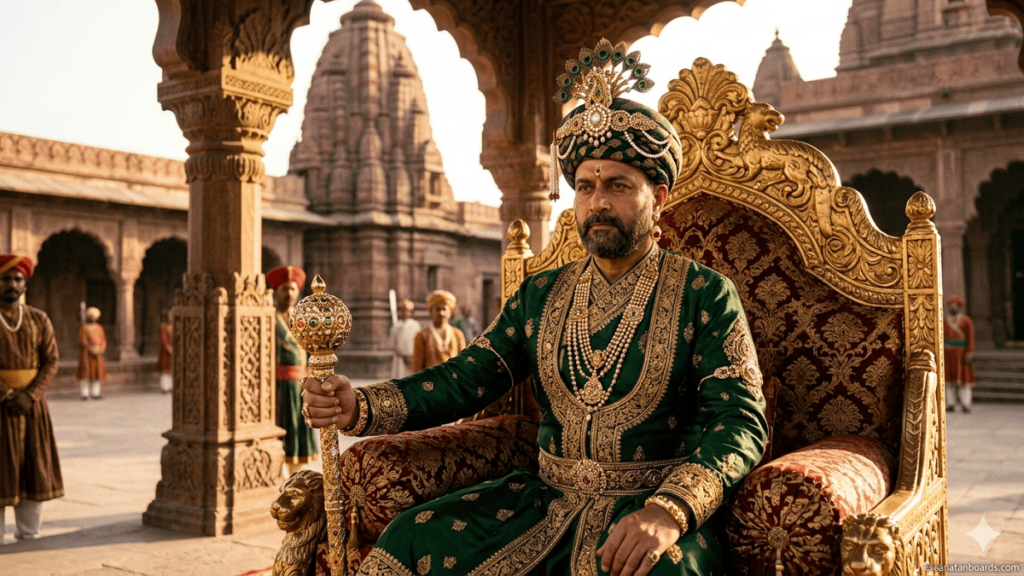
What Is Lakshmanasena (Sena Dynasty) ?
LAKSHMANASENA (SENA DYNASTY) was a monarch from the Sena Dynasty, which succeeded the Palas in eastern India—largely present‑day Bengal and parts of Bihar. The Sena Dynasty rose to power in the 11th–12th centuries CE and became one of the most influential ruling families of northeastern India during the medieval period.
As a ruler, Lakshmanasena held both political and cultural influence. Politically, he consolidated the authority of his kingdom, maintained strong administrative control, and defended his territories against rival states. While not as militarily expansive as some of his predecessors, he managed a stable and structured state apparatus. His administration reflected the common medieval Indian practice of decentralized village governance under the supervision of local elites, landholders, and religious bodies. This contributed to efficient agricultural output and revenue collection.
Culturally and intellectually, Lakshmanasena’s reign is often remembered for its patronage of literature and education. He encouraged poets, scholars, and religious thinkers, which helped produce significant literary works in Sanskrit and regional dialects. Many scholars attribute the flourishing of devotional and philosophical writings during and after his period to the climate of encouragement established in his court.
Religion played a central role in his identity and rule; Lakshmanasena was a staunch supporter of Hindu traditions. This bolstered the prominence of Brahmanical institutions in Bengal during a time when Buddhist influence had been strong. Temple building, religious festivals, and the promotion of ritual practices were important aspects of his governance.
Who Is Required Lakshmanasena (Sena Dynasty) ?
First and foremost, historians of medieval India require knowledge about Lakshmanasena to map the transition of political regimes in eastern India after the decline of the Pala Empire. His reign represents an important phase in the region’s history, when localized dynasties emerged and created distinctive political patterns.
Students of political science and governance also require Lakshmanasena’s narrative because his reign offers insight into feudal administration and regional power structures of the 12th century. Studying his rule helps clarify how monarchies managed agrarian economies, regional alliances, and decentralized administrative systems.
Literary scholars are equally interested in Lakshmanasena because his court became a center for writers, poets, and thinkers. Texts from this period reflect shifts in literary styles, thematic concerns, and the integration of religious philosophy with poetic expression. Researchers focusing on Sanskrit literature often highlight works produced under his patronage.
Those focused on religious studies require his history for understanding the resurgence of Hindusocial structures during his reign. His support for Brahmanical traditions reshaped the religious fabric of Bengal, influencing temple culture, ritual practices, and the role of Brahmins in social hierarchy.
Archaeologists and art historians require evidence from his period to study architectural remnants, inscriptions, and iconography that demonstrate the artistic sensibilities of the time.
Lastly, regional scholars and educators in Bengal and eastern India engage with Lakshmanasena’s legacy to foster local historical consciousness and cultural heritage.
In all these fields, Lakshmanasena serves as a reference point—a monarch whose life intersects with governance, culture, religion, and literary achievement.
When Lakshmanasena (Sena Dynasty) Is Required ?
1. Historical Timeline
Lakshmanasena lived and ruled during the late 12th century CE. He was part of the Sena Dynasty, which had emerged after the weakening of the Pala Empire in eastern India. His reign is typically placed around the latter half of the 12th century, making it a pivotal period in the medieval history of Bengal and northern India.
During this time, India was not a unified political entity; instead, regional dynasties like the Senas, Gahadavalas, and Chalukyas controlled large swathes of territory. Lakshmanasena’s era was marked by shifting alliances, increasing autonomy of local powers, and the gradual decentralization of authority away from larger empires. His reign occurred immediately before the significant changes brought by the early Muslim incursions into northern India, which began towards the end of the 12th century.
2. Academic and Cultural Requirement
Beyond its chronological context, Lakshmanasena’s legacy is required in specific historical inquiries and educational frameworks:
- Medieval Indian History Courses: His rule provides an ideal case study for understanding the decline of centralized empires and the emergence of regional political centers.
- Studies of Religious Transformation: Scholars examining the evolution of Hindu practices and institutions in eastern India often invoke Lakshmanasena’s patronage of Brahmanical tradition. This period marked important shifts in regional orthodoxy and ritual culture.
- Literature and Scholarship of the 12th–13th Century: Lakshmanasena’s court is essential for understanding the production and patronage of literary works, highlighting the interaction between kingship and intellectual life.
3. Cultural Identity and Regional Heritage
In the modern context, institutions in Bengal and adjacent regions refer to Lakshmanasena’s reign when tracing the roots of regional identity, art, and heritage. Museums, academic syllabi, and cultural festivals often draw upon figures like him to explore local history.
Thus, Lakshmanasena is required both as a historical figure in his own time and as a reference point for scholars, educators, and cultural historians today. His reign bridges a formative moment in medieval Indian history with ongoing efforts to understand cultural and political change.
Where Lakshmanasena (Sena Dynasty) Is Required ?
1. Geographical Context
Lakshmanasena ruled over the eastern Ganges plain, corresponding largely to modern Bengal and parts of Bihar. His reign extended to regions that are now in West Bengal (India) and Bangladesh. These areas were historically significant due to fertile agricultural land, trade routes along rivers, and cultural hubs. Scholars studying medieval Indian political geography focus on these territories to understand the rise of regional powers after the Pala Empire’s decline.
Temples, inscriptions, and architectural remnants in these regions often bear traces of his patronage. Archaeological sites and historical monuments in Bengal, particularly in Nadia, Varendra, and surrounding areas, are key locations for research.
2. Academic and Institutional Context
Lakshmanasena’s history is required in educational institutions, such as universities, schools, and research centers focusing on:
- Medieval Indian history
- Political science and governance
- Sanskrit literature and philology
- Religious studies and Hindu temple architecture
- Cultural studies in Bengal and eastern India
Institutions like the University of Calcutta and other regional universities include his reign in their syllabi to examine governance models, literature, and religious influence.
3. Museums and Cultural Heritage Sites
Lakshmanasena’s legacy is preserved in museums and cultural heritage centers that focus on medieval Bengal. These institutions require his history to curate exhibitions, explain dynastic lineage, and highlight cultural achievements such as temple architecture, literary manuscripts, and inscriptions.
4. Digital and Research Platforms
Modern platforms, including digital archives, historical databases, and e-learning resources, also require Lakshmanasena’s story. Researchers and students globally access online resources to understand political, cultural, and religious developments of his time.
How Lakshmanasena (Sena Dynasty) Is Required ?
1. Historical Research
Scholars require Lakshmanasena through archaeological studies, inscriptions, and primary manuscripts. His reign provides insights into:
- Administrative organization of the Sena Dynasty
- Land revenue systems and agrarian policies
- Diplomacy and military strategies of medieval Bengal
- Patronage of literature and religion
Research methods include textual analysis of Sanskrit works, epigraphy, and comparative studies with contemporary dynasties like the Palas and Gahadavalas.
2. Literary and Cultural Studies
Lakshmanasena is required through literary texts and cultural artifacts. Poets and scholars under his patronage produced works reflecting religious, philosophical, and social themes. His reign is studied to understand:
- Evolution of Sanskrit poetry and prose
- Religious literature and commentaries
- Socio-cultural norms and rituals of medieval Bengal
3. Educational Requirement
Lakshmanasena is required as a case study in classrooms. Teachers and students use his reign to illustrate the relationship between political authority, cultural patronage, and religion. The “how” here involves pedagogical strategies, including lecture discussions, textual interpretation, and historical comparisons.
4. Heritage Preservation
Lakshmanasena is required through preservation initiatives. Temples, inscriptions, and artifacts from his period inform heritage management and conservation strategies. Cultural authorities study his contributions to sustain Bengal’s historical and religious identity.
5. Interdisciplinary Application
His study is required in interdisciplinary contexts:
- Combining history, literature, and religious studies
- Using geographic information systems (GIS) to map Sena Dynasty territories
- Applying sociology to understand medieval social hierarchies
In all these ways, Lakshmanasena is required through a combination of historical, literary, educational, and cultural frameworks, ensuring his relevance across multiple domains.
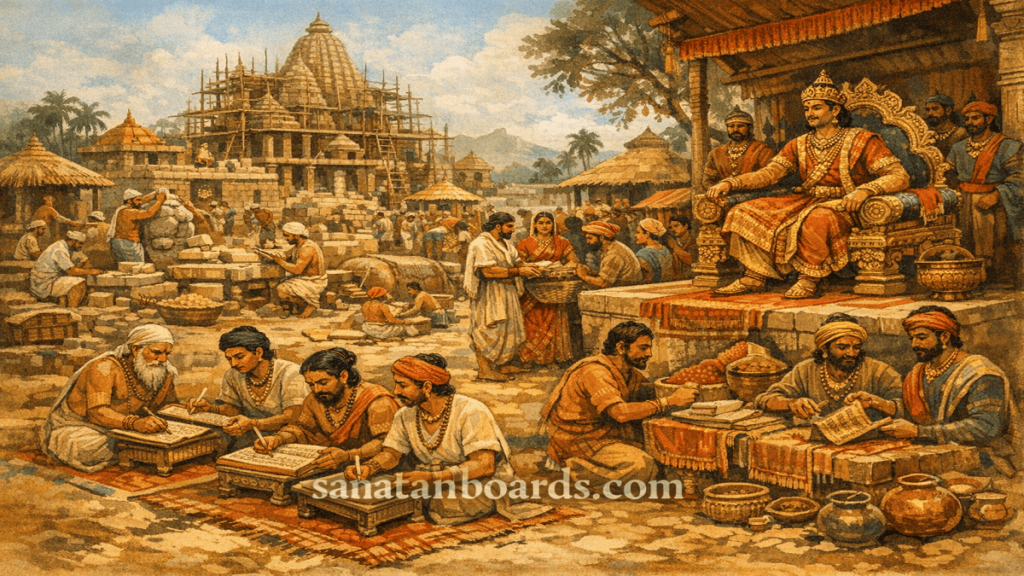
Case Study On Lakshmanasena (Sena Dynasty)
Introduction
Lakshmanasena, a prominent ruler of the Sena Dynasty, provides a comprehensive case study in medieval governance, cultural development, and religious transformation. His reign illustrates the challenges faced by regional monarchs navigating political consolidation, social cohesion, and intellectual growth.
Political Administration
Lakshmanasena inherited a kingdom stabilized after the decline of the Palas. He maintained centralized authority while allowing local elites autonomy over villages and revenue collection. The king employed ministers and officials to manage land, taxation, and legal affairs. This system reflects a balance between central control and local governance, characteristic of medieval Indian polity.
His administration was known for:
- Effective tax collection, supporting both state functions and religious institutions
- Maintaining law and order through a network of regional administrators
- Strategic diplomacy with neighboring states to prevent invasions
Cultural and Literary Patronage
Lakshmanasena’s court was a hub for literary and scholarly activity. He encouraged poets, scholars, and religious writers to compose works in Sanskrit. Notable areas of patronage included:
- Sanskrit literature reflecting philosophical and ethical concerns
- Religious texts supporting Brahmanical orthodoxy
- Poetry celebrating royal achievements and dynastic history
This patronage strengthened the intellectual climate of Bengal, influencing subsequent generations of scholars.
Religious Policies
Lakshmanasena was a staunch supporter of Hinduism, especially Brahmanical traditions. He:
- Endorsed temple construction and religious festivals
- Promoted rituals that reinforced social hierarchy
- Supported Brahmins and scholars as advisors and administrators
His reign marked a cultural consolidation, where Hindu practices regained prominence in a region formerly influenced by Buddhism.
Economic Management
Agriculture was central to the Sena economy. Lakshmanasena’s policies included:
- Irrigation improvements for rice cultivation
- Land grants to temples, creating localized economic hubs
- Encouraging trade along rivers and regional markets
Impact and Legacy
Lakshmanasena’s reign left enduring legacies:
- Consolidation of the Sena Dynasty’s political authority
- Preservation and promotion of Sanskrit literature
- Reinforcement of Hindu cultural practices in Bengal
The case study demonstrates how his governance model combined political acumen, cultural vision, and religious patronage to create a stable, culturally vibrant kingdom.
White Paper On Lakshmanasena (Sena Dynasty)
Executive Summary
LAKSHMANASENA (SENA DYNASTY) represents a critical phase in medieval Indian history. His reign, during the late 12th century, highlights the consolidation of regional power, the promotion of Hindu religious traditions, and the patronage of literature and education in Bengal and Bihar. This white paper examines his governance, cultural contributions, economic strategies, and long-term influence, providing a structured analysis suitable for scholars, policymakers, and heritage institutions.
1. Historical Context
The decline of the Pala Empire created a political vacuum in eastern India. The Sena Dynasty emerged to fill this gap, with Lakshmanasena as one of its most prominent rulers. His reign occurred against a backdrop of regional fragmentation, increasing trade along rivers, and evolving social structures. Understanding Lakshmanasena’s role provides insight into:
- The transition from large empires to regional dynasties
- Governance strategies in a decentralized medieval state
- Cultural revival amidst political change
2. Governance and Administration
Lakshmanasena implemented an administrative system balancing central authority and local governance:
- Village-level administration empowered local leaders while maintaining oversight
- Revenue collection ensured state sustainability and funded cultural projects
- Diplomatic strategies minimized conflict and fostered alliances with neighboring kingdoms
His model demonstrates how regional monarchs maintained stability without extensive military campaigns.
3. Cultural and Literary Contributions
Lakshmanasena’s court became a center for intellectual and literary activity:
- Sanskrit scholars produced philosophical, poetic, and religious texts
- Literary patronage enhanced the prestige of the kingdom and preserved knowledge
- Promotion of arts fostered a cohesive cultural identity
This emphasis on literature highlights the connection between governance and cultural flourishing.
4. Religious and Social Influence
Lakshmanasena strengthened Hindu traditions, particularly Brahmanical practices, through:
- Temple construction and ritual sponsorship
- Land grants supporting religious institutions
- Integration of religious authority into state governance
These initiatives reinforced social hierarchies and cultivated cultural continuity.
5. Economic Strategies
The Sena economy under Lakshmanasena focused on:
- Agricultural development and irrigation systems
- Supporting local markets and trade routes
- Temple-based economic activity through land grants
Economic stability underpinned both political authority and cultural patronage.
6. Legacy and Modern Implications
Lakshmanasena’s influence persists in historical research, cultural heritage, and regional identity. Contemporary studies draw lessons on:
- Sustainable regional governance models
- The role of patronage in cultural and intellectual development
- Integrating religion and statecraft in historical contexts
Conclusion
This white paper emphasizes that LAKSHMANASENA (SENA DYNASTY) was not only a political figure but also a cultural and intellectual catalyst. His reign serves as #lakshmanasenadynasty a valuable case for scholars, historians, and cultural institutions studying medieval India, demonstrating how leadership, culture, religion, and economy intersect to shape regional legacies.
Industry Application On Lakshmanasena (Sena Dynasty)
While Lakshmanasena ruled in the 12th century, his legacy continues to influence multiple industries today, demonstrating how historical insights can inform modern practices. By analyzing his governance, cultural patronage, religious policies, and economic strategies, contemporary sectors can extract lessons for education, heritage, creative industries, tourism, and digital innovation.
1. Education and Academic Research
Lakshmanasena’s reign serves as a rich resource for educational curricula and research programs:
- History and Political Science: Case studies of his administrative system help illustrate decentralized governance, regional diplomacy, and revenue management. Modern institutions can use his strategies to teach sustainable governance and leadership in historical contexts.
- Literature and Philosophy: His support of Sanskrit scholars and literary works offers inspiration for courses in classical literature, comparative philosophy, and medieval culture. Universities and research centers can create modules focusing on the intellectual vibrancy of Sena Bengal.
- Religious Studies: His promotion of Brahmanical traditions provides material for scholars exploring the evolution of Hindu rituals, temple culture, and religious institutions.
2. Tourism and Cultural Heritage
Lakshmanasena’s architectural and cultural legacy has direct relevance to heritage tourism:
- Historical Sites: Temples, inscriptions, and relics from his period attract visitors, researchers, and cultural enthusiasts. Developing guided tours and interactive museums around these sites helps preserve history while boosting local economies.
- Cultural Festivals: Modern Bengal celebrates regional traditions and arts that were promoted during his reign. Festivals, fairs, and performances reflecting medieval music, dance, and ritual practices can engage tourism and entertainment industries.
- UNESCO and Heritage Recognition: His contributions provide material for heritage nomination dossiers and international cultural projects.
3. Creative and Media Industries
Lakshmanasena’s story inspires creative sectors:
- Publishing and Literature: Books, research papers, and novels based on his reign can explore medieval politics, culture, and philosophy.
- Film and Television: Historical dramas and documentaries depicting Sena Bengal can reach global audiences, bridging education and entertainment.
- Art and Design: Reproducing architectural motifs, sculptures, and manuscript designs from his period can influence contemporary design, interior decor, and fashion industries.
4. Digital Technology and Archival Applications
The digital era allows Lakshmanasena’s legacy to influence knowledge management and tech industries:
- Digitization Projects: Manuscripts, inscriptions, and artifacts from his reign can be digitized to create global-access archives for students, historians, and cultural institutions.
- E-Learning Platforms: Interactive online courses can teach medieval Indian history using Lakshmanasena’s administration, literature, and religious policies as case studies.
- Virtual Reality (VR) Experiences: Simulated reconstructions of Sena-era palaces, temples, and courts can be used in museums, tourism, or educational platforms.
5. Policy and Governance Studies
Modern governance and leadership training can take inspiration from his strategies:
- Decentralized Administration: His approach to empowering local village officials while maintaining central oversight can inform public administration courses.
- Revenue and Resource Management: Lessons from agrarian policies, land grants, and trade facilitation can be adapted to case studies in economic planning.
- Cultural Integration: Balancing governance with cultural patronage provides a model for public leaders promoting arts, education, and heritage alongside administrative duties.
6. Cultural and Regional Branding
Lakshmanasena’s legacy is also applied in regional economic and cultural branding:
- Educational Tourism: Schools and universities can organize study tours around historical sites from his era.
- Cultural Merchandise: Reproductions of manuscripts, coins, or traditional art forms can support local artisan industries.
- Media Branding: Documentaries, podcasts, and online content can leverage his historical significance to create cultural narratives for Bengal and eastern India.
Conclusion:
Although Lakshmanasena lived centuries ago, his reign continues to provide inspiration across industries—education, culture, tourism, creative media, digital technology, and governance. By studying his administration, literature, and religious contributions, #Sanatandharmaaccreditationboardsinmumbai modern sectors can design programs, products, and experiences that honor historical legacies while generating economic, educational, and cultural value. His story demonstrates how a medieval king’s influence can extend far beyond his time, #Sanatandharmaaccreditationboardsinvasai shaping industries in ways that combine heritage, innovation, and learning.
source : Crazy Color Facts
ASK FAQ
Who was Lakshmanasena of the Sena Dynasty?
Lakshmanasena was a 12th-century king of the Sena Dynasty in Bengal, known for strengthening Hindu traditions, patronizing Sanskrit literature, and consolidating regional governance after the Pala Empire.
When did Lakshmanasena rule Bengal?
Lakshmanasena ruled Bengal in the late 12th century, a period marked by cultural revival, temple construction, and regional political consolidation.
What were the key contributions of Lakshmanasena?
His major contributions include supporting literature and scholars, promoting Hindu religious practices, constructing temples, and maintaining an effective administration in Bengal and Bihar.
Why is Lakshmanasena important in Indian history?
Lakshmanasena is important for preserving Sanskrit scholarship, reinforcing Hindu culture, and exemplifying governance strategies in medieval eastern India, influencing both political and cultural history.
Where can we find evidence of Lakshmanasena’s reign?
Evidence of his reign is found in Bengal and Bihar through inscriptions, temple architecture, manuscripts, and historical texts preserved in museums and archives.
Table of Contents
Disclaimer
The information provided in this blog is intended for informational purposes only. While efforts have been made to ensure accuracy, the historical details about LAKSHMANASENA (SENA DYNASTY) are based on available historical sources and research, which may evolve as new evidence emerges. This content is not intended as professional advice, and readers should consult scholarly sources or experts for academic or critical research purposes.