
KHARAVELA (KALINGA) is one of the most celebrated ancient rulers of Eastern India, particularly known for his association with the historic region of Kalinga. Kalinga, corresponding broadly to present‑day Odisha and parts of Andhra Pradesh, was a powerful and culturally vibrant kingdom in early Indian history. The memory of this land is often linked with the famous Kalinga War fought under Emperor Ashoka in the 3rd century BCE, but its history extends significantly beyond that event. Kharavela rose to prominence centuries later, and his reign marked a remarkable revival of Kalinga’s political, cultural, and spiritual prominence.
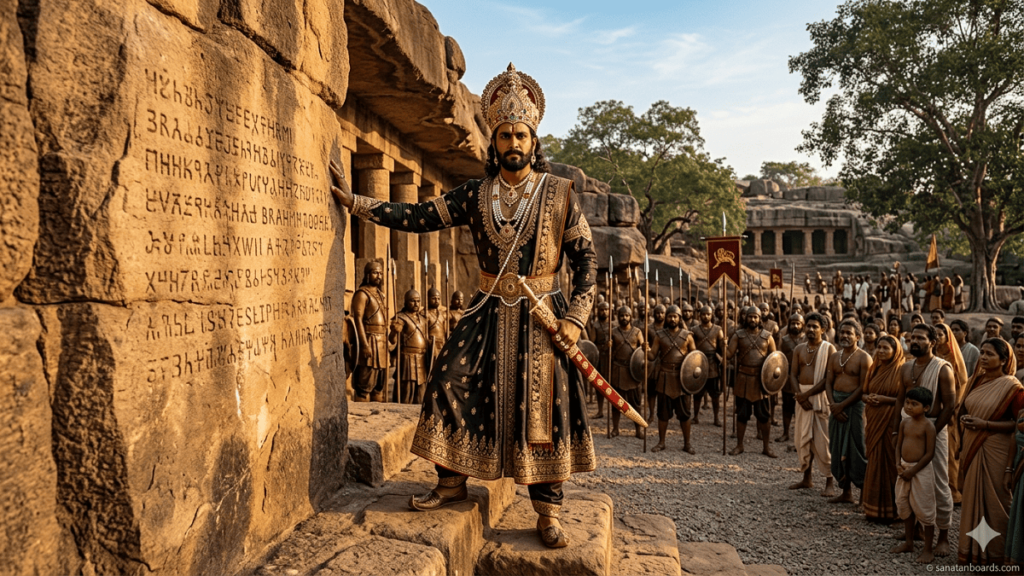
Ancient inscriptions found in Odisha, particularly the Hathigumpha inscription carved in rock caves near Bhubaneswar, provide critical evidence of Kharavela’s life and achievements. The text vividly depicts his military campaigns, patronage of religion and arts, infrastructure projects, and diplomatic pursuits. Unlike many rulers of his time who were remembered solely for conquest, Kharavela is depicted as a king with humanitarian visions who aimed to restore societal order, support religious harmony, and champion welfare for his people.
Historians consider Kharavela an emblem of indigenous resistance against foreign influence, as well as an architect of regional identity. His reign, generally dated around the 1st century BCE, is acknowledged as a period of resurgence for Kalinga. Although exact chronological details remain a subject of scholarly debate, the legacy of KHARAVELA (KALINGA) continues to shape interpretations of early regional state formation and the socio‑cultural evolution of eastern India. For students, historians, and enthusiasts alike Kharavela’s story stands as an important chapter in understanding India’s ancient past.
What Is Kharavela (Kalinga) ?
KHARAVELA (KALINGA) refers to both the king and the historical legacy associated with his rule over the ancient kingdom of Kalinga. Kalinga was a significant territorial and cultural entity in eastern India, renowned in ancient times for its maritime trade, artistic traditions, and strategic significance. KHARAVELA is best known from epigraphic records which describe a ruler who pursued ambitious projects to stabilize and strengthen his kingdom.
The name Kharavela itself is closely tied to the inscriptional evidence found primarily in the Hathigumpha caves near Udayagiri in Odisha. These inscriptions, etched in Brahmi script, chronicle his life and achievements in a first‑person narrative, showcasing military campaigns, temple renovations, public works, and patronage of religious institutions. Through this primary source, historians have pieced together an image of Kharavela as a dynamic leader who engaged in both warfare and constructive activities to benefit society.
KHARAVELA (KALINGA) was not only a military leader but also a cultural patron. The inscriptions suggest his respect for Jainism, as well as support for learning centers and public welfare. The narratives emphasize his desire to project Kalinga as a sovereign, vibrant, and prosperous region after periods of political turbulence. Unlike many rulers of his era, who remain shadows in history, Kharavela’s own words provide rich details about governance, regional diplomacy, and the responsibilities of kingship.
Who Is Required Kharavela (Kalinga) ?
Understanding who is required to study or appreciate KHARAVELA (KALINGA) involves identifying the groups of people most connected to or benefiting from in‑depth exploration of this historical figure and his legacy. First and foremost, historians and students of ancient Indian history are required to engage with Kharavela’s legacy, because he provides critical insights into post‑Mauryan regional powers and the dynamics of early statecraft in eastern India. His reign is a valuable case study in understanding how localized monarchies asserted identity, defended territory, and contributed to cultural development after larger empires fragmented.
Academics and researchers specializing in epigraphy, archaeology, and South Asian studies are also required to study KHARAVELA (KALINGA). The primary sources associated with his reign, especially rock inscriptions, are indispensable for reconstructing ancient political narratives and interpreting the socio‑religious milieu of the era. By analyzing these materials, scholars can trace shifts in language, religious patronage, artistic expression, and diplomatic strategies across regions.
Teachers and educators are required to include KHARAVELA (KALINGA) in curricula that cover classical Indian history. This topic offers students a nuanced understanding of regional dynamics that complemented larger imperial histories. It illustrates the existence of powerful yet often underrepresented polities that shaped subcontinental cultures.
In addition, heritage professionals working in museums, cultural institutions, and tourism sectors within Odisha and beyond are required to engage with Kharavela’s story. It helps enhance public history experiences, enrich exhibits, and connect contemporary audiences with ancient civilizational achievements.
When Is Kharavela (Kalinga) Required ?
KHARAVELA (KALINGA) is required in various contexts, not only in academic settings but also in cultural, educational, and heritage preservation efforts. Historically, his significance comes into focus during the early historic period of India, approximately the 1st century BCE, a time when smaller regional kingdoms began to assert autonomy after the decline of larger pan‑Indian empires. In this sense, Kharavela’s period of rule represents a milestone in understanding how governance, military strategy, culture, and religion intersected to shape regional polities.
In academic and educational timelines, KHARAVELA (KALINGA) is required when exploring the post‑Mauryan age. Students learning about ancient Indian history often encounter Ashoka and the Kalinga War around the mid‑3rd century BCE. However, the narrative arc does not end there. Kharavela is an essential figure in comparative history because his life reflects how regions like Kalinga recovered from earlier upheavals and developed distinct political identities. Teachers introduce him in history courses when discussing the transition from centralized imperial structures to decentralized monarchies that nevertheless maintained strong internal coherence and cultural sophistication.
KHARAVELA (KALINGA) is also required during cultural commemorations and heritage events, especially in eastern India. In Odisha, annual celebrations and exhibitions on ancient history often highlight his contributions to civic infrastructure, temple patronage, and public welfare. These occasions mark moments when communities reconnect with their ancestral past, fostering a sense of continuity and shared identity.
Research conferences, symposia, and archaeological seminars require KHARAVELA (KALINGA) as a focal subject for debate, interpretation, and innovation in methodology. Scholars presenting papers on epigraphy, early Indian polity, and regional iconography draw from the primary sources related to his reign to challenge assumptions and introduce new perspectives.
Furthermore, KHARAVELA (KALINGA) is required in comparative studies of governance and leadership. Modern leadership courses sometimes refer to historical examples to illustrate principles of vision, resilience, and statecraft. In this regard, Kharavela’s approach to administration — blending military strength with social welfare — becomes a historical lens for contemporary discussions.
Finally, in heritage tourism and museum curation, Kharavela’s era is required for accurate representation of regional history. Exhibits that trace the development of eastern India’s societal structures, religious institutions, and artistic achievements invariably include his reign as a critical anchor.
Where Is Kharavela (Kalinga) Required ?
KHARAVELA (KALINGA) is required in multiple geographical and intellectual spaces, bridging ancient history with contemporary understanding of culture and identity. Geographically, the primary locus where Kharavela’s story is required is the region of ancient Kalinga — largely corresponding to modern‑day Odisha and parts of northern Andhra Pradesh in India. In this area, archaeological sites, inscriptions, museums, and cultural festivals bring his legacy into public view.
The Hathigumpha caves near Udayagiri are the most prominent location associated with KHARAVELA (KALINGA). The rock‑cut inscriptions found here serve as primary evidence of his life, achievements, and the sociopolitical landscape of his reign. Scholars, tourists, and students alike visit these caves to witness firsthand the inscriptions that form the backbone of historical knowledge about him. Museums in Bhubaneswar and Cuttack, which house replicas and interpretative displays, further underscore where his legacy is required for understanding cultural history.
In academic spaces — universities, research institutes, and classrooms — KHARAVELA (KALINGA) is required as a subject of study. Departments of history, archaeology, and South Asian studies integrate his reign into curricula because it exemplifies a period where regional powers shaped their own destiny after larger empires waned. In these educational settings, knowledge of his governance style and cultural patronage helps students draw connections between ancient political organization and broader societal change.
Cultural institutions and heritage centers across eastern India also require the story of Kharavela in exhibition narratives that aim to educate both locals and visitors about the region’s rich past. Festivals, public lectures, and literary events often invoke his legacy to celebrate historical continuity and artistic expression.
Beyond India, academic conferences and global history forums often include sessions on ancient Indian rulers, of which Kharavela is a significant case. In these international intellectual spaces, his life contributes to comparative studies of early state formation, diplomacy, and religious interactions in ancient civilizations.
Finally, KHARAVELA (KALINGA) is required in digital spaces — educational websites, online learning platforms, and digital archives — where the dissemination of accessible history enables learners worldwide to explore diverse chapters of human civilization. His story occupies an essential place where history meets modern technology to expand global understanding.
How Is Kharavela (Kalinga) Required ?
KHARAVELA (KALINGA) is required through structured and multi‑layered engagements that enhance understanding of ancient history and its ongoing relevance. The requirement encompasses academic scholarship, cultural preservation, heritage interpretation, and educational dissemination.
In academic research, KHARAVELA (KALINGA) is required through meticulous analysis of primary sources such as inscriptions, archaeological evidence, and literary references. Scholars interpret the Hathigumpha inscription and other artifacts to reconstruct the chronology of his reign, his military campaigns, diplomatic relations, and religious commitments. These studies are published in journals, books, and conference proceedings, and advance historical theory and methodology. Universities and research institutions require such scholarship to deepen disciplinary knowledge and refine pedagogical approaches.
Within education, the requirement manifests through inclusion in curricula, textbooks, and classroom discussions. History educators integrate Kharavela’s story into lessons that span political history, cultural evolution, epigraphy, and regional identities. Students engage with his life as an illustrative case that expands their comprehension of how ancient societies operated, governed, and interacted with neighboring powers. Assessments, projects, and research assignments often require learners to critically evaluate his impact and legacy.
In heritage and cultural preservation, KHARAVELA (KALINGA) is required in conservation planning, interpretative signage, and museum curation. Archeological departments and heritage bodies assess physical sites associated with his reign to protect and present them responsibly. Public interpretation at these sites ensures that visitors understand historical context and significance.
Cultural organizations require Kharavela’s legacy when organizing festivals, performances, and exhibitions that celebrate ancient traditions. These events create platforms where historical narratives become living dialogues — linking past achievements with present identities.
Digital and public history platforms also require KHARAVELA (KALINGA) for content creation, such as educational videos, podcasts, and articles. These formats bring history into accessible spaces, allowing global audiences to engage with ancient Indian heritage.
Case Study On Kharavela (Kalinga)
Introduction
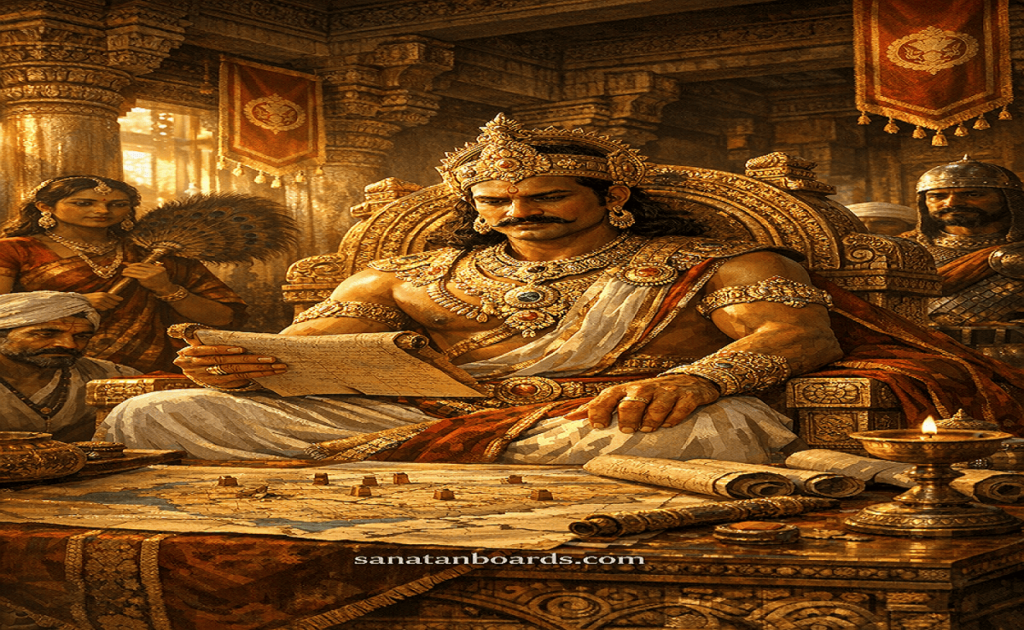
The reign of KHARAVELA (KALINGA) stands as one of the most remarkable case studies in ancient Indian history, illustrating how a regional kingdom asserted power, navigated diplomatic challenges, and fostered cultural and religious life. This case study explores his governance, military strategy, socio‑cultural engagement, and long‑term legacy.
Historical Context
After the devastating Kalinga War under Emperor Ashoka in the 3rd century BCE, Kalinga suffered a period of political upheaval, economic disruption, and loss of autonomy. By the 1st century BCE, the need for a strong leader was clear. Into this historical landscape emerged Kharavela, whose rule is primarily documented through the Hathigumpha inscriptions — a set of rock carvings that serve as autobiographical references to his achievements.
Leadership and Governance
KHARAVELA (KALINGA) demonstrated an integrative leadership model that combined military prowess with civic administration. Unlike rulers who prioritized conquest alone, Kharavela balanced state expansion with internal development. The inscriptions highlight actions such as:
• Military Campaigns: Kharavela led campaigns to reclaim territories and assert dominance against neighboring polities. These military efforts were not purely territorial; they aimed to secure trade routes and enhance political stability. Known battles illustrate strategic planning and mobilization of resources.
• Public Works: The inscriptions record Kharavela’s investment in infrastructure, such as irrigation systems, roads, and city fortifications. These efforts improved agricultural productivity and facilitated economic growth, reinforcing state capacity.
• Religious and Cultural Patronage: Although personally inclined towards Jainism, Kharavela did not restrict his support to a single tradition. He funded temples and honored brahmanical institutions, reflecting a form of religious pluralism that strengthened social cohesion. His patronage of arts and rituals ensured that culture flourished during his reign.
Diplomacy and Regional Influence
KHARAVELA (KALINGA) employed diplomatic engagement alongside military action. He maintained alliances with neighboring rulers and negotiated terms when possible. Political correspondence and tribute relations became part of his diplomatic toolkit. The result was a network of influence that extended beyond Kalinga’s borders, fostering trade partnerships and cultural exchange.
Social and Economic Impact
Under Kharavela’s leadership, economic activity expanded. Kalinga’s maritime connections with Southeast Asia and inland trade routes contributed to prosperity. The king’s investment in agriculture and market towns stimulated local economies and boosted urbanization. Socially, his reign is noted for efforts to regulate justice and public welfare, emphasizing the protection of subjects and equitable administration.
Challenges and Resilience
Despite successes, Kharavela faced challenges, including resistance from rival rulers, internal administrative tensions, and the logistical demands of sustaining a vast kingdom. His resilience is evident in how he adapted military strategies and delegated administrative authority to maintain continuity of governance.
Legacy and Long‑Term Influence
The legacy of KHARAVELA (KALINGA) is multifaceted. Historically, he symbolizes a shift from imperial dominance to strong regional rule. Culturally, his patronage influenced temple architecture, literary flourishing, and religious practices that endured for generations. Politically, his governance models inspired later regional dynasties in eastern India.
Lessons from Kharavela’s Reign
From this case study, modern scholars derive several lessons:
• Adaptive Leadership: Balancing military, administrative, and #kharavelkalinga cultural responsibilities strengthens state resilience.
• Inclusive Governance: Supporting diverse religious and cultural traditions fosters unity.
• Strategic Diplomacy: Combining force with negotiation expands influence effectively.
White paper On Kharavela (Kalinga)
Executive Summary
This white paper explores the historical significance, governance strategies, socio‑cultural contributions, and enduring legacy of KHARAVELA (KALINGA) — an ancient ruler whose reign marked a pivotal period in the history of eastern India. Drawing from archaeological evidence, inscriptional texts, and scholarly interpretations, the document outlines how Kharavela’s leadership shaped political identity, facilitated economic growth, and reinforced cultural pluralism. It emphasizes both historical assessment and relevance for modern scholarship.
Introduction
The region of Kalinga, once a powerful maritime and cultural hub in ancient India, faced significant political upheaval after the devastating Kalinga War in the 3rd century BCE. By the 1st century BCE, the rise of KHARAVELA (KALINGA) signaled a renaissance for the kingdom. The primary source of knowledge about Kharavela’s reign comes from the Hathigumpha inscriptions — rock‑cut texts that serve as self‑narratives, detailing his campaigns, public works, and policy orientations.
Historical Context and Background
Kalinga’s historical identity was shaped by its strategic location on India’s eastern coast, facilitating extensive trade with Southeast Asia and inland regions. After the departure of imperial Mauryan influence, the region experienced decentralized governance, creating opportunities for strong regional rulers. This context provided fertile ground for the emergence of Kharavela, whose reign sought both restoration and expansion.
Governance and Political Strategy
Kharavela’s governance was distinguished by:
- Restoration of Sovereignty: Following periods of foreign influence, Kharavela asserted political autonomy through military campaigns targeted at reclaiming lost territories and stabilizing border regions.
- Administrative Innovation: While details are fragmentary, inscriptions indicate structured governance involving local chieftains, assemblies, and a network of officials responsible for civic administration.
- Diplomatic Engagement: Kharavela maintained alliances with neighboring powers, negotiated peace settlements, and engaged in tributary relationships that enhanced Kalinga’s influence.
Military Campaigns and Security
The military strategy of KHARAVELA (KALINGA) balanced offensive and defensive operations. Key aspects included:
- Strategic Warfare: Campaigns were launched to secure trade routes, protect coastal interests, and deter incursions by rival kingdoms.
- Mobilization of Resources: Evidence suggests effective logistics and resource mobilization, integrating agriculture, militia, and engineering to support military needs.
Socio‑Cultural Contributions
Kharavela’s era is marked by a notable commitment to cultural and social development:
- Religious Pluralism: While personally inclined toward Jainism, he patronized multiple religious institutions, fostering tolerance and religious exchange.
- Public Works: Investments in infrastructure such as wells, embankments, roads, and city fortifications enhanced agricultural productivity and civic life.
- Art and Learning: The period saw flourishing temple construction, patronage of scholars, and cultivation of artistic traditions that enriched Kalinga’s cultural tapestry.
Economic Impacts
Economic revitalization under Kharavela derived from:
- Trade Enhancement: Maritime commerce with Southeast Asian polities and inland trade contributed to economic prosperity.
- Market Networks: Expansion of urban centers and market towns fostered regional economic integration.
- Agricultural Development: Public works improved irrigation, leading to higher agricultural yields and surplus generation.
Challenges and Limitations
Despite these accomplishments, Kharavela’s reign faced challenges:
- Geopolitical Competition: Rival kingdoms and fluctuating alliances required constant strategic recalibration.
- Resource Strain: Continuous military and civic demands put pressure on state resources.
- Fragmentary Sources: Inscriptions provide incomplete narratives, leading to gaps in historical reconstruction.
Legacy and Contemporary Relevance
KHARAVELA (KALINGA) endures as a symbol of indigenous resilience, regional empowerment, and governance that balanced martial strength with social welfare. His legacy informs:
- Historical Scholarship: Encouraging revisionist perspectives that highlight regional power centers in ancient India.
- Cultural Identity: Serving as a cultural icon in eastern India, especially in Odisha.
- Leadership Studies: Offering models of adaptive leadership and pluralistic governance.
Conclusion
This white paper demonstrates that the reign of KHARAVELA (KALINGA) was a defining era in early Indian history, characterized by political revival, #Sanatandharmaaccreditationboardsinsoutindia cultural enrichment, and socio‑economic development. Despite limitations in source material, the evidence suggests a dynamic and visionary ruler whose impact continues to shape historical understanding.
Industry Application On Kharavela (Kalinga)
Introduction
While KHARAVELA (KALINGA) is a historical figure from ancient India, his legacy has applications that extend into modern industry sectors such as education, tourism, heritage management, cultural promotion, leadership studies, and technology‑enabled learning. This section explores how the principles and narratives associated with Kharavela’s reign can be applied across industries to generate value, enhance engagement, and promote sustainable practices.
1. Education and Curriculum Development
Application: Integrating KHARAVELA (KALINGA) into education enhances historical literacy.
- Curriculum Content: Schools and universities can incorporate modules on Kharavela’s reign in history, civics, and comparative governance courses.
- Critical Thinking: Students engage with primary sources (e.g., inscriptions) to develop analytical and interpretative skills.
- Interdisciplinary Learning: Combining history with archaeology, anthropology, and linguistics offers holistic learning experiences.
Impact: Broadens students’ understanding of ancient regional states, promotes appreciation of cultural diversity, and builds competencies in historical reasoning.
2. Heritage Tourism and Cultural Industries
Application: Developing tourism products centered around KHARAVELA (KALINGA).
- Historical Sites Promotion: Sites such as the Hathigumpha caves and other archaeological locations linked to Kharavela’s era become focal points.
- Experiential Tours: Curated tours, guided storytelling, and immersive experiences help visitors connect with ancient history.
- Cultural Festivals: Events celebrating Kalinga’s heritage attract domestic and international audiences.
Impact: Drives local economic development, supports artisans and service providers, and fosters global cultural exchange.
3. Museum and Exhibit Innovation
Application: Leveraging immersive technology to showcase Kharavela’s era.
- Virtual Reality (VR) Exhibits: Re‑creating ancient Kalinga landscapes and court scenes for museum visitors.
- Interactive Displays: Digital timelines, touch‑screen narratives, and augmented reality (AR) reconstructions of inscriptions and artifacts.
Impact: Enhances public engagement with history, appeals to younger audiences, and preserves cultural memory in accessible formats.
4. Leadership and Management Training
Application: Using KHARAVELA (KALINGA) as a case study in leadership programs.
- Adaptive Leadership: Kharavela’s balance of military, civic, and cultural priorities provides insights into integrated decision‑making.
- Conflict Resolution: Understanding diplomatic strategies and negotiation techniques from his reign.
- Strategic Planning: Long‑term resource management and infrastructure investments as models for modern organizations.
Impact: Encourages ethical leadership, resilience in complexity, and strategic thinking across corporate and public sectors.
5. Digital Content and Media
Application: Producing digital educational content inspired by KHARAVELA (KALINGA).
- Webinars and Podcasts: Discussions with historians and subject matter experts.
- YouTube and Social Media Series: Bite‑sized historical insights attract global audiences.
- E‑Learning Modules: Self‑paced courses for students and general learners.
Impact: Democratizes historical knowledge, creates content monetization opportunities, and builds online communities interested in ancient history.
6. Cultural Entrepreneurship
Application: Encouraging startups and creative enterprises around ancient history.
- Publishing: Books, graphic novels, and educational materials on Kharavela’s life.
- Cultural Merchandise: Art, apparel, and artifacts inspired by Kalinga’s heritage.
- Apps and Games: Edutainment platforms that introduce ancient Indian history through interactive gameplay.
Impact: Stimulates creative industries, fosters historical appreciation among youth, and generates new economic avenues.
7. Public Policy and Heritage Conservation
Application: Incorporating historical heritage into regional development plans.
- Conservation Funding: Governments allocate resources for preserving archaeological sites linked to Kharavela.
- Community Engagement: Local populations participate in preservation and promotion activities.
- Sustainable Practices: Balancing tourism #Sanatandharmaaccreditationboardsinmumbai growth with environmental protection.
Impact: Strengthens regional identity, supports inclusive heritage stewardship, and ensures long‑term sustainability.
source : The Frustrated Indian
ASK FAQ
Who was KHARAVELA (KALINGA)?
KHARAVELA (KALINGA) was an ancient king of Kalinga (modern Odisha), known for his military campaigns, public works, and patronage of Jainism and other cultural activities in the 1st century BCE.
What is the significance of KHARAVELA (KALINGA)?
KHARAVELA (KALINGA) is significant for restoring Kalinga’s political independence, promoting cultural and religious pluralism, and leaving behind the Hathigumpha inscriptions, a primary historical record.
When did KHARAVELA (KALINGA) rule?
KHARAVELA (KALINGA) is believed to have ruled around the 1st century BCE, after the decline of Mauryan influence in eastern India.
Where can we see the evidence of KHARAVELA (KALINGA)?
Evidence of KHARAVELA (KALINGA) is mainly found in the Hathigumpha caves near Udayagiri, Odisha, where inscriptions detail his achievements, campaigns, and governance.
How did KHARAVELA (KALINGA) contribute to society?
KHARAVELA (KALINGA) contributed through public works like irrigation, temples, roads, promoting trade, and supporting religious and cultural institutions, fostering prosperity and unity in Kalinga.
Table of Contents
Disclaimer
The information provided in this white paper and industry application is intended solely for educational, learning, and knowledge purposes. It is based on historical evidence, scholarly interpretation, and analytical insights. Interpretations of ancient history may vary among experts, and the content should not be interpreted as endorsement of specific commercial, political, or academic perspectives.