
KAKUSTHA (IKSHVAKU) refers to a specific name within the ancient and celebrated Ikshvaku dynasty, also known as the Solar dynasty (Suryavansha). This dynasty is one of the most prominent and enduring lineages mentioned in Indian epics and Puranic literature, especially in the Ramayana and Mahabharata, which detail its rulers, their deeds, and their connection to divine and human events in ancient cosmological history. The dynasty owes its origin to the legendary king Ikshvaku, who is described as the son of Vaivasvata Manu, the progenitor of humanity in traditional accounts. From him came a long line of kings, warriors, and rulers whose stories are intertwined with the cultural and spiritual heritage of ancient India.
Within the rich genealogical lists, Kakutstha — often rendered here as KAKUSTHA (IKSHVAKU) — appears as a descendant in this lineage. The exact meaning of Kakutstha is traditionally interpreted as “one who sits on the hump of the bull,” a name earned through valorous deeds associated with ancient mythic battles. This name is not just a personal identifier but also became a marker of lineage, so the followers and descendants of this line are sometimes referred to in relation to Kakutstha.
The broader Ikshvaku dynasty includes many well‑known names, including kings like Bhagiratha, Harishchandra, Dasaratha, and Rama, the central figure of the Ramayana. Through such rulers the dynasty symbolizes ideals of virtuous governance, moral duty (dharma), and cultural continuity spanning generations. Thus, KAKUSTHA (IKSHVAKU) serves not only as a name within this illustrious lineage but also as a symbolic link connecting foundational figures to the celebrated heroes of later ages.
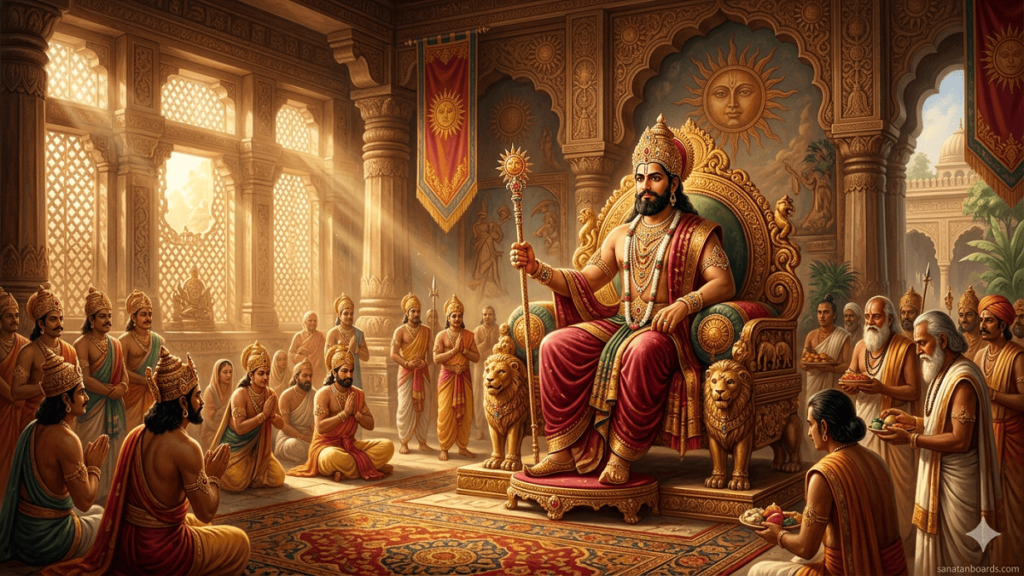
What Is Kakustha (Ikshvaku) ?
KAKUSTHA (IKSHVAKU) refers to Kakutstha, a figure embedded in the genealogical tradition of the Ikshvaku dynasty, which is synonymous with the Solar dynasty (Suryavansha) in ancient Indian lore. The name Ikshvaku itself represents the founder and early king of this dynasty, setting in motion a long lineage of rulers whose reigns are chronicled in the Ramayana, Mahabharata, and various Puranas. The very naming of this family as the Solar dynasty stems from their mythological descent from the Sun deity Surya through Vaivasvata Manu, Ikshvaku’s father.
Within this extended family tree, Kakutstha appears as one of the successors through whom the lineage continued. According to traditional lists, Kakutstha was either the descendant of Vikukshi — himself a direct son of Ikshvaku — or connected through intermediary generations depending on varying textual sources. Over time, this name came to represent a distinct branch of the Ikshvaku line.
The significance of the Kakutstha name lies not only in its placement within genealogy but also in its mythic associations. Traditional narratives link the origin of the name to episodes of heroic combat, where a figure associated with the hump of a bull (kakut) earned renown for martial prowess and divine service. In this way, Kakutstha became a title of honor as well as a genealogical marker, often identified by additional names such as Puranjaya in ancient lists.
Thus, KAKUSTHA (IKSHVAKU) denotes a branch within the historic Solar dynasty, embodying a mixture of mythic valor, lineage continuity, and cultural identity. Its presence in genealogical records underscores the dynastic progression from Ikshvaku himself toward later legendary figures, including kings renowned for righteousness and moral rule.
Who Is Required Kakustha (Ikshvaku) ?
KAKUSTHA (IKSHVAKU) — representing the figure Kakutstha within the Ikshvaku dynasty — is chiefly referenced in texts and traditions that emphasize ancestry, heritage, and dynastic continuity. When tracing the descent of renowned rulers and heroes in ancient narrative traditions, the inclusion of Kakutstha is essential to demonstrate unbroken lineage from the early progenitor, Ikshvaku, down through successive generations.
In traditional accounts, genealogical lists play a crucial role in situating later figures within a cultural and moral framework. Knowing who Kakutstha was helps readers and scholars understand how later rulers — such as King Dasharatha and Lord Rama — fit into the broader tapestry of the Solar dynasty. The name acts as a connecting bridge between the origin of the lineage and its apex in stories of epic significance.
Furthermore, the identity of Kakutstha is required for those studying lineage traditions, whether in classical Sanskrit literature, regional stories, or later genealogical compilations. Historians and cultural analysts often turn to these names to map how dynastic reputations were maintained across generations, and how individual characters within those generations contributed to the dynasty’s prestige.
From a broader perspective, KAKUSTHA (IKSHVAKU) is necessary for anyone aiming to comprehend the progression of rulers in the Ikshvaku line. It provides clarity on where and how significant figures are positioned, reinforcing the interconnectedness of mythic history with the famed heroes of ancient India.ral identities are woven into broad narrative traditions.
When Kakustha (Ikshvaku) Is Required ?
1. In Historical and Genealogical Accounts
In ancient Indian narrative traditions, chroniclers provide long lists of kings to preserve a sense of continuity and legitimacy across generations. Kakutstha appears in these lists as a named ancestor whose descendants continue the Solar dynasty’s legacy. Without acknowledging him, the sequence from Ikshvaku down to later rulers would be incomplete, especially for those aiming to trace the lineage toward well‑known kings like Rama.
2. In Epic Literature and Commentary
Works such as the Ramayana, Mahabharata, and Puranic commentaries often make direct or indirect references to ancestral branches to explain why a particular ruler — such as Rama — carries specific titles. For example, Rama is sometimes referred to as Kākutstha because he descends from the line of Kakutstha, highlighting his ancestral prestige and family identity. These distinctions become significant when historians or literary analysts interpret character titles or family epithets.
3. In Cultural Traditions and Oral History
In many regional and oral traditions, tracing descent from revered ancestors is central to cultural identity. Names like Kakutstha provide not only genealogical markers but also symbols of continuity and shared heritage. When practitioners or storytellers recount episodes from ancient lore, including Kakutstha helps situate the story within a broader cultural memory.
4. In Academic Research and Study
Scholars investigating the structure of ancient dynasties, the evolution of naming conventions, or the transmission of tradition require precise names to map how families and ruling houses evolved over centuries. Kakutstha becomes critical in such research, serving as an anchor point for discussing changes in power, tradition, and lineage over time.
In all these contexts, KAKUSTHA (IKSHVAKU) is required when a comprehensive understanding of the Ikshvaku dynasty — from its mythic origin to its narrative culmination — is sought with clarity and precision.
Where Kakustha (Ikshvaku) Is Required ?
The name KAKUSTHA (IKSHVAKU) — referring to Kakutstha in the genealogical line of the ancient Solar Dynasty — becomes necessary in specific locations of study and narrative emphasis where ancestry, identity, and tradition intersect. These locations are not always geographic, but thematic and textual places where lineage anchors understanding and meaning.
1. In the Textual “Locale” of Puranic Genealogies
Within the Puranas — ancient Sanskrit texts composed over many centuries — extensive genealogies of kings are meticulously recorded. The Solar Dynasty (Suryavansha) is one of the most elaborately documented. Here is where Kakutstha appears as a named progenitor, indicating a specific line through which later rulers inherited legacy and authority. These genealogical lists serve as narrative waypoints, anchoring successive generations to foundational origins and ensuring continuity across time. For readers and scholars navigating these textual landscapes, mentioning Kakutstha clarifies where one branch of the dynasty sits relative to others, including the major figures who follow.
2. In the Narrative “Terrains” of Epic Literature
Epic works like the Ramayana and the Mahabharata often invoke ancestral names to reinforce character backgrounds and motivations. In the Ramayana, for example, Lord Rama is sometimes identified by appellations that trace back to earlier ancestors in the Solar line, including Kakutstha. Using this name situates Rama within a territory of inherited virtue, strength, and legitimacy. By referencing Kakutstha, storytellers and commentators guide audiences through the textual geography of lineage — from origin to realization.
3. In Cultural Memory and Oral Tradition
Across India and in communities influenced by Indic literature, oral traditions preserve names and lineages as part of cultural lore. In these living narrative spaces, mentioning Kakutstha grounds stories in a frame that connects protagonists to ancestors whose reputations embody strength and continuity. These narrative locations are as important as any physical site — they are where identity, memory, and meaning converge.
4. In Academic and Interpretive Contexts
Researchers, historians, and literary critics often navigate documents, inscriptions, and manuscripts that reference dynastic sequences. Here, KAKUSTHA (IKSHVAKU) is required to establish a reference point in the dynastic schema, allowing analysis of patterns in naming, succession, and mythic representation.
Thus, the “where” of KAKUSTHA (IKSHVAKU) is not limited to physical geography but extends across textual, narrative, cultural, and interpretive landscapes. In these locations, the name performs the crucial function of tying past to present, ancestors to descendants, and stories to tradition.
How Kakustha (Ikshvaku) Is Required ?
1. Through Genealogical Recording
Ancient Sanskrit literature, especially the Puranas (such as the Vishnu Purana and Bhagavata Purana), systematically records king lists. These lists trace ruling lines back to origin figures — in this case, Ikshvaku, the progenitor of the Solar Dynasty. Kakutstha appears as one of the successors in these lineages. This method of recording serves to maintain continuity of lineage, ensuring that each generation of rulers is connected to a common ancestral root. Through this process, Kakutstha’s role is preserved as a link in the chain leading to future illustrious rulers like Rama.
2. Through Narrative Association in Epics
In the Ramayana and allied commentaries, kings are often identified not just by personal names but also by lineage markers. For example, when epics refer to Rama using appellations linked to his ancestry, they create a narrative association that binds the character to the broader dynasty. In such contexts, Kakutstha serves as an ancestral identifier, marking a historical and moral lineage that informs the character’s role and status.
3. Through Oral Tradition and Cultural Memory
Long before written texts were widely disseminated, genealogies and stories were preserved orally. Bards, priests, and storytellers would recite king lists and narrative histories at courts, in communities, or during festivals. In these oral practices, names like Kakutstha were woven into larger narrative tapestries, helping communities situate themselves within a tradition that valued continuity and collective memory. Over time, these practices contributed to cultural transmission, embedding the dynasty’s names in folk memory.
4. Through Scholarly Interpretation
Modern historians and Indologists study dynastic lists, epic literature, and Puranic genealogies to reconstruct historical frameworks and cultural meaning. Scholars interpret how names like Kakutstha fit into broader patterns of naming, succession, and cultural identity. Through comparative analysis, they position Kakutstha within the structural logic of dynasty — connecting mythic figures to literary traditions and cultural conceptions of rulership.
Thus, KAKUSTHA (IKSHVAKU) is required through methods of recording, association, oral transmission, and scholarly interpretation — each reinforcing the figure’s place in the vast tapestry of Solar Dynasty tradition.
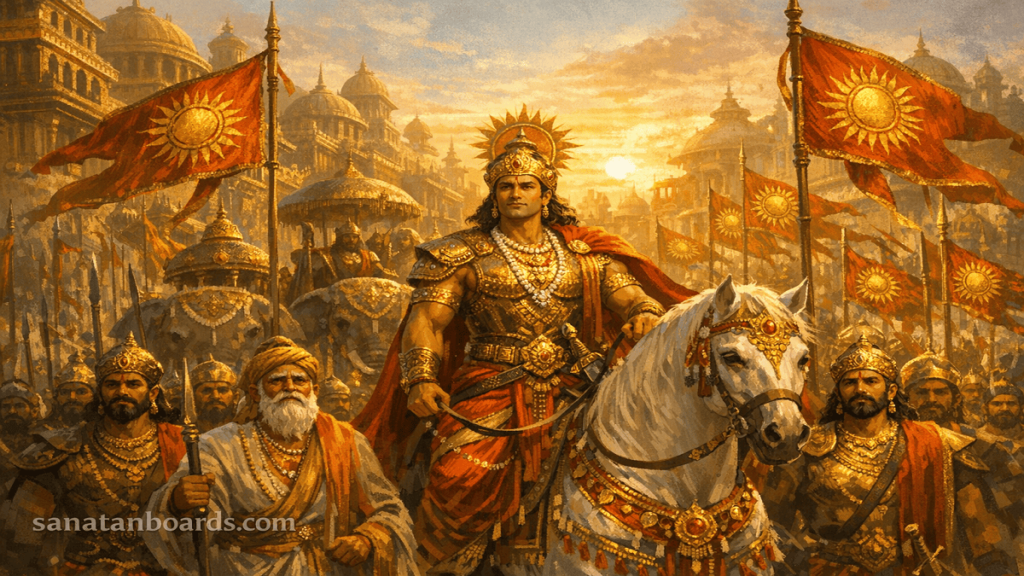
Case Study On Kakustha (Ikshvaku)
Introduction
To understand the practical significance of KAKUSTHA (IKSHVAKU) within the context of the Solar Dynasty, we can treat his role as a case study in dynastic continuity. The system of lineage transmission in ancient Indian narrative traditions offers insight into how names and identities were preserved across texts and cultural institutions.
Background
The Solar Dynasty is one of the foundational lineages in Hindu lore. Its origin is traced to Ikshvaku, the son of Vaivasvata Manu, who figures prominently in accounts of creation and human origins. Over generations, this dynasty produced rulers renowned for valor, wisdom, and devotion to dharma — moral law and duty. Within this lineage, Kakutstha emerges not as a central protagonist in epic tales but as a link that sustains the genealogical chain.
Dynastic Placement of Kakutstha
According to various puranic and genealogical accounts, Kakutstha was a descendant of Ikshvaku through one of his sons (often identified as Vikukshi). Though his own deeds are not elaborated in the same narrative depth as later kings, his significance lies in his positioning: he connects early progenitors to later rulers like King Raghu and ultimately to Rama — the hero of the Ramayana.
In textual lists, each name serves a function: to demonstrate legitimacy, transmit ancestral virtue, and preserve historical continuity. The appearance of Kakutstha in these lists confirms the dynasty’s unbroken line, reinforcing the authority of later kings who claimed descent from the same lineage.
Narrative Function of Genealogical Names
Genealogical lists function much like structural connectors in epic literature. In modern historical writing, scholars use ancestry charts to map relationships; in ancient narrative traditions, names like Kakutstha perform a similar role. They assure readers that the descent from foundational figures like Ikshvaku to later heroes like Rama is not arbitrary or incomplete.
Consider how the Ramayana refers to Rama as a descendant of Ikshvaku. The use of appellations such as Ikshvakuvamsha (of the Ikshvaku line) and Kakutstha reinforces Rama’s noble heritage — an essential element in establishing his rightful status as king and upholder of dharma.
Cultural Memory and Oral Tradition
In ancient India, much of the transmission of names and lineage occurred through oral tradition long before texts were codified. Skilled reciters, priests, and storytellers memorized extensive lists of kings and lineages. They preserved these over generations through ritual recitation and performance.
In this context, Kakutstha’s presence in recited genealogies contributed to cultural continuity. His name became part of the larger mnemonic system that preserved dynastic memory across centuries, shaping how communities understood their place in a vast, interconnected past.
Scholarly Perspective
Modern scholars view such genealogical inclusions as evidence of how ancient societies conceptualized identity and legitimacy. In the absence of concrete archaeological records for early dynastic names, Puranic geneologies — including mentions of figures like Kakutstha — provide a framework for historical imagination. Scholars compare lists, assess patterns in naming, and analyze how such sequences reflect social values, cultural priorities, and narrative logic.
Implications of the Case Study
The case of KAKUSTHA (IKSHVAKU) illustrates that:
- Not every dynastic figure needs to be a central narrative hero; some serve structural and mnemonic purposes.
- Genealogical names strengthen legitimacy and continuity within literary traditions.
- Oral and textual practices combined to preserve memory across eras.
- Scholars rely on such lists to interpret ancient cultural priorities.
Conclusion
The case study of KAKUSTHA (IKSHVAKU) shows that his role — though not dramatic — is essential within a hereditary narrative logic. #kakusthaikshvakuinuttarpradesh By occupying a place in the Solar Dynasty’s genealogical tree, he becomes a keystone that helps anchor later legend and lore, connecting the revered progenitor Ikshvaku to celebrated kings like Rama and beyond.
White Paper On Kakustha (Ikshvaku)
Executive Summary
KAKUSTHA (IKSHVAKU) represents Kakutstha, a figure embedded in the Solar Dynasty (Suryavansha), a lineage foundational to ancient Indian cultural and political thought. This white paper examines the genealogical, literary, and cultural significance of Kakutstha, demonstrating how such figures support the continuity of dynastic legitimacy, inform epic narratives, and serve as anchors in historical imagination.
1. Introduction to the Solar Dynasty
The Solar Dynasty, tracing its origin to Ikshvaku, son of Vaivasvata Manu, is one of the most documented lineages in Indian epics and Puranas. It exemplifies a structured progression of rulers whose moral, military, and administrative qualities were transmitted generationally. These narratives codify the principles of dharma, social hierarchy, and rulership, using genealogy as a framework for historical and mythic authority.
Kakutstha, as a descendant, plays a critical role in maintaining the integrity of this genealogy. His placement ensures continuity between Ikshvaku and later heroes like Rama, emphasizing the dynasty’s enduring legitimacy.
2. Genealogical Importance
The inclusion of Kakutstha in genealogical lists serves multiple purposes:
- Structural Continuity: By documenting each generation, texts ensure that later figures are embedded in an unbroken line of succession.
- Legitimacy of Authority: Names like Kakutstha reinforce the right of descendants to rule, based on hereditary and divine sanction.
- Cultural Memory: Reciting these names in oral and written traditions anchors collective memory and reinforces shared heritage.
In Puranic and epic accounts, the name Kakutstha symbolizes intermediate lineage — a bridge connecting the progenitor Ikshvaku to rulers whose narratives dominate literature and history.
3. Literary and Narrative Significance
Kakutstha’s inclusion is not purely ceremonial. In the Ramayana, Rama is occasionally referred to as Kakutstha, reflecting his ancestral connection. This demonstrates a literary strategy where genealogical markers:
- Establish credibility for the protagonist.
- Highlight inherited virtues and moral qualities.
- Provide narrative coherence across generations.
Thus, Kakutstha functions as a narrative device, linking origin stories to epic events, bridging mythology and didactic purpose.
4. Cultural and Scholarly Relevance
From a cultural perspective, Kakutstha exemplifies how ancestral figures shape identity. Communities referencing Solar Dynasty descent view these names as moral and historical benchmarks. Scholars and historians utilize such genealogical markers to interpret social norms, succession protocols, and the transmission of power.
5. Methodological Considerations
When studying KAKUSTHA (IKSHVAKU), several methodological approaches are applied:
- Textual Analysis: Examining Puranas, genealogical lists, and epic references.
- Comparative Literature: Comparing variations across manuscripts to trace lineage consistency.
- Cultural Anthropology: Understanding how oral traditions preserved names like Kakutstha in social memory.
6. Implications
The presence of Kakutstha in dynastic records highlights the importance of intermediate ancestral figures in legitimizing historical and mythological authority. They are essential in:
- Teaching generational continuity.
- Preserving the integrity of cultural and dynastic identity.
- Providing narrative coherence across epic literature.
7. Conclusion
KAKUSTHA (IKSHVAKU), though less prominent than later figures, is central to the integrity of the Ikshvaku genealogy. His presence demonstrates how #sanatandharmaaccreditationboardsofkakustha dynasties maintained continuity, legitimacy, and cultural memory over centuries. Recognizing Kakutstha underscores the interplay between genealogy, literature, and social values in ancient India.
Industry Application Of Kakustha (Ikshvaku)
While KAKUSTHA (IKSHVAKU) originates in ancient genealogical tradition, its principles of lineage, continuity, and identity offer insights for modern applications across cultural, educational, and organizational domains.
1. Cultural Heritage and Education
Institutions dedicated to Indian heritage utilize genealogical models like KAKUSTHA (IKSHVAKU) to:
- Teach historical continuity.
- Demonstrate narrative integrity in literature studies.
- Provide frameworks for understanding dynastic structures and social hierarchies.
Museums, cultural workshops, and literary programs can reference Kakutstha as a case study in lineage-based storytelling, offering learners a tangible connection between myth, history, and cultural identity.
2. Organizational Leadership and Succession Planning
Corporate and leadership studies often draw analogies from historical lineages to teach succession, mentoring, and legacy planning. Lessons from KAKUSTHA (IKSHVAKU) include:
- Continuity of vision: Just as Kakutstha connects Ikshvaku to Rama, modern organizations maintain culture and values through generational leadership.
- Intermediate roles are critical: Even seemingly “lesser-known” figures play structural roles; recognizing them avoids gaps in succession planning.
- Preservation of institutional memory: Oral and textual traditions of lineages can inspire strategies for knowledge transfer in organizations.
3. Literary and Media Industries
Epic narratives and genealogical traditions, including Kakutstha, influence:
- Screenwriting, particularly in mythological films and series.
- Literature adaptations, where lineage adds depth to character development.
- Game design, interactive storytelling, and educational content that reconstructs dynastic networks.
4. Heritage Tourism and Cultural Industry
Locations associated with Suryavansha kings and the Solar Dynasty, including Ayodhya, can integrate genealogical narratives:
- Storytelling guides referencing Kakutstha enhance visitor experience.
- Cultural exhibitions can feature lineage charts and ancestral profiles.
- Festivals and reenactments incorporate genealogical sequences, deepening engagement.
5. Digital Humanities and Genealogy Software
The principles underlying KAKUSTHA (IKSHVAKU) can inform digital projects:
- Genealogical databases preserving traditional lineages.
- Visualization of dynastic succession.
- Educational apps that explore cultural memory and heritage preservation.
6. Leadership Ethics and Moral Frameworks
Dynastic narratives also provide ethical lessons. Kakutstha, though not a central hero, symbolizes:
- Responsibility in connecting past to future.
- The role of intermediaries in sustaining ethical governance.
- Preservation of moral and cultural values across generations.
These principles can be applied to leadership training programs, especially those emphasizing mentorship, institutional ethics, and strategic continuity.
7. Conclusion
Though ancient in origin, KAKUSTHA (IKSHVAKU) offers versatile applications in modern contexts. From education, cultural preservation, and leadership development to #sanatandharmaaccreditationboardsinmumbai media and heritage tourism, the lineage serves as a model for continuity, structure, and identity, demonstrating the enduring relevance of ancestral frameworks in contemporary industries.
SOURCE : Bundelkhand M Education
ASK FAQ
Who was KAKUSTHA (IKSHVAKU) in the Solar Dynasty?
KAKUSTHA (IKSHVAKU), also known as Kakutstha, was a descendant in the ancient Ikshvaku or Solar Dynasty. He acted as an intermediate ancestor connecting the progenitor Ikshvaku to later kings, including Lord Rama, ensuring dynastic continuity.
What is the significance of KAKUSTHA (IKSHVAKU) in Hindu epics?
KAKUSTHA (IKSHVAKU) appears in genealogical lists to validate the lineage of epic heroes. In texts like the Ramayana, he symbolizes ancestral legitimacy and the transmission of dharma across generations.
Why is KAKUSTHA (IKSHVAKU) important in Indian cultural history?
He preserves the continuity of the Solar Dynasty, linking foundational rulers to legendary kings. His name is cited in oral traditions, Puranas, and historical narratives as a symbol of heritage and moral lineage.
How does KAKUSTHA (IKSHVAKU) connect to Lord Rama?
Lord Rama is described as a descendant of the line of Kakutstha. The name is used as a title or identifier to emphasize Rama’s noble ancestry and connection to the Ikshvaku lineage.
Where can KAKUSTHA (IKSHVAKU) be found in ancient texts?
References to KAKUSTHA (IKSHVAKU) appear in the Puranas, such as the Vishnu Purana and Bhagavata Purana, as well as in genealogical recitations related to the Solar Dynasty in the Ramayana and other epic traditions.
Table of Contents
Disclaimer
This blog content is based on traditional genealogical sources associated with ancient Indian texts and epic traditions regarding the Ikshvaku (Solar) dynasty. Interpretations of figures like KAKUSTHA (IKSHVAKU) derive from these narratives and may vary across different textual versions and interpretations.