
BAPPA RAWAL (MEWAR) refers to a prominent early medieval ruler associated with the region of Mewar, in what is today southern Rajasthan, India. He is traditionally portrayed as a king of the Guhila (also spelled Gahlot) Rajput dynasty who played a significant role in laying the foundations of the Mewar kingdom.
The name itself combines “Bappa,” meaning “father” or respected ancestor, with “Rawal,” a royal title used by rulers in the region. Historians and chroniclers often interpret BAPPA RAWAL not as a personal given name but as an honorific or epithet attached to a warrior‑king whose real name may have been Kalabhoja or another Guhila king.
Existing literary traditions — especially the 15th‑century Ekalinga Mahatmya — describe BAPPA RAWAL (MEWAR) as establishing the Mewar kingdom around 728 CE and fostering the rise of a political entity that would endure in various forms for centuries. He is also closely connected with the Eklingji temple tradition, a religious institution that became central to the rulers of Mewar and served as a symbol of their sacred authority.
Accounts describe his early life amid adversity — with his family killed and him growing up incognito before rising to power — reflecting the mix of legend and history in his story. While inscriptions from the time are limited, later chronicles and regional histories give him lasting stature as a foundational figure in Mewar’s political and cultural narrative.
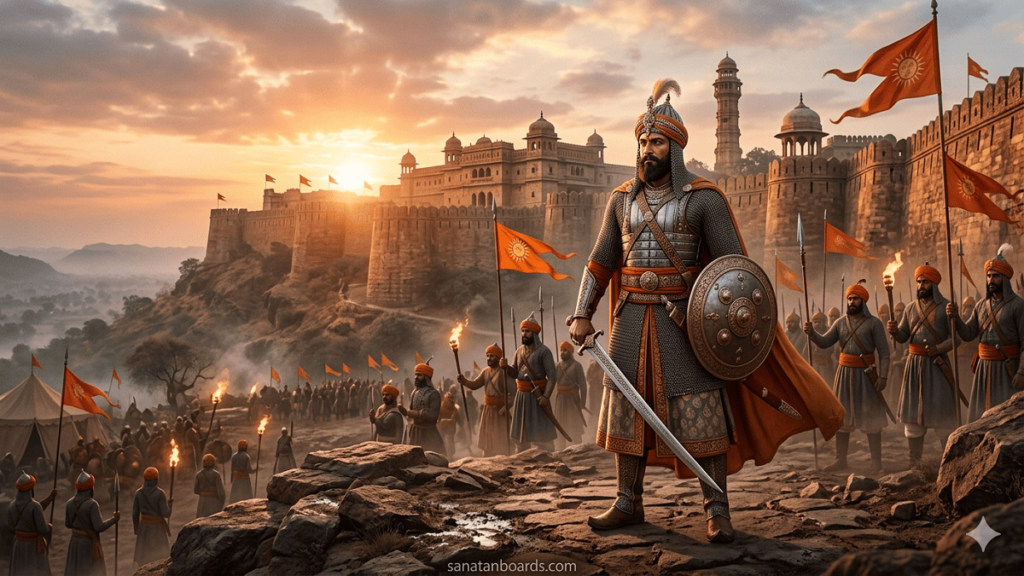
What Is Bappa Rawal (Mewar) ?
BAPPA RAWAL (MEWAR) refers to the historical identity, legacy, and foundational role of Bappa Rawal as the originator of the Mewar kingdom and its ruling dynasty. It is not merely the name of a person but a representation of a pivotal moment in Indian history when regional power structures began to solidify in response to external threats and internal dynamics.
In historical context, Bappa Rawal symbolizes the establishment of political authority in Mewar during the 8th century. His reign marked the transition from fragmented local governance to a more centralized and organized kingdom. This transformation was crucial in shaping the socio-political landscape of Rajasthan.
Culturally, Bappa Rawal embodies the ideals of Rajput identity—honor, bravery, loyalty, and sacrifice. His legacy became the foundation upon which the Rajput ethos was built. Over time, his name evolved into a symbol of resistance against foreign invasions, particularly during the early incursions of Arab forces into the Indian subcontinent.
From a historical narrative perspective, Bappa Rawal exists at the intersection of documented history and folklore. Various accounts describe his early life as being guided by sages and divine intervention, which adds a mythical dimension to his persona. These narratives, while not always historically verifiable, play a significant role in shaping his enduring image.
Thus, BAPPA RAWAL (MEWAR) is both a historical figure and a cultural archetype. It represents the birth of a powerful dynasty, the defense of regional sovereignty, and the embodiment of values that continue to resonate in Indian history and identity.
Who Is Required Bappa Rawal (Mewar) ?
The concept of “who requires BAPPA RAWAL (MEWAR)” can be understood in terms of relevance to different groups such as historians, cultural scholars, leaders, and society at large Bappa Rawal is not just a historical figure but a source of inspiration and study for multiple audiences.
Historians require Bappa Rawal to understand the early formation of Rajput states and the political evolution of medieval India. His life provides insight into how regional kingdoms responded to external invasions and internal challenges. By studying his reign, historians can trace the roots of Mewar’s long-standing resistance traditions.
Cultural scholars and researchers also require Bappa Rawal as a key figure in exploring Rajput identity and heritage. His story is deeply embedded in folklore, oral traditions, and regional literature, making him essential for understanding the cultural fabric of Rajasthan.
Leaders and strategists may find relevance in Bappa Rawal’s leadership style. His ability to unite people, establish authority, and defend his territory offers valuable lessons in governance, resilience, and strategic thinking. His life demonstrates how vision and determination can transform a fragmented region into a strong political entity.
For society, especially in India, Bappa Rawal serves as a symbol of pride and inspiration. His legacy reinforces values such as courage, loyalty, and devotion to one’s land. Educational institutions and history enthusiasts also require his story to preserve and pass on knowledge about India’s rich past.
Thus, BAPPA RAWAL (MEWAR) is “required” by anyone seeking to understand history, culture, leadership, and identity, making him a timeless figure of importance.
When Bappa Rawal (Mewar) Is Required ?
The relevance of Bappa Rawal becomes particularly significant during moments of historical reflection, cultural revival, and leadership inspiration. Understanding when BAPPA RAWAL (MEWAR) is required involves identifying contexts where his legacy offers value and insight.
Firstly, Bappa Rawal is required when studying early medieval Indian history, especially the 8th century period marked by political transitions and foreign invasions. His life provides context to how regional rulers responded to emerging threats, including Arab incursions into northwestern India. Scholars and students often revisit his contributions when analyzing the origins of Rajput power structures.
Secondly, his relevance emerges strongly during cultural and heritage preservation efforts. Festivals, academic discussions, and regional celebrations in Rajasthan frequently highlight his legacy. During such times, Bappa Rawal is invoked as a symbol of Mewar’s origins and enduring strength.
Thirdly, Bappa Rawal is required in times of national or regional identity building. His story reinforces a sense of pride and continuity, reminding people of their historical roots. In educational curricula and public discourse, his life is often referenced to instill values of courage and patriotism.
Additionally, his importance is evident during leadership and strategic studies. Modern leaders and thinkers may draw parallels between his challenges and contemporary issues. His ability to unify territories, maintain sovereignty, and establish a lasting dynasty provides lessons applicable even today.
In times of crisis or adversity, Bappa Rawal’s legacy serves as a motivational force. His resilience and determination inspire individuals and communities to face challenges with strength and resolve.
Finally, his relevance extends to tourism and historical exploration. When people visit Mewar, particularly Chittorgarh, they engage with his legacy as part of the region’s historical narrative.
Where Bappa Rawal (Mewar) Is Required ?
The significance of Bappa Rawal is deeply rooted in specific geographical, academic, and cultural spaces. Understanding where BAPPA RAWAL (MEWAR) is required helps highlight the breadth of his influence.
Geographically, his importance is most evident in Mewar, a historic region in present-day Rajasthan. Cities like Udaipur and Chittorgarh are central to his legacy. These locations serve as living reminders of his contributions, with forts, temples, and historical sites preserving his memory.
In academic institutions, Bappa Rawal is required within departments of history, archaeology, and cultural studies. Universities and research centers study his reign to understand the formation of early Indian kingdoms and the development of Rajput identity.
Culturally, his presence is felt in literature, folklore, and traditional performances. Folk songs and ballads in Rajasthan often narrate his life and achievements. Cultural festivals and heritage events also serve as platforms where his story is celebrated and remembered.
Bappa Rawal is also required in museums and historical archives. Artifacts, manuscripts, and exhibits related to Mewar frequently reference him as a foundational figure. These spaces help preserve and present his legacy to future generations.
In the realm of tourism, his importance is evident in heritage circuits across Rajasthan. Tourists visiting historical sites encounter narratives about his life, making him an integral part of the region’s tourism identity.
Additionally, Bappa Rawal is relevant in leadership training and motivational contexts. His story is used in seminars and discussions to illustrate principles of courage, unity, and strategic governance.
In digital spaces, including blogs, documentaries, and online courses, his legacy continues to reach global audiences. Content creators and educators use his story to engage people with Indian history.
How Bappa Rawal (Mewar) Is Required ?
Understanding how Bappa Rawal is required involves examining the ways in which his legacy is applied, interpreted, and utilized across different domains.
In education, Bappa Rawal is required as a foundational historical figure. His life is taught through textbooks, lectures, and research papers, helping students understand the emergence of regional powers in India. His story is used to explain broader historical themes such as state formation, resistance, and cultural identity.
In cultural preservation, his legacy is maintained through storytelling, folklore, and traditional art forms. Communities keep his memory alive by passing down narratives that highlight his bravery and leadership. This ensures that his contributions remain relevant across generations.
In leadership and management studies, Bappa Rawal is required as an example of effective governance. His ability to unify territories, establish authority, and defend his kingdom offers valuable lessons in strategy and decision-making. His leadership style is often analyzed for its adaptability and resilience.
In tourism, his legacy is used to promote historical sites in Mewar. Guides, brochures, and documentaries narrate his story to visitors, enhancing their understanding of the region’s history. This not only preserves his legacy but also contributes to economic development.
In modern media, including films, books, and online content, Bappa Rawal is portrayed as a heroic figure. These representations help introduce his story to wider audiences, making history more accessible and engaging.
In national and regional identity building, his legacy is required to reinforce values such as courage, honor, and patriotism. His story is often referenced in speeches, writings, and educational programs to inspire individuals and communities.
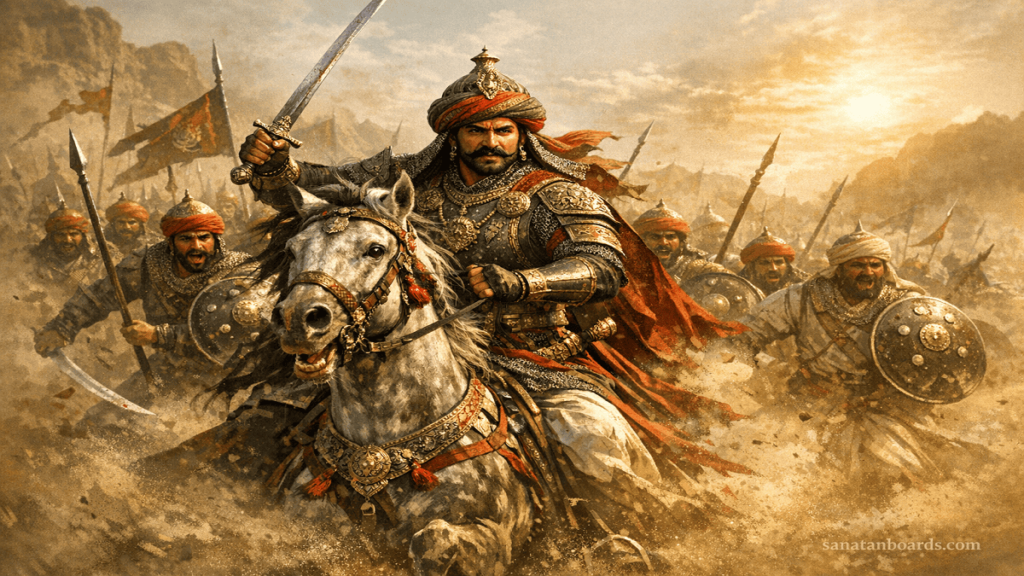
Case Study On Bappa Rawal (Mewar)
The case study of Bappa Rawal provides a comprehensive understanding of his life, leadership, and lasting impact on Mewar and Indian history.
Bappa Rawal’s rise to power is often described as a blend of historical fact and legend. Born into the Guhila clan, he is believed to have spent his early years in obscurity before emerging as a leader of great capability. Guided by spiritual influences and trained in warfare, he developed the qualities necessary to lead a kingdom.
One of the most significant aspects of his life is his association with the establishment of Mewar as a powerful state. During his time, the region faced threats from external forces, including early Arab invasions. Bappa Rawal is credited with organizing resistance and strengthening the region’s defenses.
His capture of Chittorgarh marked a turning point in his career. This strategic location became the राजधानी (capital) of Mewar and served as a stronghold for future rulers. Under his leadership, Mewar transformed into a stable and influential kingdom.
Another important dimension of his life is his spiritual inclination. Bappa Rawal is often associated with Shaivism and is believed to have been a devotee of Lord Shiva. This spiritual aspect influenced his governance, blending religious values with political authority.
His leadership style was characterized by unity and inclusiveness. He brought together different clans and communities, creating a cohesive political structure. This ability to unify diverse groups was crucial in establishing a मजबूत and enduring राज्य (state).
The legacy of Bappa Rawal extends beyond his lifetime. The dynasty he founded continued to rule Mewar for centuries, producing notable rulers who upheld his values. His influence can be seen in the resistance movements of later Rajput rulers.
From a strategic perspective, his ability to adapt to changing परिस्थितियाँ (circumstances) and respond effectively to challenges is noteworthy. He demonstrated the importance of planning, resource management, and सैन्य संगठन (military organization).
In conclusion, the case study of Bappa Rawal highlights #bapparawalofmewar his role as a founder, leader, and symbol of resilience. His life offers valuable lessons in governance, strategy, and cultural identity, making him a central figure in Indian history.
White Paper On Bappa Rawal (Mewar)
The white paper on Bappa Rawal aims to present a structured and analytical overview of his historical significance, leadership model, and long-term impact.
Bappa Rawal’s era represents a formative period in Indian history. The 8th century was marked by political fragmentation and external threats. In this context, his role in establishing Mewar as a stable and शक्तिशाली (powerful) राज्य becomes highly significant.
From a governance perspective, Bappa Rawal introduced a प्रणाली (system) that emphasized centralized authority while maintaining local autonomy. This balance allowed for efficient administration and stability. His शासन (rule) was characterized by strong military organization and strategic planning.
Economically, his reign contributed to the development of trade and agriculture in Mewar. Stability under his leadership created conditions conducive to growth and prosperity. This economic foundation supported the long-term sustainability of the kingdom.
Culturally, Bappa Rawal played a key role in promoting religious and social values. His association with Shaivism influenced the cultural identity of Mewar. Temples and धार्मिक संस्थाएँ (religious institutions) flourished during his time.
From a military standpoint, his strategies focused on defense and territorial expansion. He understood the importance of fortifications and strategic locations, such as Chittorgarh. His military success ensured the सुरक्षा (security) of his राज्य.
In modern analysis, Bappa Rawal’s leadership can be studied through frameworks such as transformational leadership and strategic governance. His ability to inspire, unify, and lead his people aligns with contemporary leadership theories.
The white paper also highlights challenges in studying his life, including the blending of historical facts with folklore. Despite these challenges, his impact remains well-recognized.
In conclusion, Bappa Rawal’s contributions #sanatandharmaaccreditationboardsofmewar to governance, culture, and military strategy make him a महत्वपूर्ण (important) figure in Indian history. His legacy continues to influence modern interpretations #sanatandharmaaccreditationboardsofmewar of leadership and राज्य निर्माण (state-building).
Industry Application On Bappa Rawal (Mewar)
The legacy of Bappa Rawal extends beyond history into various modern industry applications, offering valuable lessons in leadership, strategy, branding, and organizational development.
In the corporate world, Bappa Rawal’s leadership style can be applied to management practices. His ability to unify diverse groups mirrors modern organizational leadership, where teams with different backgrounds must work together toward common goals. His emphasis on loyalty and trust is particularly relevant in building strong workplace cultures.
In the defense and strategic sector, his military strategies provide insights into planning, resource allocation, and risk management. His focus on fortifications and strategic locations can be compared to modern infrastructure and security planning.
In tourism and hospitality, his legacy is a key asset. Mewar’s historical sites attract visitors from around the world, contributing to economic growth. Businesses in this sector use his story to create engaging experiences for tourists.
In media and entertainment, Bappa Rawal’s life serves as inspiration for films, books, and digital content. His story provides rich material for storytelling, helping industries create compelling narratives that resonate with audiences.
In education technology, his legacy can be used to develop interactive learning modules. Digital platforms can present his story through videos, simulations, and virtual tours, making history more engaging for students.
In branding and identity, his name represents strength, resilience, and heritage. Organizations can draw from these qualities to build strong brand identities that reflect reliability and tradition.
In leadership training programs, his life is used as a case study to teach decision-making, crisis management, and strategic thinking. His ability to navigate challenges and establish a lasting legacy offers valuable lessons for professionals.
Thus, the industry applications of BAPPA RAWAL (MEWAR) demonstrate how historical figures can provide timeless insights, bridging the gap between past and present while contributing to modern innovation and development.
SOURCE : Spirit Of Sense
ASK FAQ
Who was Bappa Rawal of Mewar?
Bappa Rawal was a legendary ruler and founder of the Guhila (Sisodia) dynasty in Mewar, known for establishing Rajput power in Rajasthan.
Why is Bappa Rawal famous in history?
He is famous for founding Mewar’s royal lineage and for his bravery in resisting foreign invasions, especially early Arab incursions.
Which dynasty did Bappa Rawal belong to?
Bappa Rawal belonged to the Guhila dynasty, which later became known as the Sisodia Rajput dynasty of Mewar.
What is the contribution of Bappa Rawal to Mewar?
He laid the foundation of Mewar’s kingdom, strengthened Rajput identity, and expanded territorial control.
Where was Bappa Rawal’s capital located?
His capital was in Chittorgarh, a historic fort city in present-day Rajasthan.