
ANANGPAL TOMAR (DELHI KINGDOM) refers to a powerful medieval Indian ruler from the Tomar dynasty credited with building and populating the early foundations of Delhi — long before the Delhi Sultanate or Mughal era. The most prominent figure in this lineage is Anangpal II, who ruled in the 11th century CE and is traditionally recognised as the founder of the city known then as Dhillikapuri (which later evolved into modern-day Delhi).
Anangpal Tomar belonged to the Tomara dynasty, a ruling clan whose influence spread across what is now Delhi, Haryana, and neighbouring regions in northern India during the early medieval period. Though the dynasty’s roots trace back to earlier centuries, it was under Anangpal II that the Tomars reached their political zenith.
Historical inscriptions and coins confirm that Anangpal II revitalised the long-abandoned settlement near Mehrauli and constructed Lal Kot — one of the first citadels of Delhi — around 1052 CE. He also brought the legendary Iron Pillar to Delhi and had it re-erected, marking his authority and serving as a symbol of his kingdom’s prestige.
Anangpal’s patronage extended beyond military and political life; he is credited with fortifying the region, commissioning public works like Anangtal Baoli, and supporting early forms of local dialects that would evolve into later linguistic traditions.
Despite later being overshadowed by larger northern Indian powers such as the Chauhans and eventually the Delhi Sultanate, Anangpal’s legacy persisted in local tradition and inscriptions. Today, historians recognise him as a foundational figure in the pre-Islamic history of Delhi, whose rule helped lay the groundwork for the city’s future as a capital.
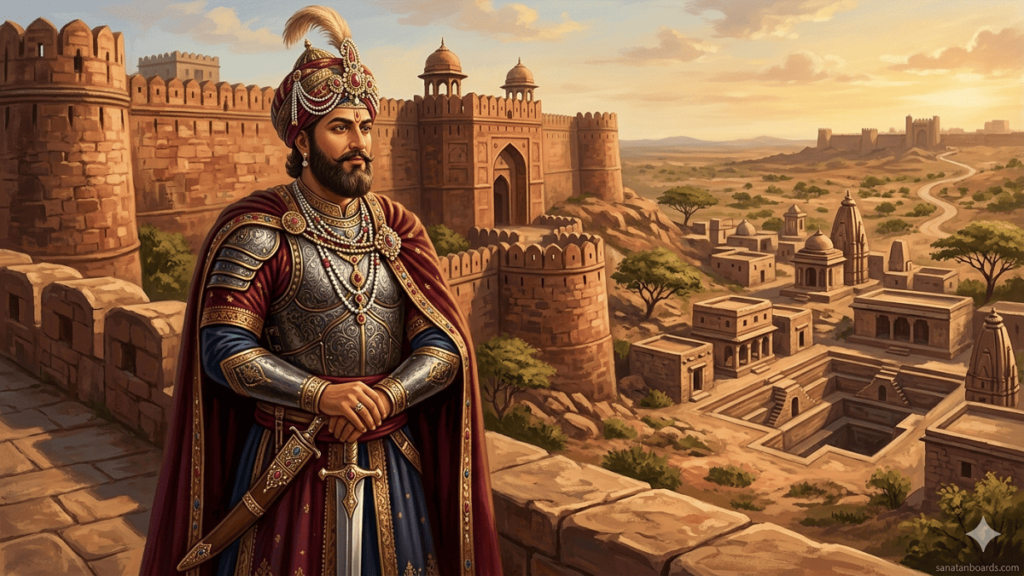
What Is Anangpal Tomar (Delhi Kingdom) ?
ANANGPAL TOMAR (DELHI KINGDOM) signifies a historical polity established by the Tomar dynasty in northern India, centred around the early medieval city of Dhillikapuri — the precursor to present‑day Delhi. This kingdom symbolised both political authority and cultural development in the region between the 8th and 12th centuries CE.
The Tomars were a Rajput or Rajput‑associated clan who ruled over parts of Delhi, Haryana, Punjab, Uttar Pradesh, and Rajasthan at the height of their power. Their control was not always continuous or uniform, but their political influence was recognised by contemporaneous inscriptions, coins and later historical writings.
Anangpal II is the most documented monarch of this dynasty, often credited with founding and revitalising Delhi around 1052 CE. The name “Delhi” itself is believed to have derived from an older name “Dhillika,” a term associated with the city during and after his reign.
Under his leadership, Lal Kot — a major fortified citadel — was constructed, serving as both a military stronghold and an urban core around which the kingdom’s administration operated. The territory, sometimes referred to as Hariyana, extended across strategic plains and trade routes that connected northern India.
The Tomar Kingdom also maintained martial engagements with neighbouring powers, including clashes with regional rulers and repelling incursions by Turkic forces, demonstrating its strategic importance at a time when northern India was politically fragmented.
Culturally, the Tomar rule fostered early medieval developments in local language, architecture, and civic structures. Though their dominance waned with the rise of the Chauhan kingdom and later conquests, the Tomars’ imprint — particularly through Anangpal — remains a critical chapter in the early history of Delhi.
Who Is Required: Anangpal Tomar ?
Anangpal Tomar (Delhi Kingdom) is a central figure in early medieval Indian history, especially in the history of Delhi. Scholars, historians, archaeologists, and students of Indian history are “required” to study him because his reign marks the foundation of Delhi as a political and urban center. His fortifications, including Lal Kot, and civic contributions, like the relocation of the Iron Pillar, are key evidence for understanding the development of urban settlements in northern India.
Political historians and governance researchers study Anangpal Tomar to trace the origins of Delhi as a seat of power, which later became the capital for successive rulers including the Chauhans and the Delhi Sultanate. Urban planners and cultural historians examine his contributions to city-building, fortifications, and public works, making him relevant for understanding the evolution of Indian urban centers.
In addition, the local population and heritage enthusiasts of Delhi are “required” to know Anangpal Tomar because his legacy forms the historical backbone of the city. Temples, stepwells (like Anangtal Baoli), and remnants of Lal Kot serve as tangible connections to Delhi’s pre-Islamic past.
Finally, comparative historians of India, especially those studying the interplay between northern and southern kingdoms, often contrast Anangpal Tomar with rulers like Adityan Chola to understand governance, military strategy, and dynastic development across regions.
When Anangpal Tomar Is Required ?
ANANGPAL TOMAR (DELHI KINGDOM) is considered historically significant because of when his leadership helped shape the early political landscape of northern India — particularly during the early medieval period (11th century CE). This epoch was marked by the transition from regional chieftains and small principalities toward more centralized powers that later dominated the Indian subcontinent.
Anangpal II, the most prominent ruler of the Tomar dynasty, is traditionally credited with revitalizing an abandoned settlement near present‑day Mehrauli around 1052 CE — a pivotal moment in Delhi’s urban history. At this time, northern India was fragmented among various Rajput clans, local rulers, and emerging powers that vied for control of trade routes, fertile plains, and strategic forts. The influence of invading forces from the northwest further emphasized the need for stronger fortified centers, and Anangpal’s decisions are seen as a response to these pressures.
The construction of Lal Kot, considered one of the earliest fortified citadels in the region, provided both defense and political legitimacy. The fortification occurred at a moment when local polities needed cohesion and stability, and the timing of Anangpal’s reign helped set the stage for later kingdoms — such as the Chauhans and eventually the Delhi Sultanate — to consolidate larger territories under centralized rule.
From a cultural perspective, studying when Anangpal Tomar ruled also helps historians understand the interplay between political power and public works at a time when cities were slowly advancing beyond simple settlements. His era sits between the decline of earlier Gupta‑era structures and the rise of Islamic Sultanates — a transition period critical to tracing the evolution of Indian statecraft and urbanization.
Where Anangpal Tomar Is Required ?
ANANGPAL TOMAR (DELHI KINGDOM) is required as a historical anchor primarily in the geographical region of modern northern India, especially in what is today Delhi and parts of Haryana. The Tomar kingdom, under Anangpal II, became a focal point for where political power, urban development, and defensive architecture first began to take shape in the pre‑Sultanate era.
The earliest evidence places Anangpal’s rule around Mehrauli — the historic quarter of present‑day Delhi — where he fortified the settlement known as Dhillika (the precursor to “Delhi”). Within this region, Lal Kot was constructed and served as the administrative and military center of the Tomar polity. Anangtal Baoli, a stepwell also attributed to the Tomar period, stands as another physical reminder of where the kingdom left its imprint.
Beyond the urban core, the Tomar influence extended into surrounding plains and agricultural lands that provided strategic depth and resource support for the kingdom. The territory under his control linked important trade routes that ran through northern India, making his domain not just a centralized fort but an economic node in its own right.
The where of Anangpal Tomar’s relevance goes beyond just physical geography — it points historians, archaeologists, and cultural scholars to sites where early Delhi emerged as more than a village or town. These include:
- The area between Mehrauli and Qutub Minar where ruins of the original fortifications still exist.
- Sections of old Delhi where older layers beneath Sultanate and Mughal structures indicate earlier habitation and defensive works.
In modern contexts, these locations are required for heritage preservation, academic study, and public history narratives that seek to trace Delhi’s antiquity beyond later Islamic and colonial layers. Anangpal Tomar’s geography explains where the story of an urban Delhi begins — setting the foundation upon which later empires, capitals, and power centers were built.
How Anangpal Tomar Is Required ?
1. Urban and Political Foundations
Anangpal Tomar is required for understanding how Delhi emerged as a centre of power. In the 11th century CE he revitalised a once‑abandoned settlement near present‑day Mehrauli and established it as Dhillikapuri, laying the groundwork for what would become Delhi. He built Lal Kot, one of the earliest fortified citadels in the region, which later became the nucleus of subsequent capitals and political expansions.
This required role is essential for historians studying the transition from scattered regional principalities to structured urban governance, showing how localized power bases evolved into capitals of larger empires.
2. Architectural and Engineering Legacy
His constructions, such as Lal Kot and Anangtal Baoli, are required references in urban archaeology and architecture. Lal Kot’s massive fortifications marked a shift toward permanent fort construction in the region, and Anangtal Baoli represents early water‑management infrastructure, providing insights into methods of resource use and city planning in medieval India.
Researchers and archaeologists use these structures to reconstruct how cities were defended, organized, and sustained before the establishment of the Delhi Sultanate.
3. Cultural and Heritage Significance
Anangpal Tomar is required in discussions of cultural identity and heritage preservation. His reign is tied to enduring sites such as the Yogmaya Temple, which still functions as a place of worship and cultural events — an example of continuous cultural tradition from early medieval times to today.
Heritage organisations and educators rely on his legacy to highlight Delhi’s deep history before later Islamic and colonial periods, helping the public appreciate layers of the city’s past.
4. Academic and Educational Importance
Scholars of Indian medieval history require Anangpal Tomar’s story to fill the narrative between ancient eras and later Sultanate rule. His rule represents a critical transitional period when regional kingdoms shaped political, social, and urban trajectories that influenced later dynasties, including the Chauhans and eventually the Delhi Sultanate.
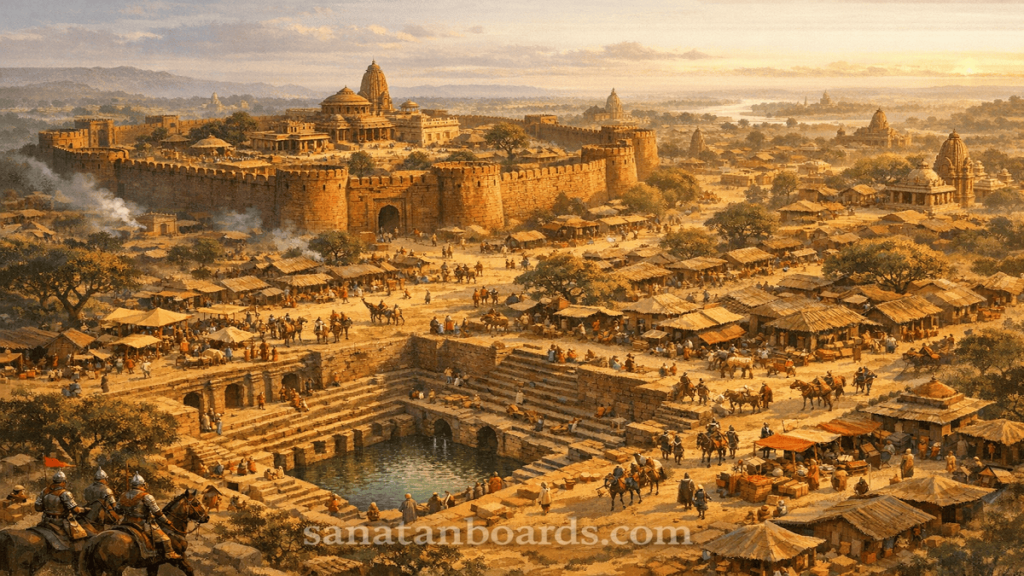
Case Study On Anangpal Tomar
1. Introduction — Historical Terrain and Early Medieval India
The early medieval period of Indian history (roughly 8th–12th centuries CE) was marked by the rise and fall of many regional powers that shaped the subcontinent’s political and cultural contours long before the establishment of the Delhi Sultanate and later empires. Among these rulers, Anangpal Tomar, also known as Anangpal II, stands out for his foundational role in establishing Delhi as a political, urban, and strategic centre in northern India.
Anangpal Tomar belonged to the Tomar dynasty, which ruled parts of present‑day Delhi and Haryana between the 8th and 12th centuries CE. The dynasty’s earliest reference connects it to the Himalayan foothills, and over time its influence expanded southward to the plains around Delhi.
The period of his reign, approximately 1051–1081 CE, came at a time when northern India lacked a large centralized empire after the decline of the Gurjara‑Pratiharas. Regional chieftains and rulers, including Rajput clans like the Tomars and Chauhans, exercised authority over fragmented territories. It was in this milieu of political fluidity that Anangpal Tomar’s leadership emerged as a crucial moment in Delhi’s early medieval history.
2. Anangpal Tomar’s Role in Founding Dhillikapuri (Delhi)
One of Anangpal Tomar’s most significant contributions was the establishment and repopulation of Dhillikapuri, the early medieval city that eventually became known as Delhi. According to an inscription dated Vikram Samvat 1383 (1052 CE), preserved in the Delhi Museum and later referenced in historical scholarship, the Tomars constructed a city called Dhillika in Haryana, which corresponds to modern Delhi.
Scholars often interpret this evidence as indicating that Delhi did not spontaneously emerge as a capital under later Islamic dynasties, but rather had its urban origins in the 11th century under the Tomars. This recognition underscores the importance of Anangpal Tomar’s reign in establishing urban governance and population settlement in the region.
The foundation of Delhi by Anangpal Tomar marked a shift from abandoned or sparsely inhabited settlements to a fortified town that could act as a political and defensive hub for the surrounding region. Later poets and chroniclers, such as in Pasanaha Chariu and Prithviraj Raso, also narrate the legend of “Dhillika” or “Dhillī,” reinforcing the association of the Tomar ruler with the city’s early development.
3. Urban Infrastructure: Lal Kot and Anangtal Baoli
Anangpal Tomar’s legacy in architectural and urban infrastructure is best exemplified by the construction of Lal Kot, a major fortified citadel near present‑day Mehrauli in Delhi. Built around 1052–1060 CE, Lal Kot had massive defensive walls with a circumference of over two miles, walls reaching substantial thickness, and served as the core of the early medieval city’s fortifications.
Although sometimes conflated with the Mughal Red Fort (built in the 17th century by Shah Jahan), Lal Kot was a distinct earlier fortification that played a foundational role in Delhi’s fort history. Fort walls, strategic positioning, and its role as a defensive centre highlighted the need for strong territorial control in an era of frequent regional conflicts.
As part of the urban framework, Anangpal Tomar is also credited with constructing Anangtal Baoli, a stepwell in Mehrauli. This structure served both as a water resource and a demonstration of early medieval adaptations to urban water management — critical in a semi‑arid environment where sustainable access to water supported growing populations and defence needs.
The placement of the Iron Pillar of Delhi in its current location near the Qutb Minar complex is also traditionally attributed to Anangpal Tomar in the 11th century. Though the pillar itself predates him (originally erected by Gupta emperor Chandragupta II), its relocation to Delhi symbolically anchored the new urban centre and affirmed the Tomar ruler’s political authority.
4. Political and Military Significance
The political significance of Anangpal Tomar’s rule lies in consolidating power in the Delhi region at a time when short‑lived regional powers dominated northern India. Inscriptions and literary sources suggest his realm included not only the immediate confines of Delhi but extended into surrounding territories of Haryana and beyond.
While detailed records of all his military campaigns are limited, some historical texts refer to his victories against Turkic forces and other regional rivals, showcasing his efforts to maintain and defend his kingdom’s territorial integrity. His rule set the stage for later political transformations in the region, including the rise of the Chauhan (Chahamana) dynasty under rulers like Prithviraj Chauhan and eventually the advent of the Delhi Sultanate after the Battle of Tarain in 1192.
This broader political context demonstrates that Anangpal Tomar’s reign was not isolated — rather it was part of the shifting dynamics of power in northern India, where emerging cities, strategic fortifications, and nascent urban societies began reshaping historical trajectories.
5. Cultural Impact and Heritage Legacy
Anangpal Tomar’s cultural legacy also includes religious and community structures, such as the Yogmaya Temple, which is one of the few surviving pre‑Sultanate temples in Mehrauli. Built for the worship of the Tomars’ kuldevi (family goddess) Yogmaya and later restored, this temple continues to be active in local traditions and annual festivals, tying modern cultural practices to early medieval roots.
Moreover, the Tomar dynasty’s patronage of civic infrastructure and minting coins with inscriptions in both Sanskrit and local dialect contributed to linguistic and cultural developments in the region, often cited by scholars as early influences on evolving forms of north Indian vernacular language.
Modern heritage efforts in India — including seminars, proposed museums, and memorials — seek to revive and highlight Anangpal Tomar’s contributions to Delhi’s history, reinforcing his role as an early figure in the long continuum of the city’s identity as a capital of successive empires.
6. Conclusion — A Foundational Figure in Delhi’s History
The case of Anangpal Tomar and the Delhi Kingdom underscores how urban centres in India often developed long before the well‑documented phases of the Sultanate and Mughal periods. Anangpal’s efforts in establishing Dhillikapuri, fortifying it with Lal Kot, managing resources like with Anangtal Baoli, and anchoring civic identity with enduring monuments #11thcenturydelhiking show that he was not merely a regional chieftain but a formative architect of early Delhi’s political and urban legacy.
His reign demonstrates the interplay between political ambition, strategic fortification, cultural continuity, and urban innovation — elements required to understand the emergence of one of South Asia’s most significant capitals. Anangpal Tomar’s contributions remain a vital chapter in Indian history, providing a bridge between pre‑Islamic political structures and #11thcenturyanangpaltomar the later large empires that dominated the subcontinent.
White Paper On Anangpal Tomar
1. Executive Summary
The Tomar dynasty, led by Anangpal Tomar, played a foundational role in shaping early Delhi’s urban, political, and cultural identity. This white paper examines his contributions, the strategic importance of his kingdom, and the lasting implications for historical research, heritage preservation, and cultural tourism. By analyzing archaeological evidence, inscriptions, and historical texts, we can contextualize Anangpal Tomar’s reign in both medieval Indian history and modern heritage discourse.
2. Historical Background
Anangpal Tomar, also known as Anangpal II, ruled in the 11th century CE, during a period of fragmented polities in northern India. His leadership marked a transition from smaller settlements to fortified urban centers, laying the groundwork for Delhi’s emergence as a political capital.
- Dynasty: Tomar Rajputs
- Territory: Delhi and surrounding Haryana plains
- Major constructions: Lal Kot (fort), Anangtal Baoli (stepwell), relocation of Iron Pillar
- Cultural contributions: Temples, coins, urban planning initiatives
By reviving abandoned settlements near Mehrauli, Anangpal Tomar created a strategic center of governance and defense in northern India.
3. Strategic and Political Significance
The Tomar kingdom under Anangpal II was strategically located along the trade and military corridors of northern India, connecting Delhi with Punjab, Haryana, and Rajputana. His fortifications, particularly Lal Kot, served as a defensive hub against regional and foreign incursions, highlighting the importance of military engineering and territorial control.
Anangpal Tomar’s reign is required in historical analysis for understanding pre-Islamic political dynamics, including interactions with neighboring Rajput clans, Turkic invasions, and the early formation of urban polities that would later influence the Delhi Sultanate.
4. Urban Planning and Architecture
Anangpal Tomar’s contributions to urban development are visible in:
- Lal Kot: Early fortification setting a precedent for later Delhi forts
- Anangtal Baoli: Stepwell demonstrating water management and public utility infrastructure
- Relocation of the Iron Pillar: Symbolic assertion of authority and continuity with past Indian dynasties
These constructions reflect integrated city planning, combining defense, resources, and religious-cultural significance, offering modern planners and historians insights into early urban strategies in India.
5. Cultural and Heritage Contributions
The Tomar dynasty’s cultural impact extends to:
- Temples: Yogmaya Temple and others, representing early Rajput religious architecture
- Coins and inscriptions: Evidence of administration and regional identity
- Literary references: Chronicled in Prithviraj Raso and other historical texts
This legacy provides material for heritage conservation, academic research, and public awareness, reinforcing Delhi’s historical depth before later Islamic and Mughal periods.
6. Modern Relevance
Understanding Anangpal Tomar’s reign is critical for:
- Academic research: Filling gaps in early Delhi history
- Cultural tourism: Promoting pre-Sultanate monuments
- Urban heritage planning: Learning from early city layouts, water management, and fortifications
- Comparative governance studies: Assessing north-south regional administrative practices
7. Recommendations for Future Research and Preservation
- Conduct archaeological surveys in Mehrauli and Lal Kot regions
- Develop heritage trails connecting Anangpal-era monuments
- Digitally document inscriptions, coins, and architecture
- Encourage interdisciplinary studies comparing Tomar polity with other Indian dynasties, including the Cholas
8. Conclusion
Anangpal Tomar (Delhi Kingdom) represents a key node in Delhi’s historical narrative. His reign exemplifies how medieval Indian rulers #sanatandharmaaccreditationboardsindelhi combined urban planning, military strategy, and cultural patronage to lay enduring legacies. Recognizing and preserving this heritage is crucial for historical #sanatandharmaaccreditationboardsimumbai scholarship, cultural tourism, and public education.
Industry Application On Anangpal Tomar
1. Cultural Tourism
Sites such as Lal Kot, Anangtal Baoli, and Yogmaya Temple are valuable for tourism initiatives, attracting historians, archaeologists, and heritage enthusiasts. Modern tourism agencies can design historical city tours, integrating Anangpal Tomar’s legacy with Delhi’s Sultanate and Mughal heritage for a complete narrative.
2. Urban Planning and Architecture
Modern architects and city planners can study Tomar-era fortifications and stepwells to understand early urban sustainability. Principles of strategic fortification, water management, and public infrastructure can inspire adaptive urban development in semi-arid regions.
3. Academic Research and Education
Universities and historical institutes can use Anangpal Tomar’s reign as a case study for medieval Indian governance, political geography, and cultural development. Interdisciplinary research combining history, archaeology, and heritage management is highly applicable.
4. Heritage Preservation and Policy Making
Government and NGOs can prioritize conservation projects around Mehrauli and Lal Kot, using Anangpal Tomar’s contributions as a framework for policy development in urban historical preservation.
5. Media, Documentary, and Digital Content
Anangpal Tomar’s story can inspire documentaries, VR experiences, and digital heritage content, bridging academic research with public engagement and cultural storytelling.
Conclusion
The industry applications of Anangpal Tomar (Delhi Kingdom) span cultural tourism, heritage conservation, urban planning, research, and digital media. By leveraging historical insights, modern society can connect Delhi’s present with its pre-Islamic roots, honoring Anangpal Tomar’s enduring legacy.
SOURCE : StudyIQ IAS
ASK FAQ
Who was Anangpal Tomar of Delhi Kingdom?
Anangpal Tomar, also known as Anangpal II, was an 11th-century ruler of the Tomar dynasty who founded Dhillikapuri (Delhi) and built the fortified citadel Lal Kot, laying the foundation for Delhi as a major political and urban center.
What is the historical significance of Anangpal Tomar?
Anangpal Tomar is significant for establishing Delhi as a political, cultural, and urban hub, constructing fortifications, stepwells, and temples, and influencing the governance and architecture of later dynasties like the Chauhans and the Delhi Sultanate.
When did Anangpal Tomar rule Delhi?
Anangpal Tomar ruled the Delhi Kingdom in the 11th century CE (approx. 1051–1081 CE), a period marked by regional fragmentation and the rise of fortified urban centers in northern India.
Where was Anangpal Tomar’s Delhi Kingdom located?
The Delhi Kingdom under Anangpal Tomar was centered around Mehrauli, Delhi, extending into surrounding areas of Haryana, with key structures like Lal Kot, Anangtal Baoli, and the Iron Pillar forming the heart of his capital.
How did Anangpal Tomar contribute to Delhi’s development?
He contributed by building forts and stepwells, relocating the Iron Pillar, and establishing temples, which strengthened Delhi’s defense, ensured sustainable urban living, and created a lasting cultural and architectural legacy.
Table of Contents
Disclaimer:
The information provided in this article about Anangpal Tomar (Delhi Kingdom) is intended for educational, historical, and informational purposes only. While we have made every effort to ensure the accuracy and reliability of the content, historical interpretations may vary, and some details are based on archaeological findings, inscriptions, and scholarly research that are subject to debate. This content does not constitute professional advice or endorsement of any viewpoint. Readers are encouraged to consult primary historical sources, academic publications, and verified research materials for detailed study or scholarly work.