
MORE INFLUENTIAL KINGS OF INDIA & ABROAD have shaped history through their leadership, vision, and strategic prowess. Across continents, kings and emperors have left legacies that influenced culture, politics, military conquests, and social structures. These rulers were not only administrators but also visionaries who transformed societies, implemented reforms, and led their nations toward prosperity.
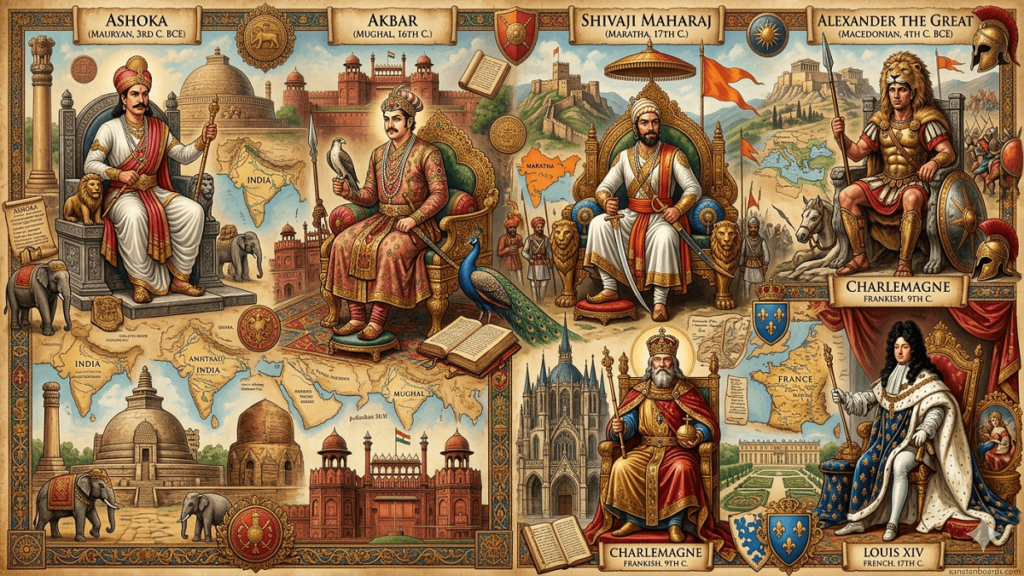
In India, from the Mauryas to the Mughals, kings like Ashoka, Akbar, and Chandragupta Maurya left indelible marks on governance, diplomacy, and cultural development. Ashoka, for instance, promoted Buddhism and ethical governance, while Akbar is celebrated for religious tolerance and administrative innovations. Their reigns became benchmarks for leadership and statecraft, inspiring generations that followed.
Abroad, influential kings such as Alexander the Great, Charlemagne, and Louis XIV changed the course of world history. Alexander expanded his empire across three continents, spreading Greek culture and ideas, while Charlemagne united much of Western Europe and laid the foundations for modern Europe. Louis XIV, the Sun King of France, exemplified absolute monarchy and influenced European art, architecture, and governance.
Studying these rulers helps us understand how leadership, vision, and policy can shape societies. Their strategies, decisions, and approaches to challenges offer lessons in governance, diplomacy and even human psychology. Whether through military conquest, cultural patronage, or administrative reforms, these kings’ influence transcended their time, leaving a legacy that continues to inspire modern leaders and thinkers.
What Is More Influential Kings Of India & Abroad ?
MORE INFLUENTIAL KINGS OF INDIA & ABROAD refers to rulers whose reigns had a significant and lasting impact on their nations and beyond. These kings are distinguished not only by their territorial conquests but also by their contributions to culture, administration, law, religion, and diplomacy. Influence is measured not merely by power but by the enduring effects of their policies and decisions on societies, economies, and civilizations.
In India, influential kings like Chandragupta Maurya established strong centralized governance, while Ashoka promoted peace and moral governance through his propagation of Buddhism. Akbar is remembered for his policies of religious tolerance and administrative efficiency, and Shivaji Maharaj created a resilient Maratha kingdom with innovative military strategies. These rulers shaped India’s socio-political fabric, contributing to unity, prosperity, and cultural development.
Internationally, influential kings included figures such as Alexander the Great, whose campaigns spread Hellenistic culture across the known world, or Charlemagne, who unified Western Europe and fostered educational reforms. Similarly, rulers like Suleiman the Magnificent transformed legal and cultural landscapes in the Ottoman Empire, while Louis XIV consolidated power and promoted French influence across Europe.
The concept of MORE INFLUENTIAL KINGS OF INDIA & ABROAD also emphasizes leadership qualities: vision, diplomacy, innovation, and resilience. It highlights how rulers not only exercised authority but also inspired societies, implemented reforms, and navigated crises. Studying these kings allows historians and readers to comprehend the intersection of power, culture, and human development.
Who Is Required More Influential Kings Of India & Abroad ?
The knowledge of MORE INFLUENTIAL KINGS OF INDIA & ABROAD is required for students, historians, policymakers, and anyone seeking to understand leadership, governance, and societal development. Scholars of history and political science examine these kings to analyze the factors that led to the success or failure of empires. These studies inform modern governance, strategy, and diplomacy.
Leaders and administrators can learn from the policies and approaches of influential kings, adapting strategies of governance, conflict resolution, and cultural integration. For instance, Akbar’s inclusive policies offer lessons in managing diversity, while Ashoka’s ethical governance emphasizes moral responsibility in leadership. Internationally, the campaigns of Alexander the Great demonstrate the impact of strategy, logistics, and cultural assimilation, which remain relevant in modern military and diplomatic studies.
Students and educators require knowledge of these kings to understand the historical development of civilizations, legal systems, cultural evolution, and social reforms. Architects, artists, and writers may also study the era-specific contributions of kings like Louis XIV, who influenced art, architecture, and literature through state patronage.
Even business leaders can derive insights from historical rulers, as strategies of resource management, negotiation, and organizational structure from the past can inspire modern enterprise practices. Understanding MORE INFLUENTIAL KINGS OF INDIA & ABROAD is essential not only to appreciate history but also to apply leadership and strategic thinking principles across disciplines and industries.
When More Influential Kings Of India & Abroad Is Required ?
The knowledge of MORE INFLUENTIAL KINGS OF INDIA & ABROAD is required at multiple stages of education, research, and leadership development. Historically, this knowledge is relevant for understanding the evolution of civilizations, the dynamics of power, and the interplay between culture, politics, and economics across different eras.
In academic contexts, history students study influential kings to trace the development of governance systems and societal structures. For example, in India, the Mauryan and Mughal empires provide insight into centralized administration, military strategy, and cultural integration. Abroad, rulers like Alexander the Great and Charlemagne demonstrate how empires expanded, maintained control, and influenced subsequent generations. Knowing when these kings ruled and the circumstances of their reigns allows learners to connect historical events with broader social and political trends.
Professionals in leadership, governance, and diplomacy also require this knowledge to understand effective strategies, negotiation techniques, and crisis management. Studying when powerful kings acted, how they responded to challenges, and the timing of their reforms or military campaigns provides lessons in strategic planning and decision-making. For instance, the timing of Akbar’s administrative reforms or Ashoka’s promotion of Buddhism after the Kalinga war highlights how rulers leveraged critical moments to achieve long-term impact.
Beyond education, knowing when MORE INFLUENTIAL KINGS OF INDIA & ABROAD made their decisions is crucial for comparative history and global studies. It helps researchers understand cause-and-effect relationships, patterns of cultural diffusion, and the historical context behind legal, economic, and social innovations.
Even in modern society, awareness of historical timelines and leadership eras offers perspective on contemporary governance challenges. By examining when these kings exercised power and enacted policies, readers can draw parallels to current leadership scenarios, appreciate the long-term consequences of strategic decisions, and better understand how historical precedent informs modern governance.
Where More Influential Kings Of India & Abroad Is Required ?
The knowledge of MORE INFLUENTIAL KINGS OF INDIA & ABROAD is required across multiple locations and settings where education, governance, cultural studies, and leadership analysis take place. Primarily, this information is essential in academic institutions, including schools, colleges, and universities, where history, political science, and cultural studies curricula focus on understanding the evolution of civilizations and leadership models.
In libraries, research centers, and digital archives, scholars and historians rely on this knowledge to analyze historical patterns, compare the achievements of kings across different regions, and study their contributions to politics, culture, and society. Museums and cultural centers also require this understanding to curate exhibitions, preserve heritage, and educate the public about influential rulers and their legacies.
Beyond formal education, the study of MORE INFLUENTIAL KINGS OF INDIA & ABROAD is required in governmental and leadership training institutions. Civil services, military academies, and diplomatic training programs emphasize lessons from historical rulers to teach strategy, administration, and negotiation skills. By studying the locations where these kings ruled and the geopolitical environments they navigated, leaders gain insights into effective governance and diplomacy.
Internationally, this knowledge is required in global history and comparative studies programs, helping students and researchers understand how leadership styles, policies, and cultural integration varied across continents. For instance, understanding where Alexander the Great expanded his empire or where Akbar implemented administrative reforms provides spatial and contextual perspective on influence and legacy.
In modern contexts, corporate leadership programs and strategy workshops may also incorporate historical case studies of kings to teach decision-making, crisis management, and long-term planning. In this sense, the relevance of MORE INFLUENTIAL KINGS OF INDIA & ABROAD extends beyond traditional academic spaces to practical applications in governance, business, and cultural understanding.
How More Influential Kings Of India & Abroad Is Required ?
The study of MORE INFLUENTIAL KINGS OF INDIA & ABROAD is required through systematic methods that combine historical research, analysis of primary sources, and comparative studies. Historians and scholars rely on ancient texts, inscriptions, coins, architectural remains, and literature to reconstruct the reigns, policies, and influence of these kings. For instance, Ashoka’s edicts provide direct evidence of his governance philosophy, while accounts of Alexander the Great’s campaigns in Greek and Persian sources reveal his military strategies and cultural impact.
Education systems require this knowledge through structured curricula, where students learn to critically analyze the contributions of influential rulers. Classroom discussions, research assignments, and project work enable learners to explore how kings shaped social, political, and economic landscapes. Comparative studies of kings across India and abroad encourage students to identify patterns of leadership, cultural exchange, and policy innovation.
In leadership and governance training, the study of these kings is required to illustrate practical applications of decision-making, strategic thinking, and resource management. For example, understanding Akbar’s administrative reforms or Shivaji Maharaj’s guerrilla warfare strategies teaches modern leaders about adaptability, resilience, and visionary planning. Similarly, analyzing Charlemagne’s consolidation of Western Europe or Louis XIV’s centralization of power provides insight into governance structures and institutional design.
Research and case studies require a methodological approach: historical context is examined, achievements are measured against contemporaneous rulers, and long-term influence is assessed. This process helps scholars and learners understand not just what these kings accomplished, but how they achieved it, the challenges they faced, and the consequences of their actions.
Additionally, in media, literature, and public discourse, the knowledge of MORE INFLUENTIAL KINGS OF INDIA & ABROAD is required to narrate history accurately, preserve cultural heritage, and inspire leadership. Documentaries, educational programs, and publications rely on a thorough understanding of these rulers to engage audiences and promote awareness of historical impact.
Ultimately, how this knowledge is required emphasizes active learning, critical thinking, and practical application. By studying the policies, military strategies, cultural patronage, and administrative innovations of influential kings, learners, leaders, and researchers gain tools to understand historical influence and apply these lessons to contemporary challenges.
Case Study On More Influential Kings Of India & Abroad
Introduction
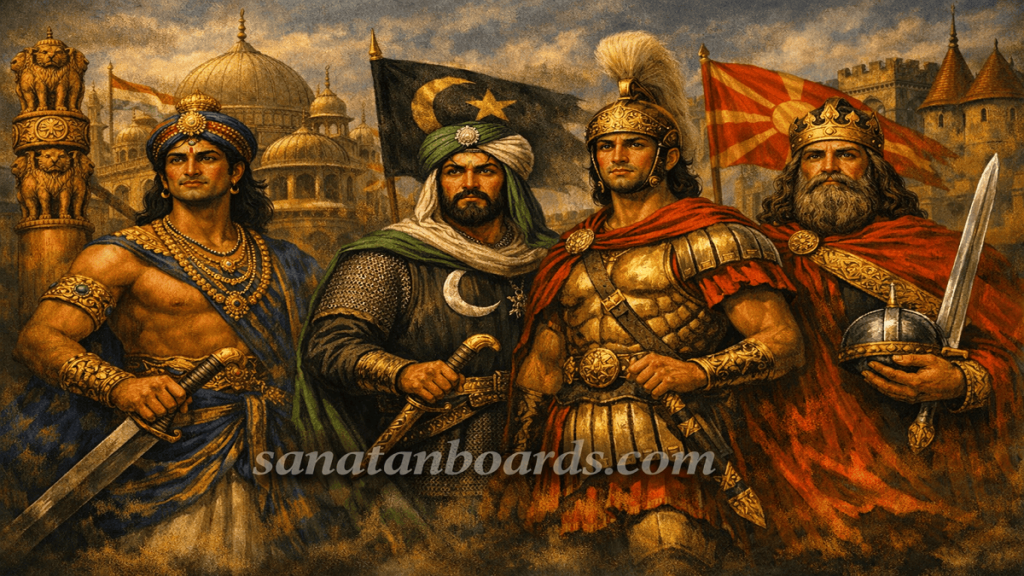
The study of MORE INFLUENTIAL KINGS OF INDIA & ABROAD provides invaluable insight into leadership, governance, and societal development. By examining individual rulers and their legacies, we can analyze the factors that contributed to their influence and the long-term consequences of their policies. This case study focuses on select kings from India and abroad to demonstrate the breadth and depth of their impact.
Case Study 1: Ashoka the Great (India)
Ashoka, the Mauryan emperor, ruled most of the Indian subcontinent in the 3rd century BCE. Initially known for his military conquests, particularly the Kalinga war, Ashoka later embraced Buddhism and propagated principles of non-violence, ethical governance, and social welfare. His edicts, inscribed on pillars and rocks, reflect policies promoting justice, compassion, and religious tolerance.
Ashoka’s reign demonstrates how a king’s influence can transcend military power. By focusing on moral governance and public welfare, he strengthened the cohesion of his empire and laid the groundwork for the spread of Buddhism across Asia. His strategies included appointing officials to monitor justice, encouraging trade, and investing in infrastructure, which enhanced economic prosperity and stability.
Case Study 2: Akbar the Great (India)
Akbar, the Mughal emperor, is celebrated for his administrative reforms, religious tolerance, and cultural patronage. He established a centralized governance system, introduced land revenue reforms, and encouraged dialogue between different religious communities. His court became a hub of art, literature, and intellectual exchange, blending Persian, Indian, and Islamic traditions.
Akbar’s influence demonstrates the importance of inclusive leadership. By valuing meritocracy, promoting cultural integration, and implementing systematic reforms, he strengthened the Mughal Empire and left a lasting legacy that influenced subsequent Indian rulers.
Case Study 3: Alexander the Great (Abroad)
Alexander the Great, the Macedonian king, expanded his empire across three continents through strategic military campaigns. Beyond conquest, he spread Hellenistic culture, encouraged the founding of cities, and facilitated cultural exchange between Greece, Egypt, Persia, and India.
Alexander’s influence highlights the power of vision and strategy. He integrated local customs into his administration, promoted education, and established trade networks that strengthened his empire’s economic foundation. His legacy persisted long after his death, influencing European and Middle Eastern civilizations for centuries.
Case Study 4: Charlemagne (Abroad)
Charlemagne, known as the Father of Europe, united much of Western Europe in the 8th and 9th centuries. He promoted education, standardized legal systems, and fostered religious reform. His reign laid the foundation for modern European states and the Holy Roman Empire.
Charlemagne’s case illustrates the impact of institutional innovation. By combining military prowess with governance reforms and education initiatives, he ensured long-term stability and cultural cohesion.
Comparative Analysis
Across India and abroad, these kings shared common traits: vision, strategic acumen, and adaptability. While Ashoka prioritized moral governance, Akbar focused on cultural and administrative integration, Alexander on military and cultural expansion, and Charlemagne on institutional consolidation. These differences highlight how context shapes leadership style but underscore that influence is measured by lasting societal impact.
Lessons Learned
Studying MORE INFLUENTIAL KINGS OF INDIA & ABROAD through case studies offers critical insights for modern leaders:
- Ethical governance strengthens legitimacy.
- Inclusive policies foster social cohesion.
- Strategic planning ensures long-term success.
- Cultural patronage leaves enduring legacies.
- Adaptability in the face of challenges determines effectiveness.
White Paper On More Influential Kings Of India & Abroad
Executive Summary
This white paper explores MORE INFLUENTIAL KINGS OF INDIA & ABROAD, analyzing their leadership strategies, governance systems, and socio-cultural impact. By examining historical examples, this paper highlights lessons for modern governance, organizational leadership, and global strategy.
Background
Throughout history, certain kings have distinguished themselves by their ability to reshape nations, influence culture, and leave enduring legacies. In India, rulers like Ashoka, Akbar, and Shivaji Maharaj transformed governance and societal structures. Abroad, figures such as Alexander the Great, Charlemagne, and Louis XIV reshaped empires and cultural landscapes.
Leadership Strategies
Influential kings exhibited a combination of strategic foresight, adaptability, and cultural sensitivity:
- Visionary Leadership – Setting long-term goals and inspiring subjects.
- Administrative Innovation – Streamlining governance and introducing reforms.
- Military Strategy – Combining tactics, logistics, and psychological warfare.
- Cultural Patronage – Supporting arts, literature, and religion to unify and strengthen empires.
- Diplomacy and Alliances – Negotiating treaties and alliances to stabilize regions.
Governance Systems
In India, centralized administration under the Mauryas and Mughals allowed efficient tax collection, law enforcement, and infrastructure development. Abroad, Alexander’s city-building initiatives and Charlemagne’s standardized legal codes promoted cohesion and stability.
Socio-Cultural Impact
Kings influenced education, religion, art, and architecture. Ashoka promoted Buddhism; Akbar fostered religious tolerance; Louis XIV created French cultural dominance. These contributions extended their influence beyond political control to cultural and societal spheres.
Modern Applications
The principles underlying these kings’ leadership remain relevant today:
- Corporate Leadership – Strategy, adaptability, and vision can guide organizations.
- Public Administration – Ethical governance, transparency, and inclusive policies strengthen public trust.
- Education and Research – Studying historical leaders enhances understanding of strategy, decision-making, and societal development.
Recommendations
- Incorporate historical leadership lessons into curricula.
- Encourage case-study-based learning in governance and management training.
- Promote cultural awareness and ethical decision-making among leaders.
Conclusion
The study of MORE INFLUENTIAL KINGS OF INDIA & ABROAD demonstrates #influentialkingsofindia that effective leadership combines vision, strategy, adaptability, and cultural engagement. These historical lessons are critical for guiding contemporary #influentialkingsofindia governance, organizational strategy, and societal development.
Industry Application On More Influential Kings Of India & Abroad
Introduction
Understanding MORE INFLUENTIAL KINGS OF INDIA & ABROAD has practical applications across industries, including education, corporate leadership, public administration, tourism, and cultural preservation. Lessons from these rulers can inform strategy, management, innovation, and cultural engagement.
Education and Research
History education benefits directly from analyzing influential kings. Curricula focused on their strategies, reforms, and societal impact help students develop critical thinking, research skills, and leadership awareness. Universities and research centers use case studies to explore governance, diplomacy, and economic policy lessons.
Corporate Leadership and Management
Leadership principles derived from these kings are applied in business and management:
- Vision and Strategy – Alexander’s expansive campaigns and Akbar’s reforms inspire long-term corporate planning.
- Resource Management – Ashoka’s administrative efficiency and Louis XIV’s centralization provide insights into optimal organizational design.
- Innovation and Adaptability – Shivaji Maharaj’s guerrilla tactics highlight flexible problem-solving and resilience in dynamic environments.
Public Administration and Governance
Modern governments and institutions draw lessons from historical rulers:
- Ethical governance models inspired by Ashoka.
- Inclusive policy-making reflecting Akbar’s religious tolerance.
- Standardized administrative practices inspired by Charlemagne.
Tourism and Cultural Industries
Historical tourism benefits from the legacies of influential kings. Palaces, forts, monuments, and cultural festivals associated with these rulers attract millions, driving local economies and cultural preservation initiatives.
Media, Literature, and Entertainment
Books, documentaries, films, and digital content often explore the lives and achievements of influential kings, providing educational and entertainment value. These narratives also foster cultural pride and global understanding.
Technology and Strategy
Military, political, and business strategists study historical campaigns and reforms to enhance decision-making frameworks. Simulation models, strategic planning exercises, and AI-driven analysis increasingly incorporate lessons from historical rulers’ strategies.
Conclusion
The study of MORE INFLUENTIAL KINGS OF INDIA & ABROAD is not only academically significant but also has real-world #sanatandharmaaccreditationboardsinindia applications in leadership, governance, corporate strategy, tourism, and cultural industries. By understanding the successes and failures of these rulers, modern professionals and institutions can #sanatandharmaaccreditationboardsinmumbai implement informed strategies, promote cultural heritage, and drive sustainable development.
source : MocomiKids
ASK FAQ
Who are the most influential kings of India and abroad?
Influential kings include Ashoka, Akbar, Shivaji Maharaj in India, and Alexander the Great, Charlemagne, and Louis XIV abroad, known for their leadership, reforms, and cultural impact.
What made these kings influential in history?
Their influence came from military strategy, governance, administrative reforms, cultural patronage, and lasting societal impact.
When did these influential kings rule?
They ruled at different times: Ashoka (3rd century BCE), Akbar (16th century CE), Alexander the Great (4th century BCE), Charlemagne (8th–9th century CE), Louis XIV (17th–18th century CE).
How did these kings impact their societies?
They shaped law, administration, culture, religion, and education, leaving legacies that influenced future generations.
Why study influential kings of India and abroad?
Studying them teaches leadership lessons, governance strategies, and insights into historical societal development.
Table of Contents
Disclaimer:
The content in this blog on MORE INFLUENTIAL KINGS OF INDIA & ABROAD is intended solely for educational, informational, and learning purposes. While every effort has been made to provide accurate and reliable historical information, interpretations of historical events and rulers may vary based on sources and perspectives. The blog does not offer professional, legal, or financial advice. Readers are encouraged to consult primary historical records, academic publications, or experts for in-depth research. The author and website disclaim any responsibility for decisions or actions taken based on the content provided in this blog.