
MITHILA KINGDOM – KING JANAKA was one of the most celebrated rulers in ancient Indian history. He ruled the kingdom of Mithila, which is believed to have existed in present-day northern Bihar and parts of Nepal. King Janaka is renowned not only for his political and administrative skills but also for his profound spiritual wisdom. He was a philosopher-king, often depicted in Hindu scriptures as an ideal ruler who combined worldly governance with deep knowledge of Dharma and philosophy.
King Janaka is especially famous for his association with the Upanishads, where he is portrayed as a seeker of truth and enlightenment. His court was a center of learning, attracting sages, scholars, and philosophers. He was also the father of Sita, who later married Lord Rama, making his kingdom central in the epic Ramayana.
Under his reign, Mithila flourished culturally, economically, and intellectually. The governance of King Janaka is considered a model for just and wise administration. His emphasis on education, ethical leadership, and spiritual growth has inspired generations, making MITHILA KINGDOM – KING JANAKA a symbol of an enlightened monarchy. Students and researchers studying ancient Indian history often examine his rule to understand the integration of spirituality and statecraft.
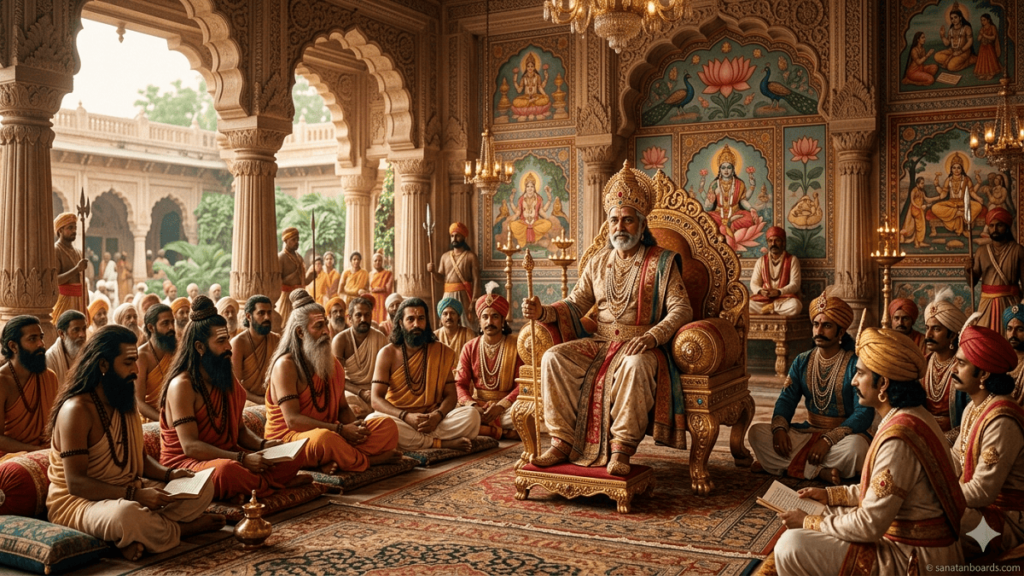
What Is Mithila Kingdom – King Janaka ?
MITHILA KINGDOM – KING JANAKA was an eminent ruler of ancient Mithila, located in present-day Bihar, India, and parts of southern Nepal. Known for his wisdom, King Janaka exemplified the ideal ruler by balancing political authority with spiritual insight. He is often remembered as a philosopher-king, whose governance extended beyond administration into the realms of ethics, philosophy and culture.
Historical and religious texts portray King Janaka as a proponent of Vedic knowledge and spiritual inquiry. He played a pivotal role in fostering intellectual growth within his kingdom, inviting scholars and sages to his court. The Upanishads frequently mention him as a seeker of truth, demonstrating that even kings can pursue self-realization while maintaining worldly responsibilities.
King Janaka’s reign also had profound cultural and social impact. He is recognized as the father of Sita, a central figure in the Ramayana, which links the Mithila Kingdom to one of India’s greatest epics. His kingdom became a hub of cultural exchange, trade, and education.
The administrative model of King Janaka reflected fairness, prosperity, and ethical governance. His focus on education, law, and social welfare ensured a stable and thriving society. Students of history and political science study his rule as an example of how leadership can harmonize worldly success with spiritual and intellectual growth.
MITHILA KINGDOM – KING JANAKA, therefore, is more than a historical kingdom; it is an emblem of enlightened monarchy, a place where governance, culture, and philosophy converged to create a legacy that continues to inspire scholars, leaders, and spiritual seekers worldwide.
Who Is Required Mithila Kingdom – King Janaka ?
MITHILA KINGDOM – KING JANAKA is required for a wide range of learners, researchers, and enthusiasts of history, philosophy, and cultural studies. Scholars of ancient Indian history seek to understand the political, social, and cultural frameworks of kingdoms like Mithila and the role of visionary leaders such as King Janaka. His reign offers insight into the governance systems of the time, ethical administration, and the integration of spiritual principles into leadership.
Students of philosophy and religious studies are particularly interested in King Janaka because of his association with the Upanishads. He exemplifies the concept of a “philosopher-king,” a ruler who does not only govern but also pursues spiritual knowledge. Those studying Vedanta or ancient Indian wisdom traditions often reference his dialogues with sages to illustrate ideal leadership and self-realization.
Educators also require this topic to develop curriculum content that teaches ethical leadership, cultural history, and the fusion of political and spiritual life. King Janaka’s life provides a model for moral governance and the importance of cultivating wisdom alongside authority.
Furthermore, cultural historians and anthropologists analyze Mithila’s artistic, social, and economic environment during his reign. King Janaka’s patronage of the arts, literature, and scholarship makes the topic essential for understanding how culture and governance mutually influence each other.
For enthusiasts of Indian epics, this topic is also critical because of King Janaka’s role as Sita’s father in the Ramayana. His kingdom forms a historical and mythological backdrop that enriches comprehension of Indian literary traditions.
In modern leadership studies, professionals and students refer to King Janaka as an archetype of enlightened leadership, making MITHILA KINGDOM – KING JANAKA relevant not only in historical terms but also for practical lessons in governance, ethics, and social welfare.
When Mithila Kingdom – King Janaka Is Required ?
MITHILA KINGDOM – KING JANAKA becomes particularly relevant when studying ancient Indian history, Vedic culture, and the integration of leadership with spiritual wisdom. Students and researchers require this knowledge when examining the political structures of early Indian kingdoms and the socio-cultural dynamics that shaped their governance.
King Janaka’s reign is a classic case of enlightened leadership, making it necessary to study during courses or research on political philosophy. Understanding his approach to ethical governance, law, and social welfare provides context for the development of just leadership practices in historical societies. When exploring how rulers balanced the material and spiritual needs of their people, MITHILA KINGDOM – KING JANAKA serves as a central reference.
The topic is also required when delving into religious and philosophical studies, especially the Upanishads. Janaka is often mentioned as an ideal ruler who practiced deep spiritual inquiry while managing a prosperous kingdom. Students exploring the history of Indian philosophy require his example to understand how kingship and enlightenment were not mutually exclusive.
When analyzing Indian epics like the Ramayana, this topic becomes necessary to understand the historical and mythological significance of Mithila. King Janaka’s connection to Sita and her marriage to Lord Rama provides insights into social customs, marital alliances, and dynastic politics of the period.
Cultural and art history students require this topic when studying the development of Mithila painting, architecture, literature, and scholarly traditions. King Janaka’s patronage of arts and education illustrates how enlightened rulers contributed to cultural flourishing.
Finally, modern leadership studies and ethics courses may introduce MITHILA KINGDOM – KING JANAKA to demonstrate timeless principles of governance, integrity, and wisdom. In contexts requiring examples of moral leadership, diplomacy, or administrative excellence, this topic becomes highly relevant.
Where Mithila Kingdom – King Janaka Is Required ?
MITHILA KINGDOM – KING JANAKA is required in multiple educational, research, and cultural settings. First and foremost, it is essential in academic institutions such as schools, colleges, and universities where courses in history, political science, philosophy, religious studies, and cultural studies are taught. Students need this topic to understand the socio-political and spiritual frameworks of ancient India.
Research institutions focusing on Vedic culture, Indian philosophy, or historical governance require this topic as a reference for scholarly work. King Janaka’s integration of spirituality and statecraft provides an archetype for studies on ethical leadership and the role of kings in society. His example is particularly valuable in comparative studies of monarchies, governance systems, and the influence of philosophical thought on political decisions.
The topic is also required in libraries, museums, and cultural centers dedicated to preserving Indian heritage. Exhibits on the Ramayana, ancient kingdoms, or Indian philosophy often feature Mithila and King Janaka to illustrate cultural, literary, and historical contexts.
Wherever discussions on leadership, governance, or moral philosophy occur—be it conferences, seminars, workshops, or online courses—MITHILA KINGDOM – KING JANAKA is a relevant case study. It is required in leadership development programs, especially when emphasizing ethical decision-making and enlightened administration.
Additionally, this topic is required in regions historically associated with Mithila—primarily northern Bihar in India and southern Nepal—where local history, folklore, and traditions keep the legacy of King Janaka alive. Here, understanding his role is crucial for cultural education and heritage preservation.
Finally, it is required in literary and religious studies spaces where the Ramayana and Upanishadic texts are analyzed. King Janaka’s life provides essential context for Sita’s story and for the philosophical discourses in which he participated.
How Mithila Kingdom – King Janaka Is Required ?
MITHILA KINGDOM – KING JANAKA is required as a study topic through multiple methods depending on the audience and purpose. Academically, it is required through structured courses in history, philosophy, and political science. Students examine primary sources like the Upanishads, Ramayana, and ancient texts to analyze his governance, ethical principles, and philosophical dialogues. This method allows learners to critically assess how King Janaka balanced spiritual and political responsibilities.
It is required in comparative research studies, where scholars analyze the governance models of different ancient civilizations. King Janaka’s administration offers a framework for studying enlightened leadership, ethical rulership, and socio-economic development. Researchers can apply historical, sociological, and philosophical lenses to understand his strategies and decisions.
In cultural and literary education, the topic is required through storytelling, dramatization, and literary analysis. King Janaka’s role in the Ramayana and his courtly life provide material for examining ancient Indian customs, marriage alliances, rituals, and scholarly traditions. This method helps learners connect textual knowledge with historical imagination.
The topic is also required in modern leadership studies through case study methods. Institutions teaching leadership, ethics, or management use King Janaka as an archetype of an enlightened ruler. By analyzing his policies, decision-making, and philosophical inclinations, learners understand how moral and intellectual wisdom can enhance governance.
It is required in heritage and cultural programs, where workshops, exhibitions, and seminars use multimedia resources, visuals, and local narratives to teach about Mithila and King Janaka. This approach preserves cultural memory while educating new generations.
Finally, it is required in digital and online learning platforms through articles, videos, podcasts, and virtual simulations. The accessibility of this topic online allows learners worldwide to explore ancient Indian philosophy, culture, and governance in a structured and interactive way.
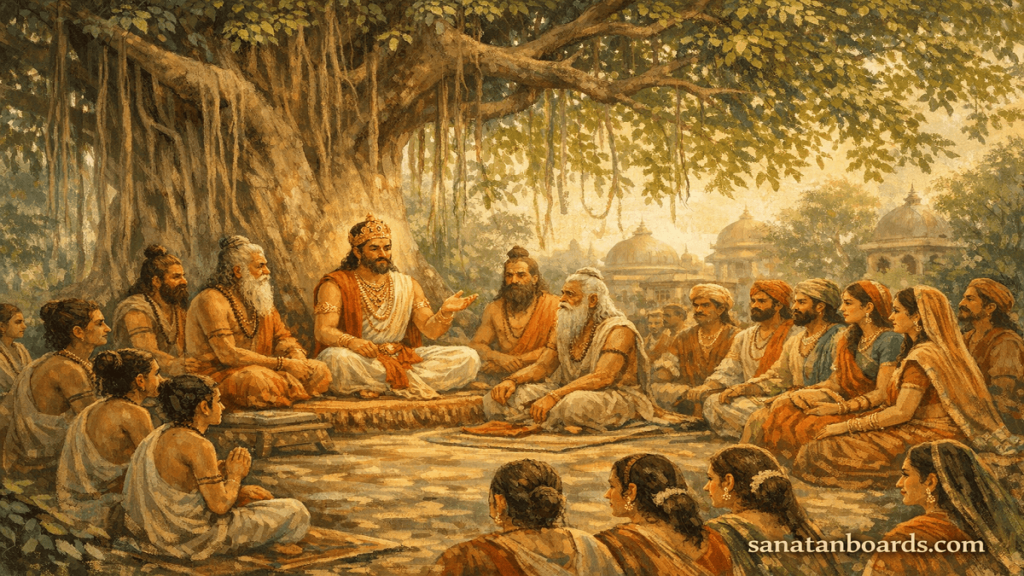
Case Study On Mithila Kingdom – King Janaka
Introduction
MITHILA KINGDOM – KING JANAKA is a historical and philosophical subject that offers profound insights into ancient Indian governance, culture, and spirituality. King Janaka, the ruler of Mithila, exemplifies a unique combination of political acumen, ethical governance, and deep philosophical inquiry. This case study explores his leadership, societal contributions, cultural influence, and relevance to modern studies in history, philosophy, and leadership.
Historical Background
The Mithila Kingdom was located in the northern region of India, covering present-day Bihar and parts of southern Nepal. The kingdom is known for its rich cultural and intellectual traditions. King Janaka ruled during a period marked by Vedic scholarship, philosophical exploration, and social development. He is frequently mentioned in ancient texts like the Upanishads, where he is portrayed not just as a ruler but as a seeker of truth. His life bridges the gap between temporal authority and spiritual wisdom, making him an ideal subject for historical and philosophical research.
Governance and Administration
King Janaka’s governance model is an archetype of ethical and enlightened leadership. He emphasized justice, fairness, and welfare of his subjects. The kingdom under his rule flourished economically and socially. He maintained a well-organized administrative system that supported trade, agriculture, and cultural development. Janaka’s court was a hub of intellectual exchange, inviting scholars, philosophers, and sages from across regions. Through his governance, he demonstrated how political authority could coexist with spiritual practice and intellectual inquiry.
Educational and Philosophical Contributions
A major contribution of King Janaka lies in his patronage of learning and philosophy. He appears in the Brihadaranyaka Upanishad, engaging in profound discussions with sages on topics like self-realization, ethics, and dharma. His example illustrates that even rulers can pursue higher knowledge without neglecting their administrative duties. Mithila under Janaka became a center of education, attracting scholars and fostering a culture of inquiry. His approach highlights the importance of education in governance and the role of ethical philosophy in leadership.
Cultural Influence
King Janaka’s reign had significant cultural implications. The kingdom of Mithila under him was known for its artistic expression, literature, and rituals. He is also renowned for being the father of Sita, a central figure in the Ramayana. His court reflected a blend of cultural sophistication and intellectual engagement. Festivals, scholarly gatherings, and religious discussions were commonplace, which strengthened social cohesion and cultural identity.
Lessons in Leadership
Janaka’s leadership provides timeless lessons. Modern leaders can learn from his example of combining ethical principles with pragmatic governance. His ability to maintain prosperity while encouraging philosophical discourse demonstrates that leadership requires both practical skills and moral grounding. The case study of MITHILA KINGDOM – KING JANAKA reinforces the notion that enlightened leadership is critical for societal well-being.
Relevance Today
Today, the study of King Janaka is relevant for students of history, philosophy, management, and leadership. His life teaches the integration of wisdom, ethics, and governance. Scholars analyzing ancient political systems, moral philosophy, and Indian epics can draw insights from Mithila’s administration and King Janaka’s practices. Additionally, his example inspires leadership models in contemporary governance, organizational management, and education.
Conclusion
The case study of MITHILA KINGDOM – KING JANAKA underscores the importance of understanding ancient governance and philosophy together. #kingjanakainnepal King Janaka’s reign remains a benchmark of ethical, intellectual, and cultural excellence. By studying his leadership, education, and contributions, modern learners gain a #kingjanakainindia comprehensive understanding of how ancient wisdom continues to influence contemporary thought.
White Paper On Mithila Kingdom – King Janaka
Executive Summary
This white paper explores MITHILA KINGDOM – KING JANAKA to understand its historical, cultural, and philosophical significance. King Janaka’s reign is a model of enlightened governance where ethical leadership, education, culture, and spirituality intersect. This document provides an analytical framework for studying Mithila’s administration, Janaka’s philosophical contributions, and their relevance for modern scholarship and leadership practices.
Introduction
King Janaka ruled the Mithila Kingdom, situated in northern India and southern Nepal. He is remembered not just as a monarch but as a philosopher and ethical leader. His life illustrates the integration of worldly governance with spiritual inquiry. The white paper examines his contributions to governance, education, philosophy, and culture, and their implications for contemporary studies.
Governance Structure
Mithila’s administration under King Janaka was highly organized. The king focused on justice, prosperity, and ethical governance. His court included ministers, advisors, and scholars, ensuring balanced decision-making. Janaka’s model demonstrates that effective governance relies on ethical decision-making, knowledge, and transparency. Policies on trade, taxation, and social welfare reflected a sophisticated understanding of statecraft, setting a benchmark for later monarchies.
Philosophical and Educational Impact
King Janaka’s philosophical legacy is prominent in the Upanishads, where he engages in dialogues about dharma, ethics, and self-realization. He embodies the concept of a “philosopher-king,” pursuing higher knowledge while fulfilling his duties. Mithila became a center of learning, promoting scholarship and intellectual discourse. His patronage of education highlights the role of leadership in fostering a knowledgeable and morally aware society.
Cultural Significance
The cultural impact of Janaka’s reign is notable. Mithila under him was renowned for arts, literature, and religious practices. King Janaka supported rituals, scholarly debates, and literary pursuits. The Ramayana references him as Sita’s father, connecting the kingdom to Indian epic literature. His reign reinforced cultural values, social cohesion, and intellectual development.
Leadership Insights
Janaka’s life provides lessons in moral and ethical leadership. He balanced authority with wisdom, promoted education, and encouraged cultural growth. Modern leadership frameworks can draw inspiration from his model, emphasizing ethics, intellect, and societal well-being. His example underscores the importance of integrating moral responsibility with administrative competence.
Applications for Modern Research and Education
Researchers and educators studying ancient Indian history, philosophy, or political science can benefit from examining King Janaka’s reign. Lessons from Mithila’s administration inform modern governance, organizational leadership, and educational policy. Philosophical discussions with Janaka serve as practical case studies in ethical decision-making and leadership development.
Conclusion
The white paper establishes MITHILA KINGDOM – KING JANAKA as a seminal subject in understanding ancient Indian governance, philosophy,#mithilakingdominnepal and culture. King Janaka’s life and reign provide a blueprint for ,#mithilakingdominindia integrating wisdom, ethics, and leadership, offering lessons that remain relevant for contemporary society and scholarship.
Industry Application On Mithila Kingdom – King Janaka
Introduction
MITHILA KINGDOM – KING JANAKA is not just a historical or philosophical topic; it offers insights applicable to modern industries, particularly in leadership, management, education, and cultural heritage. This analysis explores how the principles derived from King Janaka’s reign can inform contemporary professional, educational, and governance frameworks.
Leadership and Management
Modern corporate and public-sector leadership can learn from King Janaka’s model of ethical governance. His emphasis on fairness, justice, and welfare mirrors contemporary practices of corporate social responsibility and stakeholder management. Organizations can adopt Janaka-inspired leadership frameworks that balance profit, ethics, and employee well-being, ensuring sustainable growth.
Education and Knowledge Management
King Janaka’s patronage of education and philosophical discourse makes MITHILA KINGDOM – KING JANAKA relevant in educational industry applications. Educational institutions and e-learning platforms can use case studies from Mithila to teach ethical leadership, history, philosophy, and critical thinking. Knowledge management systems can incorporate these principles to foster intellectual growth within organizations.
Cultural and Heritage Industries
Tourism, museums, and cultural preservation sectors benefit from Mithila’s rich heritage. King Janaka’s reign is central to promoting cultural tourism in Bihar and Nepal. Heritage centers, exhibitions, and digital archives can use Mithila’s historical narratives and King Janaka’s story to educate and attract visitors.
Leadership Training Programs
Professional leadership programs can integrate Janaka’s governance principles as training modules. His ability to merge ethical values with administrative efficiency offers lessons in decision-making, conflict resolution, and ethical problem-solving. Case studies and simulations based on his reign can be developed for leadership workshops.
Media and Literature Industries
The literary and cultural relevance of King Janaka allows applications in media, storytelling, and content creation. Documentaries, films, and books on Mithila Kingdom can inspire audiences while educating them about governance, ethics, and philosophy. This can also support the creative industries in developing culturally authentic narratives.
Policy and Governance
Policy-making and public administration can benefit from studying Janaka’s reign. His ethical approach to governance, social welfare, and economic development provides models for contemporary government programs and administrative reforms.
Conclusion
MITHILA KINGDOM – KING JANAKA serves as a rich source of practical lessons across industries, from leadership and education to cultural heritage #sanatandharmaaccreditationboardsinmumbai and policy-making. Integrating the principles of King Janaka’s governance into modern practices enhances ethical, intellectual, and cultural #sanatandharmaaccreditationboardsindelhi development in various professional contexts.
source : Anichakra Vids
ASK FAQ
Who was King Janaka of Mithila?
King Janaka was the wise and enlightened ruler of the Mithila Kingdom, known for his ethical governance, spiritual wisdom, and as the father of Sita from the Ramayana.
Where was the Mithila Kingdom located?
Mithila Kingdom was situated in present-day northern Bihar, India, and parts of southern Nepal, known for its cultural and intellectual prominence.
Why is King Janaka famous in Indian history?
King Janaka is famous for combining political leadership with philosophical inquiry, his patronage of education, and his role in the Upanishads and Ramayana
How did King Janaka govern Mithila?
He ruled through ethical governance, justice, welfare policies, and promoting education and arts, making Mithila prosperous and culturally advanced.
What is the cultural significance of Mithila Kingdom?
Mithila Kingdom under King Janaka became a hub of art, literature, scholarship, rituals, and philosophical debates, shaping Indian heritage and epic literature.
Table of Contents
Disclaimer
The information provided on MITHILA KINGDOM – KING JANAKA is intended solely for educational and informational purposes. It is based on historical records, religious texts, and scholarly interpretations. This content does not constitute professional, legal, or religious advice. Readers should verify facts with primary sources and consult historians, scholars, or experts for academic research or authoritative guidance. The interpretations may vary according to different historical or cultural perspectives. Use this material for learning, teaching, or research purposes only, and not for making legal, financial, or religious decisions.