
The Koch Kingdom, spanning regions of present-day Assam and Bengal, was a significant medieval kingdom in northeast India. Its most notable ruler, Maharaja Naranarayan, reigned during the 16th century and played a pivotal role in shaping the political and cultural landscape of the region. He was the son of Biswa Singha, the founder of the Koch dynasty, and succeeded him to consolidate power and expand the kingdom.
Under Maharaja Naranarayan, the Koch Kingdom witnessed territorial expansion, administrative reforms, and promotion of art and culture. He strengthened the kingdom’s military and developed strategic alliances with neighboring states, ensuring stability in turbulent times. Additionally he encouraged trade and agricultural development, which enhanced the prosperity of his realm.
Maharaja Naranarayan also patronized education and religion, supporting scholars and religious institutions in Assam and Bengal. His reign is remembered for the harmonious coexistence of diverse communities and for laying the foundations of a strong, centralized administration.
Today, the history of the Koch Kingdom (Assam & Bengal) – Maharaja Naranarayan is studied for its contributions to regional politics, culture, and administration, making it a vital subject for students, historians, and anyone interested in the medieval history of northeast India.
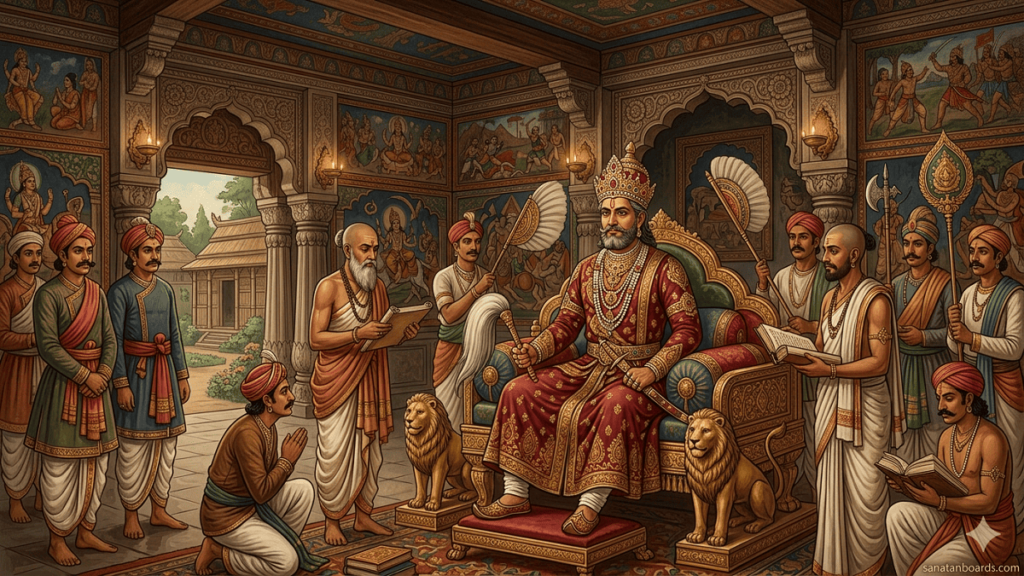
What Is Koch Kingdom (Assam & Bengal) – Maharaja Naranarayan ?
The Koch Kingdom (Assam & Bengal) – Maharaja Naranarayan refers to a historical monarchy established in the 16th century in the northeastern region of India. The kingdom was founded by Biswa Singha, but it was Maharaja Naranarayan who brought stability, expansion, and prosperity to the realm. His reign marked the golden era of the Koch dynasty, which extended across parts of present-day Assam and northern Bengal.
Maharaja Naranarayan implemented a strong administrative system with well-defined governance structures. He divided the kingdom into smaller units for efficient tax collection, law enforcement, and resource management. His diplomatic skills enabled him to maintain peaceful relations with neighboring kingdoms and tribal groups, reducing internal conflicts and promoting trade.
Culturally, Maharaja Naranarayan was a patron of arts, literature, and religion. He supported Brahmin scholars, promoted Vaishnavism, and encouraged temple construction, leaving behind an enduring cultural legacy. His reign saw the fusion of local traditions with influences from neighboring regions, enriching the social and religious fabric of Assam and Bengal.
The kingdom also played a crucial role in regional politics by resisting external invasions and maintaining sovereignty. Military reforms under Maharaja Naranarayan strengthened the Koch army, enabling it to protect its territories effectively.
Who Is Koch Kingdom (Assam & Bengal) – Maharaja Naranarayan Required ?
The Koch Kingdom (Assam & Bengal) – Maharaja Naranarayan is required in historical and educational studies primarily for understanding the political, cultural, and social evolution of medieval northeast India. Students, historians, researchers, and educators all benefit from exploring this kingdom and its ruler, Maharaja Naranarayan, to gain a holistic view of regional history.
Maharaja Naranarayan, the son of Biswa Singha, is a figure of importance because he consolidated the Koch dynasty, expanded territorial boundaries, and established an organized administrative system. His reign serves as a case study in governance, diplomacy, military strategy, and cultural patronage. Understanding his leadership provides insights into how smaller kingdoms resisted external pressures while maintaining internal stability.
In addition, the Koch Kingdom is required for studying socio-cultural integration. Maharaja Naranarayan encouraged religious tolerance, promoted Vaishnavism, and supported scholars and artisans. This makes his rule an example of how medieval Indian rulers contributed to cultural synthesis and regional identity formation.
From an educational perspective, knowledge about the Koch Kingdom is required to understand broader historical patterns, such as the rise and fall of dynasties, regional politics, and the influence of strategic leadership. It is also relevant for comparative studies with contemporary kingdoms like the Ahoms in Assam or the Mughals in Bengal.
Researchers focusing on regional trade, agriculture, and economy can find Maharaja Naranarayan’s reign significant because of the kingdom’s initiatives in improving agriculture, trade routes, and administrative efficiency. Thus, anyone studying the political, social, or cultural history of northeast India finds the Koch Kingdom (Assam & Bengal) – Maharaja Naranarayan essential for academic learning, historical research, and educational curricula.
When Koch Kingdom (Assam & Bengal) – Maharaja Naranarayan Is Required ?
The Koch Kingdom (Assam & Bengal) – Maharaja Naranarayan is required primarily when exploring the historical period of the 16th century, a time of significant regional political change in northeast India. This era is crucial for understanding how regional kingdoms navigated challenges from neighboring states, internal factions, and external invasions. Maharaja Naranarayan’s reign provides a clear timeline to study these dynamics.
It is required when examining the consolidation of power and governance. Maharaja Naranarayan strengthened the administrative framework of the Koch Kingdom by dividing the realm into manageable units, streamlining taxation, and creating an organized bureaucracy. Scholars and students refer to this kingdom when they need examples of efficient medieval administration.
The period is also required in the study of cultural and religious developments. Maharaja Naranarayan promoted Vaishnavism, supported religious scholars, and encouraged the building of temples and educational institutions. Understanding this timeline helps researchers see the evolution of regional culture and religion in Assam and Bengal.
Additionally, this kingdom is required in studies of military strategy and diplomacy. Maharaja Naranarayan expanded the kingdom’s territories while maintaining peaceful relations with neighbors, illustrating the delicate balance of warfare and alliances in medieval India.
Finally, the Koch Kingdom (Assam & Bengal) – Maharaja Naranarayan is required when discussing economic growth and trade. During his reign, agriculture and commerce were strengthened, contributing to the prosperity of the region. This historical example is referenced when studying how leadership can influence economic and social development.
Where Is Koch Kingdom (Assam & Bengal) – Maharaja Naranarayan Required ?
The Koch Kingdom (Assam & Bengal) – Maharaja Naranarayan is required in several geographical and academic contexts to study the medieval history of northeastern India. Geographically, the Koch Kingdom primarily covered parts of present-day Assam and northern Bengal, extending its influence across rivers, plains, and hilly terrains. Scholars studying the political geography of India find this kingdom essential to understand territorial control, boundary management, and strategic positioning in medieval times.
Academically, the kingdom is required in historical institutions and universities that focus on Indian history, culture, and political science. Textbooks and research materials covering the medieval period often highlight Maharaja Naranarayan’s contributions to governance, religion, and trade, making the study of this kingdom relevant in classrooms and research centers.
The kingdom is also required in cultural and archaeological studies. Temples, artifacts, and inscriptions from Maharaja Naranarayan’s reign provide primary sources for scholars to analyze religious practices, artistic styles, and cultural traditions of Assam and Bengal during the 16th century.
Moreover, this kingdom is required in regional studies programs focusing on northeast India. The study of the Koch Kingdom helps researchers understand local governance, inter-kingdom relations, and regional identity formation. Its geographical location made it a hub for trade and cultural exchange, further emphasizing its importance.
In museum exhibitions and heritage projects, the Koch Kingdom is required to showcase the evolution of Indian medieval kingdoms. Exhibits often include representations of Maharaja Naranarayan’s administration, military strategy, and cultural patronage to educate the public about the historical significance of this region.
Overall, the Koch Kingdom (Assam & Bengal) – Maharaja Naranarayan is required wherever there is a need to understand the history, culture, politics, and geography of 16th-century northeastern India, bridging academic study with cultural awareness and historical preservation.
How Koch Kingdom (Assam & Bengal) – Maharaja Naranarayan Is Required ?
The Koch Kingdom (Assam & Bengal) – Maharaja Naranarayan is required in a systematic and structured manner to study medieval northeast India. It is primarily required through historical research, classroom teaching, case studies, and cultural analysis. Scholars use primary sources, including inscriptions, manuscripts, and regional chronicles, to reconstruct the history of Maharaja Naranarayan’s reign.
It is required through academic study in history curricula. Students analyze administrative policies, military campaigns, and economic strategies employed by Maharaja Naranarayan to understand effective governance and leadership models in the 16th century. Comparative studies with neighboring kingdoms such as the Ahoms or Mughals are often conducted to highlight similarities and differences in governance and diplomacy.
The kingdom is required through archaeological and cultural exploration. Excavations of temples, forts, and artifacts from this period allow researchers to study the architecture, religious practices, and artistic contributions of the Koch dynasty. Maharaja Naranarayan’s patronage of Vaishnavism and support for scholars is documented through these artifacts, making the kingdom a rich source for cultural historians.
It is also required in economic and trade studies. Researchers examine land revenue systems, agricultural improvements, and trade networks during Maharaja Naranarayan’s reign to understand regional prosperity and resource management. This helps draw lessons on the role of leadership in economic development.
Furthermore, the kingdom is required in educational workshops, seminars, and publications. Historical conferences often feature discussions about the Koch Kingdom to highlight regional history, leadership strategies, and cultural contributions.
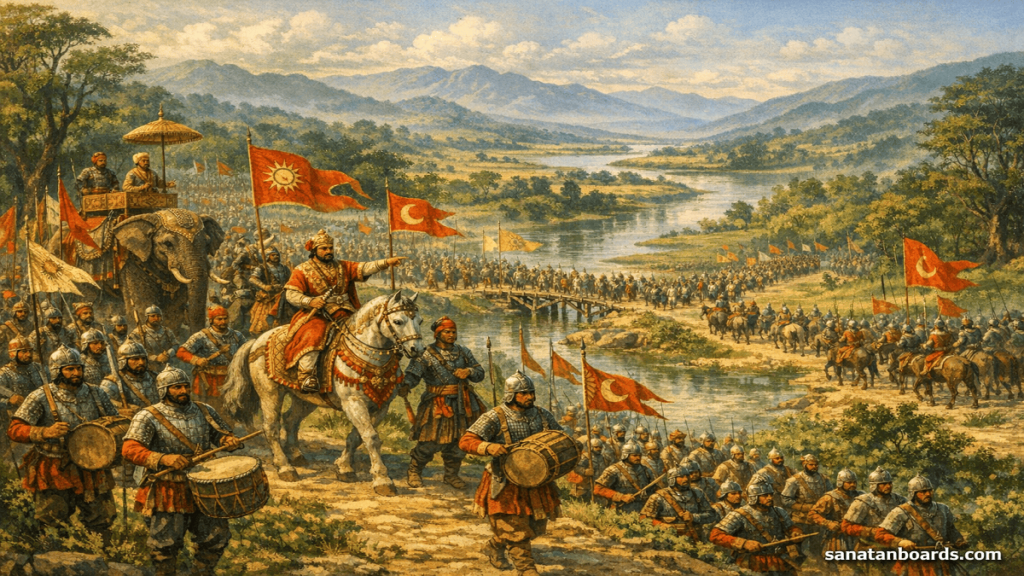
Case Study On Koch Kingdom (Assam & Bengal) – Maharaja Naranarayan
Introduction
The Koch Kingdom (Assam & Bengal) – Maharaja Naranarayan represents one of the most significant political and cultural entities in 16th-century northeast India. This case study explores the kingdom’s historical context, administrative framework, socio-economic developments, cultural contributions, and military strategies under Maharaja Naranarayan. Its study offers insights into governance, regional diplomacy, and the evolution of society in medieval India.
Historical Context
Founded by Biswa Singha, the Koch Kingdom was strategically located in the Brahmaputra valley, covering parts of present-day Assam and northern Bengal. Maharaja Naranarayan succeeded his father and expanded the kingdom’s boundaries. The region was marked by tribal communities, neighboring kingdoms like the Ahoms, and occasional invasions, which necessitated strong leadership and strategic governance.
Governance and Administration
Maharaja Naranarayan implemented a highly organized administrative system. The kingdom was divided into manageable units called Sarkars and Parganas, each overseen by appointed officials responsible for revenue collection, law enforcement, and public welfare. This decentralized yet structured approach ensured efficient governance across diverse terrains. The king emphasized meritocracy, appointing capable administrators to key positions, which strengthened the kingdom’s stability.
Military and Diplomacy
The Koch Kingdom’s military under Maharaja Naranarayan was well-trained and disciplined. Fortifications were established at strategic points, and alliances were forged with neighboring states to secure borders. Maharaja Naranarayan effectively balanced diplomacy and military action, avoiding prolonged conflicts while maintaining sovereignty. His campaigns ensured the protection of trade routes and cultivated loyalty among vassal territories.
Economic Development
Agriculture formed the backbone of the kingdom’s economy. Maharaja Naranarayan introduced land reforms, improved irrigation, and encouraged the cultivation of surplus crops. Trade with neighboring regions flourished, with local markets supplying goods such as textiles, grains, and handicrafts. The king’s policies strengthened economic resilience and enhanced the standard of living in the kingdom.
Cultural and Religious Contributions
Maharaja Naranarayan patronized the arts, literature, and religion. He supported Brahmin scholars and Vaishnavite saints, promoted temple construction, and encouraged cultural synthesis between local traditions and influences from neighboring Bengal. His reign is remembered for religious tolerance and fostering an environment conducive to learning, creativity, and community cohesion.
Education and Learning
The Koch Kingdom placed importance on knowledge dissemination. Schools and centers of learning were established to train scholars, administrators, and religious teachers. Maharaja Naranarayan’s emphasis on education helped preserve regional history and ensured the continuity of cultural and administrative knowledge.
Impact and Legacy
Maharaja Naranarayan’s rule left a lasting impact on Assam and Bengal. His model of governance, cultural patronage, and strategic diplomacy influenced subsequent rulers. Historians consider his reign a period of political stability, economic growth, and cultural flourishing.
Conclusion
The Koch Kingdom (Assam & Bengal) – Maharaja Naranarayan case study demonstrates the importance of strong leadership, administrative efficiency, and #maharajanaranarayaninassam cultural vision in medieval India. Maharaja Naranarayan’s legacy continues to inspire historical research and educational study, highlighting the kingdom’s #maharajanaranarayaninbengal significant role in regional history.
White Paper On Koch Kingdom (Assam & Bengal) – Maharaja Naranarayan
Executive Summary
The Koch Kingdom (Assam & Bengal) – Maharaja Naranarayan is an exemplary case of medieval governance, cultural advancement, and socio-economic development. This white paper examines the historical significance of the kingdom, the administrative and military strategies of Maharaja Naranarayan, and their implications for modern understanding of leadership and governance in historical contexts.
Introduction
Maharaja Naranarayan ascended the throne of the Koch Kingdom in the 16th century, following his father, Biswa Singha. His reign marked a turning point in the political consolidation of Assam and northern Bengal, as well as a period of prosperity and cultural enrichment. The white paper highlights how his policies shaped the region’s administration, economy, military, and society.
Political and Administrative Framework
The kingdom’s administration was highly structured. Maharaja Naranarayan implemented divisions such as Sarkars and Parganas for efficient governance. Officials were accountable for revenue collection, justice, and infrastructure development. The king also emphasized delegation of authority and systematic record-keeping, which ensured transparency and minimized corruption.
Military Organization and Diplomacy
Maharaja Naranarayan maintained a disciplined and well-equipped military to secure his territories. Forts were strategically located to protect against invasions, and cavalry units were trained for rapid response. The king also relied on diplomacy, forging alliances and maintaining peaceful relations with neighboring kingdoms, which prevented prolonged conflicts and fostered trade relations.
Economic Policies
Agriculture and trade were the primary economic drivers. Maharaja Naranarayan introduced reforms to improve irrigation, land management, and crop productivity. Markets and trade routes were developed, linking Assam with Bengal and neighboring regions. These policies enhanced economic resilience and created wealth, which further strengthened the kingdom’s political stability.
Cultural and Religious Influence
Maharaja Naranarayan promoted education, literature, and arts. Temples and educational institutions flourished, and the king patronized scholars and religious leaders, particularly in the Vaishnavite tradition. The era saw a fusion of local and external cultural influences, creating a rich and diverse heritage that continues to be studied today.
Strategic Implications
Understanding the Koch Kingdom provides lessons in leadership, regional diplomacy, and socio-economic planning. Maharaja Naranarayan’s model demonstrates how effective governance, combined with cultural patronage and military preparedness, can lead to sustainable development and societal cohesion.
Conclusion and Recommendations
The Koch Kingdom (Assam & Bengal) – Maharaja Naranarayan exemplifies effective medieval governance and cultural stewardship. Scholars and #kochkingdominassam students are encouraged to study this kingdom to gain insights into regional history, leadership strategies, and administrative innovations. Preservation of historical sites and #kochkingdominbengal continued academic research are recommended to maintain the legacy of this influential kingdom.
Industry Applpication On Koch Kingdom (Assam & Bengal) – Maharaja Naranarayan
Introduction
While the Koch Kingdom (Assam & Bengal) – Maharaja Naranarayan is primarily historical, its principles and legacy have applications in modern industries such as governance, cultural heritage, tourism, education, and management studies. Understanding this kingdom provides insights into leadership, administrative efficiency, and socio-cultural integration, which are relevant across sectors today.
Governance and Administration
The administrative practices of Maharaja Naranarayan can inform modern public administration and organizational management. His approach of dividing the kingdom into smaller administrative units for efficient governance mirrors modern principles of decentralized management, accountability, and performance monitoring. Public sector organizations can learn from his systematic tax collection, law enforcement, and resource management strategies.
Cultural Heritage and Tourism
Maharaja Naranarayan’s patronage of temples, art, and education offers opportunities for the tourism and heritage industry. Historical sites in Assam and Bengal associated with the Koch Kingdom can be promoted for cultural tourism. Museums, guided tours, and educational programs can leverage his legacy to attract visitors and preserve regional heritage.
Education and Research
Educational institutions and research organizations benefit from the study of the Koch Kingdom. Leadership courses, history programs, and cultural studies can incorporate lessons from Maharaja Naranarayan’s governance and patronage of learning. Case studies derived from his reign help develop critical thinking, strategic planning, and historical analysis skills.
Economic Development Models
The kingdom’s emphasis on agriculture, trade, and economic self-sufficiency provides valuable lessons for modern industries focused on regional development. Policy planners and NGOs can study historical trade networks and agricultural policies to design sustainable development programs in rural and semi-urban regions.
Leadership and Strategic Planning
Maharaja Naranarayan’s balance of diplomacy and military strategy provides insights into strategic leadership applicable in business and organizational contexts. Decision-making under resource constraints, alliance building, and conflict management are directly translatable to corporate and public sector strategy.
Technology and Innovation
While the kingdom existed centuries ago, the emphasis on record-keeping, resource management, and infrastructure can inspire modern technology applications. For instance, mapping historical trade routes and administrative units can inform digital heritage projects or regional planning tools.
Conclusion
The Koch Kingdom (Assam & Bengal) – Maharaja Naranarayan serves as a model for governance, cultural promotion, and socio-economic #sanatandharmaaccreditationboardsinmumbai planning that continues to have relevance in multiple industries today. #sanatandharmaaccreditationboardsinkoch By studying and applying these principles, modern sectors can enhance leadership, heritage management, education, and development strategies.
SOURCE : History with Koumudi
ASK FAQ
Who was Maharaja Naranarayan of the Koch Kingdom?
Maharaja Naranarayan was the 16th-century ruler of the Koch Kingdom in Assam and Bengal, known for administrative reforms, military strength, and cultural patronage.
What was the Koch Kingdom in Assam and Bengal?
The Koch Kingdom was a medieval state founded by Biswa Singha and expanded under Maharaja Naranarayan, covering parts of present-day Assam and northern Bengal.
When did Maharaja Naranarayan rule the Koch Kingdom?
Maharaja Naranarayan ruled during the 16th century, marking a period of political consolidation, economic growth, and cultural development.
What were the main achievements of the Koch Kingdom under Maharaja Naranarayan?
Key achievements include administrative reforms, territorial expansion, trade development, religious patronage, and promotion of arts and education.
Why is the Koch Kingdom (Assam & Bengal) historically important?
It is historically important for its governance model, cultural contributions, military strategies, and role in shaping medieval northeast India.
Table of Contents
Disclaimer
The information provided on Koch Kingdom (Assam & Bengal) – Maharaja Naranarayan is intended solely for educational, research, and knowledge purposes. While efforts have been made to ensure accuracy, historical interpretations may vary based on sources and ongoing research. This content does not constitute professional advice and should not be used as a definitive historical record. Readers are encouraged to consult academic publications, primary sources, and scholarly references for detailed study. The authors and publishers do not assume responsibility for any inaccuracies, misinterpretations, or consequences arising from the use of this material.