Medieval Indian Kingdoms & Kings refer to the period in Indian history between roughly the 8th and 18th centuries, marked by the rise and fall of numerous regional kingdoms and empires. During this time, powerful dynasties such as the Cholas, Rajputs, Mughals, Vijayanagara, and Marathas shaped the political, economic, and cultural landscape of India. Kings ruled with authority over their territories, establishing administrative systems, collecting revenue, and maintaining armies for defense and expansion.
This period witnessed remarkable developments in art, architecture, literature, and religion. Temples, forts, palaces, and cities constructed under medieval kings highlight their influence and vision. Trade and agriculture flourished, enabling prosperity and cultural exchange. Kings also forged alliances through marriages and treaties, affecting the regional balance of power.
Understanding medieval Indian kingdoms and kings is essential for learning about India’s historical evolution. It provides insight into governance, societal structures, military strategies, and cultural achievements. Students, educators, and history enthusiasts study this period to gain knowledge of India’s heritage, helping them connect past events with modern societal development.
What Is Medieval Indian Kingdoms & Kings ?
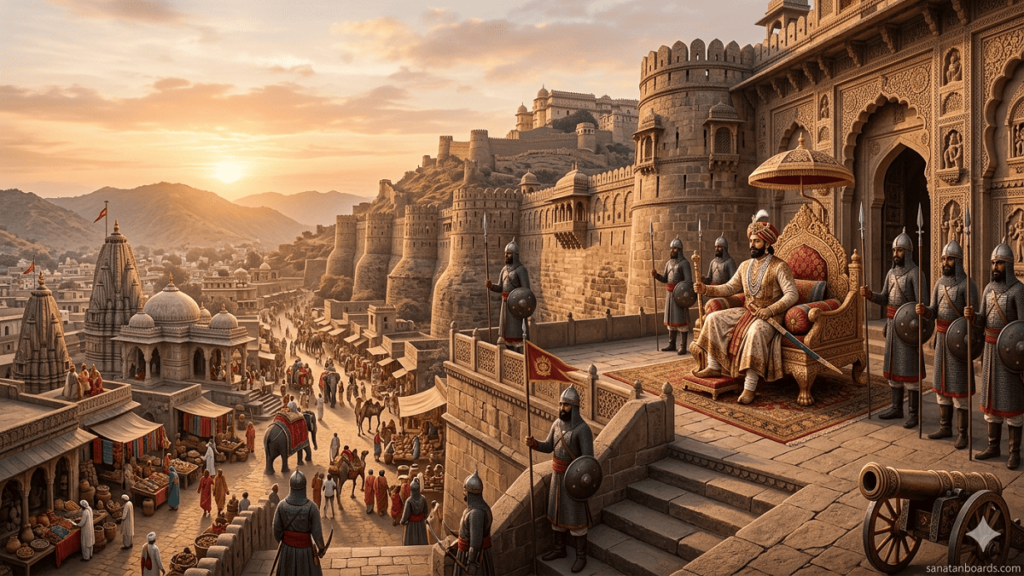
Medieval Indian Kingdoms & Kings represent the period in Indian history from the 8th century to the 18th century, bridging ancient and modern India. This era saw the emergence of regional powers, with dynasties controlling different parts of the subcontinent. Unlike earlier empires, medieval kingdoms were often smaller but highly organized politically and militarily.
Kings were central figures who ruled territories, enforced law and order, and guided economic and cultural activities. The Chola kings of South India are known for their maritime trade and temple architecture, while Rajput kings were celebrated for their valor and forts. The Delhi Sultanate and Mughal rulers introduced centralized administration and revenue systems, influencing later governance in India.
Medieval kings were also patrons of arts, literature, and religion. They commissioned monumental architecture, supported scholars, and promoted cultural festivals. Trade, agriculture, and urban development flourished under their rule. Kings often formed alliances and engaged in wars for territorial expansion, shaping the political landscape.
Studying medieval Indian kingdoms and kings is important for understanding India’s political, social, and cultural evolution. It provides insight into governance methods, military strategies, and the role of kings in promoting art, architecture, and religion. Knowledge of this period also helps connect historical events to India’s present-day regional diversity and societal structures.
Who Is Required Medieval Indian Kingdoms & Kings
Knowledge of Medieval Indian Kingdoms & Kings is required by students, historians, educators, researchers, content creators, and anyone interested in Indian history.
Students at school and university levels need this knowledge to understand the political, cultural, and economic evolution of India. Learning about the kings and kingdoms helps them connect historical developments with modern India.
Historians and researchers require this information to study governance, administration, and military strategies. It helps analyze the rise and fall of empires, regional conflicts, and cultural developments over time. Understanding how kings ruled and their contributions to art, literature, and architecture is crucial for historical interpretation.
Educators and teachers need this knowledge to design curriculum, lectures, and study materials that explain India’s medieval history clearly and engagingly.
Content creators, writers, and filmmakers also require this knowledge to ensure historical accuracy when producing books, documentaries, movies, or digital content based on medieval India. Accurate details about kings, kingdoms, and cultural practices make creative works authentic and educational.
Museum curators and cultural organizations benefit from understanding this period to develop exhibits, heritage programs, and guided tours that educate the public.
General history enthusiasts and travelers require this knowledge to appreciate historical sites like forts, palaces, and temples built by medieval kings. Knowing the stories behind these places enhances cultural experiences and learning.
Even policymakers and social scientists can benefit, as studying historical governance, alliances, and societal structures provides lessons relevant to administration and social planning today.
When Medieval Indian Kingdoms & Kings Is Required ?
Knowledge of Medieval Indian Kingdoms & Kings is required in multiple contexts and at different times depending on the purpose of learning, research, or application.
Academically, this knowledge is required when studying Indian history from the early medieval period to the late medieval period. Students learn about the emergence of regional powers, administration, military strategies, and cultural developments during this era. Understanding the timelines of dynasties such as the Cholas, Rajputs, Delhi Sultanate, Mughals, Vijayanagara, and Marathas is essential for history exams, assignments, and competitive examinations like UPSC, state civil services, or history-specific competitions. Knowledge of when each kingdom ruled and the key events under their kings provides clarity on India’s historical evolution.
Culturally, it is required when analyzing the development of art, architecture, literature, and religion. Temples, forts, palaces, and city structures built under medieval kings serve as examples of when cultural and architectural advancements took place. Learning about these periods helps students, historians, and enthusiasts connect historical timelines with the origin of cultural heritage that still exists today.
Professionally, this knowledge is required when creating content for educational purposes, museum curation, tourism, or media production. Writers, filmmakers, educators, and content creators need to know the exact periods of different kingdoms and the reigns of specific kings to ensure accurate storytelling, exhibitions, or educational programs.
In research, it is required when studying political and economic systems of medieval India. Researchers examine when certain administrative policies, military strategies, or trade systems were introduced. Understanding the chronology of kings and their policies allows for accurate analysis of cause-and-effect in historical developments.
Personally, this knowledge is required when visiting historical sites, exploring heritage tourism, or pursuing self-learning in Indian history. Knowing when kingdoms ruled and what contributions kings made during their reigns adds context and enriches the learning experience.
Where Medieval Indian Kingdoms & Kings Is Required ?
Knowledge of Medieval Indian Kingdoms & Kings is required in several locations, contexts, and platforms where learning, teaching, research, and cultural preservation occur.
In educational institutions, this knowledge is required in schools, colleges, and universities. History classrooms, lecture halls, and research centers are places where students study medieval India. Textbooks, academic journals, and online learning platforms require this information to teach students about kingdoms like the Cholas, Rajputs, Vijayanagara, Marathas, Delhi Sultanate, and Mughals, along with the contributions of their kings.
In libraries and archives, knowledge of medieval Indian kingdoms and kings is required for accessing manuscripts, historical documents, inscriptions, and records. These repositories hold crucial information about the reigns, policies, culture, and military campaigns of medieval rulers. Scholars and historians visit these locations to gain accurate data for research and publications.
In museums and heritage sites, it is required where historical artifacts, coins, sculptures, forts, and palaces are displayed. Curators and guides rely on detailed knowledge of medieval kings and kingdoms to educate visitors and provide historical context to cultural relics and monuments.
In media and creative industries, it is required in film studios, documentary production houses, and publishing houses. Writers, filmmakers, and content creators use this knowledge to create historically accurate stories, movies, digital content, and books about medieval Indian rulers.
In tourism locations, knowledge is required at historical forts, palaces, and temples constructed during medieval times. Tour guides and travel educators use this information to explain the significance of sites and the achievements of kings to tourists, researchers, and enthusiasts.
Online platforms and digital resources also require this knowledge. Websites, e-learning courses, history blogs, and educational apps rely on accurate information about medieval kingdoms and kings to reach a wider audience interested in India’s heritage.
How Medieval Indian Kingdoms & Kings Is Required ?
Knowledge of Medieval Indian Kingdoms & Kings is required through various methods and approaches that allow individuals to study, understand, and apply historical insights effectively.
In academic learning, it is required through classroom teaching, textbooks, research papers, and assignments. Students learn about kings, dynasties, and kingdoms by analyzing historical events, timelines, and cultural developments. Teachers use lectures, presentations, and interactive methods to explain administration, military strategies, and societal structures under different medieval rulers. This method ensures structured and systematic learning.
Through research and scholarship, it is required by historians and researchers who study manuscripts, inscriptions, coins, and records from medieval India. By critically analyzing these sources, they understand governance systems, trade, alliances, wars, and cultural achievements. Knowledge is required in the form of historical evidence, chronological studies, and comparative analysis to interpret patterns and influences of different kings.
In cultural preservation, it is required through museums, heritage conservation, and guided tours. Curators, historians, and archaeologists use knowledge of medieval kingdoms and kings to preserve artifacts, fortifications, temples, and monuments. This knowledge ensures accurate historical interpretation, documentation, and education for visitors and future generations.
In creative and media applications, it is required when writing historical books, creating documentaries, films, and digital content. Writers and filmmakers study the lives of kings, their administration, battles, and cultural contributions to depict them accurately. Knowledge is applied in scripting, design, and visual storytelling to maintain historical authenticity.
In tourism and public education, it is required through guided tours, exhibitions, and educational programs. Tour guides, educators, and cultural organizations use knowledge of medieval Indian kingdoms and kings to explain the significance of historical sites, temples, forts, and palaces. Visitors gain context and understanding through storytelling and interactive demonstrations.
In digital and online platforms, it is required through blogs, e-learning courses, podcasts, and history websites. Knowledge is presented using multimedia, timelines, videos, and infographics to make medieval history accessible to a wide audience.
Case Study On Medieval Indian Kingdoms & Kings
Introduction
The Medieval Indian Kingdoms & Kings period, spanning roughly from the 8th century to the 18th century, was a transformative era in India’s history. It bridged ancient and modern India and saw the rise of regional kingdoms, empires, and powerful rulers who shaped politics, society, culture, and economy. This case study examines key kingdoms, their administrative systems, military strategies, cultural contributions, and the lasting impact of medieval kings on Indian history.
The Chola Kingdom
The Chola dynasty (circa 9th–13th century CE) in South India serves as a prime example of administrative efficiency and cultural development. Chola kings, such as Rajaraja Chola I and Rajendra Chola I, established a highly organized administration with a focus on agriculture, trade, and taxation. The Cholas developed an extensive network of roads and ports, enabling maritime trade across Southeast Asia. They also commissioned grand temples, including the Brihadeeswarar Temple in Thanjavur, reflecting the importance of art and religion.
The military strength of the Cholas, including a powerful navy, allowed them to expand influence beyond the subcontinent, establishing trade relations and cultural exchange. Kings acted as patrons of literature, music, and Tamil inscriptions, ensuring the preservation of cultural identity.
The Rajputs
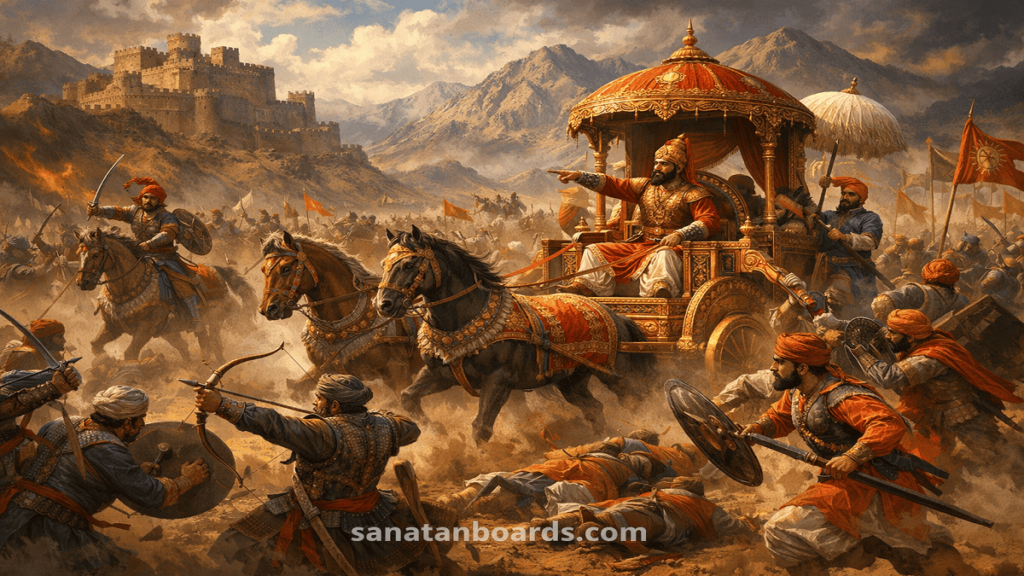
In North and Western India, Rajput kingdoms flourished from the 8th to the 16th centuries. Rajput kings were known for their valor, honor, and loyalty to their territories. Prominent kingdoms included Mewar, Marwar, and Jaipur. The Rajputs built forts, palaces, and temples that showcased military and architectural prowess. Kings such as Rana Pratap Singh of Mewar resisted invasions from the Mughal Empire, exemplifying courage and commitment to sovereignty.
Rajput administration relied on clan-based systems, with local chieftains assisting kings in governance. Social and cultural life was closely tied to religion, festivals, and patronage of art. The Rajputs maintained alliances through marriages and diplomacy, balancing power within the region.
The Delhi Sultanate
The Delhi Sultanate (1206–1526) marked the introduction of centralized governance and Persian-influenced culture in North India. Kings like Alauddin Khilji and Muhammad bin Tughlaq implemented revenue systems, military expansion, and administrative reforms. The Sultanate promoted trade, urbanization, and architectural innovation, including mosques and fortifications.
The Sultans’ policies influenced regional kingdoms and laid the foundation for the Mughal Empire. They combined military strategy with governance, ensuring stability over vast territories while dealing with rebellions and external invasions.
The Mughal Empire
The Mughal Empire (1526–1707) represents the zenith of medieval Indian political and cultural development. Emperors such as Akbar, Jahangir, and Shah Jahan expanded territories through military campaigns, alliances, and diplomacy. Akbar’s administration emphasized centralized governance, revenue collection through the zabt system, and a policy of religious tolerance known as Sulh-i-Kul.
Cultural achievements under the Mughals included monumental architecture like the Taj Mahal, Red Fort and Fatehpur Sikri, as well as advancements in painting, literature, and music. The Mughals integrated diverse communities, fostering economic growth and cultural synthesis.
Vijayanagara Kingdom
The Vijayanagara Empire (1336–1646) in South India focused on trade, agriculture, and temple architecture. Kings like Krishnadevaraya promoted Telugu literature, commissioned temples such as the Vittala Temple in Hampi, and defended the kingdom from northern invasions. Vijayanagara’s administration combined central authority with local governance, ensuring prosperity and stability.
Analysis of Kings’ Roles
Across all medieval kingdoms, kings acted as administrators, military leaders, and cultural patrons. They established revenue systems, maintained armies, and promoted art, literature, and religion. Alliances through marriage, diplomacy, or conquest influenced political stability. Kings also played a crucial role in social welfare by commissioning temples, supporting education, and fostering trade.
Lessons from Medieval Indian Kingdoms
- Governance and Administration: Medieval kings developed systems of taxation, law enforcement, and local governance that influenced later rulers.
- Cultural Patronage: Architecture, literature, and art flourished under kings, leaving a rich legacy for future generations.
- Military Strategy: Kings maintained defense through forts, armies, and naval forces, emphasizing strategy and alliances.
- Economic Development: Trade, agriculture, and urbanization under medieval kings contributed to regional prosperity.
- Religious and Social Influence: Kings balanced power with religious tolerance, social structure, and public welfare, shaping societal norms.
Conclusion
The study of Medieval Indian Kingdoms & Kings reveals a dynamic period marked by political complexity, cultural richness, and economic innovation. From the Cholas to the Mughals, kings played central roles in shaping India’s historical trajectory. Understanding their administration, military strategies, alliances, and patronage provides critical insights into India’s medieval society.
The legacy of medieval Indian kings continues to influence India’s architecture, literature, governance, and cultural identity. Learning about this era is essential for students, historians, educators, and anyone interested in the evolution of Indian civilization. It demonstrates how leadership, vision, and cultural investment by kings helped shape a diverse and prosperous India.
White Paper On Medieval Indian Kingdoms & Kings
Executive Summary
The period of Medieval Indian Kingdoms & Kings, spanning roughly from the 8th to the 18th century, represents a critical phase in India’s historical, political, and cultural evolution. This white paper examines the administrative, military, economic, and cultural dimensions of medieval kingdoms and their rulers. By analyzing the strategies and contributions of prominent kings, this document aims to provide insights for students, educators, researchers, and cultural practitioners seeking a comprehensive understanding of medieval Indian history.
Introduction
Medieval India was marked by the rise of regional kingdoms, each with distinct political and cultural identities. Dynasties such as the Cholas, Rajputs, Delhi Sultanate, Mughals, Vijayanagara, and Marathas played vital roles in shaping India’s societal structure, governance systems, and cultural heritage. Kings during this era were central figures who governed territories, maintained armies, promoted trade, and supported arts and religion. Their leadership influenced not only their immediate regions but also the larger subcontinent.
Key Objectives
The primary objectives of this white paper are:
- To provide a structured overview of major medieval Indian kingdoms and their rulers.
- To examine administrative, economic, and military strategies employed by kings.
- To analyze the cultural and social impact of medieval rulers.
- To provide insights for academic research, education, and cultural preservation.
Administrative and Governance Systems
Medieval Indian kings established sophisticated governance systems suited to their kingdoms’ scale and resources.
- Chola Administration: Highly organized, featuring village councils (ur and sabha), revenue collection systems, and maritime trade administration.
- Delhi Sultanate: Centralized governance with appointed governors, military generals, and revenue officers overseeing regional territories.
- Mughal Empire: Akbar implemented the mansabdari system, combining military service and administrative responsibility. Revenue systems like the zabt ensured efficient taxation.
These systems allowed kings to maintain political stability, manage resources, and respond to internal and external threats effectively.
Military Strategies and Defense
Military strength was central to the survival and expansion of kingdoms. Kings maintained armies equipped with infantry, cavalry, and in some cases, navies. Fortifications, such as Chittorgarh Fort (Rajputs) and Golconda Fort (Deccan), served both defensive and administrative purposes. Alliances, both diplomatic and marital, were used to strengthen political positions. Kings like Rajaraja Chola I expanded influence through naval expeditions, while Mughal emperors consolidated power with strategic warfare and intelligence.
Economic and Trade Practices
Medieval Indian kingdoms prioritized agriculture, trade, and urbanization to sustain prosperity. Cholas developed maritime trade networks with Southeast Asia. Vijayanagara focused on agricultural production and internal trade, while the Mughals implemented standardized taxation to support infrastructure and military campaigns. Markets, ports, and towns flourished, providing employment, fostering artisanal industries, and facilitating cultural exchange.
Cultural and Social Contributions
Kings were key patrons of arts, literature, and religion. Temples, forts, and palaces built during the medieval period reflected architectural innovation. Literary works in Tamil, Sanskrit, Persian, and regional languages were supported by royal courts. Religious tolerance, particularly under rulers like Akbar, helped integrate diverse communities. Festivals, rituals, and educational institutions thrived, shaping societal norms and cultural identity.
Lessons and Implications
- Leadership and Vision: Medieval kings demonstrated strategic thinking in governance, military, and cultural patronage.
- Administrative Innovation: Systems like village councils, mansabdari, and revenue administration influenced future governance structures.
- Cultural Integration: Patronage of diverse arts and religions fostered long-term cultural synthesis.
- Economic Sustainability: Trade networks and agricultural management ensured prosperity and political stability.
Recommendations
- Educational Institutions: Incorporate detailed study of medieval kingdoms and kings into history curricula.
- Museums and Heritage Sites: Provide contextual information about kings’ contributions to architecture and culture.
- Digital Platforms: Develop multimedia resources to make medieval history accessible and engaging.
- Research and Publications: Encourage interdisciplinary studies combining history, archaeology, and sociology.
Conclusion
The study of Medieval Indian Kingdoms & Kings is essential for understanding India’s political, social, and cultural heritage. Kings shaped the subcontinent through #medievalindiankingdom%kingdominindia governance, military strategy, economic management, and cultural patronage. Their legacies remain visible in India’s architecture, literature, societal norms, and historical consciousness. This white paper underscores the importance of studying #medievalkingdom&kings this period for students, educators, researchers, and cultural practitioners, providing structured insights into the governance, achievements, and enduring influence of medieval Indian rulers.
Industry Application On Medieval Indian Kingdoms & Kings
Introduction
The study of Medieval Indian Kingdoms & Kings extends beyond academic and cultural contexts into various modern industry applications. Understanding the governance, military strategies, cultural contributions, and economic systems of medieval India offers valuable insights for sectors such as education, tourism, media, heritage conservation, and digital technology. This paper explores how knowledge of medieval kingdoms and kings is applied across industries and contributes to business, education, and cultural enrichment.
Educational Industry
In the educational sector, knowledge of medieval Indian kingdoms and kings is widely applied to design curriculum, textbooks, and online learning modules. Schools, colleges, and universities incorporate case studies of dynasties such as the Cholas, Rajputs, Mughals, and Vijayanagara to teach political history, cultural studies, and economics. Educational software and e-learning platforms also utilize multimedia resources, interactive timelines, and virtual simulations of historical events to enhance learning.
Teachers and content developers use insights from medieval administration, trade practices, and cultural patronage to create lesson plans that foster critical thinking and historical analysis. Competitive exam coaching centers for civil services and history-oriented programs apply this knowledge to help students prepare for exams by understanding governance models, policies, and military strategies of kings.
Tourism and Hospitality Industry
Tourism is one of the primary industries benefiting from the study of medieval Indian kingdoms and kings. Historical forts, palaces, temples, and cities built during the medieval period attract millions of tourists annually. Knowledge of the historical context, architectural significance, and the achievements of kings enables tour guides, heritage educators, and travel agencies to provide authentic and engaging experiences.
Hotels, cultural resorts, and heritage stays near medieval sites leverage this knowledge to create themed experiences that reflect royal history. Events such as historical reenactments, cultural festivals, and heritage walks are designed based on the lifestyles, administration, and achievements of medieval kings, enriching visitor engagement and boosting local economies.
Media, Entertainment, and Film Industry
The media and entertainment industry heavily relies on knowledge of medieval Indian kingdoms and kings. Historical novels, films, documentaries, television series, and digital content are produced to depict the lives of rulers, battles, alliances, and cultural contributions. Accurate historical information ensures authenticity and enhances audience engagement.
Examples include films and documentaries depicting Rajput valor, Mughal architecture, and Chola maritime expeditions. Creative agencies use insights from medieval history to design visual effects, costumes, and sets, providing immersive experiences for audiences. Gaming industries also use historical kingdoms as inspiration for strategy and role-playing games.
Heritage Conservation and Archaeology Industry
Knowledge of medieval Indian kingdoms and kings is crucial for heritage conservation and archaeology. Museums, archaeological sites, and government heritage departments rely on historical research to preserve monuments, artifacts, inscriptions, and manuscripts. Kings’ contributions in architecture, temple construction, and urban planning are analyzed to guide restoration and conservation efforts.
Training programs for archaeologists and conservationists use case studies of medieval governance and cultural patronage to develop strategies for site management and documentation. Public-private partnerships in heritage tourism also rely on this knowledge to maintain sustainable preservation while promoting cultural awareness.
Digital Technology and Knowledge Management
The digital industry applies knowledge of medieval Indian kingdoms and kings to develop e-learning apps, history portals, virtual tours, and online archives. Interactive maps of medieval empires, 3D reconstructions of forts and palaces, and digital storytelling platforms help users engage with history in an immersive way. Artificial intelligence and augmented reality technologies are being integrated into educational and tourism platforms to visualize medieval kings’ reigns, battles, and architectural achievements.
Knowledge management systems in academic and cultural organizations ensure that historical data, research findings, and multimedia resources related to medieval kingdoms and kings are accessible, organized, and preserved for long-term use.
Conclusion
The study of Medieval Indian Kingdoms & Kings has wide-ranging industry applications. Education, tourism, media, heritage conservation, archaeology, and digital technology industries benefit from insights into governance, culture, economy, #sanatandharmaaccreditationboardsinmumbai and military strategies of medieval rulers. By applying historical knowledge to modern industries, organizations enhance learning, cultural preservation, entertainment, and technological innovation.
Understanding medieval Indian kingdoms and kings not only preserves India’s rich heritage but also creates economic, educational, and technological opportunities. #sanatandharmaaccreditationboardsinsouthindia This demonstrates the enduring relevance of medieval history in contemporary industry and societal development.
SOURCE : Odd Compass
ASK FAQ
What are Medieval Indian Kingdoms?
Medieval Indian Kingdoms were regional empires from the 8th to 18th centuries, including Cholas, Rajputs, Vijayanagara, and Mughals, known for their administration, culture, and military strategies.
Who were the famous Medieval Indian Kings?
Prominent kings include Rajaraja Chola I, Rana Pratap Singh, Akbar, Krishnadevaraya, and Shah Jahan, celebrated for governance, architecture, and cultural contributions.
Why are Medieval Indian Kingdoms important?
They shaped India’s political systems, economy, culture, and architecture, leaving a lasting legacy in governance, art, and societal structures.
When did Medieval Indian Kingdoms exist?
Approximately between the 8th century and the 18th century, bridging ancient and modern Indian history.
Where can we study Medieval Indian Kingdoms & Kings?
Knowledge is available in schools, universities, museums, heritage sites, history books, and online educational platforms.
Table of Contents
Disclaimer
The content provided on Medieval Indian Kingdoms & Kings is for educational and informational purposes only. It is intended to enhance knowledge and understanding of India’s medieval history, culture, and rulers. While every effort has been made to ensure accuracy, historical interpretations may vary, and some details are subject to scholarly debate. This content does not replace professional historical research or consultation with academic sources. Users are encouraged to cross-reference information with reliable textbooks, academic journals, and verified historical records. The publisher or author is not responsible for any inaccuracies or misinterpretations resulting from the use of this material.