
The Vakataka Dynasty was one of the prominent dynasties in ancient India, flourishing between the 3rd and 5th centuries CE. Among its notable rulers, King Pravarasena I stands out for consolidating power and expanding the dynasty’s influence over central and northern India. He played a pivotal role in strengthening the administration, supporting cultural and religious developments, and fostering trade networks that connected various regions.
King Pravarasena I is particularly remembered for his contributions to the promotion of Buddhism and Hinduism, encouraging the construction of temples and monasteries. His reign marked a period of political stability and economic prosperity. Under his leadership, the Vakatakas established strong diplomatic ties with neighboring kingdoms, including the Guptas, which later became a model of alliance politics in ancient India.
The Vakataka period under Pravarasena I is also significant for the development of art, architecture and inscriptions, many of which have been discovered in central India and Maharashtra. These inscriptions provide crucial insights into the political, social, and cultural life of the time. For students and researchers, understanding King Pravarasena I’s reign is essential to grasp the dynamics of ancient Indian polity, religion, and art. His contributions continue to be a vital part of Indian historical studies today.
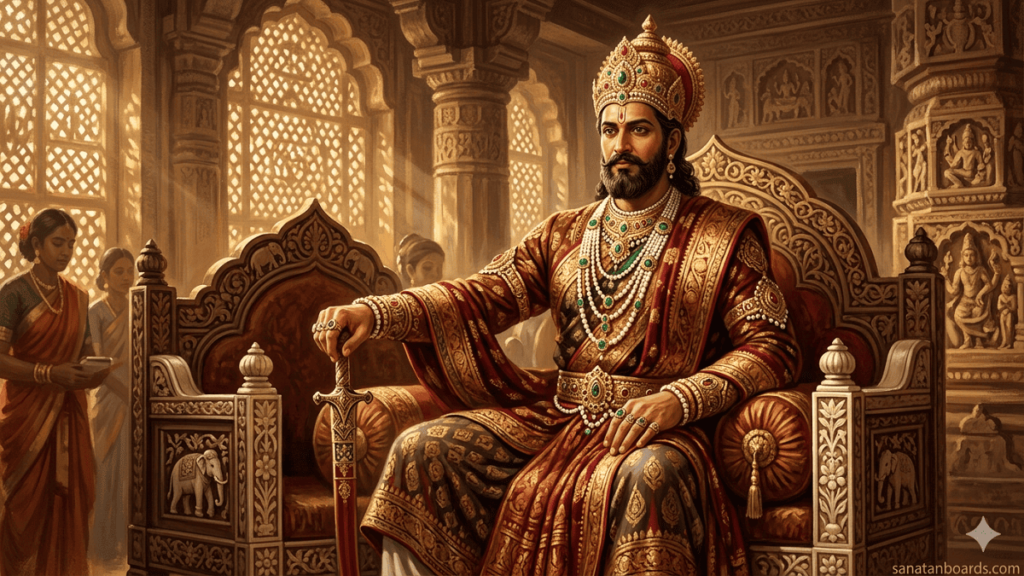
What Is Vakataka Dynasty – King Pravarasena I ?
The Vakataka Dynasty was a powerful Indian dynasty that ruled large parts of central and southern India during the 3rd to 5th centuries CE. Among its rulers, King Pravarasena I is one of the most celebrated leaders, known for his political acumen, military successes, and contributions to culture and religion. He belonged to the Vakataka branch of the Vatsagulma lineage and played a crucial role in consolidating the dynasty’s territories.
King Pravarasena I is recognized for strengthening the administrative structure of the Vakataka state. He established an efficient system of governance, which allowed the dynasty to maintain stability over a vast region. His reign was also marked by active promotion of religion and culture. Historical evidence suggests that he encouraged Hindu and Buddhist practices, supporting the construction of temples, monasteries, and educational institutions, which became centers of learning and spiritual activity.
In addition, Pravarasena I fostered alliances with other contemporary powers, including early Gupta rulers, ensuring political stability and mutual prosperity. He also focused on infrastructure and trade, which enhanced economic growth and connected distant regions. Archaeological findings, including inscriptions and coins, reflect the artistic and cultural sophistication achieved during his reign. These artifacts offer valuable insights into the social, political, and religious life under Pravarasena I.
Understanding King Pravarasena I and the Vakataka Dynasty is important for students of history because it reveals how regional kingdoms in ancient India managed governance, diplomacy, and cultural patronage. His reign represents a period of economic prosperity, cultural development, and political strength, making the Vakatakas a significant part of India’s historical heritage.
Who Is Required Vakataka Dynasty – King Pravarasena I ?
The study of VAKATAKA DYNASTY – KING PRAVARASENA I is essential for anyone interested in ancient Indian history, political science, culture, art, and religious studies. King Pravarasena I was a central figure in the Vakataka Dynasty, which played a pivotal role in shaping the socio-political and cultural landscape of central and southern India between the 3rd and 5th centuries CE.
Students and scholars of Indian history require knowledge about Pravarasena I to understand the dynamics of early Indian kingdoms. His reign demonstrates how regional powers exercised authority, maintained law and order, and managed relations with neighboring dynasties such as the Guptas. Historians studying ancient administrative systems also find his governance strategies significant, as they reflect early models of bureaucracy, taxation, and territorial management.
Archaeologists and art historians are particularly interested in Pravarasena I because his rule marked a flourishing of art, architecture, and inscriptions. Many temples, stupas, and inscriptions attributed to his period provide crucial information about ancient Indian society, religion, and language. These resources are valuable for reconstructing the historical context of the time and understanding the evolution of Indian culture.
Religious scholars also require this knowledge because King Pravarasena I actively supported both Hinduism and Buddhism, helping these traditions to grow and integrate into daily life. Temples and monasteries established during his reign became centers of learning and spiritual practice, influencing future generations.
Additionally, researchers in economic history study his era to examine trade, infrastructure, and resource management. Pravarasena I’s policies promoted agricultural development and trade networks that connected different regions, reflecting a sophisticated understanding of economic administration.
Even modern educators and students benefit from studying the Vakataka Dynasty and Pravarasena I, as it helps contextualize India’s rich historical narrative, demonstrating the interplay between power, culture, and religion. By learning about him, one gains insight into how ancient leaders maintained political stability while fostering cultural and religious growth.
When Vakataka Dynasty – King Pravarasena I Is Required ?
VAKATAKA DYNASTY – KING PRAVARASENA I ruled is crucial for placing his reign within the broader timeline of ancient Indian history. King Pravarasena I ruled during the early 5th century CE, following the consolidation of the Vakataka Dynasty by his predecessors. His period is generally considered a time of political stability, territorial expansion, and cultural prosperity, bridging the early and later phases of the dynasty.
The Vakataka Dynasty itself emerged in the 3rd century CE, during a period of fragmentation after the decline of the Satavahana Empire. By the time Pravarasena I ascended the throne, the dynasty had already established control over significant parts of central and southern India, including regions of modern Maharashtra, Madhya Pradesh, and parts of Andhra Pradesh. His reign is often associated with the Vatsagulma branch of the dynasty, which he strengthened through military campaigns and administrative reforms.
Chronologically, the reign of Pravarasena I is significant because it occurred concurrently with the rise of the Gupta Empire in northern India. This timing allowed the Vakatakas to establish diplomatic alliances with the Guptas, facilitating cultural exchange and political cooperation. The period is marked by the proliferation of inscriptions, temples, and religious monuments, many of which can be dated to his reign, offering precise historical markers for scholars.
Historians also emphasize that the era of Pravarasena I represents a transitional period in ancient Indian history, where regional powers like the Vakatakas managed to maintain autonomy while simultaneously interacting with larger empires. It was a time when art, religion, and administrative systems began to develop in ways that influenced later dynasties. For example, his promotion of Hinduism and Buddhism, combined with infrastructure development, set a precedent for succeeding rulers.
In educational and research contexts, knowing when Pravarasena I ruled helps scholars situate the Vakataka Dynasty within the broader historical and cultural narrative of India. It allows students to understand how regional dynasties contributed to India’s political structure, religious evolution, and cultural achievements during the 5th century CE.
Where Vakataka Dynasty – King Pravarasena I Is Required ?
VAKATAKA DYNASTY – KING PRAVARASENA I ruled is essential to comprehending the geographical and cultural influence of his reign. The Vakataka Dynasty primarily governed central and southern India, with its territories spanning significant portions of present-day Maharashtra, Madhya Pradesh, and parts of Andhra Pradesh. King Pravarasena I, belonging to the Vatsagulma branch of the dynasty, strengthened control over these regions and extended influence to nearby territories through diplomacy and military campaigns.
The core region of his rule was in the Vidarbha area of Maharashtra, where the Vakatakas established their administrative and cultural centers. This area served as the political and religious heartland of the dynasty, where inscriptions, temples, and educational institutions flourished. Key archaeological sites in this region, such as the Ajanta Caves, showcase the dynasty’s artistic and religious patronage during his period, reflecting a sophisticated cultural landscape.
Beyond Vidarbha, Pravarasena I’s rule extended to parts of Madhya Pradesh, where the Vakatakas maintained control over trade routes and agricultural hubs. These areas were crucial for sustaining the economic strength of the dynasty, allowing the king to fund construction projects, temples, and administrative infrastructure. The strategic placement of forts and settlements in this region also helped secure the dynasty’s boundaries.
Additionally, the Vakatakas established alliances and influence in neighboring regions, including northern territories adjacent to the Gupta Empire. This geographic reach allowed Pravarasena I to engage in diplomatic relations, promote cultural exchanges, and ensure political stability in central India. The location of his kingdom made it a bridge between northern and southern India, facilitating trade, religion, and art.
For scholars and students, understanding where Pravarasena I ruled provides insight into the socio-political and cultural geography of ancient India. It explains how geographic factors influenced political strategy, religious dissemination, and economic development. By studying the locations controlled by the Vakatakas, one can trace the impact of Pravarasena I’s policies on regional trade, religion, and cultural growth.
How Vakataka Dynasty – King Pravarasena I Is Required ?
VAKATAKA DYNASTY – KING PRAVARASENA I achieved political, cultural, and economic influence is crucial for grasping the significance of his reign. King Pravarasena I strengthened the Vakataka Dynasty through a combination of administrative skill, military strategy, cultural patronage, and religious support.
Politically, Pravarasena I centralized authority by establishing an efficient administrative system. He appointed local governors to manage provinces while maintaining direct control over strategic areas, ensuring law and order across the kingdom. This hierarchical governance allowed the dynasty to manage large territories effectively and respond quickly to internal and external challenges. His rule demonstrates how regional Indian dynasties maintained stability and expanded influence through careful administration.
Militarily, Pravarasena I consolidated power by defending existing territories and expanding the dynasty’s boundaries. Historical evidence suggests he conducted strategic campaigns to secure neighboring regions and strengthen alliances with other powerful dynasties, including the Guptas. These alliances not only provided security but also facilitated cultural and economic exchanges, reflecting how military strategy was combined with diplomacy during his reign.
Culturally and religiously, Pravarasena I promoted both Hinduism and Buddhism, building temples, monasteries, and educational institutions. These initiatives encouraged learning, spiritual growth, and artistic expression. For example, the flourishing of Ajanta cave art and inscriptions can be linked to the Vakataka rulers, demonstrating how patronage of religion and art became a tool for cultural consolidation and social influence.
Economically, Pravarasena I strengthened trade networks and agricultural productivity. By investing in infrastructure, roads, and irrigation, he facilitated commerce and improved the kingdom’s wealth. This economic stability allowed continued patronage of temples, artisans, and scholars, showing how economic planning supported cultural and political goals.
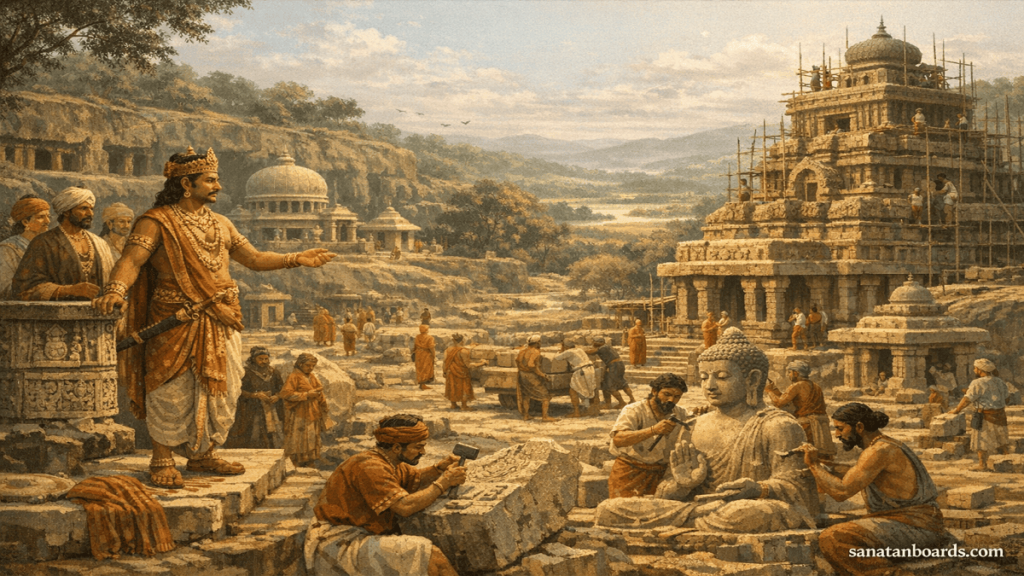
Case Study On Vakataka Dynasty – King Pravarasena I
The Vakataka Dynasty was one of the prominent dynasties of ancient India, ruling large portions of central and southern India from the 3rd to 5th centuries CE. Among its rulers, King Pravarasena I stands out as a pivotal figure who consolidated power, expanded territories, and fostered cultural, religious, and economic development. This case study explores his reign, achievements, governance strategies, cultural impact, and historical significance.
Historical Background of the Vakataka Dynasty
The Vakataka Dynasty emerged in the aftermath of the decline of the Satavahana Empire in central India. Initially a regional power, the dynasty gradually expanded its influence under successive rulers. The dynasty is divided into two main branches: the Pravarapura-Nandivardhana branch and the Vatsagulma branch, to which King Pravarasena I belonged. By the time he ascended the throne, the dynasty had already established its dominance in the Vidarbha region (modern-day Maharashtra) and extended influence into parts of Madhya Pradesh.
Political Consolidation under Pravarasena I
King Pravarasena I is credited with consolidating the Vakataka Empire through strategic administration and military campaigns. He strengthened the central authority while delegating regional governance to trusted officials, ensuring law and order across vast territories. His reign also saw the establishment of diplomatic relations with neighboring powers, most notably the Gupta Empire, which allowed cultural and political exchanges.
Pravarasena I maintained stability by strategically placing forts, garrisons, and settlements, which served as both administrative centers and defensive outposts. These measures helped the dynasty withstand potential invasions and secure trade routes, highlighting his understanding of geopolitics and regional control.
Cultural and Religious Patronage
One of the defining aspects of Pravarasena I’s reign was his support for religion and culture. He promoted both Hinduism and Buddhism, funding temples, monasteries, and educational centers. The Vakataka period is renowned for Ajanta Cave paintings, which flourished under the dynasty’s patronage. These caves are an enduring legacy of the artistic and religious achievements of the era, reflecting both aesthetic excellence and spiritual dedication.
Pravarasena I’s reign also encouraged the compilation of inscriptions and records, which serve as valuable historical evidence. These inscriptions not only recorded political achievements but also reflected societal values, religious practices, and administrative procedures of the time.
Economic and Trade Contributions
The economic policies of Pravarasena I played a vital role in sustaining the dynasty’s power. By improving agriculture through irrigation projects and developing trade networks connecting central India to northern and southern regions, the king ensured a stable revenue system. These economic foundations allowed continued investment in infrastructure, culture, and religious institutions.
Art and Architectural Achievements
The reign of Pravarasena I witnessed significant developments in art and architecture. Temples, monasteries, and cave complexes from his era illustrate the dynasty’s artistic sophistication and religious devotion. The Ajanta Caves, in particular, highlight the integration of art, spirituality, and education, serving as centers for Buddhist learning and meditation.
Legacy and Historical Significance
King Pravarasena I’s reign is considered a golden period of the Vakataka Dynasty. His political acumen, cultural patronage, and economic foresight left a lasting imprint on Indian history. The stability he provided enabled subsequent rulers to build upon his foundations, influencing the development of central Indian polity and culture for centuries.
For students and researchers, this case study demonstrates how regional dynasties like the Vakatakas managed governance, diplomacy, economy, and culture. Pravarasena I exemplifies the qualities of an effective ruler: strategic thinking, cultural vision, and administrative skill. Understanding his reign helps contextualize the broader narrative of ancient Indian history, especially the interaction between regional and imperial powers.
Conclusion
The study of VAKATAKA DYNASTY – KING PRAVARASENA I provides insight into the governance, culture, and religion of ancient India. Through political #vakatakadynastyintamilnadu consolidation, cultural patronage, and economic development, Pravarasena I strengthened his dynasty and left a legacy that continues to be studied by historians and scholars today. #vakatakadynastyinkarnataka His reign represents a crucial phase in the history of central India, highlighting the interplay between leadership, culture, and society in shaping historical progress.
White Paper On Vakataka Dynasty – King Pravarasena I
Executive Summary
The Vakataka Dynasty, ruling central and southern India from the 3rd to 5th centuries CE, represents a significant period in the subcontinent’s history. Among its rulers, King Pravarasena I is recognized for consolidating the dynasty, promoting cultural and religious developments, and facilitating economic prosperity. This white paper explores his political strategies, cultural patronage, economic policies, and lasting influence, providing an in-depth understanding for scholars, educators, and students.
Introduction
The Vakataka Dynasty emerged following the decline of the Satavahanas, establishing dominion over central India and parts of southern India. The dynasty is divided into two primary branches: the Pravarapura-Nandivardhana branch and the Vatsagulma branch, the latter associated with King Pravarasena I. His reign is regarded as a period of stability, cultural flourishing, and economic growth, which had lasting implications for the historical trajectory of the region.
Historical Context
King Pravarasena I ascended the throne during the early 5th century CE, a time characterized by the rise of the Gupta Empire in northern India. The Vakataka Dynasty maintained its autonomy while engaging diplomatically with northern powers, ensuring political stability. His reign bridged regional governance with broader imperial interactions, exemplifying strategic leadership in the Indian subcontinent.
Governance and Political Strategy
Pravarasena I implemented a centralized administration supported by regional officials to manage vast territories efficiently. His governance emphasized law, order, and infrastructure development, which reinforced the dynasty’s authority. Military strategy and diplomatic alliances, particularly with the Gupta rulers, allowed him to secure borders, expand influence, and strengthen trade networks. The political model under Pravarasena I demonstrates the integration of administration, diplomacy, and defense to maintain stability.
Cultural and Religious Contributions
A hallmark of Pravarasena I’s reign was his patronage of religion and art. Both Hinduism and Buddhism received royal support, resulting in the construction of temples, monasteries, and educational institutions. The Ajanta Caves, which flourished under the Vakatakas, exemplify the dynasty’s cultural achievements. Inscriptions from this period provide evidence of societal structure, religious practices, and administrative organization, making them invaluable for historical research.
Economic Policies and Infrastructure
Pravarasena I focused on economic development, improving agricultural productivity and facilitating trade across central India. Investment in irrigation, roads, and marketplaces enhanced economic stability, allowing continued support for cultural and religious activities. His policies exemplify the interconnection between economic management and societal growth in ancient Indian states.
Legacy and Historical Significance
The reign of Pravarasena I is considered a golden era for the Vakataka Dynasty. His political, cultural, and economic initiatives laid the foundation for subsequent rulers. By studying his governance, historians gain insight into regional statecraft, religious patronage, and cultural evolution in early medieval India. The period also highlights the importance of regional dynasties in shaping India’s historical and cultural landscape.
Conclusion
King Pravarasena I of the Vakataka Dynasty exemplifies an effective ruler whose strategic administration, cultural patronage, and economic foresight #vakatakadynastyinmumbai ensured long-lasting impact. His reign serves as a model for understanding the governance, diplomacy, religion, and economic strategies employed by ancient Indian dynasties. #vakatakadynastyindelhi The study of this period provides scholars and students with a framework for analyzing the intersection of politics, culture, and society in historical India.
Industry Application On Vakataka Dynasty – King Pravarasena I
VAKATAKA DYNASTY – KING PRAVARASENA I provides valuable lessons for modern industries, especially in education, cultural preservation, governance, tourism, and management. By analyzing the strategies and initiatives of Pravarasena I, organizations and institutions can draw insights into leadership, resource management, and cultural promotion that remain relevant today.
1. Educational Applications
King Pravarasena I’s patronage of temples, monasteries, and educational institutions highlights the importance of structured learning environments. Modern educational institutions can adopt similar principles by:
- Creating integrated learning hubs that combine academics with cultural and ethical education.
- Supporting research and scholarship through dedicated funding and mentorship, mirroring Pravarasena I’s support for scholars and religious teachers.
- Promoting interdisciplinary learning, as Pravarasena I encouraged both religious and artistic studies, fostering holistic development.
By studying his reign, educational policymakers can design curricula that balance traditional knowledge with modern skills, emphasizing cultural literacy and ethical leadership.
2. Governance and Administrative Practices
Pravarasena I’s centralized administration and delegation of regional authority provide lessons for modern governance and corporate management:
- Hierarchical but flexible management structures can optimize efficiency across large organizations.
- Strategic alliances and partnerships, akin to the Vakataka-Gupta relations, demonstrate how collaboration strengthens resilience and influence.
- Sustainable resource management, including investment in infrastructure, ensures long-term stability and growth.
Public administration programs and corporate leadership training can leverage these insights to improve decision-making, delegation, and resource allocation.
3. Cultural Preservation and Tourism
The Vakataka Dynasty’s contribution to art and architecture, particularly the Ajanta Caves, serves as a model for cultural preservation and tourism industries:
- Heritage conservation programs can draw inspiration from royal patronage systems to protect monuments and traditional arts.
- Cultural tourism initiatives can be developed by highlighting historical figures like Pravarasena I, creating educational tours and interactive experiences.
- Collaboration between government and private sector ensures that historical sites remain sustainable and accessible.
By leveraging historical narratives, tourism industries can enhance cultural awareness while generating economic benefits.
4. Leadership and Strategic Planning
King Pravarasena I’s reign demonstrates effective leadership principles that can be applied in business and public sectors:
- Visionary leadership: Planning for long-term stability and growth through governance, culture, and economy.
- Balanced decision-making: Integrating political, economic, and cultural priorities to ensure holistic development.
- Risk management: Using alliances and military strategy to secure and expand influence while mitigating threats.
Business schools and leadership programs can incorporate these historical examples into case studies to teach strategic thinking, diplomacy, and cultural sensitivity.
5. Economic and Infrastructure Development
The economic policies of Pravarasena I offer insights into modern infrastructure and trade management:
- Investment in connectivity (roads, trade routes) mirrors modern logistics planning.
- Sustainable economic policies supporting agriculture and trade can inspire regional development initiatives.
- Funding for culture and education reinforces long-term social and economic growth.
Urban planners and policymakers can apply these strategies to balance economic development with cultural and educational advancement.
Conclusion
The reign of VAKATAKA DYNASTY – KING PRAVARASENA I is not just a historical case but a blueprint for modern application in education, governance, #sanatandharmaaccreditationboardsinmumbai tourism, leadership, and infrastructure development. By studying his governance, cultural patronage, and economic strategies, industries can draw lessons on sustainable growth, strategic planning, and cultural integration.
King Pravarasena I’s legacy demonstrates that combining governance, culture, and economy can create lasting impact, offering a model for both #sanatandharmaaccreditationboardsindelhi modern institutions and industry leaders seeking to harmonize efficiency, creativity, and societal contribution.
source : Burning Encyclopedia
ASK FAQ
Who was King Pravarasena I of the Vakataka Dynasty?
King Pravarasena I was a prominent ruler of the Vakataka Dynasty in the 5th century CE, known for political consolidation, cultural patronage, and religious support in central India.
When did King Pravarasena I rule?
He ruled during the early 5th century CE, a period marked by political stability, economic growth, and cultural development.
Where did the Vakataka Dynasty under Pravarasena I govern?
His kingdom included central and southern India, primarily in modern Maharashtra and Madhya Pradesh, with influence extending to nearby regions.
What were the major achievements of King Pravarasena I?
He strengthened administration, promoted Hinduism and Buddhism, supported art and architecture, expanded trade, and built alliances with neighboring dynasties.
Why is King Pravarasena I significant in Indian history?
He represents a golden era of the Vakataka Dynasty, leaving a lasting legacy in governance, culture, religion, and economic development.
Table of Contents
Disclaimer
This content is intended solely for educational and informational purposes. It is based on historical research and scholarly interpretations of the Vakataka Dynasty and King Pravarasena I. The information provided is not professional, legal, or financial advice. While efforts have been made to ensure accuracy, historical interpretations may evolve as new evidence emerges. Readers should verify details through credible sources and academic references before using the material for formal research or decision-making. The author and publisher are not responsible for any consequences arising from the use of this content beyond educational and knowledge-sharing purposes.