
The Ikshvaku Dynasty, also known as the Solar Dynasty, is one of the oldest and most revered royal lineages in ancient Indian history and Hindu mythology. It is believed to have been founded by King Ikshvaku, a legendary figure, and produced many illustrious kings known for their virtue, courage, and wisdom. Among the most prominent rulers of this dynasty was King Harishchandra, celebrated for his unwavering commitment to truth and righteousness. His story is a timeless example of dharma (duty) and moral fortitude, inspiring generations to uphold honesty, even in the face of extreme adversity.
Another eminent figure from the Ikshvaku Dynasty is Lord Rama, the seventh avatar of Lord Vishnu, whose life and deeds are chronicled in the epic Ramayana. Lord Rama is revered for his unwavering devotion to dharma, his compassion, and his exemplary conduct as a king, husband, and son. The Ikshvaku Dynasty symbolizes an era where rulers were guided by ethical principles, social responsibility, and devotion to justice. Studying this dynasty provides valuable lessons in leadership, integrity, and moral governance. It is not only a historical or mythological topic but also a source of cultural education, offering insights into ancient Indian civilization, values, and philosophical thought.
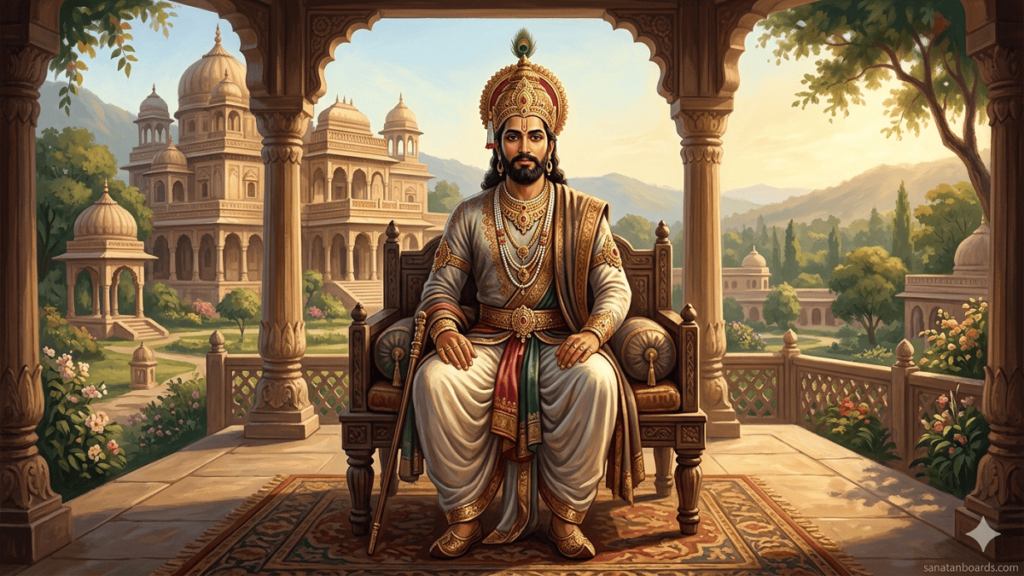
What Is Ikshvaku Dynasty – King Harishchandra, Lord Rama ?
The Ikshvaku Dynasty is a legendary lineage in Hindu mythology and Indian history, commonly referred to as the Solar Dynasty or Suryavansha. Its origins are traced to King Ikshvaku, considered a descendant of Lord Manu, the progenitor of mankind in Hindu tradition. This dynasty is historically significant as it produced kings known for their righteousness, valor, and adherence to dharma (moral duty). The rulers of this dynasty played pivotal roles in shaping early Indian society, governance, and culture, blending mythological teachings with real-life leadership principles.
Among the prominent rulers was King Harishchandra, whose life story is emblematic of truth, justice, and ethical leadership. Harishchandra is remembered for his extraordinary commitment to honesty, even when faced with poverty, exile, and personal suffering. His story is frequently cited in religious texts, folklore, and educational discourse as a model of moral integrity and perseverance.
Another illustrious figure from the Ikshvaku Dynasty is Lord Rama, the hero of the Ramayana, one of India’s greatest epics. Rama’s life demonstrates ideal conduct in every role he played— as a prince, son, husband, and king. His rule, known as Rama Rajya, symbolizes justice, prosperity, and ethical governance. Through Lord Rama, the Ikshvaku Dynasty exemplifies the integration of dharma with leadership, emphasizing moral responsibility over personal gain.
Understanding the Ikshvaku Dynasty helps learners explore the historical, cultural, and philosophical foundations of ancient India. It also provides timeless lessons in virtue, leadership, and social harmony, highlighting the enduring influence of mythological narratives on modern Indian values and education. The dynasty thus holds a dual role: preserving historical memory and inspiring ethical conduct.
Who Is Required IKSHVAKU DYNASTY – KING HARISHCHANDRA, LORD RAMA ?
The knowledge of the Ikshvaku Dynasty – King Harishchandra, Lord Rama is particularly essential for a diverse group of people, spanning students, historians, educators, spiritual seekers, and leaders.
Students and learners of Indian history and mythology benefit greatly from studying the Ikshvaku Dynasty, as it provides insight into the political, social, and ethical structures of ancient India. Understanding King Harishchandra’s devotion to truth and Lord Rama’s ideal governance helps learners grasp the principles of dharma, morality, and leadership that shaped Indian civilization. Students of literature and culture also find relevance in this knowledge, as it forms the foundation for classic texts like the Ramayana and Puranic literature.
Teachers and educators are required to know this topic to effectively impart lessons about moral philosophy, leadership, and historical context. By integrating stories of Harishchandra and Rama into curricula, they provide students with practical examples of ethical conduct and governance, encouraging the application of these principles in contemporary life.
Researchers and historians focusing on ancient India or comparative mythology also require this knowledge. The Ikshvaku Dynasty offers a lens to study the blending of historical fact and legend, enabling scholars to explore lineage, dynastic governance, and the cultural impact of mythological narratives over millennia.
Spiritual seekers and practitioners find value in understanding the Ikshvaku lineage because the lives of Harishchandra and Rama exemplify devotion, righteousness, and adherence to dharma. Their stories guide individuals seeking to cultivate ethical and spiritual discipline in personal and social life.
Leaders and administrators can draw inspiration from the governance models depicted in the Ikshvaku Dynasty. Rama’s reign, often described as Rama Rajya, exemplifies fair, compassionate, and just leadership, providing modern leaders with a philosophical framework to balance power with morality.
When Is IKSHVAKU DYNASTY – KING HARISHCHANDRA, LORD RAMA Required ?
The study and understanding of the Ikshvaku Dynasty – King Harishchandra, Lord Rama is required at multiple stages of education, research, spiritual practice, and leadership development, making it relevant across historical, cultural, and moral contexts.
Firstly, it is required during formal education, particularly in courses covering Indian history, mythology, and literature. Students in schools and universities learn about King Harishchandra and Lord Rama when exploring the Ramayana, Puranas, or the broader cultural history of India. These lessons help contextualize ancient governance systems, moral frameworks, and societal norms. Studying this dynasty provides a concrete example of how ethical principles were interwoven into rulership and personal conduct.
Secondly, this knowledge is required in spiritual and moral education. For practitioners of Hinduism or anyone studying ethical philosophy, the lives of Harishchandra and Rama serve as practical guides for living a life rooted in truth, compassion, and duty. Religious ceremonies, storytelling traditions, and spiritual discourses frequently highlight their examples to inspire ethical behavior and devotion.
It is also required in leadership and governance studies. Modern leaders and administrators can learn from the Ikshvaku Dynasty, particularly Rama’s reign known as Rama Rajya, which emphasizes justice, fairness, and the welfare of citizens. King Harishchandra’s life, characterized by unwavering honesty despite adversity, is often cited in discussions of ethical decision-making and integrity in leadership.
Moreover, this knowledge is required in cultural preservation and research. Scholars and historians analyze the Ikshvaku Dynasty to understand the evolution of Indian society, literature, and mythology. By studying this lineage, they can trace patterns of dynastic governance, social hierarchy, and the moral codes that influenced generations.
Lastly, it is required in personal development and social learning. The stories of King Harishchandra and Lord Rama provide timeless lessons on resilience, virtue, and duty. These narratives are applicable whenever individuals face ethical dilemmas, leadership challenges, or situations that demand moral courage.
Where Is IKSHVAKU DYNASTY – KING HARISHCHANDRA, LORD RAMA Required ?
Firstly, it is required in schools and universities. Classrooms, lecture halls, and online educational platforms teaching Indian history, literature, and mythology are key places where students engage with the stories of King Harishchandra and Lord Rama. Textbooks, academic courses on the Ramayana, Puranic literature, and courses on ancient governance structures incorporate these narratives to teach ethics, cultural heritage, and historical context.
Secondly, this knowledge is required in temples, spiritual retreats, and religious institutions. The lives of Harishchandra and Rama are frequently shared in storytelling sessions, sermons, and devotional discourses. Temples, spiritual ashrams, and religious learning centers use these examples to illustrate dharma, devotion, and moral resilience, providing guidance for personal conduct and community behavior.
It is also required in research centers and libraries. Scholars studying mythology, ancient Indian history, and cultural anthropology often rely on manuscripts, inscriptions, and commentaries that reference the Ikshvaku Dynasty. Research institutions preserve this knowledge to analyze the evolution of dynastic leadership, ethical codes, and societal values in historical and mythological contexts.
Moreover, it is required in leadership academies and governance workshops. Lessons from the Ikshvaku Dynasty are applied in spaces where ethical leadership, public administration, and moral decision-making are taught. Rama’s example of righteous governance and Harishchandra’s commitment to truth are used as case studies to inspire integrity and responsibility among emerging leaders.
Finally, it is required in cultural events, museums, and media. Storytelling festivals, heritage museums, exhibitions, and educational documentaries frequently highlight the Ikshvaku lineage to preserve cultural memory and teach lessons in ethics, virtue, and leadership. These platforms bring the narratives to wider audiences, ensuring that the legacy of King Harishchandra and Lord Rama continues to influence society.
How Is Ikshvaku Dynasty – King Harishchandra, Lord Rama Required ?
Firstly, through formal education, it is required via structured learning in schools, colleges, and universities. Courses in history, literature, religious studies, and philosophy incorporate the stories of King Harishchandra and Lord Rama to teach students about ancient Indian society, governance, and moral principles. Textbooks, lectures, and interactive classroom discussions provide the framework for understanding the dynasty’s contributions to culture and ethics.
Secondly, through storytelling and oral traditions, this knowledge is required in temples, spiritual centers, and cultural programs. Religious sermons, folk tales, and recitations of the Ramayana and Puranic texts convey the values of truth, duty, and righteous governance exemplified by Harishchandra and Rama. These methods allow learners to internalize ethical lessons in a memorable and impactful way.
Thirdly, through research and scholarly study, it is required using analytical approaches. Historians and cultural researchers examine ancient manuscripts, inscriptions, and texts to reconstruct the lineage, governance patterns, and cultural significance of the Ikshvaku Dynasty. Comparative studies, academic papers, and critical analysis help contextualize the dynasty within broader Indian and global history, ensuring accurate and nuanced understanding.
Fourthly, through leadership and ethical training, it is required via case studies, workshops, and seminars. Rama’s model of fair governance and Harishchandra’s adherence to truth are applied as examples in courses on management, public administration, and ethical decision-making. These methods provide practical lessons for leaders in contemporary organizational and societal contexts.
Fifthly, through media, digital platforms, and creative arts, it is required in films, documentaries, podcasts, and interactive applications. Visual storytelling, animations, and educational videos make the lessons of the Ikshvaku Dynasty accessible to a wider audience, bridging the gap between ancient narratives and modern learning.
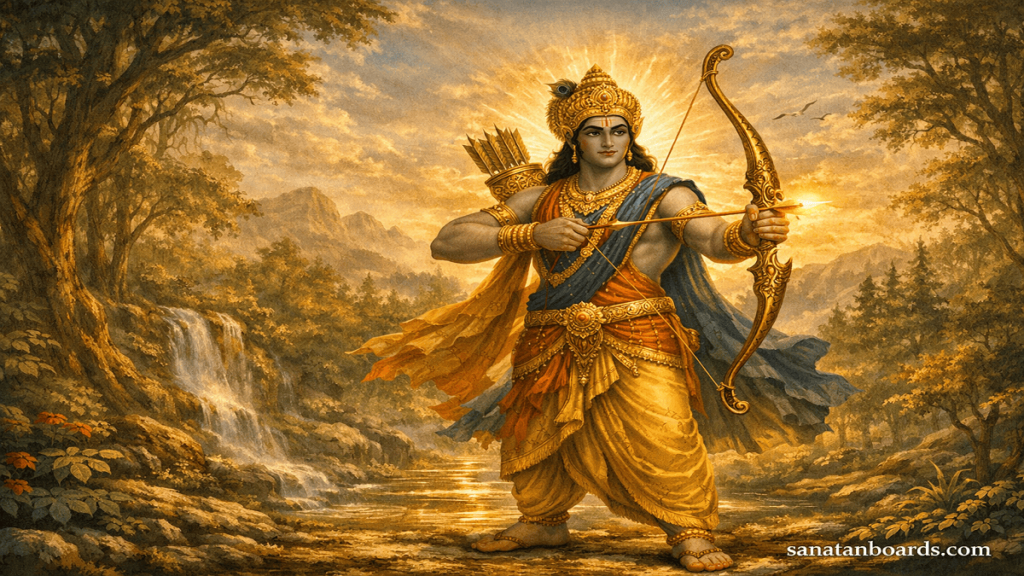
Case Study On Ikshvaku Dynasty – King Harishchandra, Lord Rama
Introduction
The Ikshvaku Dynasty, also known as the Solar Dynasty or Suryavansha, holds a unique position in Indian history and mythology. It is widely regarded as one of the earliest dynasties in Hindu tradition, celebrated for producing kings of exceptional virtue, courage, and wisdom. Among its most prominent figures are King Harishchandra, renowned for his unwavering commitment to truth, and Lord Rama, revered for his exemplary conduct as an ideal king, son, and husband. Studying the Ikshvaku Dynasty provides valuable insights into ancient Indian governance, ethical leadership, and social values. This case study examines the historical and mythological aspects of the dynasty, the ethical and leadership lessons derived from the lives of Harishchandra and Rama, and their relevance in contemporary society.
Historical and Mythological Background
The Ikshvaku Dynasty traces its origins to King Ikshvaku, a descendant of Lord Manu, considered the progenitor of humankind in Hindu tradition. The dynasty, also called the Solar Dynasty, spans numerous generations of kings, each known for their adherence to dharma (righteousness) and governance aligned with moral principles. While the exact historical timeline of the dynasty remains debated, its stories are documented in Puranas, epics, and classical texts, blending historical accounts with mythological narratives.
King Harishchandra is a central figure in the dynasty known for his extraordinary commitment to truth and justice. According to the legends, Harishchandra faced immense personal trials, including loss of kingdom, wealth, and family, yet never deviated from his promise to uphold truth. His life story has been recounted in texts such as the Markandeya Purana, and dramatized in folklore and theater across centuries, reflecting the cultural importance of ethical integrity in leadership.
Lord Rama, another luminary of the Ikshvaku Dynasty, is celebrated as the seventh avatar of Lord Vishnu. Chronicled in the Ramayana, Rama embodies dharma in every role—prince, husband, son, and king. His reign, known as Rama Rajya, is a model of just and compassionate governance. Rama’s life emphasizes the importance of personal discipline, moral courage, devotion, and responsibility toward society.
Ethical Lessons
The Ikshvaku Dynasty offers profound ethical guidance. King Harishchandra exemplifies the principle that truth is paramount, regardless of personal cost. His story demonstrates that moral courage often requires sacrifice, patience, and resilience. Harishchandra’s trials teach that ethical decisions may not always yield immediate benefits, yet they establish long-term social and personal integrity.
Lord Rama’s life provides lessons in balancing personal duty with societal responsibility. From obeying his father’s command to undertake exile to upholding justice as a king, Rama exemplifies that ethical leadership involves prioritizing the welfare of others while maintaining personal virtue. Together, Harishchandra and Rama demonstrate that dharma is the cornerstone of moral and social order.
Leadership Lessons
The Ikshvaku Dynasty also offers enduring leadership lessons. King Harishchandra’s unwavering adherence to truth highlights the importance of integrity as a leadership quality. Leaders are often confronted with dilemmas, and their decisions shape not only their personal legacy but also societal trust. Harishchandra’s story reinforces that ethical consistency strengthens credibility and inspires loyalty.
Lord Rama’s governance, Rama Rajya, provides a blueprint for effective leadership. It emphasizes fairness, inclusivity, accountability, and compassion. Rama’s decision-making combines personal discipline, strategic foresight, and empathy—qualities essential for sustainable governance. Modern leaders can draw parallels between Rama’s principles and contemporary organizational and political leadership challenges.
Societal and Cultural Impact
The Ikshvaku Dynasty’s influence extends beyond governance. Its stories permeate Indian cultural, spiritual, and literary traditions. Dramatic performances, classical literature, and religious festivals celebrate Harishchandra and Rama, transmitting values of truth, justice, and moral courage across generations. By reinforcing ethical and social norms, the dynasty played a vital role in shaping the collective consciousness of Indian society.
Additionally, the dynasty’s emphasis on dharma contributed to the formation of legal, social, and political frameworks in ancient India. Rama’s ideals influenced governance models, while Harishchandra’s story underscored the societal importance of honesty and accountability. Together, they highlight the integration of ethics with social structures—a principle relevant even today.
Contemporary Relevance
The lessons from the Ikshvaku Dynasty remain highly relevant in modern contexts. Educators use these stories to teach moral reasoning, leadership skills, and social responsibility. Spiritual practitioners draw inspiration from their devotion, resilience, and ethical discipline. Corporate and political leaders study Rama’s governance principles as a model for ethical leadership. Moreover, the narrative of Harishchandra encourages individuals to prioritize integrity in personal and professional life.
In an era of rapid change and ethical challenges, the Ikshvaku Dynasty offers timeless guidance. Its combination of moral excellence, strategic governance, and societal responsibility provides a framework for personal development, ethical leadership, and cultural preservation.
Conclusion
The Ikshvaku Dynasty – King Harishchandra, Lord Rama represents an invaluable confluence of history, mythology, ethics, and leadership. #ikshvakudynastykingharishchandralordramainayodhya King Harishchandra exemplifies unwavering truth and moral courage, while Lord Rama illustrates ideal governance and dharma-centered life. Together, they provide educational, spiritual, and practical lessons that remain relevant across generations. #ikshvakudynastykingharishchandralordramainharidwar Studying this dynasty allows learners, leaders, and society at large to internalize timeless values of integrity, justice, and social responsibility, ensuring that the legacy of the Ikshvaku lineage continues to inspire and guide humanity.
White Paper On Ikshvaku Dynasty – King Harishchandra, Lord Rama
Executive Summary
The Ikshvaku Dynasty, also known as the Solar Dynasty, is a seminal lineage in Indian mythology and history, known for producing rulers of exceptional virtue, courage, and adherence to dharma. Two prominent figures—King Harishchandra, famed for his unwavering commitment to truth, and Lord Rama, celebrated as the ideal king and avatar of Lord Vishnu—represent the ethical and governance principles embedded within this dynasty. This white paper examines the historical and mythological context of the Ikshvaku Dynasty, analyzes ethical and leadership lessons, explores its cultural and societal impact, and proposes applications for education, leadership development, and cultural preservation.
1. Introduction
The Ikshvaku Dynasty holds a unique position in Indian heritage, bridging history, mythology, and ethical philosophy. Its stories have been documented in classical texts such as the Ramayana, Markandeya Purana, and other Puranic literature, forming an essential component of India’s spiritual and moral education. The dynasty symbolizes governance guided by moral and ethical principles rather than mere power or wealth.
The objectives of this white paper are to:
- Examine the historical and mythological foundations of the Ikshvaku Dynasty.
- Analyze the ethical and leadership principles demonstrated by King Harishchandra and Lord Rama.
- Highlight the societal, cultural, and educational significance of the dynasty.
- Explore contemporary applications in education, governance, and personal development.
2. Historical and Mythological Context
The Ikshvaku Dynasty, originating from King Ikshvaku, a descendant of Lord Manu, represents the Solar lineage. It is one of the earliest documented dynasties in Hindu mythology, blending historical claims with legendary narratives. Its rulers were renowned for their adherence to dharma, social responsibility, and justice.
King Harishchandra is a central figure who faced trials of immense magnitude, including exile, poverty, and loss of family, yet never compromised his commitment to truth. His story serves as a timeless example of ethical perseverance and integrity.
Lord Rama, the seventh avatar of Lord Vishnu, exemplifies the ideal ruler. Chronicled in the Ramayana, his life illustrates obedience to duty, compassion, ethical governance, and social responsibility. Rama’s reign, known as Rama Rajya, symbolizes justice, welfare, and prosperity.
3. Ethical and Leadership Analysis
3.1 Ethical Principles
The Ikshvaku Dynasty emphasizes the primacy of dharma. Harishchandra’s life demonstrates moral courage under adversity, reinforcing that truth and integrity are non-negotiable principles. Rama’s conduct illustrates ethical balance, showing that personal duty and societal welfare must coexist. Together, they present a model where moral and ethical considerations guide decisions and actions.
3.2 Leadership Principles
The dynasty also provides leadership insights relevant to modern contexts:
- Integrity: Harishchandra’s steadfastness illustrates the importance of credibility in leadership.
- Justice and Compassion: Rama’s governance emphasizes fairness, inclusivity, and empathy.
- Accountability: Both figures demonstrate that leaders are responsible not just for personal actions but for societal well-being.
- Strategic Decision-Making: Rama’s handling of complex political and familial challenges offers lessons in foresight and adaptability.
4. Cultural and Societal Impact
The Ikshvaku Dynasty shaped Indian culture through literature, art, and religious practices. Stories of Harishchandra and Rama permeated theater, folklore, classical dance, and festivals, embedding moral lessons in society. Their narratives influenced social values, legal norms, and governance philosophies, reinforcing the link between ethics and societal cohesion.
Temples, spiritual centers, and educational institutions have preserved and propagated these stories, ensuring intergenerational transmission of ethical, cultural, and spiritual values.
5. Contemporary Applications
5.1 Education
In schools and universities, the Ikshvaku Dynasty provides a rich resource for teaching history, ethics, literature, and cultural studies. Lessons from Harishchandra and Rama can be integrated into curricula to cultivate moral reasoning, leadership skills, and social responsibility.
5.2 Leadership and Governance
Public administration and management programs can utilize the dynasty’s narratives to model ethical leadership. Rama’s governance principles—justice, empathy, accountability—offer actionable frameworks for decision-making and policy formulation.
5.3 Personal Development
On an individual level, the stories encourage adherence to truth, resilience in adversity, and responsible conduct, serving as guides for ethical living in personal and professional spheres.
5.4 Cultural Preservation
Media, arts, and literature can leverage the dynasty’s narratives to maintain cultural heritage. Documentaries, films, exhibitions, and digital storytelling help transmit these values to contemporary audiences, bridging ancient wisdom with modern learning.
6. Recommendations
- Integrate Ikshvaku Dynasty narratives into educational curricula to teach ethical decision-making and leadership.
- Develop case studies and workshops based on Harishchandra and Rama for corporate, political, and social leaders.
- Promote cultural programs and media content to preserve and popularize the dynasty’s teachings.
- Encourage research and scholarly exploration of historical and mythological sources to strengthen contextual understanding.
7. Conclusion
The Ikshvaku Dynasty – King Harishchandra, Lord Rama exemplifies the fusion of history, mythology, ethics, and leadership. Its narratives provide timeless lessons in truth, governance, social responsibility, and moral courage. #ikshvakudynastykingharishchandralordramainmumbai Understanding and applying these principles enhances education, leadership development, personal growth, and cultural preservation. By bridging the wisdom of the past with #ikshvakudynastykingharishchandralordramainvasai contemporary needs, the Ikshvaku Dynasty continues to offer guidance and inspiration across generations.
Industry Application Of Ikshvaku Dynasty – King Harishchandra, Lord Rama
Introduction
The Ikshvaku Dynasty – King Harishchandra, Lord Rama provides enduring lessons in ethics, leadership, governance, and cultural heritage. Beyond its historical and mythological significance, this lineage offers practical insights applicable to modern industries including education, governance, corporate leadership, media, and cultural preservation. By analyzing how these lessons can be implemented across sectors, organizations and institutions can derive benefits in ethical practice, leadership development, and societal engagement.
1. Education Industry
In the education sector, the Ikshvaku Dynasty serves as a vital resource for teaching history, literature, ethics, and leadership principles.
Curriculum Development: Stories of Harishchandra and Rama can be integrated into school and university curricula, providing case studies in ethical decision-making, social responsibility, and moral reasoning. For example, lessons on Harishchandra’s unwavering truthfulness illustrate personal integrity, while Rama’s governance demonstrates the application of fairness and justice in leadership.
Pedagogical Tools: Educational technology companies can develop interactive digital content, including e-learning modules, simulations, and gamified experiences, based on these narratives. Students can engage in role-playing scenarios, problem-solving exercises, and ethical dilemmas modeled on the Ikshvaku Dynasty, enhancing experiential learning.
Teacher Training: Training programs for educators can incorporate methodologies for teaching moral and leadership principles drawn from the dynasty, helping instructors foster holistic development in students.
2. Governance and Public Administration
The principles of the Ikshvaku Dynasty have direct relevance for modern governance and public administration.
Ethical Leadership Models: Rama’s reign, known as Rama Rajya, exemplifies fairness, accountability, and citizen welfare. Public administration institutes can use Rama’s model to train officials in ethical decision-making, transparency, and inclusive governance.
Policy Frameworks: King Harishchandra’s dedication to truth highlights the importance of integrity in public service. Governments can design policies emphasizing accountability, transparency, and adherence to ethical standards, using the dynasty’s narratives as guiding frameworks.
Civic Education: Public programs and campaigns can use stories from the dynasty to promote civic responsibility, emphasizing honesty, justice, and social harmony.
3. Corporate Leadership and Organizational Development
Modern organizations benefit from integrating Ikshvaku Dynasty principles into leadership and management practices.
Ethical Leadership Training: Corporate leadership programs can include modules on Harishchandra’s ethical courage and Rama’s balanced governance, guiding leaders to make principled decisions in complex business environments.
Corporate Social Responsibility (CSR): Rama’s focus on citizen welfare can inspire CSR initiatives, encouraging companies to prioritize community well-being, sustainability, and ethical engagement.
Conflict Resolution and Decision-Making: Lessons from the dynasty provide frameworks for resolving dilemmas by balancing fairness, empathy, and strategic foresight. Role-playing exercises and workshops based on dynasty narratives can enhance managerial skills.
4. Media and Entertainment Industry
The media industry can leverage the rich narratives of the Ikshvaku Dynasty to create content that educates, entertains, and inspires.
Films and Series: Stories of King Harishchandra and Lord Rama are timeless and adaptable for cinematic and television productions, which can highlight moral, ethical, and leadership lessons while reaching a broad audience.
Documentaries and Educational Content: Streaming platforms, educational channels, and digital media can develop documentaries and animated series, presenting the dynasty in historically contextualized and engaging formats.
Publishing Industry: Books, comics, and illustrated stories based on the dynasty can target diverse age groups, promoting cultural literacy and moral education.
5. Cultural and Heritage Preservation
The Ikshvaku Dynasty offers opportunities for cultural institutions, museums, and heritage organizations.
Exhibitions and Museums: Museums can curate exhibitions showcasing artifacts, manuscripts, and artistic depictions of the dynasty, integrating interactive experiences to educate visitors about ethical governance and leadership.
Festivals and Cultural Programs: Cultural festivals, theater productions, and traditional performances (e.g., Ramleela) preserve and popularize dynasty narratives, providing experiential learning while reinforcing societal values.
Digital Heritage Platforms: Technology-enabled platforms can archive stories, texts, and media related to the dynasty, ensuring global accessibility and engagement.
6. Educational Technology and Digital Innovation
EdTech companies and digital content creators can utilize the Ikshvaku Dynasty as a foundation for interactive learning.
Virtual Simulations: Students and professionals can experience ethical dilemmas faced by Harishchandra or administrative challenges encountered by Rama through VR or simulation platforms.
Gamification of Learning: Gamified storytelling apps can engage users in solving moral and leadership challenges, making the dynasty’s lessons immersive and memorable.
Global Outreach: Digital platforms allow the dissemination of the dynasty’s principles beyond India, promoting cross-cultural learning and ethical awareness internationally.
7. Recommendations for Industry Integration
- Education: Incorporate dynasty-based case studies into ethics, leadership, and history curricula.
- Governance: Develop public sector workshops using Rama Rajya as a model for ethical policy-making.
- Corporate Sector: Use narratives for CSR, leadership training, and conflict-resolution simulations.
- Media and Entertainment: Produce films, documentaries, and interactive content to convey ethical and cultural lessons.
- Cultural Institutions: Curate exhibitions, festivals, and digital archives to preserve and promote the dynasty’s heritage.
- EdTech and Digital Learning: Create VR, gamified, and AI-powered learning experiences to engage modern learners globally.
Conclusion
The Ikshvaku Dynasty – King Harishchandra, Lord Rama is not only a historical and mythological lineage but also a practical resource for modern industries. #sanatandharmaaccreditationboardsinmumbai Its principles of ethical leadership, governance, and social responsibility have applications in education, public administration,corporate management, media, and cultural preservation. By integrating the lessons of Harishchandra and Rama into organizational strategies, #sanatandharmaaccreditationboardsinvasai curricula, and content, industries can cultivate integrity, leadership, and cultural literacy, ensuring that the dynasty’s timeless wisdom continues to guide contemporary society.
SOURCE : History ByGone
ASK FAQ
Who was King Harishchandra of the Ikshvaku Dynasty?
King Harishchandra, from the Ikshvaku Dynasty, is renowned for his unwavering commitment to truth and righteousness. His life exemplifies moral integrity and ethical leadership, inspiring generations in Indian culture and literature.
What is the significance of Lord Rama in the Ikshvaku Dynasty?
Lord Rama, the seventh avatar of Vishnu, is a key figure in the Ikshvaku Dynasty. Known for his ideal conduct, justice, and devotion to dharma, he represents perfect leadership and moral excellence.
Where can the stories of the Ikshvaku Dynasty be studied?
Stories of the Ikshvaku Dynasty are studied in the Ramayana, Puranas, schools, universities, temples, and cultural programs, offering lessons in ethics, leadership, and governance.
Why is the Ikshvaku Dynasty important today?
The Ikshvaku Dynasty teaches timeless values like truth, duty, and righteous governance, applicable in education, leadership, spiritual growth, and cultural preservation in modern society.
How are King Harishchandra and Lord Rama examples of ethical leadership?
Harishchandra’s truthfulness and Rama’s just rule illustrate moral courage, fairness, and social responsibility, providing enduring models for ethical leadership and decision-making.
Table of Contents
Disclaimer
This content is intended solely for educational, informational, and knowledge-sharing purposes. It draws on historical, mythological, and literary sources about the Ikshvaku Dynasty, King Harishchandra, and Lord Rama, but is not a definitive historical record or religious instruction. Interpretations may vary based on cultural, textual, and scholarly perspectives. Readers are encouraged to explore primary texts like the Ramayana and Puranas for deeper understanding. This material should be used for learning, research, or cultural enrichment only and does not constitute professional, religious, or legal advice. Accuracy is aimed for, but verification from original sources is recommended.