The Chandravanshi Dynasty is one of the most important and widely discussed royal lineages in ancient Indian tradition. Known as the Lunar Dynasty, it traces its origin to Chandra, the Moon God, symbolizing calmness, intelligence, and continuity. This dynasty includes many legendary kings and divine personalities who contributed significantly to cultural, spiritual, and philosophical development.
Among them, King Yayati and Lord Krishna are two of the most influential figures. King Yayati is remembered for his life story that highlights human desires, moral conflicts, and the realization of truth. His decisions and actions shaped the future branches of the Chandravanshi lineage.
Lord Krishna, born in the Yadava clan of this dynasty, represents divine wisdom, righteousness, and strategic leadership. His teachings, especially in the Bhagavad Gita, continue to guide humanity in understanding duty and life purpose.
The study of this dynasty helps in understanding ancient traditions, values, and philosophical teachings that remain relevant even today.
What is Chandravanshi Dynasty – King Yayati, Lord Krishna ?
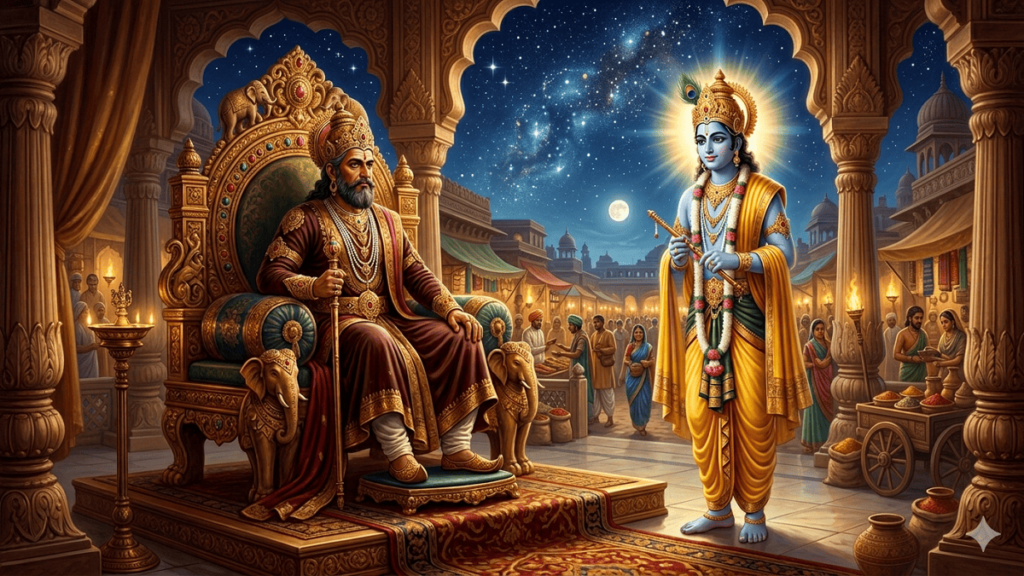
The Chandravanshi Dynasty – King Yayati, Lord Krishna refers to a legendary royal lineage described in ancient Indian scriptures such as the Puranas and the Mahabharata. The term “Chandravanshi” means descendants of Chandra (the Moon), indicating a family that holds both historical and mythological importance.
This dynasty represents a continuous line of rulers and influential personalities who contributed to the formation of early Indian society. One of the earliest and most important kings in this lineage is King Yayati. His story is central to understanding how the dynasty expanded into multiple branches through his sons, especially Yadu and Puru.
A later and highly significant figure in this dynasty is Lord Krishna. He belongs to the Yadava clan, which originates from King Yayati’s lineage. Lord Krishna is not only a historical or mythological character but also a spiritual guide whose teachings in the Bhagavad Gita explain duty, righteousness, and the purpose of life.
The Chandravanshi Dynasty – King Yayati, Lord Krishna is therefore a combination of genealogy, mythology, and philosophy. It explains both the origin and the highest development of the lineage.
Who is Required – Chandravanshi Dynasty – King Yayati, Lord Krishna ?
The topic Chandravanshi Dynasty – King Yayati, Lord Krishna requires the inclusion of key figures who define and shape this lineage. The most essential personalities in this context are King Yayati and Lord Krishna.
King Yayati is required because he is one of the foundational rulers of the Chandravanshi Dynasty. His life story plays a crucial role in explaining the division and expansion of the dynasty through his sons. His experiences with desire and realization provide important moral lessons that are central to this topic.
Lord Krishna is required because he represents the most significant and divine figure within the Chandravanshi lineage. As a descendant of King Yayati through the Yadava clan, he connects the early history of the dynasty to its later spiritual importance. His role in guiding the Pandavas during the Mahabharata war and his teachings in the Bhagavad Gita make him essential for understanding dharma and life philosophy.
Other figures such as Yadu and Puru are also indirectly required, as they help establish the continuity of the dynasty. However, the primary focus remains on King Yayati and Lord Krishna.
When is Required – Chandravanshi Dynasty – King Yayati, Lord Krishna ?
Chandravanshi Dynasty – King Yayati, Lord Krishna is required to be understood within specific time contexts that combine ancient history, mythology, and continued relevance in modern society. The “when” aspect is important because it helps place the events, characters, and teachings within a clear timeline, making the subject easier to understand and connect with.
In the earliest phase, the Chandravanshi Dynasty is associated with ancient Vedic and Puranic periods. During this time, early kings and lineages were established, and stories were preserved through oral traditions and later written in scriptures. King Yayati belongs to this early stage. His life is described in texts like the Puranas, where he is presented as a powerful ruler who faced moral and personal challenges. This period is significant because it represents the beginning of structured dynasties and the development of ethical teachings through storytelling.
Moving forward in time, the next important phase is the Epic period, particularly the era of the Mahabharata. Lord Krishna is associated with this period. Traditionally, the Mahabharata is believed to have taken place around 3000 BCE, although historians and scholars may interpret this timeline differently. This era marks a more advanced stage of political organization, warfare, and philosophical thought. The teachings given by Lord Krishna during this time, especially in the Bhagavad Gita, reflect a deeper understanding of life, duty, and spirituality.
The “when” is also required in terms of generational continuity. King Yayati represents the earlier generation of the Chandravanshi Dynasty, while Lord Krishna represents a later and more evolved stage of the same lineage. Understanding this timeline helps in connecting how the dynasty developed from its early rulers to its most influential spiritual figure.
In addition to ancient timelines, the relevance of this topic extends into the present day. Even today, the stories and teachings of the Chandravanshi Dynasty are remembered and practiced through festivals, traditions, and educational studies. For example, the celebration of Janmashtami marks the birth of Lord Krishna and keeps his teachings alive in modern society. Similarly, the story of King Yayati is often discussed in moral education to explain the consequences of desire and the importance of self-realization.
The “when” is also required in academic and learning contexts. Students, researchers, and readers study this topic when exploring Indian history, mythology, philosophy, and cultural heritage. It is also relevant during discussions on ethics, leadership, and human behavior, as the lessons derived from these figures are timeless.
Furthermore, in modern life, the teachings associated with this topic are required during decision-making, personal development, and leadership situations. The principles taught by Lord Krishna about duty and detachment are especially useful in today’s fast-paced and result-oriented world.
Where is Required – Chandravanshi Dynasty – King Yayati, Lord Krishna ?
The topic Chandravanshi Dynasty – King Yayati, Lord Krishna is required to be understood mainly within the geographical context of the Indian subcontinent. The events and stories associated with this dynasty are linked to several important historical and cultural regions.
Lord Krishna is closely associated with places like Mathura and Dwarka. Mathura is believed to be his birthplace, while Dwarka is known as the kingdom he ruled. These locations are still important religious centers and attract millions of visitors.
King Yayati is connected with earlier regions where his descendants established kingdoms. These areas spread across northern and central India, showing how the dynasty expanded geographically.
The “where” is not limited to physical places. It is also required in cultural and spiritual contexts such as temples, scriptures, and storytelling traditions. These platforms continue to preserve the legacy of the Chandravanshi Dynasty.
Therefore, the Chandravanshi Dynasty – King Yayati, Lord Krishna is required in both geographical locations and cultural spaces.
How is Required – Chandravanshi Dynasty – King Yayati, Lord Krishna ?
The topic Chandravanshi Dynasty – King Yayati, Lord Krishna is required to be understood through its moral, philosophical, and practical significance.
King Yayati explains how human desires can influence decisions and lead to consequences. His story teaches the importance of self-control and realization.
Lord Krishna provides a deeper understanding of life through his teachings. His message of performing duty without attachment is widely applicable in modern life, especially in stressful environments.
The “how” is required in terms of application. These teachings can be applied in daily life, leadership, education, and decision-making. They help individuals understand how to balance emotions, responsibilities, and ethical values.
Culturally, this topic influences festivals, art, and traditions. Educationally, it helps in learning history and moral values.
Thus, the Chandravanshi Dynasty – King Yayati, Lord Krishna is required as a guide for understanding and applying life principles.
Case Study On Chandravanshi Dynasty – King Yayati, Lord Krishna
The Chandravanshi Dynasty – King Yayati, Lord Krishna provides a powerful case study for analyzing human behavior, leadership patterns, ethical dilemmas, and long-term consequences of decisions. By examining the lives of King Yayati and Lord Krishna, we gain insight into two contrasting yet complementary models of life and leadership.
King Yayati’s life serves as an example of desire-driven decision-making. As a ruler, he had power, authority, and access to all material pleasures. However, his inability to control his desires led to a curse that caused premature old age. Instead of accepting this reality, he asked his sons to exchange their youth with him. This reflects a leadership flaw where responsibility is avoided, and short-term satisfaction is prioritized.
From a case study perspective, this situation highlights key issues such as lack of self-control, dependency on others for personal gain, and failure to accept consequences. These traits are often observed in modern leadership failures where decision-makers prioritize immediate benefits over long-term sustainability. However, Yayati’s story does not end in failure. After years of indulgence, he realizes that desires are endless and cannot bring true satisfaction. This realization marks a transformation from ignorance to wisdom, making his life a complete cycle of learning.
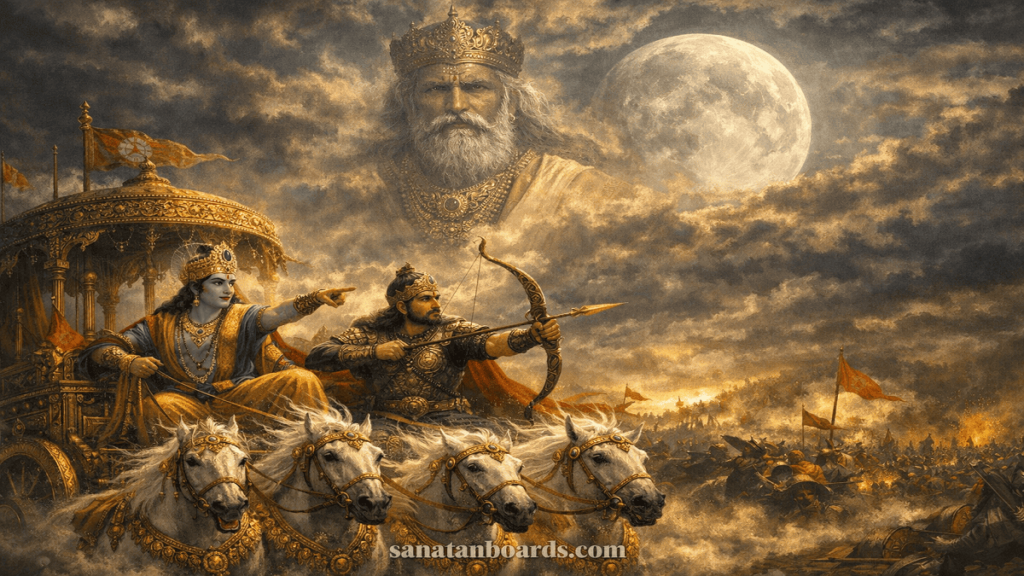
In contrast, Lord Krishna represents a balanced and wisdom-driven leadership model. During the Mahabharata, Krishna chose not to take up weapons but instead guided others through knowledge and strategy. His role as a charioteer to Arjuna symbolizes humility and service-based leadership. He did not impose decisions but helped individuals understand their duties.
Krishna’s teachings in the Bhagavad Gita provide a framework for ethical decision-making. His principle of performing duty without attachment to results is highly relevant in modern professional environments. It encourages focus, reduces stress, and promotes fairness.
Another important aspect of this case study is conflict management. While Yayati’s story deals with internal conflict between desire and responsibility, #chandravanshidynasty–king yayati,lordkrishnainmathura Krishna’s role deals with external conflict resolution in a large-scale war. This dual perspective helps in understanding both personal and societal challenges.
Thus, the Chandravanshi Dynasty – King Yayati, #chandravanshidynasty–king yayati,lord krishnainuttarpradesh Lord Krishna serves as a comprehensive case study that teaches lessons about leadership, ethics, responsibility, and personal transformation.
White Paper On Chandravanshi Dynasty – King Yayati, Lord Krishna
The Chandravanshi Dynasty – King Yayati, Lord Krishna represents a significant subject for academic and philosophical analysis. This white paper explores its historical relevance, cultural impact, and philosophical contributions.
The Chandravanshi Dynasty is one of the two major dynasties described in ancient Indian texts, the other being the Suryavanshi Dynasty. The lineage structure reflects early governance systems based on family succession and hierarchical organization.
King Yayati plays a crucial role in understanding early leadership challenges. His story highlights issues such as ethical dilemmas, generational responsibility, and the consequences of personal decisions on society. His eventual realization demonstrates the importance of self-awareness and transformation.
Lord Krishna represents a more advanced stage of philosophical development. His teachings in the Bhagavad Gita address universal questions about duty, morality, and the purpose of life. These teachings are applicable across disciplines such as philosophy, psychology, and management.
Culturally, the Chandravanshi Dynasty has influenced Indian traditions, literature, and art forms Stories of Krishna are widely depicted in classical dance, music, and visual arts. Festivals such as Janmashtami celebrate his life and teachings, ensuring their continuity across generations.
Philosophically, the contrast between Yayati and Krishna provides a complete understanding of human life—from desire-driven actions to wisdom-based living. This duality makes the topic highly valuable for academic research and practical application.
From a research perspective, this topic can be #chandravanshidynasty–king yayati,lord krishnainmumbai studied under multiple disciplines including history, religious studies, ethics, and leadership theory. It offers a holistic framework for understanding human behavior and societal development.
In conclusion, the Chandravanshi Dynasty – King Yayati, Lord Krishna is #chandravanshidynasty–king yayati,lord krishnainvasai not just a mythological narrative but a structured knowledge system that provides insights into leadership, ethics, and cultural evolution.
Industry Application Of Chandravanshi Dynasty – King Yayati, Lord Krishna
The principles derived from the Chandravanshi Dynasty – King Yayati, Lord Krishna can be effectively applied across various modern industries, including business management, leadership development, education, and psychology.
In management and corporate leadership, King Yayati represents the risks of short-term thinking. His desire to prolong youth reflects a mindset focused on immediate satisfaction rather than long-term sustainability. Modern organizations can learn from this by prioritizing ethical decision-making, long-term planning, and accountability.
On the other hand, Lord Krishna provides a model for effective and ethical leadership. His approach during the Mahabharata demonstrates how influence, guidance, and strategic thinking can lead to successful outcomes without direct control. This is highly relevant in today’s corporate world, where leaders are expected to inspire and guide rather than dominate.
Krishna’s principle of “detachment from results” is particularly useful in high-pressure industries. It encourages professionals to focus on their work without excessive stress about outcomes, leading to improved performance and mental well-being.
In education, this topic is used to teach ethics, values, and critical thinking. Students learn how ancient narratives can provide practical life lessons and improve decision-making skills.
In psychology, Yayati’s story helps in understanding human desires and behavioral patterns, while Krishna’s teachings are applied in mindfulness practices and stress management techniques.
In leadership training programs, these examples are used to illustrate different leadership styles—one driven by desire and the other by wisdom. #sanatandharmaaccreditationboardsinmumbai This comparison helps professionals develop balanced and effective leadership approaches.
Thus, the Chandravanshi Dynasty – King Yayati, Lord Krishna #sanatandharmaaccreditationboardsinvasai continues to influence modern industries by providing timeless lessons in leadership, ethics, and human behavior.
source : instaFRY Stories
ASK FAQ
What is the Chandravanshi Dynasty?
The Chandravanshi Dynasty is an ancient royal lineage in Indian tradition believed to originate from the Moon God (Chandra). It includes many important rulers and divine figures like King Yayati and Lord Krishna.
Who was King Yayati?
King Yayati was an early ruler of the Chandravanshi Dynasty known for his story about desire and realization. His life teaches lessons about self-control and the consequences of human actions.
Why is Lord Krishna important in the Chandravanshi Dynasty?
Lord Krishna is important because he belongs to the Yadava clan of this dynasty and represents its spiritual and philosophical peak through his teachings in the Bhagavad Gita.
How are King Yayati and Lord Krishna connected?
King Yayati is an ancestor of the Chandravanshi lineage, and Lord Krishna is his descendant through the Yadu branch, making them part of the same dynasty.
What lessons can we learn from the Chandravanshi Dynasty?
The dynasty teaches important lessons about leadership, responsibility, self-control, and performing duties with wisdom, especially through the lives of King Yayati and Lord Krishna.
Table of Contents
Disclaimer
This content is created strictly for educational learning and knowledge purposes only. The information presented about the Chandravanshi Dynasty, King Yayati, and Lord Krishna is based on traditional texts, historical interpretations, and widely accepted mythological sources. It is not intended to hurt any religious beliefs, sentiments, or cultural values of any individual or community. Readers are encouraged to explore multiple sources for deeper understanding and interpretation. The purpose of this content is to provide general awareness, academic insight, and conceptual clarity on the topic, without making any claims of absolute historical accuracy or promoting any specific viewpoint or ideology.