The Chalukya Dynasty was one of the most influential dynasties in South Indian history, known for its contributions to art, architecture, and administration. Among its most celebrated rulers were Pulakesin II and Vikramaditya II.
Pulakesin II (reigned c. 610–642 CE) was a remarkable military leader who expanded the Chalukya kingdom across the Deccan region. He successfully resisted northern invasions by the Harsha Empire and consolidated power through strategic alliances. His reign is often remembered for the famous inscription at Aihole, which highlights his victories and administrative prowess.
Vikramaditya II (reigned c. 733–744 CE) continued this legacy, overseeing a period of prosperity and cultural development. He is known for his military campaigns against the Pallavas and for fostering temple construction, most notably in Badami and Pattadakal. Under his rule, art, literature, and architecture flourished, reflecting a golden era in the Chalukya Empire.
The dynasty played a critical role in shaping the political and cultural landscape of southern India. Today, their legacy is studied in schools and universities to understand medieval Indian history, governance, and heritage architecture. Learning about Pulakesin II and Vikramaditya II provides insight into leadership, diplomacy, and cultural achievements of ancient India.
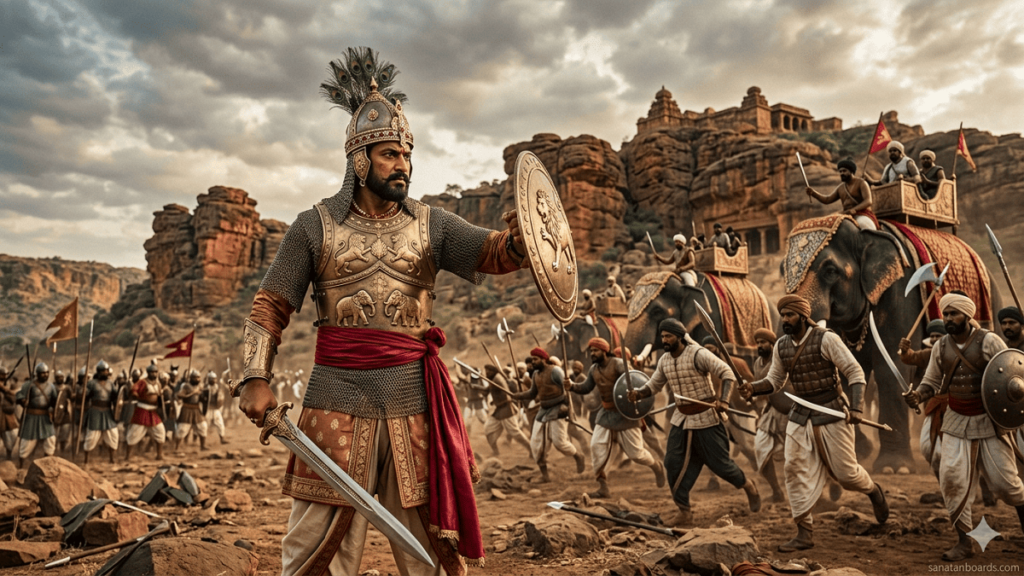
What Is Chalukya Dynasty – Pulakesin Ii, Vikramaditya Ii ?
The Chalukya Dynasty emerged around the 6th century CE in southern India, primarily in the Deccan region. It was divided into three major branches: the Badami Chalukyas, the Eastern Chalukyas, and the Western Chalukyas. Among these, the Badami Chalukyas are most renowned for their rulers Pulakesin II and Vikramaditya II, who played crucial roles in consolidating and expanding the kingdom.
Pulakesin II, who reigned during the early 7th century, is celebrated for his military genius and administrative skills. He successfully repelled northern invasions, particularly those led by Emperor Harsha, and expanded his kingdom from the Arabian Sea to the Bay of Bengal. Pulakesin II’s reign saw the establishment of an efficient administrative system, promotion of trade, and encouragement of art and culture. His achievements are documented in the famous Aihole inscription, which highlights both his victories and the prosperity of his empire.
Vikramaditya II, ruling about a century later, continued this illustrious legacy. He is remembered for his campaigns against the Pallavas in the south and his patronage of architecture, particularly temple construction at Badami and Pattadakal, which are UNESCO World Heritage Sites today. Under his reign, the Chalukya Empire reached new cultural heights, with flourishing literature, sculpture, and temple architecture.
Together, Pulakesin II and Vikramaditya II exemplify the strength, vision and cultural sophistication of the Chalukya Dynasty. Their leadership not only shaped the political landscape of medieval southern India but also left a lasting legacy in Indian art, architecture, and historical studies. Studying them offers invaluable insights into the strategies, governance, and cultural achievements of one of India’s greatest dynasties.
Who is Required for Chalukya Dynasty – Pulakesin II, Vikramaditya II ?
Studying the Chalukya Dynasty, particularly rulers like Pulakesin II and Vikramaditya II, is essential for various groups of people because it provides insights into history, governance, culture, and art.
Students and Academics: One of the primary groups who require knowledge of the Chalukya Dynasty are students of history, archaeology, and cultural studies. Learning about Pulakesin II and Vikramaditya II helps students understand the political and cultural landscape of early medieval India. These kings exemplify leadership, military strategy, and administrative systems, which are crucial topics in history curricula from schools to universities. Scholars researching temple architecture, inscriptions, and South Indian dynasties also rely on their reigns as primary case studies.
Educators and Historians: Teachers, professors, and historians require this knowledge to educate others about India’s rich historical heritage. Detailed studies of Pulakesin II’s military campaigns and Vikramaditya II’s cultural contributions provide educators with examples of governance, diplomacy, and art patronage. Their stories serve as teaching tools for understanding broader historical patterns, such as regional politics, trade, and religious developments in medieval India.
Cultural Enthusiasts and Tourists: Individuals interested in art, architecture, and cultural heritage also benefit from learning about the Chalukya Dynasty. Pulakesin II’s military achievements and Vikramaditya II’s temple constructions in Badami, Aihole, and Pattadakal remain vital attractions for cultural tourism. Understanding the historical context enhances appreciation of UNESCO World Heritage sites and regional Indian art forms.
Policy Makers and Administrators: Even modern policymakers and public administrators can draw lessons from the governance models of Pulakesin II and Vikramaditya II. Their approaches to administration, decentralization, and public welfare demonstrate effective leadership strategies applicable in studying organizational management and regional governance today.
General Learners and Knowledge Seekers: Beyond academics, anyone interested in India’s history, military strategy, or ancient civilization requires knowledge about these rulers. Their reigns highlight the interplay of power, culture, and diplomacy, providing timeless lessons about leadership, resilience, and societal development.
When Is Chalukya Dynasty – Pulakesin II, Vikramaditya II Required ?
Understanding when the Chalukya Dynasty, particularly rulers like Pulakesin II and Vikramaditya II, is relevant is crucial for placing their contributions within the timeline of Indian history. This knowledge is required by students, historians, and cultural scholars to contextualize political, social, and cultural developments during early medieval India.
Pulakesin II ruled approximately from 610 CE to 642 CE, during the post-Gupta period when India was fragmented into regional kingdoms. This was a time when northern India was dominated by Emperor Harsha, while southern India witnessed the rise of dynasties like the Chalukyas and Pallavas. Studying Pulakesin II’s reign is required to understand the military strategies, administration, and territorial expansion that shaped the Deccan region. His victories over northern invasions highlight the strategic importance of timing in defense and governance, making his reign a key case study for military and political history.
Vikramaditya II, who ruled around 733 CE to 744 CE, represents a later phase of the Chalukya Dynasty. His era is characterized by cultural consolidation, temple construction, and continued rivalry with the Pallavas. Understanding this period is required to study the evolution of South Indian temple architecture, art, and literature. Vikramaditya II’s reign also shows how dynasties maintained power over time, responding to political challenges while promoting cultural growth.
Learning when these rulers governed is required for comparative historical analysis. It allows scholars to track changes in administration, military strategy, trade, and religion over time. It also helps learners understand the sequence of events that led to the rise and decline of regional powers in India.
From an educational perspective, knowledge of this timeline is required in school and university curricula to teach early medieval Indian history accurately. It helps students develop chronological thinking and understand cause-and-effect relationships in historical processes. Furthermore, understanding when Pulakesin II and Vikramaditya II ruled is essential for archaeologists, cultural historians, and heritage professionals to date inscriptions, temples, and artifacts associated with their reigns.
Where Is Chalukya Dynasty – Pulakesin II, Vikramaditya II Required ?
The Chalukyas primarily ruled the Deccan region, with their capital at Badami in present-day Karnataka. This region was strategically significant, connecting northern India with southern territories. Pulakesin II expanded the dynasty’s territory across much of the Deccan, including modern Karnataka, Maharashtra, and parts of Andhra Pradesh. Knowledge of where he ruled is required to understand the geographic challenges of administration, military campaigns, and trade routes. Locations like Aihole, Badami, and Pattadakal are directly tied to his reign, as inscriptions and monuments there document his victories and governance.
Vikramaditya II focused on consolidating Chalukya power further south and east, engaging in campaigns against the Pallavas in Tamil Nadu. His temple-building projects, especially in Pattadakal, Badami, and other nearby sites, demonstrate the geographic spread of cultural influence. Understanding where his contributions are located is required for students of architecture, archaeology, and cultural history to trace the evolution of South Indian temple styles and urban planning.
The geographic context is also required for educators and historians. It helps them connect historical events with physical locations, enabling more accurate reconstructions of medieval Indian political boundaries. For instance, Pulakesin II’s battles against northern powers illustrate the importance of controlling river valleys and trade routes, while Vikramaditya II’s construction projects show how rulers used geography to enhance political legitimacy.
From a broader perspective, learning where the Chalukya Dynasty’s influence extended is required for cultural tourism and heritage management. Sites like Badami caves, Aihole temples, and Pattadakal monuments are UNESCO World Heritage locations that require historical context for effective preservation and interpretation.
In educational settings, this knowledge is required to understand how geography influenced governance, military strategy, and cultural development. It also enables students to appreciate the regional diversity of India and the ways in which dynasties like the Chalukyas left tangible marks on the landscape.
How Is Chalukya Dynasty – Pulakesin II, Vikramaditya II Required ?
Historical research and analysis is one of the primary ways this knowledge is required. Scholars examine inscriptions, such as the Aihole inscription of Pulakesin II, and other archaeological evidence to reconstruct political events, military campaigns, and administrative practices. Learning how to interpret these sources is required for history students to critically assess the dynasty’s governance, achievements, and challenges. Similarly, the study of temple architecture, sculptures, and urban planning commissioned by Vikramaditya II provides insights into South Indian art and cultural evolution.
Educational pedagogy makes understanding the Chalukya Dynasty required in structured learning environments. Teachers and professors use case studies of Pulakesin II’s military expansion and Vikramaditya II’s cultural patronage to demonstrate concepts such as leadership, statecraft, diplomacy, and the interplay between politics and culture. Learning how these rulers managed their kingdoms—through decentralization, military organization, and promotion of arts—teaches students about practical applications of governance and strategic thinking.
Cultural preservation and field studies further highlight how this knowledge is required. Archaeologists, heritage managers, and tourism educators study the geographic sites associated with these rulers, including Badami, Aihole, and Pattadakal, to conserve monuments and educate the public. Understanding how the dynasty influenced local culture, religious practices, and architecture is essential for effective preservation and interpretation.
Additionally, modern applications make this knowledge required beyond academic circles. Leadership programs, organizational studies, and cultural awareness initiatives use examples from Pulakesin II’s administration and Vikramaditya II’s temple projects to illustrate lessons in governance, planning, and cultural impact. Learning how the Chalukya Dynasty functioned provides timeless insights into strategic decision-making, project management, and societal development.
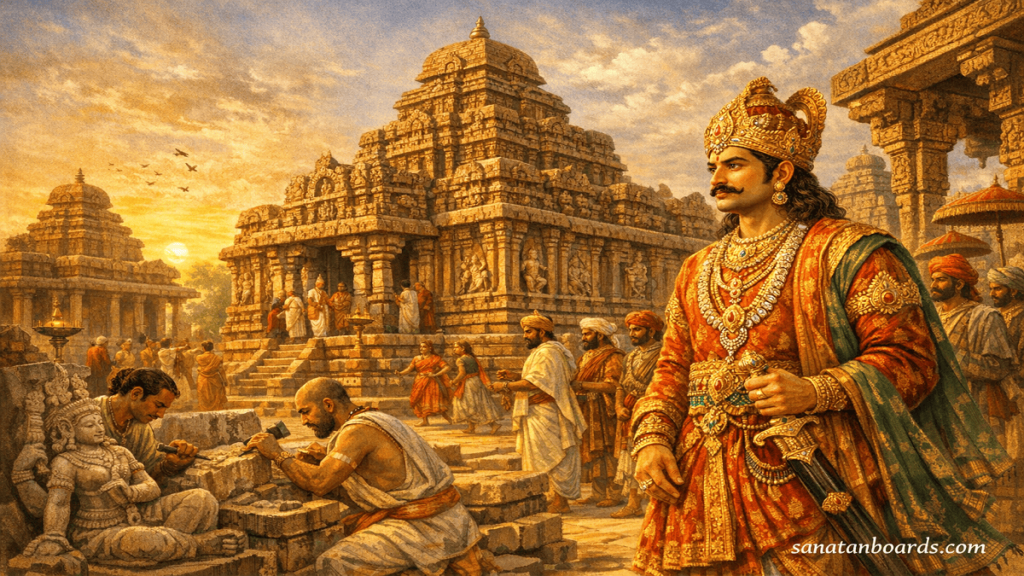
Case Study On Chalukya Dynasty – Pulakesin II and Vikramaditya II
Introduction
The Chalukya Dynasty was a dominant power in early medieval India, particularly in the Deccan region. It is renowned for its military prowess, administrative efficiency, and cultural contributions. Among its rulers, Pulakesin II (610–642 CE) and Vikramaditya II (733–744 CE) stand out for their strategic leadership and patronage of art and architecture. This case study examines their political, military, and cultural achievements, providing insights into why the dynasty remains significant in Indian history.
Historical Context
The Chalukya Dynasty emerged during a period of political fragmentation in India after the decline of the Gupta Empire. Southern India was divided among regional kingdoms such as the Pallavas, Kadambas, and Cholas. The Badami Chalukyas, with their capital at Badami, played a key role in consolidating the Deccan region.
Pulakesin II ascended the throne at a time when northern India was under Emperor Harsha. Recognizing the importance of territorial expansion and military strength, Pulakesin II expanded the Chalukya kingdom from the Arabian Sea in the west to the Bay of Bengal in the east. His reign represented a blend of strategic warfare, diplomatic alliances, and effective administration, setting a foundation for the dynasty’s long-term prominence.
Vikramaditya II, almost a century later, inherited a well-established kingdom. His reign coincided with intense rivalry with the Pallavas in the south. However, unlike Pulakesin II, Vikramaditya II focused not only on military campaigns but also on consolidating cultural and architectural achievements.
Pulakesin II: Military and Administrative Achievements
Pulakesin II is best remembered as a formidable military strategist. He successfully resisted Emperor Harsha’s northern invasions, thereby securing the Deccan from external threats. This accomplishment is chronicled in the Aihole inscription, composed by his court poet Ravikirti, which highlights both his battlefield victories and his administrative foresight.
Administratively, Pulakesin II established a decentralized governance system. Regional governors, appointed by the king, maintained law and order, collected taxes, and oversaw trade and agriculture. This model ensured efficient management of the vast Chalukya territory and provided a template for later rulers. His patronage of trade routes connecting the Deccan with northern and western India contributed to the economic prosperity of the empire.
Culturally, Pulakesin II promoted religious tolerance and temple construction. He encouraged Hinduism and Jainism, resulting in monumental architecture at Badami and Aihole. These structures not only served religious purposes but also demonstrated the dynasty’s wealth and influence.
Vikramaditya II: Cultural Patronage and Expansion
Vikramaditya II’s reign is notable for blending military prowess with cultural consolidation. He launched successful campaigns against the Pallavas, regaining territories previously lost to them. However, his most enduring contributions lie in temple construction and art patronage. The temples at Pattadakal, now a UNESCO World Heritage Site, were commissioned under his rule. These temples reflect innovative architecture and intricate sculptures, illustrating the Chalukyas’ commitment to culture and religion.
Vikramaditya II also promoted literature and scholarship, encouraging Sanskrit poets and scholars to thrive under his court. This emphasis on learning not only enriched the cultural landscape but also reinforced the dynasty’s prestige among contemporaneous kingdoms.
Political and Strategic Lessons
Studying Pulakesin II and Vikramaditya II offers several lessons in governance and strategy:
- Military Strategy: Pulakesin II’s defense against northern invasions demonstrates the importance of preparation, intelligence, and territorial knowledge in maintaining sovereignty.
- Administrative Efficiency: Both rulers exemplified decentralized governance, ensuring stability and control over diverse regions.
- Cultural Diplomacy: Vikramaditya II’s temple construction and patronage of scholars highlight the role of culture in consolidating political power.
- Sustainable Legacy: By combining military, administrative, and cultural achievements, these rulers ensured the dynasty’s long-lasting influence.
Impact on South Indian History
The Chalukya Dynasty under Pulakesin II and Vikramaditya II shaped South Indian history in multiple ways:
- Politically, they established a stable, centralized yet flexible governance system in the Deccan.
- Militarily, they protected southern India from northern invasions and rival kingdoms.
- Culturally, their patronage of temples and literature laid the groundwork for the evolution of Dravidian architecture and classical South Indian arts.
The monuments, inscriptions, and literature from their reigns continue to serve as primary sources for historians, archaeologists, and students worldwide.
Conclusion
The reigns of Pulakesin II and Vikramaditya II demonstrate the Chalukya Dynasty’s remarkable blend of military acumen, administrative efficiency, and cultural sophistication. Pulakesin II’s expansionist strategies and Vikramaditya II’s architectural #Chalukyadynasty–pulakesinII,VikramadityaIIinchennai patronage collectively illustrate how a dynasty can balance power and culture to leave a lasting legacy. Studying these rulers provides invaluable insights into #Chalukyadynasty–pulakesinII,VikramadityaIIingujrat medieval Indian history, leadership principles, and cultural development, making their legacy essential for educational, historical, and cultural learning.
White Paper On Chalukya Dynasty – Pulakesin II and Vikramaditya II
Executive Summary
The Chalukya Dynasty (6th–8th centuries CE) was a pivotal power in early medieval India, shaping the political, cultural, and architectural landscape of the Deccan region. Among its most influential rulers were Pulakesin II (610–642 CE) and Vikramaditya II (733–744 CE). Pulakesin II is renowned for territorial expansion, military defense against northern invasions, and administrative innovations, while Vikramaditya II is recognized for cultural patronage, temple construction, and consolidation of Chalukya influence. This white paper examines the dynasty’s historical significance, strategic governance, cultural contributions, and relevance to contemporary scholarship.
1. Historical Context
Following the decline of the Gupta Empire, India entered a period of regionalization, with multiple kingdoms vying for dominance. The Badami Chalukyas, centered in the Deccan, emerged as a formidable power. Pulakesin II ascended the throne during this period of political flux, recognizing the need for military strength and administrative control. Vikramaditya II inherited a more established kingdom but faced challenges from southern rivals like the Pallavas.
The geographic context of the Chalukyas—spanning modern-day Karnataka, Maharashtra, and parts of Andhra Pradesh—was critical for trade, military campaigns, and cultural exchange. Understanding this territorial expanse is vital for analyzing the dynasty’s political and economic strategies.
2. Pulakesin II: Leadership and Military Strategy
Pulakesin II’s reign exemplifies strategic military and administrative leadership:
- Military Expansion: He expanded the Chalukya kingdom from the western coast (Arabian Sea) to the eastern coast (Bay of Bengal). His defense against Emperor Harsha’s northern incursions is well-documented in the Aihole inscription, which highlights both tactical acumen and battlefield innovation.
- Administrative Framework: Pulakesin II implemented a decentralized governance system, appointing regional governors to oversee territories while ensuring loyalty to the central authority. This model maintained stability over a vast and diverse region.
- Economic Development: By controlling major trade routes, Pulakesin II stimulated commerce, agricultural production, and wealth accumulation, reinforcing the dynasty’s strength.
- Cultural Contributions: Although primarily recognized as a warrior king, he supported religious institutions, including Hindu and Jain temples, promoting societal cohesion and artistic innovation.
3. Vikramaditya II: Cultural Consolidation and Architectural Legacy
Vikramaditya II’s reign is marked by a focus on culture and architecture alongside military endeavors:
- Military Campaigns: He conducted successful campaigns against the Pallavas, restoring Chalukya territorial claims in the south. These campaigns solidified Chalukya dominance in the region.
- Temple Architecture: Vikramaditya II commissioned numerous temples in Pattadakal, Badami, and Aihole, blending Nagara and Dravidian architectural styles. These constructions were not merely religious centers but also symbols of political legitimacy and cultural sophistication.
- Literary Patronage: His court supported Sanskrit poets and scholars, enhancing the intellectual environment and promoting cultural continuity.
4. Strategic Governance and Lessons for Modern Leadership
The governance models of Pulakesin II and Vikramaditya II offer insights relevant to modern organizational and leadership studies:
- Decentralized Administration: Delegation of authority ensured effective control over vast regions, demonstrating the importance of distributed leadership.
- Integration of Culture and Power: Using cultural patronage to reinforce political authority exemplifies strategic soft power.
- Conflict Management: Military campaigns highlight the significance of strategic planning, intelligence, and adaptability.
- Sustainability: Both rulers focused on long-term stability by balancing military, economic, and cultural priorities.
5. Cultural and Educational Relevance
The Chalukya Dynasty’s contributions remain critical for educational and cultural studies:
- Architecture: Temples and monuments serve as primary sources for South Indian architectural history, including the UNESCO World Heritage Site at Pattadakal.
- Inscriptions: Documents like the Aihole inscription provide insights into medieval governance, military campaigns, and societal norms.
- Art and Literature: Sculptures and literary patronage under both rulers illustrate the cultural sophistication of the period, offering rich material for historians, archaeologists, and students.
6. Modern Applications
The study of Pulakesin II and Vikramaditya II has contemporary significance in several areas:
- Heritage Management: Insights into temple architecture and urban planning inform preservation strategies.
- Leadership Studies: Lessons in governance, strategy, and cultural integration are applicable to organizational leadership programs.
- Education: Curriculum developers utilize their reigns to teach Indian history, arts, and political science.
- Tourism: Knowledge of the dynasty’s geographic and cultural footprint aids in heritage tourism and regional development.
Conclusion
The Chalukya Dynasty, under Pulakesin II and Vikramaditya II, demonstrates the interconnection of military strength, administrative efficiency, and cultural patronage in establishing a lasting legacy. Pulakesin II’s expansionist and defensive strategies and #Chalukyadynasty–pulakesinII,VikramadityaIIinmumbai Vikramaditya II’s cultural and architectural contributions provide enduring lessons in leadership, governance, and heritage preservation. Studying this dynasty is not only required for historical scholarship but also offers #Chalukyadynasty–pulakesinII,VikramadityaII invasai practical insights for modern leadership, cultural management, and educational development.
Industry Application Of Chalukya Dynasty – Pulakesin II, Vikramaditya II
Introduction
The study of the Chalukya Dynasty, particularly the reigns of Pulakesin II and Vikramaditya II, extends beyond historical knowledge and plays a significant role in various modern industries. Their contributions to governance, military strategy, architecture, and culture have practical applications in sectors such as education, tourism, heritage management, leadership development, and even modern organizational practices. Understanding these applications helps bridge the gap between historical knowledge and contemporary relevance.
1. Education Industry
One of the most prominent applications of the Chalukya Dynasty is in the education sector. Schools, colleges, and universities include Pulakesin II and Vikramaditya II in history curricula to teach early medieval Indian history.
- Curriculum Development: Their reigns are used to explain political systems, military strategies, and cultural development.
- Case-Based Learning: Educators use Pulakesin II’s defense strategies and Vikramaditya II’s cultural contributions as case studies to teach leadership and governance.
- Research and Academia: Scholars and students rely on inscriptions, temple architecture, and historical texts for research in archaeology, history, and art studies.
This makes the Chalukya Dynasty essential for building foundational historical knowledge and analytical skills in learners.
2. Tourism and Hospitality Industry
The legacy of Pulakesin II and Vikramaditya II plays a vital role in the tourism industry, especially in India.
- Heritage Tourism: Sites like Badami, Aihole, and Pattadakal attract tourists from across the world. These locations are known for their temples, caves, and inscriptions linked to the Chalukya rulers.
- Cultural Tourism: Visitors explore these regions to understand ancient Indian architecture, religious practices, and artistic achievements.
- Economic Impact: Tourism generates employment for local communities, including guides, hotel staff, and artisans.
Understanding the historical context of these rulers enhances the tourism experience and promotes sustainable cultural tourism.
3. Heritage Management and Archaeology
The Chalukya Dynasty has strong applications in heritage conservation and archaeology.
- Monument Preservation: Temples and monuments built during Vikramaditya II’s reign require conservation efforts. Knowledge of their construction techniques helps in restoration.
- Archaeological Research: Inscriptions like the Aihole inscription of Pulakesin II are studied to reconstruct historical timelines and events.
- Cultural Policy: Governments and organizations use historical data to create policies for preserving heritage sites.
This ensures that the cultural and historical legacy of the Chalukyas is preserved for future generations.
4. Leadership and Management Industry
The governance and leadership styles of Pulakesin II and Vikramaditya II offer valuable lessons for modern management and leadership training.
- Strategic Thinking: Pulakesin II’s military campaigns demonstrate planning, risk management, and decision-making.
- Decentralized Governance: Their administrative systems reflect delegation of authority, similar to modern organizational structures.
- Cultural Leadership: Vikramaditya II’s patronage of art and culture shows how leaders can inspire creativity and innovation within organizations.
Business schools and leadership programs can apply these principles to teach effective management strategies.
5. Architecture and Design Industry
The Chalukya Dynasty significantly influences the architecture and design sector.
- Temple Architecture: The structures at Pattadakal and Badami represent a blend of northern and southern Indian architectural styles.
- Design Inspiration: Modern architects and designers study these temples for inspiration in creating sustainable and culturally rich designs.
- Urban Planning: The layout of ancient cities provides insights into early urban planning and infrastructure development.
This makes the Chalukya architectural style relevant even in contemporary design practices.
6. Cultural and Creative Industries
The contributions of Pulakesin II and Vikramaditya II extend to cultural and creative fields such as media, literature, and arts.
- Film and Media: Historical movies and documentaries often depict the Chalukya period, bringing their stories to a wider audience.
- Literature: Writers and historians use their reigns as inspiration for books, research papers, and storytelling.
- Art and Craft: Sculptures and carvings from the Chalukya period influence modern artists and craftsmen.
These industries help preserve and popularize the legacy of the dynasty.
7. Government and Policy-Making
The governance models of the Chalukya rulers have applications in public administration and policy-making.
- Administrative Systems: Their decentralized governance offers insights into efficient regional administration.
- Public Welfare: Policies supporting trade, agriculture, and religion reflect balanced governance.
- Cultural Policies: Governments use historical knowledge to promote cultural heritage and tourism.
This demonstrates how ancient governance models can inform modern policy decisions.
8. Skill Development and Training
The study of the Chalukya Dynasty also contributes to skill development initiatives.
- Analytical Skills: Interpreting inscriptions and historical data improves critical thinking.
- Cultural Awareness: Understanding heritage fosters respect for diversity and traditions.
- Professional Training: Tourism, archaeology, and education sectors require specialized knowledge of such dynasties.
This highlights the role of historical knowledge in developing practical and professional skills.
Conclusion
The Chalukya Dynasty, particularly under Pulakesin II and Vikramaditya II, has wide-ranging applications across multiple industries. From education and #sanatandharmaaccreditationboardsinmumbai tourism to leadership, architecture, and policy-making, their contributions continue to influence modern practices.
Pulakesin II’s military and administrative strategies provide lessons in leadership and governance, while Vikramaditya II’s cultural and architectural achievements inspire #sanatandharmaaccreditationboardsinvasai creativity and heritage preservation. Their legacy demonstrates how historical knowledge can be applied in practical, real-world contexts.
In conclusion, the study of the Chalukya Dynasty is not limited to academic interest but serves as a valuable resource for various industries. It bridges the past and present, offering insights that contribute to education, economic development, cultural preservation, and professional growth.
SOURCE : Study 2 Study
ASK FAQ
What was the Chalukya Dynasty known for?
The Chalukya Dynasty was known for its strong administration, military power, and contributions to temple architecture in the Deccan region of India.
Who was Pulakesin II and why is he important?
Pulakesin II was a powerful Chalukya ruler famous for defeating northern king Harsha and expanding his empire across the Deccan.
What are the achievements of Vikramaditya II?
Vikramaditya II is known for defeating the Pallavas and promoting temple architecture at Pattadakal and Badami.
Where did the Chalukya Dynasty rule?
The Chalukya Dynasty ruled mainly in the Deccan region, including present-day Karnataka, Maharashtra, and Andhra Pradesh.
Why is the Chalukya Dynasty important in Indian history?
It is important for its role in shaping South Indian politics, culture, and architecture during the early medieval period.
Table of Contents
Disclaimer
This blog is created solely for educational and informational purposes. The content is based on historical sources, research studies, and academic interpretations related to the Chalukya Dynasty, including rulers Pulakesin II and Vikramaditya II. While every effort has been made to ensure accuracy, some details may vary due to differing historical perspectives and interpretations. This content is not intended to offend any culture, community, or belief. Readers are encouraged to consult additional scholarly sources for deeper understanding. The information provided here is meant to enhance knowledge, learning, and awareness of Indian history and heritage only.