
The Ahom Kingdom, established in 1228 in the region of present-day Assam, India, was one of the most enduring and influential kingdoms in Northeast India. Among its notable rulers, King Suhungmung, also known as Dihingia Raja, stands out for his remarkable contributions to the kingdom’s expansion administration, and cultural development.
King Suhungmung ascended the throne in 1497 and ruled for nearly 52 years, marking one of the longest and most impactful reigns in Ahom history. He is remembered for consolidating the kingdom’s territories through strategic warfare and diplomacy, successfully resisting invasions by neighboring states. Suhungmung introduced administrative reforms, including the Paik system which strengthened military organization and societal governance.
Culturally, his reign promoted art, literature, and religion, fostering the growth of a unique Ahom identity. Temples and monuments constructed during his rule reflect the kingdom’s prosperity and architectural advancement. His reign also laid the foundation for future Ahom kings to further expand and stabilize the region.
King Suhungmung’s leadership transformed the Ahom Kingdom into a formidable power in Northeast India, leaving a legacy that shaped the history, culture, and administration of Assam for centuries.
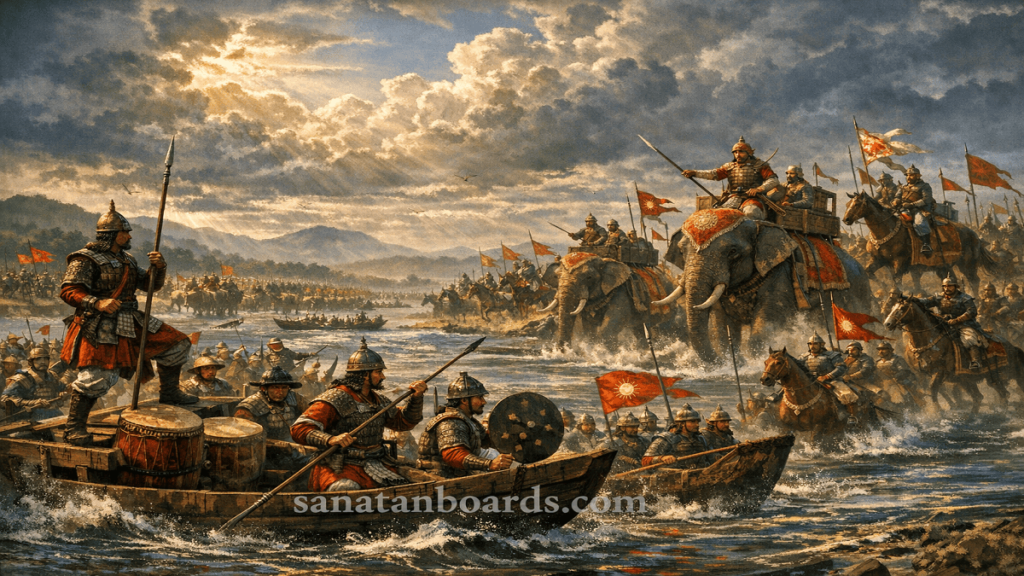
What Is Ahom Kingdom – King Suhungmung ?
The Ahom Kingdom was a historic kingdom in the Brahmaputra Valley of present-day Assam, India, founded in 1228 by Sukaphaa, a Tai prince from Mong Mao (present-day Yunnan, China). Over the centuries, the kingdom grew into a powerful political and cultural entity, maintaining its independence and identity despite pressures from neighboring kingdoms and invasions. Among the many rulers of the Ahom dynasty, King Suhungmung (also known as Dihingia Raja) is recognized as one of the most significant monarchs due to his visionary leadership, military achievements, and administrative innovations.
King Suhungmung ascended the throne in 1497 and ruled until 1539, marking a period of political consolidation and territorial expansion. Under his reign, the Ahom Kingdom extended its boundaries, absorbing regions that had previously been autonomous or under rival control. He implemented important reforms, notably in the Paik system, which structured labor and military service efficiently, ensuring both social stability and a strong defense force. This system became a hallmark of Ahom administration and allowed the kingdom to sustain its power for centuries.
Culturally, Suhungmung’s rule fostered the growth of Ahom literature, religious tolerance, and temple construction. He promoted the integration of diverse communities into the kingdom, including local ethnic groups, which helped strengthen social cohesion. His reign also set precedents for governance,diplomacy, and conflict management, creating a model for future Ahom rulers.
Who Is Required – Ahom Kingdom – King Suhungmung ?
When studying the Ahom Kingdom and its history, understanding who King Suhungmung was is crucial. King Suhungmung, also called Dihingia Raja, ruled the Ahom Kingdom from 1497 to 1539 and is considered one of its most influential monarchs. He was a descendant of the Ahom founder, Sukaphaa, and inherited a kingdom that had already established political stability but needed consolidation and territorial expansion. Suhungmung’s leadership qualities made him a central figure in defining the kingdom’s identity and ensuring its long-term survival.
Suhungmung is required in historical studies for several reasons. Firstly, he represents the peak of Ahom military and administrative organization. Through strategic campaigns, he expanded the kingdom’s territory, defeating neighboring chiefs and kingdoms while incorporating new regions into Ahom governance. His reforms of the Paik system, which organized citizens into military and labor units, strengthened both the defense and economy of the state. This system became a model of governance in Assam for centuries.
Secondly, he is essential in understanding the cultural and social development of the Ahom Kingdom. Suhungmung encouraged the integration of different ethnic groups into the kingdom, fostering unity and cooperation among diverse populations. His reign saw the growth of temples, literature, and religious tolerance, which helped establish a distinct Ahom cultural identity.
Additionally, King Suhungmung’s rule is required in education because it illustrates the role of visionary leadership in medieval India. He exemplifies how strategic vision, administrative skill, and diplomacy can transform a regional kingdom into a resilient power capable of defending its sovereignty.
When Is Required Ahom Kingdom – King Suhungmung ?
The timeline of King Suhungmung’s reign is critical to understanding the historical development of the Ahom Kingdom. Suhungmung ascended the throne in 1497 CE, during a period when the kingdom faced both internal consolidation challenges and external threats from neighboring kingdoms such as the Kachari Kingdom and other hill tribes. His reign lasted approximately 42 years, ending in 1539 CE, which was one of the longest and most stable periods in Ahom history.
The significance of this time frame lies in the socio-political transformation it witnessed. Before Suhungmung’s rule, the Ahom Kingdom had established a stable polity under earlier kings, but the kingdom’s influence was mostly limited to the Brahmaputra valley. During Suhungmung’s reign, the Ahoms undertook systematic territorial expansion, annexing surrounding regions and strengthening the kingdom’s borders. This period also coincided with increasing interactions between Assam and neighboring regions, including trade routes connecting the Brahmaputra valley to Bengal and the Himalayan foothills.
Suhungmung’s reign marks the implementation of crucial administrative reforms at a specific historical moment. The formalization of the Paik system centralized labor and military organization, enabling the kingdom to mobilize resources efficiently. This system was particularly important during the late 15th and early 16th centuries, when regional conflicts and raids by rival chiefs required rapid military responses.
Culturally, the period of 1497–1539 CE was significant for the consolidation of the Ahom identity. Temples, religious sites, and literary works produced during this era illustrate the kingdom’s prosperity and Suhungmung’s patronage of arts and religion. His policies laid the groundwork for future Ahom kings, ensuring political stability and cultural growth in the decades that followed.
Where – Ahom Kingdom – King Suhungmung Is Required?
The Ahom Kingdom under King Suhungmung was located primarily in the Brahmaputra Valley, which is part of present-day Assam, India. This region is bounded by the eastern Himalayas to the north, the Khasi and Jaintia hills to the south, and the Patkai hills to the east, providing a natural strategic defense. The fertile plains of the Brahmaputra River allowed the kingdom to support agriculture, sustain its population, and develop a strong economy, which was vital for maintaining Suhungmung’s expansive administration and military campaigns.
Suhungmung’s influence extended beyond the central Brahmaputra Valley. He led campaigns into neighboring regions, including areas inhabited by the Kachari, Chutia, and Naga communities, gradually incorporating them under Ahom control. These territorial expansions not only increased the kingdom’s geographical extent but also integrated diverse ethnic groups into a cohesive political system. The Ahom capital shifted over time to better manage these territories, with Garhgaon becoming a key administrative center during his reign.
The geographical location of the Ahom Kingdom was particularly significant for its defense and diplomacy. The natural boundaries of rivers and hills made large-scale invasions challenging for enemy forces, while Suhungmung leveraged these features to secure his borders. Additionally, the location enabled the Ahoms to control trade routes connecting the Brahmaputra Valley with Bengal and other northeastern regions, facilitating economic growth and cultural exchange.
Furthermore, the kingdom’s position influenced settlement patterns and governance. The Paik system, which Suhungmung reformed, was implemented differently in various areas depending on geography, ensuring efficient labor distribution for agriculture, infrastructure, and military readiness. Temples, fortifications, and administrative centers were built strategically in accessible yet defensible locations, reflecting the importance of geography in Ahom statecraft.
How Is Required – Ahom Kingdom – King Suhungmung ?
The “how” is required to understand the methods, strategies, and processes by which King Suhungmung strengthened and governed the Ahom Kingdom. He used a combination of military, administrative, economic, and cultural approaches to achieve a stable and prosperous state.
Military Strategy: Suhungmung led campaigns to expand the kingdom, defeating the Chutia and other neighboring rulers. He fortified strategic locations along rivers and hills to defend against invasions.
Administrative Reforms: He refined the Paik system, which required each male citizen to serve in labor or military units. This system ensured a disciplined army and organized civic labor, making governance more efficient.
Economic Management: Suhungmung promoted agriculture in the fertile Brahmaputra plains and maintained trade routes connecting Assam to neighboring regions, ensuring economic stability.
Cultural Integration: He promoted religious tolerance, temple construction, and assimilation of various ethnic groups, fostering unity and a distinct Ahom identity.
Understanding “how” is required to grasp the mechanics of his governance. It shows that Suhungmung’s success was not accidental but the result of careful planning, leadership, and innovation. Studying “how” reveals lessons in medieval statecraft, societal organization, and the integration of culture, economy, and military strategy to create a resilient kingdom.
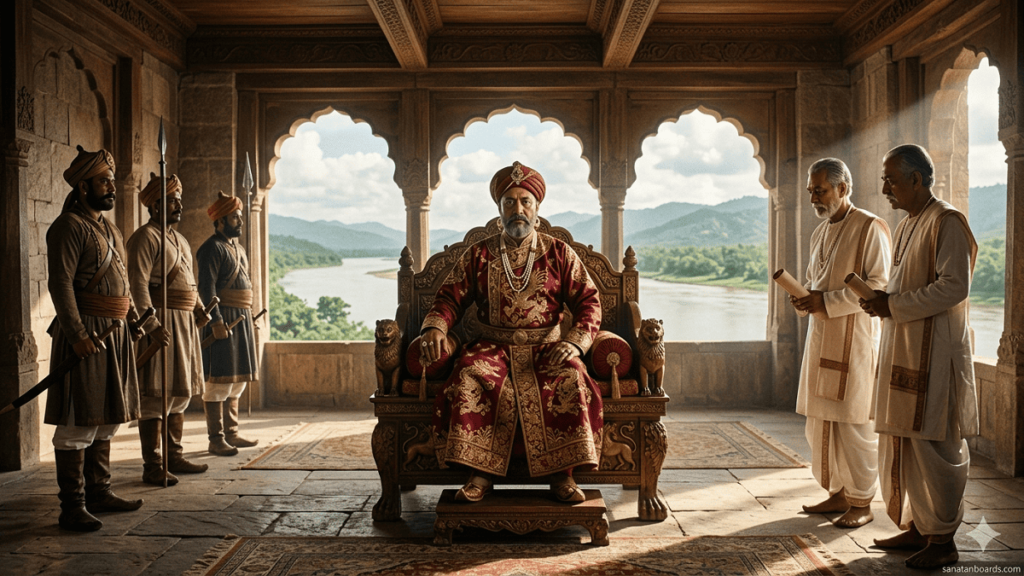
Case Study On Ahom Kingdom – King Suhungmung
Introduction
The Ahom Kingdom, established in 1228 CE by Sukaphaa, a Tai prince from Mong Mao (present-day Yunnan, China), was a remarkable political entity in the Brahmaputra Valley of Assam, India. Among its rulers, King Suhungmung (Dihingia Raja, 1497–1539 CE) stands out for his transformative role in expanding the kingdom, reforming administration, and fostering cultural development. This case study analyzes his reign to understand how visionary leadership shaped the Ahom Kingdom into a formidable power.
Historical Context
Before Suhungmung, the Ahom Kingdom had established its identity in the Brahmaputra Valley but remained limited in territorial influence. The region consisted of diverse ethnic groups, riverine plains, and strategic hills, which provided both opportunity and challenge for governance. External threats came from neighboring kingdoms like the Chutia and Kachari, as well as hill tribes in the east. Suhungmung’s accession in 1497 CE coincided with a critical period requiring political consolidation, territorial expansion, and societal integration.
Military Expansion
King Suhungmung employed strategic military campaigns to expand the kingdom. One significant achievement was the annexation of the Chutia Kingdom, which not only extended Ahom control but also brought fertile lands and additional manpower under his administration. His campaigns were marked by careful planning, use of riverine and hill geography for defense, and incorporation of defeated communities into the kingdom’s governance system.
The Paik system, refined under his rule, allowed the mobilization of labor and soldiers efficiently. Every adult male contributed to military or civic duties, ensuring that resources were optimally utilized for defense, infrastructure, and agriculture. This system became a cornerstone of Ahom governance and military strength for centuries.
Administrative Reforms
Suhungmung’s administration balanced centralized authority with local autonomy. He appointed capable officials to govern newly annexed territories while respecting local customs. This approach reduced resistance and facilitated smooth integration of ethnic groups such as the Chutia and Kachari communities. Administrative divisions were strategically aligned with geography to ensure efficient tax collection, manpower deployment, and governance.
The Paik system also enabled labor allocation for public works, such as building roads, embankments, and temples, further strengthening the kingdom’s infrastructure. Suhungmung’s reforms provided a sustainable governance model that persisted in Assam for generations.
Cultural and Social Integration
Cultural policies were central to Suhungmung’s strategy. He promoted religious tolerance, assimilation of diverse ethnic groups, and the growth of Ahom literature, festivals, and temple architecture. By fostering a shared cultural identity while respecting local traditions, Suhungmung reinforced loyalty among subjects and strengthened social cohesion.
His reign also saw the promotion of Ahom rituals alongside indigenous practices, creating a hybrid culture that became a hallmark of Assamese identity. This cultural integration played a vital role in consolidating the kingdom and reducing internal conflict.
Economic Development
Economic strategies under Suhungmung focused on agriculture, trade, and resource management. The Brahmaputra plains provided fertile land for rice cultivation, while trade routes connected Assam to Bengal and other northeastern regions. This facilitated commerce, cultural exchange, and access to resources required for sustaining military campaigns and administrative infrastructure.
Legacy and Lessons
King Suhungmung’s reign demonstrates how strategic leadership, administrative innovation, and cultural integration can transform a regional kingdom into a resilient power. His combination of military acumen, governance reforms, and social policies offers valuable lessons in statecraft, leadership, and community building.
In conclusion, Suhungmung’s reign was a defining period in the Ahom Kingdom, shaping its territorial extent, administrative systems, and cultural identity. #ahomkingdomkingsuhungmungingujrat Understanding his strategies and policies #ahomkingdomkingsuhungmunginlucknow provides crucial insights into medieval Assam and the broader context of Indian history.
White Paper On Ahom Kingdom – King Suhungmung
Executive Summary
This white paper examines King Suhungmung of the Ahom Kingdom (1497–1539 CE), highlighting his contributions to military strategy, administrative reform, cultural integration, and economic development. The study emphasizes how Suhungmung’s reign transformed the Ahom Kingdom into a stable, prosperous, and culturally cohesive state in Northeast India.
Introduction
The Ahom Kingdom, established in 1228 CE in Assam, India, was a significant political entity in the Brahmaputra Valley. The kingdom faced both opportunities and challenges, including territorial expansion, integration of diverse ethnic groups, and defense against external threats. King Suhungmung, also known as Dihingia Raja, ruled during a critical phase in the late 15th and early 16th centuries. His reign is notable for strategic innovation in governance, military, and culture, making it a subject of interest for historians, educators, and policy analysts.
Historical Background
Suhungmung ascended the throne in 1497 CE, succeeding a line of Ahom kings who had laid the foundation of the kingdom. At the time, the region was composed of multiple ethnic communities and vulnerable to invasions from the Kachari Kingdom, Chutia Kingdom, and neighboring hill tribes. Suhungmung’s era was defined by the need to consolidate power, expand territory, and implement systematic governance.
Strategic Governance
Suhungmung introduced administrative reforms that centralized authority while allowing local governance. The Paik system, a compulsory labor and military service program, became the backbone of the kingdom’s administration. This system enabled efficient mobilization of manpower for military, agricultural, and public works purposes.
The king also appointed capable officials to govern annexed regions, ensuring loyalty and effective administration. This model balanced central control with regional autonomy, reducing resistance and enabling long-term stability.
Military Leadership
Suhungmung’s military campaigns were instrumental in territorial expansion. By defeating the Chutia Kingdom, he incorporated fertile plains and additional manpower. Strategic fortifications along rivers and hills enhanced the kingdom’s defense. The integration of conquered populations into the Paik system strengthened military and civic organization, ensuring readiness against internal and external threats.
Cultural Policies
Cultural integration was a cornerstone of Suhungmung’s policies. He promoted religious tolerance, allowing Ahom rituals alongside indigenous practices. Temple construction, festivals, and literary patronage fostered a shared identity among diverse ethnic groups. Such initiatives reduced internal conflict and enhanced loyalty, contributing to a cohesive and culturally rich state.
Economic Development
Economic growth under Suhungmung relied on agriculture and trade. The Brahmaputra plains provided fertile land for rice cultivation, while trade routes connected Assam with Bengal and the northeast. Surplus production supported military campaigns, administrative projects, and cultural initiatives, ensuring a balanced and self-sufficient economy.
Lessons and Implications
King Suhungmung’s reign illustrates how strategic leadership, administrative innovation, and cultural policies contribute to state resilience. For modern scholars, his methods offer insights into governance, integration of diverse populations, and sustainable economic and military systems.
Conclusion
King Suhungmung transformed the Ahom Kingdom into a resilient and #ahomkingdomkingsuhungmunginvasai prosperous state. His reign combined territorial expansion, administrative reforms, cultural integration, and economic planning, leaving a lasting legacy in Assam’s history. #ahomkingdomkingsuhungmunginmumbai This white paper underscores the importance of studying his strategies for both historical knowledge and broader lessons in governance and leadership.
Industry Applications On Ahom Kingdom – King Suhungmung
Introduction
The reign of King Suhungmung (1497–1539 CE) over the Ahom Kingdom offers valuable insights into strategic leadership, organizational management, and resource optimization. While the Ahom Kingdom existed in a pre-modern context, the principles underlying Suhungmung’s administration, military strategy, and socio-economic policies have relevance for contemporary industries, governance models, and organizational behavior. This paper explores how lessons from Suhungmung’s reign can be applied to various sectors, from corporate management and defense strategy to public administration and cultural heritage preservation.
1. Governance and Organizational Management
One of Suhungmung’s most notable contributions was the Paik system, a labor and military organization that ensured efficiency, accountability, and resource optimization. In modern industry, this can be applied to human resource management and operational structuring. Companies can learn from Suhungmung’s approach to:
- Task allocation based on capability and regional conditions: Just as the Paik system organized labor and military service according to geography and skill, organizations today can implement task-specialization strategies to maximize efficiency.
- Resource mobilization during peak demands: The Ahom system allowed quick deployment of manpower for campaigns or infrastructure projects, a concept akin to scalable workforce planning in modern industries.
- Integration of diverse teams: Suhungmung incorporated multiple ethnic groups into his system, promoting cohesion and loyalty. Modern companies benefit from similar diversity and inclusion strategies, enhancing productivity and innovation.
2. Strategic Planning and Defense
Suhungmung’s military campaigns and fortification strategies demonstrate the importance of long-term strategic planning. In defense and security industries, the Ahom model emphasizes:
- Terrain-aware strategy: Using rivers, hills, and plains for defense can inspire geospatial planning in modern security operations.
- Resource optimization: Efficient use of available manpower, food supplies, and logistics parallels modern military supply chain management.
- Crisis management and contingency planning: Suhungmung’s campaigns show that preparation and adaptability are crucial for success, a principle applicable to risk management in both corporate and defense sectors.
3. Cultural Integration and Stakeholder Management
Suhungmung promoted religious tolerance, cultural assimilation, and community participation, which ensured loyalty and reduced internal conflict. These strategies are relevant for:
- Corporate social responsibility (CSR): Businesses engaging with local communities can foster goodwill and social cohesion, echoing Suhungmung’s integration of conquered peoples.
- Stakeholder engagement: Just as Suhungmung balanced the interests of various ethnic groups, modern organizations must navigate complex stakeholder environments to maintain operational stability.
- Change management: Implementing reforms without alienating key groups mirrors corporate strategies for introducing organizational change smoothly.
4. Economic Planning and Resource Management
The Ahom Kingdom thrived economically due to agriculture, trade, and efficient labor management. Modern applications include:
- Supply chain and production efficiency: The Paik system ensured agricultural output and timely delivery of goods for military and civic purposes, analogous to modern production line optimization and supply chain management.
- Trade network development: Suhungmung leveraged trade with neighboring regions, similar to companies today seeking market expansion and strategic partnerships.
- Sustainable resource use: Optimizing manpower and natural resources without depleting them mirrors principles of sustainable industry practices today.
5. Education, Leadership, and Knowledge Management
Suhungmung valued literature, religion, and administrative knowledge, which strengthened societal cohesion and leadership capacity. In industry contexts:
- Knowledge transfer and training: Structured training of officials and soldiers is similar to modern employee development programs.
- Leadership development: Suhungmung’s example illustrates visionary leadership, accountability, and strategic thinking, qualities crucial for executives, managers, and project leaders.
- Organizational culture: Promoting shared values, ethics, and identity can enhance productivity and loyalty, as it did in the Ahom Kingdom.
6. Modern Industry Applications by Sector
- Corporate Sector: Task management, hierarchical organization, and cultural integration can guide corporate operations and workforce efficiency.
- Defense and Security: Strategic planning, fortification, and terrain management provide lessons for military training and disaster preparedness.
- Public Administration: Governance reforms and resource mobilization inform government policy design and infrastructure planning.
- Education and Leadership Training: Suhungmung’s strategies serve as case studies in leadership programs, history, and organizational behavior curricula.
- Cultural and Heritage Industries: Preservation of Ahom monuments, temples, and literature inspires initiatives in tourism, museum curation, and heritage management.
Conclusion
The reign of King Suhungmung of the Ahom Kingdom provides enduring lessons for modern industries. From organizational management and strategic planning to cultural integration and economic optimization, his governance exemplifies #sanatandharmaaccreditationboardsinmumbai principles that transcend time and context. By studying historical strategies and applying them to contemporary sectors, industries can adopt sustainable, efficient, and culturally sensitive practices.
Suhungmung’s legacy demonstrates that effective leadership, structured governance, and adaptive strategies are universal tools for building #sanatandharmaaccreditationboardsinvasai resilient and prosperous systems—whether in medieval kingdoms or modern industrial environments.
source : Odd Compass
ASK FAQ
Who was King Suhungmung of the Ahom Kingdom?
King Suhungmung (1497–1539 CE), also called Dihingia Raja, was a prominent Ahom ruler known for territorial expansion, administrative reforms, and cultural integration.
When did King Suhungmung rule the Ahom Kingdom?
He ruled from 1497 CE to 1539 CE, marking a period of consolidation and growth for the Ahom Kingdom.
Where was the Ahom Kingdom during Suhungmung’s reign?
The kingdom was mainly in the Brahmaputra Valley of Assam, extending into surrounding regions through military expansion.
How did King Suhungmung strengthen the Ahom Kingdom?
Through military campaigns, the Paik system, administrative reforms, cultural integration, and economic planning.
Why is King Suhungmung important in Assamese history?
He transformed the Ahom Kingdom into a stable, prosperous, and culturally cohesive state, leaving a lasting legacy in Assam.
Table of Contents
Disclaimer
The information provided in this blog is intended solely for educational and knowledge purposes. While every effort has been made to ensure historical accuracy, interpretations of the Ahom Kingdom and King Suhungmung’s reign may vary according to different scholarly sources. This content should not be considered professional advice, legal guidance, or official historical documentation. Readers are encouraged to consult primary historical texts, research articles, and authoritative sources for detailed study. The author and publisher are not responsible for any decisions or actions taken based on this information. All names, dates, and events are presented with reference to established historical research.