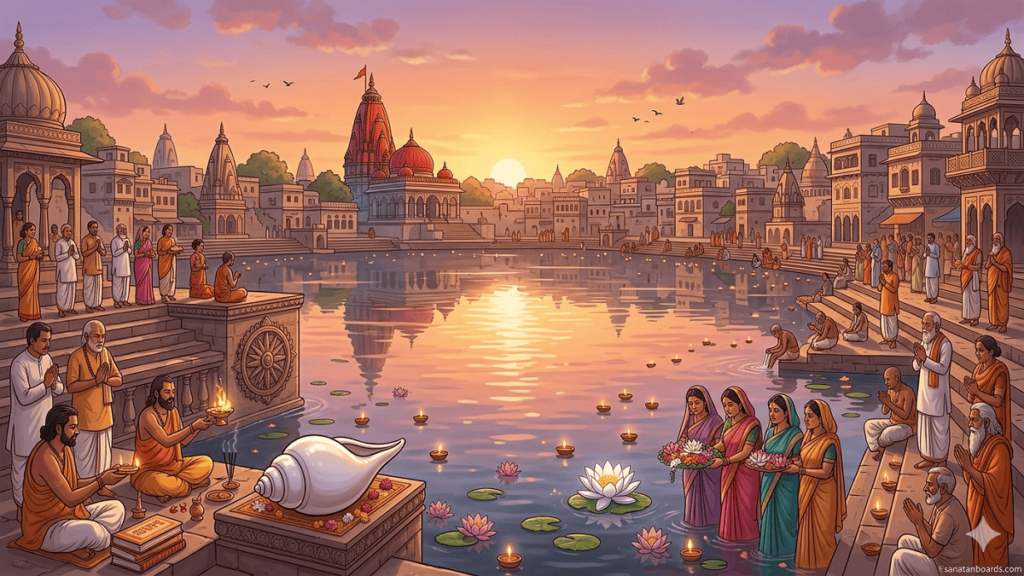
The Pushkar Vishnu Dharma Network is envisioned as a platform dedicated to spreading knowledge about Hindu spirituality, culture, and ethical living. Drawing inspiration from Pushkar, one of India’s most sacred towns, it emphasizes the significance of pilgrimage, rituals, and the spiritual energy associated with holy sites. Pushkar is renowned for the Brahma Temple and the sacred Pushkar Lake, where devotees perform rituals believed to cleanse the mind and soul.
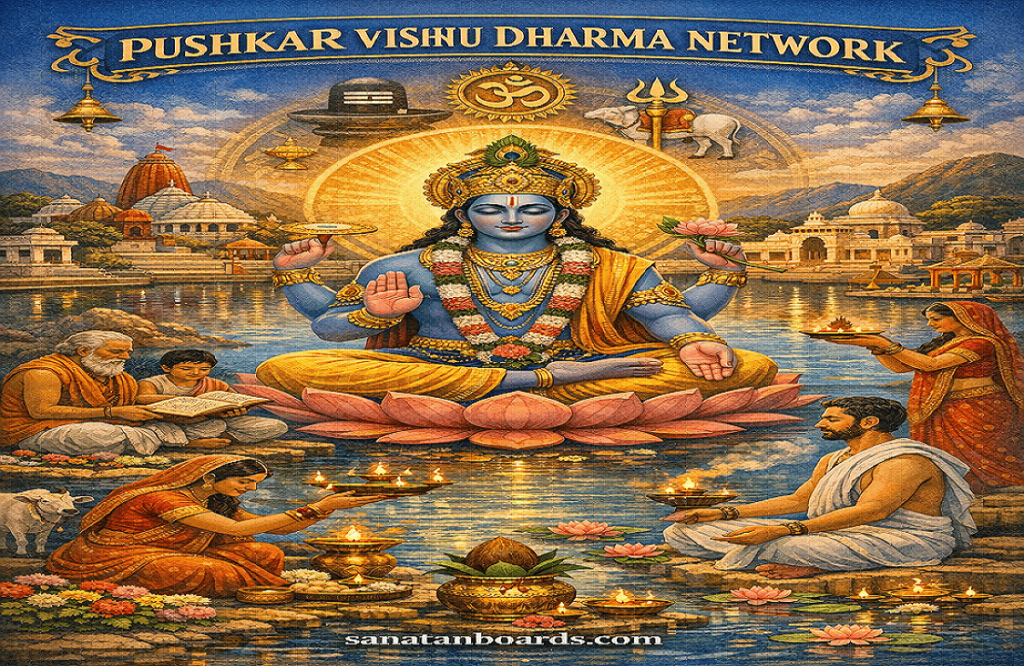
At the heart of the network lies Lord Vishnu, the preserver of the universe according to Hindu philosophy. Vishnu’s teachings, preserved in texts like the Vishnu Purana and the Bhagavad Gita, emphasize righteousness, duty, and the balance of cosmic order. By focusing on Vishnu, the network aims to educate followers about dharma—the moral and ethical principles that guide human life.
Through educational resources, discussions, and spiritual guidance, the Pushkar Vishnu Dharma Network fosters learning about meditation, devotion, and the ethical values that underpin Hindu philosophy. It serves as a bridge connecting ancient wisdom with modern understanding, enabling individuals to explore spiritual growth, cultural heritage, and moral responsibility.
What Is Pushkar Vishnu Dharma Network ?
The term Pushkar Vishnu Dharma Network can be understood as a conceptual or community‑oriented initiative that blends spiritual learning, cultural values, and ethical philosophy rooted in Hindu tradition. Pushkar is one of India’s most ancient and sacred pilgrimage towns, located in the Ajmer district of Rajasthan. It is famous for its holy lake and for housing one of the rare temples dedicated to Lord Brahma, the creator in Hindu cosmology, making the town a centre of deep religious significance and spiritual practice.
The word Vishnu refers to one of the principal deities in Hinduism, revered as the preserver of the universe. Bhakti (devotion) towards Vishnu and his avatars (incarnations) teaches principles such as righteousness, duty, compassion, and spiritual discipline. Dharma in this context means moral order, duty, and ethical conduct that guide individuals toward a balanced and purposeful life.
Thus, a Pushkar Vishnu Dharma Network likely symbolizes a learning platform or community that promotes understanding of Hindu spiritual teachings, the practice of dharma, and the philosophical insights associated with Lord Vishnu and sacred traditions of Pushkar. It would serve educational and cultural purposes by sharing knowledge about ethics, devotion, community values, and timeless spiritual wisdom.
Who Is Required Pushkar Vishnu Dharma Network?
In an age of rapid change and information overload, many individuals seek meaning, purpose, and clarity beyond material success. The Pushkar Vishnu Dharma Network—conceptually rooted in spiritual tradition, cultural heritage, and ethical living—is designed to support those on a journey of inner learning, self‑reflection, and moral growth. But who exactly benefits from this network? Let’s explore the groups of people for whom it holds value.
1. Seekers of Spiritual Understanding
The first group is anyone who is on a spiritual quest. Many people feel a deep need to understand life’s big questions—Why am I here? What is my duty? What is the nature of consciousness? The words Pushkar, Vishnu, and Dharma together symbolize a tradition of inner wisdom that has been discussed for thousands of years. For those seeking answers rooted in philosophical depth rather than temporary trends, this network provides a structured way to explore spiritual knowledge based on Hindu teachings and practices.
2. Individuals Looking for Ethical Guidance
Modern life brings complex moral choices in relationships, work, and society. Dharma—a core concept in Indian philosophy—refers to righteous living, ethical duty, and harmony with universal principles. The Pushkar Vishnu Dharma Network can benefit people who want frameworks to make ethical decisions and understand how spiritual values can guide everyday actions. By learning about dharma from ancient texts and teachings, individuals can cultivate integrity, compassion, and balanced behavior in their personal and professional lives.
3. Students and Scholars of Philosophy
For students, researchers, or enthusiasts of religion and philosophy, this network can serve as a resource platform. It provides insights into Hindu cosmology, the role of divine principles, and the philosophical significance of sacred places like Pushkar. Through educational discussions, text interpretation, and comparative learning, scholars can deepen their understanding of Vishnu‑centric teachings, the concept of preservation and balance in the universe, and how these ideas relate to ethics and human conduct.
4. Cultural Learners and Heritage Enthusiasts
Pushkar is one of India’s oldest pilgrimage sites. It represents not only spiritual significance but also cultural richness—festivals, rituals, local traditions, and historical experiences. People who want to understand Indian heritage beyond textbooks—such as travelers, artists, and cultural learners—will find value in a network that connects spiritual philosophy with cultural context. It offers a meaningful backdrop to ancient ceremonies, temple architecture, and ritual practices associated with devotion and community life.
5. Those Seeking Inner Peace and Well‑Being
Life stress has become a universal challenge. Many individuals are now turning toward meditation, mindfulness, and value‑based living to find peace and mental balance. The network’s teachings around dharma and devotion can help create internal harmony. By learning practices that encourage patience, resilience, gratitude, and clarity of purpose, people can build emotional stability and well‑being.
6. Community Builders and Ethical Leaders
Leaders who want to inspire and uplift others—such as teachers, counselors, social workers, or community organizers—can use the principles highlighted by the network to promote ethical leadership and social harmony. The wisdom of dharma encourages service, honesty, and empathy—qualities essential for positive societal change.
When Is The Pushkar Vishnu Dharma Network Required?
1. During Spiritual Exploration
When a person feels the need to understand life’s purpose or explore the principles of Hindu spirituality, the network is required. This could be during times of questioning, meditation, or interest in learning about dharma, devotion, and moral responsibility.
2. In Times of Ethical Dilemma
When facing difficult choices that challenge personal or societal ethics, the network provides guidance based on dharma, helping individuals make decisions aligned with righteousness, balance, and ethical principles.
3. While Seeking Cultural and Religious Knowledge
Students, scholars, or cultural enthusiasts require this network when they want deep insights into Pushkar’s heritage, rituals, and Vishnu-related teachings, connecting philosophical ideas with tangible cultural practices.
4. For Personal Growth and Mental Well-Being
During periods of stress, confusion, or emotional imbalance, engaging with the network can help individuals practice mindfulness, reflection, and spiritual discipline, leading to inner peace and clarity.
5. For Community and Leadership Development
The network is needed when leaders, educators, or social workers aim to promote ethical values, social harmony, and responsible conduct within a community.
Where Is The Pushkar Vishnu Dharma Network Required?
1. Spiritual and Religious Centers
The network is most naturally required in pilgrimage sites, temples, and spiritual retreats, such as Pushkar itself. Pushkar is one of India’s most sacred towns, known for its Brahma Temple, holy Pushkar Lake, and centuries-old rituals. Pilgrims and devotees visiting these sacred spaces can benefit from the network’s teachings on dharma, devotion, and Vishnu-centric philosophy. It can serve as a guide for performing rituals meaningfully and understanding their spiritual significance, deepening the connection between the devotee and divine principles.
2. Educational Institutions
Colleges, schools, and research centers focusing on religious studies, philosophy, or Indian culture require the Pushkar Vishnu Dharma Network. Students and scholars can access structured knowledge about Hindu dharma, Vishnu’s teachings, and the historical-cultural context of sacred places. This helps in academic exploration, comparative religious studies, and cultural preservation. For example, courses in Indian philosophy or cultural heritage programs can integrate the network as a learning tool to supplement textbooks with experiential insights.
3. Community and Social Centers
Communities seeking to foster ethical values, social harmony, and moral education can benefit from the network. Temples, social organizations, and spiritual community groups can use it to teach ethical living, dharma, and social responsibility, connecting spiritual wisdom with practical life. It helps community members of all ages learn how to make balanced decisions and live harmoniously, fostering a stronger moral fabric in society.
4. Personal Spaces for Growth
The network is also required in homes, meditation centers, and personal study spaces, where individuals pursue self-improvement, reflection, or spiritual practice. In these environments, it guides people in daily meditation, ethical reflection, and understanding the principles of dharma in everyday life. By integrating its teachings into personal routines, individuals can cultivate mindfulness, purpose, and emotional balance.
5. Cultural and Heritage Sites
Finally, the Pushkar Vishnu Dharma Network is required in cultural festivals, heritage sites, and museums, where the preservation of traditional knowledge and rituals is essential. It helps visitors, researchers, and cultural enthusiasts understand the significance of Vishnu-centric traditions, Pushkar rituals, and ethical philosophy, ensuring that cultural and spiritual wisdom is transmitted accurately across generations.
How Is The Pushkar Vishnu Dharma Network Required?
1. Through Education and Knowledge Sharing
The network is required through educational initiatives that convey the principles of dharma, Vishnu-centric teachings, and the spiritual significance of sacred sites like Pushkar. This includes lectures, workshops, online resources, and discussion forums. By providing structured learning, it enables students, scholars, and spiritual seekers to explore ancient texts, philosophical principles, and ethical practices, connecting them with contemporary life. For instance, understanding the stories of Lord Vishnu and the moral lessons they convey helps learners apply these insights to modern ethical dilemmas.
2. Through Community Engagement
The network is also required through active community programs. Temples, spiritual groups, and social organizations can use it to guide community members in ethical living, ritual practices, and spiritual discipline. Activities such as group meditations, dharma discussions, volunteer service, and festival observances allow participants to experience and practice the teachings of Vishnu and the principles of dharma collectively, reinforcing moral values and social harmony.
3. Through Personal Spiritual Practice
On an individual level, the network is required through personal reflection and practice. Devotees and seekers can engage with its teachings by studying sacred texts, performing daily prayers, meditation, or acts of service. These practices help individuals internalize ethical principles, cultivate mindfulness, and strengthen spiritual discipline, leading to personal growth and inner peace. The network provides guidance on integrating dharma into everyday life, making spirituality practical and applicable.
4. Through Cultural Preservation and Learning
The network is also required to preserve and transmit cultural knowledge. Pushkar’s festivals, rituals, and sacred traditions are living examples of Hindu heritage. By using the network, cultural enthusiasts, educators, and tourists can learn the historical and philosophical context behind these practices, ensuring that the spiritual and ethical wisdom of ancient traditions is maintained for future generations.
5. Through Leadership and Ethical Guidance
Finally, the network is required as a framework for ethical leadership. Teachers, counselors, community leaders, and policymakers can draw upon the teachings of dharma to guide decisions, mentor others, and foster ethical behavior in society. By applying the principles in governance, education, and social work, the network helps cultivate responsibility, compassion, and balanced judgment.
Case Study On Pushkar Vishnu Dharma Network
Introduction
The Pushkar Vishnu Dharma Network is envisioned as a platform that promotes Hindu spirituality, ethical living (dharma), and cultural heritage. Rooted in the sacred town of Pushkar and the teachings of Lord Vishnu, the network aims to educate individuals and communities on moral values, spiritual practices, and cultural traditions. This case study explores its objectives, target audience, methods of engagement, and potential impact.
Objectives
- Spiritual Education – To provide knowledge on dharma, Vishnu’s teachings, and rituals associated with Pushkar.
- Cultural Preservation – To create awareness of Pushkar’s historical and religious significance.
- Ethical Development – To guide individuals in applying dharma principles in personal and social life.
- Community Building – To foster social harmony through shared spiritual and ethical practices.
Target Audience
The network is relevant for:
- Spiritual seekers and devotees interested in Vishnu-centered teachings.
- Students and researchers of religion, philosophy, and Indian culture.
- Individuals seeking ethical guidance and personal growth.
- Community leaders promoting moral and cultural values.
Methodology / Implementation
The Pushkar Vishnu Dharma Network operates (or can operate) through:
- Educational Programs: Workshops, seminars, and online courses on dharma, Vishnu philosophy, and Pushkar’s rituals.
- Community Engagement: Organizing group meditations, volunteering, and discussions on ethical living.
- Cultural Events: Celebrating festivals and rituals, conducting heritage walks, and documenting traditions.
- Digital Presence: A website or app providing resources like texts, articles, and video lectures for global learners.
Challenges
- Awareness: Limited public knowledge about the network or its objectives.
- Accessibility: Difficulty in reaching global audiences with authentic and structured content.
- Integration: Balancing traditional teachings with modern lifestyle and technology.
Impact / Benefits
- Enhanced Learning: Participants gain structured understanding of dharma, ethical principles, and spiritual practices.
- Cultural Awareness: Individuals learn the significance of Pushkar and Vishnu-centered rituals.
- Personal Growth: Engagement promotes mindfulness, moral reflection, and inner peace.
- Community Cohesion: Ethical and spiritual guidance fosters harmony and responsible leadership in communities.
Conclusion
The Pushkar Vishnu Dharma Network serves as a model of spiritual, ethical, and cultural learning. It addresses the need for #pushkarvishnudharmanetworkinchennai meaningful guidance in modern life by combining ancient wisdom, cultural heritage, and practical ethics. While challenges remain in accessibility and awareness, its structured approach has the #pushkarvishnudharmanetworkindelhi potential to transform individuals and communities by fostering knowledge, reflection, and dharmic living.
White Paper On Pushkar Vishnu Dharma Network
Executive Summary
The Pushkar Vishnu Dharma Network (PVDN) is an emerging platform designed to promote spiritual knowledge, ethical living, and cultural heritage. Drawing inspiration from the sacred town of Pushkar and the teachings of Lord Vishnu, the network serves as a bridge between ancient wisdom and contemporary life, offering structured learning on dharma, devotion, and moral responsibility. This white paper outlines the need, objectives, implementation strategies, and benefits of the PVDN, highlighting its potential to transform individuals and communities.
Introduction
In today’s fast-paced world, individuals often struggle to find guidance on ethical decision-making, spiritual growth, and cultural understanding. The Pushkar Vishnu Dharma Network addresses these challenges by providing a comprehensive framework for learning about dharma—the principle of righteous living—Vishnu-centric teachings, and the sacred traditions of Pushkar.
Pushkar, located in Rajasthan, India, is home to the Brahma Temple and the holy Pushkar Lake, making it one of the most revered pilgrimage sites in Hinduism. By connecting these cultural and spiritual resources with educational initiatives, PVDN provides a platform for meaningful engagement with India’s philosophical heritage.
Objectives
- Spiritual Education: Disseminate teachings of Lord Vishnu and principles of dharma to individuals and communities.
- Cultural Preservation: Promote awareness of Pushkar’s religious and cultural significance.
- Ethical Development: Offer frameworks for applying moral principles in daily life.
- Community Engagement: Foster social cohesion through shared rituals, meditation, and discussions on dharma.
- Global Accessibility: Leverage digital platforms to make resources available to a worldwide audience.
Target Audience
- Spiritual seekers interested in Hindu philosophy.
- Students and scholars of religion, philosophy, and culture.
- Individuals seeking personal growth and ethical guidance.
- Community leaders promoting social harmony and responsible behavior.
- Cultural enthusiasts exploring Indian traditions and heritage.
Methodology / Implementation
- Educational Initiatives: Workshops, seminars, online courses, and webinars focused on dharma, Vishnu philosophy, and Pushkar’s rituals.
- Community Programs: Meditation sessions, volunteer projects, ethical discussions, and festival celebrations.
- Digital Learning: Websites, mobile apps, and multimedia resources to share teachings globally.
- Cultural Documentation: Archiving sacred rituals, temple histories, and heritage practices for education and research.
- Collaborations: Partnering with educational institutions, temples, and cultural organizations to expand reach.
Challenges and Considerations
- Awareness Gap: Many individuals may not know of the network or its benefits.
- Balancing Tradition and Modernity: Integrating ancient wisdom with contemporary lifestyles.
- Accessibility: Ensuring digital and physical accessibility to diverse audiences.
Benefits / Impact
- Enhanced Learning: Structured understanding of dharma and Vishnu-centric teachings.
- Cultural Preservation: Sustaining Pushkar’s heritage and sacred traditions.
- Personal Development: Promoting mindfulness, ethical decision-making, and spiritual growth.
- Community Cohesion: Strengthening moral and social harmony through collective engagement.
- Global Outreach: Making Indian spiritual and ethical teachings accessible to worldwide learners.
Conclusion
The Pushkar Vishnu Dharma Network represents a holistic approach to spiritual, ethical, and cultural education. By leveraging sacred traditions, #pushkarvishnudharmanetworkinmumbai philosophical teachings, and community engagement, PVDN provides individuals and communities with tools for meaningful living, ethical behavior, and personal growth. Its implementation can bridge the gap between ancient wisdom and modern life, making #pushkarvishnudharmanetworkinvasai dharma and cultural heritage accessible, practical, and transformative.
Industry Applications Of Pushkar Vishnu Dharma Network
1. Education and Research Industry
The network serves as a resource platform for schools, colleges, and universities offering programs in religion, philosophy, Indian culture, and ethics.
- Curriculum Development: Integrate PVDN content into courses on Hindu philosophy, ethics, and cultural heritage.
- Workshops and Seminars: Facilitate student engagement through interactive learning about dharma and Vishnu teachings.
- Research Initiatives: Scholars can use the network for studying sacred rituals, ancient texts, and heritage preservation.
2. Tourism and Cultural Heritage Industry
Pushkar is one of India’s most sacred pilgrimage towns, making cultural and religious tourism a key industry.
- Spiritual Tourism: PVDN can guide pilgrims on the historical and spiritual significance of temples, rituals, and festivals.
- Heritage Preservation: Collaborate with local tourism boards to educate visitors about Pushkar’s cultural and spiritual heritage.
- Educational Tours: Provide curated programs for international and domestic tourists interested in learning about dharma and Vishnu teachings.
3. Wellness and Mindfulness Industry
Spiritual teachings of the network can be applied to mental wellness, meditation and personal development programs.
- Meditation Centers: Incorporate Vishnu-centric philosophy and dharma principles into mindfulness practices.
- Wellness Apps: Digital tools can offer teachings, guided reflections, and meditation routines inspired by the network.
- Counseling and Therapy: Ethical and spiritual frameworks help improve emotional well-being and life purpose guidance.
4. Social and Community Development Industry
The network can support community organizations, NGOs, and social enterprises focused on ethics, leadership, and civic responsibility.
- Ethical Leadership Training: Teach dharma-based decision-making for community leaders, educators, and corporate mentors.
- Volunteer Programs: Use spiritual and ethical frameworks to promote social service and community cohesion.
- Cultural Outreach: Conduct workshops and awareness programs in schools and public spaces to promote moral education.
5. Digital and Knowledge Platforms
The network can leverage technology for global reach, supporting online learning and cultural education.
- E-Learning Platforms: Courses on dharma, spiritual philosophy, and ethical living can reach a global audience.
- Content Development: Multimedia content (videos, blogs, podcasts) on Vishnu teachings and Pushkar traditions.
- Community Forums: Create virtual spaces for learners, devotees, and scholars to share knowledge and insights.
Conclusion
The Pushkar Vishnu Dharma Network demonstrates that spiritual and cultural frameworks have tangible industry applications beyond traditional religious settings. #sanatandharmaaccreditationboardsinmumbai From education and research to tourism, wellness, community development, and digital learning, PVDN can enrich industries by integrating ethical principles, spiritual teachings, and cultural knowledge into their programs. Its versatile approach ensures that dharma, #sanatandharmaaccreditationboardsinvasai Vishnu philosophy, and heritage preservation are not only studied but actively applied, creating both social and economic value.
source : Sanatan Gyaan Manthan
ASK FAQ
What is the Pushkar Vishnu Dharma Network?
It is a conceptual platform focused on spreading spiritual knowledge, ethical living (dharma), and cultural heritage, inspired by Lord Vishnu’s teachings and the sacred traditions of Pushkar.
Who can benefit from the Pushkar Vishnu Dharma Network?
Spiritual seekers, students, scholars, cultural enthusiasts, community leaders, and anyone seeking personal growth, ethical guidance, and cultural understanding can benefit from it.
When is the Pushkar Vishnu Dharma Network required?
It is needed during spiritual exploration, ethical dilemmas, cultural learning, personal development, or community-building initiatives.
Where is the Pushkar Vishnu Dharma Network most applicable?
It is most relevant in temples, pilgrimage sites like Pushkar, educational institutions, community centers, meditation centers, and cultural heritage programs.
How does the Pushkar Vishnu Dharma Network help individuals and communities?
It provides structured spiritual education, ethical guidance, cultural preservation, meditation practices, and community engagement, promoting inner growth and social harmony.
Table of Contents
Disclaimer:
This content is for educational, informational, and learning purposes only. It is not intended as professional, spiritual, or religious advice. Readers should consult relevant experts or authorities for personal guidance.