
The Nashik Panchavati Network is a significant infrastructural and cultural framework in Nashik, connecting key religious, residential, and commercial areas within the city. Panchavati, one of the most historic neighborhoods of Nashik, is renowned for its mythological importance as the place where Lord Rama spent part of his exile according to the Ramayana. The network integrates roads, pedestrian paths, public transportation, and utility services to support both local residents and the millions of pilgrims visiting Nashik annually, particularly during the Kumbh Mela.
This network emphasizes seamless connectivity among prominent temples, ghats along the Godavari River, markets, and residential sectors. It includes modern infrastructure developments like smart street lighting, surveillance systems, and environmentally friendly waste management to enhance urban efficiency. From a socio-economic perspective, the Panchavati Network fosters tourism, local commerce and cultural preservation while ensuring sustainable urban growth. Its design reflects a blend of traditional urban planning with contemporary technology, making it a model for heritage-centric city networks in India.
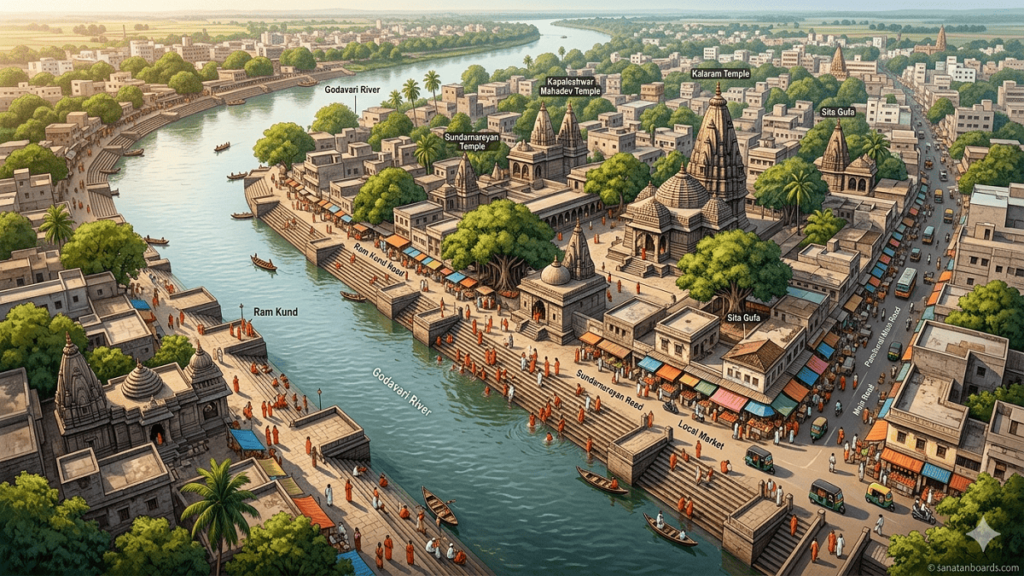
What Is Nashik Panchavati Network ?
The Nashik Panchavati Network refers to the integrated urban and infrastructural framework in Nashik, particularly focused on the historic Panchavati area. Panchavati is famous for its cultural and religious significance, as it is believed to be the site where Lord Rama spent part of his exile in the Ramayana. The network is designed to connect temples, ghats, markets, residential areas, and other public spaces efficiently, ensuring smooth mobility for both residents and the large number of pilgrims who visit the city.
This network includes well-planned roads, pedestrian pathways, public transport links, water supply, electricity, and waste management systems, all aimed at enhancing urban functionality while preserving cultural heritage. Modern features, such as smart street lighting, surveillance systems, and eco-friendly initiatives, are incorporated to promote sustainable development.
The Nashik Panchavati Network also supports tourism and local commerce by providing easy access to key sites such as Trimbakeshwar Temple and Ramkund. Its combination of traditional urban planning and contemporary infrastructure makes it an example of how heritage areas can be developed responsibly. Overall, the network is more than just roads and utilities—it is a lifeline that preserves history, supports the community, and enables sustainable growth in one of India’s sacred cities.
Who Is Required For The Nashik Panchavati Network ?
The Nashik Panchavati Network is a complex urban and cultural infrastructure system in Nashik, designed to connect historic Panchavati with the rest of the city while supporting both residents and millions of pilgrims. Its planning, construction, and maintenance require the involvement of multiple key stakeholders working together.
Urban planners and architects are essential for designing roads, pedestrian pathways, public spaces, and transport links that balance modern urban needs with the heritage value of Panchavati. They ensure that infrastructure respects the religious significance of sites linked to the Ramayana.
Local government authorities, mainly the Nashik Municipal Corporation, provide funding, regulatory approvals, and policy oversight. They coordinate between departments to maintain water supply, electricity, waste management, and public safety.
Civil engineers and construction agencies implement the plans on the ground, building roads, bridges, ghats, and drainage systems that can handle both everyday traffic and large festival crowds, such as those during the Kumbh Mela.
Environmental and heritage experts ensure development is sustainable and that cultural landmarks, riverbanks, and green spaces are preserved. Technology providers implement smart systems for street lighting, surveillance, and traffic management, enhancing safety and efficiency.
Additionally, community members and religious leaders play a vital role by providing insights into local needs, pilgrim behavior, and cultural practices, ensuring the network is socially inclusive. Public transport authorities and utility departments maintain buses, water, electricity, and sanitation, keeping the network functional daily.
When Is The Nashik Panchavati Network Required ?
The Nashik Panchavati Network is required continuously but becomes especially critical during specific times, events, and developmental phases in Nashik. This network is designed to ensure smooth urban functioning, efficient transport, sustainable development, and preservation of cultural and religious heritage in Panchavati. Understanding when it is required helps appreciate its importance for both residents and visitors.
Firstly, the network is required on a daily basis. Panchavati is a bustling urban area with a mix of residential, commercial, and religious zones. Roads, pedestrian pathways, public transport, and utility services like water supply, electricity, and waste management must function efficiently every day to support normal urban life. Without a coordinated network, traffic congestion, service disruptions, and inconvenience to local residents would be common.
Secondly, the network becomes critically important during religious festivals and pilgrimages. Panchavati is historically significant as the place where Lord Rama spent part of his exile, according to the Ramayana. Millions of pilgrims visit annually, particularly during the Kumbh Mela and other major festivals like Ram Navami. During these periods, the network ensures safe movement of large crowds, manages traffic effectively, and maintains sanitation and public safety. Temporary arrangements such as additional buses, emergency medical services, and crowd-control measures are integrated into the network during these high-demand times.
The network is also required during urban expansion and infrastructure development. Nashik is rapidly growing, and Panchavati is a focal point for commercial, cultural, and residential development. Planning new roads, upgrading public transport systems, installing smart street lighting, and improving waste management all require the Panchavati Network to coordinate multiple departments and stakeholders.
Environmental and heritage preservation efforts further highlight when the network is necessary. During riverbank cleaning, temple restorations, or tree plantation drives along the Godavari River, the network helps coordinate traffic diversions, protect heritage sites, and maintain public access.
Lastly, the network is required during emergencies and disaster management. Floods, fires, or medical emergencies demand quick response across roads, drainage systems, and public facilities. The Nashik Panchavati Network integrates smart surveillance, emergency routes, and communication systems to handle such situations efficiently.
Where is the Nashik Panchavati Network required /
he Nashik Panchavati Network is required in specific locations within Nashik to ensure smooth transportation, urban functionality, and cultural preservation. Panchavati is a historic and religious hub along the banks of the Godavari River, famous for its association with Lord Rama in the Ramayana. The network is strategically implemented in areas that experience high footfall, vehicular movement, and cultural activity.
Primarily, the network is required along major roads and transport corridors connecting Panchavati with the rest of Nashik. Roads such as Gangapur Road, Panchavati Road, and Ramkund Road are vital for daily commuting, commercial traffic, and tourism. Efficient traffic management, pedestrian pathways, and public transport stops in these areas reduce congestion and improve accessibility.
The network is also crucial around religious and cultural landmarks. Key sites include Ramkund, Kalaram Temple, Sita Gufaa, and other temples where pilgrims and tourists gather daily. Infrastructure here must support large crowds, safe pedestrian movement, sanitation, and emergency services, especially during festivals like Kumbh Mela and Ram Navami.
Residential and commercial areas in and near Panchavati also require the network to maintain water supply, electricity, waste management, and road connectivity. Efficient service delivery ensures residents’ quality of life while supporting local businesses, markets, and hospitality services catering to pilgrims and tourists.
Additionally, the network is required along the Godavari riverbanks and ghats, which are central to religious rituals and eco-tourism. Pathways, lighting, drainage, and waste management along these zones are critical to prevent pollution, ensure safety, and preserve the river ecosystem.
Finally, the network is essential at urban expansion and developmental sites. Areas earmarked for new infrastructure projects, public spaces, parks, and smart city initiatives depend on integrated planning to connect them with existing roads, transport systems, and public utilities.
How the Nashik Panchavati Network is required ?
The Nashik Panchavati Network is required in a structured and systematic manner to ensure the smooth functioning of transportation, urban services, and cultural preservation in Nashik. The question of “how it is required” focuses on the methods, processes, and approaches used to implement and maintain the network effectively in Panchavati, a historic and religious hub along the Godavari River.
Firstly, the network is required through strategic urban planning. Urban planners and architects study the city’s layout, population density, and traffic patterns to design roads, pedestrian pathways, and public transport systems that reduce congestion and improve accessibility. The network emphasizes connecting key sites like Ramkund, Kalaram Temple, and other landmarks associated with the Ramayana, ensuring that pilgrims and tourists can move safely and efficiently.
Secondly, it is required through integration of infrastructure services. Roads, drainage, water supply, electricity, waste management, and public lighting are coordinated under the network to ensure continuous service delivery. For example, street lighting and surveillance systems are installed along major roads and ghats to maintain safety, while drainage systems prevent waterlogging during monsoons.
The network is also required through stakeholder collaboration. Government authorities like the Nashik Municipal Corporation work with civil engineers, environmental experts, technology providers, and community leaders to ensure that development is sustainable, culturally sensitive, and inclusive. This collaborative approach ensures that both local residents and millions of pilgrims visiting events like the Kumbh Mela benefit from efficient facilities.
Another way the network is required is through technology integration. Smart traffic management, surveillance cameras, and automated public utilities help maintain order and prevent disruptions. Mobile apps and digital information boards guide commuters and pilgrims, making navigation easier and improving overall efficiency.
Finally, the network is required through adaptive management. Seasonal events, festivals, and emergency situations demand temporary adjustments, such as additional bus services, crowd-control measures, and emergency response plans. The network’s design allows flexibility to handle high traffic volumes and unexpected situations without compromising urban functionality or heritage preservation.
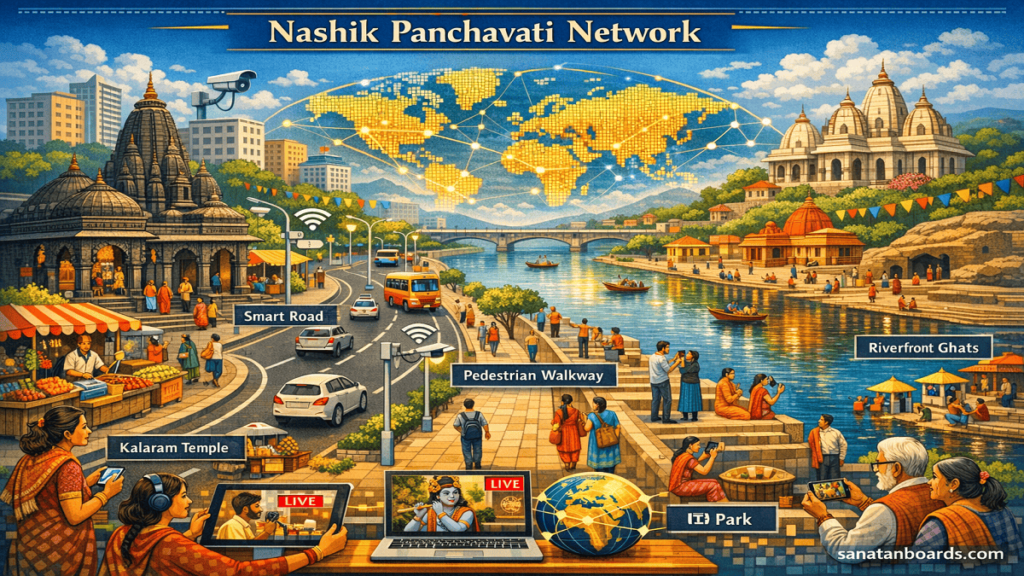
Case Study On Nashik Panchavati Network
Introduction:
The Nashik Panchavati Network in Nashik is a comprehensive urban infrastructure and connectivity system designed to support daily life, tourism, and pilgrimage activities in one of India’s most historically significant neighborhoods. Panchavati is renowned for its association with Lord Rama in the Ramayana, and its ghats along the Godavari River attract millions of pilgrims every year.
Objective:
The network aims to:
- Improve transportation and pedestrian movement in Panchavati.
- Enhance public utilities such as water, electricity, waste management, and drainage.
- Preserve cultural and religious heritage.
- Support tourism and economic activity.
- Ensure sustainability and safety during high-footfall events like the Kumbh Mela.
Implementation:
The Nashik Municipal Corporation (NMC) collaborated with urban planners, civil engineers, heritage experts, and technology providers to develop the network. Key strategies included:
- Construction of well-planned roads, pedestrian walkways, and riverfront pathways.
- Installation of smart street lighting, CCTV surveillance, and traffic management systems.
- Integration of water supply, drainage, sanitation, and waste management facilities.
- Preservation and beautification of temples, ghats, and historic landmarks to maintain cultural integrity.
Challenges:
- Managing congestion during festivals with millions of visitors.
- Balancing urban development with heritage preservation.
- Ensuring sustainable waste disposal and environmental protection along the Godavari River.
- Coordinating multiple stakeholders effectively.
Outcomes:
- Improved connectivity and accessibility within Panchavati.
- Enhanced safety and comfort for residents and pilgrims.
- Increased tourism revenue due to better infrastructure and organized facilities.
- Sustainable urban development practices that respect cultural heritage.
Conclusion:
The Nashik Panchavati Network demonstrates how a city can successfully integrate modern urban planning with historical and religious significance. By coordinating infrastructure,#nashikpanchavatinetworkinjaipur technology, community participation, and heritage conservation, it has become a model for heritage-centric urban #nashikpanchavatinetworkinnashik networks in India.
White Paper On Nashik Panchavati Network
Executive Summary:
The Nashik Panchavati Network is a strategic urban infrastructure system in Nashik, aimed at enhancing connectivity, preserving cultural heritage, and supporting sustainable urban development. Panchavati, historically significant due to its association with Lord Rama in the Ramayana, is a hub of religious, cultural, and commercial activity. The network addresses challenges of high pedestrian and vehicular traffic, infrastructure maintenance, and heritage preservation while ensuring accessibility for residents and pilgrims.
Background:
Panchavati is one of Nashik’s oldest neighborhoods, featuring temples, ghats along the Godavari River, and historical sites. With millions visiting annually, especially during festivals like the Kumbh Mela, there was a critical need for an integrated network to manage transportation, utilities, and public safety.
Objectives:
- Improve urban mobility through planned roads, pedestrian pathways, and public transport.
- Integrate utility services including water, electricity, drainage, and waste management.
- Preserve cultural and religious landmarks.
- Support tourism and local commerce.
- Implement sustainable and eco-friendly practices.
Implementation Approach:
- Urban Planning: Strategic layout of roads, walkways, and transport corridors.
- Stakeholder Collaboration: Coordination between the Nashik Municipal Corporation, urban planners, engineers, environmental experts, and community leaders.
- Technology Integration: Smart traffic management, surveillance systems, and automated utilities.
- Cultural Preservation: Restoration and maintenance of temples, ghats, and riverfront areas.
- Emergency & Event Management: Temporary infrastructure for festivals and pilgrimages to handle large crowds safely.
Challenges:
- High congestion during festivals and pilgrimages.
- Balancing modern infrastructure with heritage preservation.
- Waste management and river ecosystem protection.
- Coordination across multiple government departments and private contractors.
Outcomes and Benefits:
- Enhanced urban connectivity and mobility.
- Improved safety, sanitation, and public services.
- Increased tourism and economic activity.
- Sustainable urban growth while preserving heritage.
Conclusion:
The Nashik Panchavati Network serves as a model for heritage-centric urban planning. By integrating infrastructure, technology, and community engagement, #nashikpanchavatinetworkinmumbai the network ensures Nashik remains accessible, safe, and culturally vibrant, balancing the city’s historic significance with modern #nashikpanchavatinetworkinjaipur urban needs.
Industry Applications Of Nashik Panchavati Network
The Nashik Panchavati Network in Nashik is more than a city infrastructure system; it also has significant applications across multiple industries, ranging from tourism to urban development and technology. By integrating roads, pedestrian pathways, utility services, and heritage conservation, it provides a model for industries to optimize operations in urban and cultural hubs.
1. Tourism and Hospitality Industry:
Panchavati, a historically and religiously significant area linked to the Ramayana, attracts millions of pilgrims and tourists annually, especially during festivals like the Kumbh Mela. The network ensures smooth transportation, access to temples, ghats, and markets, and safety for visitors. Hotels, restaurants, and tour operators benefit directly by being able to plan services around well-organized traffic and pedestrian systems.
2. Transportation and Logistics:
The network facilitates the movement of goods, vehicles, and public transport within Panchavati and beyond. Logistics companies, delivery services, and city transit authorities use the structured roads, transport hubs, and smart traffic management systems to optimize routes, reduce congestion, and improve efficiency.
3. Urban Planning and Real Estate Development:
Developers and planners leverage the network’s infrastructure for residential, commercial, and mixed-use projects. Availability of reliable utilities, proper drainage, and road connectivity increases land value and promotes sustainable urban expansion.
4. Technology and Smart City Solutions:
The network integrates smart street lighting, surveillance cameras, and traffic monitoring. Tech companies can deploy IoT devices, data analytics, and urban management software to monitor crowds, optimize public utilities, and enhance citizen safety.
5. Heritage and Cultural Management:
Organizations focused on cultural preservation and event management use the network to coordinate maintenance of temples, ghats, and riverfront areas. Festivals and cultural events are planned efficiently, ensuring minimal disruption to daily urban life while protecting heritage sites.
6. Environmental and Waste Management:
The network supports sustainable practices along the Godavari River and surrounding areas. Waste collection, water treatment, and pollution control are integrated with urban operations, providing opportunities for environmental tech and service companies to innovate in urban sustainability.
Conclusion:
The Nashik Panchavati Network is a blueprint for multi-industry applications, linking tourism, transportation, urban development, technology, cultural management, #sanatandharmaaccreditationboardsinmumbai and environmental services. By providing structured connectivity, utilities, and smart infrastructure, it enables industries to operate efficiently, #sanatandharmaaccreditationboardsinvasai sustainably, and in harmony with heritage and community needs.
source : Yatra Mitra
ASK FAQ
What is the Nashik Panchavati Network?
The Nashik Panchavati Network is an integrated urban infrastructure system in Nashik, connecting roads, pedestrian pathways, utilities, and cultural landmarks in Panchavati to support residents, tourism, and heritage preservation.
Why is the Nashik Panchavati Network important?
It is important because it ensures smooth mobility, efficient public services, and safety for daily life and large pilgrim gatherings, while protecting the cultural and religious heritage of Panchavati.
Who is involved in the Nashik Panchavati Network?
Key stakeholders include the Nashik Municipal Corporation, urban planners, civil engineers, technology providers, environmental experts, community leaders, and heritage authorities.
Where is the Nashik Panchavati Network implemented?
The network is implemented across major roads, residential and commercial areas, temples, ghats along the Godavari River, and urban development zones in Panchavati.
How does the Nashik Panchavati Network benefit industries?
It benefits tourism, transportation, real estate, technology, cultural management, and environmental services by providing organized connectivity, utilities, smart infrastructure, and crowd management during festivals like Kumbh Mela.
Table of Contents
Disclaimer: This content is for educational and informational purposes only. All information about the Nashik Panchavati Network is based on publicly available sources and is intended to enhance learning. The author and website are not responsible for any decisions made based on this information.