The Mathura Vrindavan Bhakti Network refers to the spiritual and devotional culture centered around Mathura and Vrindavan, two sacred cities closely associated with the life of Lord Krishna. This “network” is not just technological but deeply human and spiritual, connecting temples, saints, devotees, and traditions that promote bhakti (devotion).
Mathura is believed to be the birthplace of Lord Krishna, while Vrindavan is where he spent his childhood performing divine pastimes. Together, they form the heart of Krishna devotion. The Bhakti Network includes temples, ashrams, spiritual organizations, and pilgrimage routes that guide devotees in practicing love and surrender to God.
In modern times, this network has expanded through digital platforms such as live temple darshan, online kirtans, and spiritual teachings shared via social media. This allows devotees from around the world to stay connected with the sacred traditions of Mathura and Vrindavan.
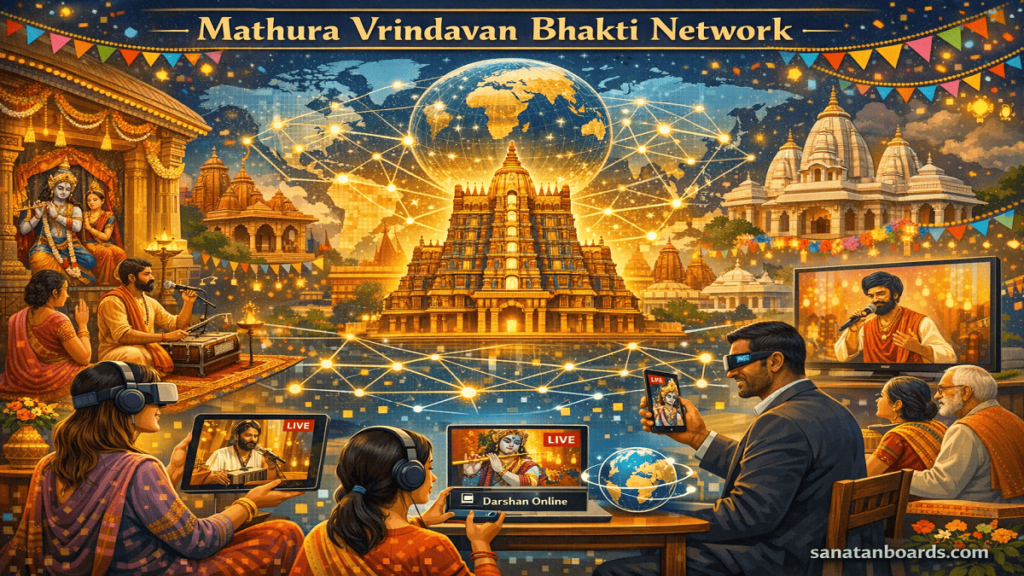
What Is MATHURA VRINDAVAN BHAKTI NETWORK ?
The Mathura Vrindavan Bhakti Network is a spiritual and devotional system centered around the sacred cities of Mathura and Vrindavan, both of which are deeply associated with the life of Lord Krishna. This network represents a living tradition of bhakti (devotion), connecting temples, saints, devotees, religious institutions, and cultural practices that focus on love and devotion toward God.
Mathura is believed to be the birthplace of Lord Krishna, while Vrindavan is known as the place where he spent his childhood and performed divine pastimes. Because of this, these cities have become major centers of pilgrimage and devotion. The Bhakti Network includes well-known temples, ashrams, and spiritual communities where daily rituals such as aarti, kirtan (devotional singing), and scriptural teachings are practiced with deep faith.
This network is not limited to physical spaces. It also includes the relationships and shared beliefs among devotees who visit, live, or spiritually connect with these places. Festivals like Janmashtami and Holi are celebrated with great enthusiasm, bringing together people from different parts of India and the world. These events strengthen the spiritual bond among devotees and promote the values of unity, love, and faith.
In modern times, the Mathura Vrindavan Bhakti Network has expanded through digital technology. Many temples and spiritual organizations now offer live darshan, online kirtans, and virtual spiritual discourses through platforms like YouTube and mobile apps. This allows people who cannot physically visit these holy places to stay connected and participate in devotional practices from anywhere in the world.
The core purpose of this network is to spread the message of bhakti, which emphasizes surrender to God, compassion for others, and inner peace. It plays an important role in preserving ancient traditions while adapting to modern communication methods. As a result, the Mathura Vrindavan Bhakti Network continues to inspire millions of people, helping them deepen their spiritual understanding and maintain a meaningful connection with divine devotion in their daily lives.
Who Is Required For MATHURA VRINDAVAN BHAKTI NETWORK ?
The Mathura Vrindavan Bhakti Network is not run by a single person or group; instead, it depends on the collective efforts of many individuals and communities connected to the sacred cities of Mathura and Vrindavan. Different people play important roles in maintaining and spreading this devotional network.
First, spiritual leaders and saints are essential. They guide devotees by teaching the principles of bhakti, explaining scriptures, and leading religious activities such as kirtans and discourses. Their wisdom helps people understand the deeper meaning of devotion and spirituality.
Second, temple priests and caretakers are required to perform daily rituals like aarti, पूजा (worship), and maintaining the temples. They ensure that traditional practices are followed properly and that the spiritual atmosphere is preserved.
Third, devotees (bhakts) are the heart of this network. Without devotees, the Bhakti Network would not exist. They participate in prayers, festivals, and pilgrimages, and spread devotion through their faith and actions. Their involvement keeps the spiritual energy alive.
Fourth, volunteers and service workers (sevadars) play a key role. They help manage temples, organize events, distribute food (prasadam), and assist pilgrims. Their selfless service reflects the true spirit of bhakti.
Fifth, in modern times, digital creators and organizers are also important. They manage social media, live streaming of darshan, and online spiritual content, making the Bhakti Network accessible worldwide.
Lastly, local communities and authorities support infrastructure, safety, and organization of large gatherings and festivals.
When Is Required MATHURA VRINDAVAN BHAKTI NETWORK ?
The Mathura Vrindavan Bhakti Network is not limited to a specific time—it is required and active throughout the year. It is centered in the sacred cities of Mathura and Vrindavan, where devotional activities take place daily as part of continuous spiritual practice.
On a daily basis, the Bhakti Network is required for regular temple rituals such as aarti, पूजा (worship), bhajans, and darshan. Devotees engage in these practices every day to maintain their spiritual connection and discipline. Morning and evening are especially important times for these activities.
On a seasonal and festival basis, the network becomes even more active and important. Major festivals like Janmashtami (the birth of Lord Krishna), Holi, and Radhashtami attract large numbers of devotees. During these times, the Bhakti Network helps organize celebrations, manage crowds, and spread devotional teachings.
It is also required during pilgrimage seasons, when people travel to Mathura and Vrindavan for spiritual visits. The network supports pilgrims through temple services, guidance, and community support.
In modern times, the Bhakti Network is needed continuously online as well. Through live streaming, social media, and virtual events, spiritual teachings and darshan are shared every day with a global audience.
Where Is Mathura Vrindavan Bhakti Network Required ?
The Mathura Vrindavan Bhakti Network is primarily required and centered in the sacred region of Mathura and Vrindavan, which are located in the state of Uttar Pradesh, India. These cities are considered the spiritual heart of devotion to Lord Krishna and serve as the main foundation of this network.
Mathura is widely believed to be the birthplace of Lord Krishna, making it one of the most important pilgrimage sites in Hinduism. Vrindavan, located nearby, is where Krishna spent his childhood and performed his divine leelas (pastimes). Because of this deep spiritual significance, the Bhakti Network is most active and required in these locations, where thousands of temples, ashrams, and religious centers exist.
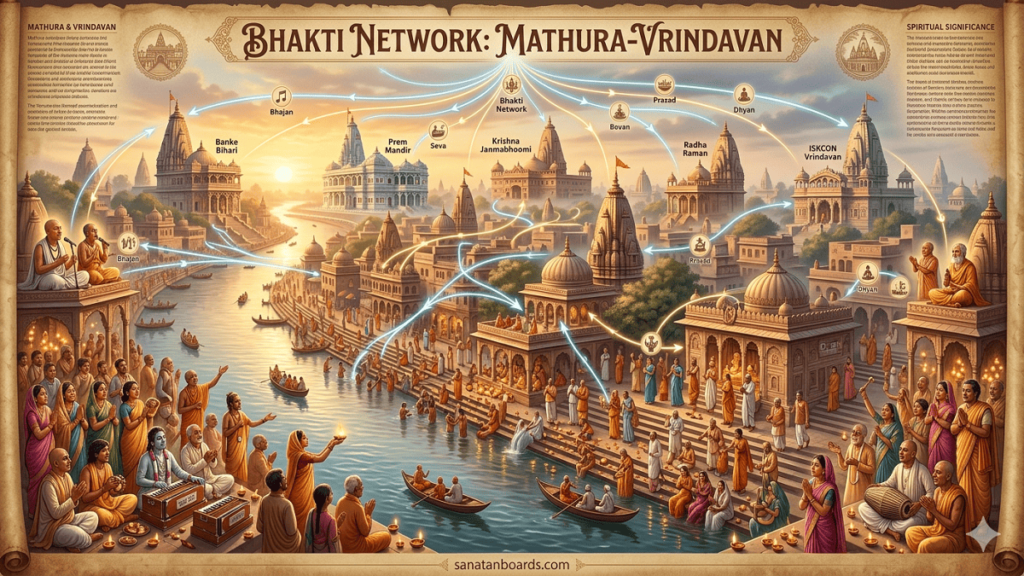
Within these cities, the network operates in various places such as temples, ghats along the Yamuna River, ashrams, and spiritual institutions. Daily rituals, kirtans, and religious teachings take place in these spaces, requiring constant participation from priests, devotees, and volunteers. Popular temple areas and pilgrimage routes are especially important, as they attract large numbers of visitors who depend on the Bhakti Network for guidance and spiritual experience.
The network is also required in surrounding regions known as the Braj area, which includes places like Govardhan, Barsana, and Nandgaon. These places are connected to different events in Krishna’s life and are part of the larger pilgrimage circuit. Devotees often travel across these locations, and the Bhakti Network supports their journey through services, events, and spiritual activities.
In addition to physical locations, the Mathura Vrindavan Bhakti Network is now required globally through digital platforms. Many temples and organizations broadcast live darshan, kirtans, and spiritual discourses online. This allows devotees from different countries to connect with the sacred traditions of Mathura and Vrindavan without being physically present.
The network is also required in homes, communities, and spiritual centers where people practice Krishna bhakti. Devotees recreate the atmosphere of Mathura and Vrindavan by organizing bhajans, पूजा, and study groups, extending the reach of the network beyond geographical boundaries.
How Is Required Mathura Vrindavan Bhakti Network ?
The Mathura Vrindavan Bhakti Network is required in an organized and interconnected manner to sustain and spread devotion rooted in the sacred cities of Mathura and Vrindavan. It functions through a combination of religious practices, community involvement, and modern communication systems.
Firstly, the network is required through daily spiritual activities carried out in temples and ashrams. Rituals such as aarti, पूजा (worship), bhajans, and kirtans are performed regularly. These require coordination between priests, temple staff, and devotees to ensure that traditions are preserved and followed with discipline.
Secondly, it depends on the active participation of devotees. Devotees engage in prayer, attend discourses, and take part in pilgrimages. Their faith and involvement keep the devotional environment alive and help in spreading the message of bhakti to others.
Thirdly, the network is maintained through seva (selfless service). Volunteers and organizers manage temple activities, help pilgrims, distribute prasadam, and handle large crowds during festivals. Their efforts ensure that spiritual events are conducted smoothly and efficiently.
Another important aspect is spiritual education and guidance. Saints and teachers provide knowledge of scriptures and guide people on the path of devotion. This helps individuals understand the deeper meaning of bhakti and apply it in their daily lives.
In modern times, the Bhakti Network is also required through digital platforms. Live streaming of darshan, online kirtans, and social media sharing allow people across the world to stay connected with the spiritual practices of Mathura and Vrindavan.
Case Study On Mathura Vrindavan Bhakti Network
The Mathura Vrindavan Bhakti Network is a unique example of how traditional spirituality and modern systems can work together to sustain and spread devotion. Centered in the sacred cities of Mathura and Vrindavan, this network connects temples, devotees, spiritual leaders, and digital platforms into a unified devotional system.
Background
Mathura and Vrindavan are globally recognized as the birthplace and childhood land of Lord Krishna. Every year, millions of devotees visit these cities for spiritual experiences. Managing such large-scale devotion requires a strong and well-organized network which has evolved over time into what we call the Bhakti Network.
Key Components of the Network
The network includes:
- Temples and Ashrams where daily rituals and teachings take place
- Priests and Saints who guide spiritual practices
- Devotees who actively participate in worship and festivals
- Volunteers (Sevadars) who manage events and provide services
- Digital Platforms that broadcast live darshan and spiritual content
Case Example: Festival Management
During major festivals like Janmashtami and Holi, the Bhakti Network becomes highly active. For example, on Janmashtami, thousands of devotees gather in temples across Mathura and Vrindavan. The network ensures:
- Smooth crowd management
- Continuous पूजा and kirtans
- Distribution of prasadam
- Safety and guidance for pilgrims
At the same time, live streaming allows millions of online viewers to participate virtually, showing how traditional devotion is supported by modern technology.
Challenges
The network faces challenges such as overcrowding, maintaining cleanliness, and managing resources during peak seasons. Digital infrastructure and coordination between authorities and temple management are also critical.
Outcomes and Impact
Despite challenges, the Mathura Vrindavan Bhakti Network successfully preserves ancient traditions while adapting to modern needs. It promotes spiritual values like devotion, unity, and service, and connects people globally.
Conclusion
This case study shows that the #mathuravrindavanbhaktinetworkinjaipur Mathura Vrindavan Bhakti Network is not just a religious system but a well-coordinated model of community, culture, and technology working together #mathuravrindavanbhaktinetworkingujrat to sustain spiritual life.
White Paper On Mathura Vrindavan Bhakti Network
Abstract
The Mathura Vrindavan Bhakti Network represents a dynamic integration of traditional spirituality and modern connectivity. Centered in Mathura and Vrindavan, this network facilitates devotional practices, pilgrimage management, and global spiritual outreach. This paper explores its structure, functioning, challenges, and future potential.
1. Introduction
Mathura and Vrindavan are globally recognized as the core of Krishna devotion. With millions of pilgrims visiting annually, a structured system has evolved to manage religious, cultural, and logistical activities. The Bhakti Network is a decentralized yet interconnected framework that supports these functions while promoting the philosophy of bhakti (devotion).
2. Structure of the Bhakti Network
The network consists of multiple stakeholders:
- Temples and Ashrams: Centers for rituals, teachings, and spiritual gatherings
- Spiritual Leaders and Priests: Providers of guidance and religious knowledge
- Devotees: Active participants in devotional practices
- Volunteers (Sevadars): Supporters of event management and services
- Digital Platforms: Channels for global outreach through live streaming and online content
3. Functional Mechanisms
The network operates through:
- Daily Ritual Systems: Aarti, kirtans, and scriptural discourses
- Festival Coordination: Large-scale organization during events like Janmashtami and Holi
- Pilgrimage Support: Infrastructure for accommodation, guidance, and safety
- Digital Integration: Virtual darshan and online engagement for global devotees
4. Role of Technology
Technology has significantly expanded the reach of the Bhakti Network. Social media, mobile applications, and live streaming platforms allow real-time participation in rituals. This hybrid model bridges geographical gaps and ensures continuous engagement.
5. Challenges
Key challenges include:
- Overcrowding during peak seasons
- Environmental concerns and waste management
- Infrastructure limitations
- Need for coordinated governance among stakeholders
6. Opportunities and Future Scope
The network has strong potential for growth through:
- Smart pilgrimage management systems
- Enhanced digital infrastructure
- Sustainable tourism practices
- Global collaborations for cultural preservation
7. Conclusion
The Mathura Vrindavan Bhakti Network is a powerful example of how ancient spiritual traditions can adapt to modern systems. By combining devotion, #mathuravrindavanbhaktinetworkinvrindavan community participation, and technology, it #mathuravrindavanbhaktinetworkinmumbai continues to serve millions while preserving cultural and religious heritage.
Industry Applications Of Mathura Vrindavan Bhakti Network
1. Tourism and Hospitality Industry
One of the most important applications is in religious tourism. Millions of pilgrims visit Mathura and Vrindavan every year. Hotels, guest houses, transport services, and tour operators benefit from this flow. The Bhakti Network helps organize pilgrimages, manage crowds, and enhance visitor experience, making it a strong case for sustainable tourism development.
2. Event Management Industry
Large-scale festivals such as Janmashtami and Holi require advanced planning and coordination. Event management companies can learn from this network in handling massive gatherings, logistics, safety, and scheduling of activities.
3. Media and Digital Content Industry
The rise of live darshan, online kirtans, and spiritual videos has created opportunities in digital media. Platforms like YouTube and social media channels are used to broadcast devotional content globally. This supports content creators, streaming services, and digital marketers.
4. Education and Training Sector
Spiritual institutions in Mathura and Vrindavan provide teachings on scriptures, philosophy, and values. This creates opportunities for online courses, workshops, and cultural education programs, benefiting the education industry.
5. Non-Profit and Social Service Sector
Many organizations within the network are involved in charity work such as food distribution, healthcare camps, and social welfare. This provides a model for NGOs to organize community service efficiently and sustainably.
6. Technology and IT Industry
The integration of apps, websites, and virtual platforms for darshan and donations shows how technology can support traditional systems. IT companies can develop solutions for crowd management, online donations, and virtual event experiences.
7. Local Economy and Handicrafts Industry
The demand for पूजा items, souvenirs, and traditional crafts supports local businesses and artisans. This boosts small-scale industries and promotes cultural products.
Conclusion
The Mathura Vrindavan Bhakti Network demonstrates how a spiritual system can influence multiple industries. By #sanatandharmaaccreditationboardsinmumbai combining tradition with modern practices, it provides a scalable and sustainable model for tourism, technology, media, #sanatandharmaaccreditationboardsinvasai and social development.
source : Trimurti Bhakti
ASK FAQ
What is the Mathura Vrindavan Bhakti Network?
The Mathura Vrindavan Bhakti Network is a spiritual system connecting temples, devotees, and traditions centered in Mathura and Vrindavan, promoting devotion (bhakti) to Lord Krishna.
Why is the Mathura Vrindavan Bhakti Network important?
It helps preserve ancient traditions, supports pilgrims, and spreads spiritual values like love, devotion, and unity across local and global communities.
How does the Bhakti Network function?
It operates through daily rituals, festivals, seva (service), and digital platforms like live darshan and online kirtans, connecting devotees worldwide.
Who are the key participants in the Bhakti Network?
The network includes priests, saints, devotees, volunteers, temple authorities, and digital content creators who help maintain and expand devotional activities.
Where is the Mathura Vrindavan Bhakti Network applied?
It is mainly active in Mathura, Vrindavan, and nearby regions, but also extends globally through online platforms and spiritual communities.
Table of Contents
Disclaimer:
This content is created for educational and informational purposes only. It is based on general knowledge about the Mathura Vrindavan Bhakti Network and does not represent any official organization or authority. The information is intended to promote learning and understanding of spiritual and cultural concepts.