The Madurai Meenakshi Wisdom Network is an initiative aimed at preserving, promoting, and sharing the rich cultural, historical, and spiritual heritage of Madurai, centered around the iconic Meenakshi Amman Temple. This network serves as a hub for scholars, students, and enthusiasts who wish to explore ancient knowledge, architectural marvels, traditional arts, and religious practices associated with the temple and the city.
By leveraging digital platforms, the network provides access to research, virtual tours, lectures, and workshops, bridging the gap between traditional wisdom and modern learning. It emphasizes the temple’s unique contributions to Dravidian architecture, Tamil literature, and South Indian religious practices, showcasing how the Meenakshi temple has influenced education, community life, and cultural identity over centuries.
The network also encourages interactive learning, connecting historians, archaeologists, and local artisans with global audiences. Its focus on sustainability and cultural continuity ensures that the knowledge embedded in Madurai’s heritage is preserved for future generations. For students and researchers, the Madurai Meenakshi Wisdom Network is not only an educational resource but also a source of inspiration, highlighting the enduring legacy of one of India’s most revered spiritual and cultural centers.
What Is Madurai Meenakshi Wisdom Network ?
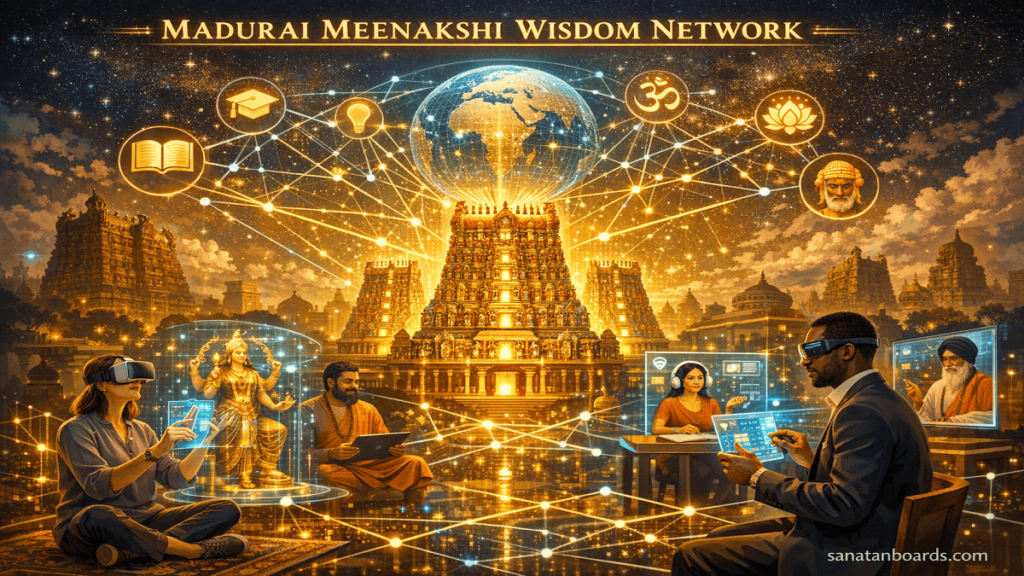
The Madurai Meenakshi Wisdom Network is a dedicated platform designed to preserve, share, and promote the rich cultural, historical, and spiritual heritage of Madurai, with a special focus on the world-famous Meenakshi Amman Temple. Madurai, often called the cultural capital of Tamil Nadu, has been a center of learning, religion, and art for over two millennia. The Wisdom Network seeks to document and make accessible this wealth of knowledge to scholars, students, and curious learners around the world.
Through digital archives, research publications, interactive workshops, and virtual tours, the network provides insights into various aspects of Madurai’s heritage. It highlights the architectural grandeur of the Meenakshi Temple, the spiritual significance of its rituals, and the intricate craftsmanship of sculptures and murals. The network also explores the city’s contributions to Tamil literature, classical music, dance, and festivals, reflecting how tradition and culture continue to influence contemporary life.
A key aim of the Madurai Meenakshi Wisdom Network is to bridge the gap between ancient wisdom and modern education. By connecting historians, archaeologists, and local artisans with learners worldwide, it creates a dynamic learning environment. Students can study the symbolism behind temple structures, understand centuries-old rituals, and explore the historical narratives that shaped Madurai’s identity.
Beyond education, the network plays a vital role in cultural preservation. By digitizing knowledge and promoting community participation, it ensures that the legacy of Madurai and the Meenakshi Temple remains alive for generations to come. In essence, the Madurai Meenakshi Wisdom Network is not just an information repository—it is a living, interactive platform celebrating the city’s timeless wisdom, art, and spirituality.
Who Is Required For Madurai Meenakshi Wisdom Network ?
The Madurai Meenakshi Wisdom Network is a collaborative platform, and its success depends on the active participation of diverse groups of people who share a passion for learning, culture, and heritage. Scholars, historians, and researchers are essential, as they provide well-researched insights into the history, architecture, rituals, and literature associated with Madurai and the Meenakshi Amman Temple. Their expertise ensures that information shared on the network is accurate, reliable, and academically valuable.
Educators and students are also vital participants, as they bring curiosity, fresh perspectives, and the drive to learn and explore. By engaging with the network, students can gain hands-on knowledge about Dravidian architecture, temple rituals, local art forms, and the city’s historical significance. Educators can use the network as a teaching tool, integrating digital resources, virtual tours, and research materials into their curriculum.
Local artisans, craftsmen, and cultural practitioners are equally important, as they keep traditional arts, crafts, and rituals alive. Their contributions provide practical demonstrations of heritage skills, ensuring that cultural practices are not only studied but also experienced and appreciated.
Finally, community volunteers, technology experts, and digital content creators play a crucial role in maintaining the network, creating online resources, managing workshops, and organizing virtual events. Together, these groups form a dynamic ecosystem that preserves Madurai’s wisdom while making it accessible globally.
When Is The Madurai Meenakshi Wisdom Network Required ?
The Madurai Meenakshi Wisdom Network becomes especially relevant and necessary in several important contexts, reflecting the need to preserve, share, and promote the cultural, historical, and spiritual heritage of Madurai and the Meenakshi Amman Temple. In today’s fast-paced world, traditional knowledge and local heritage are at risk of being overlooked or forgotten. The network provides a structured platform to ensure that centuries-old wisdom remains accessible, relevant, and meaningful for future generations.
First, the network is required during educational pursuits. Scholars, students, and educators benefit from a centralized repository of information about Madurai’s architecture, temple rituals, literature, and arts. By offering digital archives, virtual tours, and research materials, the network enables learners to study Dravidian temple architecture, explore historical events, and understand cultural practices in depth. It becomes crucial for schools, colleges, and universities that aim to integrate heritage studies into their curricula.
Second, the network is needed in the context of cultural preservation. The Meenakshi Temple and Madurai’s surrounding traditions are living heritage sites that require documentation, awareness, and promotion. Festivals, rituals, sculptures, and traditional crafts carry centuries of knowledge that could be lost without proper engagement. The network provides a platform for artisans, temple authorities, and local communities to record and share their practices with global audiences, ensuring continuity of culture.
Third, it is required in modern digital engagement. As more people access knowledge online, the network serves as a bridge between ancient wisdom and contemporary technology. Virtual experiences, online workshops, and interactive sessions help connect global audiences with Madurai’s spiritual and cultural legacy, making learning engaging and accessible regardless of geographical location.
Finally, the network is essential during initiatives that aim to inspire social and spiritual learning. It encourages research, dialogue, and collaborative projects among historians, students, artists, and enthusiasts, fostering a deeper appreciation of heritage while promoting responsible tourism, cultural studies, and scholarly inquiry.
Where Is The Madurai Meenakshi Wisdom Network Required ?
The Madurai Meenakshi Wisdom Network is required in multiple locations and contexts where cultural preservation, education, and knowledge dissemination intersect. While the network is centered around Meenakshi Amman Temple in Madurai, its relevance extends far beyond the temple walls, reaching educational institutions, research centers, cultural hubs, and digital spaces both locally and globally.
Primarily, the network is required at the temple complex itself. The Meenakshi Temple, an architectural marvel and a center of spiritual practice for centuries, houses a wealth of historical and cultural knowledge. Scholars, historians, and cultural enthusiasts can study temple rituals, sculptures, murals, and inscriptions on-site to understand the depth of Dravidian architecture, Tamil literature, and religious traditions. On-site documentation ensures that this knowledge is preserved authentically and passed on accurately to future generations.
Secondly, the network is required in educational institutions such as schools, colleges, and universities. Students of history, architecture, anthropology, and religious studies benefit immensely from structured access to resources provided by the network. By offering research publications, online lectures, and interactive workshops, the network brings the cultural heritage of Madurai into classrooms worldwide, making learning more tangible and engaging.
Thirdly, the network is required in local communities and cultural hubs. Artisans, performers, and practitioners of traditional crafts rely on platforms like this to share and preserve their skills. Cultural centers, museums, and community organizations can host workshops, exhibitions, and demonstrations facilitated by the network, ensuring that knowledge about festivals, rituals, music, dance, and crafts is actively transmitted to younger generations.
Fourth, the network is required in digital spaces and global platforms. In today’s world, knowledge sharing increasingly happens online. Virtual tours, webinars, and digital archives allow global audiences to access Madurai’s heritage without being physically present. This expands the reach of cultural education, promotes responsible tourism, and creates opportunities for international collaboration in research and learning.
Finally, the network is required in governmental and policy-making contexts. Authorities involved in heritage preservation, urban planning, or tourism development can use the insights and data provided by the network to make informed decisions that balance cultural conservation with modern development needs.
How Is The Madurai Meenakshi Wisdom Network Required ?
The Madurai Meenakshi Wisdom Network is required in a structured and strategic manner to ensure the preservation, promotion, and dissemination of the cultural, historical, and spiritual heritage of Madurai and the Meenakshi Amman Temple. Its effective implementation depends on multiple approaches that combine research, education, technology, and community participation.
Firstly, the network is required through scholarly research and documentation. Experts in history, archaeology, architecture, and literature are essential for collecting accurate information about the temple’s design, inscriptions, rituals, and festivals. Documenting these details in a systematic way creates a reliable knowledge base that can be shared with students, researchers, and enthusiasts worldwide. Field studies, surveys, and historical analyses help capture nuances that are often overlooked, ensuring the network remains authentic and authoritative.
Secondly, it is required through educational engagement. Schools, colleges, and universities can integrate the network into their teaching methods by using digital resources, research papers, and interactive workshops. Students can learn about Dravidian temple architecture, Tamil literary traditions, and cultural practices in a hands-on and immersive way. Educators can design curricula that link traditional wisdom with modern learning objectives, making the network an essential educational tool.
Thirdly, the network is required through digital and technological platforms. Virtual tours, webinars, and online archives allow global audiences to access the heritage of Madurai without physical boundaries. Social media, mobile apps, and websites amplify the network’s reach, creating awareness and fostering engagement with audiences who may never visit the city in person. Technology also allows the network to archive audio-visual recordings of rituals, performances, and artisan techniques, preserving them for future generations.
Fourthly, it is required through community and cultural participation. Local artisans, performers, and temple authorities are encouraged to share their knowledge, demonstrate traditional skills, and participate in workshops. This hands-on engagement ensures that the network is not just theoretical but a living platform where culture and wisdom are experienced directly. Volunteers and cultural organizations also contribute by organizing events, exhibitions, and training programs.
Finally, the network is required through collaboration and global partnerships. Partnerships with international universities, cultural institutions, and heritage organizations help expand research, exchange ideas, and promote Madurai’s legacy worldwide.
Case Study On Madurai Meenakshi Wisdom Network
The Madurai Meenakshi Wisdom Network is an innovative initiative designed to preserve, share, and promote the cultural, historical, and spiritual heritage of Madurai, focusing on the renowned Meenakshi Amman Temple. Madurai, one of India’s oldest continuously inhabited cities, is known for its rich traditions, Dravidian architecture, classical arts, and religious festivals. Recognizing the importance of safeguarding this heritage for future generations, the Wisdom Network was conceptualized to bridge the gap between traditional knowledge and modern technology.
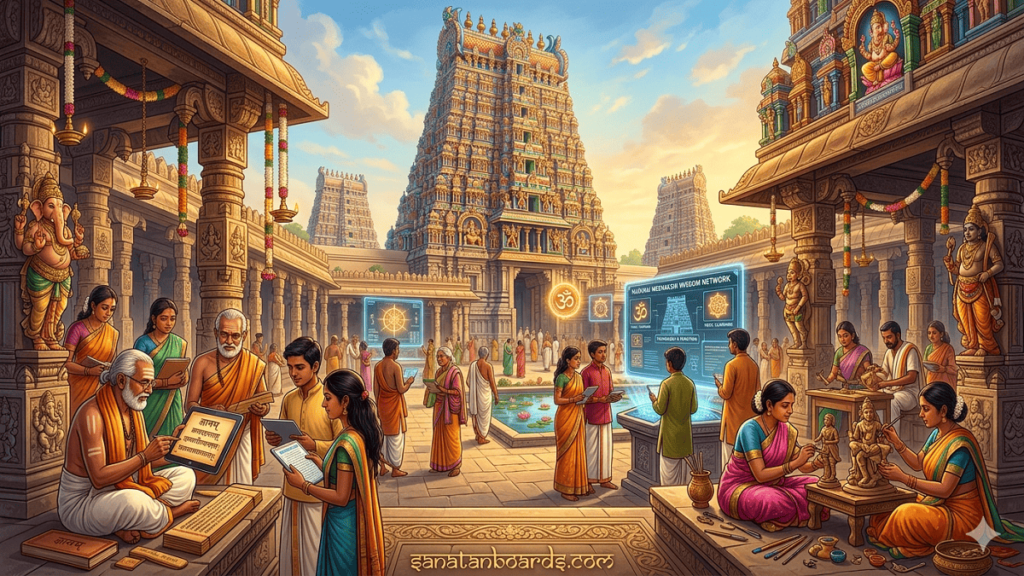
The network functions as a digital and physical platform connecting scholars, students, researchers, artisans, and local communities. It provides detailed documentation of temple architecture, sculptures, murals, rituals, and festivals. For example, intricate carvings on the temple’s gopurams (gateway towers) are recorded and analyzed, explaining their symbolic meaning and historical context. Similarly, festival practices such as the Chithirai Festival are documented, showcasing the temple’s cultural influence in the region.
Educational engagement is a major component. The network collaborates with schools, colleges, and universities to integrate heritage studies into curricula. Through workshops, virtual tours, and lectures, students learn about Tamil literature, Dravidian architectural principles, and traditional arts in an interactive manner. This hands-on approach fosters appreciation and understanding of local culture while encouraging scholarly research.
The network also emphasizes community participation. Local artisans, musicians, and temple authorities contribute actively by demonstrating craft techniques, performing traditional music, and explaining rituals. These contributions ensure that cultural knowledge remains living and dynamic, rather than merely archival. Digital technology further extends the network’s reach. Virtual experiences, online archives, and interactive platforms allow global audiences to explore Madurai’s heritage remotely, promoting cultural awareness and responsible tourism.
A notable outcome of the network is its role in preserving endangered practices. For instance, rare temple arts and ritual performances that were at risk of fading are now documented and taught through online sessions and workshops. Moreover, the network has fostered collaborations with international research institutions, enabling cross-cultural studies and global engagement.
In conclusion, the Madurai Meenakshi Wisdom Network is more than a repository of information—it is a living ecosystem of education, preservation, and cultural exchange. By combining scholarly research, technology, community participation, and global outreach, the network ensures that the historical, spiritual, and artistic legacy of Madurai and the Meenakshi Temple continues to inspire and educate generations worldwide. This case study highlights the importance of proactive heritage management in maintaining the continuity of knowledge and culture in the modern age.
White Paper On Madurai Meenakshi Wisdom Network
Executive Summary
The Madurai Meenakshi Wisdom Network (MMWN) is a strategic initiative aimed at preserving, promoting, and disseminating the cultural, historical, and spiritual heritage of Madurai, with a primary focus on the Meenakshi Amman Temple. This network integrates digital technology, scholarly research, educational engagement, and community participation to ensure that Madurai’s heritage remains accessible, relevant, and sustainable for future generations.
Background
Madurai, often referred to as the cultural capital of Tamil Nadu, is a city with over 2,500 years of recorded history. The Meenakshi Amman Temple, its most iconic landmark, is an architectural and spiritual masterpiece that reflects the richness of Dravidian art, #maduraimeenakshiwisdomnetworkinlucknow Tamil literature, and religious traditions. Despite its global recognition, much of Madurai’s cultural knowledge remains localized, undocumented, or inaccessible to #maduraimeenakshiwisdomnetworkintelugu wider audiences. The MMWN was conceptualized to address this gap, leveraging modern tools to preserve and disseminate ancient wisdom.
Objectives
- Preservation of Cultural Heritage: Document temple architecture, sculptures, murals, rituals, festivals, and associated arts.
- Education and Research: Provide resources for scholars, students, and researchers to study Madurai’s heritage.
- Community Engagement: Empower local artisans, temple authorities, and cultural practitioners to share their knowledge.
- Global Accessibility: Utilize digital platforms for virtual tours, webinars, and online archives to reach international audiences.
- Sustainability: Ensure that traditional knowledge, rituals, and art forms are preserved and transmitted to future generations.
Methodology
The network operates through a multi-layered approach:
- Research & Documentation: Field studies, surveys, historical analysis, and academic publications on temple history, architecture, and culture.
- Digital Integration: Virtual tours, interactive workshops, mobile applications, and online archives to reach wider audiences.
- Educational Collaboration: Partnerships with schools, colleges, and universities for curriculum integration and heritage studies.
- Community Participation: Engaging artisans, musicians, and local practitioners in workshops, demonstrations, and cultural documentation.
- Global Partnerships: Collaboration with international cultural and academic institutions to promote cross-cultural studies and research.
Outcomes
- Digitized records of temple architecture, sculptures, and rituals.
- Increased awareness and education about Madurai’s heritage among students and global audiences.
- Preservation of endangered arts, crafts, and performances.
- Enhanced cultural tourism through virtual engagement.
- Strengthened collaboration between academia, government bodies, and local communities.
Conclusion
The Madurai Meenakshi Wisdom Network is a pioneering initiative that merges tradition with technology to preserve and promote one of India’s most valuable #maduraimeenakshiwisdomnetworkintamil cultural heritages. By combining research, education, community engagement, and digital access, MMWN ensures that the legacy of Madurai and the #maduraimeenakshiwisdomnetworkinmumbaiMeenakshi Amman Temple remains vibrant, accessible, and meaningful in the 21st century and beyond.
Industry Applications Of The Madurai Meenakshi Wisdom Network
The Madurai Meenakshi Wisdom Network (MMWN), while primarily focused on cultural preservation and education, has significant applications across multiple industries, demonstrating how heritage knowledge can intersect with modern economic and technological sectors. By leveraging the temple’s rich history, architecture, art forms, and rituals, the network provides practical benefits and opportunities for industries including tourism, education, technology, media, and creative arts.
1. Tourism and Hospitality Industry:
The MMWN plays a crucial role in promoting cultural tourism. By offering virtual tours, curated guides, and interactive content on the Meenakshi Temple and surrounding heritage sites, the network attracts domestic and international visitors. Hotels, travel agencies, and tour operators can integrate the network’s resources into travel packages, providing enriched visitor experiences. Festivals like the Chithirai and Meenakshi Thirukalyanam can be showcased as immersive cultural events, increasing tourism revenue and local employment opportunities.
2. Education and Research Industry:
Universities, research institutions, and online learning platforms benefit directly from the network. Academic programs in architecture, archaeology, religious studies, and cultural studies can utilize the network’s digital archives, research papers, and workshops. This creates opportunities for curriculum development, online courses, and heritage-based educational tools. Students gain hands-on knowledge through virtual simulations and interactive content, while researchers have access to well-documented historical data for scholarly publications.
3. Technology and Digital Media Industry:
The network’s digital platform offers a model for technology integration in heritage management. Software developers, AR/VR companies, and app creators can develop interactive applications, augmented reality tours, and immersive experiences using MMWN resources. Digital content such as 3D models of temple architecture, online ritual simulations, and cultural storytelling apps can be monetized or used for educational subscriptions, bridging traditional knowledge with modern tech solutions.
4. Creative and Cultural Industries:
Artisans, filmmakers, designers, and performers benefit from the network’s preservation of traditional arts, crafts, and music. The detailed documentation of sculptures, murals, and temple performances serves as a source of inspiration for movies, documentaries, animation, and fashion design. Cultural enterprises can collaborate with local artisans to create authentic heritage-based products, exhibitions, and performances, thereby generating revenue while sustaining traditional skills.
5. Government and Policy-Making:
The network also informs government planning for heritage conservation, urban development, and tourism strategies. Data from MMWN can guide policymakers in preserving historic sites, promoting sustainable tourism, and creating cultural hubs, benefiting public-private partnerships and heritage-based economic initiatives.
In conclusion, the Madurai Meenakshi Wisdom Network is not only a platform for education and cultural preservation but also a valuable resource for multiple industries. #sanatandharmaaccreditationboardsinmumbai From tourism and education to technology, media, and policy-making, its applications demonstrate how heritage knowledge can be #sanatandharmaaccreditationboardsinvasai transformed into economic, technological, and creative opportunities, ensuring both cultural sustainability and industry growth.
SOURCE : Chandu Journey
ASK FAQ
What is the Madurai Meenakshi Wisdom Network?
The Madurai Meenakshi Wisdom Network is a platform that preserves, shares, and promotes the cultural, historical, and spiritual heritage of Madurai and the Meenakshi Amman Temple, combining education, digital technology, and community engagement.
Who can join the Madurai Meenakshi Wisdom Network?
Scholars, students, educators, artisans, temple authorities, and cultural enthusiasts can participate to contribute knowledge, attend workshops, or access digital resources for learning and research.
Why is the Madurai Meenakshi Wisdom Network important?
It is important because it preserves traditional arts, temple rituals, Dravidian architecture, and local culture, while making this knowledge accessible globally for education, research, and cultural awareness.
How does the Madurai Meenakshi Wisdom Network work?
The network works through research, documentation, digital archives, virtual tours, workshops, and community participation, connecting scholars, artisans, and learners worldwide.
Where can I access resources from the Madurai Meenakshi Wisdom Network?
Resources can be accessed at the Meenakshi Temple, local cultural centers in Madurai, and online through digital platforms, virtual tours, educational workshops, and publications.
Table of Contents
Disclaimer
This content is created for educational and informational purposes only. The “Madurai Meenakshi Wisdom Network” is a conceptual or illustrative topic used for learning, research, and knowledge-sharing. The information provided is based on general cultural understanding of Madurai and the Meenakshi Amman Temple, and may not represent any official organization or entity.