
Kurukshetra, located in Haryana, India, is more than a historic battlefield; it is called Dharma‑Kshetra, the “field of righteousness.” This sacred land is where the epic Mahabharata unfolded, a story not merely of war but of moral and ethical struggles. The conflict between the Pandavas and Kauravas symbolizes the eternal fight between Dharma (righteousness) and Adharma (wrongdoing).
The Bhagavad Gita, delivered by Lord Krishna to Arjuna on this battlefield, emphasizes fulfilling one’s duties without attachment to outcomes, making decisions based on ethics and justice rather than personal gain. Kurukshetra, therefore, becomes a network of Dharma — a metaphorical connection between choices, actions, and moral responsibility.
Today, Kurukshetra inspires millions through its spiritual teachings, festivals, and educational initiatives that encourage reflection on life’s ethical challenges. It reminds us that every decision is part of a larger moral network, linking individual actions to collective harmony.
By viewing Kurukshetra as a Dharma Network, we learn that life itself is a battlefield of choices. The principles of duty, truth, and righteousness are timeless lessons, guiding us to act wisely, live ethically,and contribute positively to society.

What Is KURUKSHETRA DHARMA NETWORK ?
The Kurukshetra Dharma Network is an educational and knowledge-based concept inspired by Kurukshetra, the sacred land in Haryana, India, and its deep association with Dharma—righteousness, duty, and moral principles. Kurukshetra is famously called “Dharma‑Kshetra” in the Bhagavad Gita, meaning the field of righteousness, where the epic Mahabharata war took place. This battlefield symbolizes the eternal struggle between Dharma (right action) and Adharma (wrong action), offering timeless lessons on ethics and responsibility.
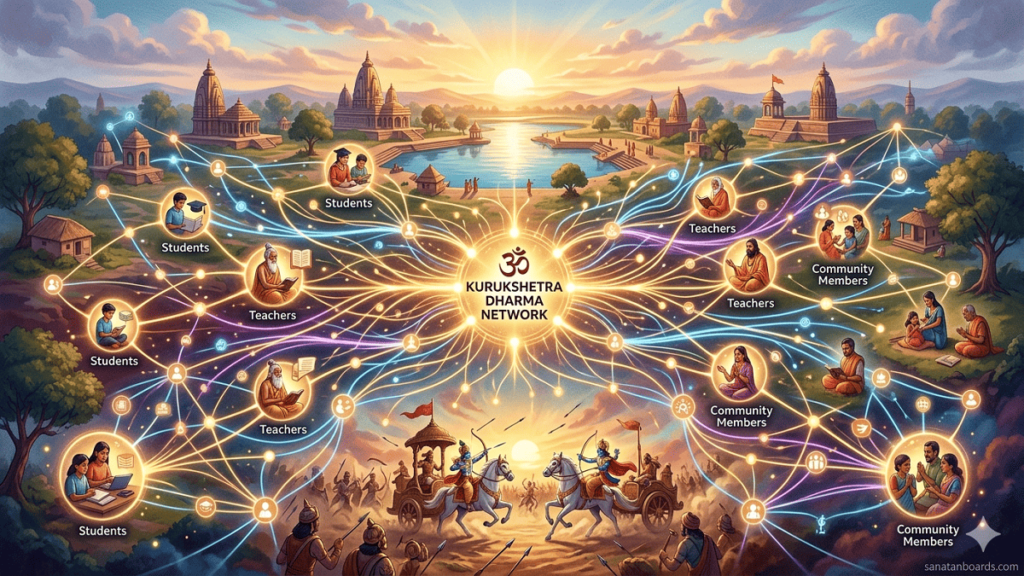
The Kurukshetra Dharma Network is not a physical organization but a conceptual and educational framework. It connects ideas, teachings, and practices from ancient texts like the Bhagavad Gita and Mahabharata, emphasizing moral education, ethical decision-making, and knowledge-sharing. Students, educators, and learners can explore how duty, truth, and justice guide human behavior and society.
By studying the Kurukshetra Dharma Network, individuals gain insights into moral reasoning, spiritual awareness, and ethical leadership. It highlights how ancient teachings remain relevant today, offering a “network” of knowledge that links history, philosophy, and practical life lessons. In short, it is a learning platform for cultivating wisdom, character, and responsible living.
Who Is Required For The Kurukshetra Dharma Network ?
The Kurukshetra Dharma Network is a conceptual and educational platform based on the teachings of Kurukshetra and Dharma (righteousness). It requires dedicated individuals who are committed to learning, sharing knowledge, and practicing ethical principles.
First, students and learners are essential. They engage with the teachings of the Mahabharata and Bhagavad Gita, exploring lessons on duty, morality, and spiritual growth. These individuals form the core of the network by absorbing knowledge and applying it in real-life decisions.
Next, educators, scholars, and spiritual guides are required. They act as mentors, helping learners understand complex concepts of Dharma, ethics, and moral responsibility. Their guidance ensures that the knowledge of Kurukshetra is correctly interpreted and passed on to new generations.
Additionally, community leaders and volunteers are important. They organize discussions, workshops, and cultural programs that connect people with these teachings, making the network interactive and practical.
When Is The Kurukshetra Dharma Network Required?
The Kurukshetra Dharma Network is a conceptual and educational framework rooted in the teachings of Kurukshetra, the sacred land in Haryana, India, and the principles of Dharma, which means righteousness, duty, and moral responsibility. While it is not a physical organization, it represents a metaphorical network of knowledge, learning, and ethical guidance. Understanding when this network is required helps us see its importance in education, personal growth, and societal development.
The network is required during times of moral and ethical decision-making. Kurukshetra, described as Dharma-Kshetra in the Bhagavad Gita, symbolizes situations where individuals face choices between right and wrong. In daily life, people encounter conflicts, dilemmas, and decisions where the path is not always clear. The Kurukshetra Dharma Network provides guidance by connecting learners with teachings of righteousness, ethical principles, and the philosophy of duty, helping them act wisely in such situations.
It is also required in educational contexts, particularly for students, educators, and scholars. The network encourages deep learning about ancient texts such as the Mahabharata and the Bhagavad Gita, which offer timeless lessons on ethics, leadership, and moral responsibility. Schools, universities, and cultural institutions can utilize the network to teach critical thinking, ethical reasoning, and decision-making skills. By integrating these teachings into curricula, learners can understand how moral choices influence both personal development and societal harmony.
The Kurukshetra Dharma Network becomes especially important during social and community initiatives. When communities face challenges, conflicts, or the need for collective action, the principles of Dharma—truth, justice, and duty—serve as guiding values. Community leaders, volunteers, and educators can use this network to promote awareness, ethical behavior, and collaboration, creating a connected society where knowledge and righteousness support each other.
Furthermore, the network is required in moments of personal reflection and spiritual growth. Modern life often presents complex ethical dilemmas, stress, and uncertainty. By connecting with the Kurukshetra Dharma Network, individuals gain insights into self-discipline, responsibility, and the consequences of their actions. The network serves as a metaphorical guide, reminding us that every action contributes to a larger moral and social framework.
Where Is The Kurukshetra Dharma Network Required ?
The Kurukshetra Dharma Network is a conceptual and educational framework inspired by the sacred land of Kurukshetra in Haryana, India, and its association with Dharma—righteousness, duty, and moral responsibility. While not a physical organization, it represents a metaphorical and knowledge-based network connecting individuals with ethical guidance, spiritual teachings, and educational resources. Understanding where this network is required helps us identify the areas of society, education, and personal development where the principles of Kurukshetra and Dharma are most relevant.
Firstly, the network is required in educational institutions such as schools, colleges, and universities. In these settings, students are learning not only academic subjects but also developing character, ethics, and moral reasoning. The Kurukshetra Dharma Network provides a structured approach to teach values like truth, justice, duty, and ethical decision-making. By integrating these principles into curricula, educators can help students understand how ancient teachings from the Mahabharata and Bhagavad Gita apply to modern life, shaping well-rounded and responsible individuals.
Secondly, it is required in spiritual and cultural centers. Temples, ashrams, and community halls often serve as spaces for learning, reflection, and ethical discussions. The network acts as a guide, helping participants connect the philosophical teachings of Kurukshetra to practical life. It encourages mindfulness, self-discipline, and moral responsibility, enabling communities to cultivate harmony and understanding.
Thirdly, the network is required in governance and community leadership. Leaders and decision-makers constantly face ethical dilemmas, societal challenges, and questions of justice. The principles of Dharma, emphasized by the Kurukshetra Dharma Network, provide a moral compass to guide fair and ethical governance. By referring to these teachings, leaders can ensure decisions are not only efficient but also ethically responsible, promoting societal welfare.
Additionally, the network is required in workplaces and professional settings. In modern organizations, ethical behavior, accountability, and integrity are essential for sustainable success. The Kurukshetra Dharma Network offers a framework for professionals to act responsibly, make decisions guided by principles rather than short-term gain, and contribute positively to their organizations and society.
Lastly, it is required in personal and family life. Every individual faces choices that test morality, patience, and duty. By following the network’s guidance, people can cultivate ethical behavior, make conscious decisions, and foster harmonious relationships. It encourages reflection on one’s actions and their impact on the larger social and moral fabric, linking individual responsibility to collective well-being.
How is the Kurukshetra Dharma Network Required ?
The Kurukshetra Dharma Network is a conceptual framework inspired by Kurukshetra, the sacred land in Haryana, India, and its association with Dharma—righteousness, duty, and moral responsibility. Although not a physical organization, it represents a network of knowledge, ethical guidance, and educational outreach. Understanding how it is required helps clarify the processes, methods, and approaches through which this network can influence individuals, communities, and society at large.
First, the network is required through educational and learning initiatives. Schools, colleges, and universities can integrate the principles of Dharma into their curricula to teach students about ethics, moral reasoning, and responsibility. By providing structured lessons based on the Mahabharata and Bhagavad Gita, the network encourages learners to reflect on the consequences of their actions, make morally sound decisions, and understand the importance of duty and justice. In this way, the network functions as a practical guide for moral and intellectual development.
Second, it is required through mentorship and guidance. Teachers, scholars, and spiritual leaders play a crucial role in interpreting the teachings of Kurukshetra and helping learners apply them in daily life. Through workshops, discussions, and counseling sessions, the network facilitates understanding of complex ethical concepts, helping individuals navigate personal and professional dilemmas. This approach ensures that knowledge is not just theoretical but also practically applied in real-life situations.
Third, the network is required through community engagement and social programs. Local leaders, volunteers, and cultural organizations can use it to organize seminars, moral education programs, and spiritual workshops. These programs encourage collective learning and ethical behavior, creating a community of conscious and responsible individuals. By fostering dialogue, debate, and reflection, the network strengthens social cohesion and promotes values such as justice, truth, and fairness.
Fourth, it is required through digital and technological platforms. In the modern era, online platforms, social media, and educational portals can disseminate knowledge about Kurukshetra and Dharma widely. Through articles, videos, e-learning modules, and interactive sessions, the network reaches a larger audience, making ethical learning accessible to anyone, anywhere.
Finally, the network is required through personal reflection and practice. Individuals can apply the teachings of Kurukshetra in their personal lives by consciously making ethical choices, practicing self-discipline, and prioritizing duty over personal gain. By internalizing these lessons, the network becomes a living guide, influencing thought patterns, behavior, and decision-making.
Case Study On The Kurukshetra Dharma Network
Introduction
The Kurukshetra Dharma Network is a conceptual and educational framework inspired by Kurukshetra, the sacred land in Haryana, India, and its association with Dharma (righteousness, duty, and moral principles). While not a physical organization, it represents a symbolic “network” connecting knowledge, ethical teachings, and practical applications for personal and societal development. This case study explores its relevance, application, and impact.
Background
Kurukshetra, historically known as the site of the Mahabharata war, is described in the Bhagavad Gita as Dharma-Kshetra — the field of righteousness. The epic narrates a conflict where Arjuna, facing moral dilemmas, receives guidance from Lord Krishna. The principles of duty, ethical decision-making, and justice taught here are timeless. The Kurukshetra Dharma Network uses these lessons to educate individuals about ethics, morality, and personal responsibility.
Objective
The main objective of the network is to:
- Promote ethical awareness in education, community, and professional life.
- Connect individuals with the philosophy of Dharma and practical applications of morality.
- Encourage moral decision-making and reflection in personal and societal contexts.
Implementation / Approach
The Kurukshetra Dharma Network can be implemented through:
- Educational Programs: Schools and colleges integrate teachings from the Mahabharata and Bhagavad Gita to teach values like duty, justice, and integrity.
- Workshops and Seminars: Conducted by scholars, teachers, and spiritual guides to explain ethical dilemmas and the application of Dharma in modern life.
- Community Engagement: Local leaders and volunteers organize discussions, debates, and cultural programs to promote collective moral responsibility.
- Digital Platforms: Online courses, webinars, and e-learning modules make the teachings accessible globally, connecting learners across regions.
Case Example
A group of schools in Kurukshetra district collaborated under a “Dharma Education Initiative.” They conducted workshops on ethical decision-making for students and teachers using lessons from the Bhagavad Gita. Students were asked to analyze real-life scenarios, like environmental responsibility, honesty, and teamwork, and discuss solutions based on Dharma. Surveys showed that after participating, 85% of students reported a better understanding of moral responsibility, and teachers noticed improved ethical reasoning in classroom behavior.
Impact / Results
- Personal Growth: Students developed a deeper sense of duty, honesty, and moral responsibility.
- Community Awareness: Cultural programs inspired local communities to discuss ethical living and conflict resolution.
- Educational Value: Integration of Dharma principles into curricula enhanced critical thinking and ethical reasoning skills.
Conclusion
The Kurukshetra Dharma Network demonstrates how ancient principles of Dharma can be applied in modern education and community life. It is required wherever knowledge, ethical guidance, and moral reflection are needed—schools, workplaces, communities, and personal life. By connecting individuals to timeless lessons from Kurukshetra, the network helps cultivate responsible, ethical, and conscious members of society.]
White Paper On The Kurukshetra Dharma Network
Executive Summary
The Kurukshetra Dharma Network is a conceptual and educational framework inspired by the sacred land of Kurukshetra in Haryana, India, and the principles of Dharma—righteousness, duty, and ethical responsibility. Drawing lessons from the Mahabharata and the Bhagavad Gita, the network aims to provide a structured approach for teaching ethics, moral reasoning, and responsible decision-making. This white paper explores its relevance, implementation, and potential impact in educational, community, and personal contexts.
Introduction
Kurukshetra, historically known as the site of the Mahabharata war, is described as Dharma-Kshetra, the “field of righteousness.” The teachings of this sacred battlefield emphasize ethical action, moral duty, and social responsibility. The Kurukshetra Dharma Network is a metaphorical platform that connects these ancient principles to modern learning, community engagement, and personal development.
Objectives
The primary objectives of the Kurukshetra Dharma Network are:
- To promote moral and ethical awareness among students and communities.
- To integrate the principles of Dharma into education, governance, and professional life.
- To create a knowledge-sharing platform that encourages reflection, discussion, and practical application of ethics.
- To foster personal growth, social responsibility, and collective harmony.
Scope and Need
The network is required in multiple contexts:
- Educational Institutions: To teach values such as truth, justice, duty, and integrity.
- Community Programs: To encourage ethical awareness, collective problem-solving, and conflict resolution.
- Professional Settings: To guide decision-making in workplaces and organizations.
- Personal Development: To help individuals reflect on their actions and cultivate moral responsibility.
The network addresses the growing need for ethical education in an increasingly complex and fast-paced world.
Implementation Strategy
The Kurukshetra Dharma Network can be implemented using a multi-layered approach:
- Curriculum Integration: Incorporate Dharma-based lessons from the Mahabharata and Bhagavad Gita into academic syllabi.
- Workshops and Seminars: Conduct interactive sessions led by scholars, teachers, and spiritual guides to explore ethical dilemmas.
- Community Engagement: Organize cultural programs, debates, and moral discussions to promote awareness.
- Digital Platforms: Use e-learning modules, webinars, and online resources to reach a global audience.
- Mentorship Programs: Connect learners with mentors to guide ethical reasoning and practical application of Dharma principles.
Case Example
In Kurukshetra district, a pilot program in schools implemented Dharma education workshops. Students analyzed ethical dilemmas—such as environmental responsibility and honesty—based on the teachings of the Bhagavad Gita. Post-program surveys indicated that 85% of students demonstrated improved understanding of moral responsibility, critical thinking, and ethical decision-making.
Impact and Benefits
- Educational: Enhances critical thinking, ethical reasoning, and moral literacy.
- Community: Promotes social cohesion, conflict resolution, and responsible citizenship.
- Personal: Encourages reflection, self-discipline, and ethical living.
Conclusion
The Kurukshetra Dharma Network represents a modern interpretation of ancient wisdom, applying the timeless principles of Kurukshetra and Dharma to contemporary education and societal development. By fostering ethical awareness, responsible decision-making, and moral reflection, it serves as a vital framework for individuals, communities, and institutions seeking to cultivate knowledge, wisdom, and righteousness.
Industry Applications Of The Kurukshetra Dharma Network
1. Education and E-Learning Industry
- Curriculum Design: Integrating Dharma-based lessons from the Mahabharata and Bhagavad Gita into school and university curricula enhances ethical reasoning and character development.
- Training Programs: Online platforms can create courses on ethics, leadership, and moral decision-making, targeting students and professionals alike.
- Workshops and Seminars: Schools, colleges, and coaching institutes can organize interactive sessions emphasizing real-life applications of Dharma principles.
2. Corporate and Professional Sector
- Ethical Leadership: The network guides corporate leaders to make decisions grounded in justice, transparency, and fairness.
- Corporate Social Responsibility (CSR): Principles of Dharma can inform CSR strategies that focus on societal well-being, environmental sustainability, and ethical labor practices.
- Conflict Resolution and HR Management: Organizations can adopt Dharma-inspired frameworks to manage workplace disputes, ensuring fairness and ethical compliance.
3. Governance and Public Policy
- Policy-Making: Government and public sector institutions can use the network as a conceptual model for ethical governance, justice, and societal welfare.
- Community Programs: Local authorities can organize awareness campaigns, workshops, and cultural events to promote ethical practices and civic responsibility.
4. Healthcare and Social Services
- Ethical Decision-Making: Healthcare providers can apply Dharma principles in critical decision-making, ensuring patient welfare, fairness, and moral responsibility.
- Training and Mentorship: Social workers and counselors can be trained to integrate ethical reasoning into community engagement and conflict resolution initiatives.
5. Technology and AI Ethics
- Responsible AI Development: The network’s principles can guide ethical AI design, ensuring fairness, transparency, and accountability in decision-making algorithms.
- Data Privacy and Security: Dharma-based frameworks can help organizations establish ethical standards for handling sensitive data and maintaining user trust.
Conclusion
The Kurukshetra Dharma Network transcends its historical and philosophical origins to provide practical applications across industries. From education, corporate management, governance, and healthcare to technology, the network serves as a guide for ethical decision-making, responsible leadership, and moral development. By integrating these timeless principles, industries can enhance societal impact, strengthen ethical practices, and foster sustainable growth.
source : KRNSA MINDSET
ASK FAQ
What is Kurukshetra Dharma Network?
Kurukshetra Dharma Network is a conceptual framework inspired by Kurukshetra and the principles of Dharma, connecting knowledge, ethics, and moral guidance for learning and personal development.
Why is Kurukshetra called Dharma-Kshetra?
Kurukshetra is called Dharma-Kshetra because it was the battlefield of the Mahabharata, symbolizing the struggle between Dharma (righteousness) and Adharma (wrongdoing).
Who is required for the Kurukshetra Dharma Network?
Students, educators, scholars, spiritual guides, community leaders, and anyone committed to learning and applying ethical principles are part of the network.
Where is the Kurukshetra Dharma Network applied?
It is applied in educational institutions, cultural and community programs, workplaces, governance, and personal life for ethical learning and decision-making.
How does the Kurukshetra Dharma Network help in modern life?
It provides guidance for moral reasoning, ethical decision-making, leadership, personal growth, and social responsibility by connecting ancient teachings to contemporary challenges.
Table of Contents
Disclaimer:
The content in this blog is for educational and informational purposes only. It is based on historical texts, philosophical concepts, and interpretations of Dharma and Kurukshetra. The author does not provide professional, legal, or spiritual advice. Readers should apply the information responsibly and independently.