The Ganga, one of Asia’s longest rivers, originates in the Himalayas and flows over 2,500 km before reaching the Bay of Bengal. Its network of tributaries, including the Yamuna, Ramganga, Ghaghara, and Gandak, forms a vast system that sustains ecosystems, agriculture, and millions of people across northern India.
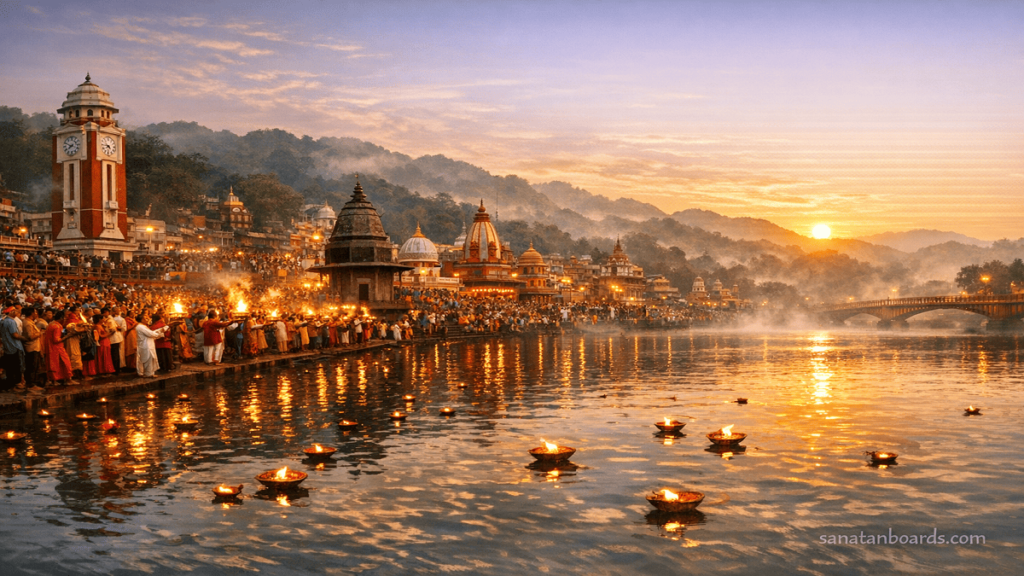
Haridwar is a key city where the Ganga emerges from the mountains into the plains, slowing and widening as it enters the fertile Indo-Gangetic region. This transition supports dense populations, farming, and industries downstream. Haridwar is also a major pilgrimage site,with Har Ki Pauri being one of the most famous ghats. Daily rituals like the Ganga Aarti attract thousands of devotees, and the city hosts events like the Kumbh Mela, highlighting the river’s spiritual significance.
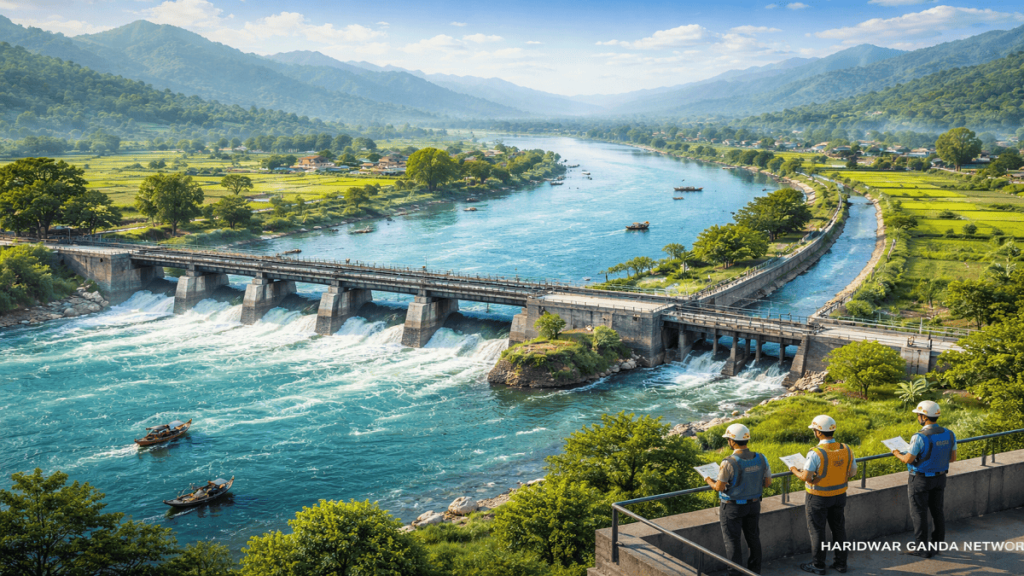
Infrastructure like the Bhimgoda Barrage helps regulate water flow, diverting it for irrigation and local use. However, the river network faces environmental challenges, including pollution and flood risks. Efforts like Namami Gange aim to clean and preserve the Ganga for future generations.
Haridwar represents a unique convergence of geography, culture, and ecology, where the Ganga’s journey from the Himalayas shapes both landscapes and lives.
What Is Haridwar Ganga Network?
The Ganga, one of the most important rivers in India and Asia, originates from the Gangotri Glacier in the Himalayas and travels over 2,500 km, forming an extensive river network with numerous tributaries such as the Yamuna, Ramganga, Ghaghara, Gandak, and Kosi. This network sustains agriculture, ecosystems, industry, and millions of people across northern India and Bangladesh, making it both an ecological and cultural lifeline.
Haridwar, located in Uttarakhand, holds special significance along the Ganga. It is the point where the river leaves the mountains and enters the Indo-Gangetic plains, marking a major geographical transition. Here, the river slows, widens, and begins supporting fertile farmlands and densely populated areas downstream. Haridwar is also a spiritual hub, with famous ghats like Har Ki Pauri, where pilgrims perform daily rituals such as the Ganga Aarti. The city hosts large gatherings like the Kumbh Mela, emphasizing the river’s sacred status in Hindu tradition.
From an infrastructure perspective, Haridwar features the Bhimgoda Barrage, which diverts water into the Upper Ganges Canal for irrigation and local water supply. This is part of broader water management efforts to maintain flow and support human and ecological needs.
However, the Ganga network faces challenges. Industrial, domestic, and agricultural pollution affects water quality, while seasonal floods from Himalayan snowmelt threaten nearby settlements. Government initiatives like Namami Gange aim to reduce pollution and restore the river’s health, though the process remains ongoing.
Who Is Required In The Haridwar Ganga Network?
The Haridwar Ganga Network is a complex system involving the river, its tributaries, infrastructure, and surrounding communities. Managing it effectively requires a diverse set of people and organizations, each playing a critical role in safeguarding the river, ensuring water supply, supporting agriculture, and preserving cultural and spiritual traditions.
1. Government Authorities
Government bodies are central to managing the Haridwar Ganga Network. The Uttarakhand state government oversees water resource management, pollution control, and flood prevention. Specific agencies, like the Uttarakhand Jal Sansthan, handle irrigation, maintenance of barrages such as the Bhimgoda Barrage, and regulation of water flow to agricultural canals. At the national level, the National Ganga Council and initiatives like Namami Gange provide policy guidance, pollution monitoring, and funds for river cleaning and ecological restoration.
2. Environmental Scientists and Ecologists
Maintaining the health of the Ganga network requires experts who study water quality, aquatic life, and river ecosystems. Hydrologists, ecologists, and environmental engineers monitor pollution levels, propose river restoration strategies, and design sustainable infrastructure. They ensure that interventions do not harm the fragile Himalayan ecosystem or disrupt the natural flow of the river as it enters the plains at Haridwar.
3. Religious and Cultural Leaders
Haridwar is a spiritual hub, and religious leaders play a key role in promoting awareness about river conservation among pilgrims and local communities. Priests at ghats like Har Ki Pauri help organize rituals such as Ganga Aarti, while also educating devotees about responsible practices, such as minimizing pollution and avoiding dumping waste into the river.
4. Local Communities and Farmers
The local population, including residents, farmers, and business owners, is integral to the Ganga network. Farmers rely on canal water for irrigation, while local communities contribute to maintenance of ghats and riverfront areas. Public participation in cleanliness drives and sustainable practices is essential to preserve the river for future generations.
5. Non-Governmental Organizations (NGOs) and Volunteers
NGOs and volunteer groups support awareness campaigns, river cleaning drives, and community education. Organizations like the Ganga Action Parivar and other local environmental NGOs help bridge gaps between government policies and public action. Their involvement ensures that ecological, cultural, and social considerations are integrated into river management.
6. Engineers and Infrastructure Experts
Finally, engineers are required to design, maintain, and monitor river infrastructure, including dams, barrages, canals, and sewage treatment plants. Their work ensures controlled water flow, reduces flood risks, and supports irrigation systems critical to the Indo-Gangetic plains.
When Is Required In The Haridwar Ganga Network?
1. During Seasonal Changes: The river’s flow changes drastically between the dry and monsoon seasons. During monsoons, heavy rainfall and Himalayan snowmelt can cause floods. Timely monitoring by engineers and government authorities is required to operate barrages like the Bhimgoda Barrage, regulate water flow, and prevent damage to downstream communities. In the dry season, water levels drop, requiring irrigation planning and conservation efforts to meet agricultural and domestic needs.
2. During Religious and Cultural Events: Haridwar is a spiritual hub where millions gather for rituals such as Ganga Aarti and festivals like the Kumbh Mela. During these periods, crowd management, pollution control, and water quality monitoring are required to protect both the river and the people using it. NGOs, local authorities, and volunteers play a critical role at these times.
3. During Environmental Interventions: Regular river cleaning, pollution monitoring, and ecological restoration efforts are required to prevent degradation of the river ecosystem. Environmental scientists, local communities, and government agencies must act promptly when water quality deteriorates or invasive practices threaten the river’s health.
4. During Infrastructure Maintenance: Engineers and water resource managers are required whenever barrages, canals, or sewage treatment systems need inspection or repair, ensuring uninterrupted water supply and flood prevention.
Where Is Required In The Haridwar Ganga Network?
1. Ghats and Religious Zones
One of the most important areas is the riverfront of Haridwar, especially at Har Ki Pauri, where millions of pilgrims gather daily for rituals like Ganga Aarti. Here, action is required to maintain cleanliness, manage crowds, and ensure water safety. Solid waste disposal, sewage management, and pollution monitoring are critical in these areas to protect the river from contamination while accommodating large gatherings. Other smaller ghats across Haridwar also require continuous attention to prevent ecological degradation.
2. Irrigation and Agricultural Zones
The Upper Ganges Canal and surrounding agricultural lands depend on the controlled flow of water from Haridwar. Interventions are required where the river is diverted into canals to ensure adequate water supply for irrigation, prevent waterlogging, and reduce soil erosion. Farmers and local authorities coordinate in these zones to maximize water efficiency and maintain soil fertility, especially during dry seasons when water scarcity can impact crops.
3. Flood-Prone Areas
Certain stretches downstream of Haridwar are prone to seasonal flooding due to monsoon rains and Himalayan snowmelt. In these areas, action is required to monitor water levels, reinforce embankments, and manage flood relief efforts. Barrages, check dams, and early warning systems are essential in these zones to minimize damage to homes, farmland, and infrastructure.
4. Pollution Monitoring and Industrial Zones
Industrial zones near Haridwar and along the Ganga’s course require interventions to control effluents and prevent water contamination. Monitoring stations and treatment plants are strategically placed where pollutants enter the river. NGOs and government agencies collaborate in these areas to ensure that wastewater is treated before entering the river network.
5. Ecological and Conservation Areas
Upstream areas near the foothills of the Himalayas, forests along the riverbanks, and wetlands near Haridwar are crucial ecological zones. Action is required in these locations to protect biodiversity, prevent deforestation, and maintain the natural flow of tributaries feeding the Ganga. Environmental scientists and conservationists focus on these regions to preserve aquatic life and maintain the health of the river ecosystem.
How Is Required In The Haridwar Ganga Network
1. Water Management and Flow Regulation
Controlling the flow of the river is essential for irrigation, flood prevention, and ecological balance. Structures like the Bhimgoda Barrage divert water into the Upper Ganges Canal for agriculture and human use. Engineers monitor water levels, operate gates, and adjust flow according to seasonal demands. During monsoon seasons, careful regulation prevents flooding downstream, while in dry periods, water is conserved to meet agricultural and domestic needs.
2. Pollution Control and River Cleaning
Maintaining the health of the river requires systematic cleaning and pollution management. Sewage treatment plants, industrial effluent controls, and solid waste management programs ensure that harmful substances do not enter the river. NGOs, government agencies, and local communities participate in cleanup drives along ghats and riverbanks. Public awareness campaigns educate pilgrims and residents about avoiding littering and using eco-friendly rituals.
3. Cultural and Spiritual Practices
In Haridwar, the Ganga is deeply sacred. Activities like Ganga Aarti, bathing rituals, and festivals are conducted in ways that respect both spiritual tradition and environmental needs. Religious leaders coordinate with local authorities to manage crowds and reduce waste, while volunteers ensure that ceremonial offerings do not pollute the river. By aligning spiritual practices with conservation, the river’s cultural and ecological significance is preserved.
4. Ecological Conservation
Environmental scientists and ecologists carry out interventions to protect aquatic life, wetlands, and riverbank forests. This includes monitoring water quality, restoring habitats for fish and other wildlife, and planting vegetation to prevent erosion. Conservation programs also regulate tourism and human activity in sensitive zones upstream and near Haridwar, ensuring minimal ecological disruption.
5. Community Participation and Education
Local communities, schools, and NGOs play a critical role in how actions are implemented. Educational workshops, volunteer clean-up drives, and citizen monitoring programs empower people to participate actively in river management. This bottom-up approach ensures that interventions are sustainable and culturally accepted.
Case Study On The Haridwar Ganga Network
Introduction
The Ganga River is one of the most significant rivers in India, both ecologically and culturally. The Haridwar segment of the river is particularly important because it marks the point where the Ganga exits the Himalayas and enters the Indo-Gangetic plains. This transition zone is not only a hub for agriculture and water management but also a major center for religious activities, including the Ganga Aarti and Kumbh Mela. The Haridwar Ganga Network is, therefore, a critical point where ecology, economy, culture, and spirituality intersect.
Objectives of the Case Study
- To understand the importance of the Ganga at Haridwar.
- To analyze the management and conservation challenges of the river network.
- To identify key stakeholders and their roles in maintaining the network.
- To explore the impact of human activity and cultural practices on the river ecosystem.
Background
The Ganga network consists of the main river and several tributaries feeding into it, including the Yamuna, Ramganga, and Ghaghara. Haridwar serves as a geographical, ecological, and spiritual junction. The city hosts millions of pilgrims annually, creating both cultural richness and environmental pressure. Additionally, the Upper Ganges Canal and structures like the Bhimgoda Barrage are critical for irrigation, drinking water, and flood management in the downstream plains.
Key Challenges
- Pollution:
- Sewage, industrial effluents, and religious offerings contribute to contamination.
- Water quality monitoring is required at multiple points to prevent ecological degradation.
- Flood Risk:
- Monsoon rains and snowmelt from the Himalayas can cause sudden floods.
- Barrages and embankments need continuous maintenance.
- Cultural Pressures:
- Pilgrimages and festivals increase solid waste and water usage.
- Balancing spiritual practices with environmental conservation is essential.
- Ecological Impact:
- Riverbank erosion, habitat disruption, and biodiversity loss are ongoing concerns.
Stakeholders Involved
- Government Authorities: Uttarakhand state agencies, National Ganga Council.
- Engineers & Infrastructure Experts: Operate barrages and canals.
- Environmental Scientists & NGOs: Monitor pollution, restore ecosystems.
- Religious Leaders & Local Communities: Manage rituals, educate pilgrims, and maintain ghats.
Strategies for Sustainable Management
- Water Flow Regulation: Using barrages to maintain water levels.
- Pollution Control: Sewage treatment plants, waste management, and public awareness campaigns.
- Community Engagement: Volunteers, NGOs, and locals participating in river conservation.
- Ecological Restoration: Riverbank planting, habitat protection, and biodiversity monitoring.
- Cultural Integration: Coordinating religious events to reduce ecological stress.
Conclusion
The Haridwar Ganga Network exemplifies the intersection of nature, culture, and human activity. Managing this river segment requires ##haridwarganganetworkinkolkata coordinated efforts from multiple stakeholders — government, scientists, religious leaders, and local communities. Sustainable management strategies ensure that the Ganga ##haridwarganganetworkinhyderabad continues to support agriculture, spiritual traditions, and ecological balance, securing its future for generations to come.
White Paper On The Haridwar Ganga Network
Executive Summary
The Haridwar Ganga Network represents a critical section of the Ganga River where it exits the Himalayas and enters the Indo-Gangetic plains. This segment is vital for water supply, irrigation, ecological balance, and spiritual practices. However, it faces significant challenges including pollution, flood risks, and ecological degradation, intensified by cultural activities and increasing urbanization. This white paper analyzes the current state, identifies key stakeholders, and proposes strategies for sustainable management of the Haridwar Ganga Network.
1. Introduction
The Ganga River, spanning over 2,500 km, supports millions of people across northern India and Bangladesh. Haridwar, located in Uttarakhand, is strategically significant because it serves as a transition point from mountainous regions to fertile plains. The river network here includes tributaries, irrigation canals, barrages, and ghats, creating a complex system that requires multi-sectoral management.
2. Importance of the Haridwar Ganga Network
- Ecological: Supports aquatic life, wetlands, and riverbank ecosystems.
- Economic: Provides irrigation through the Upper Ganges Canal, supporting agriculture and local livelihoods.
- Cultural & Spiritual: Hosts major pilgrimages and rituals, including Ganga Aarti and Kumbh Mela.
- Infrastructure: Barrages and canals regulate water flow and prevent flooding.
3. Key Challenges
- Pollution:
- Sewage, industrial effluents, and ritual waste contaminate water.
- Deteriorating water quality threatens health and ecosystems.
- Flooding:
- Seasonal monsoon rains and Himalayan snowmelt cause floods.
- Inadequate embankments and outdated infrastructure exacerbate risks.
- Cultural Pressures:
- Large pilgrimages produce waste and increase water demand.
- Ecological Degradation:
- Riverbank erosion, habitat loss, and biodiversity decline.
4. Stakeholders
- Government Authorities: Uttarakhand state departments, National Ganga Council.
- Environmental Scientists & NGOs: Monitor water quality and restore ecosystems.
- Engineers & Infrastructure Experts: Operate barrages, canals, and sewage treatment facilities.
- Local Communities & Religious Leaders: Manage rituals and promote public awareness.
5. Recommended Strategies
- Integrated Water Resource Management: Efficiently operate barrages and canals for irrigation, flood control, and ecological flow.
- Pollution Control: Expand sewage treatment, regulate industrial effluents, and promote eco-friendly rituals.
- Community Engagement: Educate local residents and pilgrims, involve volunteers in river-cleaning drives.
- Ecological Conservation: Restore riverbanks, protect wetlands, and maintain biodiversity.
- Monitoring & Research: Regular water quality assessment and scientific studies to inform policy decisions.
- Sustainable Tourism & Pilgrimage Management: Reduce environmental impact during major festivals like Kumbh Mela.
6. Conclusion
The Haridwar Ganga Network is an intersection of ecology, culture, and economy. Sustainable management requires collaboration among #haridwarganganetworkinmumbai government authorities, scientists, religious leaders, engineers, and communities. By adopting integrated strategies, the river can continue to provide clean water, support livelihoods, and maintain its spiritual ##haridwarganganetworkinvasai significance for generations to come.
Industry Applications Of The Haridwar Ganga Network
1. Agriculture and Irrigation
The Upper Ganges Canal, fed from Haridwar, is a critical irrigation source for the fertile Indo-Gangetic plains. Industries related to agriculture benefit directly:
- Crop Production: Water from the network supports wheat, rice, sugarcane, and vegetable cultivation.
- Agro-based Industries: Sugar mills, food processing units, and dairy farms rely on consistent water supply.
- Irrigation Technology Providers: Companies offering pumps, pipelines and water management solutions use the network to serve large-scale irrigation projects.
2. Hydropower and Renewable Energy
The river’s flow from the Himalayas offers potential for small and medium-scale hydropower projects:
- Local energy industries harness water for electricity generation.
- Micro-hydropower plants in nearby areas provide clean energy for communities and industrial operations.
- Energy management firms are involved in optimizing water flow for both power and irrigation.
3. Tourism and Pilgrimage Industry
Haridwar is a major spiritual and cultural tourism hub. The river network underpins a large sector of the local economy:
- Pilgrimage Tourism: Millions visit Haridwar annually for Ganga Aarti, Kumbh Mela, and ritual bathing.
- Hospitality and Service Industries: Hotels, restaurants, transport, and guides benefit directly from the river’s cultural significance.
- Recreational Businesses: Boating, riverfront parks, and cultural events generate revenue while promoting sustainable tourism.
4. Fisheries and Aquaculture
The Ganga supports a thriving fisheries sector:
- Local fishermen harvest freshwater fish for commercial markets.
- Aquaculture farms near Haridwar utilize canal and river water for sustainable fish production.
- Related industries, including fish processing and cold storage, depend on the river’s continuous flow.
5. Water-based Enterprises
Several industries depend directly on river water for operations:
- Beverage and Bottling Plants: Use treated river water for production.
- Paper, Textile, and Dyeing Units: Rely on large volumes of water for manufacturing processes.
- Wastewater Treatment Firms: Operate alongside industries to treat effluents before discharge.
6. Environmental and Consultancy Services
The Ganga network has also created opportunities in:
- Environmental monitoring and water quality testing.
- River restoration and pollution control projects, engaging NGOs and private consultancy firms.
- Sustainable development services, offering solutions for industry compliance with ecological regulations.
Conclusion
The Haridwar Ganga Network is a multifaceted natural resource with wide-ranging industrial applications. From agriculture and hydropower to tourism, fisheries, #Sanatandharmaaccreditationboardsinmumbai and water-dependent manufacturing, industries rely on its water, infrastructure, and cultural significance. Sustainable #Sanatandharmaaccreditationboardsinvasai management ensures that economic benefits continue while preserving the river’s ecological and spiritual value.
SOURCE : The Newswala Network
ASK FAQ
What is the Haridwar Ganga Network?
The Haridwar Ganga Network is the section of the Ganga River where it exits the Himalayas, including tributaries, canals, and barrages like Bhimgoda, supporting irrigation, culture, and ecology.
Where is the Bhimgoda Barrage located?
The Bhimgoda Barrage is in Haridwar, Uttarakhand, regulating water flow into the Upper Ganges Canal for agriculture and flood control.
Why is Haridwar important for the Ganga River?
Haridwar is where the Ganga enters the plains, making it a key site for spiritual rituals, irrigation, flood management, and ecological monitoring.
How does the Upper Ganges Canal benefit local communities?
The Upper Ganges Canal provides irrigation for farmland, supports drinking water supply, and helps manage seasonal floods downstream.
What challenges does the Haridwar Ganga Network face?
Challenges include pollution from sewage and rituals, flood risks, riverbank erosion, and ecological degradation, requiring sustainable management.
Table of Contents
Disclaimer:
The content provided about the Haridwar Ganga Network is for educational and informational purposes only. SanatanBoards.com does not guarantee the accuracy or completeness of the information and is not responsible for any actions taken based on it