
Sanatam Dharma Promoters
Guardians of the Eternal Faith: A Comprehensive Look at Sanatan Dharma Promoters
Sanatan Dharma, often translated as the “eternal way of life,” is not merely a religion but a sophisticated and ancient spiritual culture that encompasses a vast spectrum of philosophies, rituals, and traditions. Its resilience over millennia can be attributed to the continuous efforts of individuals and organizations dedicated to its promotion and preservation. From the institutionalized bodies in the Caribbean to modern spiritual leaders and cultural movements in India, the promoters of Sanatan Dharma are as diverse as the faith itself. This article delves into the multifaceted world of these promoters, exploring their roles, motivations, and the evolving landscape of dharmic advocacy in the 21st century.
The Historical and Institutional Framework: The “Sabha” Movement
The formal, organized promotion of Sanatan Dharma often takes the shape of “Sabhas” or organizations. These bodies have been instrumental in consolidating Hindu communities, particularly in regions where they form a diaspora or face external pressures.
One of the most prominent examples is the Sanatan Dharma Maha Sabha (SDMS) in Trinidad and Tobago . Far more than a religious body, the SDMS is a formidable social and educational institution. Founded in 1952 by Bhadase Sagan Maraj, it was the result of merging two earlier organizations, the Sanatan Dharma Association and the Sanatan Dharma Board of Control. This merger was a strategic response to both the need for Hindu consolidation in the Caribbean and the challenges posed by reformist movements like the Arya Samaj .
The SDMS’s model of promotion is deeply rooted in community infrastructure. It operates over 150 mandirs (temples) and more than 50 educational institutions, ranging from primary schools to secondary schools and even a tertiary institution. Its founders understood that the key to perpetuating the faith lay in education. Between 1952 and 1956 alone, the Maha Sabha built 31 schools across the island, ensuring that young Hindus could receive an education grounded in their cultural and ethical values.
Today, its influence extends into the media landscape with its own radio station, Radio Jaagriti 102.7 FM, and TV channel, TV Jaagriti, which broadcast spiritual discourse, cultural programs, and news to the Hindu diaspora . The SDMS exemplifies how institutional promoters can safeguard dharma by controlling the narrative through education and media, ensuring that traditions like the Vedas, Ramayan, and Bhagavad Gita remain central to community life for generations.
A similar, though more localized, spirit of community-driven promotion is seen in the Guwahati Harisabha (Sanatan Dharma Sabha) in Assam, India . Established in 1913, this institution was built on a remarkable model of inter-community unity. Its founding trust included members from the Assamese, Bengali, and Marwari communities, making it a true representative of all Sanatanis in the region. The Harisabha was not just a place of worship; it was a vibrant socio-cultural center. It hosted the first girls’ school in the town, the Kumari Vidyalaya, and ran a “Balya Ashram” where boys were taught the ethical values of the Vedanta and Upanishads .
Furthermore, its premises became a hub for the national movement, with secret training imparted in sword and stick fighting for self-defense during the Swadeshi and Swaraj movements. This illustrates that promoters of Sanatan Dharma have historically been intertwined with broader social and nationalistic causes. By organizing grand pujas (like Durga Puja and Janmastami), hosting cultural performances, and providing a space for social reform and nationalistic activity, the Guwahati Harisabha promoted Sanatan Dharma as a living, breathing force that informed every aspect of life, from education to politics .
The Contemporary Spiritual Landscape: Gurus, Leaders, and Movements
In contemporary India, the promotion of Sanatan Dharma has taken on new dimensions, often blending traditional spirituality with modern statecraft, global diplomacy, and mass media.
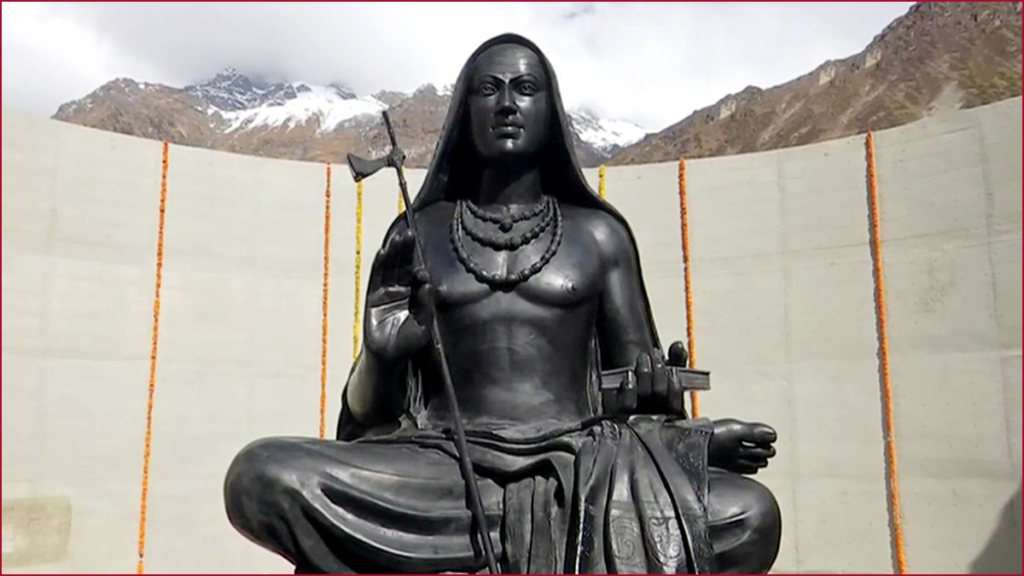
Rajarshi Bhupendra Modi represents a unique fusion of corporate success and spiritual statesmanship. A venerated entrepreneur, he was bestowed with the title of “Rajarshi” (a sage-king) in 2024 by all four Shankaracharyas, the highest custodians of Hindu Dharma. This sacred duty was further confirmed at the Maha Kumbh 2025 when he was given a “Dharma Dand” (ritual staff), symbolizing his mission to unite Hindus worldwide . His promotional strategy is global and grandeur-oriented. He established the Jagadguru Adi Sankara Math at Rampur, a center dedicated to Advaita Vedanta, aiming to prepare future spiritual leaders and cultural ambassadors.
His most ambitious project is the Global Hindu Kings Movement, which seeks to honor over 500 senior leaders from various fields—medicine, media, philanthropy, and business—as “New Age Hindu Kings and Queens.” This initiative redefines leadership, suggesting that true royalty lies in being “mind administrators” and “protectors of dharma” . By taking this message to the Nobel Peace Centre in Oslo and consecrating global icons like Dr. Deepak Chopra as honorary Hindu kings, Rajarshi Modi is actively globalizing the dharmic narrative, positioning it as a solution to modern alienation and a source of world peace .
Operating at the intersection of spirituality and politics is Acharya Satish Sadhguru Nath Ji. His promotional work involves extensive travel across Indian states like Rajasthan, Haryana, Chhattisgarh, and Maharashtra, where he meets with high-ranking political leaders . His meetings with Chief Ministers and Union Ministers like Nitin Gadkari emphasize the role of spirituality in governance. He discusses pressing contemporary issues affecting the Hindu community, such as religious conversions and the protection of temple traditions, directly with those in power.
This form of promotion is about advocacy and ensuring that the principles of Sanatan Dharma influence policy and public discourse. By also engaging with cultural icons like Ajay Devgn and media mogul Subhash Chandra, Sadhguru Nath Ji seeks to use the platforms of entertainment and media to inspire the youth, counter Western cultural influences, and instill the values of the Gita and Vedas in the younger generation . His work shows a top-down approach, influencing decision-makers to create an environment where Sanatan Dharma can flourish.
The Sanatan Saints Conference 2025, organized by Om Sanatan Nyas at Bharat Mandapam in New Delhi, represents the collective, institutional power of the traditional spiritual hierarchy . With the participation of over 300 saints, spiritual leaders, and scholars, including Pujya Swami Govinddev Giri Ji Maharaj and Pujya Swami Chidanand Saraswatiji, this conference was a grand proclamation of India’s spiritual consciousness. The message was clear: Sanatan Dharma is not a sect but the life-philosophy of all humanity.
The conference honored organizations like Ekal Abhiyan and Gita Parivar for their grassroots contributions, thereby creating a network of validated promoters. It also focused on the youth, urging them to take pride in their culture and see the balance between modern science and Indian spirituality as the foundation of “New India.” Such conferences serve to consolidate the dharmic narrative, showcase unity among various sects (Vedanta, Yoga, Bhakti, etc.), and project a unified voice on the global stage .
The Intersection of Dharma, Politics, and Celebrity
In recent years, the promotion of Sanatan Dharma has become increasingly visible in the political and celebrity spheres, particularly around massive religious gatherings like the Maha Kumbh Mela.
A significant development in this regard is the proposed formation of a “Sanatan Board,” akin to a religious trust or council, discussed at a historic “Dharma Sansad” during the 2025 Prayagraj Maha Kumbh . Led by spiritual orator Devkinandan Thakurji Maharaj, the proposal aims to create a board to safeguard Hindu temples, gurukuls (traditional schools), and gaushalas (cow shelters). This movement garnered immediate support from high-profile figures. Actor Suniel Shetty called it a “historic moment” and urged Hindus to unite for the cause, while BJP MP and actress Hema Malini also praised the initiative.
This convergence of spiritual leadership, political ambition, and celebrity endorsement marks a new era of organized advocacy for Sanatan Dharma. The proposed board seeks to institutionalize the protection and promotion of Hindu institutions, moving beyond informal networks to a structured, legally recognizable body that can represent the interests of the faith at various levels of government and society.
However, the confluence of celebrity and spirituality at events like the Kumbh Mela is not without its complexities and controversies. The 2025 Mahakumbh witnessed a phenomenon where a clutch of actresses, social media influencers, and former models positioned themselves as flagbearers of Sanatan Dharma, sometimes overshadowing traditional political and spiritual figures .
Figures like Ishika Taneja, a former actress who claimed to have taken “diksha” (initiation) and was renamed Ishika Sri Lakshmi, and Monalisa Bhosle, an 18-year-old who gained fame as the “brown-eyed girl selling beads,” drew massive media attention. Similarly, Harsha Richhariya, a social media influencer, initially claimed to be a sadhvi before backtracking, and former Bollywood actress Mamta Kulkarni resurfaced after 20 years to be anointed as a Mahamandaleshwar (a high-ranking spiritual leader) by the Kinnar Akhara .
This trend has sparked a fierce debate about legitimacy and intent in the promotion of dharma. While some, like Mamta Kulkarni’s supporters, defended her consecration, claiming she had been doing “tapasya” (penance) for years, others, like Swami Anand Swaroop of the Sambhavi Peeth, were highly critical. He argued that these women had “nothing to do with Sanatan Dharma” and were merely at the Kumbh to “increase their followers”.
The Kinnar Akhara itself was split over Mamta Kulkarni’s entry, with its founder revoking her title. This phenomenon highlights a modern tension within the promotion of Sanatan Dharma: the clash between traditional pathways to spiritual authority (years of study, renunciation, and lineage) and the new-age, social-media-driven path to influence, where visibility and “followers” can be mistaken for spiritual capital. An official at the Mela pragmatically noted, “Everybody is free here to publicise themselves… a little bit of entertainment is fine for us,” underscoring the blurred lines between devotion, promotion, and self-promotion .
Grassroots and Charitable Trusts: The Unsung Promoters
Beyond the grand conferences and media spectacles, the promotion of Sanatan Dharma is sustained by countless charitable trusts and individual preachers who work at the grassroots level. These promoters focus on education, community service, and the propagation of scriptural knowledge.
An example is Pasarlapati Srinivasa Bangaraiah Sarma from Telangana, an exponent of the Puranas and a follower of the Sringeri Sharada Peetham . Through his organizations, the “Jagadguru Adi Sankaracharya Bhaktha Samajam” and “Tatvam Charitable Trust,” he disseminates the philosophy of Advaita Vedanta. His discourses are widely followed and telecast on regional television networks like Bhakti TV and ETV, making deep philosophical concepts accessible to Telugu-speaking audiences worldwide. He represents the vital link between ancient monastic orders (like the Sringeri Peetham) and the common person, using modern media to spread timeless wisdom .
Organizations honored at the Sanatan Saints Conference, such as Ekal Abhyalaya (Ekal Abhiyan) and the Indian Culture Global Trust, work on the ground to promote education and cultural awareness, often in tribal and rural areas . Their work in running one-teacher schools (Ekal Vidyalayas) ensures that children in remote areas receive an education that includes a strong component of cultural and ethical values rooted in Sanatan Dharma. These organizations are the backbone of the dharmic ecosystem, ensuring that the faith remains a lived reality for millions, not just a topic of intellectual or political debate.
Conclusion
The promoters of Sanatan Dharma form a rich and complex tapestry. From the institutional might of the Sanatan Dharma Maha Sabha in Trinidad, securing the future of the faith through education and media, to the 100-year-old Guwahati Harisabha, which fostered social unity and nationalistic spirit, the historical framework is one of community organization and resilience . In modern India, this promotion has diversified. It includes the global spiritual statesmanship of Rajarshi Bhupendra Modi, the political advocacy of Sadhguru Nath Ji, and the unified voice of thousands of saints at conferences like the one in 2025 .
Simultaneously, the arena has become more crowded and complex. The proposed Sanatan Board represents a move toward formalized political and institutional advocacy, backed by celebrities and politicians . In contrast, the spectacle of influencers and actors seeking spiritual titles at the Kumbh raises profound questions about authenticity, commercialization, and the very definition of a “promoter” in the digital age . Amidst all this, the silent, sustained work of countless trusts and individual preachers continues to nourish the roots of the faith .
Ultimately, the promotion of Sanatan Dharma is a dynamic and ongoing process. It is a conversation between the ancient and the modern, the ascetic and the celebrity, the local community and the global stage. As the faith navigates the challenges and opportunities of the 21st century, its promoters will continue to evolve, but their core mission remains eternal: to uphold the truth, compassion, and duty that have defined Sanatan Dharma for thousands of years.
List of top 100 kingdom & king for promoters of sanatam dharma in india & worldwide?
Here’s a list of some of the most significant kingdoms and kings who have been promoters of Sanatan Dharma (Hinduism) in India and worldwide throughout history.
Courtesy: The Hindu Talk Show
Ancient Indian Kingdoms & Kings
- Ikshvaku Dynasty – King Harishchandra, Lord Rama
- Suryavanshi Dynasty – King Dasharatha, Lord Rama
- Chandravanshi Dynasty – King Yayati, Lord Krishna
- Maurya Empire – Emperor Chandragupta Maurya, Emperor Ashoka (after Kalinga War promoted Dharma)
- Gupta Empire – Chandragupta I, Samudragupta, Chandragupta II (Vikramaditya)
- Kushan Empire – King Kanishka (Patron of Hinduism & Buddhism)
- Pallava Dynasty – King Narasimhavarman I, Mahendravarman I
- Chola Dynasty – Rajaraja Chola I, Rajendra Chola I
- Pandya Dynasty – King Nedunjeliyan, Maravarman Kulasekara Pandyan
- Chera Dynasty – King Senguttuvan
- Satavahana Empire – King Gautamiputra Satakarni
- Vakataka Dynasty – King Pravarasena I
- Rashtrakuta Empire – King Amoghavarsha
- Chalukya Dynasty – Pulakesin II, Vikramaditya II
- Kakatiya Dynasty – King Prataparudra
- Yadava Dynasty – King Ramachandra
- Hoysala Dynasty – King Vishnuvardhana
- Pandyas of Tamil Nadu – Sundara Pandyan
- Vijayanagara Empire – Harihara I, Bukka Raya I, Krishnadevaraya
- Ahom Kingdom – King Suhungmung
Medieval Indian Kingdoms & Kings
- Rajput Kingdoms – King Prithviraj Chauhan, Rana Kumbha, Rana Sanga, Maharana Pratap
- Mewar Kingdom – Bappa Rawal, Maharana Pratap
- Maratha Empire – Chhatrapati Shivaji Maharaj, Chhatrapati Shahu
- Sikh Empire – Guru Gobind Singh (Hindu-Sikh unity), Maharaja Ranjit Singh
- Gajapati Kingdom (Odisha) – Kapilendra Deva
- Mithila Kingdom – King Janaka (Father of Sita Devi)
- Travancore Kingdom – Marthanda Varma, Swathi Thirunal Rama Varma
- Mysore Kingdom – Maharaja Krishnaraja Wodeyar III
- Koch Kingdom (Assam & Bengal) – Maharaja Naranarayan
- Bastar Kingdom – King Pravir Chandra Bhanj Deo
Promoters of Sanatan Dharma Outside India
- Greater Nepal & Gurkha Kingdom – King Prithvi Narayan Shah
- Bali (Indonesia) – King Dharmodayana Warmadewa
- Majapahit Empire (Indonesia) – King Hayam Wuruk
- Srivijaya Empire (Indonesia, Malaysia) – King Sri Jayanasa
- Khmer Empire (Cambodia, Vietnam, Thailand) – King Jayavarman II
- Champa Kingdom (Vietnam) – King Bhadravarman
- Siam (Thailand) – King Ramkhamhaeng
- Tibetan Empire – King Trisong Detsen (Patron of Buddhism, Hindu influence)
- Sri Lanka (Ravana’s Lanka) – King Ravana, King Parakramabahu
- Mauritius Hindu Leadership – Seewoosagur Ramgoolam
- Hindu Kings of Fiji – Ratu Seru Epenisa Cakobau (Later converted)
- Caribbean Hindu Promoters – Dr. Cheddi Jagan (Guyana)
- Hindu Leaders of South Africa – S. Radhakrishna Chetty
- Trinidad & Tobago Hindu Leaders – Bhadase Sagan Maraj
More Influential Kings of India & Abroad
- King Bhoja (Paramara Dynasty, Malwa)
- Raja Raja Chola I (Great temple builder)
- Krishna Deva Raya (Vijayanagar)
- Martanda Varma (Travancore)
- Jai Singh II (Jaipur, astronomical advancements)
- Raghunath Singh of Nepal
- Narasimhavarman II (Pallava)
- Mahipala (Pala Empire)
- Lakshmanasena (Sena Dynasty)
- Ballala Sena (Bengal)
- Govinda III (Rashtrakuta)
- Vishnuvardhana (Hoysala)
- Rudrama Devi (Kakatiya, female warrior queen)
- Bappa Rawal (Mewar)
- Mahendravarman (Pallava)
- Rajendra Chola II
- Ramachandra Yadava
- Chhatrasal Bundela (Madhya Pradesh)
- Kharavela (Kalinga)
- Chandragupta II Vikramaditya (Gupta Empire)
- Skandagupta (Last strong Gupta ruler)
- Rudradeva (Kakatiya Dynasty)
- Suheldev (Raja of Shravasti, fought Mahmud of Ghazni)
- Puru (Puru Dynasty, fought Alexander)
- Jayachandra (Kannauj, rival of Prithviraj Chauhan)
- Mahadeva Pandyan (Tamil Nadu)
- Srivallabha Pandyan
- Kakustha (Ikshvaku)
- Vikramaditya I (Chalukya)
- Nandivarman II (Pallava)
- Harsha Vardhana (Pushyabhuti Dynasty)
- Mahendrapala I (Gurjara-Pratihara)
- Mihira Bhoja (Pratihara)
- Someshvara I (Western Chalukya)
- Karikala Chola
- Rajadhiraj Chola
- Adityan Chola
- Mahendra Varma Pallava
- Virupaksha Raya (Vijayanagar)
- Devaraya I (Vijayanagar)
- Devaraya II (Vijayanagar)
- Maharaja Chhatrasal (Bundelkhand)
- Veer Ballala III (Hoysala)
- Trilochanapala (Shahi Kingdom, Afghanistan)
- Bhojadeva (Malwa)
- Narasimhavarman I (Pallava)
- Vasudeva Kanva (Kanva Dynasty)
- Veera Kerala Varma (Kerala)
- Jayasimha Siddharaja (Solanki)
- Bhaskaravarman (Kamrupa)
- Madhava Varma (Andhra)
- Rudradaman I (Saka ruler promoting Sanskrit)
- Jayapida (Karkota Dynasty, Kashmir)
- Lalitaditya Muktapida (Karkota, Kashmir)
- Someshvara II (Western Chalukya)
- Anangpal Tomar (Delhi Kingdom)
This list includes Hindu kings & empires who significantly promoted Sanatan Dharma through governance, temple building, Vedic education, and cultural preservation. Many of these rulers fought invaders and defended Dharma.

Table of Contents