
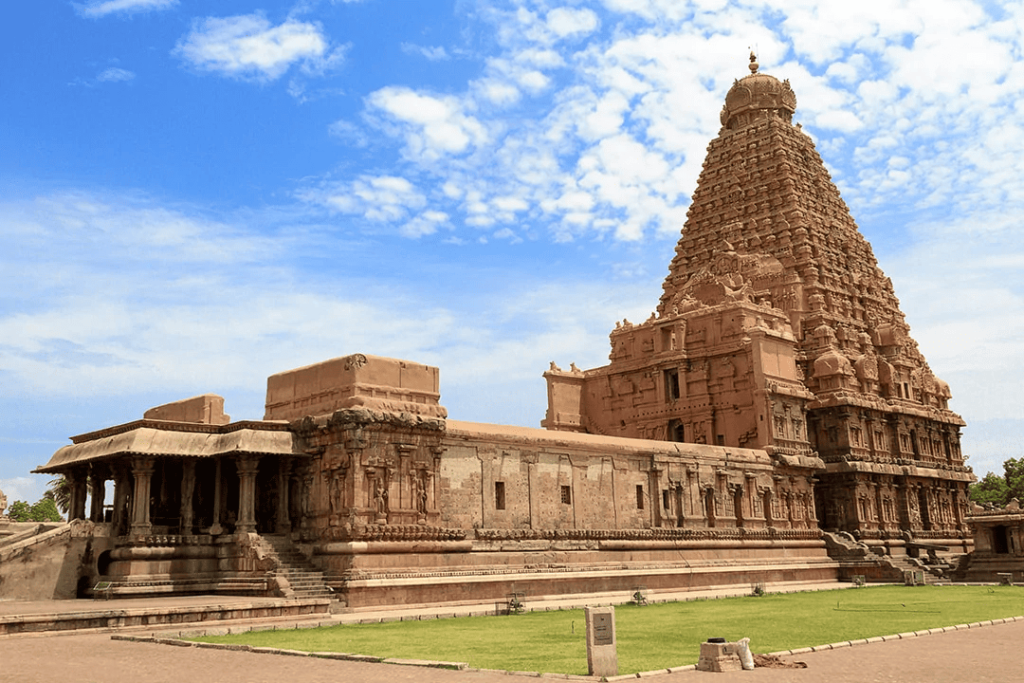
Sanatan Dharma Famous Temples
A Journey Through Its Sacred Temples
Introduction
Sanatan Dharma, often referred to as Hinduism, is not merely a religion but a cosmic vision of eternal truth and order. Its essence is not confined to scriptures or doctrines but is vibrantly alive in its rituals, festivals, and, most profoundly, in its sacred architecture—the temple. A Hindu temple, or Devalaya (“abode of the divine”), is far more than a place of worship. It is a microcosm of the universe, a conduit between the earthly and the celestial, a stone-textbook of philosophy, and a living center of community, art, and culture. It is where geography meets cosmology, and sculpture becomes theology.
This journey explores some of the most famous and significant temples of Sanatan Dharma, categorized by their primary deity, architectural style, and historical context. We will traverse from the icy heights of the Himalayas to the southernmost tip of the Indian subcontinent, exploring how each temple encapsulates a unique aspect of the eternal Dharma.
Part 1: The Philosophical and Architectural Foundation
Before embarking on our pilgrimage, it is crucial to understand what a temple represents.
1.1 The Temple as a Cosmic Diagram (Mandala & Vastu Purusha Mandala):
The ground plan of a classic Hindu temple is based on the Vastu Purusha Mandala, a sacred square diagram symbolizing the cosmos. The Purusha (cosmic being) is envisioned within the square, with different parts of his body corresponding to various gods. The central point, the Brahmasthana, is the navel of the Purusha and the seat of the main deity. This design ensures that the temple is in harmony with cosmic energies.
1.2 The Journey from the Profane to the Sacred:
A devotee’s movement within the temple is a symbolic spiritual journey.
- Gopuram (in Dravida style): The towering gateway, often adorned with a profusion of sculptures, marks the transition from the outer world.
- Ardh-Mandapa, Mandapa: The entrance porch and hall for assembly.
- Antarala: The vestibule or ante-chamber.
- Garbhagriha: The sanctum sanctorum, the womb-house. It is a dark, cave-like, cubicle that houses the main deity (Murti). It is the epicenter of energy, representing the unmanifest, the primordial cave of creation.
1.3 Major Architectural Styles:
- Nagara (North Indian): Characterized by a beehive-shaped curvilinear Shikhara (spire) over the garbhagriha. The plan is usually square. Examples: Kandariya Mahadeva, Somnath.
- Dravida (South Indian): Features a pyramidal tower (Vimana) over the sanctum, composed of progressively smaller storeys. It is often preceded by massive gateway towers called Gopurams. Examples: Brihadeeswarar, Meenakshi.
- Vesara (Mixed or Deccan style): A hybrid style that blends elements of both Nagara and Dravida, often seen in temples of Karnataka and parts of central India. Examples: Hoyasaleswara, Chennakesava.
1.4 The Five Abodes of Shiva (Pancha Bhoota Stalam): Representing Shiva’s manifestation in the five primordial elements.
1.5 The Sacred Abodes of Vishnu (108 Divya Desams): Celebrated in the Tamil hymns of the Alvars.
1.6 The Shakti Peethas: The sacred sites where parts of Goddess Sati’s body fell, spanning the subcontinent.
Part 2: The Abodes of Shiva – Where the Ascetic Dwells
2.1 The Jyotirlingas: Pillars of Light
The 12 Jyotirlingas are supreme manifestations of Shiva as a column of infinite light.
- Somnath, Gujarat: The “Protector of the Moon God,” located on the shores of the Arabian Sea. Its history is a saga of repeated destruction and resilient reconstruction, symbolizing the eternal nature of faith. The present temple, in the Chalukya style, is a modern marvel.
- Mallikarjuna, Srisailam, Andhra Pradesh: Situated on the thickly forested hills of the Nallamala range, it is one of the most ancient Shakti Peethas and Jyotirlingas, representing the unity of Shiva and Shakti.
- Mahakaleshwar, Ujjain, Madhya Pradesh: The only Jyotirlinga with a south-facing idol (Dakshinamurti). It is renowned for its Bhasma Aarti, a unique ritual where the deity is adorned with ashes from a freshly cremated body, presenting a profound meditation on life, death, and timelessness.
- Omkareshwar, Madhya Pradesh: Located on an island in the Narmada river shaped like the sacred syllable ‘Om’. It embodies the primal sound of the universe.
- Kedarnath, Uttarakhand: Nestled at 3,583 meters in the Himalayas, accessible only by a arduous trek. The temple, built of massive stone slabs, is believed to be over a thousand years old. Its survival of the catastrophic 2013 floods is considered miraculous, a testament to divine protection.
- Bhimashankar, Maharashtra: Located in the Sahyadri hills, this temple is associated with Shiva slaying the demon Tripurasura. The surrounding forest is a biodiversity hotspot.
- Kashi Vishwanath, Varanasi, Uttar Pradesh: The most revered of all. Located in the world’s oldest continually inhabited city, it is believed that death in Kashi leads to liberation (Moksha). The golden spires of the temple, rebuilt by Ahilyabai Holkar in the 18th century, shine above the ghats of the Ganges.
- Trimbakeshwar, Maharashtra: Near the source of the Godavari river, it houses a unique Linga with three faces representing Brahma, Vishnu, and Shiva.
- Vaidyanath, Deoghar, Jharkhand: Also a Shakti Peetha, it is associated with healing (Vaidya means physician).
- Nageshwar, Gujarat: The “Lord of Serpents,” with a towering 25-meter statue of Shiva.
- Rameshwaram, Tamil Nadu: The southernmost Jyotirlinga, associated with Rama’s worship of Shiva before his battle with Ravana. Its corridors (prakaras) are the longest in the world, and its water tanks are believed to be purifying.
- Grishneshwar, Maharashtra: Near the Ellora caves, it represents the last Jyotirlinga.
2.2 Architectural Marvels of Shaivism
- Kandariya Mahadeva Temple, Khajuraho, Madhya Pradesh: Part of the UNESCO World Heritage site of Khajuraho, built by the Chandela dynasty. A pinnacle of Nagara architecture, its main shikhara is surrounded by 84 miniature spires, creating a mountain-like range. While famous for its erotic sculptures, they form a small part of a vast tapestry depicting all aspects of life (Purusharthas), symbolizing the celebration of worldly life as a path to the divine.
- Brihadeeswarar Temple (Peruvudaiyar Kovil), Thanjavur, Tamil Nadu: A UNESCO site and a crowning glory of Dravidian architecture under Rajaraja Chola I (11th century). Its vimana rises to 66 meters, capped by a monolithic dome-shaped stupi weighing about 80 tons. The miracle lies in how this granite stone was hauled to such a height. The temple is a repository of Chola art, with magnificent frescoes and sculptures.
- Hoyasaleswara Temple, Halebidu, Karnataka: The “capital of ruins” houses this masterpiece of Hoysala architecture (12th century). Built from chloritic schist (soapstone), it is famed for its intricate, lace-like sculptural detail. Every inch of the star-shaped platform and walls is covered with exquisitely carved narratives from the epics, depictions of deities, and friezes of daily life, making it a veritable encyclopedia in stone.
Part 3: The Sanctuaries of Vishnu – The Preserver’s Earthly Homes
3.1 The Char Dham: The Four Abodes
The quintessential Hindu pilgrimage circuit.
- Badrinath, Uttarakhand: Dedicated to Vishnu as Badrinarayan, sitting in meditation. Nestled in the Garhwal Himalayas, it is one of the 108 Divya Desams.
- Dwarka, Gujarat: The western Dham, believed to be the ancient kingdom of Krishna. The temple, with its five-storey spire, stands at the confluence of the Gomti river and the Arabian Sea.
- Jagannath, Puri, Odisha: The eastern Dham. The temple is famous for its annual Rath Yatra (Chariot Festival), where the deities—Lord Jagannath (a form of Krishna), Balabhadra, and Subhadra—are taken out in massive chariots. The temple kitchen, said to be the largest in the world, serves thousands of devotees daily.
- Rameshwaram, Tamil Nadu: The southern Dham (also a Jyotirlinga), completing the sacred quadrilateral.
3.2 Among the 108 Divya Desams
- Sri Rangam (Sri Ranganathaswamy Temple), Tiruchirappalli, Tamil Nadu: The largest functioning Hindu temple complex in the world (156 acres). It is the foremost of the Divya Desams, dedicated to Vishnu as Ranganatha in a reclining posture. It features 7 concentric enclosure walls and 21 magnificent gopurams, the tallest being the 236-foot Rajagopuram.
- Tirupati (Sri Venkateswara Temple), Andhra Pradesh: The richest and one of the most-visited religious sites in the world. Located atop the Tirumala hills, it is dedicated to Venkateswara, a form of Vishnu. The temple’s wealth, derived from offerings, funds massive charitable and educational initiatives. The deity’s idol is believed to be self-manifested (Swayambhu).
- Padmanabhaswamy Temple, Thiruvananthapuram, Kerala: Known for its hidden vaults (one, Vault B, remains unopened), containing legendary treasures. The deity, Padmanabha (Vishnu reclining on Ananta Shesha), is viewed through three doors, with the cosmic form spanning from navel to feet. The temple is an exemplary blend of Dravidian and Kerala architectural styles.
3.3 Architectural Splendors of Vaishnavism
- Chennakesava Temple, Belur, Karnataka: Another Hoysala gem, known as the “Versailles of Medieval India.” Its sculptures, like the iconic Darpana Sundari (lady with a mirror) and Shilabalikas (celestial maidens) in various dance poses, display an unprecedented level of grace, realism, and artistry.
- Virupaksha Temple, Hampi, Karnataka: Part of the ruined Vijayanagara empire capital. It has been a functioning temple since the 7th century, making it one of the oldest. Its 160-foot gopuram dominates the Hampi bazaar. The temple complex includes smaller shrines, mandapas, and a unique inverted-pinhole camera effect in its dark chamber that projects an image of the main gopuram.
Part 4: The Seats of the Divine Mother – Shakti Peethas
The goddess is worshipped in myriad forms, from the gentle Parvati to the fierce Kali.
- Kamakhya Temple, Guwahati, Assam: The most important Shakti Peetha, where Sati’s womb and yoni fell. The sanctum houses no idol, but a natural stone yoni-shaped cleft, which is worshipped. The annual Ambubachi Mela celebrates the menstruation of the goddess, a unique festival acknowledging the creative power of the feminine.
- Vaishno Devi, Jammu & Kashmir: Located in a cave in the Trikuta Mountains, accessible by a 13-km trek. The deity is a natural rock formation (Pindies) representing Maha Kali, Maha Lakshmi, and Maha Saraswati. It is a quintessential example of faith-driven pilgrimage.
- Meenakshi Amman Temple, Madurai, Tamil Nadu: The heart of the ancient city of Madurai. Dedicated to Goddess Meenakshi (Parvati) and her consort Sundareshwarar (Shiva). The temple is famous for its 14 towering gopurams, completely covered in thousands of brightly painted stucco figures of gods, demons, and animals. The Hall of a Thousand Pillars is an engineering marvel, with each pillar featuring exquisite carvings.
- Kanchipuram Temples, Tamil Nadu: The “City of a Thousand Temples” houses two major Shakti shrines: the Kamakshi Amman Temple (one of the three Shakti Peethas where the Sri Chakra is installed) and the Ekambareswarar Temple (a Pancha Bhoota Stalam for earth, with a 3500-year-old mango tree).
- Dakshineswar Kali Temple, Kolkata, West Bengal: Famous for its association with Sri Ramakrishna Paramahamsa. The temple complex, built in the Navaratna style, houses 12 identical Shiva temples and the main shrine of Goddess Kali, where Ramakrishna experienced profound spiritual ecstasies.
Part 5: Temples Beyond Conventional Classification
5.1 The Sun Temples
- Konark Sun Temple, Odisha: A UNESCO World Heritage site, designed as a colossal chariot of the Sun God, Surya, with 12 pairs of ornamented wheels pulled by seven horses. It is a monumental achievement of Kalinga architecture. The temple is also famous for its erotic mithuna sculptures, interpreted as representations of cosmic union. Its alignment allows the sun’s rays to illuminate the inner sanctum.
5.2 The Jain Dilwara Temples, Mount Abu, Rajasthan
Though Jain, they are an integral part of India’s Dharmic architectural heritage. Built between the 11th and 13th centuries, they are renowned for their mind-boggling, translucent marble filigree work. The detail is so fine that, in places, the marble becomes nearly transparent when lit from behind. The Vimal Vasahi and Luna Vasahi temples are sublime expressions of devotion through craft.
5.3 The Cave Temples: Where Nature Meets the Divine
- Ellora Caves, Maharashtra: A UNESCO site showcasing the spirit of religious harmony. It contains 34 caves—Buddhist, Hindu, and Jain—carved side-by-side from the Charanandri hills. The pinnacle is Kailasa Temple (Cave 16), the world’s largest monolithic rock-cut structure. It is a replica of Mount Kailash, Shiva’s abode, carved top-down from a single rock cliff. The scale and ambition are staggering.
- Elephanta Caves, Maharashtra: A UNESCO site on an island in Mumbai harbor. The main cave houses the magnificent Maheshamurti—a three-headed bust of Shiva as the creator, preserver, and destroyer. This 20-foot sculpture is a masterpiece of Gupta-period art and a profound philosophical statement.
Part 6: Living Traditions and Modern Manifestations
Temples are not museums; they are pulsating centers of life.
- Rituals and Festivals: From the daily abhishekam (ritual bath) and aarti (waving of lamps) to massive festivals like Maha Shivaratri, Diwali, and Navaratri, temples orchestrate the rhythm of time for millions.
- Temple Arts: They have been the traditional patrons of classical music (Carnatic and Hindustani), dance (Bharatanatyam, Odissi, etc.), sculpture, and painting, preserving these arts for millennia.
- Social and Educational Role: Historically, temples served as community centers, banks, courts, and schools (gurukuls). Today, major temple trusts run hospitals, universities, and charitable feeding programs.
- Modern Mega-Temples: The late 20th and 21st centuries have seen the rise of new architectural wonders, often built with global diaspora contributions.
- Akshardham, Delhi: A sprawling complex showcasing traditional Indian and Hindu culture, spirituality, and architecture on a monumental, modern scale.
- Iskcon Temples Worldwide: The International Society for Krishna Consciousness has built iconic temples globally (e.g., Delhi, Bangalore, Mayapur), blending traditional design with modern amenities, serving as hubs for Bhakti yoga.
Conclusion: The Eternal Abode
The famous temples of Sanatan Dharma are more than just lists of stone and mortar. They are:
- Cosmic Maps: Guiding the soul from manifestation to the unmanifest source.
- Historical Chronicles: Telling the story of dynasties, invasions, resilience, and renaissance.
- Art Galleries: Housing some of humanity’s most sublime artistic expressions.
- Philosophical Treatises: Illustrating concepts of Dharma, Karma, Moksha, and the nature of reality.
- Living Organisms: Breathing through the daily rhythms of prayer, festival cycles, and the unwavering faith of millions.
From the snow-clad solitude of Kedarnath to the riotous colors of Meenakshi, from the erotic exuberance of Khajuraho to the serene geometry of the Dilwara, each temple offers a unique window into the boundless, eternal, and ever-evolving spirit of Sanatan Dharma. They stand as timeless witnesses to humanity’s enduring quest for the divine, inviting every pilgrim not just to see, but to experience, to feel, and ultimately, to transcend. In their silence, they speak the language of the cosmos; in their grandeur, they whisper the intimate secret of the soul. The journey through them is, in essence, a journey home.
Top 100 name of Sanatan Dharma Famous Temples
Sanatan Dharma (Hinduism) is home to countless sacred temples, each with deep spiritual, historical, and architectural significance. Here’s a list of 100 famous temples of Sanatan Dharma, covering Jyotirlingas, Shakti Peethas, Vishnu Temples, and other prominent pilgrimage sites across India and beyond.
🛕 Top 100 Famous Temples of Sanatan Dharma
🔥 12 Jyotirlinga Temples (Shiva Temples)
- Somnath Jyotirlinga (Gujarat)
- Mallikarjuna Jyotirlinga (Andhra Pradesh)
- Mahakaleshwar Jyotirlinga (Madhya Pradesh)
- Omkareshwar Jyotirlinga (Madhya Pradesh)
- Kedarnath Jyotirlinga (Uttarakhand)
- Bhimashankar Jyotirlinga (Maharashtra)
- Kashi Vishwanath Jyotirlinga (Varanasi, Uttar Pradesh)
- Trimbakeshwar Jyotirlinga (Maharashtra)
- Vaidyanath Jyotirlinga (Jharkhand)
- Nageshwar Jyotirlinga (Gujarat)
- Ramanathaswamy Jyotirlinga (Rameswaram, Tamil Nadu)
- Grishneshwar Jyotirlinga (Maharashtra)
Courtesy: Tourism India Diary
💃 Shakti Peetha Temples (Goddess Temples)
- Kamakhya Temple (Assam)
- Vaishno Devi Temple (Jammu & Kashmir)
- Kalighat Kali Temple (West Bengal)
- Tarapith Temple (West Bengal)
- Mahalakshmi Temple (Kolhapur, Maharashtra)
- Meenakshi Temple (Madurai, Tamil Nadu)
- Vishalakshi Temple (Varanasi, Uttar Pradesh)
- Jwala Devi Temple (Himachal Pradesh)
- Chintpurni Devi Temple (Himachal Pradesh)
- Hinglaj Mata Temple (Pakistan)
🕉️ Famous Vishnu & Krishna Temples
- Badrinath Temple (Uttarakhand)
- Tirupati Balaji Temple (Andhra Pradesh)
- Jagannath Temple (Puri, Odisha)
- Dwarkadhish Temple (Gujarat)
- Ranganathaswamy Temple (Srirangam, Tamil Nadu)
- Guruvayur Temple (Kerala)
- Udupi Krishna Temple (Karnataka)
- Banke Bihari Temple (Vrindavan, Uttar Pradesh)
- Prem Mandir (Vrindavan, Uttar Pradesh)
- Sri Krishna Janmabhoomi Temple (Mathura, Uttar Pradesh)
- Vitthal Rukmini Temple (Pandharpur, Maharashtra)
- Ananta Padmanabhaswamy Temple (Kerala)
🔱 Famous Lord Rama Temples
- Ram Janmabhoomi Temple (Ayodhya, Uttar Pradesh)
- Rameswaram Temple (Tamil Nadu)
- Kothandaramaswamy Temple (Tamil Nadu)
- Bhadrachalam Rama Temple (Telangana)
- Kodandarama Temple (Andhra Pradesh)
- Triprayar Ramaswamy Temple (Kerala)
- Rajrappa Ram Mandir (Jharkhand)
🌞 Sun Temples (Surya Temples)
- Konark Sun Temple (Odisha)
- Modhera Sun Temple (Gujarat)
- Martand Sun Temple (Jammu & Kashmir)
- Katarmal Sun Temple (Uttarakhand)
- Suryanar Kovil (Tamil Nadu)
🔔 Panch Kedar Temples (Shiva Temples in the Himalayas)
- Kedarnath Temple
- Madhyamaheshwar Temple
- Tungnath Temple (Highest Shiva temple in the world)
- Rudranath Temple
- Kalpeshwar Temple
Courtesy: National Geographic India
🌊 Char Dham Temples (Himalayan Pilgrimage)
- Yamunotri Temple (Uttarakhand)
- Gangotri Temple (Uttarakhand)
- Kedarnath Temple (Uttarakhand)
- Badrinath Temple (Uttarakhand)
🛕 Ashta Vinayak Temples (Ganesha Temples in Maharashtra)
- Mayureshwar Temple
- Siddhivinayak Temple
- Ballaleshwar Temple
- Varadvinayak Temple
- Chintamani Temple
- Girijatmaj Temple
- Vighnahar Temple
- Mahaganapati Temple
🏛️ Famous Temples Across India
- Somnath Temple (Gujarat)
- Ambaji Temple (Gujarat)
- Chamundeshwari Temple (Mysuru, Karnataka)
- Lingaraj Temple (Bhubaneswar, Odisha)
- Annamalaiyar Temple (Arunachaleswarar Temple) (Tamil Nadu)
- Murudeshwar Temple (Karnataka)
- Mookambika Temple (Kollur, Karnataka)
- Akhilandeshwari Temple (Tamil Nadu)
- Bhadrakali Temple (Warangal, Telangana)
- Kamatchi Amman Temple (Kanchipuram, Tamil Nadu)
- Mahabodhi Temple (Bodh Gaya, Bihar)
- Ekambareswarar Temple (Tamil Nadu)
🏯 Famous Temples Outside India
- Pashupatinath Temple (Nepal)
- Muktinath Temple (Nepal)
- Prambanan Temple (Indonesia)
- Angkor Wat Temple (Cambodia)
- Batu Caves Murugan Temple (Malaysia)
- Saraswati Temple (Bali, Indonesia)
- Koneswaram Temple (Sri Lanka)
🏔️ Himalayan Temples
- Adi Kailash Temple (Tibet-India Border)
- Jageshwar Dham (Uttarakhand)
- Neelkanth Mahadev Temple (Rishikesh)
- Tungnath Temple (Highest Shiva Temple in the world)
🔥 Other Major Temples
- Dakshineswar Kali Temple (Kolkata)
- Ettumanoor Mahadeva Temple (Kerala)
- Srivilliputhur Andal Temple (Tamil Nadu)
- Thiruvanaikaval Jambukeswarar Temple (Tamil Nadu)
- Madhura Kaliamman Temple (Tamil Nadu)
- Chidambaram Nataraja Temple (Tamil Nadu)
- Shani Shingnapur Temple (Maharashtra)
- Brahma Temple (Pushkar, Rajasthan)
- Gorakhnath Temple (Uttar Pradesh)
- Datta Peetham (Shirdi Sai Baba Temple) (Maharashtra)
- Chintamani Ganapati Temple (Theur, Maharashtra)
- Shri Rangnathji Temple (Rajasthan)
- Sri Raghavendra Swamy Matha (Mantralayam, Andhra Pradesh)
- Omkareshwar Temple (Madhya Pradesh)
This list includes Shiva, Vishnu, Shakti, Sun, Ganesha, and Hanuman temples, along with famous temples outside India.

Table of Contents