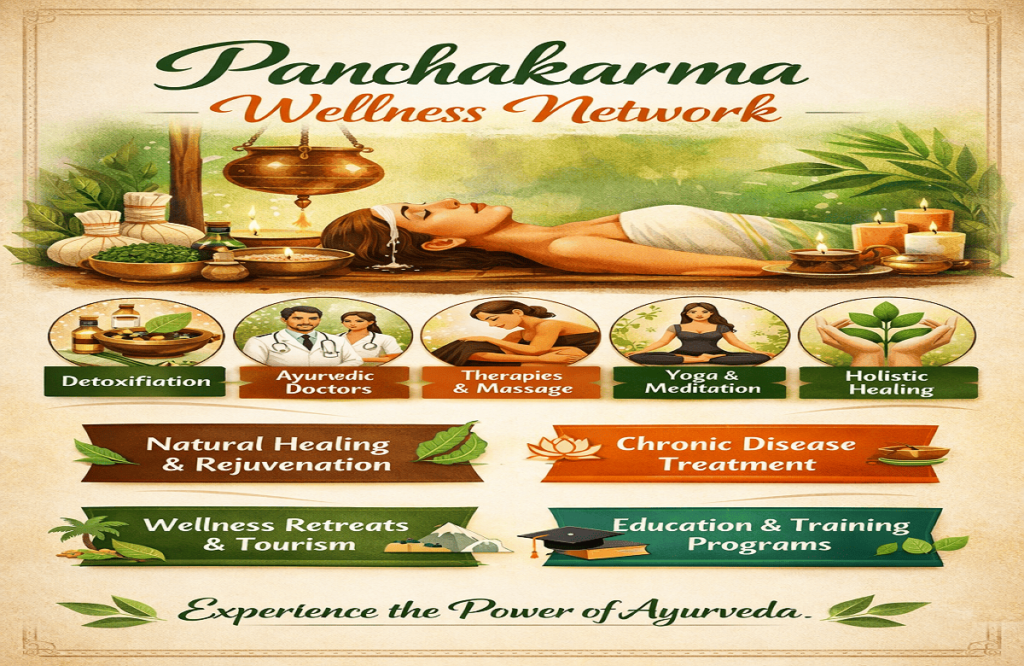
Panchakarma Wellness is a traditional healing system from the Indian science of Ayurveda that focuses on detoxifying and rejuvenating the body. The word Panchakarma means “five actions,” referring to five cleansing therapies designed to remove toxins and restore balance among the body’s natural energies—Vata, Pitta, and Kapha. These therapies typically include Vamana (emesis), Virechana (purgation), Basti (medicated enema), Nasya (nasal therapy), and Raktamokshana (blood purification). Panchakarma programs often combine herbal medicines, oil massages, steam therapy, yoga, meditation, and a specialized diet. This holistic approach helps improve digestion, boost immunity, reduce stress, and promote overall physical, mental, and emotional well-being
WHAT IS PANCHAKARMA WELLNESS NETWORK?
A Panchakarma Wellness Network is a group of wellness centers, clinics, therapists, and healthcare professionals connected through the practice of Ayurveda. These networks work together to provide Panchakarma therapies and holistic health services to people seeking natural healing and preventive healthcare. The main aim of such a network is to promote traditional Ayurvedic treatments and make them accessible to a wider population.
The word Panchakarma comes from Sanskrit and means “five actions.” It refers to five detoxification procedures used in Ayurveda to remove toxins from the body and restore balance among the three doshas—Vata, Pitta, and Kapha. These therapies are usually performed under the supervision of trained Ayurvedic doctors and therapists. The five main therapies include Vamana (therapeutic vomiting), Virechana (purgation therapy), Basti (medicated enema), Nasya (nasal therapy), and Raktamokshana (blood purification). Together, these treatments help cleanse the body and improve overall health.
A Panchakarma Wellness Network typically includes different types of organizations and professionals. These may include Ayurvedic hospitals, wellness clinics, spa centers, yoga instructors, diet experts, and certified Panchakarma therapists. By working together in a network, these professionals can share knowledge, skills, and resources. This collaboration helps maintain quality standards and ensures that patients receive authentic and effective treatments.
One of the important goals of a Panchakarma Wellness Network is to promote holistic wellness. Holistic wellness means focusing on the overall health of the body, mind, and spirit. Panchakarma programs often include herbal medicines, oil massages such as Abhyanga, steam therapy, yoga, meditation, and special Ayurvedic diets. These treatments not only help in detoxifying the body but also reduce stress, improve digestion, boost immunity, and increase energy levels.
Another key function of such a network is education and training. Many Panchakarma Wellness Networks provide training programs, workshops, and certification courses for students and healthcare professionals who want to learn Ayurvedic therapies. Through these educational activities, the network helps preserve traditional knowledge and prepares skilled therapists who can provide safe and effective treatments.
Panchakarma Wellness Networks also play a role in promoting wellness tourism. Many people travel to India and other countries to experience authentic Ayurvedic therapies. Wellness networks can connect patients with trusted clinics and retreat centers that offer professional Panchakarma programs. This helps visitors receive proper care and guidance during their detox and rejuvenation treatments.
In addition, these networks often work to spread awareness about natural healthcare and preventive medicine. They may organize health camps, seminars, community programs, and online consultations to educate people about the benefits of Ayurvedic lifestyle practices. By encouraging healthy habits, balanced diets, and stress management, the network helps individuals maintain long-term well-being.
WHO IS REQUIRED PANCHAKARMA WELLNESS NETWORK?
1. People Seeking Natural Healing
Individuals who prefer natural and holistic treatments often require services from a Panchakarma Wellness Network. These people want to improve their health through traditional methods of Ayurveda rather than relying only on modern medicines.
2. Patients with Chronic Health Problems
People suffering from long-term health conditions may benefit from Panchakarma therapies. Such conditions include joint pain, digestive disorders, skin diseases, stress, and lifestyle-related problems. Panchakarma treatments help detoxify the body and support natural healing.
3. People Wanting Detoxification
Many individuals choose Panchakarma programs to remove toxins from the body. Detoxification helps improve digestion, increase energy levels, and support overall health. A Panchakarma Wellness Network provides access to trained professionals who can guide this process safely.
4. Individuals Experiencing Stress and Mental Fatigue
Modern lifestyles often lead to stress, anxiety, and mental exhaustion. Panchakarma therapies combined with yoga, meditation, and relaxation techniques help reduce stress and promote mental well-being.
5. Health and Wellness Enthusiasts
People who are interested in maintaining a healthy lifestyle may also use Panchakarma services. These individuals focus on preventive healthcare and regular wellness programs to keep their body and mind balanced.
6. Students and Professionals in Ayurveda
Students studying Ayurveda and professionals working in the wellness industry may require a Panchakarma Wellness Network for training, professional collaboration, and skill development.
7. Wellness Tourists
Many international and domestic tourists travel to experience authentic Ayurvedic therapies. A Panchakarma Wellness Network helps them find reliable wellness centers and professional therapists for safe and effective treatment.
WHEN IS REQUIRED PANCHAKARMA WELLNESS NETWORK?
1. During Detoxification Programs
A Panchakarma Wellness Network is required when individuals want to undergo a proper detoxification program based on the principles of Ayurveda. Panchakarma treatments must be done under trained professionals, and the network helps people access qualified doctors and therapists.
2. When Treating Chronic Health Problems
It is required when people suffer from long-term health conditions such as joint pain, digestive disorders, skin diseases, or lifestyle-related illnesses. Panchakarma therapies can help remove toxins and support the body’s natural healing process.
3. During Seasonal Body Cleansing
In Ayurveda, seasonal detox is recommended to maintain balance in the body. Many people undergo Panchakarma treatments at the change of seasons to cleanse the body and improve immunity. A wellness network helps provide proper treatment facilities for this purpose.
4. When Experiencing Stress and Mental Fatigue
A Panchakarma Wellness Network is also required when people experience high levels of stress, anxiety, or mental exhaustion. Panchakarma therapies combined with yoga and meditation help relax the body and mind.
5. For Preventive Healthcare
People who want to maintain good health and prevent diseases may require Panchakarma wellness services. Regular wellness programs help improve digestion, strengthen immunity, and maintain balance in the body.
6. During Training and Professional Development
Students and healthcare professionals studying Ayurveda may require a Panchakarma Wellness Network for education, practical training, and professional collaboration.
WHERE IS PANCHAKARMA WELLNESS NETWORK REQUIRED?
1. Ayurvedic Hospitals
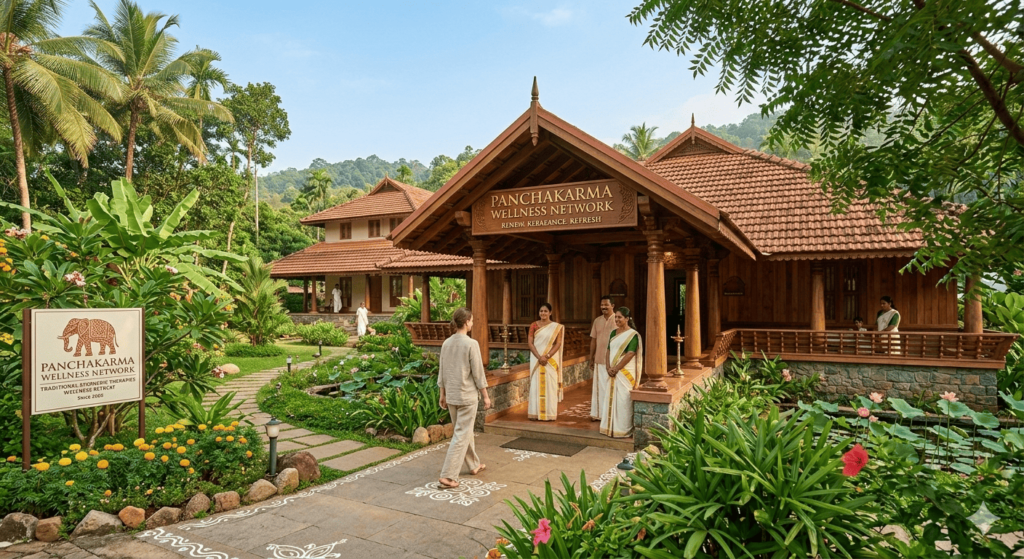
A Panchakarma Wellness Network is required in Ayurvedic hospitals where patients receive specialized treatments based on the principles of Ayurveda. These hospitals provide professional supervision, proper equipment, and trained therapists to perform Panchakarma therapies safely.
2. Wellness and Detox Centers
Panchakarma Wellness Networks are also required in wellness and detox centers. These centers focus on improving overall health through detoxification, relaxation therapies, herbal treatments, and lifestyle guidance.
3. Panchakarma Clinics
Specialized Panchakarma clinics require a wellness network to connect with trained doctors, therapists, and other healthcare professionals. This helps ensure high-quality treatment and better patient care.
4. Yoga and Holistic Healing Centers
Many yoga and holistic healing centers include Panchakarma therapies as part of their wellness programs. A network helps these centers collaborate with Ayurvedic experts and provide complete mind–body healing.
5. Wellness Resorts and Retreat Centers
Panchakarma Wellness Networks are commonly used in wellness resorts and retreat centers where people travel for relaxation, rejuvenation, and health improvement. These places often offer long-term Panchakarma programs.
6. Educational and Training Institutes
Institutes that teach Ayurveda and Panchakarma therapies require wellness networks to provide practical training, workshops, and professional guidance for students.
7. International Wellness Tourism Centers
Panchakarma Wellness Networks are also important in places that attract wellness tourists. These networks help visitors find trusted Ayurvedic centers where they can experience authentic Panchakarma treatments.
HOW IS PANCHAKARMA WELLNESS NETWORK REQUIRED?
1. By Connecting Health Professionals
A Panchakarma Wellness Network is required by connecting different healthcare professionals such as Ayurvedic doctors, Panchakarma therapists, yoga instructors, and nutrition experts. These professionals work together using the principles of Ayurveda to provide complete wellness care.
2. By Providing Standardized Treatments
The network helps maintain proper standards for Panchakarma therapies. Through shared guidelines and training, wellness centers can provide safe, authentic, and effective treatments to patients.
3. By Sharing Knowledge and Resources
A Panchakarma Wellness Network allows clinics and professionals to share knowledge, research, and resources. This improves treatment methods and helps practitioners stay updated with Ayurvedic practices.
4. By Offering Training and Certification
The network supports education by organizing training programs, workshops, and certification courses for students and therapists who want to learn Panchakarma therapies.
5. By Expanding Access to Wellness Services
Through a network of clinics and wellness centers, more people can access Panchakarma therapies in different locations. This makes Ayurvedic healthcare more available to the public.
6. By Promoting Awareness and Wellness Programs
The network helps spread awareness about natural healing and preventive healthcare through seminars, health camps, and wellness programs.
CASE STUDY ON PANCHAKARMA WLLNES NETWORK REQUIRED
1. Introduction
This case study focuses on the concept and functioning of a Panchakarma Wellness Network, which is a collaborative system of wellness centers and healthcare professionals working together to provide Panchakarma therapies and holistic treatments based on Ayurveda. The network aims to promote natural healing, detoxification, and preventive healthcare.
2. Background of the Case
In recent years, many people have started looking for natural and holistic healthcare solutions due to increasing stress, unhealthy lifestyles, and chronic diseases. As a result, Panchakarma therapies have become more popular. However, patients often face difficulties finding authentic treatment centers and trained therapists. To solve this problem, Panchakarma Wellness Networks have been developed to connect reliable clinics and professionals.
3. Case Description
A wellness organization created a Panchakarma Wellness Network by connecting several Ayurvedic clinics, therapists, yoga instructors, and wellness centers in different cities. The network ensured that all participating centers followed proper treatment guidelines and maintained high-quality standards for Panchakarma therapies.
Each center in the network provided services such as Ayurvedic consultation, Panchakarma detox treatments, herbal medicine therapy, oil massages like Abhyanga, steam therapy, yoga sessions, meditation, and personalized diet plans.
4. Implementation
The network was implemented through several important steps:
- Identifying certified Ayurvedic doctors and therapists
- Connecting wellness centers under one system
- Providing training programs for Panchakarma therapists
- Establishing treatment protocols based on Ayurvedic principles
- Promoting services through wellness programs and health awareness campaigns
5. Benefits Observed
The Panchakarma Wellness Network provided several benefits:
- Patients received safe and authentic Panchakarma treatments
- Clinics gained access to professional training and shared knowledge
- Awareness about Ayurvedic wellness increased among the public
- The network helped expand holistic healthcare services to more locations
6. Challenges
Despite its benefits, the network also faced some challenges such as maintaining consistent quality standards, ensuring proper training of therapists, and educating people about the correct use of Panchakarma therapies.
SOURCE : Nityanandam Shree
WHITE PAPER ON PANCHAKARMA WELLNES NETWORK
1. Introduction
A Panchakarma Wellness Network is a structured system of wellness centers, healthcare professionals, and institutions that collaborate to provide Panchakarma therapies and holistic health services. These services are based on the traditional Indian medical system of Ayurveda, which focuses on balancing the body, mind, and spirit. The network aims to promote natural healing, preventive healthcare, and sustainable wellness practices.
2. Purpose of the Panchakarma Wellness Network
The main purpose of a Panchakarma Wellness Network is to create a reliable platform where Ayurvedic professionals and wellness centers can work together. It helps standardize Panchakarma treatments, improve access to authentic therapies, and promote awareness about Ayurvedic healthcare. Through collaboration, the network ensures that patients receive safe, effective, and scientifically guided treatments.
3. Structure of the Network
A Panchakarma Wellness Network usually includes several participants such as Ayurvedic doctors, Panchakarma therapists, wellness clinics, Ayurvedic hospitals, yoga instructors, nutrition experts, and wellness resorts. Each member of the network contributes to providing integrated healthcare services that focus on detoxification, rejuvenation, and lifestyle improvement.
4. Core Services Offered
The network offers a range of services related to Panchakarma therapies. These services include Ayurvedic consultation, detoxification programs, herbal medicine treatments, therapeutic oil massages, steam therapy, nasal treatments, and medicated enemas. In addition, wellness programs often include yoga, meditation, and personalized diet plans to support long-term health and well-being.
5. Benefits of the Network
A Panchakarma Wellness Network provides multiple benefits for both patients and healthcare professionals. Patients gain access to reliable treatment centers and trained therapists. Healthcare professionals benefit from knowledge sharing, professional collaboration, and training opportunities. The network also helps promote holistic healthcare and supports the growth of Ayurvedic wellness services.
6. Role in Education and Training
Education is an important component of the Panchakarma Wellness Network. Many networks organize workshops, training programs, and certification courses for students and practitioners interested in learning Panchakarma therapies. This helps maintain professional standards and ensures that therapies are performed safely and effectively.
7. Role in Wellness Tourism
The Panchakarma Wellness Network also supports wellness tourism by connecting patients and tourists with authentic Ayurvedic wellness centers. Many people travel to experience traditional detox and rejuvenation programs, and the network helps them find trusted clinics that follow proper Ayurvedic practices.
8. Challenges and Future Scope
Although the Panchakarma Wellness Network offers many advantages, it also faces challenges such as maintaining consistent quality standards, ensuring proper training of therapists, and increasing awareness about the benefits of Ayurvedic treatments. In the future, these networks may expand globally and integrate modern research with traditional Ayurvedic knowledge.
9. Conclusion
In conclusion, a Panchakarma Wellness Network plays a vital role in promoting holistic healthcare through the principles of Ayurveda. By connecting professionals, standardizing treatments, and spreading awareness, the network helps people achieve better health through natural and preventive healthcare methods.
INDUSTRY APPLICATION OF PANCHAKARMA WELLNESS NETWORK
1. Healthcare Industry
In the healthcare sector, a Panchakarma Wellness Network is used to provide natural treatment and preventive care based on the principles of Ayurveda. Ayurvedic hospitals and clinics use Panchakarma therapies to treat lifestyle diseases, improve immunity, and support overall health. The network connects doctors, therapists, and wellness centers to deliver standardized and effective treatments.
2. Wellness and Spa Industry
The wellness and spa industry widely uses Panchakarma therapies as part of detox and rejuvenation programs. Wellness centers and spas offer therapies such as herbal oil massages, steam therapy, and relaxation treatments. A Panchakarma Wellness Network helps these centers maintain quality services and collaborate with trained Ayurvedic professionals.
3. Tourism and Hospitality Industry
Many resorts and retreat centers offer Panchakarma programs for relaxation and health improvement. This has created a growing field known as wellness tourism. Through a network of trusted centers, tourists can find authentic Panchakarma services and experience traditional Ayurvedic healing methods during their travels.
4. Education and Training Industry
Educational institutions that teach Ayurveda use Panchakarma Wellness Networks to provide practical training to students. These networks organize workshops, certification programs, and internships to develop skilled Panchakarma therapists and practitioners.
5. Pharmaceutical and Herbal Industry
The pharmaceutical and herbal medicine industry also benefits from Panchakarma practices. Herbal oils, medicines, and formulations used in Panchakarma treatments are produced and supplied by Ayurvedic pharmaceutical companies. The network helps connect treatment centers with suppliers of authentic herbal products.
6. Corporate Wellness Industry
Many organizations are introducing wellness programs for employees to reduce stress and improve productivity. Panchakarma therapies and Ayurvedic lifestyle programs are increasingly being included in corporate wellness initiatives to promote physical and mental well-being.
Table of Contents
ASK FAQ
1.What is a Panchakarma Wellness Network?
A Panchakarma Wellness Network is a group of wellness centers, clinics, and health professionals connected to provide Panchakarma therapies and holistic healthcare services. These networks follow the principles of Ayurveda to offer detoxification, rejuvenation, and preventive treatments. The network helps people access authentic Ayurvedic therapies through trained doctors and therapists.
2.What are the benefits of Panchakarma Wellness treatments?
Panchakarma wellness treatments help detoxify the body, improve digestion, boost immunity, and reduce stress. They also support the treatment of lifestyle diseases and help balance the body’s natural energies. These therapies focus on overall wellness by improving both physical and mental health.
3.Who should use a Panchakarma Wellness Network?
People who want natural healing, detoxification, stress relief, or preventive healthcare can benefit from a Panchakarma Wellness Network. It is also useful for patients with chronic conditions, wellness tourists, and students or professionals studying Ayurveda.
4. Where can Panchakarma Wellness Network services be found?
Panchakarma Wellness Network services are available in Ayurvedic hospitals, wellness clinics, spa centers, yoga and holistic healing centers, wellness resorts, and training institutes. These places offer professional Panchakarma therapies and wellness programs.
5.Why is a Panchakarma Wellness Network important?
A Panchakarma Wellness Network is important because it connects healthcare professionals and wellness centers to maintain treatment quality and expand access to Ayurvedic therapies. It also promotes awareness about natural healthcare and helps people maintain long-term wellness through traditional healing practices.