
VACHHRAJ METALS
Table of Contents
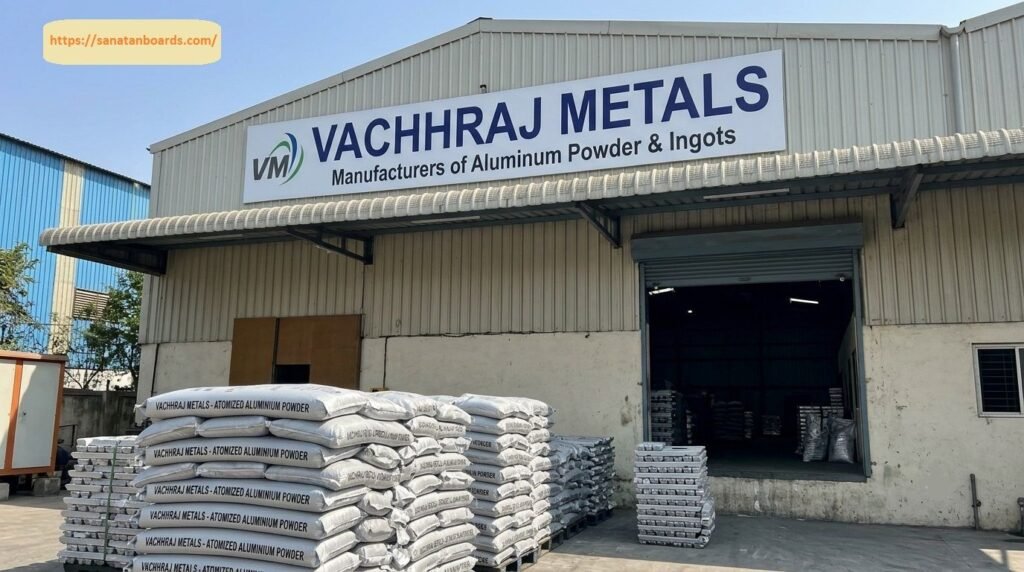
Chapter 1 – The Beginning of a Quality-Oriented Journey
Every successful industrial enterprise begins with a simple objective: to create a product that customers can trust. For a company operating in the metal and powder industry, however, trust involves much more than supplying a product at the right price. Customers expect consistency, responsible handling, proper documentation, technical understanding, dependable communication and the ability to meet industrial requirements. This was the environment in which VACHHRAJ METALS developed its journey around aluminium powder.
Located in the industrial region of Kosamba, Surat, Gujarat, VACHHRAJ METALS operates in a business environment where manufacturing, trading, logistics and industrial supply chains intersect. The location itself offers an important commercial advantage because Gujarat has a strong industrial ecosystem and extensive road connectivity. The company’s supplied address near National Highway No. 8 placed its operations in an area connected with industrial movement and commercial transportation.
The company’s 2022 milestone involving a Material Safety Data Sheet Certificate for Aluminium Powder represented an important step in presenting its product in a more professionally documented manner. An MSDS/SDS is particularly relevant for industrial materials because customers need information about product characteristics, hazards, handling precautions, storage requirements, emergency measures and other safety considerations.
This becomes especially significant when the product is aluminium powder. Aluminium powder is not simply an ordinary solid material. Fine metallic powders require appropriate attention to dust generation, ignition sources, moisture, incompatible substances, storage and handling. International chemical-safety information notes that finely divided aluminium powder can present fire or explosion hazards under certain conditions and that appropriate precautions are required.
Therefore, documentation surrounding the product can become an important part of professional customer service.
For VACHHRAJ METALS, the 2022 documentation milestone can be viewed as part of a broader transformation from simply supplying a product toward presenting itself as a responsible industrial supplier.
The importance of this transformation is easy to understand.
Imagine a customer purchasing aluminium powder for an industrial application. The customer does not only want to know the price per kilogram. The customer may also want to understand the material, its safe handling conditions, storage requirements and precautions for employees. Procurement teams may require technical documentation before approving a supplier. Production managers may need product information for their internal procedures. Safety personnel may require documentation for workplace assessments.
A professionally prepared MSDS therefore supports communication between supplier and customer.
For a growing enterprise, documentation also creates internal discipline. When product information has to be clearly communicated, the organization itself becomes more conscious of product specifications, packaging, handling, storage and customer requirements.
This is where the story of VACHHRAJ METALS becomes a story about more than aluminium powder.
It becomes a story about the gradual professionalization of an industrial enterprise.
The 2022 milestone provided an opportunity for the organization to look at its product through a broader lens. Quality was no longer limited to the physical appearance or commercial value of aluminium powder. Quality increasingly included documentation, safety awareness, communication and consistency.
The management could use this foundation to strengthen customer confidence.
The product itself also had considerable industrial relevance. Publicly available information about Vachhraj Metals describes the business as being involved in aluminium powder products, while marketplace information has listed atomized aluminium powder in multiple mesh specifications and industrial applications.
This meant that the company’s future could be connected not only with local demand but also with customers operating across different industrial segments.
The first stage of growth was therefore not necessarily about becoming larger overnight.
It was about becoming more organized.
It was about creating a foundation on which future growth could be built.
It was about understanding that an industrial customer judges a supplier through many touchpoints: product quality, communication, documentation, packaging, delivery, responsiveness and safety awareness.
The 2022 MSDS milestone became one such touchpoint.
From that foundation, VACHHRAJ METALS could begin looking toward a future in which its product identity, technical documentation and customer relationships worked together.
The journey had begun.
#VachhrajMetals
Chapter 2 – Understanding the Importance of Aluminium Powder
Aluminium is one of the world’s important industrial metals, and aluminium powder represents a specialized form of the material. The transformation of aluminium into powder creates opportunities for applications that require particular particle characteristics, surface properties, purity levels or processing behavior.
For VACHHRAJ METALS, this meant that the business was operating in a segment where technical understanding could become an important competitive factor.
An industrial powder customer does not necessarily purchase material simply because it is aluminium. The customer may have requirements relating to particle size, mesh, purity, consistency, packaging, application and supply reliability. A supplier therefore needs to understand the difference between a commodity transaction and a technical industrial supply relationship.
This understanding can influence the company’s growth.
Public information about Vachhraj Metals identifies aluminium powder as a major product area and describes applications across industrial sectors. A marketplace listing also describes atomized aluminium powder in mesh ranges from 20 to 400 mesh, illustrating how particle specifications can form part of the product discussion.
For a developing company, such diversity creates both opportunity and responsibility.
The opportunity comes from being able to serve multiple types of customers.
The responsibility comes from ensuring that customers receive appropriate technical information.
This is where the 2022 MSDS milestone becomes particularly meaningful.
Safety documentation encourages a company to think systematically about its product. Rather than viewing aluminium powder only as a material to manufacture, package and sell, the organization must consider how the product behaves during transportation, storage, handling and use.
For example, safety references concerning aluminium powder emphasize the importance of minimizing dust generation, avoiding ignition sources and protecting material from incompatible conditions such as moisture or certain reactive substances.
Such information reinforces an important principle: responsible industrial growth requires responsible product communication.
VACHHRAJ METALS could therefore use documentation as an educational tool for customers.
A professional supplier can communicate:
What the product is.
How it should be stored.
How it should be handled.
What precautions should be taken.
What personal protective equipment may be appropriate.
What actions should be considered in an emergency.
How the product should be protected during transportation.
These details create a more complete customer experience.
Over time, this can change the nature of customer relationships.
Instead of a customer seeing the supplier simply as another source of aluminium powder, the supplier can become a technical partner capable of providing relevant product documentation and support.
For the promoter and management, this represents a shift in business thinking.
Entrepreneurship in manufacturing is often associated with machinery, production capacity, raw materials and sales. But sustainable industrial growth also depends on systems.
A system means that the company does not depend entirely on one individual’s memory or personal involvement.
Product information is documented.
Customer requirements are recorded.
Orders are communicated properly.
Material is identified.
Packaging is controlled.
Dispatch information is maintained.
Complaints are reviewed.
Safety information is available.
Employees understand their responsibilities.
When these elements begin working together, a small or medium industrial enterprise can become significantly more professional.
The 2022 documentation initiative could therefore act as a catalyst for these improvements.
The company’s management could begin asking more questions.
Are product specifications communicated consistently?
Are customers receiving the information they need?
Are storage conditions appropriate?
Are employees sufficiently aware of powder-handling precautions?
Is packaging suitable for transportation?
Are records maintained properly?
Are repeat customer requirements understood?
Each question represents a potential improvement opportunity.
Growth is often created through hundreds of small improvements rather than one dramatic event.
For VACHHRAJ METALS, the product itself became the center of this improvement journey.
Aluminium powder demanded technical attention, and technical attention created opportunities for better documentation.
Better documentation created opportunities for better communication.
Better communication created opportunities for greater customer confidence.
Greater customer confidence could support stronger commercial relationships.
Thus, the MSDS milestone was not merely a document.
It could become part of a broader quality culture.
The company’s future growth could be built on the idea that every kilogram of aluminium powder represented not just a sale, but a promise of consistent supply, responsible handling information and professional service.
This philosophy would become increasingly important as the company expanded its market reach.
#AluminiumPowder
Chapter 3 – The Promoter’s Role in Building the Enterprise
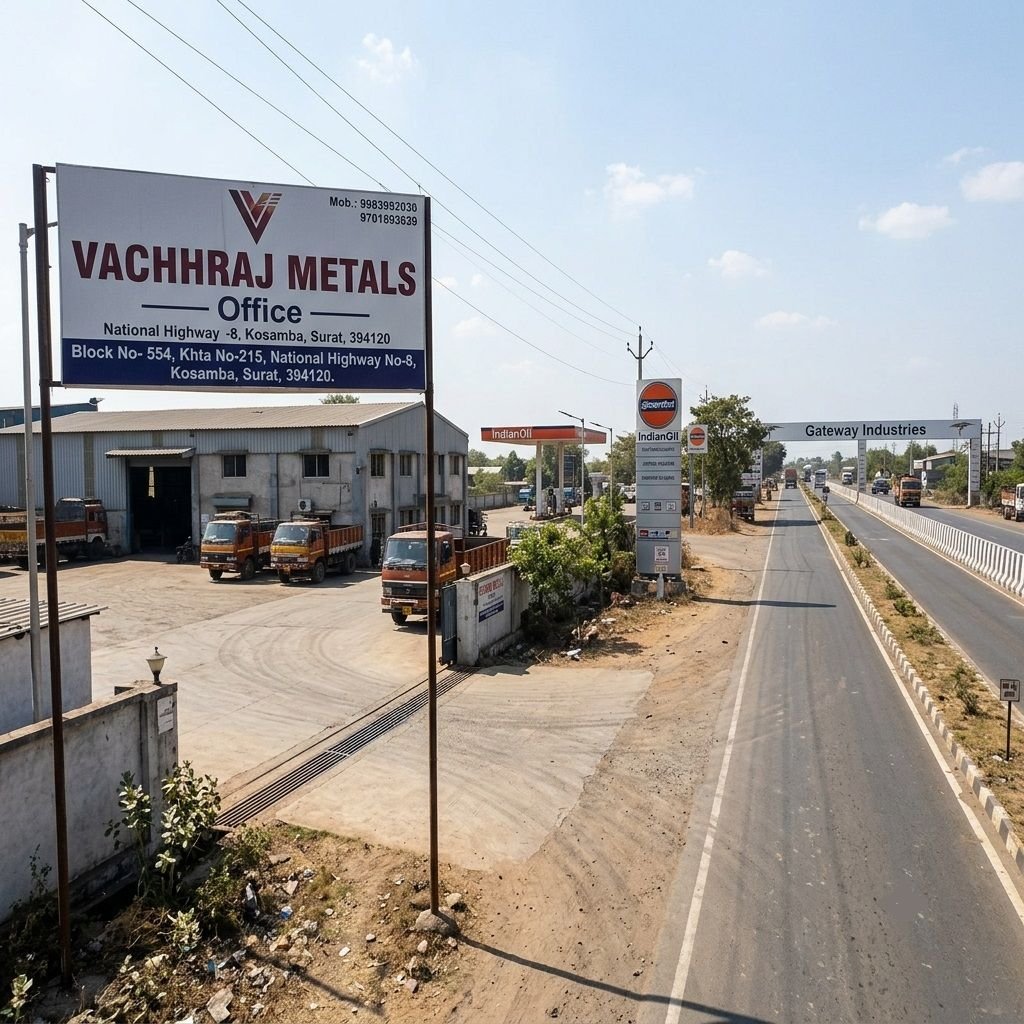
Behind every growing industrial organization is a person or management team responsible for making decisions during uncertain periods.
For VACHHRAJ METALS, entrepreneurship required more than identifying a market for aluminium powder. It required understanding customers, managing suppliers, organizing operations, dealing with logistics and responding to changing industrial expectations.
Public business information associates VACHHRAJ METALS with proprietor Jemish Bharatbhai Moradiya. The company’s public-facing information also emphasizes aluminium products, customer service and supply capabilities.
The promoter’s journey can therefore be understood through the gradual evolution of the enterprise.
At the beginning of an industrial business, the promoter often has to perform multiple functions. One day may involve purchasing raw materials. Another may involve discussing product specifications with a customer. Another may involve transportation. Another may involve solving a production or packaging problem.
This creates valuable practical knowledge.
The promoter learns what customers actually need rather than what textbooks say they need.
He learns which specifications create problems.
He learns how transportation affects deliveries.
He learns how packaging behaves in real conditions.
He learns which customers return and why.
He learns that a delayed delivery can affect an entire production schedule.
He learns that documentation can be as important as the physical product.
Such experience becomes an invisible asset.
The 2022 MSDS milestone could help transform some of this practical knowledge into formal documentation.
That transformation is important.
A business can survive through personal relationships and entrepreneurial energy during its early stage. But as it grows, it needs systems that allow other employees to perform responsibilities consistently.
This is where the promoter’s role changes.
Initially, the promoter may be the center of almost every decision.
Later, the promoter becomes the person who designs systems, develops people, establishes standards and monitors performance.
That is a significant transition.
The MSDS initiative fits naturally into this evolution because it formalizes knowledge about the product.
Instead of relying on informal explanations, product safety information can be documented and communicated systematically.
This can improve interactions with procurement teams.
It can assist industrial customers in preparing their own safety documentation.
It can support responsible warehouse practices.
It can provide a reference during transportation and handling.
It can make the company appear more organized to prospective customers.
Professional documentation also helps a business communicate with customers who may not personally know the promoter.
This is crucial for expansion.
A local customer may already trust the entrepreneur.
A new customer hundreds of kilometers away does not have that personal history.
That customer evaluates the company through documents, specifications, samples, packaging, communication, references, website information and commercial performance.
Therefore, documentation becomes part of the company’s reputation.
The promoter’s growth can consequently be seen not simply as personal financial development, but as an expansion of managerial thinking.
The entrepreneur begins with a product.
He gradually develops a business.
Then he develops a system.
Then he develops a brand.
This process is often difficult because every stage requires new capabilities.
A growing company must learn how to delegate.
It must learn how to standardize.
It must learn how to maintain records.
It must learn how to handle customer complaints constructively.
It must learn how to separate urgent tasks from important tasks.
It must learn how to invest in improvements that may not generate immediate revenue.
Safety documentation is one example of such an investment.
A document may not directly produce a sale, but it can reduce uncertainty for customers.
That reduction in uncertainty has commercial value.
The promoter’s long-term challenge is therefore to make the organization dependable.
A customer should feel that the company can deliver the same professional experience regardless of which employee answers the telephone, prepares the quotation or coordinates dispatch.
That is the beginning of institutional growth.
For VACHHRAJ METALS, the aluminium powder business provided the commercial foundation, while documentation and quality consciousness could provide the organizational foundation.
The promoter’s role was to connect the two.
#MaterialSafetyDataSheet
Chapter 4 – Documentation as a Tool for Customer Confidence
Industrial customers purchase confidence along with products.
When a company supplies aluminium powder, customers may need confidence that the material is properly identified, adequately packaged and accompanied by relevant technical information.
This is why documentation can influence commercial relationships.
The 2022 Material Safety Data Sheet Certificate for aluminium powder gave VACHHRAJ METALS a structured way to communicate product-related safety information.
An MSDS/SDS generally addresses matters such as hazards, composition, first-aid measures, fire-fighting measures, accidental-release procedures, handling, storage, exposure controls, personal protection, transportation and disposal considerations.
For aluminium powder, these areas are especially relevant because fine metallic powders can create particular safety challenges. International safety references describe dust-explosion risks for finely divided aluminium and recommend controlling dust accumulation and ignition sources.
Therefore, documentation should not be treated as paperwork for paperwork’s sake.
It can become a communication bridge.
Consider a customer evaluating two suppliers.
Supplier A provides a quotation.
Supplier B provides a quotation together with organized product information and safety documentation.
The second supplier may appear more prepared because the customer has more information available for internal evaluation.
This does not automatically make one supplier technically superior, but it demonstrates how documentation can influence procurement confidence.
For VACHHRAJ METALS, the availability of MSDS documentation could therefore support the company’s professional image.
It could also assist customers in their own internal compliance systems.
Many industrial companies maintain safety files for materials used within their facilities. When suppliers provide appropriate documentation, customers can integrate that information into their procedures more efficiently.
This creates a secondary benefit.
Good supplier documentation can reduce the administrative burden on customers.
And reducing customer effort is itself a form of service quality.
The company could therefore build a philosophy around three forms of quality:
Product quality.
The aluminium powder must meet agreed requirements.
Documentation quality.
The information accompanying the product must be clear and useful.
Service quality.
The customer must receive responsive communication and dependable support.
When these three areas work together, customer relationships become stronger.
Documentation also supports internal training.
New employees may not have extensive knowledge of aluminium powder. A formal safety document gives them a reference point. It can help management communicate important handling principles and encourage employees to ask questions.
For warehouse personnel, storage practices matter.
For production personnel, dust control matters.
For dispatch personnel, packaging integrity matters.
For administrative personnel, accurate documentation matters.
For sales personnel, correct product information matters.
Thus, one document can influence multiple departments.
This is one reason why quality-oriented organizations treat documentation as part of the management system rather than as a separate administrative activity.
The 2022 milestone could therefore encourage VACHHRAJ METALS to expand its documentation culture.
Product specifications could be organized.
Customer requirements could be recorded.
Packaging details could be standardized.
Dispatch documents could be checked.
Complaint records could be maintained.
Supplier information could be evaluated.
Corrective actions could be tracked.
Over time, these practices could make the company less dependent on informal communication.
The promoter could delegate responsibilities with greater confidence because employees would have documented references.
This is particularly important during growth.
When order volumes increase, informal methods begin to break down.
A person who previously remembered ten customers may struggle to remember fifty.
A salesperson who previously knew every product specification may eventually require a formal product catalogue.
A promoter who personally checked every dispatch may eventually need a documented inspection system.
Growth therefore creates a demand for systems.
The MSDS milestone can be seen as one element in this movement toward systematic management.
It also reinforces the company’s message to the market.
VACHHRAJ METALS is not merely interested in selling aluminium powder.
It is interested in supplying an industrial material responsibly.
That message can support brand development.
Customers remember suppliers who make their work easier.
They remember suppliers who respond quickly.
They remember suppliers whose products arrive correctly packed.
They remember suppliers who provide useful documentation.
They remember suppliers who solve problems instead of creating them.
Therefore, documentation becomes part of the customer experience.
The 2022 MSDS certificate represented a formal step in that direction.
It helped convert technical responsibility into visible evidence of professionalism.
#MSDSCertificate
Chapter 5 – Building a Culture of Quality
Quality is not created by certificates alone.
A certificate or document can demonstrate that a particular requirement has been addressed, but sustainable quality depends on daily behavior.
For VACHHRAJ METALS, the real value of its 2022 documentation milestone could therefore emerge when the principles behind the documentation became part of everyday operations.
A quality culture begins with awareness.
Employees need to understand that their work affects the customer.
A small mistake in packaging can lead to product loss.
An incorrect label can create confusion.
Poor storage can affect material condition.
Incomplete documentation can delay customer approval.
A delayed dispatch can disrupt production at the customer’s facility.
Therefore, every employee contributes to quality.
For a business dealing with aluminium powder, housekeeping and handling discipline are particularly important. Safety references emphasize preventing dust accumulation, controlling ignition sources and keeping aluminium powder away from incompatible conditions.
This means quality and safety are closely connected.
Good housekeeping is not merely about making a factory look clean.
It can be part of risk management.
Good packaging is not merely attractive.
It can protect the product during transportation.
Good labeling is not merely administrative.
It helps identify the material correctly.
Good records are not merely paperwork.
They create traceability.
The promoter can therefore use quality thinking to develop employee responsibility.
Instead of saying, “Management will check everything,” the organization can move toward, “Everyone is responsible for doing the job correctly.”
That change can have a major effect.
It reduces dependence on final inspection.
If every process is performed correctly, fewer defects reach the final stage.
For example, if incoming material is checked carefully, unsuitable material can be identified before production.
If production parameters are monitored, variations can be detected early.
If packaging is checked before dispatch, errors can be corrected before the shipment leaves.
If customer complaints are analyzed, recurring problems can be addressed rather than repeatedly corrected.
This creates a continuous-improvement cycle.
Identify.
Measure.
Correct.
Prevent.
Review.
Improve.
This philosophy can support the company’s long-term development.
The role of the promoter is critical because employees observe management behavior.
If management treats quality as a priority only when an auditor visits, employees learn that quality is temporary.
If management discusses quality during routine operations, employees understand that quality is permanent.
The 2022 MSDS milestone therefore had the potential to become a starting point for a wider cultural change.
The company could establish internal discussions around product safety.
It could train employees on handling precautions.
It could maintain safety documentation where relevant.
It could review warehouse practices.
It could strengthen communication between sales and operations.
It could create better feedback mechanisms.
The result would not necessarily be visible immediately.
Cultural change takes time.
But over months and years, these habits can influence customer satisfaction.
Employees become more confident.
Errors become easier to identify.
Communication improves.
Customers receive clearer responses.
Management gains better visibility.
Operations become more predictable.
This is the foundation of sustainable growth.
The company’s public-facing information today emphasizes quality, customer service and aluminium-product capabilities, illustrating how these themes have become part of its commercial presentation.
The evolution from a small business mentality toward a quality-oriented industrial organization is therefore a significant part of the VACHHRAJ METALS story.
Quality becomes not just a department.
It becomes a mindset.
The promoter can reinforce this mindset by celebrating correct work, responding constructively to mistakes and encouraging employees to suggest improvements.
A worker who notices a packaging problem should feel comfortable reporting it.
A salesperson who discovers a recurring customer complaint should be able to communicate it.
A warehouse employee who identifies an unsafe condition should have authority to raise the issue.
A manager who identifies a process weakness should have the opportunity to correct it.
This is how organizations mature.
The MSDS certificate was an external document, but its greatest internal value could come from the behavior it encouraged.
The company learned to look at the product from the customer’s perspective.
It learned that safety information matters.
It learned that technical documentation matters.
It learned that professionalism is communicated through details.
Those lessons could then be applied to other areas of the business.
That is how a document becomes a quality culture.
#QualityManagement
Chapter 6 – From Local Business to Wider Market Opportunities
The natural ambition of an industrial enterprise is to expand its market.
For VACHHRAJ METALS, aluminium powder provides opportunities because the material can serve different industrial applications. Public company information describes products including atomized aluminium powder, aluminium paste and other metallic powders, while external marketplace information describes industrial and export-market activity associated with aluminium powder.
Market expansion, however, requires more than production capability.
A company must become commercially presentable.
Potential customers may ask:
Who are you?
What products do you supply?
What specifications are available?
What documentation do you provide?
How do you package the product?
What are your delivery capabilities?
What is your production capacity?
How do you manage quality?
What markets do you serve?
How do you respond to complaints?
A professional business needs answers.
The 2022 MSDS documentation could help answer one part of these questions.
It demonstrated attention to the product’s safety communication.
But the company could build upon that foundation by developing product catalogues, technical datasheets, packaging standards, quality records and customer-service procedures.
This is particularly useful when approaching customers outside the immediate geographical region.
Local business often relies heavily on reputation.
Distance reduces the value of informal reputation.
Documentation helps bridge the gap.
A customer in another state may never visit the facility before placing an order.
A customer in another country may rely heavily on digital information.
Therefore, the company’s website, product literature, technical documents and professional communication become important parts of the sales process.
The modern VACHHRAJ METALS website presents the company as a manufacturer and exporter of aluminium powder products and highlights international market ambitions.
Whether measured through domestic expansion or international opportunities, the principle remains the same:
Professional presentation supports market access.
The promoter’s role therefore shifts again.
Instead of asking only, “How can we sell more?” the entrepreneur begins asking, “What must our organization become to serve larger customers?”
This is a much more important question.
Larger customers may require consistent specifications.
They may require purchase-order discipline.
They may require traceability.
They may require technical documentation.
They may require defined packaging.
They may require timely delivery.
They may require formal complaint handling.
They may require supplier evaluation.
A company prepared for these expectations can pursue opportunities that might otherwise remain inaccessible.
The MSDS certificate becomes part of this preparation.
It demonstrates that product safety information has been considered.
The company can then expand its documentation system.
Each new document adds another layer of professionalism.
The business begins developing an information architecture around its products.
Sales knows what operations can supply.
Operations knows what sales has promised.
Quality knows what specifications apply.
Dispatch knows what documentation accompanies the shipment.
Customers know what they are receiving.
This alignment reduces confusion.
Market expansion also requires logistics.
Aluminium powder must be transported with appropriate care. Safety references stress maintaining suitable conditions and protecting material from moisture and incompatible conditions.
Thus, logistics cannot be treated as an afterthought.
Packaging, vehicle selection, handling procedures and documentation may all contribute to reliable delivery.
A delayed or damaged shipment can undermine months of relationship-building.
Therefore, quality must extend beyond the factory gate.
The company’s commercial growth could increasingly depend on the entire customer journey:
Inquiry → quotation → specification → order → production → inspection → packing → documentation → dispatch → delivery → feedback.
Each stage is connected.
A weakness in one stage can affect the others.
A strength in one stage can improve the whole chain.
This systems perspective is one of the most valuable lessons for an industrial promoter.
The company does not grow merely because more products are sold.
It grows when the organization becomes capable of handling more business without losing control.
That is the real meaning of scalable growth.
For VACHHRAJ METALS, the 2022 milestone could therefore be viewed as one building block in a larger journey.
The product had been documented.
The company had an opportunity to strengthen its systems.
The market could be expanded.
Customer relationships could be deepened.
The brand could become more professional.
And the promoter could transition from managing individual transactions toward managing an organization.
#IndustrialSafety
Chapter 7 – Strengthening Customer Relationships Through Reliability
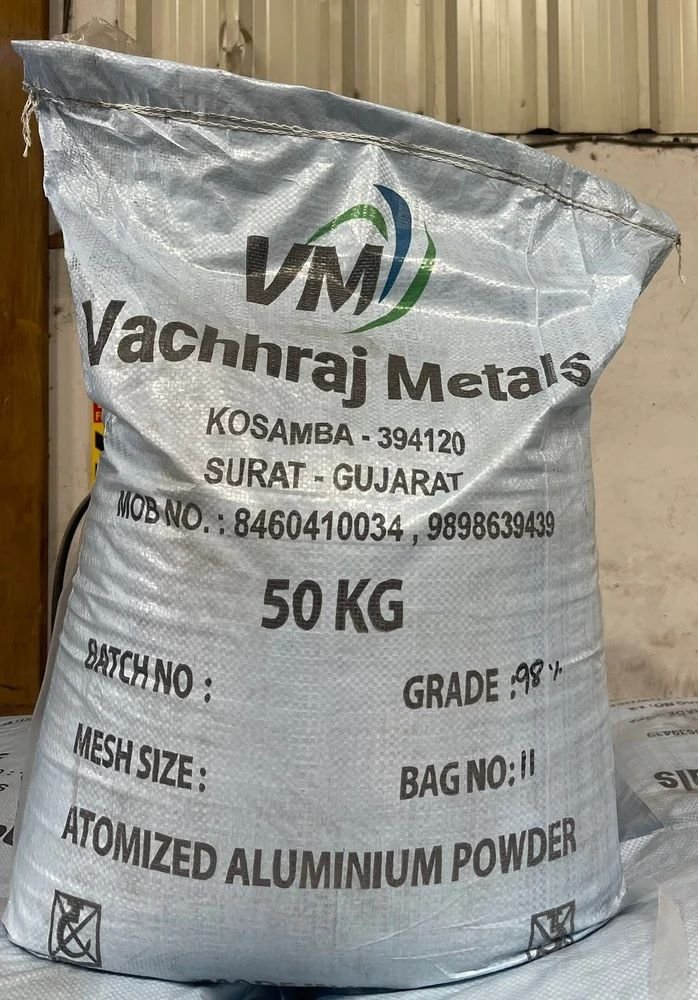
A business can attract a customer through price.
It can retain the customer through reliability.
For an industrial supplier, reliability includes many things.
The material should be available when promised.
The specification should match the agreed requirement.
The packaging should arrive intact.
The documentation should be clear.
The supplier should communicate delays honestly.
Questions should receive timely responses.
Complaints should be investigated.
Repeat orders should become easier.
These elements together create customer confidence.
For VACHHRAJ METALS, the development of product documentation around aluminium powder could support this relationship-building process.
When a customer receives an organized package of information, the customer experiences a more structured supplier relationship.
This can be particularly valuable for industrial procurement teams.
The buyer may not personally use the aluminium powder.
The buyer may have to satisfy quality, safety, production and management departments.
The more professionally the supplier supports those internal needs, the easier the procurement relationship becomes.
This is why documentation can influence repeat business.
The customer begins to associate the supplier with dependability.
Dependability then becomes a brand characteristic.
A company brand is not only its logo.
It is what customers expect when they hear the company name.
If they expect accurate quotations, that is part of the brand.
If they expect consistent product quality, that is part of the brand.
If they expect prompt dispatches, that is part of the brand.
If they expect safety documentation, that is part of the brand.
If they expect responsive service, that is part of the brand.
Therefore, the 2022 MSDS milestone could contribute to brand development by establishing a visible standard for technical professionalism.
Customer relationships can also create valuable feedback.
Every customer question provides information.
If multiple customers ask about mesh sizes, the company can improve its product literature.
If customers repeatedly ask about storage, the company can strengthen its technical communication.
If customers report packaging difficulties, the company can improve packaging.
If customers request specific grades, the company can study market demand.
Thus, customer service becomes a source of business intelligence.
The promoter can turn this information into improvement projects.
Suppose several customers request a particular particle-size range.
The company can evaluate whether the requirement is commercially viable.
Suppose customers require faster delivery.
The company can study inventory planning.
Suppose customers request export documentation.
The company can strengthen its logistics procedures.
Every customer interaction can therefore become an opportunity for growth.
This is a powerful concept for an industrial company.
Instead of treating complaints as negative events, management can treat them as signals.
A complaint indicates a gap between expectation and experience.
If the gap is understood, the company can improve.
If the improvement is documented, recurrence can be reduced.
If the improvement benefits multiple customers, the original complaint creates organizational value.
This is how quality management becomes a growth mechanism.
For VACHHRAJ METALS, the journey after 2022 could therefore involve increasingly mature customer relationships.
The company could move from transaction-based relationships toward partnership-based relationships.
A transaction asks:
“What quantity do you want?”
A partnership asks:
“What problem are you trying to solve?”
The second question creates deeper commercial understanding.
For example, a customer may not actually need “aluminium powder” in the abstract.
The customer may need a material with a specific particle distribution, purity, packaging format and delivery schedule for a defined industrial application.
Understanding that complete requirement allows the supplier to serve the customer better.
The promoter’s knowledge of the market can then become a strategic advantage.
This is how a product supplier develops into a solution-oriented industrial company.
Reliability also builds reputation.
A satisfied customer may introduce another customer.
A successful order can become a reference.
A repeat buyer can become a long-term relationship.
A strong supplier relationship can create opportunities in new industries.
Growth therefore becomes cumulative.
One customer leads to another.
One successful application builds credibility.
One professional document improves procurement confidence.
One reliable delivery reinforces trust.
One resolved complaint demonstrates responsibility.
Over time, these small achievements can become the foundation of a strong business reputation.
The MSDS certificate was one of those building blocks.
Its value was not limited to the document itself.
Its value came from what the document represented:
responsibility, transparency, safety awareness and professional communication.
Those qualities remain central to industrial customer relationships.
#AluminiumIndustry
Chapter 8 – Operational Development and the Discipline of Continuous Improvement
As a company grows, operations become more complex.
More customers mean more orders.
More orders mean more planning.
More planning means more coordination.
More coordination means greater dependence on systems.
This is where operational discipline becomes essential.
For VACHHRAJ METALS, the aluminium powder business requires attention to material handling, product identification, packaging, storage, dispatch and customer requirements.
Safety references for aluminium powder emphasize maintaining dry storage, minimizing dust generation and avoiding ignition and incompatible materials.
These considerations can become part of operational planning.
A professional warehouse system could include defined storage locations, clear identification, appropriate housekeeping schedules and controlled access.
A packaging system could include standardized packaging materials, labels, batch identification and final checks.
A dispatch system could include documentation verification before loading.
A customer-order system could ensure that product specifications are communicated correctly from sales to operations.
A complaint system could ensure that issues are recorded and analyzed.
These systems may appear simple, but they become increasingly valuable as order volume increases.
Continuous improvement does not mean changing everything every day.
It means consistently asking whether the current method can be improved.
For example:
Can loading time be reduced?
Can packaging errors be prevented?
Can customer queries be answered faster?
Can product information be made clearer?
Can inventory be organized more efficiently?
Can repeat orders be processed more quickly?
Can employee training be improved?
Can safety awareness be strengthened?
Each question can produce an improvement project.
The promoter’s role is to prioritize these projects.
Not every improvement requires expensive machinery.
Some improvements require only better organization.
A checklist can prevent a mistake.
A label can prevent confusion.
A documented procedure can reduce variation.
A training session can prevent unsafe handling.
A customer database can improve follow-up.
A complaint register can identify recurring problems.
A maintenance schedule can reduce unexpected downtime.
These improvements create operational maturity.
The company also needs to develop people.
Machines and documents cannot replace skilled employees.
Employees need to understand why procedures exist.
If workers know that dust control protects them, they are more likely to take it seriously.
If warehouse personnel understand why moisture control matters, they can respond appropriately.
If sales employees understand technical product information, they can communicate more accurately.
If administrative staff understand documentation requirements, they can maintain better records.
Training therefore becomes part of quality.
The promoter can create an environment in which employees are encouraged to learn.
This can gradually reduce dependency on individual experience.
When one employee leaves, knowledge should not leave with that employee.
The organization should retain knowledge through procedures, training and records.
This is another important characteristic of a mature enterprise.
Operational development can also improve profitability.
Efficiency reduces waste.
Better planning can reduce idle time.
Improved inventory control can reduce unnecessary stock.
Better packaging can reduce product damage.
Fewer complaints can reduce rework.
Faster documentation can reduce administrative delays.
Reliable dispatch can reduce customer dissatisfaction.
Thus, quality and operational efficiency are not opposites.
They can reinforce each other.
The 2022 MSDS milestone provided one example of how formal documentation can support professional operations.
The company could extend that philosophy across its processes.
Product information.
Safety information.
Customer information.
Supplier information.
Production information.
Dispatch information.
Complaint information.
All become parts of an organizational knowledge system.
This is how an industrial company develops resilience.
If one employee is unavailable, the process continues.
If one customer asks a technical question, information can be retrieved.
If a complaint occurs, the company can investigate.
If a new employee joins, training can be provided.
If a new market is targeted, documentation can be prepared.
This capability allows the company to grow without losing control.
For VACHHRAJ METALS, continuous improvement can therefore become more than a management slogan.
It can become a practical way of operating.
The objective is not perfection.
The objective is progress.
Every year should leave the organization more organized, more knowledgeable and more capable than the previous year.
That is the discipline behind sustainable industrial growth.
#QualityCertification
Chapter 9 – The Long-Term Vision of VACHHRAJ METALS
Every milestone becomes meaningful when it contributes to a larger vision.
For VACHHRAJ METALS, the 2022 MSDS milestone can be interpreted as one stage in the development of an organization seeking to establish itself within the aluminium powder market.
The company’s public-facing material currently presents a broader product and market vision, including aluminium powder products and international customers. This suggests that the company’s commercial identity extends beyond a single local transaction model.
A long-term vision for an industrial company requires several elements.
The first is product excellence.
Customers must have confidence in what they purchase.
The second is consistency.
Customers should receive predictable performance.
The third is safety.
Products must be handled and communicated responsibly.
The fourth is customer service.
Customers need timely responses.
The fifth is innovation.
The company must respond to changing market requirements.
The sixth is people.
Employees must grow alongside the organization.
The seventh is systems.
Processes must become stronger as the business becomes larger.
The eighth is reputation.
The company must protect the trust it has built.
These elements are interconnected.
A company cannot maintain a strong reputation if product quality is inconsistent.
It cannot maintain quality if processes are uncontrolled.
It cannot maintain processes if employees are not trained.
It cannot satisfy customers if communication is weak.
It cannot expand markets if technical documentation is inadequate.
Thus, growth is a complete system.
The MSDS certificate can be viewed within this system as evidence of attention to product documentation and safety communication.
It should not be seen as the entire quality journey.
Rather, it is one component of a larger professional development process.
The promoter’s vision can therefore evolve from short-term sales toward long-term organizational value.
A short-term approach asks:
“How many orders can we get this month?”
A long-term approach asks:
“What kind of company are we building?”
The second question encourages investment in systems.
It encourages training.
It encourages documentation.
It encourages customer relationships.
It encourages product development.
It encourages responsible growth.
For VACHHRAJ METALS, aluminium powder provides the central product identity.
But the company’s future identity can become broader:
A dependable industrial supplier.
A technically informed manufacturer.
A documentation-conscious organization.
A customer-focused business.
A quality-oriented company.
An organization capable of serving increasingly sophisticated industrial requirements.
The promoter’s personal growth is closely connected to this organizational evolution.
Entrepreneurship teaches that every stage requires different skills.
At the beginning, courage is important.
During early growth, persistence becomes important.
During expansion, delegation becomes important.
During professionalization, systems become important.
During maturity, leadership becomes important.
The promoter must continuously evolve.
The same person who once personally handled customer enquiries may eventually lead managers.
The person who once monitored individual orders may eventually review performance indicators.
The person who once solved daily operational problems may eventually focus on strategy.
This is the natural progression of entrepreneurship.
The company’s 2022 documentation milestone can therefore be viewed as part of this broader journey from individual entrepreneurship toward organizational maturity.
The vision is not merely to increase volume.
It is to increase capability.
A company capable of handling more customers responsibly is more sustainable than a company that simply accepts more orders.
This distinction matters.
Growth without systems creates stress.
Growth with systems creates capacity.
The future can therefore be built on disciplined expansion.
New customers can be added while existing customers remain satisfied.
New products can be introduced while quality remains controlled.
New markets can be explored while documentation remains accurate.
New employees can join while organizational knowledge remains accessible.
New technologies can be adopted while safety remains central.
This is the type of balanced growth that can create long-term industrial value.
For VACHHRAJ METALS, the journey from the 2022 MSDS milestone toward future development can therefore be understood as a journey from product supply toward complete industrial professionalism.
The product opened the door.
Documentation strengthened credibility.
Quality thinking strengthened operations.
Customer relationships strengthened reputation.
Continuous improvement strengthened the organization.
And leadership created the vision.
Together, these elements form the foundation of a sustainable future.
#IndustrialGrowth
Chapter 10 – A Continuing Journey of Quality, Responsibility and Growth
The story of VACHHRAJ METALS is ultimately a story about evolution.
A company does not become successful through one document, one order or one customer.
It develops through thousands of decisions.
Some decisions involve machinery.
Some involve raw materials.
Some involve customers.
Some involve employees.
Some involve documentation.
Some involve safety.
Some involve investment.
Some involve difficult choices.
The 2022 Material Safety Data Sheet Certificate for Aluminium Powder represents one documented milestone in that larger journey.
It symbolizes the recognition that industrial products require professional communication.
It represents an understanding that customers need more than material.
They need information.
They need confidence.
They need responsible service.
They need consistency.
They need a supplier capable of understanding their requirements.
For aluminium powder, this responsibility is particularly important because fine metallic powders can present specific handling and fire-related hazards under certain conditions. Safety references emphasize appropriate control of dust, ignition sources, moisture and incompatible substances.
Therefore, a responsible supplier must look beyond the sale.
The supplier must think about what happens before the product leaves the facility and what happens after the customer receives it.
This broader perspective can become the foundation of long-term growth.
For the promoter, the journey is also personal.
Building an industrial enterprise requires patience.
There are periods when customers increase rapidly.
There are periods when markets slow down.
There are periods when raw-material conditions change.
There are periods when logistics become difficult.
There are periods when competition becomes intense.
There are periods when employees need training.
There are periods when systems must be redesigned.
The entrepreneur must remain focused through all of these cycles.
The objective is not to avoid every challenge.
The objective is to develop the organization so that it can respond to challenges.
This is the real meaning of resilience.
VACHHRAJ METALS can continue strengthening this resilience through several principles.
First, maintain product focus.
Aluminium powder and related products should remain supported by clear specifications and customer-oriented development.
Second, strengthen documentation.
Technical information, safety documentation and commercial records should remain organized and current where applicable.
Third, invest in people.
Employees should receive appropriate training and understand their responsibilities.
Fourth, improve customer communication.
Every enquiry should be treated as an opportunity to understand market requirements.
Fifth, develop operational discipline.
Production, storage, packaging and dispatch should be managed systematically.
Sixth, encourage continuous improvement.
Small improvements should be identified and implemented regularly.
Seventh, build relationships rather than merely transactions.
Long-term industrial customers can become partners in growth.
Eighth, protect reputation.
Every shipment represents the company’s name.
These principles can guide future expansion.
The company can seek new markets while maintaining its existing standards.
It can explore new applications.
It can strengthen export opportunities.
It can develop additional product formats.
It can improve digital communication.
It can expand its technical knowledge.
It can strengthen logistics.
Each initiative can contribute to the larger vision.
The story therefore does not end with 2022.
The certificate date is a milestone, not a conclusion.
The most meaningful question is what the organization does after receiving a quality or safety-related document.
Does it change its behavior?
Does it improve its processes?
Does it train its employees?
Does it communicate better?
Does it satisfy customers more consistently?
Does it become more disciplined?
If the answer is yes, then the certificate becomes valuable beyond the paper on which it is printed.
That is the real lesson of the VACHHRAJ METALS journey.
Quality is a continuing responsibility.
Safety is a continuing responsibility.
Customer satisfaction is a continuing responsibility.
Growth is a continuing responsibility.
For the promoter, the greatest achievement is therefore not simply building a company that sells aluminium powder.
It is building an organization capable of creating trust around its products.
From Kosamba and Surat, the company can continue looking toward wider industrial markets.
Its future opportunities can be shaped by product knowledge, customer relationships, operational discipline and professional documentation.
The journey from a product-focused enterprise toward a quality-conscious industrial organization is gradual.
But every improvement matters.
Every trained employee matters.
Every correctly prepared document matters.
Every satisfied customer matters.
Every safely handled shipment matters.
Every process improvement matters.
Every repeat order matters.
And every lesson learned becomes part of the company’s institutional knowledge.
VACHHRAJ METALS therefore stands at the intersection of entrepreneurship, industrial manufacturing, product responsibility and customer service.
The 2022 MSDS milestone represents an important chapter in that story.
It demonstrates the value of formal product-safety communication and creates a foundation for further professional development.
The company’s continuing challenge is to build upon that foundation.
To strengthen systems.
To develop people.
To understand customers.
To protect quality.
To manage safety responsibly.
To explore new opportunities.
And to grow without losing the principles that created customer trust in the first place.
The story of VACHHRAJ METALS is therefore not simply the story of aluminium powder.
It is the story of an industrial enterprise learning that sustainable growth depends on much more than production.
It depends on quality, documentation, responsibility, reliability, customer confidence and continuous improvement.
The certificate may have carried a date in 2022.
But the commitment represented by professional product documentation can continue year after year.
And that is where the next chapter of VACHHRAJ METALS begins.
From certification documentation to customer confidence.
From customer confidence to stronger relationships.
From stronger relationships to sustainable growth.
And from sustainable growth to a stronger industrial future.
That is the continuing journey of VACHHRAJ METALS.
#SuratIndustries
#MetalPowderIndustry #ProductSafety #IndustrialQuality #ManufacturingExcellence #QualityAssurance
Take the Next Step Today
Don’t wait to enhance your business’s quality and efficiency. Partner with Sanatan Dharma Accreditation Boards and experience the transformation that comes with expert consultancy and training. Contact us today to learn more about how we can help you achieve your business goals. Reach out via phone at +91-8668266780, visit our website at sanatanboards.com, or email us at info@sanatanboards.com Let us be your guide on the journey to excellence and innovation.





