
Mr. Menin Elias Fernandes
Table of Contents
Chapter 1 — The Beginning of a Professional Quality Journey
In the world of marine, offshore, engineering, fabrication, and industrial operations, the quality of welding can have a direct influence on the reliability, safety, durability, and performance of equipment and structures. A weld may appear to be a small part of a large industrial project, but its importance is often much greater than its physical size. Behind every reliable welded structure stands a combination of skilled workmanship, appropriate procedures, qualified personnel, inspection, documentation, and a disciplined approach to quality. It was within this professional environment that Mr. Menin Elias Fernandes developed his association with welding qualification and technical competency.
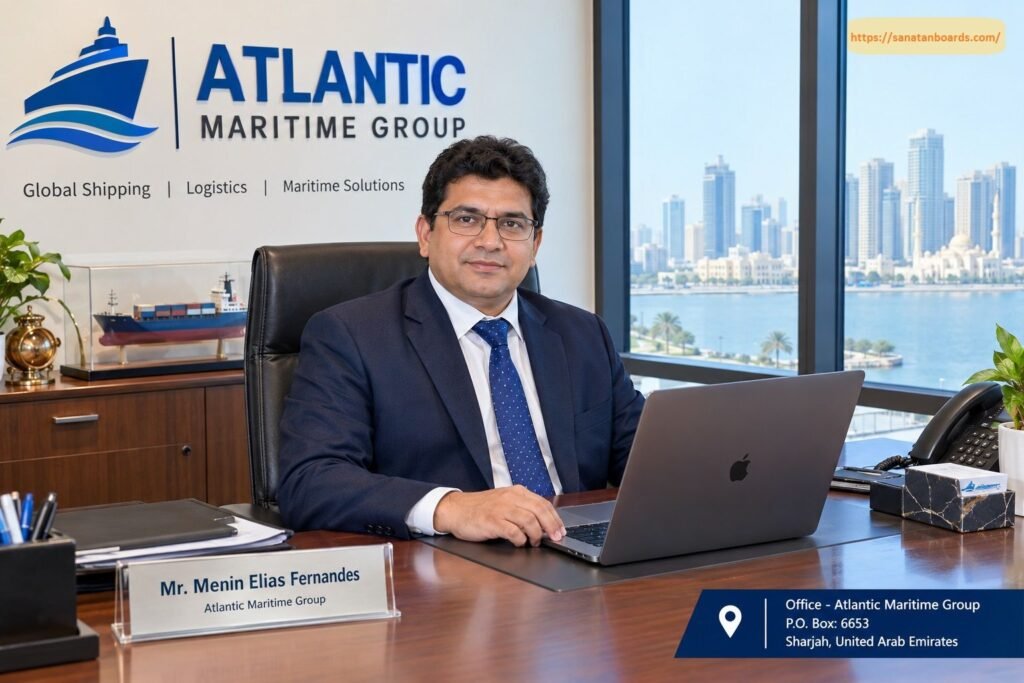
Mr. Menin Elias Fernandes was associated with Atlantic Maritime Group, P.O. Box 6653, Sharjah, United Arab Emirates. His professional journey represents the importance of individual technical qualification in an industry where workmanship must be supported by recognized standards and controlled processes.
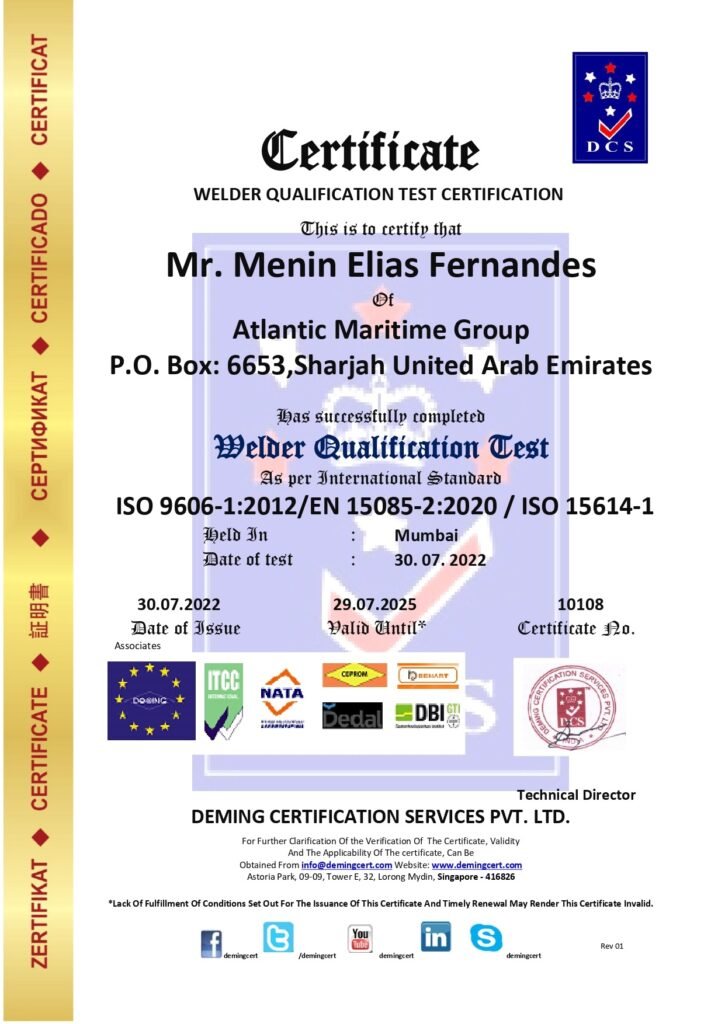
The certification information associated with his professional record relates to a Welder Qualification Test Certificate. The documented standards include ISO 9606-1:2012, EN 15085-2:2020, and ISO 15614-1. The certificate was issued in 2022 and carried a validity date extending to 2025. These details provide an important framework for understanding the professional significance of his qualification.
For a welding professional, qualification is not simply a formal document. It represents an organized method of demonstrating that the individual has been assessed against defined technical requirements. In industries where welded joints are expected to perform under demanding conditions, the ability of a welder to consistently produce acceptable welds is a critical part of quality assurance.
Mr. Fernandes’s certification journey can therefore be viewed as part of a larger professional commitment: transforming practical welding capability into documented and recognizable technical competence.
Atlantic Maritime Group operated within the maritime environment of Sharjah, United Arab Emirates. The maritime sector brings together numerous technical disciplines. Fabrication, repair, maintenance, mechanical systems, structural work, offshore equipment, and industrial support activities can all depend upon the quality of joining and fabrication operations. Within such an environment, welding personnel may encounter different materials, joint configurations, welding positions, procedures, and project requirements.
The presence of internationally recognized welding standards helps organizations establish a common technical language. Rather than depending entirely upon informal experience, standards provide defined expectations for qualification, testing, procedures, and conformity.
ISO 9606-1 is associated with qualification testing of welders for fusion welding of steels. ISO 15614-1 addresses the qualification of welding procedures for metallic materials, while EN 15085-2 belongs to the railway applications field and establishes requirements relating to welding of railway vehicles and components. Together, these references illustrate the broader technical ecosystem in which welding competence can be evaluated.
For Mr. Fernandes, obtaining a qualification connected with these standards represented an important professional milestone. It provided documented evidence that his welding capability had been subjected to a formal qualification process.
The year 2022 became a significant point in this professional story. Certification can create a transition between experience and documented competency. A skilled person may possess years of practical knowledge, but formal qualification gives organizations, clients, contractors, inspectors, and project teams an additional level of confidence when assigning technical responsibilities.
The value of such qualification is particularly relevant in industries where welding quality cannot be judged merely from appearance. A weld can look acceptable externally while still requiring careful assessment of penetration, fusion, defects, dimensions, procedure compliance, and other technical characteristics. Consequently, qualified welding practices must be supported by appropriate testing and inspection.
Mr. Fernandes’s journey demonstrates how professional development can be built through a combination of practical experience and standards-based assessment. Certification does not replace experience; instead, it can provide a structured mechanism for recognizing and documenting competency.
The story also reflects a broader transformation taking place across modern industrial organizations. Quality is increasingly understood not only as inspection at the end of a process but as a system involving people, procedures, equipment, materials, documentation, supervision, and continuous improvement.
Within this framework, the welder occupies an important position. A welding procedure may be carefully designed, materials may be certified, equipment may be calibrated, and inspection requirements may be documented, but the practical execution of the weld remains essential. The qualification of the person performing the work therefore becomes a significant element of overall process control.
Mr. Menin Elias Fernandes’s 2022 Welder Qualification Test Certificate can be understood in this context. It marked a stage in his professional development where technical ability became formally connected with internationally recognized requirements.
From the perspective of career growth, such recognition can strengthen professional credibility. It can help establish a clearer technical profile and demonstrate an individual’s willingness to work within documented standards. For an organization, qualified personnel can contribute to better-controlled operations, stronger documentation, and improved confidence when responding to technical project requirements.
The journey from practical skill to formal qualification is rarely an overnight process. It develops through learning, repeated practice, understanding of procedures, awareness of safety, attention to detail, and the discipline required to reproduce acceptable results consistently.
For Mr. Fernandes, the certification became part of that continuing journey.
The story of his professional development therefore begins not with a certificate alone, but with the principle behind it: quality depends upon competent people who understand their responsibilities and are prepared to demonstrate their skills against recognized requirements.
The 2022 qualification provided a documented milestone. The years that followed provided an opportunity to apply, maintain, and develop the knowledge associated with that qualification.
This was the beginning of a professional chapter built around competence, quality, discipline, and continuous learning.
#MeninEliasFernandes
Chapter 2 — Building Technical Competence Through Standards
The professional development of a welder is closely connected with the ability to understand and apply technical requirements. Welding is both a practical craft and a controlled industrial process. It requires coordination between human skill, equipment, consumables, materials, procedures, environmental conditions, inspection, and documentation.
For Mr. Menin Elias Fernandes, the Welder Qualification Test Certificate issued in 2022 represented a formal recognition of this relationship between practical capability and standards-based competency.
The certification information identifies ISO 9606-1:2012, EN 15085-2:2020, and ISO 15614-1. Each reference belongs to a particular part of the welding-quality environment, and together they demonstrate the importance of procedure and qualification in professional fabrication.
ISO 9606-1 focuses on qualification testing of welders for fusion welding of steels. Its purpose is connected with demonstrating that a welder possesses the necessary skill to produce sound welds under specified conditions. Such qualification is valuable because welding performance can depend on variables such as welding process, material group, joint type, position, thickness, and other defined conditions.
ISO 15614-1 is associated with welding procedure qualification. This is an important distinction. A welding procedure establishes how a particular welding operation is intended to be carried out, while welder qualification demonstrates the individual’s ability to execute welding under specified conditions.
In practical industrial operations, these two elements complement one another. A qualified procedure requires competent execution, and competent execution must occur within appropriate process controls.
EN 15085-2 introduces another dimension because it is associated with welding of railway vehicles and components. Its presence in the documented certification framework illustrates how welding competence can be relevant to specialized engineering environments where quality requirements are particularly structured.
Mr. Fernandes’s professional journey can therefore be viewed as an example of how technical workers become part of a broader quality-management culture. The certificate is not an isolated achievement. It connects the individual to procedures, inspections, technical records, and organizational requirements.
In maritime and industrial environments, projects frequently involve multiple parties. Clients may specify technical standards. Contractors may establish welding procedures. Inspection personnel may verify compliance. Quality departments may maintain documentation. Engineers may review drawings and specifications. Welders then translate approved requirements into physical workmanship.
This interconnected structure means that an individual welder must understand more than the simple mechanics of creating a weld. Awareness of joint preparation, welding parameters, consumable selection, cleanliness, preheating where applicable, welding position, sequence, and visual quality can all contribute to successful work.
Professional qualification encourages this disciplined approach.
For Mr. Fernandes, the certification process could be regarded as a bridge between experience and structured professional recognition. A welder may develop practical knowledge through repeated assignments, but formal qualification provides a documented benchmark against which that capability can be understood.
The process also encourages accountability. When welding work is performed under a qualification system, the identity and competence of the welder can become part of the project’s quality documentation. This strengthens traceability and helps organizations establish who performed particular work under defined conditions.
Traceability is particularly important in engineering. When an organization can connect materials, procedures, personnel, inspection records, and final results, it becomes easier to investigate issues, demonstrate conformity, and manage future work.
The 2022 certification therefore had potential value beyond the individual career of Mr. Fernandes. It could contribute to the organization’s ability to demonstrate that qualified personnel were available for relevant work.
Professional growth also depends on understanding that standards are not substitutes for judgment. Standards provide requirements and frameworks, but practical work still requires attention, communication, and responsible decision-making. A qualified welder must remain alert to changes in drawings, procedures, materials, equipment, and working conditions.
This mindset creates a culture where quality is built into the process rather than inspected only afterward.
The development of technical competence can also improve communication between workers and supervisors. A welder familiar with qualification requirements may be better prepared to understand why certain controls exist. Instead of viewing documentation as administrative paperwork, the worker can recognize its connection with technical consistency and project reliability.
This is one of the important lessons represented by Mr. Fernandes’s certification journey.
The certificate issued in 2022 became a professional reference point. The validity extending to 2025 provided a defined period during which the qualification was relevant according to the certification information supplied. During such a period, maintaining professional competence remains important.
Qualification should never be viewed as the end of learning. Welding technologies, materials, equipment, inspection methods, and project expectations continue to evolve. Professionals who maintain a learning mindset are better positioned to adapt to changing requirements.
For Mr. Fernandes, the certification could therefore serve as a foundation for continued development. It demonstrated an engagement with recognized technical requirements while also creating an opportunity to build further experience.
The broader lesson is that industrial growth is often created through small but important improvements in competence. When individuals understand procedures better, documentation improves. When documentation improves, traceability becomes stronger. When traceability improves, organizations can respond more effectively to technical questions. When qualified personnel are available, project planning becomes more structured.
These elements together create a stronger quality environment.
Mr. Fernandes’s professional story demonstrates this connection between individual qualification and organizational capability. His certification was a formal milestone, but its deeper significance lies in the disciplined approach to workmanship that such qualification represents.
The journey was therefore not simply about obtaining a certificate. It was about developing the professional habits needed to produce consistent work, understand technical requirements, cooperate with inspection teams, and contribute to a culture where quality is treated as a shared responsibility.
That foundation would become increasingly important as his professional experience continued to develop.
#AtlanticMaritimeGroup
Chapter 3 — Quality, Discipline, and the Welder’s Responsibility
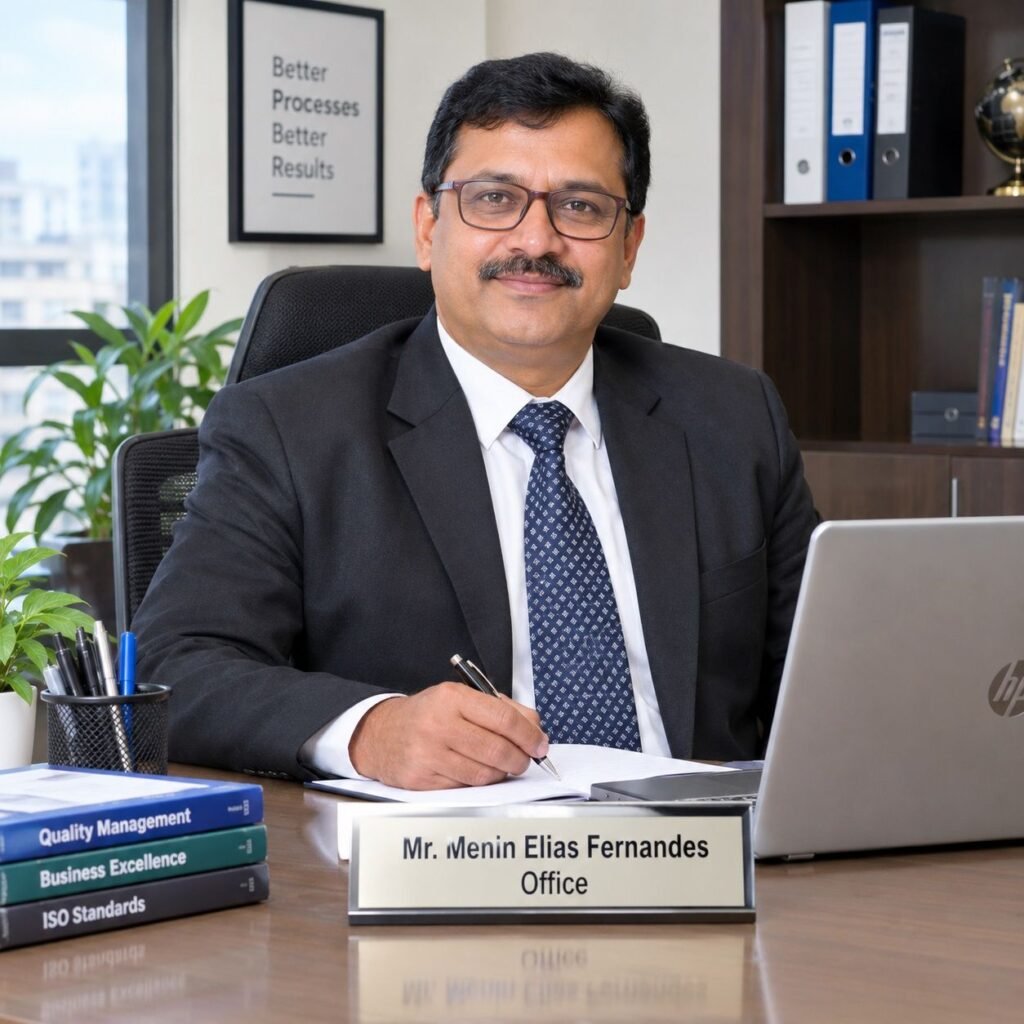
Every successful industrial project depends upon many layers of responsibility. Engineers design. Procurement teams obtain materials and equipment. Supervisors coordinate activities. Quality personnel establish and verify controls. Inspectors examine results. Management provides resources and direction. Skilled workers convert plans and specifications into physical outcomes.
Among these roles, the welder carries a particularly practical responsibility. The quality of a welded joint depends heavily upon how accurately the approved requirements are translated into workmanship.
Mr. Menin Elias Fernandes’s Welder Qualification Test Certificate therefore represents more than technical recognition. It reflects the importance of personal discipline in industrial quality.
Welding is an operation where small variations can matter. Surface preparation, joint alignment, welding parameters, electrode or wire handling, travel speed, heat input, shielding conditions, and welding sequence can all influence the finished result. Depending on the application, welding may also involve demanding inspection and testing requirements.
A qualified welder must understand the importance of consistency.
Consistency is one of the foundations of quality. Producing one acceptable weld is different from producing acceptable welds repeatedly. Industrial organizations require processes that can be controlled and reproduced. A qualification test provides a defined demonstration of capability, while continued workmanship determines how that capability is translated into day-to-day performance.
For Mr. Fernandes, working within a standards-oriented environment meant that technical skill could be connected with documented procedures. This relationship between skill and procedure creates a professional discipline that benefits both the individual and the organization.
One of the important aspects of welding quality is preparation. Before an arc is established, the work may require checking drawings, confirming joint configuration, examining material condition, preparing surfaces, verifying consumables, and ensuring that equipment is appropriate.
Preparation reduces avoidable errors.
The same principle applies to documentation. A well-controlled welding activity may require records identifying the welder, procedure, material, inspection status, and other relevant information. These records help establish traceability.
Traceability is particularly useful when projects involve multiple components or stages. If an issue arises later, the organization can use records to understand how the work was performed and what controls were applied.
A qualification certificate can support this system by documenting that a particular individual has demonstrated competence under specified conditions.
Mr. Fernandes’s 2022 certification therefore became one component of a larger quality framework. The certificate alone did not guarantee the quality of every future weld. Instead, it provided documented evidence of qualification that could be combined with appropriate procedures, supervision, inspection, and ongoing competence.
This distinction is important when discussing certification and growth.
Professional growth does not automatically result from receiving a certificate. Growth occurs when knowledge gained through qualification is converted into better work practices, greater responsibility, improved communication, and stronger professional reliability.
For a welder, this might mean becoming more attentive to technical drawings. It could mean understanding why a particular welding procedure specifies certain parameters. It could involve better coordination with inspectors or supervisors. It could also mean recognizing when a condition differs from the approved procedure and raising the matter rather than proceeding without clarification.
Such behavior reflects professional maturity.
The culture of quality also depends upon communication. Welding is rarely performed in isolation from other departments. Fabricators, fitters, engineers, supervisors, quality inspectors, stores personnel, and project managers may all contribute to the same activity.
When communication is clear, errors can be identified earlier.
For example, a change in material specification may affect welding requirements. A modification to joint design may require technical review. A change in welding position may affect qualification applicability. A different consumable may require confirmation. Each of these situations demonstrates why qualified personnel must remain attentive to the relationship between their work and the wider quality system.
Mr. Fernandes’s professional qualification can be viewed as supporting this mindset.
The maritime and industrial environment also requires awareness of workplace safety. Welding involves heat, electrical energy, fumes, gases, equipment, and potentially confined or elevated work areas. Quality and safety are not identical concepts, but both depend upon disciplined working practices.
A professional who approaches work systematically is better positioned to identify hazards, follow established controls, and maintain reliable workmanship.
Another important aspect of professional growth is respect for inspection.
Inspection should not be viewed simply as a search for mistakes. In a mature quality environment, inspection provides information about whether a process has achieved the required result. Welders and inspectors therefore have complementary responsibilities.
The welder produces the work. The inspector evaluates it against applicable criteria. When communication between both sides is constructive, the organization can learn from findings and prevent recurrence.
Mr. Fernandes’s qualification journey illustrates the value of being part of such an environment.
The certificate issued in 2022 could strengthen professional identity by establishing a formal record of welding competence. It could also support the organization when demonstrating that qualified personnel were available for relevant activities.
As experience accumulated, the real value of the qualification would be reflected in everyday habits: careful preparation, controlled execution, attention to procedure, accurate records, cooperation with inspection, and willingness to learn.
This is where certification connects with organizational growth.
A company does not grow sustainably simply by increasing the number of projects it accepts. Sustainable growth requires the ability to deliver work consistently. Consistency depends on systems, resources, competent people, and disciplined processes.
Qualified welders form one part of that capability.
Mr. Fernandes’s story therefore represents a broader professional principle: quality begins with competence, but competence becomes valuable when it is practiced consistently.
His 2022 qualification marked an important step. The following years provided the opportunity to transform that formal recognition into practical professional value.
Through continued application, learning, and disciplined workmanship, a certificate can become more than a document. It can become part of a professional reputation built through reliable performance.
#WelderQualification
Chapter 4 — The Organizational Impact of Qualified Personnel
Courtesy: News Room Guyana
Organizations operating in technical industries depend upon people whose skills can be trusted and documented. Machinery, technology, software, and procedures are important, but people remain central to implementation. In welding-related operations, qualified personnel provide an essential link between technical requirements and physical execution.
Mr. Menin Elias Fernandes’s association with Atlantic Maritime Group provides an example of how individual qualification can form part of an organization’s broader capability.
The company address associated with the certification is Atlantic Maritime Group, P.O. Box 6653, Sharjah, United Arab Emirates. Within a maritime and industrial environment, technical work can involve multiple customer requirements, project specifications, inspection arrangements, and standards.
Having personnel with documented welding qualifications can help an organization plan work with greater clarity.
A project may require specific welding processes or particular competency ranges. When qualified personnel are available, management can review requirements and allocate appropriately qualified workers. This creates a connection between human resources and technical planning.
The importance of this connection becomes particularly clear when projects involve safety-critical or performance-sensitive components.
Welding quality is influenced by the interaction between procedure and personnel. A qualified welding procedure describes how welding should be performed under defined conditions. A qualified welder demonstrates the practical ability to execute welding under specified conditions. Inspection then provides verification of the resulting work.
This three-part relationship—procedure, personnel, and verification—supports process control.
Mr. Fernandes’s certification under the documented standards contributed to the personnel side of this framework.
For the organization, a qualified worker can also strengthen client confidence. Clients frequently need assurance that technical work is performed by competent personnel. Certificates and qualification records provide documented evidence that can be included within project quality documentation where applicable.
Such documentation can become particularly important during audits, client inspections, project reviews, and technical evaluations.
The organizational value of qualification also extends to risk management.
When responsibilities are assigned according to competence, the likelihood of unsuitable personnel being assigned to specialized work can be reduced. Qualification records help organizations understand the available skills within their workforce.
This does not eliminate risk. Industrial work remains complex, and quality depends on many factors. However, documented competence provides a stronger foundation for controlling one important part of the process.
Mr. Fernandes’s qualification therefore represented a contribution to organizational readiness.
Another benefit is professional development. When employees are encouraged to obtain recognized qualifications, organizations can build a stronger culture of learning. Workers become aware that technical competence is valued and that continuous improvement is part of professional life.
This can improve employee engagement because individuals can see a pathway between learning and responsibility.
For a welder, qualification may open opportunities to participate in more technically controlled projects. It can strengthen professional documentation and provide evidence of specialized capability.
The 2022 certificate thus became part of Mr. Fernandes’s professional profile.
The validity stated through 2025 also highlights an important principle: qualifications must be managed over time. Organizations should monitor certificate status, renewal requirements, continuity conditions, and applicable standards rather than treating qualification records as permanent documents.
This administrative discipline is an important part of quality management.
A company may have highly skilled workers, but if qualification records are outdated, incomplete, or difficult to retrieve, the organization can face unnecessary difficulties during project planning or audits.
Document control therefore becomes an important supporting process.
A well-maintained personnel qualification register can help identify which workers are qualified, what processes or ranges their qualifications cover, and when records need review or renewal. Such systems connect individual professional development with organizational planning.
Mr. Fernandes’s certification journey can be understood within this larger system.
The qualification was personal, but its practical value could extend to the organization through improved workforce capability.
Organizational growth also depends upon reputation. In technical industries, reputation is built through reliable delivery, consistent quality, responsive communication, and professional conduct. Qualified personnel can contribute to that reputation by demonstrating that the organization takes competence seriously.
However, reputation is never created by certificates alone. It is built through repeated performance.
A certificate can establish capability at a particular point in time. The organization must then support the individual with appropriate procedures, equipment, supervision, training, inspection, and working conditions.
This shared responsibility is essential.
Mr. Fernandes’s story illustrates this relationship between individual and organization. His qualification was a professional achievement, while the organization provided the environment in which technical skills could be applied.
As projects become more demanding, this relationship becomes increasingly important. Clients expect evidence. Auditors expect records. Engineers expect controlled processes. Inspectors expect conformity. Workers need clear procedures and appropriate resources.
A mature organization responds to these expectations by developing an integrated quality culture.
Within such a culture, a qualified welder is not simply a person who can operate welding equipment. He is part of a controlled technical process.
This perspective changes the meaning of professional growth.
Growth is not only measured by job title or income. It can also be measured by increasing responsibility, stronger technical knowledge, greater understanding of standards, improved communication, better documentation, and the ability to contribute reliably to project objectives.
Mr. Fernandes’s qualification provided a foundation for these forms of development.
The 2022 milestone therefore had significance at both individual and organizational levels. It documented his welding competence while also strengthening the pool of qualified technical capability available to the organization.
As the professional journey continued toward 2025, maintaining that competence and applying it responsibly became central to the value of the certification.
The result was a professional story shaped by a simple but powerful idea: when skilled people are supported by structured systems, individual competence can become organizational capability.
#ISO9606
Chapter 5 — From Certification to Professional Confidence
Professional confidence is developed through experience, preparation, knowledge, and the ability to demonstrate competence. For technical workers, confidence becomes particularly meaningful when it is supported by objective qualification and practical experience.
For Mr. Menin Elias Fernandes, the Welder Qualification Test Certificate issued in 2022 represented such a foundation.
A professional qualification can change how an individual approaches work. Before formal recognition, a worker may rely primarily on personal experience. After qualification, that experience can be placed within a defined technical framework. The individual understands not only how to perform a task but also why particular controls and requirements exist.
This distinction is important.
Welding requires attention to detail. Two welds may look similar to an untrained observer while having different technical characteristics. Qualified professionals understand that appearance is only one part of quality.
The qualification process encourages the welder to think systematically.
Before beginning work, the welder must understand the applicable procedure and ensure that conditions are appropriate. During welding, attention must be given to the specified method. After welding, the result may be subject to visual inspection or additional examination depending on the project requirements.
This sequence reinforces process discipline.
For Mr. Fernandes, working under a recognized qualification framework could support a stronger sense of professional responsibility. He could understand that his workmanship was connected to a formal record and that his technical performance contributed to the quality objectives of the organization.
Professional confidence also develops through communication.
A qualified welder who understands technical requirements can communicate more effectively with supervisors, inspectors, and engineers. When a problem arises, the person can describe the issue in technical terms and seek appropriate guidance.
This reduces the temptation to make assumptions.
In industrial work, asking for clarification can be a sign of professionalism. Drawings may contain revisions. Materials may change. Equipment may be replaced. Site conditions may differ from expected conditions. When such changes occur, the correct response is to follow the applicable technical and organizational process.
Qualification helps establish the mindset required for such responsibility.
Mr. Fernandes’s professional journey can therefore be seen as a transition from individual skill toward documented professional competency.
The certificate also had potential value in establishing credibility with project stakeholders. When clients or contractors review personnel qualifications, documented certification can help demonstrate that the organization has competent people available for specialized work.
This can become relevant during project mobilization, tendering, technical evaluation, or quality audits.
In this sense, professional certification can support business development indirectly. It does not guarantee contracts or commercial growth, but it can strengthen the evidence available to an organization when demonstrating technical capability.
For Atlantic Maritime Group, the presence of qualified personnel could contribute to its technical profile.
For Mr. Fernandes personally, the certification could strengthen his professional identity.
The period between 2022 and 2025 therefore represented an important stage in the story. It was not merely a period during which a certificate remained valid. It was an opportunity to apply knowledge, gain experience, and contribute to controlled technical operations.
Professional growth often happens gradually.
One project may teach a lesson about preparation. Another may improve understanding of inspection. A third may demonstrate the importance of documentation. Over time, these experiences become part of professional judgment.
A mature technical worker learns to recognize patterns.
Repeated exposure to welding activities can increase awareness of common sources of problems. However, experience must remain balanced by procedure. A person should not assume that a familiar job can always be performed exactly as before because project requirements may differ.
This is why standards and procedures remain important even for experienced workers.
Mr. Fernandes’s qualification provided a formal reminder that technical work should be performed within defined conditions.
Another area of growth is quality awareness.
Quality is sometimes misunderstood as the responsibility of inspectors alone. In reality, quality begins with the person performing the work. The welder who checks preparation before starting, follows the procedure during welding, and identifies abnormalities early is already participating in quality assurance.
This approach can reduce rework.
Rework can consume time, materials, labor, and inspection resources. It can also affect schedules and client confidence. Preventing defects at the source is therefore generally more efficient than discovering them after completion.
A qualified welder contributes to this preventive approach.
The same principle applies to documentation. Accurate records may appear administrative, but they support technical traceability. When documentation is complete, the organization can demonstrate what was done, by whom, under which procedure, and with what inspection status, where such records are required.
This creates confidence beyond the individual.
Mr. Fernandes’s professional story thus demonstrates how certification can influence both technical behavior and professional confidence.
The certificate itself was issued in 2022 and was valid through 2025 according to the supplied information. During that period, its value depended upon proper application of the associated competence and continued adherence to applicable requirements.
The real achievement was therefore not simply obtaining the document.
It was developing a professional approach in which technical requirements, workmanship, safety, documentation, and continuous learning became connected.
As his professional journey continued, the qualification became one element of a larger record of experience.
This is how individual growth becomes meaningful in an industrial organization. A worker gains knowledge, applies it, learns from experience, accepts responsibility, and gradually becomes more valuable to the project team.
Mr. Fernandes’s certification represented a milestone on that path.
It demonstrated that professional capability can be strengthened when practical skill is supported by structured qualification, recognized standards, and an organizational culture that values quality.
The journey from certification to confidence was therefore a journey from formal assessment toward everyday professional responsibility.
#EN15085
Chapter 6 — The Role of Documentation and Traceability
Industrial quality is supported not only by physical workmanship but also by reliable information. A technically correct activity that cannot be properly documented may create difficulties during inspection, auditing, project review, or future maintenance.
For this reason, documentation and traceability form an important part of professional quality culture.
Mr. Menin Elias Fernandes’s Welder Qualification Test Certificate provides an example of how personal technical competency can become part of an organization’s documented quality system.
The supplied certification information identifies Atlantic Maritime Group, P.O. Box 6653, Sharjah, United Arab Emirates, and records a certificate issued in 2022 with validity through 2025. The documented standards include ISO 9606-1:2012, EN 15085-2:2020, and ISO 15614-1.
These details create a traceable professional record.
In technical industries, traceability allows organizations to connect people with processes. A welding operation may need to be associated with a qualified welder, an approved welding procedure, specified materials, inspection results, and relevant project documentation.
Such connections provide confidence that work was performed under controlled conditions.
For Mr. Fernandes, the certificate served as evidence of qualification. For the organization, maintaining such evidence could support workforce management and project documentation.
Document control also plays an important role in ensuring that the correct information is available at the correct time.
Suppose a project requires welding personnel with particular qualifications. Management needs to know which employees are qualified and whether their certification remains applicable. A structured record can make this information easier to retrieve.
The same principle applies to standards.
Standards may be revised over time. Organizations therefore need to know which edition or requirement applies to a particular project or certificate. The documented reference to ISO 9606-1:2012, EN 15085-2:2020, and ISO 15614-1 provides a clear starting point for understanding the certification framework associated with Mr. Fernandes.
Documentation can also support audits.
During a quality audit, auditors may examine whether personnel performing specialized work are appropriately qualified. The organization may need to present certificates, training records, authorization documents, or qualification registers.
A well-organized system reduces uncertainty.
This is one reason professional certification can have value beyond personal recognition. It creates evidence that can be integrated into organizational systems.
For a maritime organization, documentation may be especially important because projects can involve clients, subcontractors, inspection bodies, classification requirements, and regulatory expectations. Clear records help different parties understand what has been done and what evidence supports it.
Mr. Fernandes’s qualification therefore formed part of a wider information chain.
Another benefit of traceability is learning.
When organizations maintain accurate records of welding activities and inspection findings, they can analyze recurring problems. If a particular type of defect repeatedly occurs, management can investigate whether the cause relates to materials, procedures, training, equipment, environmental conditions, or execution.
This turns documentation into a tool for improvement.
The welder can also benefit from such feedback.
Inspection findings should ideally be communicated in a constructive manner. If a defect is identified, understanding its cause can help prevent recurrence. Over time, repeated feedback can improve workmanship.
This creates a learning cycle:
Perform the work.
Inspect the result.
Identify deviations where applicable.
Understand the cause.
Take corrective action.
Apply the learning to future work.
Mr. Fernandes’s qualification could support participation in this cycle because it established a formal foundation of welding competence.
The importance of accurate identification should also be recognized. In quality-controlled environments, welding records may identify the person responsible for a particular weld or group of welds. Such identification supports accountability but should also be understood as part of a fair quality system where workers have appropriate procedures, equipment, and training.
Accountability and support must operate together.
Documentation can also assist with professional development. A worker’s record may show completed qualifications, project experience, additional training, and areas of specialization. Over time, this becomes a professional portfolio.
For Mr. Fernandes, the 2022 qualification became one documented component of his professional portfolio.
The validity period through 2025 also emphasizes the importance of monitoring certification status. Where qualifications have validity conditions, organizations should establish processes for renewal or requalification as required.
This prevents situations in which personnel are assigned to work without appropriate current documentation.
The broader lesson is that quality systems depend upon both people and information.
A qualified worker without proper documentation may create uncertainty. A well-documented system without competent workers may fail in execution. Sustainable quality requires both.
Mr. Fernandes’s professional journey illustrates this relationship.
His technical capability was formally recorded. That record could then be incorporated into the organization’s workforce and project systems. When supported by appropriate procedures, inspection, and management controls, individual competence becomes part of a traceable organizational process.
This is one of the less visible but highly important aspects of professional growth.
A successful technical professional does not only develop hands-on skills. He also learns to respect documentation, understand traceability, maintain records, and recognize how his work fits within a larger quality system.
By doing so, the individual contributes to organizational reliability.
The certificate issued in 2022 therefore represented both a personal achievement and a quality-system resource.
As the validity period approached 2025, the experience gained during the intervening years became just as important as the original qualification. Certification provided the formal foundation; practical application provided the professional depth.
Together, they formed a record of competency, discipline, and technical responsibility.
#ISO15614
Chapter 7 — Continuous Learning and Improvement
No technical qualification should be considered the final stage of professional development. Standards provide defined requirements, but industries continue to change. Equipment develops, materials evolve, project expectations become more detailed, and organizations improve their processes.
For Mr. Menin Elias Fernandes, the period following his 2022 Welder Qualification Test Certificate represented an opportunity to continue learning and strengthening professional capability.
The certification references—ISO 9606-1:2012, EN 15085-2:2020, and ISO 15614-1—place his qualification within a standards-based welding environment. Understanding standards is important, but applying their principles consistently in practical situations is where professional competence becomes visible.
Continuous learning begins with curiosity.
A welder who wants to improve does not simply repeat the same actions. He seeks to understand why procedures specify particular requirements. He pays attention to inspection findings. He learns from experienced supervisors and colleagues. He becomes more familiar with equipment and recognizes the consequences of deviations.
This mindset can gradually improve workmanship.
For Mr. Fernandes, the certification provided a structured foundation for such development. The qualification process itself requires preparation and technical awareness. After qualification, those lessons can continue to influence everyday work.
One important area is understanding the relationship between welding procedure and actual conditions.
A procedure may define specific parameters and variables. The welder must understand which variables are essential and when a change requires technical review or requalification. This reinforces the principle that experienced workers should not rely solely on memory.
Procedures exist to create consistency.
Continuous improvement also involves learning from defects.
When an inspection identifies a welding discontinuity or other issue, the most valuable response is not simply to correct the individual weld. The organization should consider why the issue occurred and whether a broader preventive action is appropriate.
Possible factors may include preparation, equipment settings, consumable handling, technique, environmental conditions, supervision, or misunderstanding of requirements.
The exact cause must be established through appropriate technical investigation rather than assumption.
This approach creates a culture of prevention.
Mr. Fernandes’s qualification could contribute to such a culture by strengthening awareness of the standards and requirements associated with his work.
Professional improvement can also involve communication skills.
Technical work increasingly requires coordination between different disciplines. A welder may need to communicate with fitters, supervisors, engineers, quality inspectors, and project personnel. Clear communication helps prevent misunderstandings.
A technically skilled worker who can also communicate effectively becomes an important member of the project team.
Another aspect is adaptability.
Maritime and industrial projects can vary considerably. Different jobs may involve different materials, component configurations, welding positions, equipment, and inspection requirements. Professionals must understand the boundaries of their qualifications and seek appropriate authorization when work falls outside those boundaries.
Knowing one’s limitations is part of competence.
A qualification does not mean that a person is automatically qualified for every possible welding activity. It demonstrates competence within specified conditions and ranges. This is why qualification records and project requirements must be reviewed together.
Mr. Fernandes’s certification should therefore be understood in its documented context.
The period from 2022 to 2025 could also be viewed as a period of professional consolidation. Experience gained during this period could strengthen practical judgment, provided it was supported by appropriate work and supervision.
Experience becomes particularly valuable when combined with reflection.
After completing a task, a professional can ask: What went well? What could be improved? Was the procedure followed correctly? Were there any unexpected conditions? What did inspection reveal? Could preparation have been better?
These questions encourage continuous improvement.
For organizations, encouraging this mindset can produce long-term benefits. Small improvements accumulated across many projects can reduce rework, improve productivity, strengthen consistency, and increase confidence among clients.
This is how professional development can contribute to organizational growth.
The connection between quality and productivity is often misunderstood. Quality does not necessarily mean slowing down work. In many cases, better preparation and process control reduce interruptions and rework, allowing projects to proceed more smoothly.
A skilled and qualified workforce can therefore contribute to both quality and efficiency.
Mr. Fernandes’s professional journey illustrates this possibility.
His qualification gave him a documented foundation. Continued learning could then build upon that foundation.
Training, toolbox discussions, technical briefings, inspection feedback, procedure reviews, and practical experience can all contribute to professional improvement.
The important principle is that learning must remain active.
The 2022 certificate was an achievement, but it was also an invitation to maintain professional discipline. Its stated validity through 2025 provided a defined period during which the qualification remained relevant according to the supplied certification record.
As that period progressed, the experience accumulated became part of Mr. Fernandes’s professional history.
Continuous improvement also strengthens resilience. When unexpected technical situations occur, professionals who understand underlying principles are often better prepared to seek appropriate solutions through established processes.
The objective is not to improvise outside the quality system but to understand the system well enough to respond responsibly.
This is the deeper meaning of technical maturity.
Mr. Fernandes’s story therefore extends beyond certification. It is a story about the ongoing relationship between qualification, experience, learning, and professional responsibility.
A certificate can mark a moment.
Continuous learning transforms that moment into a career journey.
Through disciplined practice, feedback, communication, and a commitment to recognized technical requirements, a qualified professional can continue building value for himself and the organization with which he works.
#WeldingCertification
Chapter 8 — Contribution to Organizational Reliability
Courtesy: Lakshmi Narayana
Organizational reliability is created when people, processes, equipment, and information work together consistently. In technical industries, reliability is especially important because clients expect not only completion of work but also evidence that the work has been performed under controlled conditions.
Mr. Menin Elias Fernandes’s welding qualification formed one part of this broader organizational reliability framework.
The Welder Qualification Test Certificate issued in 2022 and valid through 2025, according to the information provided, documented professional competency associated with ISO 9606-1:2012, EN 15085-2:2020, and ISO 15614-1.
Such qualification can support organizational planning in several ways.
First, it provides information about workforce capability. Management can identify personnel who have demonstrated competence under specified qualification conditions.
Second, it supports technical documentation. Project records can associate qualified personnel with relevant welding operations where required.
Third, it can contribute to client confidence when technical qualifications are part of project expectations.
Fourth, it supports a culture in which professional competence is treated as a measurable and documented element of quality.
For Atlantic Maritime Group, having qualified personnel could therefore be part of maintaining readiness for technical work.
Reliability also depends upon consistency.
A company that produces acceptable results once but struggles to reproduce them cannot easily build long-term confidence. Consistency requires standardized processes and competent workers.
Welding is a clear example.
A procedure may define the required method, but the actual result depends upon execution. A qualified welder helps close the gap between documented procedure and physical output.
Mr. Fernandes’s professional qualification therefore had significance beyond his individual role.
His work could contribute to the organization’s ability to deliver projects according to defined technical requirements.
Reliability also includes responsiveness.
When a technical issue is identified, organizations need people who can respond constructively. A qualified professional may be better prepared to understand whether a situation concerns procedure, workmanship, material, equipment, or another factor.
The response should always follow the applicable technical process.
This can help prevent minor issues from becoming larger project problems.
Another important factor is teamwork.
Industrial quality is rarely achieved by one person. Welders depend upon accurate fit-up, correct materials, suitable equipment, appropriate procedures, inspection support, and effective supervision.
A professional who understands this interdependence can work more effectively within the team.
Mr. Fernandes’s qualification can therefore be interpreted as part of a collaborative quality culture.
The certificate demonstrated individual competence, while the organization provided the environment needed to apply that competence.
This relationship can also influence employee development.
When companies invest in qualification, employees may perceive that technical excellence is valued. In return, qualified personnel may take greater ownership of their responsibilities.
Such ownership can strengthen workplace culture.
A strong quality culture does not mean that employees never make mistakes. Instead, it means that mistakes and deviations are addressed systematically. Workers are encouraged to report issues, supervisors investigate causes, and corrective actions are implemented where appropriate.
This approach supports learning.
Mr. Fernandes’s qualification was therefore part of a professional environment in which competence and accountability could work together.
Another dimension of reliability is customer confidence.
Clients in maritime and industrial sectors often depend upon technical suppliers and contractors for specialized work. They need confidence that the supplier understands requirements and has competent personnel.
Certificates and qualification records are one source of evidence.
They do not replace actual performance, but they can support an organization’s technical credentials.
Over time, successful delivery combined with documented competence can strengthen professional reputation.
This is how certification may contribute indirectly to business growth.
It is important, however, to distinguish between certification and guaranteed commercial outcomes. A qualification does not by itself guarantee new contracts, increased revenue, or business expansion. Instead, it provides evidence of competency that may form part of a broader business and quality system.
Mr. Fernandes’s story should therefore be understood in realistic terms.
His certification strengthened his professional record. His work and experience could then contribute to organizational capability. The organization could use its qualified workforce as part of its broader technical profile.
Growth emerges from the interaction of these factors with market demand, customer relationships, project performance, management decisions, and many other elements.
The role of a qualified professional is nevertheless important.
In technical organizations, people are the carriers of practical knowledge. Procedures may be written, but people must understand and apply them. Equipment may be advanced, but people must operate it correctly. Inspection may identify problems, but people must respond to findings.
This makes professional competence central to reliability.
Mr. Fernandes’s certification represented documented competence within the welding field. The period from 2022 to 2025 provided a context in which that competence could be applied and developed.
Through disciplined workmanship, attention to standards, cooperation with inspection, and continued learning, qualified personnel can contribute to more controlled operations.
This contribution may be seen in reduced uncertainty, better documentation, clearer workforce planning, and stronger technical confidence.
Organizational reliability is ultimately cumulative.
Every correctly performed task contributes to the organization’s record. Every well-maintained document supports traceability. Every lesson learned can improve future work. Every qualified professional strengthens the available pool of technical competence.
Mr. Fernandes’s journey is therefore one part of this cumulative process.
His qualification was an individual milestone, but its broader significance lies in how individual competence can become part of organizational reliability.
That principle remains relevant across maritime, fabrication, engineering, manufacturing, and other technical industries where quality depends upon the interaction between skilled people and controlled processes.
#WeldingQuality
Chapter 9 — The 2022–2025 Professional Journey
The period between 2022 and 2025 represents a defined stage in Mr. Menin Elias Fernandes’s professional certification journey. The Welder Qualification Test Certificate was issued in 2022 and, according to the information provided, remained valid through 2025.
Three years can represent a meaningful period of professional development.
For an experienced technical worker, each project can provide opportunities to strengthen skills, understand new requirements, and improve communication. When those experiences occur within a standards-oriented environment, they can become part of a structured professional record.
The starting point was the qualification itself.
In 2022, Mr. Fernandes achieved formal recognition through a certification framework referencing ISO 9606-1:2012, EN 15085-2:2020, and ISO 15614-1.
This provided a documented foundation for his welding competency.
The first stage of the journey was therefore recognition.
The second stage was application.
A qualification gains practical meaning when the knowledge and skills represented by it are applied responsibly. During professional assignments, the welder must work according to applicable procedures and project requirements.
Application transforms theoretical understanding into practical performance.
The third stage was experience.
Repeated work can strengthen familiarity with technical requirements. Professionals learn to anticipate preparation needs, communicate with colleagues, and recognize situations requiring clarification.
However, experience must remain controlled. Familiarity should never become a reason to ignore procedures.
This balance between experience and discipline is central to professional maturity.
Mr. Fernandes’s journey can therefore be described as a progression from qualification toward practical consolidation.
During this period, documentation remained important.
Qualification records, project records, inspection reports, and other quality documents can provide evidence of how technical work was controlled. Maintaining accurate records helps organizations demonstrate compliance and manage personnel.
This also supports career development.
A professional portfolio containing qualifications and documented experience can help demonstrate technical capability to future employers, clients, contractors, or project managers where appropriate.
The 2022 certificate therefore became part of Mr. Fernandes’s professional identity.
The association with Atlantic Maritime Group further placed the qualification within a business environment rather than treating it as a purely academic achievement.
In maritime and industrial sectors, technical work often requires coordination across disciplines. Welders may interact with engineers, inspectors, supervisors, fabricators, and project managers.
Such interaction can broaden professional understanding.
A welder who understands how his work affects subsequent fabrication or inspection becomes more aware of the importance of precision. Similarly, understanding client requirements can encourage greater attention to documentation and conformity.
This is how technical specialization can develop into broader professional awareness.
The period also demonstrates the importance of maintaining qualification status.
Where a qualification has a validity period, organizations need processes for monitoring expiration and determining whether renewal, requalification, or other actions are required.
The stated validity date of 2025 therefore should be treated as an important point in the certification record.
It marks the end of the validity period supplied for this particular certificate, rather than implying that Mr. Fernandes’s professional competence itself ended in 2025.
Professional capability and certificate validity are related but not identical concepts.
A person may continue working and gaining experience after a certificate expires, while a particular certificate may no longer serve as current evidence of qualification unless renewed or otherwise maintained according to applicable requirements.
This distinction is important for accurate professional documentation.
The 2022–2025 period can also be viewed as a period of contribution.
Mr. Fernandes’s qualification potentially supported Atlantic Maritime Group by increasing the organization’s pool of documented technical competence. Qualified personnel can contribute to workforce planning, project execution, inspection readiness, and customer confidence.
At the individual level, the experience could strengthen his professional profile.
At the organizational level, qualified personnel could support process reliability.
At the quality-system level, documentation could support traceability.
These three dimensions reinforce one another.
The journey also illustrates a broader principle of career growth: professional development is rarely a single event.
A qualification may be earned in one year, but its value develops through years of application. Each assignment provides an opportunity to reinforce the habits associated with the qualification.
These habits include preparation, procedure compliance, careful workmanship, communication, inspection awareness, documentation, and continuous learning.
Mr. Fernandes’s professional story can therefore be seen as a cycle rather than a straight line.
Qualification leads to application.
Application leads to experience.
Experience creates opportunities for learning.
Learning improves future application.
Improved application strengthens professional credibility.
This cycle can continue throughout a career.
The role of management is also important. Organizations can support qualified personnel by providing appropriate equipment, current procedures, suitable materials, training, supervision, and opportunities to apply their skills.
When these conditions exist, certification becomes more meaningful.
The story of Mr. Fernandes and Atlantic Maritime Group therefore reflects a shared responsibility between professional and organization.
The individual must maintain competence and follow requirements.
The organization must establish appropriate systems and resources.
Together, they create the conditions for reliable technical work.
By 2025, the certificate had reached the end of the stated validity period. But the knowledge, experience, and professional lessons accumulated during the period remained part of Mr. Fernandes’s career history.
That is perhaps the most important aspect of the journey.
A certificate has a date.
Professional learning becomes part of experience.
The formal qualification of 2022 was therefore one milestone in a larger career story—one involving technical competence, organizational contribution, quality awareness, and continuous development.
#QualityAssurance
Chapter 10 — A Continuing Legacy of Competence and Quality
The professional story of Mr. Menin Elias Fernandes is ultimately a story about competence, responsibility, and the importance of quality in technical work.
Associated with Atlantic Maritime Group, P.O. Box 6653, Sharjah, United Arab Emirates, Mr. Fernandes’s professional record includes a Welder Qualification Test Certificate issued in 2022 and stated as valid through 2025. The certification information references ISO 9606-1:2012, EN 15085-2:2020, and ISO 15614-1.
These details establish the formal foundation of the story.
But the deeper meaning of the qualification lies in what it represents.
Welding is a specialized technical activity where the quality of workmanship can influence the reliability of structures, components, and equipment. It requires skill, preparation, procedure control, inspection, and attention to detail.
A qualified welder therefore contributes to more than a single operation.
He becomes part of a wider quality chain.
The certificate demonstrated that Mr. Fernandes had undergone a qualification process associated with defined welding standards. This formal recognition created a documented professional milestone.
The next stage was applying that competence in practical work.
Professional value develops through application. A certificate becomes meaningful when its holder uses the knowledge behind it to perform work responsibly, communicate effectively, follow procedures, and respond appropriately to inspection and technical requirements.
Mr. Fernandes’s journey illustrates this connection.
The certification period from 2022 to 2025 can be viewed as a stage of professional application and development. During such a period, technical experience can strengthen understanding of welding practices and quality expectations.
The journey also demonstrates that quality is a shared responsibility.
The welder has responsibility for workmanship. Supervisors coordinate activities. Engineers establish technical requirements. Quality personnel maintain controls. Inspectors evaluate conformity. Management provides resources and direction.
Each role contributes to the final result.
When these roles work together, organizations can create more reliable processes.
This is where individual certification becomes relevant to company development.
A qualified person contributes to organizational capability. Multiple qualified and competent professionals can strengthen the organization’s workforce. Stronger workforce capability can support better project planning and execution.
However, certification should never be presented as a guarantee of commercial success.
Business growth depends on many factors, including customer relationships, market conditions, project performance, financial management, operational efficiency, reputation, and strategic decisions.
The role of professional qualification is more specific: it provides documented evidence of competence that can support technical credibility and quality assurance.
For Mr. Fernandes, this was an important part of his professional profile.
The certification also highlights the value of standards.
ISO 9606-1:2012 establishes a framework related to welder qualification for fusion welding of steels. ISO 15614-1 relates to welding procedure qualification, while EN 15085-2 is associated with welding requirements for railway vehicles and components. Their inclusion in the certification information demonstrates the standards-based nature of the documented qualification.
Understanding these references helps place the certificate in its technical context.
It also reinforces an important lesson for professionals: standards should be understood rather than treated merely as labels on certificates.
The real benefit of standards comes from applying their principles to practical work.
This includes consistency, controlled processes, competent personnel, traceability, inspection, documentation, and continual attention to requirements.
Mr. Fernandes’s professional story demonstrates how these principles can become part of an individual’s working identity.
The legacy of a qualification is therefore not limited to the document itself.
It can include improved awareness, greater professional discipline, stronger technical communication, and a deeper understanding of quality.
These benefits can continue even after the formal validity period of a particular certificate ends, although the certificate itself should not be represented as current after its stated validity date without appropriate renewal or requalification.
The 2025 validity date is therefore an important boundary in the documented record.
Looking beyond that date, the appropriate focus is on continuing competence, further training, new qualifications where applicable, and ongoing professional development.
The future of technical industries will continue to depend upon people who can combine practical ability with standards awareness.
Automation and advanced equipment may change the workplace, but human judgment, responsibility, inspection, and process understanding will remain important.
Professionals such as Mr. Fernandes contribute to this future by developing their technical skills and demonstrating their commitment to recognized requirements.
His story can also provide an example for younger technical professionals.
Career development does not happen through certificates alone. It requires discipline, patience, practical learning, willingness to accept feedback, and a commitment to performing work correctly.
A qualification can open a professional chapter.
Experience writes the chapter.
Continuous learning extends the story.
For organizations, the lesson is equally important.
Investment in qualified personnel is an investment in process capability. When employees are trained, assessed, supported, and given appropriate responsibilities, organizations can strengthen their technical foundations.
When documentation is maintained and inspection feedback is used constructively, organizations can learn from experience.
When quality becomes part of everyday behavior rather than an isolated department, improvement becomes more sustainable.
Mr. Menin Elias Fernandes’s professional journey reflects these principles.
His 2022 Welder Qualification Test Certificate marked a formal milestone.
His association with Atlantic Maritime Group placed that qualification within a real organizational environment.
The period through 2025 provided a defined stage of professional application.
The broader legacy is the connection between individual competency and organizational quality.
The story therefore ends not with the expiration of a certificate, but with the continuation of professional development.
A certificate may have an issue date and a validity date.
A professional career is longer.
The knowledge gained through qualification, the experience developed through practical work, and the discipline created through standards can continue to influence future assignments.
For Mr. Fernandes, the qualification represents a documented chapter in a professional journey shaped by welding competence, technical standards, quality awareness, and responsibility.
For Atlantic Maritime Group, qualified technical personnel represent part of the human capability required to support reliable industrial operations.
And for the wider engineering and maritime community, the story reinforces a simple principle:
Quality is created when competent people apply disciplined processes consistently.
The achievement of certification is therefore not the final destination. It is a milestone on the continuing road toward professional excellence, organizational reliability, and responsible technical workmanship.
That is the enduring significance of Mr. Menin Elias Fernandes’s qualification journey.
#ProfessionalGrowth
#WeldingStandards #CertifiedWelder #MaritimeEngineering #TechnicalCompetence #QualityManagement
Take the Next Step Today
Don’t wait to enhance your business’s quality and efficiency. Partner with Sanatan Dharma Accreditation Boards and experience the transformation that comes with expert consultancy and training. Contact us today to learn more about how we can help you achieve your business goals. Reach out via phone at +91-8668266780, visit our website at sanatanboards.com, or email us at info@sanatanboards.com Let us be your guide on the journey to excellence and innovation.





