
Maa Tarini Enterprises
Table of Contents
Introduction
The growth of a business is rarely the result of one decision. It is usually the outcome of many small decisions taken consistently over time—decisions about quality, customer service, documentation, safety, production discipline, communication and responsibility. For a business operating in a product category where handling, storage, packaging and safety information are important, these principles become even more significant.
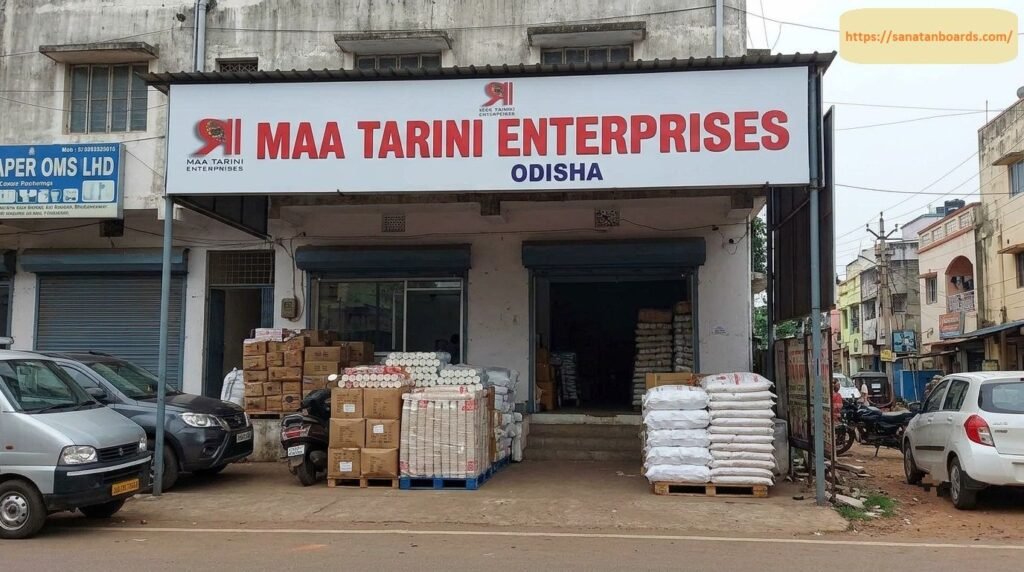
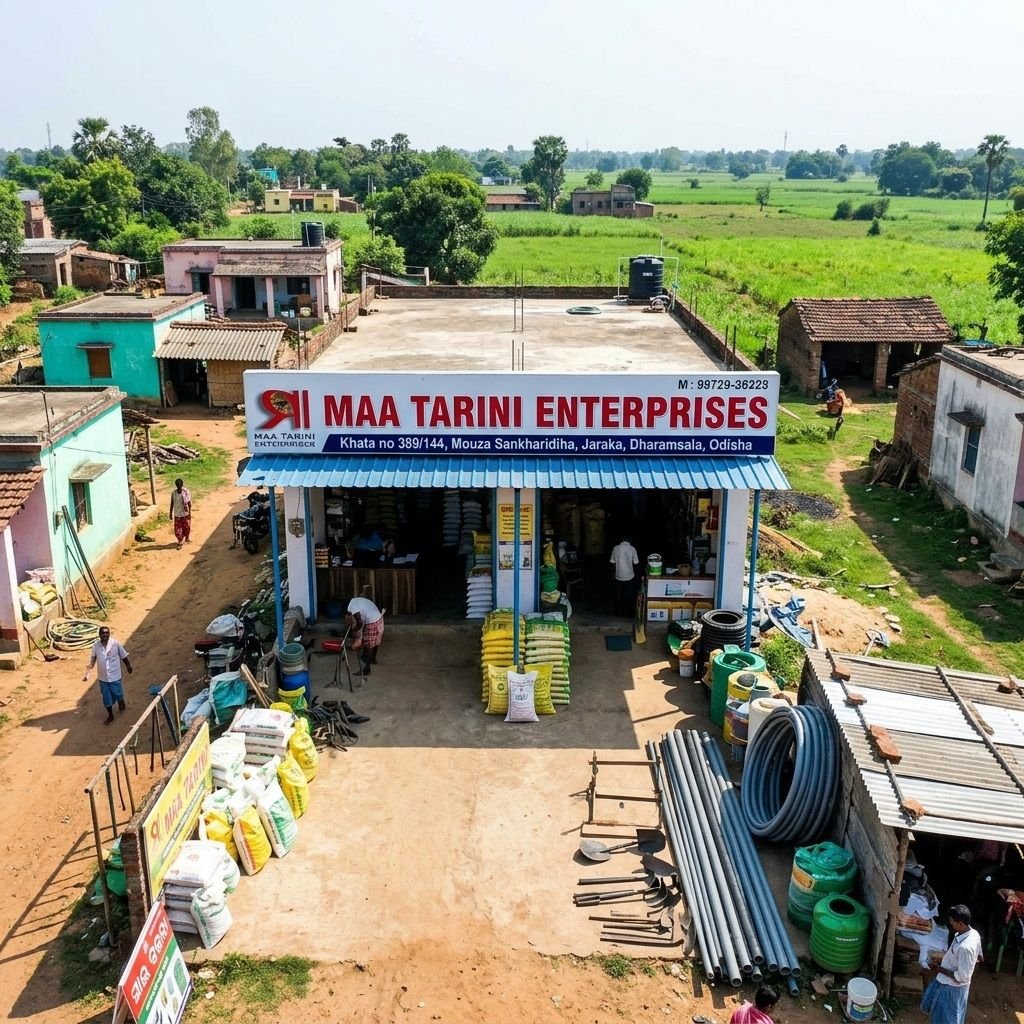
Maa Tarini Enterprises, located at Khata No. 389/144, Mouza Sankharidiha, Jaraka, Dharamsala, Odisha, represents the journey of an enterprise that sought to strengthen its professional approach through documented quality and product-safety practices.
Its product, camphor, is widely recognized for religious, household and other applications. Although familiar to consumers, camphor is a product that requires responsible handling and appropriate safety information. As the enterprise developed its professional documentation, obtaining a Material Safety Data Sheet Certificate in 2022 became an important step in presenting product information in a more systematic manner.
This story explores how the discipline associated with quality management and product documentation can influence a company’s development. It describes the transformation not simply as the achievement of a certificate, but as a continuing journey toward better systems, clearer responsibilities, improved confidence and sustainable business practices.
Chapter 1 – The Beginning of Maa Tarini Enterprises
Every enterprise begins with an idea. Sometimes the idea develops from an opportunity observed in the marketplace; sometimes it grows from family experience, local demand or an understanding of a particular product. In the case of Maa Tarini Enterprises, the business developed around a product with deep familiarity in Indian society—camphor.
Camphor occupies a distinctive place in Indian households. It is particularly associated with religious rituals, prayer, festivals and traditional practices. At the same time, products containing camphor or camphor itself require appropriate handling and storage because of their physical and chemical characteristics. This combination of familiarity and responsibility makes professional product management important.
Maa Tarini Enterprises operated from Sankharidiha, Jaraka, in Dharamsala, Odisha. The location reflects the character of many Indian enterprises that grow from regional markets and gradually seek to develop a more structured commercial identity.
In the early stage of any business, the promoter has to manage several responsibilities simultaneously. Procurement, production or product preparation, packaging, customer communication, inventory, transportation, documentation and financial management may all compete for attention. A small enterprise can therefore function successfully through personal supervision for a period of time, but as the business develops, informal methods increasingly need to be supported by documented systems.
The journey toward quality certification is often connected with this realization.
For Maa Tarini Enterprises, the importance of professional documentation became increasingly relevant as the business considered how its product information should be communicated. Customers, distributors, transporters and other stakeholders can benefit from clear information concerning product identification, handling, storage, hazards and emergency considerations.
This is where the concept of a Material Safety Data Sheet becomes significant.
An MSDS provides structured safety-related information about a product. It can help communicate important details to people who handle, store, transport or otherwise work with the material. For a business dealing with a product such as camphor, having professionally prepared product-safety information can contribute to a more responsible operating environment.
The certification journey was therefore more than an administrative exercise. It represented a movement from informal knowledge toward documented knowledge.
The promoter’s role was central to this transition. In a growing enterprise, the promoter often acts as the connection between vision and execution. The promoter determines whether quality documentation is treated as paperwork or as a genuine business tool. When documentation becomes part of the company’s operating culture, it can support consistency across different activities.
Maa Tarini Enterprises could therefore begin viewing quality through a broader lens.
Quality was not only about whether the product reached the customer. It could also involve how the product was identified, how information was communicated, how materials were stored, how employees understood their responsibilities and how customer concerns were handled.
The year 2022 became an important milestone in this development. The issuance of the Material Safety Data Sheet Certificate for camphor provided a formal reference point for the enterprise’s product documentation.
A certificate alone does not create a successful organization. Its value comes from how the organization uses the discipline behind it.
For Maa Tarini Enterprises, the certification became part of a larger story: the story of an enterprise seeking to establish credibility through organized systems and responsible product communication.
The journey ahead would require continuous attention. Documentation would need to remain relevant. Product handling would need discipline. Customer expectations would continue to change. Competition would require professionalism.
The foundation, however, had been strengthened.
The enterprise was beginning to understand that sustainable growth depends not only on selling more products but also on building confidence around those products.
That understanding would influence the next stage of its development.
#MaaTariniEnterprises
Chapter 2 – Understanding Quality Beyond the Certificate
When companies first encounter quality management systems, there can be a temptation to think of certification as the final destination. In reality, certification is more useful when it becomes a starting point for organizational discipline.
For Maa Tarini Enterprises, the certification journey encouraged a broader understanding of quality.
The company operated with camphor as its identified product. Because camphor can be used in different environments and handled by different categories of people, product information has an important role. A professional business must consider not only the product itself but also the information surrounding it.
This creates a chain of responsibility.
The product must be properly identified. Relevant information must be documented. Packaging and labeling should communicate appropriately. Storage practices should support product integrity and safety. Personnel should understand their responsibilities. Customers should be able to receive reliable information when they require it.
Such thinking is closely aligned with the philosophy behind quality management.
Quality management is fundamentally about creating repeatable processes that produce predictable results. Rather than depending entirely on individual memory or personal supervision, the organization develops methods that can be followed consistently.
For a growing enterprise, this change can be transformative.
Imagine a business where one person knows every important detail. When that person is present, everything works smoothly. But when the business becomes larger, dependence on one individual’s memory can become a weakness. A documented system reduces this dependency.
Maa Tarini Enterprises could therefore use its certification experience to strengthen internal discipline.
Product-related information could be organized systematically. Records could be maintained more carefully. Responsibilities could become clearer. Communication between people involved in operations could become more structured.
These improvements may appear small individually, but together they can influence the entire organization.
The promoter’s perspective can also change during this process.
Initially, business growth may be measured primarily through sales. Later, the promoter may begin considering additional indicators: customer satisfaction, repeat business, product consistency, documentation quality, response time, operational efficiency and employee awareness.
This represents a significant evolution in business thinking.
A quality-oriented enterprise does not ask only, “How much did we sell?”
It also asks:
“Did we meet customer expectations?”
“Was the product information clear?”
“Did we maintain appropriate records?”
“Could we respond effectively to a customer question?”
“Are our processes repeatable?”
“Can the business continue to function effectively as it grows?”
These questions create a culture of continuous improvement.
For Maa Tarini Enterprises, the MSDS certification issued in 2022 could serve as a tangible representation of this culture. It demonstrated that the enterprise recognized the importance of structured safety information for its camphor product.
The certification also had potential value in professional communication.
When dealing with business partners, distributors or institutional customers, documentation can help establish that a company takes product responsibility seriously. Instead of relying solely on verbal explanations, the organization can provide formal information.
This can increase confidence.
Trust is particularly important for small and medium-sized enterprises. Larger organizations may have established reputations, extensive facilities and years of market presence. Smaller enterprises often have to demonstrate professionalism through their actions and documentation.
A properly organized certification portfolio can become one part of that professional identity.
Maa Tarini Enterprises could therefore begin seeing quality not as a one-time event but as an organizational habit.
This perspective also helps explain the relationship between ISO 9001 principles and product-specific documentation. ISO 9001 emphasizes a systematic approach to quality management, while an MSDS focuses on communicating safety and handling information about a particular product. They serve different purposes, but together they can contribute to a broader culture of responsibility.
For the promoter, this creates a valuable lesson.
Certification is not simply something to display on a wall.
It is a framework for asking better questions.
It encourages organizations to document what they do, understand why they do it, monitor results and improve where necessary.
As Maa Tarini Enterprises continued its journey, these principles could become increasingly relevant to its day-to-day activities.
The company’s growth story therefore became less about a single certificate and more about a change in mindset.
The business had started moving toward a professional system in which quality, documentation and customer confidence could support commercial growth.
#ISO9001Certification
Chapter 3 – The Importance of Product Safety Documentation
Camphor is a familiar product, but familiarity should never be confused with the absence of risk. Products that are widely used can still require responsible handling, storage and communication.
For Maa Tarini Enterprises, the preparation and certification of an MSDS for camphor represented an important step in recognizing this responsibility.
A Material Safety Data Sheet is designed to organize information about a material in a structured format. Depending on the applicable framework and product characteristics, such documentation can address areas such as product identification, composition, hazards, first-aid measures, fire-fighting measures, accidental release response, handling and storage, exposure controls, physical and chemical properties, stability, toxicological information, ecological considerations, disposal and transport-related information.
The value of such documentation is practical.
Different people may interact with a product at different stages of its journey. Employees may handle it during operations. Packaging personnel may work with it. Warehouse staff may store it. Transporters may carry it. Distributors may receive it. Customers may use it. (https://tarinienterprises.com/)
Each person may have different questions.
How should the product be stored?
What precautions are relevant?
What should be done in case of accidental exposure?
How should a spill be addressed?
What conditions should be avoided?
A structured safety document helps organize answers to such questions.
For Maa Tarini Enterprises, this created a stronger connection between product and information.
The company could think about product quality as having two dimensions.
The first was the physical product.
The second was the information necessary to understand and handle the product appropriately.
This is an important concept in modern business.
A product does not exist in isolation. It is surrounded by documentation, labeling, packaging, instructions, customer service and logistics. A weakness in any of these areas can affect the customer’s overall experience.
The certification issued in 2022 could therefore contribute to greater awareness within the enterprise.
Employees and operational personnel could become more conscious of the need to follow documented procedures. Storage could be considered not merely as placing stock in a particular area but as an activity requiring appropriate control. Packaging could be viewed as both protection and communication.
The promoter could also use this experience to encourage a culture of responsibility.
Instead of asking employees only to complete tasks, the organization could encourage them to understand why the tasks mattered.
For example, careful handling is not simply a rule. It protects people and products.
Accurate documentation is not merely paperwork. It supports communication.
Correct identification is not only a label requirement. It helps prevent confusion.
Organized storage is not simply about neatness. It can support inventory control and safety.
This change in perspective can improve the maturity of an organization.
As businesses grow, operational complexity increases. More products may be handled. More customers may be served. More transactions may occur. More people may become involved.
Without documentation, complexity can create confusion.
With documentation, complexity can become manageable.
This was one of the important lessons emerging from Maa Tarini Enterprises’ certification journey.
The company’s MSDS documentation could become a reference point for future business development. It could support communication with customers and business partners while also strengthening internal awareness.
The certification also encouraged the enterprise to think about continuity.
What happens if a key employee leaves?
Can another employee understand the product requirements?
Can the company answer customer questions consistently?
Can records be retrieved when needed?
Can the business demonstrate its professional approach to a new business partner?
These are questions that become increasingly important as an enterprise grows.
The certification journey therefore helped move Maa Tarini Enterprises toward a more structured model.
The promoter’s responsibility evolved from personally controlling every detail to creating a system in which people could work with greater clarity.
That is one of the defining characteristics of organizational growth.
A business becomes stronger when knowledge is converted into systems.
The 2022 certification became part of that process.
It did not eliminate every operational challenge. Instead, it gave the organization a framework for addressing those challenges more systematically.
For Maa Tarini Enterprises, that was a meaningful step toward professional maturity.
#MSDSCertification
Chapter 4 – The Promoter’s Role in Organizational Transformation
Behind every small and medium-sized enterprise is a person or group of people who carries the weight of its decisions. The promoter often begins by doing everything personally—finding suppliers, speaking to customers, checking products, solving operational problems and managing finances.
This hands-on involvement is often necessary during the early stage.
However, as the enterprise grows, the same approach can become difficult to sustain.
The promoter of Maa Tarini Enterprises faced the same fundamental challenge that many growing entrepreneurs encounter: how to transform personal effort into organizational capability.
The certification journey provided an opportunity to think about this transformation.
The first lesson was that quality cannot depend entirely on one person.
If the promoter personally checks every activity, the organization may perform well while the promoter is present. But sustainable growth requires systems that continue functioning even when the promoter is occupied elsewhere.
Documentation therefore becomes an important management tool.
Responsibilities can be defined.
Procedures can be explained.
Records can be maintained.
Problems can be documented.
Corrective actions can be considered.
This allows the promoter to move gradually from operational control toward strategic leadership.
For Maa Tarini Enterprises, the MSDS certification could support this shift by encouraging structured product knowledge.
Instead of product-safety information existing only as informal knowledge, it could become part of the company’s documented information base.
This creates institutional memory.
Institutional memory is particularly valuable for businesses that want to survive and grow over many years. Employees change. Suppliers change. customers change. Markets change.
The organization must retain knowledge even when individuals change.
The promoter’s leadership therefore became increasingly important.
A quality-oriented promoter does not merely demand results. The promoter creates conditions in which employees can achieve those results consistently.
This may involve training.
It may involve clearer instructions.
It may involve better recordkeeping.
It may involve periodic reviews.
It may involve listening to customer feedback.
It may involve identifying recurring problems and finding their root causes.
These practices gradually create a culture of continuous improvement.
For Maa Tarini Enterprises, the certification milestone could become a reminder that growth should be organized.
Suppose a customer raises a concern. A mature organization does not simply solve the immediate problem and forget it. It asks why the problem occurred and whether the same issue could happen again.
This is the essence of corrective thinking.
Similarly, if documentation is difficult to locate, the organization can improve its document-control process.
If employees are unclear about a procedure, training can be strengthened.
If customers repeatedly ask the same question, the company can improve product information.
If inventory discrepancies occur, stock-control practices can be reviewed.
Each small improvement strengthens the organization.
The promoter’s role is to create the environment in which such improvements are welcomed.
This requires a cultural shift.
Employees should feel that reporting a problem is not equivalent to admitting failure. Instead, reporting a problem provides an opportunity to improve the process.
That mindset is closely connected with quality management.
For Maa Tarini Enterprises, this could become one of the most valuable outcomes of its certification journey.
The enterprise could begin looking at growth not only as an increase in sales but as an increase in organizational capability.
A stronger organization can manage more customers.
A more documented organization can respond more consistently.
A more disciplined organization can reduce avoidable errors.
A more professional organization can build stronger business relationships.
The promoter can then spend more time thinking about the future.
What markets should the company serve?
How can customer satisfaction be improved?
How can product information be strengthened?
What new capabilities should employees develop?
How can operational risks be reduced?
These questions move the promoter from daily firefighting toward strategic planning.
The 2022 certification milestone therefore represented more than compliance.
It could be interpreted as part of the promoter’s transition from entrepreneur-as-doer to entrepreneur-as-system-builder.
That transition is often one of the most important stages in the growth of a small business.
Maa Tarini Enterprises had begun developing the foundation for such a transformation.
#CamphorProduct
Chapter 5 – Building Customer Confidence Through Professional Practices
Courtesy: Maa Tarini Enterprises
Customers do not see everything that happens inside a company.
They may see the product, packaging, price and communication. They may not see the internal records, procedures, training or management meetings that support the business.
This creates an important challenge for enterprises.
How can a company communicate its professionalism to customers?
One answer is through consistent service and credible documentation.
For Maa Tarini Enterprises, the MSDS certification for camphor became one component of that professional identity.
The certificate could help demonstrate that the enterprise had taken steps toward formally documenting product-safety information. This matters because business confidence is built through evidence.
A customer may ask whether a supplier understands its product.
Documentation can provide evidence.
A business partner may ask whether product information is organized.
Documentation can provide evidence.
An employee may need reference information.
Documentation can provide evidence.
The certificate therefore had value beyond its physical appearance.
It became a symbol of a process.
For the promoter, this could lead to an important realization: customers increasingly evaluate suppliers not only on price but also on reliability.
A low price may attract an initial order, but reliable quality, communication and service are important for long-term relationships.
This is particularly relevant in competitive markets.
If several suppliers offer similar products, the business that communicates more professionally can create an advantage.
Professionalism can appear in many forms:
- Clear product identification
- Appropriate documentation
- Consistent communication
- Organized order processing
- Reliable packaging
- Responsible handling
- Timely response to customer questions
- Proper record maintenance
- Complaint handling
- Commitment to continuous improvement
None of these activities alone guarantees business growth.
Together, however, they create an environment in which customers can develop confidence.
Maa Tarini Enterprises could use the lessons from certification to strengthen these areas.
Customer feedback could become an input for improvement rather than merely a reaction to complaints.
If a customer requested information, the company could examine whether that information should become part of its standard documentation.
If customers had repeated questions regarding storage or handling, product communication could be improved.
If a complaint occurred, the company could investigate its root cause.
This approach creates a feedback loop.
Customer → Feedback → Analysis → Corrective Action → Improved Process → Better Customer Experience.
Such a cycle is fundamental to sustainable quality.
The promoter could also recognize that customer confidence extends beyond individual transactions.
A customer who trusts a supplier may return.
A distributor who experiences reliable service may continue the relationship.
A business partner who sees professional documentation may be more comfortable discussing future opportunities.
Thus, quality management can indirectly support commercial development.
The certification did not automatically generate new customers. Rather, it strengthened the infrastructure through which the company could serve customers professionally.
This distinction is important.
A certificate should never be presented as a guarantee of business growth.
Growth occurs when a company combines quality, customer understanding, market opportunity, operational discipline and effective management.
Certification can support that combination.
For Maa Tarini Enterprises, the 2022 MSDS certificate could therefore be viewed as one element in a larger customer-confidence strategy.
The enterprise could increasingly understand that every interaction communicates something about the company.
An organized document communicates seriousness.
A clear answer communicates competence.
A properly handled product communicates responsibility.
A timely response communicates respect.
A well-managed complaint communicates accountability.
Over time, these signals can contribute to reputation.
Reputation is difficult to build and easy to damage. A single poor experience may affect customer confidence, while many consistent positive experiences may gradually strengthen it.
This is why quality must be continuous.
The promoter’s responsibility is not simply to achieve certification once. It is to maintain the discipline that certification represents.
For Maa Tarini Enterprises, this meant keeping the focus on systems even as daily business pressures continued.
The real success of certification would be visible not in the certificate itself but in the company’s behavior.
If documentation became easier to manage, if product information became clearer, if responsibilities became better understood and if customer service became more consistent, then the certification journey would have produced meaningful organizational value.
This was the direction in which Maa Tarini Enterprises could continue to grow.
#QualityManagement
Chapter 6 – Operational Discipline and the Road to Efficiency
Growth brings opportunity, but it also brings complexity.
As a company serves more customers, handles more materials or manages more orders, the number of operational decisions increases. Without adequate systems, complexity can lead to mistakes.
For Maa Tarini Enterprises, developing a more disciplined quality approach created an opportunity to strengthen operational efficiency.
The first area was documentation.
Documents should be controlled, accessible and understandable. Employees should know which information they are expected to use and where it can be found.
The second area was responsibility.
Every process works better when people understand who is responsible for what.
The third area was recordkeeping.
Records provide evidence of what happened. They can help identify trends, investigate problems and support decision-making.
The fourth area was improvement.
An organization should not simply repeat its existing methods indefinitely. It should examine whether those methods remain effective.
These principles could be applied throughout the enterprise.
Consider inventory management.
If stock records are inaccurate, the company may face delays, excess inventory or shortages. A disciplined approach to records can improve visibility.
Consider packaging.
If packaging practices are inconsistent, product presentation and protection can vary. Standardized procedures can help create consistency.
Consider customer communication.
If different employees provide different answers to similar questions, customer confidence may decline. Shared product information can improve consistency.
Consider product handling.
Clear instructions and awareness can reduce avoidable errors.
The certification journey helped Maa Tarini Enterprises see these activities as connected rather than isolated.
This is one of the important benefits of a process-based approach.
Instead of viewing the company as a collection of unrelated tasks, management can view it as a system.
Procurement influences operations.
Operations influence packaging.
Packaging influences delivery.
Delivery influences customer experience.
Customer feedback influences improvement.
Improvement influences future operations.
This interconnected thinking can reveal opportunities that are invisible when each task is considered separately.
The promoter can then ask a more useful question:
“Where in the process can we improve?”
Rather than:
“Who made the mistake?”
This change in question can significantly influence organizational culture.
Blaming individuals often produces fear. Understanding processes produces learning.
Suppose a packaging error occurs. A blame-oriented approach may identify the employee responsible. A process-oriented approach asks whether the instructions were clear, whether the packaging materials were correctly identified, whether training was sufficient and whether the verification step was effective.
The second approach is more likely to prevent recurrence.
For Maa Tarini Enterprises, this represented an important opportunity.
Efficiency is not simply working faster. It is achieving reliable results with fewer unnecessary steps and fewer avoidable errors.
Quality and efficiency can therefore reinforce one another.
When documents are organized, employees spend less time searching.
When responsibilities are clear, tasks move more smoothly.
When procedures are standardized, training becomes easier.
When customer feedback is analyzed, recurring problems can be reduced.
When records are accurate, management decisions become more informed.
These improvements can accumulate.
The promoter may eventually find that a structured organization requires less constant intervention.
Instead of solving the same problem repeatedly, management can establish a process that prevents recurrence.
That frees leadership time for strategic development.
This is how quality management can indirectly contribute to business growth.
The enterprise does not grow merely because it has documentation. It grows because better systems create greater capacity.
A well-organized company can potentially handle increased demand more effectively than a company dependent entirely on informal methods.
For Maa Tarini Enterprises, the 2022 certification milestone therefore represented an opportunity to build such capacity.
The journey toward operational maturity would continue.
Processes would need periodic review.
Employees would need awareness.
Documentation would need maintenance.
Customer requirements would need attention.
The business environment would continue to change.
But the organization now had a stronger framework for responding.
The journey from a small enterprise toward a more professional business was becoming visible.
#ProductSafety
Chapter 7 – From Compliance to Continuous Improvement
One of the most important lessons of a certification journey is that compliance should not become the only objective.
A company may initially focus on meeting requirements. But once the basic system is established, the organization can begin asking a more valuable question:
“How can we become better?”
For Maa Tarini Enterprises, this represented a shift from compliance to continuous improvement.
Continuous improvement does not necessarily mean making dramatic changes. In many businesses, the most effective improvements are small.
A better record format.
A clearer instruction.
A more organized storage arrangement.
A faster response to customer inquiries.
Improved employee training.
More consistent packaging.
Better tracking of complaints.
More systematic supplier evaluation.
Each improvement can contribute to overall performance.
The promoter can encourage this culture by making improvement part of routine management.
Regular reviews can help identify recurring issues.
Employees can be encouraged to suggest practical improvements.
Customer feedback can be recorded and analyzed.
Operational problems can be reviewed for root causes.
When improvements are implemented, their effectiveness can be monitored.
This creates a cycle:
Identify → Analyze → Improve → Monitor → Standardize → Improve Again.
For Maa Tarini Enterprises, this cycle could become increasingly valuable as the company developed.
The certification issued in 2022 provided a reference point. The years following certification could then be viewed as a period of implementation and learning.
The company’s success would depend on whether the documented approach became part of everyday behavior.
This is where leadership matters.
If management treats quality documentation as something needed only during an audit, employees may do the same.
If management uses documentation to make decisions, employees are more likely to see its practical value.
If management asks about customer feedback, employees understand that customer satisfaction matters.
If management reviews corrective actions, employees understand that problems should be solved rather than hidden.
The promoter therefore becomes the role model for quality culture.
This is especially important in smaller organizations because leadership behavior has a direct influence on employees.
A promoter who follows procedures demonstrates their importance.
A promoter who values accurate records reinforces accountability.
A promoter who listens to customers reinforces customer focus.
A promoter who admits mistakes and learns from them creates psychological safety.
A promoter who rewards improvement encourages innovation.
These behaviors can shape the organization more strongly than formal documents alone.
Maa Tarini Enterprises could therefore use its certification experience as an opportunity to develop a long-term management philosophy.
The goal would not simply be to maintain certification-related documents.
The goal would be to build a company capable of learning.
Learning organizations are more adaptable.
Markets change.
Customer expectations change.
Regulations can change.
Technology changes.
Supply conditions change.
Businesses that cannot adapt may struggle.
Businesses that continuously learn can respond more effectively.
For an enterprise dealing with a recognized product such as camphor, this adaptability can involve packaging, communication, distribution, documentation and customer service.
The company can also strengthen its professional identity by maintaining accurate product information.
The MSDS certification remains part of that identity because it demonstrates attention to structured safety information.
However, the organization should continue to review whether its product information remains appropriate and whether operational practices remain aligned with applicable requirements.
This is the essence of continuous improvement.
The company should never assume that because something was correct yesterday, it will automatically remain correct tomorrow.
The promoter’s vision therefore becomes longer-term.
Instead of thinking only about the next order, the promoter considers the next year.
Instead of thinking only about the next year, management considers the organization’s reputation over the next decade.
What kind of company should Maa Tarini Enterprises become?
A company known for reliable products?
A company known for professional documentation?
A company known for responsible customer service?
A company capable of building long-term partnerships?
These ambitions can guide improvement.
The certification journey had created a foundation.
Continuous improvement could build upon it.
The company had moved from simply operating a business toward managing a system.
That was a significant step in its development.
#BusinessGrowth
Chapter 8 – Building a Stronger Professional Identity
Every growing enterprise eventually develops an identity.
Customers begin to associate the company with certain characteristics.
Some businesses become known for price.
Others become known for speed.
Others become known for technical expertise.
Others become known for reliability.
For Maa Tarini Enterprises, certification and structured documentation created an opportunity to strengthen its professional identity around quality and responsibility.
The company could communicate that it took product information seriously.
This is especially valuable for enterprises seeking to move beyond purely local or informal business relationships.
Professional identity can influence how potential partners perceive a company.
A business with organized documents, defined processes and appropriate certifications may appear more prepared to work with structured organizations.
Again, certification is not a guarantee of commercial success. It is one part of a broader professional presentation.
The company’s address in Sankharidiha, Jaraka, Dharamsala, Odisha represented its operational base. From this regional foundation, the enterprise could potentially develop broader business relationships by demonstrating reliability and professionalism.
The promoter could use the certification experience to establish a stronger business philosophy.
Quality should be visible.
Responsibility should be documented.
Customer needs should be respected.
Employees should understand their roles.
Improvement should be continuous.
These principles can become part of the company’s identity.
Professional identity is also reflected in communication.
When a customer asks about a product, the company should be able to provide clear information.
When a business partner asks for documentation, the company should be prepared.
When an employee needs guidance, the organization should have accessible information.
When a problem occurs, management should have a process for responding.
These capabilities create confidence.
Over time, confidence can become reputation.
Reputation can become an intangible business asset.
A strong reputation can make conversations with customers easier because the company does not have to prove its professionalism from zero each time.
This is particularly important for enterprises seeking sustainable growth.
Sustainable growth should not depend entirely on promotional activity.
It should emerge from the underlying strength of the organization.
The MSDS certificate issued in 2022 could therefore be used as part of the company’s professional documentation portfolio.
The company could demonstrate that it had formally addressed product-safety information for camphor.
Internally, this could reinforce the importance of documentation.
Externally, it could contribute to confidence among stakeholders.
The promoter could also recognize that professional identity must be supported by actual performance.
A company cannot rely on certificates if its customer service is poor.
It cannot claim quality if its processes are inconsistent.
It cannot claim responsibility if employees are unaware of safety requirements.
Therefore, the certificate should encourage behavior rather than replace it.
This distinction is critical.
A mature organization uses certification as a framework.
An immature organization uses certification merely as advertising.
Maa Tarini Enterprises had the opportunity to choose the first path.
By integrating certification principles into everyday work, the enterprise could build a stronger foundation for future expansion.
The company’s journey could then be described as a progression:
Business establishment → Product focus → Documentation → Certification → Process discipline → Customer confidence → Continuous improvement → Sustainable growth.
This progression does not happen automatically.
Each stage requires leadership.
Each stage requires investment of time and attention.
Each stage requires willingness to learn.
But the benefits can compound.
A better process creates better consistency.
Better consistency creates customer confidence.
Customer confidence supports relationships.
Relationships support business stability.
Business stability creates room for investment and improvement.
Improvement strengthens the business further.
This is the cycle that can turn a small enterprise into a mature organization.
For Maa Tarini Enterprises, the 2022 certification milestone became part of that cycle.
The story was no longer simply about a certificate.
It was about creating an organization that understood the value of quality.
#QualityAssurance
Chapter 9 – The Long-Term Vision for Maa Tarini Enterprises
Every certification journey ultimately raises a larger question: What comes next?
For Maa Tarini Enterprises, the answer lies in continuing to build organizational capability.
The company has an important foundation: a defined product, an identifiable operating location and formal product-safety documentation associated with its camphor product.
The next stage is to convert that foundation into sustainable organizational strength.
Sustainability in business means more than environmental responsibility. It also means creating an enterprise capable of surviving changing market conditions.
A sustainable company manages quality.
It manages risk.
It develops people.
It listens to customers.
It controls information.
It maintains relationships.
It learns from experience.
It plans for the future.
For Maa Tarini Enterprises, this could mean continuing to strengthen its quality-management approach and reviewing operational practices regularly.
Employee awareness should remain an ongoing activity.
New employees should receive appropriate orientation.
Existing employees should periodically refresh their understanding.
Documents should be reviewed and updated where necessary.
Customer feedback should be captured.
Operational issues should be analyzed.
Supplier relationships should be monitored.
Records should remain accessible.
These activities create resilience.
The promoter’s long-term vision can also include gradual modernization.
Digital documentation can reduce dependence on physical records.
Structured inventory systems can improve visibility.
Customer databases can improve communication.
Digital quality records can make information easier to retrieve.
Standardized templates can improve consistency.
Training materials can help employees learn faster.
Technology does not replace quality management, but it can strengthen it.
The company can also consider broader market opportunities where appropriate.
If business expansion occurs, the systems developed through certification can provide a foundation for managing increased complexity.
A company that has already learned to document its processes is better prepared to document new processes.
A company that has developed customer-feedback mechanisms is better prepared to handle a larger customer base.
A company that understands product-safety documentation is better prepared to manage additional documentation requirements.
Thus, quality management creates scalability.
This may be one of the most important long-term benefits of the certification journey.
The promoter can also establish a culture in which every employee understands that quality is everyone’s responsibility.
Quality should not belong only to a quality department.
It should be part of procurement.
It should be part of operations.
It should be part of packaging.
It should be part of logistics.
It should be part of customer service.
It should be part of leadership.
When quality becomes everyone’s responsibility, the organization becomes more resilient.
Maa Tarini Enterprises can therefore look toward a future in which its professional identity is supported by consistent practices.
The 2022 certificate becomes a historical milestone, but the journey continues.
The company should not measure its success only by certificates obtained.
It should measure success by improved processes, customer confidence, employee capability and organizational stability.
The promoter’s success should not be measured only by personal achievement.
It should also be measured by the strength of the organization created.
A company that can operate effectively without depending on one individual is a stronger company.
A company that can train new employees effectively is a stronger company.
A company that can respond to customer needs consistently is a stronger company.
A company that can identify and correct problems is a stronger company.
A company that continues learning is a stronger company.
This is the long-term vision that can guide Maa Tarini Enterprises.
From a regional enterprise to a professionally managed organization.
From informal knowledge to documented systems.
From individual effort to institutional capability.
From certification to continuous improvement.
From short-term transactions to long-term relationships.
The journey is not finished.
In many ways, certification simply opened the next chapter.
#OdishaBusiness
Chapter 10 – The Legacy of Quality and Growth
The story of Maa Tarini Enterprises is ultimately a story about transformation.
It begins with an enterprise operating from Sankharidiha, Jaraka, Dharamsala, Odisha.
It develops around camphor, a product familiar to millions of people yet requiring responsible product information and handling.
It reaches an important milestone in 2022 with the issuance of a Material Safety Data Sheet Certificate.
But the most important part of the story lies beyond the certificate.
The real transformation occurs when documentation begins influencing behavior.
When employees become more aware.
When processes become clearer.
When responsibilities become defined.
When customer questions receive structured answers.
When operational problems are analyzed rather than simply corrected temporarily.
When the promoter begins building systems rather than personally controlling every task.
This is the deeper meaning of quality management.
A certificate can be printed.
A system must be lived.
For Maa Tarini Enterprises, the certification journey provided an opportunity to strengthen both.
The company could look back at 2022 as a milestone in its professional development.
The MSDS certification for camphor demonstrated recognition of the importance of product-safety information.
The quality-management philosophy provided a broader framework for thinking about consistency, customer focus and improvement.
Together, these elements could support the company’s continued development.
The promoter’s journey was equally important.
Entrepreneurship often begins with courage.
Growth requires discipline.
Professional maturity requires systems.
Long-term success requires continuous learning.
The promoter who builds systems creates something more lasting than daily revenue.
The promoter creates organizational capability.
That capability can support employees.
It can support customers.
It can support business partners.
It can support future generations of leadership.
This is the beginning of a legacy.
Maa Tarini Enterprises can continue strengthening that legacy by maintaining its focus on quality and responsibility.
Every product should be handled with care.
Every document should be treated as a useful source of information.
Every customer interaction should be viewed as an opportunity to build trust.
Every complaint should be treated as an opportunity to learn.
Every process should be reviewed when circumstances change.
Every employee should understand their role in quality.
Every improvement should contribute to the larger objective of sustainable growth.
The business environment will continue to evolve.
Customer expectations will change.
Competition will increase.
Technology will create new opportunities.
Regulatory and safety expectations may evolve.
Companies that remain static may find it difficult to adapt.
Companies that develop a culture of learning can respond more effectively.
Maa Tarini Enterprises has the opportunity to continue along this path.
Its certification story is therefore not an ending.
It is a beginning.
The journey from certification to growth requires consistency.
The journey from growth to maturity requires systems.
The journey from maturity to legacy requires values.
Quality can become one of those values.
Responsibility can become another.
Customer trust can become another.
Continuous improvement can become another.
Together, these values can define the company’s identity.
The story of Maa Tarini Enterprises demonstrates an important principle for entrepreneurs everywhere:
Growth is strongest when it is supported by systems.
Sales may create momentum, but quality creates consistency.
Marketing may create awareness, but trust creates relationships.
Certificates may demonstrate achievement, but implementation creates value.
Leadership may establish direction, but employees make systems work.
Documentation may record knowledge, but continuous improvement turns knowledge into capability.
For Maa Tarini Enterprises, the 2022 Material Safety Data Sheet Certificate for camphor became a meaningful milestone in this broader journey.
From its base in Odisha, the enterprise could continue building a professional organization focused on quality, product responsibility and customer confidence.
The future remains open.
The next chapter can include stronger systems, better documentation, improved customer relationships, employee development, operational efficiency and carefully managed expansion.
The most important principle remains unchanged:
Quality is not a destination. Quality is a way of working.
And when a company makes quality part of the way it works, certification becomes more than a document.
It becomes part of the company’s story.
For Maa Tarini Enterprises, that story is one of ambition, responsibility, professional development and the continuing pursuit of sustainable growth.
Maa Tarini Enterprises — from certification to capability, from capability to confidence, and from confidence toward a stronger future.
#ContinuousImprovement
#IndustrialSafety #QualityCertification #CertifiedBusiness #CustomerConfidence #SustainableBusinessGrowth
Take the Next Step Today
Don’t wait to enhance your business’s quality and efficiency. Partner with Sanatan Dharma Accreditation Boards and experience the transformation that comes with expert consultancy and training. Contact us today to learn more about how we can help you achieve your business goals. Reach out via phone at +91-8668266780, visit our website at sanatanboards.com, or email us at info@sanatanboards.com Let us be your guide on the journey to excellence and innovation.





