
Hzsh Textiles LLP
Table of Contents
Introduction
The story of HZSH Textiles LLP is a story about how a growing textile-oriented business can strengthen its professional identity by giving greater importance to product information, documentation, safety communication and quality-oriented business practices.
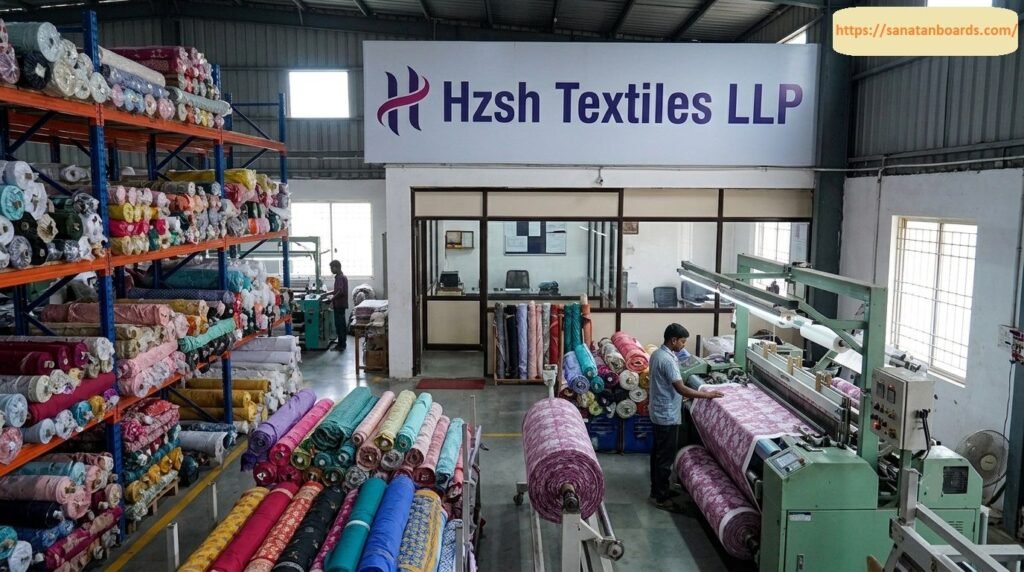
HZSH Textiles LLP operates from Santacruz West, Mumbai, an established commercial environment closely connected with the city’s garment, textile, fashion, wholesale and trading ecosystem. Publicly available business records identify the LLP as an active entity incorporated in 2020, with its registered office at the Milan Subway Road address in Santacruz West. Records also describe its activity in wholesale and trade-related business.
In 2022, HZSH Textiles LLP received a Material Safety Data Sheet Certificate, according to the certification information supplied for this case study. The certification became an important point in the company’s continuing journey toward organized documentation and greater attention to product-related information.
Although an MSDS certificate is different from an ISO 9001 certification, this story uses the certification milestone as the starting point for examining how a quality-oriented approach can influence business development. The purpose is not to claim that certification alone created growth. Rather, it explores how certification, documentation discipline, customer communication and management awareness can work together to support a developing company.
For a business operating in textiles and related trading activities, quality is not restricted to the physical characteristics of a product. It also includes reliable information, consistency, traceability, communication, responsiveness, documentation and confidence.
The journey of HZSH Textiles LLP therefore represents a broader lesson: quality becomes commercially valuable when it is converted into daily business discipline.
Chapter 1 – The Beginning: Building a Textile Business in Mumbai
The foundation of every successful company begins long before its most visible achievements. For HZSH Textiles LLP, that foundation was established in Mumbai, one of India’s most important commercial centres for textiles, apparel, fashion and trading.
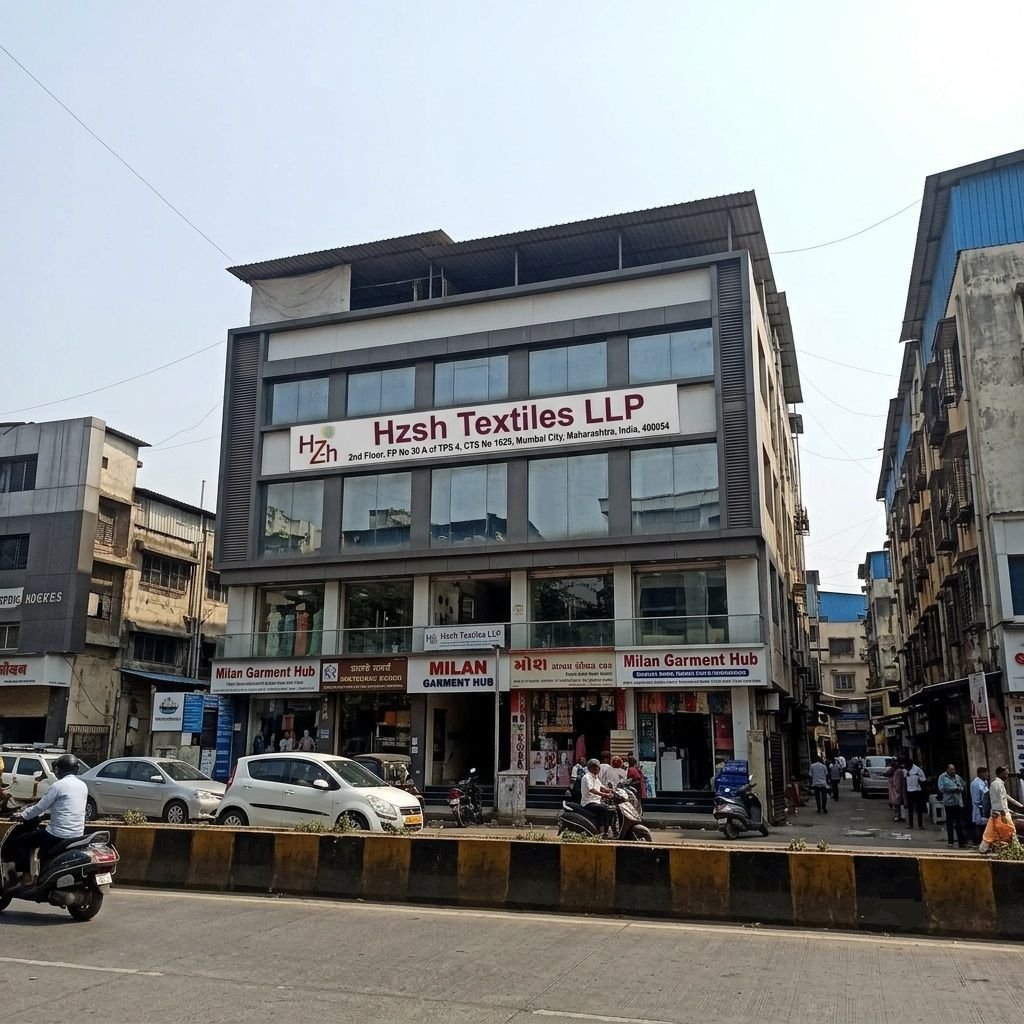
The company’s registered office is located at the second floor of FP No. 30 A of TPS 4, CTS No. 1629, Milan Subway Road, Santacruz West, Mumbai. Public records identify HZSH Textiles LLP under LLPIN AAS-8441 and indicate that it was incorporated in 2020.
The location itself is significant from a business perspective. Santacruz West has long been associated with commercial activity, garment businesses, wholesalers, suppliers, retailers and fashion-related enterprises. Being located in such an ecosystem provides opportunities, but it also creates competition.
A textile business cannot survive only by finding products and selling them. Customers increasingly compare suppliers on multiple parameters. They consider price, quality, reliability, delivery, product information, documentation, communication and after-sales support.
This changing environment creates a fundamental question for every entrepreneur:
How can a company become more dependable than the competition?
For HZSH Textiles LLP, the answer increasingly involved professionalism.
In the early phase of a business, management attention naturally focuses on customers, suppliers, inventory, pricing and cash flow. Documentation may initially be viewed as an administrative responsibility rather than a strategic asset.
However, as the company grows, documentation becomes increasingly important.
A customer may ask for product specifications.
Another may request safety-related information.
A supplier may require technical details.
A new buyer may want evidence that the company follows systematic practices.
An organization that can respond quickly and professionally has an advantage over one that must search through scattered information.
This is where the concept of quality begins to move from theory into commercial practice.
Quality is not merely a certificate displayed on a wall. It is a method of organizing the business so that customers experience consistency.
For a textile-oriented trading company, this can involve systematic product identification, supplier documentation, product information, purchase records, sales documentation, customer communication and complaint handling.
The 2022 certification milestone became relevant in this context.
The Material Safety Data Sheet Certificate represented an emphasis on formal product information and responsible communication. Rather than treating documentation as an afterthought, certification encouraged the company to recognize the importance of presenting information in a structured manner.
The management’s thinking gradually shifted from:
“We know our products.”
to:
“Can we demonstrate what we know in a professional and documented way?”
That difference is important.
A growing business eventually reaches a stage where personal knowledge held by one or two people is no longer sufficient. Information must become accessible to the organization itself.
This is one of the most important transitions in entrepreneurial development.
In a small operation, the owner may remember which supplier provided a particular material, which customer purchased it, what price was negotiated and what specifications were discussed.
As the business grows, employees become involved.
Then information must be shared.
Then procedures become necessary.
Then records become important.
Then quality becomes a management system rather than an individual habit.
The 2022 milestone therefore became part of a larger journey for HZSH Textiles LLP.
The company was not simply seeking a certificate. It was moving toward greater professional maturity.
This maturity could be seen in the way management considered customer expectations, documentation and business reliability.
The certification experience also encouraged a broader understanding of risk.
Textile and trading businesses operate through interconnected relationships. A problem with a supplier can affect delivery. Incorrect product information can affect customer confidence. Poor documentation can slow commercial transactions. Delayed communication can damage relationships.
The stronger the company’s internal discipline, the easier it becomes to manage such challenges.
HZSH Textiles LLP’s journey therefore began with a simple but powerful principle:
A growing business needs systems that grow with it.
The 2022 certification milestone helped reinforce that principle.
It provided management with an opportunity to look beyond immediate transactions and think about the structure supporting those transactions.
That shift in thinking would influence the company’s subsequent approach to customers, suppliers, documentation and market positioning.
#HZSHTextilesLLP
Chapter 2 – Understanding the Importance of Certification and Documentation
Certification can mean different things to different businesses.
For some companies, certification is primarily a customer requirement.
For others, it is a regulatory or contractual expectation.
For still others, certification becomes a mechanism for improving internal discipline.
For HZSH Textiles LLP, the 2022 Material Safety Data Sheet certification became an opportunity to strengthen the company’s approach toward documentation and product information.
The importance of documentation is sometimes underestimated in commercial businesses.
A transaction may appear simple.
A customer requests a product.
The company provides the product.
Payment is received.
The transaction is complete.
But behind this apparently simple process are numerous information requirements.
What exactly is the product?
Who supplied it?
What are its characteristics?
How should it be handled?
What documentation accompanies it?
What information does the customer need?
How should a query be answered?
What happens if there is a complaint?
The answers to these questions create the difference between an informal business and a professionally organized business.
The certification milestone encouraged the company to think more systematically about these issues.
Documentation creates continuity.
If an employee leaves, records remain.
If a new employee joins, information can be transferred.
If a customer asks the same question six months later, the company can respond using documented information rather than memory.
If management wants to review a transaction, the necessary records can be located.
This is the real commercial value of a quality-oriented documentation culture.
In the textile sector, product-related information can be especially important because buyers may work with multiple suppliers and materials. A supplier who provides clear, organized information becomes easier to work with.
The customer does not have to repeatedly ask basic questions.
The purchasing department can compare information.
The quality department can maintain records.
The accounts department can process documentation more efficiently.
Management can monitor transactions with greater clarity.
Thus, certification began to influence not only compliance but also communication.
The company gradually recognized that documentation is itself a form of customer service.
A professional document communicates seriousness.
A structured certificate communicates preparedness.
A clear product document communicates responsibility.
A consistent format communicates organizational maturity.
These impressions may appear small individually, but together they can influence business relationships.
This became particularly relevant as HZSH Textiles LLP developed its identity as a business operating within a competitive textile ecosystem.
The management understood that price alone could not define the company.
There would always be competitors willing to negotiate.
There would always be customers searching for lower prices.
There would always be suppliers offering alternative products.
Therefore, the company needed additional sources of value.
Reliability became one.
Professional communication became another.
Documentation became another.
Responsiveness became another.
Quality awareness became another.
This combination gradually created a stronger business proposition.
Certification also encouraged a more structured relationship with suppliers.
Instead of considering suppliers only as sources of material, management could view them as partners in maintaining consistency.
Supplier information could be reviewed.
Product information could be recorded.
Documentation could be organized.
Communication could become clearer.
The objective was not to make the business bureaucratic.
The objective was to make it dependable.
There is a major difference between bureaucracy and systemization.
Bureaucracy creates paperwork without necessarily creating value.
Systemization creates repeatable processes that make work easier and more reliable.
The challenge for HZSH Textiles LLP was therefore to ensure that documentation served business objectives.
Every document needed a purpose.
Every record needed a reason.
Every certificate needed to support confidence.
Every procedure needed to make an activity clearer.
This philosophy gradually transformed the meaning of certification.
Instead of seeing the 2022 milestone as an isolated event, the company could use it as a reference point for continuous improvement.
The organization began asking more useful questions.
Can customer requirements be captured more clearly?
Can supplier information be organized better?
Can product information be communicated faster?
Can complaints be recorded systematically?
Can repeat orders be handled more efficiently?
Can documentation be retrieved quickly?
Can new employees understand the workflow?
These questions are simple, but their impact can be significant.
They shift management attention from individual transactions to the process behind transactions.
That is one of the foundations of quality management.
The company’s journey after certification therefore became increasingly focused on turning information into organizational knowledge.
Instead of knowledge remaining inside individuals, the company could develop records and processes.
Instead of relying exclusively on experience, it could build repeatable practices.
Instead of responding to every situation from the beginning, it could learn from previous experiences.
This was the beginning of a more mature business culture.
The certificate did not automatically create growth.
The certificate created an opportunity.
The management’s willingness to use that opportunity created value.
#TextileIndustry
Chapter 3 – The Promoters’ Role in Creating a Quality-Oriented Culture
Every organization ultimately reflects the priorities of its leadership.
Technology can improve processes.
Documents can organize information.
Certificates can demonstrate compliance.
But leadership determines whether quality becomes part of the company’s culture.
Public business information identifies Jaiprakash Chandru Jethwani and Yash Gangwani Ram among the directors associated with HZSH Textiles LLP.
In the context of this case study, the promoter and leadership journey can be understood through a central challenge faced by growing entrepreneurs: balancing commercial speed with organizational discipline.
Entrepreneurs often work under intense pressure.
Customers want immediate responses.
Suppliers want quick confirmations.
Prices change.
Markets fluctuate.
Transport schedules shift.
Payments must be followed up.
Orders must be completed.
New opportunities appear unexpectedly.
Under these conditions, documentation can seem secondary.
However, leadership eventually recognizes that uncontrolled speed can create hidden costs.
A missing document can delay an order.
An unclear specification can cause a misunderstanding.
A poorly recorded complaint can become a repeated problem.
An undocumented supplier issue can affect future purchases.
A lack of process can make employee training difficult.
Therefore, the management began to view organization itself as a competitive advantage.
This was an important shift.
Instead of asking only:
“How much can we sell?”
management could also ask:
“How effectively can we deliver what we sell?”
That second question is the foundation of sustainable growth.
The leadership’s role was to encourage employees to take documentation seriously without creating unnecessary complexity.
The company could establish clearer responsibilities.
Who receives a customer requirement?
Who confirms product details?
Who communicates with the supplier?
Who maintains documents?
Who follows up on delivery?
Who handles customer feedback?
Who closes a complaint?
When responsibilities are clearly defined, organizational performance becomes less dependent on individual memory.
This is particularly important in an LLP environment where business relationships can expand beyond the founders.
The promoters’ role also includes maintaining trust.
Trust is one of the most valuable assets in textile trading.
A customer who trusts a supplier is more likely to return.
A supplier who trusts a buyer is more likely to cooperate during difficult situations.
An employee who trusts management is more likely to take responsibility.
A company that demonstrates professional documentation can strengthen all three relationships.
The certification milestone therefore became a symbol of a larger leadership philosophy.
It communicated that management was prepared to invest attention in quality-related systems.
It also encouraged a culture in which employees could understand that quality was everyone’s responsibility.
A sales employee influences quality through accurate communication.
A purchasing employee influences quality through supplier selection and verification.
An operations employee influences quality through proper handling and documentation.
An accounts employee influences quality through accurate commercial records.
Management influences quality through decisions, priorities and review.
Thus, quality is not the responsibility of a single department.
It is the combined result of organizational behavior.
The leadership also had to understand that improvement is gradual.
No organization becomes perfectly systematic overnight.
Processes evolve.
Employees learn.
Customers change.
Markets change.
Technology changes.
Therefore, the objective is not perfection.
The objective is controlled improvement.
This perspective prevented certification from becoming a one-time activity.
Instead, it could become a reminder to continue strengthening the organization.
The leadership journey can therefore be described as a movement from entrepreneurial dependence toward organizational capability.
In the early stages, founders naturally make many decisions themselves.
As the company develops, they must create systems that allow others to make appropriate decisions.
This is one of the hardest transitions in business.
Delegation requires trust.
Trust requires systems.
Systems require documentation.
Documentation requires discipline.
Discipline requires leadership.
The certification experience helped connect these elements.
The promoters increasingly understood that their role was not simply to generate sales but to create an organization capable of generating consistent value.
This created the foundation for future growth.
A company that depends entirely on its founders may grow only as fast as the founders can work.
A company supported by systems can grow through the combined capability of its people.
That distinction became central to HZSH Textiles LLP’s post-certification journey.
The promoters’ greatest contribution was therefore not the certificate itself.
It was the mindset behind it.
The certificate could demonstrate a particular achievement.
Leadership had to transform that achievement into organizational behavior.
#ISO9001Certification
Chapter 4 – Strengthening Customer Confidence
Customer confidence is difficult to build and easy to lose.
In a competitive textile market, customers often have several options. They may compare suppliers based on price, quality, availability, delivery, communication and documentation.
HZSH Textiles LLP understood that professional documentation could become one of the factors differentiating the company.
The 2022 certification milestone provided a tangible representation of the company’s attention to product information and documentation.
For customers, this can have psychological value.
When a supplier provides organized information, the customer feels that the supplier understands the importance of professional transactions.
The certificate becomes part of the company’s credibility framework.
However, management understood that credibility cannot depend on a certificate alone.
The real test comes during everyday interactions.
Does the company respond on time?
Does it provide accurate information?
Does it maintain consistency?
Does it handle complaints responsibly?
Does it communicate delays honestly?
Does it follow up after delivery?
Does it maintain records?
These behaviors collectively create customer confidence.
The post-certification period therefore became an opportunity to strengthen customer-facing practices.
Customer requirements could be recorded more systematically.
Instead of relying entirely on informal telephone conversations, important requirements could be confirmed through written communication.
Product information could be maintained.
Order details could be checked.
Customer queries could be tracked.
This reduced the possibility of misunderstanding.
The company could also develop a stronger approach to repeat customers.
A repeat customer represents more than a new sale.
It represents evidence of trust.
When a customer returns, the company has an opportunity to build a longer-term relationship.
The management began to recognize the economic value of such relationships.
Acquiring a new customer can require considerable effort.
Maintaining an existing customer often requires consistency.
Therefore, quality systems indirectly support customer retention.
A documented approach also helps when customers change.
In a growing company, the person who originally handled an account may eventually be unavailable.
If the account information exists only in that person’s memory, continuity becomes difficult.
If the information is properly documented, another employee can understand the customer’s requirements.
This creates organizational resilience.
Customer confidence also grows when complaints are handled systematically.
Every business experiences complaints.
A complaint does not necessarily mean failure.
It can be an opportunity to identify weakness.
The critical question is what happens after a complaint.
A weak organization may become defensive.
A stronger organization investigates.
It asks:
What happened?
Why did it happen?
Was the requirement understood correctly?
Was the product information clear?
Was the supplier involved?
Was the communication adequate?
What can prevent recurrence?
This approach changes the meaning of customer feedback.
Instead of being treated as criticism, it becomes information for improvement.
Such a culture can improve relationships.
Customers appreciate suppliers who listen.
They appreciate suppliers who acknowledge problems.
They appreciate suppliers who communicate solutions.
The certification journey therefore helped HZSH Textiles LLP strengthen its understanding of customer confidence as a process rather than an advertisement.
A certificate can attract attention.
Performance earns trust.
Consistency retains trust.
The company also recognized that professional presentation matters.
Business documents, quotations, invoices, product information and certification records collectively create an impression.
A customer may never consciously analyze these details, but they influence perception.
A well-organized supplier appears more dependable.
A dependable supplier becomes easier to recommend.
Recommendations can create new opportunities.
Thus, documentation can indirectly support business development.
Another important development was the company’s growing awareness of customer expectations.
Customers increasingly expect suppliers to understand not only the product but also the information surrounding it.
This is particularly important in B2B transactions.
Purchasing departments often need documentation for their own internal processes.
Quality departments may need technical information.
Safety personnel may need product information.
Accounts departments need commercial documentation.
Management may need supplier records.
A company capable of supporting these requirements becomes more valuable.
HZSH Textiles LLP’s post-certification development can therefore be understood as a movement toward becoming a more complete business partner rather than simply a seller.
That distinction matters.
A seller focuses on completing a transaction.
A business partner focuses on supporting the customer’s objective.
The latter approach creates stronger relationships.
The company’s certification milestone reinforced this philosophy.
It encouraged the organization to think about quality from the customer’s perspective.
What does the customer need?
What information reduces uncertainty?
What process makes the transaction easier?
What response demonstrates responsibility?
These questions became part of the company’s broader quality mindset.
Customer confidence consequently became one of the most important intangible outcomes of the post-certification journey.
#QualityManagement
Chapter 5 – Improving Supplier Relationships and Business Coordination
Courtesy: Hns Embro Llp
No textile trading business operates independently.
Behind every successful customer delivery is a network of suppliers, logistics providers, service partners, documentation resources and financial relationships.
For HZSH Textiles LLP, strengthening internal discipline also created an opportunity to improve coordination with external partners.
Supplier relationships are often built around three fundamental expectations:
quality, reliability and communication.
Price remains important, but price alone cannot sustain a relationship when deliveries are inconsistent or information is unreliable.
The certification-oriented approach encouraged the company to consider suppliers more systematically.
Supplier information could be organized.
Product specifications could be reviewed.
Commercial terms could be recorded.
Documents could be retained.
Past performance could become part of future decision-making.
This helped move supplier selection away from purely transactional thinking.
A supplier offering the lowest price may not necessarily provide the best overall value.
A slightly higher-priced supplier may provide better consistency, documentation, delivery performance or responsiveness.
A quality-oriented business evaluates the complete relationship.
This approach can be particularly valuable in textiles because materials may have different specifications and applications.
The company therefore became more conscious of matching customer requirements with appropriate supplier capabilities.
A customer’s requirement should not simply be passed to the supplier.
It should be understood.
The supplier should receive clear information.
The response should be reviewed.
The product should be evaluated against requirements.
Documentation should be maintained.
This creates a chain of responsibility.
Supplier coordination also became important during changing market conditions.
Prices can fluctuate.
Availability can change.
Transportation can be delayed.
Customer requirements can change quickly.
A company with strong supplier relationships is better positioned to respond.
Communication becomes faster.
Alternative sourcing can be explored.
Customers can receive more realistic information.
This protects credibility.
One of the most important lessons of quality management is that prevention is usually better than correction.
If a supplier issue is identified early, corrective action can be taken before the problem reaches the customer.
If product information is checked before dispatch, misunderstandings can be reduced.
If documentation is reviewed before submission, delays can be avoided.
Therefore, supplier management became part of the company’s broader risk-management thinking.
The management also recognized the importance of long-term relationships.
A supplier should not be treated merely as an anonymous source of products.
Strong business relationships depend on mutual respect.
Clear requirements.
Fair communication.
Timely commitments.
Professional dispute resolution.
Payment discipline.
Feedback.
These behaviors build trust.
Trust, in turn, creates flexibility.
During difficult circumstances, trusted partners are often more willing to cooperate.
The post-certification mindset therefore expanded the company’s understanding of quality beyond the customer-facing side.
Quality begins upstream.
If supplier information is poor, customer information may also be poor.
If incoming material is inconsistent, customer satisfaction may be affected.
If documentation is missing, commercial transactions can become difficult.
Thus, supplier coordination is an essential component of organizational quality.
The company could also use supplier experience as a source of learning.
Which suppliers consistently meet expectations?
Which suppliers require closer monitoring?
Where do delays occur?
Which products generate the most questions?
Which documentation is frequently missing?
Such questions can lead to continuous improvement.
Over time, supplier performance becomes data.
Data becomes information.
Information becomes management knowledge.
Management knowledge becomes better decision-making.
This is the progression that transforms a trading business into a more organized enterprise.
The certification experience therefore supported a more structured view of the entire supply chain.
The company did not need to control every activity performed by every supplier.
Instead, it needed to understand the risks and establish appropriate controls.
This is an important principle.
Quality does not mean eliminating every risk.
Quality means identifying important risks and managing them intelligently.
For HZSH Textiles LLP, this approach helped create greater coordination between customer requirements, supplier capabilities and internal processes.
The result was a stronger business foundation.
The company could respond more confidently to customer requests.
It could maintain better records.
It could communicate more effectively.
It could learn from previous transactions.
And it could develop stronger supplier relationships.
These improvements may not always appear dramatic in a single transaction.
But over hundreds of transactions, small improvements can create significant organizational value.
This became one of the important lessons of the company’s post-certification journey:
Sustainable growth is often created through many small improvements repeated consistently.
#MaterialSafetyDataSheet
Chapter 6 – From Documentation to Operational Discipline
One of the most significant effects of a quality-oriented approach is the transformation of documentation into operational discipline.
Before systematic processes are introduced, businesses often depend heavily on individual employees.
One person knows the supplier.
Another knows the customer.
Someone else knows where the documents are stored.
Another employee remembers previous negotiations.
This arrangement may work when the organization is small.
But it becomes risky as the company grows.
HZSH Textiles LLP’s post-certification journey highlighted the importance of converting individual knowledge into organizational knowledge.
The first step was recognizing that documentation should be accessible.
Important records should not depend on one person’s memory.
The second step was consistency.
Documents should follow a logical structure.
Information should be recorded in a predictable manner.
The third step was responsibility.
Employees should know who creates, checks, approves and maintains information.
These three elements—accessibility, consistency and responsibility—form the basis of operational discipline.
The company could apply this thinking to different parts of the business.
Sales teams could record customer requirements.
Purchasing teams could maintain supplier information.
Operations teams could track order progress.
Accounts teams could maintain commercial records.
Management could review performance.
This creates a chain connecting individual tasks with organizational objectives.
Operational discipline also reduces dependency on informal communication.
Informal communication will always exist.
Telephone calls, meetings and messaging are essential to business.
But important decisions should be captured in a reliable form.
For example, if a customer changes a specification, that change should be recorded.
If a supplier changes a delivery commitment, the change should be documented.
If a complaint is received, it should be tracked.
If corrective action is agreed, responsibility should be assigned.
This approach creates traceability.
Traceability is valuable because it allows the company to understand what happened.
Without records, management can only reconstruct events from memory.
With records, management can investigate.
Investigation supports improvement.
Improvement supports prevention.
Prevention supports quality.
Quality supports customer confidence.
Customer confidence supports business development.
This chain demonstrates how documentation can ultimately influence growth.
The company also became more aware of the importance of employee training.
A process is useful only when employees understand it.
New employees need orientation.
Existing employees need periodic reinforcement.
Responsibilities need to be explained.
Documentation requirements need to be clear.
Employees should understand why a particular record matters.
When people understand the purpose of a process, they are more likely to follow it.
This created a gradual cultural change.
Documentation stopped being viewed simply as “paperwork.”
It became part of the company’s professional identity.
The company could also learn from errors.
Suppose a document is missing.
Instead of merely replacing the document, management can ask why it was missing.
Was responsibility unclear?
Was the document not listed?
Was the employee unaware?
Was the storage system confusing?
Was there no review mechanism?
These questions reveal root causes.
Correcting the root cause is more valuable than correcting the immediate symptom.
This is one of the most important principles of quality management.
Operational discipline also improves management visibility.
When information is organized, managers can see patterns.
They can identify repeated customer requests.
They can identify recurring supplier issues.
They can identify delays.
They can identify documentation gaps.
They can identify areas requiring additional resources.
This improves decision-making.
Instead of relying entirely on intuition, management can combine experience with documented evidence.
Entrepreneurs should never lose intuition.
Market intuition remains important.
But intuition becomes more powerful when supported by information.
This combination—experience plus evidence—creates mature management.
The certification milestone therefore contributed to a broader operational transformation.
The company increasingly viewed its processes as assets.
A good process saves time.
A clear document saves explanation.
A reliable record saves investigation.
A trained employee reduces dependency.
A defined responsibility reduces confusion.
A structured response improves customer experience.
Each improvement appears small.
Together they strengthen the organization.
HZSH Textiles LLP’s story therefore illustrates a fundamental business principle:
Operational discipline is not the enemy of entrepreneurial speed. Properly designed systems make entrepreneurial speed sustainable.
The company could respond faster because information was easier to locate.
It could communicate more confidently because records were available.
It could train people more effectively because processes were clearer.
It could handle growth more systematically because responsibilities were defined.
The post-certification period thus became a period of organizational learning.
The certificate represented an achievement.
The discipline created by the certification mindset became a continuing business asset.
#MSDSCertificate
Chapter 7 – Building a Stronger Market Identity
A company operating in a competitive industry needs an identity.
That identity is not limited to a logo, website or business card.
It is created through repeated experiences.
Customers form opinions based on communication.
Suppliers form opinions based on professionalism.
Employees form opinions based on management.
Partners form opinions based on reliability.
Over time, these opinions become reputation.
For HZSH Textiles LLP, the certification milestone contributed to the development of a more professional market identity.
The company could communicate that it took documentation and quality-related requirements seriously.
This was especially useful in B2B relationships where professional documentation can influence vendor evaluation.
A new customer may not know the company personally.
The customer may therefore look for signals of reliability.
Business registration is one signal.
Experience is another.
References are another.
Documentation is another.
Certification is another.
Professional communication is another.
None of these signals guarantees performance.
But together they reduce uncertainty.
The company increasingly understood that market identity is essentially the sum of these signals.
A quality-oriented identity also influences employee behavior.
If employees understand that the company values professionalism, they become more conscious of how they communicate.
A sales executive may provide clearer information.
A purchasing executive may ask better questions.
An operations employee may pay greater attention to records.
A manager may review customer feedback more carefully.
Thus, external reputation can reinforce internal culture.
The company’s location in Mumbai also provided access to a large commercial ecosystem.
The surrounding textile and garment environment creates opportunities for networking and business development.
However, opportunities alone are insufficient.
A company must be prepared to convert opportunities into relationships.
This is where the post-certification mindset became important.
When a prospective customer approached the company, management could present a more organized professional image.
The company could explain its documentation practices.
It could demonstrate its commitment to product information.
It could respond more systematically to queries.
This reduced friction during business discussions.
The company also became more conscious of the importance of consistency in communication.
A customer should receive the same fundamental information regardless of which employee handles the inquiry.
Inconsistent answers create uncertainty.
Consistent answers create confidence.
Therefore, standardization became useful.
Standard quotations.
Standard product information.
Standard documentation.
Standard complaint records.
Standard follow-up procedures.
These tools help maintain consistency.
However, standardization does not mean treating every customer identically.
Different customers have different requirements.
The objective is to standardize the foundation while remaining flexible in application.
This is an important distinction.
The company could maintain basic systems while adapting to individual customer requirements.
The certification milestone also supported the company’s ability to participate more confidently in professional business environments.
As companies grow, they increasingly encounter procurement teams, quality departments, institutional buyers and structured vendor-selection processes.
Such organizations may request documentation before approving a supplier.
A company that already maintains organized records is better positioned to respond.
This can create opportunities that might otherwise be difficult to pursue.
Therefore, quality documentation can have a commercial return even when the return is not immediately measurable.
It opens doors.
It reduces uncertainty.
It improves credibility.
It strengthens negotiation.
It supports repeat business.
The management also recognized that reputation develops slowly.
One successful order does not create a strong reputation.
Many consistent transactions do.
Similarly, one certificate does not establish a culture.
Repeated application of quality principles does.
The company therefore continued to focus on behavior after certification.
The objective was to ensure that the certificate did not become a decorative document.
It needed to represent an ongoing commitment.
This distinction became increasingly important.
Customers are intelligent.
They eventually recognize whether a company’s quality claims are supported by actual behavior.
Therefore, the company sought alignment between what it communicated and what it practiced.
That alignment became part of the brand.
The market identity of HZSH Textiles LLP could increasingly be associated with professionalism, documentation awareness, customer responsiveness and organized business practices.
These characteristics do not replace product quality or competitive pricing.
They strengthen them.
The company’s story demonstrates that branding and quality are closely connected.
A strong brand creates expectations.
Quality systems help meet those expectations.
Meeting expectations creates trust.
Trust creates loyalty.
Loyalty creates repeat business.
Repeat business creates stability.
Stability creates opportunities for growth.
Thus, the post-certification journey helped HZSH Textiles LLP move toward a stronger market identity built not only on what it sold but on how it conducted business.
#TextileBusinessGrowth
Chapter 8 – Managing Growth Through Continuous Improvement
Growth is often celebrated as if it were automatically positive.
But uncontrolled growth can create problems.
More customers mean more communication.
More orders mean more documentation.
More suppliers mean more coordination.
More employees mean more training.
More transactions mean more opportunities for errors.
Therefore, growth must be managed.
For HZSH Textiles LLP, the post-certification period encouraged management to view growth through the lens of continuous improvement.
Continuous improvement does not mean changing everything constantly.
It means identifying meaningful opportunities to make the business better.
The process can begin with simple questions.
What worked well?
What did not work well?
Where did delays occur?
Which customer complaints were repeated?
Which documents were difficult to locate?
Which supplier created recurring problems?
Which process depended too heavily on one employee?
These questions create a culture of learning.
The company could then prioritize improvements.
Not every problem requires a major investment.
Sometimes a checklist can solve a problem.
Sometimes a standard template is enough.
Sometimes employee training is required.
Sometimes supplier communication needs improvement.
Sometimes technology can help.
The important point is to identify the cause before selecting the solution.
This prevents unnecessary complexity.
A quality-oriented company therefore becomes more analytical.
Instead of reacting emotionally to problems, management can investigate them.
Instead of blaming employees immediately, it can examine the process.
Instead of treating every complaint as an isolated event, it can look for patterns.
This approach improves organizational maturity.
Another element of continuous improvement is measurement.
Even when a business does not use sophisticated dashboards, basic indicators can provide useful information.
Order turnaround time.
Customer response time.
Complaint frequency.
Supplier delivery performance.
Documentation errors.
Repeat orders.
Pending payments.
These indicators help management understand performance.
The objective is not to create statistics for their own sake.
The objective is to make better decisions.
For example, if a particular supplier repeatedly causes delays, management can investigate alternatives.
If a particular customer requires frequent clarification, the company can improve its product information.
If a particular document repeatedly contains errors, the template can be redesigned.
This is how quality management becomes practical.
The company also recognized the importance of employee participation.
Employees are often closest to operational problems.
A manager may see a delayed order.
An employee may know exactly why it was delayed.
Therefore, management should create opportunities for employees to share observations.
This builds ownership.
When employees participate in improvement, they are more likely to support changes.
Continuous improvement also requires patience.
Some improvements produce immediate benefits.
Others take months.
For example, better documentation may initially require additional effort.
Employees must learn the new system.
Records must be organized.
Old habits must change.
But once the system becomes familiar, the effort may decrease.
The company can then handle more work with less confusion.
This is one of the hidden benefits of systemization.
At first, systems can feel slower.
Later, they often make the organization faster.
The company also learned that improvement should remain customer-focused.
An internal process may appear efficient but still create customer inconvenience.
Therefore, management must ask whether improvements actually create value for customers.
Does the process reduce errors?
Does it improve response time?
Does it increase reliability?
Does it make information easier to understand?
Does it reduce uncertainty?
If the answer is yes, the improvement is likely meaningful.
The post-certification period therefore became a period of organizational learning.
The certification milestone encouraged the company to develop a mindset in which improvement became continuous rather than occasional.
This is one of the most important differences between a company that merely obtains certification and one that derives long-term value from quality principles.
Certification has a beginning.
Continuous improvement does not.
The company could therefore continue developing its systems year after year.
As markets changed, the systems could change.
As customers changed, requirements could change.
As employees changed, training could change.
As technology developed, documentation methods could change.
The underlying principle remained constant:
The organization should always look for ways to perform better.
This philosophy gave HZSH Textiles LLP a stronger foundation for sustainable growth.
Growth was no longer viewed only as an increase in sales.
It could also mean better systems, stronger relationships, clearer information, improved customer experience and greater organizational resilience.
That broader definition of growth became a valuable part of the company’s journey.
#BusinessGrowthStory
Chapter 9 – The Long-Term Impact on Business Confidence and Expansion
The real impact of a certification-oriented journey is often visible over time.
Immediately after certification, the company may experience increased awareness.
Later, that awareness can influence processes.
Eventually, improved processes can influence relationships.
Relationships can influence reputation.
Reputation can influence business opportunities.
This creates a long-term chain of value.
For HZSH Textiles LLP, the 2022 certification milestone became part of that longer journey.
The company did not need to claim that every business success resulted directly from certification.
Such a claim would oversimplify business growth.
Growth depends on many factors.
Market demand matters.
Pricing matters.
Supplier relationships matter.
Customer relationships matter.
Management decisions matter.
Capital matters.
Employees matter.
Timing matters.
Competition matters.
Certification is one element within that larger environment.
Its value lies in strengthening the organization’s ability to operate professionally.
The company increasingly understood that confidence is essential for expansion.
Management needs confidence to enter new markets.
Employees need confidence to handle new responsibilities.
Customers need confidence to place larger orders.
Suppliers need confidence to extend cooperation.
Partners need confidence to work together.
Documentation contributes to this confidence because it reduces uncertainty.
A company that knows its processes can make commitments more confidently.
A company that maintains records can investigate issues more confidently.
A company that understands its suppliers can source more confidently.
A company that listens to customers can adapt more confidently.
Thus, quality becomes a form of business confidence.
The company also developed a stronger understanding of risk.
Every expansion creates new risks.
A new customer may have different requirements.
A new supplier may have different standards.
A new product may require additional documentation.
A larger order may require stronger logistics.
A new employee may need training.
The answer is not to avoid expansion.
The answer is to prepare for it.
This is where systems become important.
A company with strong foundations can scale more effectively.
A company without systems may find that every increase in business creates additional confusion.
HZSH Textiles LLP’s post-certification journey therefore encouraged management to think about scalability.
Could existing processes handle more customers?
Could documentation be retrieved quickly?
Could new employees understand responsibilities?
Could customer complaints be tracked?
Could supplier performance be reviewed?
Could management identify emerging problems early?
These questions are indicators of organizational readiness.
The company’s professional identity also became increasingly important.
In modern B2B markets, buyers often evaluate suppliers before starting business.
They may examine legal information, documentation, product information and professional credentials.
A well-organized company can make the evaluation process easier.
That can reduce the time between initial inquiry and commercial engagement.
The company could also use its quality-oriented culture as a foundation for future certifications and standards, should business requirements make them appropriate.
The important point is that once an organization learns how to manage documentation and processes, future quality initiatives become easier.
Employees already understand concepts such as records, responsibilities, review, corrective action and continual improvement.
Management already understands the value of structured systems.
Therefore, the first quality-oriented initiative can create capabilities that support later development.
This is one of the most valuable long-term outcomes.
The certification milestone becomes a learning experience.
The organization becomes more mature.
The company becomes more prepared.
The promoters become more aware of systematic management.
Employees become more disciplined.
Customers experience greater consistency.
Suppliers receive clearer communication.
All these effects reinforce each other.
The result is not necessarily explosive growth.
More often, it is stronger growth.
Strong growth is growth supported by organizational capability.
The company can absorb additional business without losing control.
It can respond to customers without compromising documentation.
It can develop relationships without abandoning discipline.
It can expand while maintaining its identity.
This is sustainable growth.
The story of HZSH Textiles LLP therefore demonstrates that the greatest benefit of certification may not always be visible immediately.
The certificate itself is visible.
The behavioral change behind it is less visible.
Yet that behavioral change can become more valuable over time.
A company that learns to document can learn to measure.
A company that learns to measure can learn to improve.
A company that learns to improve can learn to scale.
A company that learns to scale responsibly can create long-term value.
This became an important lesson for the management.
The objective was never simply to complete a certification process.
The objective was to become a better organization.
That objective remains relevant regardless of market conditions.
#QualityAssurance
Chapter 10 – The Future: From Certification Milestone to Sustainable Business Growth
The journey of HZSH Textiles LLP after the 2022 certification milestone can ultimately be understood as a journey from awareness toward maturity.
The company began with the fundamental challenge faced by many growing businesses: how to compete effectively while maintaining professionalism.
Its location in Santacruz West placed it within an active commercial ecosystem.
Its business activity connected it with textile and wholesale opportunities.
Its management had to balance customer expectations, supplier coordination, documentation and operational requirements.
The certification milestone provided a structured opportunity to strengthen these areas.
The company learned that quality is not a department.
It is not merely a document.
It is not merely a certificate.
It is a way of thinking.
Quality begins when requirements are understood correctly.
It continues when those requirements are converted into clear actions.
It becomes visible when products and services are delivered consistently.
It becomes valuable when customers recognize the difference.
It becomes sustainable when employees understand their role.
And it becomes powerful when management continuously improves the system.
The future growth of HZSH Textiles LLP can therefore be imagined around several strategic pillars.
1. Customer-Centric Growth
The company can continue strengthening relationships by understanding customer requirements and responding with clarity.
Long-term customers can become strategic partners.
Feedback can become a source of improvement.
Complaints can become opportunities for learning.
2. Supplier Development
Strong supplier relationships can support reliability.
Supplier evaluation can help identify dependable partners.
Better documentation can improve coordination.
Long-term relationships can create stability.
3. Digital Documentation
As technology develops, the company can increasingly organize records digitally.
Digital systems can improve retrieval, backup, accessibility and collaboration.
This can reduce dependency on physical paperwork.
4. Employee Capability
Growth requires people.
Training can help employees understand product information, documentation, communication and quality responsibilities.
A trained workforce reduces organizational dependency on individual founders.
5. Process Improvement
The company can periodically review its processes.
What was effective yesterday may not be sufficient tomorrow.
Continuous improvement ensures that systems remain relevant.
6. Market Expansion
A strong professional foundation can support expansion into additional customer segments and geographic markets where appropriate.
New opportunities can be evaluated systematically rather than pursued solely on enthusiasm.
7. Stronger Quality Culture
The ultimate objective should be to make quality part of everyday behavior.
Employees should naturally ask:
“Is this information accurate?”
“Is this document complete?”
“Has the customer requirement been understood?”
“Can this process be improved?”
Such questions create a quality culture.
The promoters’ role will remain central.
As the company grows, leadership will need to maintain the balance between entrepreneurship and systemization.
Entrepreneurship provides ambition.
Systems provide control.
Customer relationships provide opportunity.
Quality provides consistency.
Employees provide capability.
Continuous improvement provides adaptability.
Together, these elements create sustainable growth.
The story also demonstrates an important distinction between certification and business success.
Certification cannot guarantee success.
But a quality-oriented approach can improve the organizational conditions in which success becomes more achievable.
It can reduce uncertainty.
It can strengthen credibility.
It can improve documentation.
It can encourage consistency.
It can support customer confidence.
It can help management identify weaknesses.
And it can create a foundation for future improvement.
For HZSH Textiles LLP, the 2022 milestone therefore represents more than a certificate.
It represents a point in the company’s development when documentation, responsibility and professional business practices became increasingly important.
The company’s future story will be written through everyday decisions.
Every customer interaction.
Every supplier relationship.
Every quotation.
Every order.
Every document.
Every complaint.
Every improvement.
Every new employee.
Every new opportunity.
That is where quality becomes real.
The most successful organizations understand that growth is not simply about becoming bigger.
It is about becoming stronger.
A stronger company is one that can maintain customer confidence.
A stronger company is one that can respond to changing markets.
A stronger company is one that can train its people.
A stronger company is one that can learn from mistakes.
A stronger company is one that can manage information.
A stronger company is one that can grow without losing control.
HZSH Textiles LLP’s post-certification journey provides an example of this philosophy.
Beginning from a textile-oriented business environment in Mumbai, the organization used the 2022 certification milestone as an opportunity to place greater emphasis on documentation and professional quality practices.
The certificate itself marked a point in time.
The lessons associated with it can continue indefinitely.
The company’s greatest future opportunity is therefore not simply to obtain more certificates.
It is to build a business in which the principles represented by those certificates are reflected in daily behavior.
That is the difference between certification as an event and certification as a culture.
The journey that began with documentation can lead toward stronger processes.
Stronger processes can lead toward stronger relationships.
Stronger relationships can lead toward customer loyalty.
Customer loyalty can support stability.
Stability can create confidence.
Confidence can support expansion.
And expansion, when supported by quality, can become sustainable.
This is the deeper story of HZSH Textiles LLP.
It is a story not simply about a certificate issued in 2022, but about the continuing transformation of a growing business into a more organized, confident and professionally managed enterprise.
The certificate became a milestone.
The quality mindset became the journey.
And the future remains an opportunity to continue improving.
#MumbaiTextileIndustry
Conclusion
HZSH Textiles LLP’s story illustrates how a quality-oriented certification milestone can become part of a wider organizational transformation.
The company, incorporated in 2020 and publicly recorded as an active LLP in Mumbai, operates within a competitive wholesale and textile-related business environment.
The 2022 Material Safety Data Sheet certification provided an opportunity to strengthen documentation awareness, product information and professional business practices.
The most important lesson is that certification should not be viewed as an end point.
Its greatest value emerges when management converts certification principles into everyday practices.
For HZSH Textiles LLP, this means continuing to strengthen customer confidence, supplier relationships, documentation, employee capability, operational discipline and continuous improvement.
The journey from certification to growth is therefore not automatic.
It is created through consistent action.
Certification provides recognition.
Quality creates confidence.
Consistency creates trust.
Trust creates relationships.
Relationships create opportunity.
And disciplined growth creates long-term business value.
That is the continuing growth story of HZSH Textiles LLP.
#TextileQuality #CertifiedBusiness #SustainableBusinessGrowth #QualityDrivenGrowth #TextileEntrepreneurship
Take the Next Step Today
Don’t wait to enhance your business’s quality and efficiency. Partner with Sanatan Dharma Accreditation Boards and experience the transformation that comes with expert consultancy and training. Contact us today to learn more about how we can help you achieve your business goals. Reach out via phone at +91-8668266780, visit our website at sanatanboards.com, or email us at info@sanatanboards.com Let us be your guide on the journey to excellence and innovation.





