
Babaloo Kumar Rajbhar
Table of Contents

Chapter 1 – The Beginning of a Quality-Driven Journey
The story of Babaloo Kumar Rajbhar and MAHWS Oilfield Services Private Limited is a story of professional development, industrial discipline and the gradual transformation of experience into structured competence. Operating from the TTC Industrial Area, MIDC Industrial Area, Pawne, Navi Mumbai, the company is positioned within one of Maharashtra’s important industrial environments. Navi Mumbai has developed into a significant centre for engineering, manufacturing, logistics, industrial services and businesses supporting the energy and infrastructure sectors.
For an organization connected with oilfield services and industrial operations, quality is not simply a matter of preparing documents. It is closely connected with reliability, competence, safety, communication, planning and the ability to perform work consistently. In such an environment, certification can become an important milestone because it encourages an organization and its professionals to think systematically about how work is performed and controlled.
For Babaloo Kumar Rajbhar, the professional journey associated with MAHWS Oilfield Services Private Limited represents this transition from individual capability toward formally demonstrated competence. (https://mathewassociates.com/)
The year 2022 became an important point in this journey. The certification information associated with Babaloo Kumar Rajbhar identifies IECEx OD 504 – IECEx Personal Competence Certification, under the scope of an IEC certification system for explosive atmospheres. The certification was issued in 2022 and stated as valid through 2027.
The significance of such recognition lies in the nature of the working environment. Explosive atmospheres demand a disciplined approach because electrical and non-electrical equipment, installation practices, inspection, maintenance and human competence can all have consequences for operational safety. A professional working in or around such environments needs more than theoretical knowledge. The individual must understand procedures, technical requirements, workplace conditions and the importance of following controlled practices.
This is where the relationship between quality management and personal competence becomes meaningful.
An ISO 9001-oriented approach encourages organizations to establish repeatable processes, define responsibilities, control documented information, evaluate risks and opportunities, monitor performance and pursue continual improvement. Certification does not automatically create excellence. Instead, it provides a structured framework through which an organization can build and demonstrate disciplined operations.
For an oilfield-services organization, this structure can influence almost every part of business activity.
A customer seeking specialized industrial services wants confidence that the service provider understands its responsibilities. A project manager wants competent personnel. A safety professional wants documented processes. A procurement team wants reliable suppliers. A contractor wants clear instructions. An auditor wants objective evidence. A client representative wants confidence that work will be performed according to agreed requirements.
The professional development of Babaloo Kumar Rajbhar can therefore be viewed as part of a broader organizational journey.
The certification milestone did not merely represent a certificate placed in an office file. It represented an opportunity to connect knowledge, competence and documented systems.
Within MAHWS Oilfield Services Private Limited, this kind of approach can help create a culture where employees understand that quality is everyone’s responsibility. The person performing technical work becomes part of the quality system. The supervisor becomes responsible for verification. Management becomes responsible for resources and continual improvement. Documentation becomes evidence of work rather than unnecessary paperwork.
The industrial location at Pawne also provides an appropriate setting for such development. The surrounding industrial ecosystem requires companies to communicate professionally, respond to client expectations and maintain disciplined operational practices.
Babaloo Kumar Rajbhar’s certification journey can therefore be understood as a bridge between professional experience and formally recognized competence.
The first stage of growth was not necessarily about becoming larger. It was about becoming stronger.
A company can grow through additional customers, projects and employees, but sustainable growth requires a foundation. That foundation consists of competence, consistency, accountability and trust.
For MAHWS Oilfield Services Private Limited, quality certification and professional competence provided an opportunity to strengthen that foundation.
The journey that began around certification could consequently influence the way projects were approached, the way responsibilities were assigned and the way professional credibility was communicated to customers.
In this sense, 2022 became more than a certification year. It became a reference point in the continuing story of professional development.
#BabalooKumarRajbhar
Chapter 2 – Understanding the Importance of Competence in Explosive Atmospheres
The industrial world contains environments in which ordinary working practices are not sufficient. Oilfields, petroleum facilities, chemical plants, processing units, storage areas and other industrial installations can contain locations where flammable gases, vapours, liquids or combustible dust may create potentially explosive atmospheres.
In such environments, competence becomes a critical part of quality.
A technically qualified person may understand equipment, drawings or procedures, but specialized work requires the ability to apply that knowledge correctly in real workplace conditions. This is particularly important where electrical equipment and installations may operate in hazardous locations.
The certification associated with Babaloo Kumar Rajbhar under IECEx OD 504 – IECEx Personal Competence Certification reflects this professional dimension.
Personal competence certification is fundamentally different from simply stating that an individual has experience. Experience is valuable, but formal competence recognition provides a structured way to demonstrate that the person possesses knowledge and capability relevant to defined technical activities.
For MAHWS Oilfield Services Private Limited, this distinction can strengthen the company’s professional identity.
Imagine a customer evaluating several service providers. Each company may claim experience. Each may describe its personnel as technically skilled. However, when a professional qualification or competence certification can be presented, the conversation becomes more structured. The customer has an additional reason to evaluate the individual as a competent professional rather than relying solely on general claims.
This is particularly relevant in industries where mistakes can have serious consequences.
Quality management also reinforces this philosophy. ISO 9001 places strong emphasis on competence, awareness and documented information. Employees need to understand their responsibilities and possess the competence necessary to perform work affecting quality.
For Babaloo Kumar Rajbhar, formal recognition of competence could therefore support both individual professional credibility and the broader quality culture of MAHWS Oilfield Services Private Limited.
The value of competence is visible in everyday activities.
A competent professional approaches a technical assignment differently. Before beginning work, the person considers the requirements. During execution, the person follows appropriate procedures. When conditions differ from expectations, the person identifies the issue instead of ignoring it. After completing the assignment, the person understands the importance of verification and documentation.
These habits reduce uncertainty.
A strong quality system attempts to make good practices repeatable. Instead of depending entirely on one individual’s memory, processes are documented. Instead of assuming everyone knows what to do, responsibilities are defined. Instead of waiting for problems to occur, organizations identify risks and opportunities.
This creates an environment in which individual competence and organizational systems reinforce each other.
Babaloo Kumar Rajbhar’s professional development can therefore be seen as an example of how personal competence contributes to organizational maturity.
A certificate by itself cannot replace practical ability. Similarly, a quality management system cannot replace competent people. The strongest organizations combine both.
For MAHWS Oilfield Services Private Limited, this combination has potential significance because the company’s activities are associated with the oilfield-services sector, where clients often evaluate technical capability, safety awareness, response capacity and reliability.
The professional identity of the company can become stronger when these elements are presented together.
The 2022 certification also created a multi-year period of validity extending to 2027. Such a period can be viewed as an opportunity rather than simply a date range. It gives the professional and organization time to build on the competence achieved, maintain knowledge and demonstrate consistent application.
Certification should therefore be understood as a continuing responsibility.
Technical standards evolve. Equipment changes. Customer requirements change. Industrial environments become more sophisticated. Professionals must continue learning.
A competent professional does not treat certification as the end of education. Instead, certification becomes a foundation for further learning.
This mindset can influence organizational culture.
When employees see management investing in competence, they receive a message that technical knowledge matters. When clients see qualified personnel, they receive a message that the company takes professional requirements seriously. When documentation reflects actual practice, auditors can see that the quality system is functioning rather than existing only on paper.
For Babaloo Kumar Rajbhar, the certification therefore represents more than an individual achievement.
It can become part of the professional story of MAHWS Oilfield Services Private Limited.
The company’s growth can be understood not only in terms of size, but also in terms of capability. A company that becomes more disciplined, more competent and more trusted is growing even when numerical growth figures are not publicly available.
This is the deeper meaning of quality-driven development.
#MAHWSOilfieldServices
Chapter 3 – ISO 9001 and the Creation of a Structured Working Culture
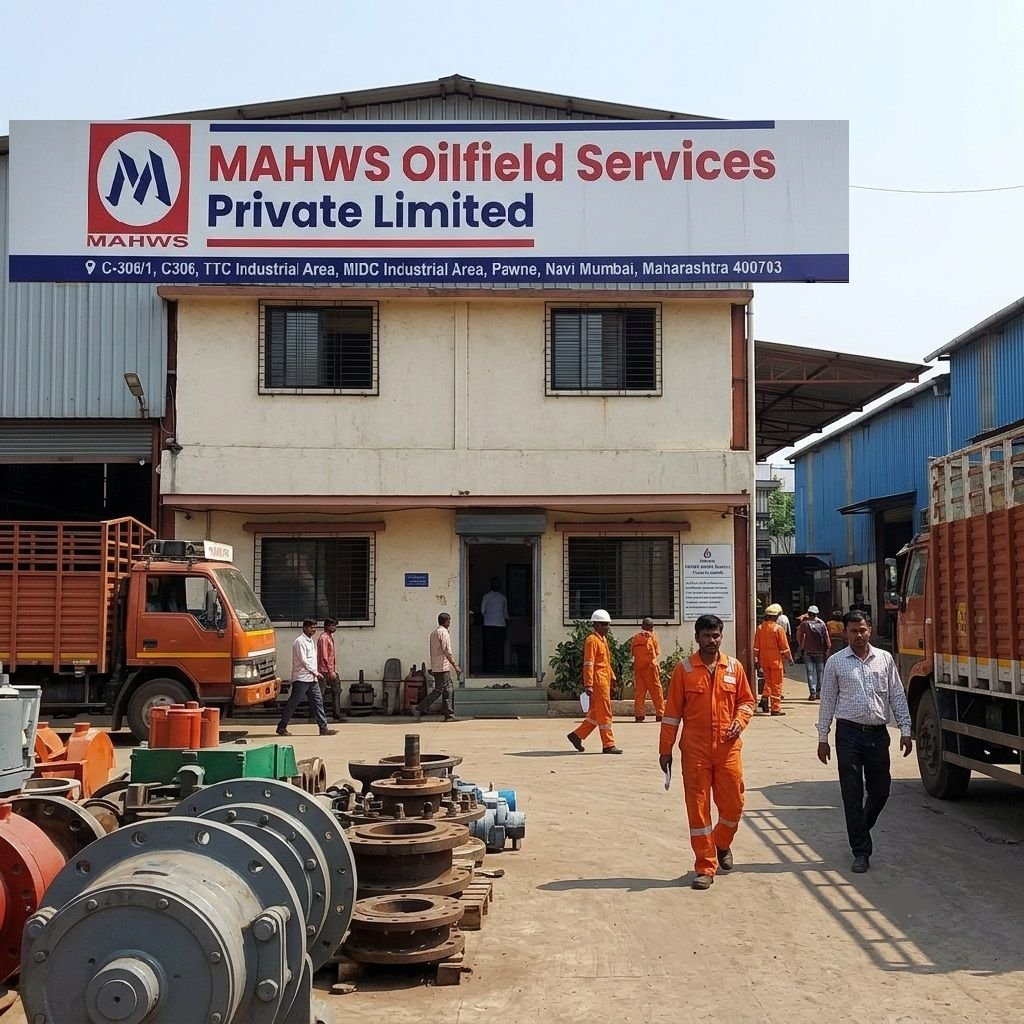
Certification becomes most valuable when it changes the way people work.
For MAHWS Oilfield Services Private Limited, an ISO 9001-oriented quality-management approach can provide a framework for organizing business processes around customer requirements, competence, documentation, risk management, monitoring and continual improvement.
Before formal systems become established, many organizations depend heavily on individual knowledge. An experienced employee knows how to handle a particular task. A supervisor remembers how a previous project was completed. A manager knows which supplier can respond quickly.
Such knowledge is useful, but it can create dependency.
A structured quality system attempts to convert individual knowledge into organizational knowledge.
Procedures can be documented. Responsibilities can be defined. Records can be maintained. Training requirements can be identified. Customer requirements can be reviewed before work begins. Problems can be recorded and analyzed.
This transformation is particularly important in technical service organizations.
Consider a typical industrial assignment. A customer communicates a requirement. The company reviews the requirement. Personnel are selected. Technical information is evaluated. Equipment and resources are identified. Work is planned. The assignment is performed. Results are checked. Documentation is completed. Customer feedback is considered.
Each step can influence the final quality of the service.
A weakness at any stage may create problems later.
An ISO 9001-based system encourages organizations to consider these connections.
For Babaloo Kumar Rajbhar, working within such a structured environment could strengthen the connection between personal competence and company procedures.
His IECEx personal competence certification could serve as evidence of specialized knowledge, while the organizational quality system could provide the framework within which that competence is applied.
This combination is valuable.
A qualified person working without a structured process may produce inconsistent results. A sophisticated process operated by unqualified personnel may also fail. Quality comes from the interaction between capable people and capable systems.
The management of competence is therefore an important part of organizational development.
The company can identify which activities require specialized knowledge, determine who is qualified to perform them, identify training needs and maintain appropriate records. This creates greater visibility over human resources.
Such practices can also improve succession planning.
If knowledge remains inside the mind of one person, replacing that person becomes difficult. If knowledge is documented and supported through training, the organization becomes more resilient.
For a growing company, resilience is essential.
Customers do not only judge companies when everything goes well. They also judge them when a problem occurs. A mature organization needs mechanisms for identifying nonconformities, determining causes, implementing corrective actions and checking whether those actions were effective.
This creates a learning cycle.
A mistake becomes information.
A customer complaint becomes an opportunity to understand expectations.
An audit observation becomes an opportunity to strengthen a process.
A training gap becomes an opportunity to improve competence.
This is the essence of continual improvement.
The certification journey associated with Babaloo Kumar Rajbhar can therefore be positioned within this larger philosophy of improvement.
His professional qualification supports competence at the individual level. ISO 9001 principles support consistency at the organizational level.
Together, they can help create confidence.
For customers, confidence comes from knowing that the organization has competent people and controlled processes.
For employees, confidence comes from knowing what is expected.
For management, confidence comes from having records and indicators that help determine whether processes are working.
For auditors, confidence comes from objective evidence.
For business partners, confidence comes from professional discipline.
The result can be a gradual change in organizational culture.
Quality stops being the responsibility of a single quality department and becomes part of normal work.
An engineer thinks about quality while planning.
A technician thinks about quality while executing.
A supervisor thinks about quality while verifying.
Management thinks about quality while allocating resources.
The customer experiences quality through consistent service.
This cultural shift is one of the most important forms of growth after certification.
A certificate displayed on a wall may create an impression. A quality culture creates a lasting organizational capability.
For MAHWS Oilfield Services Private Limited, the professional development of Babaloo Kumar Rajbhar can therefore be seen as one element in the creation of such a capability.
The journey from certification to growth is not automatic.
It requires daily application.
But once applied consistently, quality principles can become embedded in the company’s identity.
#ISO9001Certification
Chapter 4 – From Individual Recognition to Corporate Credibility
A company’s reputation is built through repeated interactions.
One successful project can create satisfaction. Several successful projects can create trust. A long history of consistent performance can create reputation.
For an industrial service company, reputation is particularly important because customers are often making decisions involving operational continuity, safety, technical competence and business risk.
The professional credentials of key personnel can contribute to this reputation.
Babaloo Kumar Rajbhar’s IECEx Personal Competence Certification provides a meaningful component of that professional profile. The certification associated with IECEx OD 504 identifies specialized competence connected with explosive atmospheres.
This can be important when the company communicates its technical capability to potential customers.
The certification does not mean that every service offered by the company is automatically covered by the certificate. Instead, it provides a specific form of professional recognition that can be considered alongside experience, procedures, resources and other qualifications.
This distinction is important because credible companies avoid exaggeration.
Professional trust grows when claims match evidence.
An organization that communicates clearly about its scope, competence and capabilities can create stronger relationships than one that makes broad unsupported claims.
This principle aligns naturally with quality management.
ISO 9001 emphasizes customer focus and the consistent ability to provide products and services meeting applicable requirements. Therefore, corporate credibility is not simply about marketing. It is supported by actual processes.
For MAHWS Oilfield Services Private Limited, certification could support a more professional approach to company presentations, proposals, client communications and technical documentation.
Instead of saying only that the organization has experienced personnel, the company can describe the relevant qualifications and responsibilities more precisely.
Instead of making vague statements about quality, the company can explain how quality is controlled.
Instead of simply promising timely service, it can demonstrate planning and monitoring processes.
Such changes can influence how potential customers perceive the organization.
Industrial buyers frequently examine documentation before awarding work. They may ask about personnel qualifications, quality systems, safety practices, previous experience and technical capability.
A company that has developed its documentation and competence structure is better prepared for such conversations.
The impact of certification can also extend internally.
Employees become aware that professional competence is valued. Management becomes more conscious of maintaining records. Training becomes more systematic. Project documentation becomes more organized.
These internal changes eventually become visible externally.
A well-prepared proposal communicates professionalism.
A clear technical report communicates professionalism.
A properly maintained record communicates professionalism.
A competent response to a technical question communicates professionalism.
Every interaction becomes part of the company’s reputation.
For Babaloo Kumar Rajbhar, this creates an interesting connection between personal development and company development.
His certification contributes to his own professional identity, but the organization can also benefit when his competence is integrated into its broader systems.
This is how individual capability can become organizational capability.
The company can use lessons learned from specialized work to improve training, procedures and project planning. Other employees can learn from experienced professionals. New personnel can be introduced to established methods.
Over time, the organization becomes less dependent on isolated expertise and more capable of developing expertise across its workforce.
This is a major step in organizational maturity.
The period from 2022 to 2027 can therefore be seen as an important window for maintaining and strengthening professional credibility.
Certification should be supported by continuous learning, proper implementation and evidence of actual competence.
The true value of a certification is demonstrated through behavior.
A certificate may open a conversation.
Competence can win confidence.
Consistent performance can build a relationship.
And sustained quality can create long-term business value.
For MAHWS Oilfield Services Private Limited, these stages represent a potential pathway from certification toward stronger corporate credibility.
#IECExCertification
Chapter 5 – Quality as a Foundation for Customer Trust
Courtesy: The Navy Quora
Customers are at the centre of every sustainable business.
For an oilfield-services organization, customer expectations can be complex. Customers may require technical expertise, responsiveness, accurate documentation, safety awareness, competent personnel and adherence to agreed requirements.
A quality-management system can help organize these expectations.
ISO 9001’s customer-focused philosophy encourages organizations to understand requirements and evaluate whether they can consistently meet them.
This begins before work starts.
The company must understand what the customer actually needs.
Are the technical requirements clear?
Are there applicable standards?
Are competent personnel available?
Are resources sufficient?
Are there special site conditions?
Are documentation requirements understood?
Are timelines realistic?
These questions can prevent misunderstandings.
For Babaloo Kumar Rajbhar, specialized competence adds another dimension to this process. When a project involves explosive-atmosphere considerations, the competence of the personnel involved becomes particularly important.
The company’s ability to identify suitable personnel for appropriate assignments can strengthen customer confidence.
Customer trust is rarely created through one action.
It develops through a series of experiences.
A customer sends an inquiry and receives a clear response.
The proposal accurately reflects the scope.
The personnel arrive prepared.
The work is performed according to agreed requirements.
Records are completed.
Issues are communicated promptly.
The final deliverables are organized.
The customer receives appropriate follow-up.
Each interaction adds another layer to the relationship.
Quality systems can support this consistency.
They create processes that reduce dependence on memory and personal habits. They encourage organizations to document important information and review performance.
For a growing company, consistency becomes increasingly important.
When the number of customers increases, informal methods can become difficult to manage. Different customers may have different expectations. More projects may run simultaneously. More personnel may become involved.
Without structure, complexity can produce errors.
With structure, complexity can be managed more effectively.
This is one reason certification can be a turning point in an organization’s development.
The company begins to think in terms of processes rather than isolated activities.
Sales becomes connected with operations.
Operations becomes connected with competence.
Competence becomes connected with training.
Training becomes connected with records.
Records become connected with audits.
Audits become connected with improvement.
The organization becomes a system.
Babaloo Kumar Rajbhar’s certification can be positioned within this system as an example of how specialized personal competence can support service quality.
It also creates an opportunity for knowledge transfer.
A professional who has developed specialized knowledge can contribute to internal awareness programs, mentoring and technical discussions. The organization can gradually develop a stronger technical culture.
This is particularly valuable in industries where knowledge has practical consequences.
Customer trust also depends on honesty.
A responsible organization should communicate the precise scope of its certifications rather than treating certification as a universal endorsement of every activity.
Such transparency can actually strengthen credibility.
When customers see that a company understands both its capabilities and its limitations, they are more likely to trust its professional judgment.
This is the type of culture that can emerge when quality principles are taken seriously.
The ultimate goal is not merely to satisfy a checklist.
The goal is to provide reliable service.
Certification becomes valuable when it supports that goal.
For MAHWS Oilfield Services Private Limited, the combination of quality-management principles and recognized professional competence can therefore contribute to a stronger customer-focused identity.
The journey is continuous.
Every project provides another opportunity to demonstrate quality.
Every customer interaction provides another opportunity to build trust.
Every problem provides another opportunity to improve.
And every competent professional contributes to the company’s reputation.
#IECExOD504
Chapter 6 – Building a Culture of Safety, Responsibility and Learning
Industrial growth without responsibility is incomplete growth.
In sectors connected with oilfield services and explosive atmospheres, safety awareness and technical competence are especially important. Organizations need people who understand why procedures exist and how those procedures relate to real workplace conditions.
This is where certification can influence organizational culture.
Babaloo Kumar Rajbhar’s IECEx personal competence certification provides a professional reference point for specialized knowledge. Within an organization, such competence can support a culture in which safety is treated as part of technical quality rather than as a separate administrative activity.
The distinction is important.
Quality and safety often intersect.
Poor planning can affect both quality and safety.
Insufficient competence can affect both quality and safety.
Inadequate documentation can affect both quality and safety.
Weak communication can affect both quality and safety.
Therefore, strengthening the quality system can also support a more responsible working culture.
An ISO 9001-based organization can identify competence requirements, maintain training records, review process performance and address problems systematically.
These practices can create greater awareness.
Employees begin to understand that they are accountable for the quality of their work.
Supervisors understand the importance of verification.
Managers understand the importance of resources.
Technical personnel understand the importance of staying within their competence.
Customers receive clearer communication.
This creates a professional environment.
Learning is another important part of this culture.
Industrial standards and technologies do not remain static. Professionals need to maintain their knowledge. A certification valid through 2027 should therefore be viewed as a period during which continued competence and professional development remain important.
For Babaloo Kumar Rajbhar, the certification milestone can serve as a reminder that competence must be maintained through practical experience, awareness and continuous learning.
The company can support this through internal training, technical discussions, lessons-learned sessions and controlled documentation.
A strong learning culture also changes the way organizations respond to mistakes.
In a weak culture, people may hide problems because they fear blame.
In a mature quality culture, problems are identified because they provide information.
If a process fails, the organization asks why.
Was the requirement misunderstood?
Was training insufficient?
Was a procedure unclear?
Was equipment unavailable?
Was communication incomplete?
Was supervision inadequate?
Was the risk underestimated?
The objective is not simply to identify who made a mistake. It is to understand why the system allowed the mistake to occur and how recurrence can be prevented.
This approach supports continual improvement.
For MAHWS Oilfield Services Private Limited, such a culture can become an important foundation for sustainable development.
As organizations grow, they encounter new challenges.
More employees mean more communication requirements.
More customers mean more documentation.
More projects mean greater planning complexity.
More technical assignments mean greater competence requirements.
A quality system provides a framework for managing these challenges.
Babaloo Kumar Rajbhar’s professional journey can therefore be connected with a broader organizational message: technical competence must be respected, maintained and integrated into everyday operations.
This message can influence younger employees.
A new employee entering the organization can see that professional certification has value. The employee may become more motivated to develop specialized knowledge.
Over time, this creates a cycle.
Competent employees improve services.
Improved services increase customer confidence.
Customer confidence creates opportunities.
Opportunities create demand for more competent employees.
The organization invests further in training.
The cycle continues.
This is how certification can contribute to growth beyond the certificate itself.
The most important result may be the development of a professional mindset.
People begin asking better questions.
They plan more carefully.
They document more accurately.
They communicate more clearly.
They learn from experience.
They take responsibility.
And they understand that industrial quality is not created by paperwork alone.
It is created by people who consistently do the right work in the right way.
#PersonalCompetenceCertification
Chapter 7 – Turning Certification into Business Opportunities
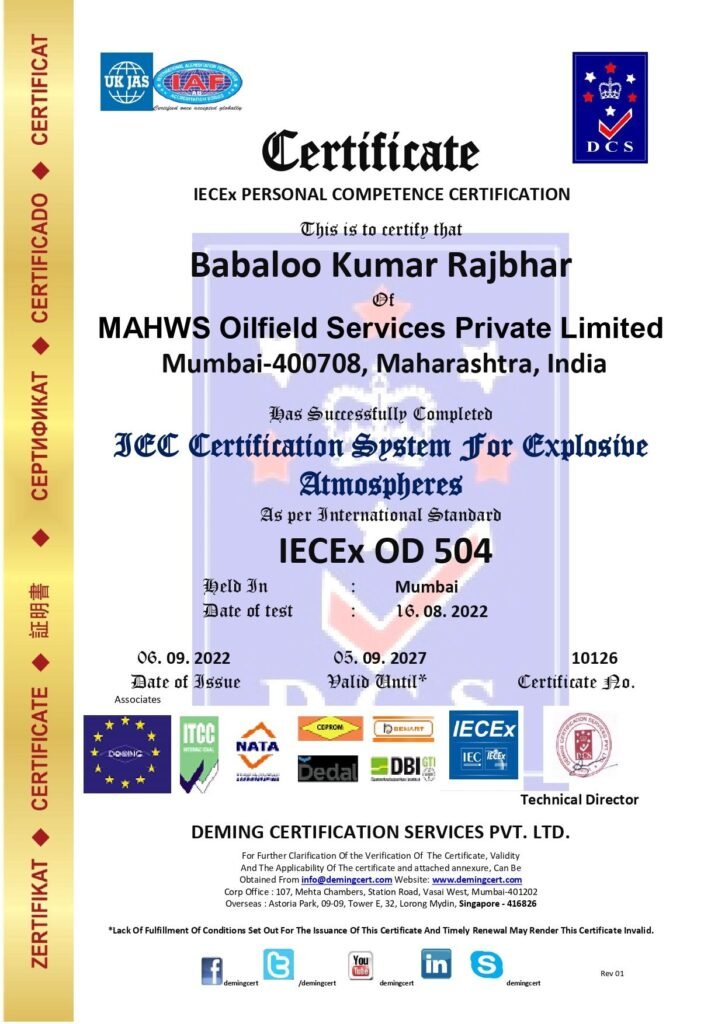
Certification does not guarantee business growth, but it can strengthen the foundation from which business opportunities are pursued.
For MAHWS Oilfield Services Private Limited, professional credentials can be useful when entering conversations with industrial customers, contractors, engineering organizations and other businesses that evaluate technical competence.
The certification associated with Babaloo Kumar Rajbhar provides a specific example of specialized professional capability.
When incorporated appropriately into company profiles and proposals, such credentials can help demonstrate that the organization has personnel with recognized competence relevant to particular technical activities.
This can support a more professional business-development process.
Before certification, a company may rely heavily on statements such as “experienced staff” or “quality service.” After developing formal competence and quality systems, the organization can provide more structured evidence.
The conversation changes.
Instead of simply discussing experience, the company can discuss qualifications.
Instead of only describing quality, it can describe processes.
Instead of making general claims about safety, it can explain competence and procedural controls.
This does not eliminate competition.
Industrial markets remain competitive.
Customers compare pricing, experience, technical capability, responsiveness, resources and reputation.
However, professional certification can become one element within a broader value proposition.
For an oilfield-services company, specialization can be particularly important.
Organizations that attempt to serve every possible market may struggle to communicate a clear identity. A company that develops recognized competence in defined technical areas can communicate its capabilities more precisely.
Babaloo Kumar Rajbhar’s professional certification can therefore contribute to a story of specialization.
The company’s location in Pawne, Navi Mumbai also places it within a substantial industrial ecosystem. Being located in an industrial environment can support access to industrial customers, technical professionals, suppliers and service networks.
Business development can then build upon technical credibility.
A potential customer may first discover the company through a professional reference.
The customer may then review its certifications.
The next step may involve a technical discussion.
Then a quotation.
Then project execution.
Finally, successful performance can create repeat business.
This sequence demonstrates why certification should not be considered an isolated marketing tool.
The real opportunity begins after the customer becomes interested.
The organization must deliver.
Quality systems help at this stage.
A company that has established procedures for contract review, planning, competence, service delivery, documentation, customer feedback and corrective action is better positioned to manage business growth systematically.
As project numbers increase, these systems become increasingly important.
A company can win ten projects and still struggle if it cannot manage them consistently.
Sustainable growth requires operational capacity.
This is where the connection between ISO 9001 principles and professional certification becomes particularly valuable.
The personal competence of Babaloo Kumar Rajbhar can support technical capability.
The quality-management framework can support organizational consistency.
Business-development efforts can connect those capabilities with market opportunities.
Customer satisfaction can then convert individual projects into longer-term relationships.
This is the pathway from certification to potential business growth.
It is important not to assume that certification alone produced any particular increase in revenue, employees or customers unless verified records exist. A responsible growth story should distinguish between documented facts and the potential business benefits of professional certification.
What can reasonably be said is that certification provides evidence that can strengthen professional positioning.
The organization can build upon that evidence through performance.
This is a healthier approach to business development.
Instead of promising everything, the company demonstrates what it can do.
Instead of competing only on price, it can compete on competence and reliability.
Instead of treating quality as a document, it can use quality as part of its business strategy.
For MAHWS Oilfield Services Private Limited, this approach creates a pathway toward sustainable market development.
And for Babaloo Kumar Rajbhar, professional certification becomes part of a larger story: the story of transforming technical competence into professional credibility and using that credibility to support organizational growth.
#ExplosiveAtmospheres
Chapter 8 – Strengthening Documentation, Audits and Continual Improvement
One of the less visible benefits of a mature quality system is improved organizational memory.
Every organization learns from experience, but without documentation, much of that learning can disappear.
A project is completed.
A problem occurs.
Someone finds a solution.
The customer is satisfied.
The team moves on.
Months later, the same problem appears again because nobody documented the lesson.
A structured quality system attempts to prevent this loss of organizational knowledge.
For MAHWS Oilfield Services Private Limited, documentation can support project planning, technical activities, competence management, customer communication, inspection and continual improvement.
The purpose of documentation is not to create unnecessary paperwork.
Good documentation should make work clearer.
A procedure should explain how an activity is controlled.
A record should provide evidence that an activity occurred.
A training record should demonstrate competence development.
An audit report should identify whether processes are functioning as intended.
A corrective-action record should demonstrate how a problem was addressed.
This evidence becomes particularly important as the organization grows.
Management cannot personally observe every activity.
Therefore, reliable records help management understand what is happening.
Audits provide another important mechanism.
An internal audit can examine whether documented processes are actually being followed.
It can reveal gaps between policy and practice.
For example, a procedure may require competence records to be maintained, but the organization may discover that records are incomplete. An audit provides an opportunity to correct the issue before it becomes a larger problem.
Similarly, customer feedback can be analyzed to identify recurring issues.
If customers repeatedly request clearer reports, the company can improve its reporting format.
If project teams repeatedly experience delays due to incomplete information, the contract-review process can be strengthened.
If employees require additional technical knowledge, training can be planned.
This is the continual-improvement cycle.
For Babaloo Kumar Rajbhar, specialized competence can also contribute to this learning process.
Technical experience can help identify where procedures need clarification or where employees require additional awareness.
Knowledge can be transferred.
Questions can be discussed.
Lessons can be recorded.
Processes can be improved.
This is how personal competence becomes organizational knowledge.
The period between the 2022 certification issue and the stated 2027 validity can therefore be viewed as an extended opportunity for maintaining and developing professional capability.
The organization can use this period to strengthen internal systems and prepare for future requirements.
A mature company does not wait until certification renewal to think about competence.
It maintains competence continuously.
Similarly, it does not wait for an external audit to discover weaknesses.
It uses internal monitoring to identify them earlier.
This mindset changes the relationship between certification and management.
Certification becomes part of an ongoing improvement program rather than an occasional event.
Management meetings can review quality objectives.
Customer complaints can be analyzed.
Training needs can be identified.
Audit findings can be tracked.
Corrective actions can be verified.
Supplier performance can be monitored.
Project outcomes can be reviewed.
All these activities provide information.
Information supports decisions.
Decisions support improvement.
Improvement supports growth.
This is one of the strongest ways in which certification can influence an organization.
The certificate itself does not perform work.
People perform work.
Systems organize work.
Records demonstrate work.
Management reviews results.
Customers judge outcomes.
Together, these elements create organizational capability.
For MAHWS Oilfield Services Private Limited, strengthening this capability can help the company prepare for increasingly complex customer expectations.
And for Babaloo Kumar Rajbhar, continued professional development can ensure that the personal competence recognized in 2022 remains relevant and valuable throughout the certification period.
The result is a company that does not merely hold certifications but learns from them.
That distinction can become an important competitive advantage.
#OilfieldServices
Chapter 9 – The Human Side of Organizational Growth
Every organization is ultimately built by people.
Machines, procedures, certificates, buildings and technology are important, but people make decisions, communicate with customers, solve problems and perform technical work.
The story of Babaloo Kumar Rajbhar and MAHWS Oilfield Services Private Limited is therefore also a story about people.
Professional certification can influence how individuals see themselves.
A person who receives formal recognition of competence may gain greater confidence in his or her professional identity. That confidence can encourage further learning and responsibility.
For Babaloo Kumar Rajbhar, the 2022 IECEx personal competence certification can be viewed as one milestone in this professional journey.
It represents recognition of specialized competence within the defined certification framework.
But professional development does not stop there.
The next stage is application.
Knowledge becomes valuable when it is used responsibly.
A competent professional contributes not only through personal work but also through communication with colleagues.
Experience can be shared.
Junior employees can learn.
Questions can be discussed.
Errors can be prevented.
The organization becomes stronger.
This creates an internal multiplier effect.
Suppose one professional learns an important lesson from a project. If that lesson remains with the individual, only one person benefits. If the lesson is documented and shared, many people can benefit.
Quality management encourages this type of organizational learning.
Competence management also becomes important as the workforce develops.
The company can identify which roles require specific knowledge.
Employees can receive appropriate training.
Responsibilities can be assigned according to competence.
Supervisors can monitor performance.
This creates a more rational approach to workforce development.
For a growing industrial company, such structure can make recruitment and training more effective.
New employees need to understand the organization’s quality culture.
They need to know how documents are controlled.
They need to understand customer requirements.
They need to know who is responsible for technical decisions.
They need to understand when to seek assistance.
They need to know the importance of reporting problems.
These habits create professionalism.
Leadership also plays a major role.
Management must demonstrate that quality is more than a slogan.
If management demands proper documentation but does not provide sufficient time to complete it, the system becomes ineffective.
If management expects competence but does not support training, employees may struggle.
If management values safety but prioritizes speed over procedure, employees receive conflicting messages.
Therefore, leadership commitment is essential.
For MAHWS Oilfield Services Private Limited, the growth journey associated with certification can be strengthened when leadership, technical personnel and support staff share the same quality objectives.
Everyone needs to understand why the system exists.
The purpose is not to satisfy auditors.
The purpose is to deliver reliable service.
This human-centered view also changes how success is measured.
Success is not only revenue.
It can include employee competence.
Customer satisfaction.
Reduced errors.
Better documentation.
Improved response time.
Successful project completion.
Stronger professional reputation.
Better internal communication.
These improvements may eventually contribute to commercial growth, but their immediate value is organizational capability.
Babaloo Kumar Rajbhar’s professional journey therefore represents more than an individual certificate.
It represents the role that qualified professionals can play in building organizations.
One competent person can influence a project.
A group of competent people can influence a department.
A competent organization can influence customer confidence.
A trusted organization can develop long-term business relationships.
This is how individual growth becomes corporate growth.
The journey is not necessarily dramatic.
Often, organizational growth happens through hundreds of small improvements.
A better checklist.
A clearer report.
A better training session.
A more accurate customer requirement review.
A faster response to a complaint.
A better technical decision.
A more disciplined audit.
A stronger corrective action.
Each improvement appears small.
Together, they create maturity.
That maturity becomes the real legacy of certification.
#QualityManagement
Chapter 10 – Looking Toward 2027 and Beyond: A Continuing Journey of Growth
The certification story of Babaloo Kumar Rajbhar and MAHWS Oilfield Services Private Limited reaches an important reference point with the certification issued in 2022 and stated as valid through 2027.
But certification validity should never be confused with the end of development.
The future belongs to organizations that continue learning.
For MAHWS Oilfield Services Private Limited, the years following certification can represent an opportunity to strengthen technical competence, improve quality systems, develop employees and deepen customer relationships.
The company can build upon the foundation created through quality-oriented processes and professional competence.
The first priority should remain competence.
Industrial technologies and customer expectations continue to evolve. Professionals working in specialized environments must maintain their knowledge and remain aware of applicable requirements.
Babaloo Kumar Rajbhar’s certification provides a foundation, but continuous professional development can make that foundation stronger.
The second priority is consistency.
A company earns trust when it delivers reliable service repeatedly.
One successful project is encouraging.
A history of successful projects is much more powerful.
Consistency requires processes.
It requires competent employees.
It requires leadership.
It requires customer feedback.
It requires corrective action.
The third priority is customer relationships.
Long-term customers are built through trust.
Trust grows when organizations communicate honestly, respond responsibly and deliver according to commitments.
A quality-management approach can help structure this relationship.
The fourth priority is organizational learning.
Every project should provide information.
What worked?
What did not work?
What could be improved?
What did the customer appreciate?
What created delay?
What technical issue required additional attention?
What training would help the team?
These questions can turn experience into knowledge.
The fifth priority is responsible business growth.
Growth should not be pursued at the expense of quality.
Winning more projects is useful only when the organization has the capacity to deliver them properly.
Therefore, expansion should be matched with competence, resources, processes and management capability.
This is where the lessons of ISO 9001 become particularly valuable.
A quality system encourages organizations to think about processes and their interactions.
Sales affects operations.
Operations affects customer satisfaction.
Competence affects service quality.
Supplier performance affects operations.
Documentation affects traceability.
Corrective action affects continual improvement.
Management decisions affect every process.
The company becomes an interconnected system.
Within that system, Babaloo Kumar Rajbhar’s professional competence can continue to contribute to the technical identity of MAHWS Oilfield Services Private Limited.
The future story can therefore be one of increasing maturity.
A company that began by establishing stronger quality practices can gradually develop more sophisticated systems.
A professional who achieved recognized competence can continue expanding knowledge.
Employees can develop new capabilities.
Customers can receive more consistent services.
The company’s professional profile can become stronger.
The industrial environment around Navi Mumbai can provide opportunities for organizations capable of delivering specialized and dependable services.
Yet the most important lesson is simple.
Certification is not the destination.
It is a milestone.
The real value appears in what happens afterward.
If certification encourages better planning, it creates value.
If it encourages better competence management, it creates value.
If it improves documentation, it creates value.
If it strengthens customer confidence, it creates value.
If it promotes continual learning, it creates value.
If it helps professionals take greater responsibility for their work, it creates value.
For Babaloo Kumar Rajbhar, the 2022 certification can therefore be remembered as a significant chapter in a continuing professional journey.
For MAHWS Oilfield Services Private Limited, it can represent one stage in the development of a stronger quality culture.
And looking beyond 2027, the objective should not simply be to obtain another certificate.
The objective should be to become a better organization.
A better organization understands its customers.
A better organization develops its people.
A better organization controls its processes.
A better organization learns from mistakes.
A better organization respects competence.
A better organization communicates honestly.
A better organization continually improves.
This is the true meaning of sustainable growth.
The story of Babaloo Kumar Rajbhar and MAHWS Oilfield Services Private Limited is therefore not only a story about certification. It is a story about the connection between competence, quality, responsibility, customer confidence and organizational development.
The certification issued in 2022 provides a documented milestone.
The years that follow provide the opportunity to turn that milestone into lasting capability.
And the ultimate measure of success will be found not in the certificate itself, but in the quality of work performed, the trust earned from customers, the knowledge developed by employees and the continuous improvement achieved by the organization.
That is the journey from certification to growth.
That is the journey from individual competence to organizational capability.
And that is the continuing story of Babaloo Kumar Rajbhar and MAHWS Oilfield Services Private Limited.
Certification Profile Summary
Client: Babaloo Kumar Rajbhar – MAHWS Oilfield Services Private Limited
Location: C-306/1, C306, TTC Industrial Area, MIDC Industrial Area, Pawne, Navi Mumbai, Maharashtra – 400703
Certification System: IEC Certification System for Explosive Atmospheres
Certification Reference: IECEx OD 504
Certification: IECEx Personal Competence Certification
Issue Year: 2022
Validity Stated: 2027
Key Themes of the Growth Journey
- Development of professional competence
- Stronger quality-management practices
- Greater focus on customer requirements
- Improved technical credibility
- Better documentation and process discipline
- Continuous employee learning
- Safety-conscious industrial practices
- Stronger organizational knowledge
- Improved readiness for technical opportunities
- Sustainable growth through continual improvement
#IndustrialSafety
#IndustrialQuality #TechnicalCompetence #QualityAssurance #OilAndGasIndustry #NaviMumbaiIndustries
Take the Next Step Today
Don’t wait to enhance your business’s quality and efficiency. Partner with Sanatan Dharma Accreditation Boards and experience the transformation that comes with expert consultancy and training. Contact us today to learn more about how we can help you achieve your business goals. Reach out via phone at +91-8668266780, visit our website at sanatanboards.com, or email us at info@sanatanboards.com Let us be your guide on the journey to excellence and innovation.





