
Alina Enterprise
Table of Contents
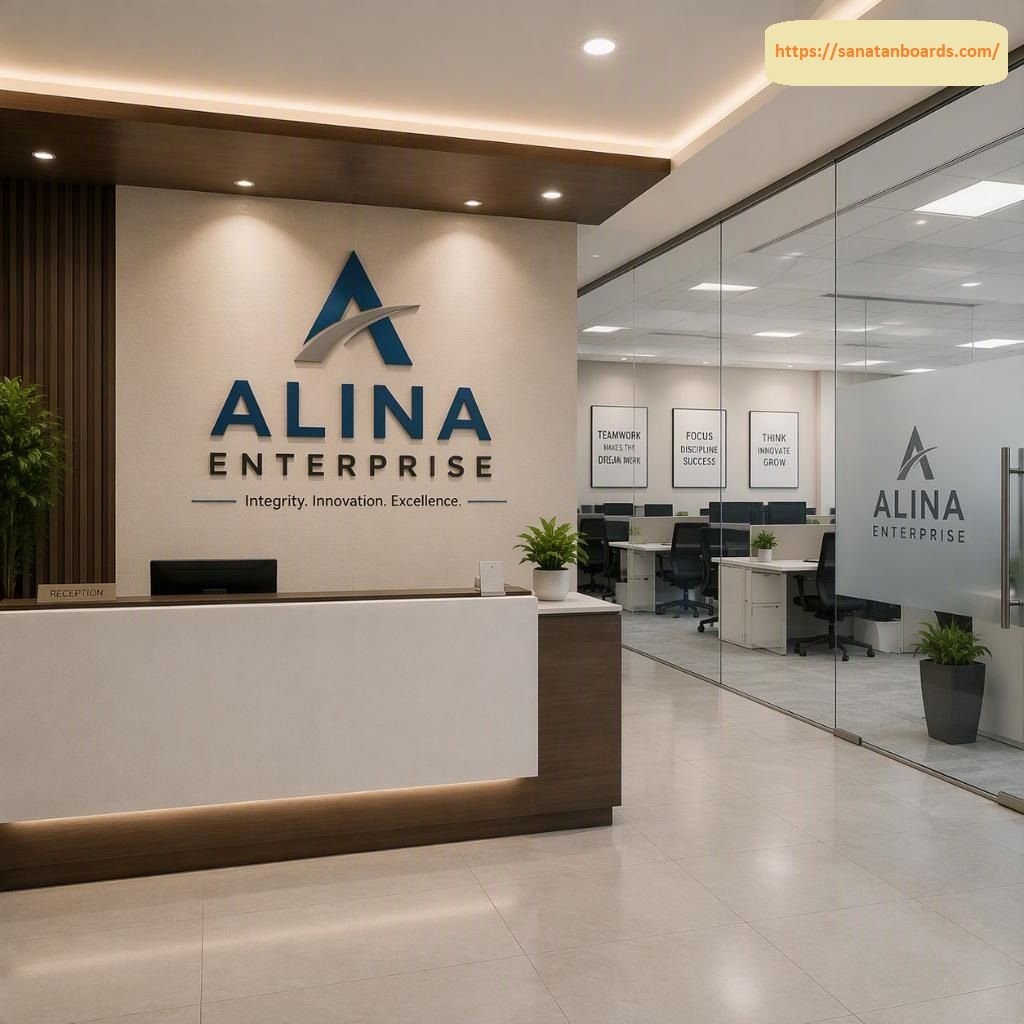
Chapter 1 — The Beginning of Alina Enterprise: Vision, Business Foundation and the Road Toward Quality
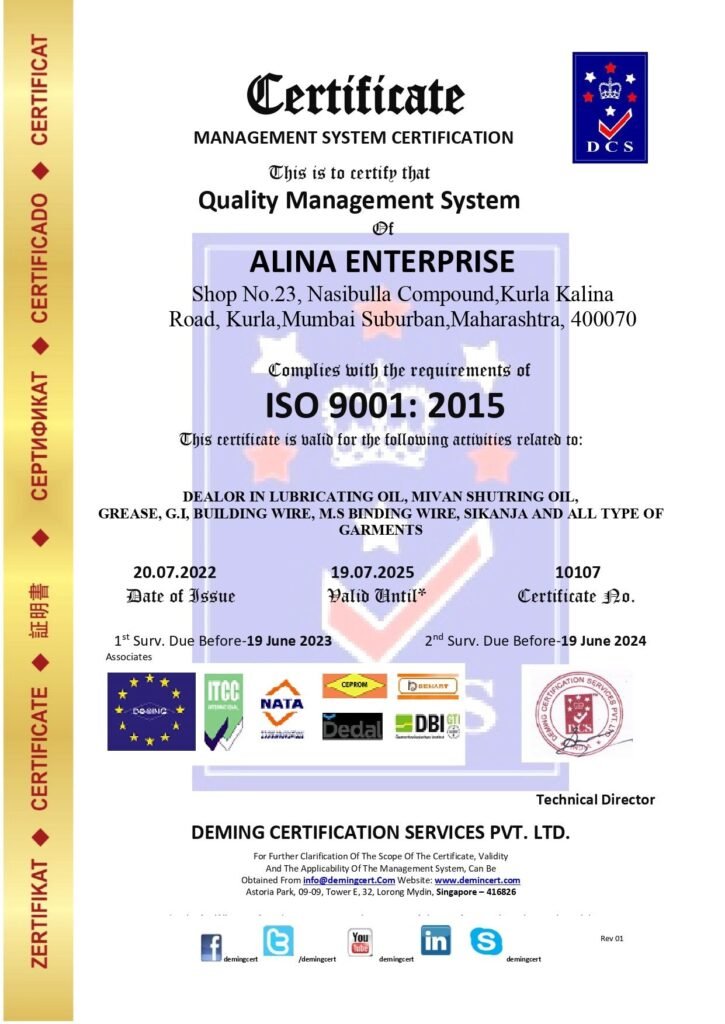
Alina Enterprise began its journey with a practical understanding of the needs of customers in Mumbai’s highly competitive commercial and construction-related marketplace. Operating from Shop No. 23, Nasibulla Compound, Kurla Kalina Road, Kurla, Mumbai Suburban, Maharashtra – 400070, the enterprise developed its business around the supply and dealing of a diverse range of industrial, construction, electrical, lubrication and garment-related products. Its business scope included lubricating oil, Mivan shuttering oil, grease, G.I. products, building wire, M.S. binding wire, sikanja and various types of garments.
From the beginning, the promoter’s approach was based on understanding customer requirements and maintaining dependable relationships with buyers and suppliers. In a market where customers often require materials quickly and expect consistency in product quality, availability and service, Alina Enterprise had to manage several responsibilities simultaneously. It needed to identify suitable products, communicate accurately with customers, coordinate procurement, maintain stock, manage documentation and ensure that supplied materials matched customer expectations.
The diversity of products itself created an important management challenge. Lubricating oil and grease have different characteristics from building wire or M.S. binding wire. Garments require another type of quality consideration, while G.I. products and sikanja may involve different specifications and applications. Therefore, the company’s development was not simply about selling more products. It was also about creating a systematic approach to handling different categories of customer requirements.
As the business developed, the promoter increasingly recognized that long-term growth required more than personal relationships and day-to-day commercial experience. A growing enterprise needs processes that can continue working consistently even when the number of customers, suppliers, products and transactions increases. This understanding created the foundation for the company’s movement toward a formal Quality Management System.
For a business such as Alina Enterprise, quality management could be connected to many everyday activities. It could involve understanding customer requirements before accepting an order, selecting appropriate suppliers, checking incoming materials, maintaining suitable records, controlling documentation, handling customer complaints and reviewing the effectiveness of business processes.
The decision to pursue ISO 9001:2015 certification therefore represented an important stage in the company’s organizational development. The certification was issued in 2022 and was valid through 2025. Rather than viewing certification merely as a certificate to display, the quality-management approach could be used as a framework for bringing greater discipline to business operations.
The promoter’s role was particularly significant during this period. In a growing enterprise, the promoter often acts as the central link between customers, suppliers, employees and operational decisions. Experience may allow the promoter to make quick decisions, but systematic processes help ensure that those decisions can be communicated and repeated consistently.
ISO 9001:2015 introduced a structured perspective toward quality management. For Alina Enterprise, this meant thinking about the business in terms of processes and their interactions rather than treating every customer order as an isolated transaction. Customer requirements, purchasing, product handling, delivery, documentation and feedback could be viewed as connected parts of one quality-oriented system.
The certification journey also encouraged greater awareness of responsibilities. When business activities are documented and reviewed, it becomes easier to identify where delays occur, where misunderstandings arise and where improvements can be made. This can be particularly valuable for a diversified trading enterprise because even a small error in product identification, quantity, specification or delivery coordination can affect customer satisfaction.
The Kurla location also placed Alina Enterprise within a commercially active environment. Mumbai’s business ecosystem creates opportunities but also significant competition. Customers can compare suppliers, negotiate prices and expect quick responses. In such an environment, reliability can become an important differentiating factor.
The promoter’s growth journey after certification can therefore be understood as a transition from an experience-driven business model toward a more organized and process-oriented model. The objective was not to abandon the flexibility that helped the enterprise grow, but to support that flexibility with greater consistency.
ISO 9001:2015 also brought attention to continual improvement. Quality management is not intended to be a one-time exercise. Customer expectations change, suppliers change, product requirements change and markets evolve. A business that reviews its processes regularly can identify opportunities to improve its performance.
For Alina Enterprise, certification in 2022 became an important milestone in this journey. It provided a formal recognition of its Quality Management System and created a framework through which the promoter could strengthen operational discipline.
The story of Alina Enterprise after certification is therefore not simply the story of receiving an ISO certificate. It is the story of how a diversified enterprise could use quality-management principles to organize its activities, strengthen customer confidence, improve internal coordination and prepare itself for sustainable business development.
The certificate represented a milestone, but the larger achievement was the culture of systematic thinking behind it. For the promoter, quality became increasingly connected with everyday business decisions: understanding requirements, controlling processes, maintaining consistency, responding to problems and looking for ways to improve.
This foundation would become increasingly important as Alina Enterprise continued developing its market presence and managing a broader range of products and customer expectations.
#AlinaEnterprise
Chapter 2 — Understanding Customer Requirements and Building a Quality-Oriented Business Culture
The success of any trading and supply enterprise depends heavily on its ability to understand what customers actually require. For Alina Enterprise, this became particularly important because its product portfolio covered several different categories. A customer purchasing lubricating oil could have very different expectations from a customer purchasing building wire, M.S. binding wire, garments or other materials.
After the implementation of the Quality Management System, customer requirements could be approached in a more structured manner. Instead of relying solely on informal communication, the business could pay greater attention to product descriptions, quantities, specifications, delivery expectations and other relevant details before processing an order.
This approach supported the promoter’s broader objective of making Alina Enterprise more systematic. In a competitive market, customer satisfaction is influenced not only by price but also by whether the supplier delivers what was actually requested.
For example, a customer ordering lubricating oil may need a particular product type or quantity for a specific application. Similarly, Mivan shuttering oil may be required for construction-related activities where timely availability is important. Building wire and M.S. binding wire may have requirements relating to dimensions, quantity and application. Garments, meanwhile, can involve different considerations such as type, size, quantity and customer-specific expectations.
A quality-oriented process begins by capturing these requirements accurately.
The promoter’s experience remained important, but the Quality Management System encouraged a transition from relying entirely on individual memory toward maintaining appropriate records and controls. This could help reduce misunderstandings between customers, suppliers and internal personnel.
Another important area was communication. When a customer places an order, several activities may follow. The order needs to be understood, availability checked, purchasing or stock decisions made, dispatch arranged and customer communication maintained. If these activities are not coordinated, even a good product may result in an unsatisfactory customer experience.
The implementation of quality-management practices helped Alina Enterprise view these activities as connected stages of a process.
This process-based approach could also benefit supplier relationships. Since the company dealt with multiple categories of goods, supplier selection and purchasing decisions were important. A reliable supplier can support product consistency, timely availability and smooth customer service.
The company could therefore consider supplier performance in terms of quality, delivery, responsiveness and commercial reliability. Maintaining information about suppliers also provided a stronger foundation for future purchasing decisions.
For the promoter, this represented an important change in thinking. Instead of considering procurement simply as buying goods at an acceptable price, purchasing could be viewed as an important quality-management activity.
The same principle applied to incoming materials. Where appropriate, products could be checked against purchase requirements before being supplied to customers. Such controls can help identify discrepancies earlier in the process.
Documentation also became more meaningful. Records are often viewed as administrative work, but within a Quality Management System they provide evidence of what happened. Orders, purchase information, inspection details, customer communications, complaints and corrective actions can collectively help a business understand its performance.
For Alina Enterprise, better documentation could support continuity as the business grew. If an employee or business associate needed information about a previous transaction, records could provide a reference rather than requiring someone to depend entirely on memory.
This became especially relevant as the promoter’s responsibilities expanded. Business growth increases the number of decisions that need attention. A structured system can help distribute responsibilities and reduce dependence on one individual.
Quality culture also involves people. Employees need to understand that quality is not only the responsibility of management. A person handling an order, checking material, preparing an invoice, coordinating delivery or communicating with a customer can influence the customer’s experience.
The promoter could therefore use the Quality Management System as a way of creating greater awareness among people involved in the enterprise.
Another benefit of a quality-oriented culture was improved response to problems. Mistakes can occur in any business. The important question is how the organization responds to them. Instead of treating every problem as an isolated incident, the company could examine why it occurred and whether the underlying process needed improvement.
For example, if a product mismatch occurred, the organization could consider whether the original requirement was recorded correctly, whether purchasing information was accurate, whether incoming material was checked and whether dispatch documentation was clear.
This approach changes the focus from simply correcting the immediate problem to preventing recurrence.
The promoter’s journey after certification therefore involved a gradual shift toward process awareness. Customer service became connected with requirement identification, procurement, verification, documentation and feedback.
This created a stronger foundation for sustainable growth.
ISO 9001:2015 certification issued in 2022 provided external recognition of the company’s Quality Management System, but its greater practical value could come from how the principles were incorporated into daily activities.
As Alina Enterprise continued serving customers in Mumbai, quality became increasingly connected with reliability. The company could seek to build relationships in which customers knew that their requirements would be understood, processed and handled systematically.
The promoter’s vision was thus supported by a more organized operational culture—one where customer satisfaction, supplier performance, documentation, process control and continual improvement were treated as interconnected elements of business growth.
#ISO9001Certification
Chapter 3 — Strengthening Procurement, Supplier Coordination and Product Control

For Alina Enterprise, procurement was one of the most important operational functions because the company dealt in multiple categories of products. A trading enterprise can only satisfy its customers consistently when its supply chain is managed effectively.
The promoter therefore had to maintain relationships with different suppliers and ensure that the materials being sourced were appropriate for customer requirements. Lubricating oil, Mivan shuttering oil, grease, G.I. products, building wire, M.S. binding wire, sikanja and garments each required different purchasing considerations.
ISO 9001:2015 encouraged the company to look at procurement systematically. Supplier performance could be evaluated based on factors such as product conformity, delivery reliability, responsiveness and ability to meet requirements.
This created an opportunity for Alina Enterprise to develop stronger supplier relationships. Instead of treating every purchase as an independent commercial transaction, the company could build a more organized supplier-management approach.
The promoter’s experience in dealing with suppliers remained valuable. However, documented information could make supplier management more transparent. If a supplier consistently delivered the required materials on time and according to expectations, that performance could be recognized. If problems repeatedly occurred, the company could investigate whether corrective action or alternative sourcing was necessary.
Product control was another important consideration.
When a business handles multiple product categories, identification becomes critical. A customer needs to receive the right product in the right quantity and, where applicable, the right specification.
For Alina Enterprise, better identification and order-control practices could reduce the risk of confusion between similar products. This became particularly relevant when the volume of transactions increased.
Storage and handling could also influence product quality. Different materials require different considerations. Lubricants and oils need appropriate handling and storage conditions, while wire products and metal-related materials require organized physical management. Garments require protection from conditions that could affect their appearance or usability.
A systematic approach to storage could therefore help preserve product condition until delivery.
The promoter’s growing awareness of these details supported a broader shift from simply completing sales to managing the complete customer-service process.
The company’s Quality Management System also created an opportunity to review purchasing-related problems. If a customer complaint was connected to an incoming product, the organization could trace the issue back through purchasing information and supplier records.
Traceability, where applicable, could help identify the source of a problem and support corrective action.
This was important for business development because customer trust can be affected by how a supplier responds when something goes wrong. A company that acknowledges an issue, investigates it and takes appropriate action can demonstrate a commitment to quality.
Supplier communication also became more structured. Requirements could be communicated more clearly, reducing the possibility of misunderstanding.
The promoter could also use supplier feedback to improve purchasing decisions. If certain suppliers consistently provided better service, that information could contribute to future procurement planning.
As the business matured, purchasing could become more strategic.
Instead of purchasing only when a customer order arrived, the company could consider demand patterns, product availability and customer expectations. Better planning could help reduce unnecessary delays.
For a Mumbai-based enterprise operating in a competitive market, responsiveness can be important. Customers often want materials quickly, particularly when products are needed for ongoing construction, industrial or commercial activities.
The ability to coordinate supply efficiently could therefore become part of Alina Enterprise’s competitive strength.
Quality management also encouraged the promoter to consider risks. Every business faces operational risks. Supplier delays, incorrect materials, stock shortages, documentation errors and communication failures can affect customer satisfaction.
Identifying these risks allows management to consider preventive measures.
For example, maintaining information on alternative suppliers can reduce dependence on one source. Reviewing frequently demanded materials can support better stock planning. Clear customer-order documentation can reduce product-selection errors.
These practices do not eliminate every business problem, but they can make the organization more prepared.
The promoter’s growth journey was therefore closely connected with improving operational visibility. As more activities became documented and organized, it became easier to understand how the company was performing.
This also supported employee development. People working in procurement or stock handling could follow defined procedures rather than depending entirely on informal instructions.
The result was a business environment where quality became part of routine activity.
ISO 9001:2015 certification issued in 2022 served as an important milestone in formalizing this approach. The certification period through 2025 provided a framework within which Alina Enterprise could continue reviewing its processes and improving its operations.
For the promoter, this represented an evolution in management philosophy. Business success was increasingly understood not merely in terms of sales volume, but also in terms of process reliability, supplier coordination, customer satisfaction and the ability to learn from operational experience.
The company was building a stronger foundation for future growth—one purchase, one supplier relationship and one customer requirement at a time.
#ISO90012015
Chapter 4 — Building Customer Trust Through Consistency and Service
Courtesy: Alina Enterprise
Customer trust is one of the most valuable assets for a growing enterprise. For Alina Enterprise, customer relationships were particularly important because the company operated across several product categories and served customers who could have different requirements.
The promoter understood that obtaining a customer was only the beginning. Long-term business depended on maintaining confidence.
ISO 9001:2015 provided a structured framework for focusing on customer satisfaction. This encouraged Alina Enterprise to examine customer expectations not only at the point of sale but throughout the order-delivery cycle.
A customer could judge the company based on several factors: how quickly an inquiry was answered, whether the product information was accurate, whether the promised material was available, whether delivery was coordinated properly and how the company responded if a problem occurred.
Consistency therefore became a central theme.
The company’s diversified product portfolio made consistency challenging. Lubricating oil and grease have different characteristics from construction wires, G.I. products, sikanja and garments. Yet the customer expects the same basic level of professionalism regardless of the product being purchased.
This is where the Quality Management System could provide a common framework.
The promoter could establish greater consistency in communication, order processing, purchasing, documentation and complaint handling even when the actual products were different.
Customer feedback became another important source of information.
Complaints are often viewed negatively, but within a quality-management system they can provide valuable information about process performance. If customers repeatedly raised similar concerns, the organization could investigate the underlying cause.
For example, if delays occurred repeatedly, management could examine whether they were related to supplier performance, stock planning, transportation coordination or internal communication.
If product-related issues occurred, the company could review procurement and incoming-material controls.
This approach helped transform customer feedback into an improvement mechanism.
The promoter could also encourage a culture in which customer concerns were addressed respectfully and promptly. Even when an issue could not be resolved immediately, clear communication could help maintain the relationship.
In a competitive market such as Mumbai, this could be important for customer retention.
The certification also provided an external symbol of the company’s commitment to quality management. An ISO 9001:2015 certificate could be presented as evidence that the organization had established a formal Quality Management System within its certified scope.
However, the promoter’s real challenge was to ensure that the principles behind certification were reflected in daily operations.
This meant maintaining discipline after the initial certification process. Documents had to remain relevant, records had to be maintained, internal processes reviewed and improvement opportunities identified.
The period following certification could therefore be viewed as a test of sustainability.
For Alina Enterprise, the years from 2022 to 2025 represented an important period of structured quality management. During this time, the promoter had an opportunity to strengthen processes and develop a more mature organizational culture.
The company’s reputation could increasingly be associated with dependable service.
Customer relationships also supported business development through repeat orders and referrals. When customers are satisfied with a supplier’s reliability, they may return for future requirements or recommend the supplier to others.
Such relationships can contribute to organic growth.
The promoter’s role remained central. Leadership is important because employees often follow the standards demonstrated by management. When the promoter emphasizes accuracy, timely communication and customer satisfaction, these priorities can become part of the organization’s culture.
The Quality Management System therefore provided a structure, while leadership gave that structure practical meaning.
Another important aspect was managing customer expectations realistically. Promising a delivery that cannot be achieved can damage trust. A quality-oriented approach encourages the organization to assess requirements and available resources before making commitments.
This could improve the reliability of customer communication.
As Alina Enterprise continued developing its market presence, the promoter could also use customer feedback to identify areas for expansion. Repeated inquiries for certain products could indicate emerging demand. Customer conversations could reveal new requirements or opportunities.
Thus, customer interaction became not only a service activity but also a source of business intelligence.
The company could use this information to consider which products to stock, which suppliers to strengthen relationships with and where additional process improvements might be required.
The broader lesson from this stage of the company’s journey was that quality and growth were interconnected.
Quality management was not simply about avoiding mistakes. It was also about creating a reliable customer experience that could support repeat business and reputation.
The promoter’s development after ISO certification therefore involved greater awareness of customer expectations, stronger communication and systematic use of feedback.
By 2025, the certification period had represented several years during which the enterprise could build experience with a formal Quality Management System.
The journey demonstrated that customer trust develops through repeated interactions. Every quotation, order, purchase, delivery, response and complaint became an opportunity to demonstrate consistency.
For Alina Enterprise, this customer-centered approach became an important component of its broader growth story.
#QualityManagementSystem
Chapter 5 — Developing People, Responsibility and Internal Coordination
As a business grows, the promoter cannot personally handle every activity. This makes people and internal coordination increasingly important.
Alina Enterprise’s diversified product range meant that several functions needed to work together. Customer inquiries, procurement, stock management, documentation, billing and delivery coordination all depended on effective communication.
ISO 9001:2015 encouraged the organization to consider competence, awareness and responsibility as important parts of quality management.
For the promoter, this meant creating greater clarity about who was responsible for different activities.
When responsibilities are unclear, tasks can be duplicated or missed. A customer inquiry may not be followed up, a purchasing requirement may be delayed or important information may not reach the person responsible for dispatch.
Defined responsibilities can reduce these risks.
Training also became important.
Employees handling different product categories needed to understand the organization’s procedures and their own responsibilities. They needed to appreciate why accurate information, proper documentation and customer communication mattered.
Training did not necessarily mean lengthy formal programs. It could include practical guidance, process explanations, demonstrations and regular discussions about problems and improvements.
The promoter could use operational experience to teach employees how to recognize customer requirements and avoid common errors.
This helped transform individual knowledge into organizational knowledge.
Another important change was increased reliance on records. When information is documented, employees can refer to it rather than relying entirely on verbal instructions.
For example, customer requirements, supplier information, purchase details and delivery instructions can provide references for different stages of a transaction.
This can become particularly valuable when multiple orders are being handled simultaneously.
The promoter’s leadership remained essential in establishing this culture.
Quality management works most effectively when management demonstrates commitment. If the promoter follows procedures, reviews problems and encourages improvement, employees are more likely to recognize quality as a genuine business priority.
The company could also benefit from regular internal reviews.
An internal review allows management to examine whether processes are being followed as intended. It can reveal gaps that might otherwise remain unnoticed.
For Alina Enterprise, internal review could involve examining customer-order handling, purchasing, product control, documentation, complaint management and other relevant activities.
The objective would not simply be to find mistakes. It would be to understand how processes are functioning and identify opportunities for improvement.
This supported a culture of continual improvement.
When an issue was identified, the company could determine whether it was an isolated incident or evidence of a larger process weakness.
For example, if a customer received an incorrect quantity, management could examine whether the issue originated in order recording, stock preparation, invoicing or dispatch.
Such analysis could help prevent repetition.
Employees could also be encouraged to share improvement suggestions. People involved in daily operations often see problems that management may not notice.
Creating an environment where employees can raise concerns can therefore improve organizational learning.
The promoter’s growth was consequently linked with a changing leadership role. Instead of personally controlling every detail, the promoter could increasingly focus on developing systems, reviewing performance and supporting employees.
This transition can be challenging for entrepreneurs because businesses are often built around the founder’s direct involvement.
However, sustainable growth requires organizational capability beyond one individual.
For Alina Enterprise, the Quality Management System provided a framework for developing that capability.
The company’s employees became participants in quality rather than simply people carrying out instructions.
This could improve accountability.
When employees understand their responsibilities and the consequences of their work, they can take greater ownership of results.
The promoter could also recognize the importance of communication between functions. Procurement needs accurate information from customer-facing activities. Stock management needs purchasing information. Billing and documentation need correct order details. Delivery coordination depends on accurate customer information.
Quality therefore became a shared responsibility.
This internal coordination could also support faster decision-making. When information is available and responsibilities are clear, management can respond more efficiently.
Over time, these practices could help create a more professional organizational environment.
The company’s ISO 9001:2015 certification issued in 2022 provided an external framework, but the internal culture created around it was equally important.
The promoter’s journey demonstrated that certification alone cannot produce organizational growth. People must understand and apply the principles.
By strengthening employee awareness, responsibility, communication and competence, Alina Enterprise could develop greater resilience.
This was especially important for a business operating in a competitive marketplace where customer requirements could change quickly.
The company’s future would depend not only on the promoter’s individual experience but on the ability of its people and processes to work together.
Thus, the development of people became another chapter in Alina Enterprise’s post-certification growth story.
#BusinessGrowth
Chapter 6 — Process Improvement, Risk Awareness and Continual Development
One of the central principles of ISO 9001:2015 is continual improvement. For Alina Enterprise, this principle provided a useful way to think about business development.
Growth is rarely a straight line. Markets change, customer expectations evolve, supplier performance varies and operational challenges appear unexpectedly.
The promoter therefore needed to create an organization capable of learning from experience.
Risk awareness became part of this thinking.
A trading and supply business can face many operational risks. A supplier may delay a shipment. A required product may become temporarily unavailable. Customer specifications may be misunderstood. Stock information may not be updated. Delivery arrangements may change.
Identifying such risks allows the company to consider preventive actions.
For Alina Enterprise, risk management could involve maintaining supplier alternatives, improving order verification, reviewing stock requirements and ensuring that customer communication remains clear.
The purpose was not to eliminate all risk, which is unrealistic, but to improve preparedness.
Process improvement also involved examining existing ways of working.
The promoter could ask practical questions:
Are customer requirements being recorded accurately?
Are purchase requirements communicated clearly?
Are incoming products checked where necessary?
Are customer complaints documented and reviewed?
Are employees aware of their responsibilities?
Are records easy to retrieve?
Are recurring problems being analyzed?
Such questions could reveal opportunities for improvement.
The company could also monitor performance indicators appropriate to its operations. Customer complaints, delivery performance, supplier issues and order accuracy could provide useful information.
The objective would be to identify trends rather than simply react to individual events.
For example, one delayed delivery may be unavoidable. Repeated delays from the same source, however, may indicate a supplier-performance issue requiring management attention.
Similarly, an isolated product discrepancy may be an individual error, while repeated discrepancies may indicate a weakness in order-processing controls.
This distinction was valuable for the promoter because it allowed resources to be directed toward underlying causes.
Corrective action therefore became more meaningful.
Instead of simply fixing a problem for one customer, Alina Enterprise could consider what changes would reduce the chance of recurrence.
This approach could improve operational stability.
Continual improvement also applied to customer service. Customer feedback could reveal new expectations or opportunities to simplify communication.
For example, clearer quotations, better order confirmations or more systematic follow-up could improve the customer experience without requiring major investment.
Small improvements could accumulate over time.
The promoter’s management style could also evolve through this process. Rather than viewing problems solely as disruptions, management could treat them as information about how the system was performing.
This is an important change in organizational thinking.
When employees feel that problems can be discussed constructively, they may be more willing to report them early. Early identification can make corrective action easier.
The Quality Management System could therefore contribute to a culture of transparency.
Documentation supported this culture because decisions and actions could be recorded and reviewed.
Another area of improvement was the company’s ability to plan.
Demand patterns, customer requirements and supplier lead times could inform purchasing decisions. Better planning could reduce emergency procurement and improve service reliability.
The diversified product portfolio made such planning especially relevant.
The company could identify frequently requested materials and ensure that appropriate sourcing arrangements were available.
The promoter’s experience in the market remained a major resource. ISO-based processes did not replace entrepreneurial judgment; instead, they provided additional structure around it.
This combination of experience and systematic management could strengthen decision-making.
The period from certification in 2022 through its validity in 2025 therefore represented an opportunity for Alina Enterprise to mature as an organization.
The certificate itself marked compliance with an established Quality Management System, while continual improvement represented the ongoing work behind that system.
The promoter’s growth could be understood through this evolution: from reacting to individual operational situations toward identifying patterns, assessing risks and improving processes.
Such a mindset could help prepare the business for future challenges.
Quality management was becoming less about documentation alone and more about organizational learning.
For Alina Enterprise, every customer interaction, supplier experience, operational problem and successful improvement could contribute to a larger body of knowledge.
This learning could support future growth.
The company therefore moved forward with a stronger understanding that sustainable development depends on the ability to adapt.
#Entrepreneurship
Chapter 7 — Expanding Business Confidence Through Professionalization
The implementation of ISO 9001:2015 also contributed to the professionalization of Alina Enterprise.
For many businesses, especially growing enterprises, professionalism develops gradually. Initially, the promoter may personally manage customers, suppliers, purchasing and administration. As the enterprise expands, however, more formal systems become necessary.
Certification in 2022 represented one of the important steps in this transition.
An ISO 9001:2015 certificate could provide customers and business partners with formal evidence that the organization had established a Quality Management System within its certified scope.
This could support confidence during business discussions.
For Alina Enterprise, operating in Mumbai’s commercial environment meant competing with many suppliers. Professional presentation, organized documentation and systematic customer service could help the enterprise communicate its capabilities more effectively.
The promoter could use the certification as part of the company’s professional identity while continuing to focus on actual process performance.
This distinction was important.
A certificate can create an initial impression, but long-term reputation depends on the organization’s ability to deliver consistently.
Therefore, the promoter focused increasingly on connecting certification with daily operations.
Customer inquiries could be handled more systematically. Supplier records could be maintained. Product requirements could be clarified before purchasing. Complaints could be recorded and analyzed.
These practices created a more structured business environment.
Professionalization also influenced relationships with suppliers.
A company that communicates requirements clearly and maintains records can develop stronger commercial relationships. Suppliers understand expectations, and the buyer has a clearer basis for evaluating performance.
This could contribute to improved procurement decisions.
The same principle applied to customers.
Clear documentation could reduce misunderstandings about products, quantities and delivery arrangements.
For a company dealing in products ranging from lubricants to construction materials and garments, this clarity was particularly useful.
The promoter could also use the Quality Management System to support business planning.
Instead of relying entirely on short-term sales opportunities, management could examine which product categories were generating sustained demand and where improvements were needed.
This could support more informed decisions regarding inventory, supplier relationships and customer development.
Another dimension of professionalization was consistency in internal communication.
Employees needed to understand how their activities affected customer satisfaction.
A person responsible for purchasing might not interact directly with customers, but an incorrect purchase can eventually become a customer-service problem.
Likewise, an employee handling documentation may influence the accuracy of an order.
This interconnected perspective strengthened the organization’s understanding of quality.
The promoter’s leadership became increasingly focused on building a company rather than simply managing transactions.
This is a significant stage in entrepreneurial development.
A founder’s early success often comes from personal effort and direct relationships. Later growth requires systems that allow the business to operate efficiently across more activities.
ISO 9001:2015 supported this transition by encouraging process management, responsibility, documented information, customer focus and continual improvement.
The company’s certification period from 2022 to 2025 therefore represented a period of organizational learning.
The promoter could evaluate which practices were working, where gaps existed and which improvements could make the business more effective.
Professionalization also supported resilience.
If one person was unavailable, documented processes could help another employee understand what needed to be done. This reduced excessive dependence on individual memory.
Such resilience could be valuable during periods of high workload.
The company’s diversified portfolio could also create opportunities for cross-business relationships. A customer initially seeking one category of product might have additional requirements that Alina Enterprise could potentially serve.
Understanding customer needs broadly could therefore support business development.
However, expansion required maintaining control.
Growth without process discipline can create new problems. More customers mean more orders. More products mean more purchasing and stock-management complexity. More suppliers mean more coordination.
The promoter therefore had to balance growth with operational control.
The Quality Management System provided a framework for doing so.
By integrating quality principles into business activities, Alina Enterprise could seek growth without losing sight of consistency.
The company’s journey after certification thus reflected a broader entrepreneurial transformation.
The promoter was not simply seeking more business. The objective was to build an organization capable of managing business growth responsibly and systematically.
This created greater confidence among employees, suppliers and customers.
The ISO certificate issued in 2022 became part of this professional journey, while the real development occurred through the processes and discipline established around it.
As the certification remained valid through 2025, Alina Enterprise had an extended period in which these practices could be applied, reviewed and strengthened.
The experience provided valuable organizational knowledge that could continue influencing the company’s direction beyond the certification period.
#QualityManagement
Chapter 8 — The Promoter’s Leadership Journey and the Human Side of Quality
Courtesy: Alina Enterprise
Behind every growing enterprise is a human story.
The development of Alina Enterprise was closely connected with the promoter’s willingness to learn, adapt and accept greater responsibility.
Entrepreneurship requires decision-making under uncertainty. Suppliers may change their terms, customers may change requirements and market conditions may shift.
The promoter therefore needed flexibility.
At the same time, quality management required discipline.
This created an important leadership balance: remaining responsive to changing business conditions while maintaining consistent processes.
ISO 9001:2015 provided principles that could help establish this balance.
Customer focus encouraged attention to buyer requirements.
Process thinking encouraged management to understand how activities were connected.
Risk-based thinking encouraged awareness of potential problems.
Continual improvement encouraged learning from experience.
Leadership brought these principles together.
For the promoter of Alina Enterprise, certification could therefore be viewed as part of a broader professional-development journey.
The promoter had to move beyond simply knowing the products and market. Management increasingly involved understanding systems, people, documentation and performance.
This could require changing established habits.
For example, informal verbal communication may be sufficient when a business is very small. As transaction volume increases, written records become more important.
Similarly, personal knowledge of suppliers may work initially, but supplier evaluation and documented information can become valuable as the supplier network grows.
The promoter’s willingness to embrace these changes helped strengthen the company.
Leadership also involved setting expectations.
When employees understood that customer satisfaction and quality were priorities, they could align their activities accordingly.
The promoter could encourage employees to ask questions rather than making assumptions.
This was particularly important when dealing with diverse products.
If an order description was unclear, clarification before purchasing or dispatch could prevent downstream problems.
Such small decisions can have significant effects on customer satisfaction.
Leadership also involved responding to mistakes constructively.
No organization operates without errors. The important question is whether the organization learns from them.
A promoter who treats every mistake only as an individual failure may miss the process weakness behind it.
A quality-oriented leader can instead ask what allowed the error to happen and what can be changed.
This encourages learning.
The human side of quality also includes customer relationships.
Customers are people, not simply order numbers. Their confidence can depend on how they are treated during both successful transactions and difficult situations.
The promoter’s personal involvement could help maintain this relationship-oriented culture while the Quality Management System provided structure.
Over time, the promoter could also develop a stronger sense of delegation.
Delegation is essential for growth because management capacity is limited.
Employees who are given responsibility need clear expectations, appropriate competence and access to necessary information.
This supports organizational development.
The promoter’s role could then shift toward reviewing results and making strategic decisions rather than personally controlling every routine task.
This represented an important milestone in entrepreneurial maturity.
Another aspect of leadership was future orientation.
Certification was issued in 2022 and remained valid through 2025, but the promoter needed to think beyond the certificate’s validity period.
The objective of quality management should be sustained organizational capability.
Therefore, processes needed to remain useful even as circumstances changed.
The promoter could consider questions such as:
How can customer satisfaction be improved further?
Which products offer opportunities for development?
Which suppliers provide dependable support?
Where can operational delays be reduced?
What skills do employees need?
How can documentation become more efficient?
Which recurring problems require permanent corrective action?
These questions support a culture of continual development.
The company’s story therefore became more than a certification story.
It became a leadership story.
The promoter’s journey demonstrated how entrepreneurial experience can be strengthened by formal management systems.
Business knowledge provided the practical foundation, while quality-management principles added structure.
Together, they created an environment in which Alina Enterprise could pursue growth while maintaining greater attention to consistency and customer expectations.
The promoter’s contribution was especially important because systems do not operate independently. People operate systems.
Leadership determines whether quality becomes a genuine organizational value or remains only a document.
For Alina Enterprise, the post-certification period represented an opportunity to build that value into everyday business practices.
This human-centered approach became an important part of the company’s continuing development.
#CustomerSatisfaction
Chapter 9 — Business Growth, Reputation and Lessons from the Certification Journey
The years following ISO 9001:2015 certification provided Alina Enterprise with valuable experience in applying formal quality-management principles to a diversified trading operation.
The certificate issued in 2022 and valid through 2025 represented a defined period during which the company could strengthen its Quality Management System.
The business lessons from this period extended beyond certification.
One major lesson was the importance of consistency.
Customers value suppliers who can provide dependable service repeatedly. A single successful transaction is not enough to establish a lasting reputation. Trust develops through repeated performance.
For Alina Enterprise, consistency could involve accurate communication, appropriate product sourcing, timely coordination and effective complaint handling.
Another lesson was the importance of documentation.
As the business grows, memory becomes less reliable as a management tool. Written records provide continuity.
Documentation can help answer important questions:
What did the customer request?
What was purchased?
Which supplier provided the material?
What quantity was received?
When was the product dispatched?
What feedback was received?
These records can support both operational control and future decision-making.
The promoter also gained greater appreciation for process interaction.
A customer complaint rarely belongs to one department alone.
A product issue may involve procurement.
A delivery delay may involve suppliers and logistics.
An incorrect order may involve communication and documentation.
Understanding these connections can help management address root causes.
Another important lesson was the value of supplier relationships.
Reliable suppliers can support customer satisfaction, while inconsistent suppliers can create operational difficulties.
Supplier performance therefore became part of the company’s overall quality strategy.
Customer feedback also remained a valuable source of information.
A business that listens to customers can identify both problems and opportunities.
Repeated customer inquiries may reveal demand for new products. Complaints may identify weaknesses. Positive feedback may reveal strengths worth maintaining.
The promoter could use this information to guide future decisions.
The company’s broad product portfolio created both challenges and opportunities.
Diverse products allow a business to serve different customer needs, but they also increase operational complexity.
Quality management helped provide a common organizational framework across these different product categories.
The same principles of customer focus, process control, supplier management, documentation and improvement could apply regardless of the specific product.
This created organizational coherence.
The certification journey also demonstrated the importance of continual improvement.
A business cannot assume that yesterday’s successful process will always remain sufficient.
Market conditions change.
Customers change.
Suppliers change.
Technology changes.
Regulatory expectations may change.
A company that regularly reviews its operations is better positioned to adapt.
For the promoter, this became a long-term management lesson.
The purpose of quality management was not to make the business rigid. It was to create enough structure to support controlled adaptation.
This distinction is important.
A successful enterprise must remain flexible, but flexibility without control can create inconsistency.
Alina Enterprise’s quality-management approach sought to combine both.
The certification period also contributed to professional identity.
An ISO 9001:2015 certificate can demonstrate that an organization has implemented a formal Quality Management System within its certified scope. For Alina Enterprise, this became part of its business profile.
However, the promoter understood that reputation ultimately depends on actual performance.
The certificate could open a conversation, but customer experience would influence whether the relationship continued.
This understanding encouraged the company to connect certification with practical improvement.
The promoter’s personal growth was therefore closely connected to company growth.
As the business became more systematic, management capabilities expanded.
The promoter gained experience not only in products and customers but also in process management, supplier coordination, employee responsibilities, documentation and continual improvement.
This broader management perspective could support future entrepreneurial opportunities.
The company also developed a stronger foundation for dealing with changing business conditions.
Whether customer demand increased, supplier relationships changed or new product opportunities appeared, the organization had a clearer process framework for responding.
The lessons of 2022–2025 therefore remained valuable beyond the certification period.
The journey demonstrated that organizational growth is not measured only by turnover or number of customers.
Growth can also mean improved systems, stronger relationships, clearer responsibilities, better documentation and greater ability to solve problems.
For Alina Enterprise, these intangible improvements formed an important part of its development.
The promoter’s story illustrates how a business can evolve from a primarily transaction-focused operation toward a more organized and quality-oriented enterprise.
ISO 9001:2015 was an important milestone in that evolution.
The greater achievement was the organizational learning that accompanied it.
#MumbaiBusiness
Chapter 10 — Looking Ahead: The Continuing Legacy of Quality at Alina Enterprise
The story of Alina Enterprise’s development through ISO 9001:2015 certification is ultimately a story about transformation.
Beginning with a diversified trading business in Kurla, Mumbai, the enterprise built its activities around lubricating oil, Mivan shuttering oil, grease, G.I. products, building wire, M.S. binding wire, sikanja and different types of garments.
Its ISO 9001:2015 certificate was issued in 2022 and remained valid through 2025, marking an important stage in the company’s quality-management journey.
The certification represented more than an administrative achievement.
It created an opportunity for the promoter to examine how the business operated and how its processes could be improved.
Customer requirements became more important.
Supplier performance became more visible.
Documentation became more useful.
Employee responsibilities became clearer.
Problems could be analyzed systematically.
Continual improvement became part of management thinking.
These changes helped create a stronger foundation for future development.
The promoter’s journey was equally significant.
Entrepreneurs often begin with a strong combination of determination, market understanding and personal involvement. As the business develops, however, leadership must evolve.
The promoter of Alina Enterprise increasingly had to think about systems rather than individual transactions.
This meant creating processes that could support employees, customers and suppliers.
It meant recognizing that quality is created throughout the business, not only when a final product reaches a customer.
Every stage matters.
The accuracy of a customer inquiry.
The clarity of an order.
The selection of a supplier.
The control of incoming materials.
The accuracy of documentation.
The coordination of delivery.
The response to customer feedback.
Together, these activities shape the customer’s experience.
This systems perspective became one of the most valuable lessons from the certification journey.
The company also learned that quality management is continuous.
The expiration of a certificate’s validity does not erase the organizational knowledge developed during the certification period. The procedures, lessons and management practices developed between 2022 and 2025 can continue informing future business decisions.
The promoter can carry these lessons into the next stage of the company’s development.
Future growth may involve strengthening existing customer relationships, developing supplier networks, improving product availability, expanding business categories or adopting new technologies.
Whatever direction the enterprise takes, quality principles can continue providing a foundation.
Customer focus will remain relevant.
Reliable supplier relationships will remain important.
Employee competence will remain necessary.
Documentation will remain valuable.
Risk awareness will remain useful.
Continual improvement will remain essential.
The company’s experience also demonstrates that quality certification and entrepreneurship can complement each other.
Entrepreneurship provides initiative and adaptability.
Quality management provides structure and consistency.
When combined effectively, they can help an enterprise become more organized without losing its commercial flexibility.
For the promoter, this balance can support long-term leadership development.
Instead of measuring success only by immediate sales, the promoter can also consider organizational capability.
Can the business respond reliably to customers?
Can employees handle responsibilities effectively?
Can supplier problems be identified early?
Can customer complaints lead to improvement?
Can management make decisions using reliable information?
These questions help define sustainable growth.
Alina Enterprise’s story also highlights the importance of reputation.
In a competitive market, reputation develops gradually through repeated experiences.
A company earns confidence when customers see that commitments are taken seriously and problems are addressed responsibly.
The ISO 9001:2015 certification contributed to the company’s professional profile, while its ongoing business practices determined the strength of the relationships built around that profile.
The promoter’s journey from operational management toward systematic leadership represents perhaps the most important part of the story.
The company grew not only through products and customers but also through management knowledge.
The experience of implementing and maintaining a Quality Management System provided an opportunity to understand the organization from a broader perspective.
The lessons learned during the certification period can become part of the company’s institutional knowledge.
This is the lasting value of the journey.
Alina Enterprise’s story is therefore not simply about a certificate issued in 2022 and valid until 2025. It is about the development of a business mindset centered on quality, customer focus, process discipline and continual improvement.
The certificate marked a milestone.
The systems created around it became the foundation.
The promoter’s leadership gave those systems direction.
And the company’s continuing relationship with customers and suppliers provided the environment in which improvement could take place.
As Alina Enterprise looks toward the future, the experience of its ISO 9001:2015 journey provides a platform for continued organizational development.
The company’s story demonstrates that sustainable business growth is built through many connected elements: customer trust, reliable supply, disciplined processes, capable people, responsible leadership and a willingness to improve.
From its location on Kurla Kalina Road to its diverse range of products and services, Alina Enterprise represents the journey of an enterprise seeking to strengthen its professional foundation.
Its ISO 9001:2015 certification became one chapter in that journey.
The larger story is the continuing pursuit of better business practices.
And that pursuit can remain the foundation for the company’s next stage of growth.
#ContinualImprovement
#QualityDrivenGrowth #CertifiedBusiness #ProcessImprovement #SupplierManagement #SustainableBusinessGrowth
Take the Next Step Today
Don’t wait to enhance your business’s quality and efficiency. Partner with Sanatan Dharma Accreditation Boards and experience the transformation that comes with expert consultancy and training. Contact us today to learn more about how we can help you achieve your business goals. Reach out via phone at +91-8668266780, visit our website at sanatanboards.com, or email us at info@sanatanboards.com Let us be your guide on the journey to excellence and innovation.





