
Santosh P. Patil
Table of Contents
Chapter 1 – The Beginning of a Quality-Driven Journey
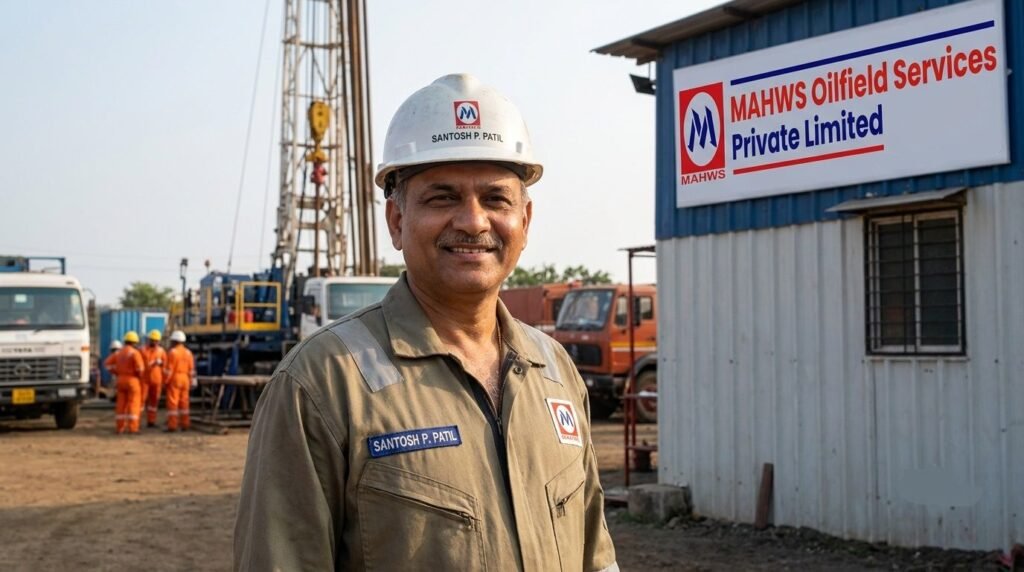
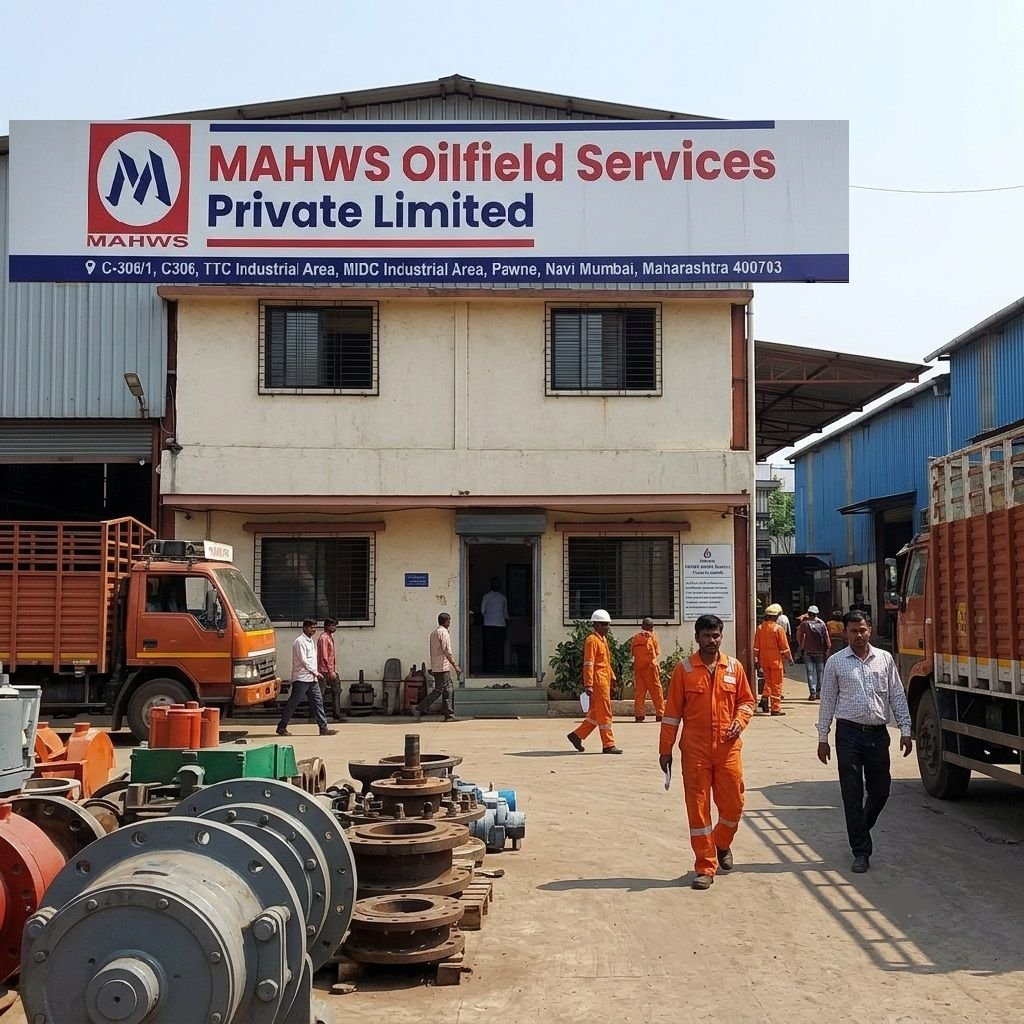
The growth journey of Santosh P. Patil and MAHWS Oilfield Services Private Limited represents an important story about how technical competence, professional discipline and a commitment to quality can influence the direction of an organization. Located in the TTC Industrial Area of MIDC, Pawne, Navi Mumbai, the company operates within an industrial ecosystem where technical capability, safety awareness, reliability and professional execution are essential characteristics of business success.
For a company associated with oilfield services, the expectations surrounding technical work can be significantly higher than in many ordinary commercial activities. Industrial customers do not simply look for a service provider who can complete a task. They increasingly look for organizations and professionals who understand procedures, recognize hazards, maintain appropriate competence and can demonstrate that their work is performed according to established requirements.
This was the environment in which the professional journey associated with Santosh P. Patil developed.
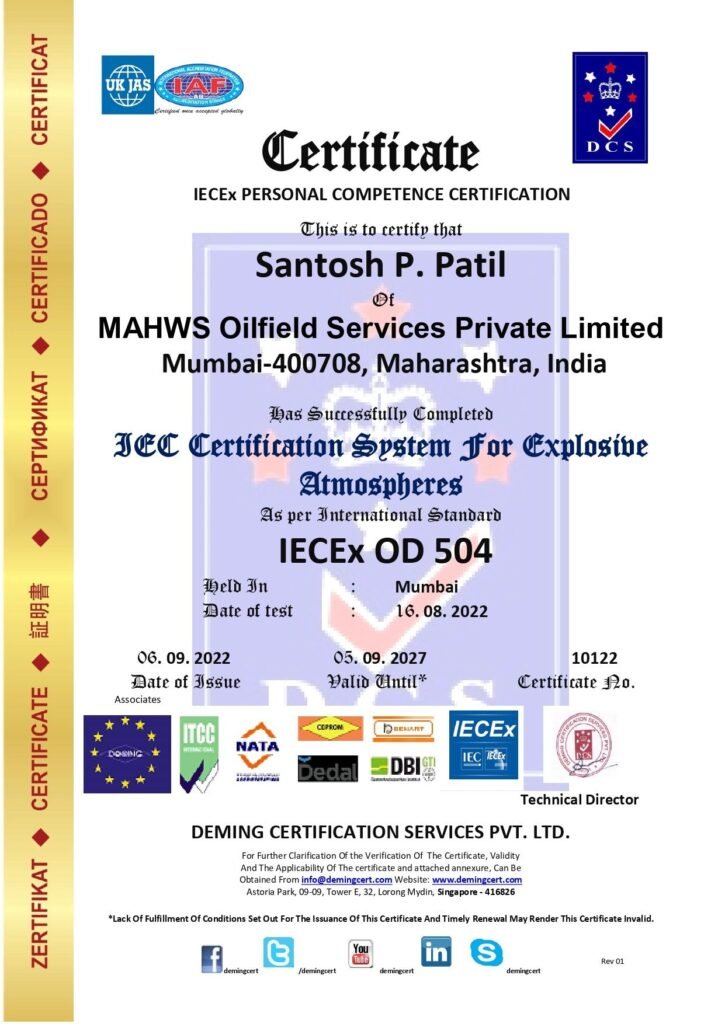
The decision to pursue a recognized competence-oriented certification became more than a documentation exercise. It represented a move toward formalizing knowledge and demonstrating professional capability. The certification information supplied for this case identifies IECEx OD 504 and IECEx Personnel Competence Certification, issued in 2022 and valid through 2027.
IECEx OD 504 establishes competence requirements associated with personnel working with electrical equipment for explosive atmospheres. Its purpose is to support assessment of knowledge and skills relevant to work in hazardous areas and Ex equipment environments.
For Santosh P. Patil, such recognition could be viewed as part of a broader professional philosophy: in technically demanding industries, competence should not remain merely an internal belief. It should be developed, assessed and demonstrated.
This philosophy also connects naturally with the principles behind ISO 9001 quality management. ISO explains that quality management involves establishing, implementing, maintaining and continually improving a management system capable of consistently delivering products and services that meet requirements and enhance customer satisfaction. (https://mathewassociates.com/)
The significance of such a framework becomes particularly clear in an industrial environment.
Imagine a customer approaching an oilfield-service organization. The customer may have a technically complex requirement, strict deadlines and safety expectations. The customer needs confidence that the people performing or supervising the work understand what they are doing. Documentation, competence, communication and controlled processes therefore become part of the service itself.
The certification journey helped place these ideas at the center of professional thinking.
For Santosh P. Patil, the journey can be understood as a transition from simply performing technical responsibilities to demonstrating a more structured professional identity. Certification does not automatically create business growth. Instead, it can provide a framework through which competence, credibility and organizational discipline can become visible to customers and stakeholders.
This distinction is important.
A certificate alone cannot guarantee business success. Growth comes from the combined effect of technical capability, customer relationships, quality of execution, responsiveness, reputation and continual improvement. Certification can strengthen those elements when it is integrated into everyday work rather than treated as a framed document.
The year 2022 therefore becomes an important milestone in this story.
The certification created a formal reference point around professional competence. It could support conversations with customers, strengthen professional credibility and encourage continued learning. The validity extending to 2027 also provided a multi-year horizon in which competence could be maintained and developed.
The wider lesson from Santosh P. Patil’s journey is that industrial growth increasingly depends on trust.
Customers want to know who is performing the work. They want confidence in technical decisions. They want procedures followed consistently. They want problems identified before they become costly failures. They want communication to be clear.
Quality management gives organizations a structured way of addressing these expectations.
The ISO quality-management principles include customer focus, leadership, engagement of people, process approach, improvement, evidence-based decision-making and relationship management.
These principles provide a useful lens through which the development of MAHWS Oilfield Services Private Limited can be understood.
The story of Santosh P. Patil is therefore not simply a story about obtaining certification. It is a story about professional maturity.
The certification became one milestone in a longer journey—one in which competence, quality, safety awareness and customer confidence could increasingly become connected.
As the company continued operating from Navi Mumbai’s industrial environment, the value of this approach became increasingly visible in the way work could be planned, communicated, documented and improved.
The first step had been taken.
The next challenge was to turn certification into capability.
And capability into sustainable business value.
#SantoshPPatil
Chapter 2 – Understanding the Importance of Competence in Explosive Atmospheres
The oilfield and industrial-services environment contains circumstances where technical mistakes can have consequences far beyond ordinary operational inconvenience. Certain workplaces can contain flammable gases, vapours, dusts or other hazardous conditions. In such environments, personnel must understand the risks associated with the equipment and work being undertaken.
This is where the significance of IECEx personnel competence becomes particularly important.
IECEx OD 504 specifies basic knowledge and competence associated with work involving electrical equipment for explosive atmospheres. The document explains that competence includes the knowledge and skills required for particular work activities and that basic knowledge for hazardous-area entry includes understanding risks, limitations and occupational health and safety responsibilities.
For Santosh P. Patil, professional recognition in this field therefore represented an important dimension of career and organizational development.
Competence is not simply theoretical knowledge.
A technically qualified person must also be able to apply knowledge correctly in a practical environment. Industrial work often requires judgment under pressure. Procedures may need to be interpreted, equipment conditions evaluated and communication maintained among multiple stakeholders.
The ability to transfer knowledge into practical performance is what gives competence its real value.
IECEx documentation similarly describes competence in terms of demonstrated knowledge and skills and emphasizes the ability to apply those skills in workplace situations.
This concept aligns strongly with the philosophy of quality management.
A quality system cannot succeed if competence exists only on paper. ISO’s quality-assurance guidance emphasizes clearly defined roles, appropriate competence, training, performance monitoring and continual improvement.
The development of professional competence therefore became a strategic asset.
For MAHWS Oilfield Services Private Limited, operating in an industrial location such as TTC MIDC created an environment where relationships with engineering, manufacturing, maintenance and industrial-service organizations could become important. Within such an ecosystem, professional credibility can influence how a company is perceived.
A customer evaluating two service providers may ask several questions.
Who understands the technical requirements?
Who can demonstrate competence?
Who communicates professionally?
Who maintains documentation?
Who understands safety?
Who can respond to unexpected situations?
Who takes responsibility for continual improvement?
The answers to these questions can influence purchasing decisions.
Certification can help provide evidence for some of those answers.
However, the deeper value lies in what certification encourages professionals to do after the assessment.
It encourages continued learning.
It encourages attention to procedures.
It encourages awareness of changing requirements.
It encourages documentation.
It encourages people to view competence as something that must be maintained rather than achieved once and forgotten.
This mindset is particularly valuable in technical industries because standards, technologies and customer expectations evolve.
A professional who completed certification in 2022 could not reasonably assume that knowledge would remain permanently sufficient through 2027. Continuous development becomes essential.
Santosh P. Patil’s certification journey can therefore be seen as the beginning of a continuous professional-development cycle.
The cycle can be represented simply:
Learn → Apply → Verify → Improve → Repeat.
Learning establishes knowledge.
Application converts knowledge into workplace performance.
Verification tests whether performance meets requirements.
Improvement addresses gaps.
The cycle then begins again.
This philosophy also supports the process approach associated with ISO 9001. Rather than treating work as disconnected activities, the process approach considers how inputs, responsibilities, controls, outputs and feedback connect together.
In an oilfield-service context, a service assignment could involve customer communication, technical requirement review, resource planning, competence verification, work execution, inspection, documentation, customer feedback and closure.
Every stage matters.
A weakness at the beginning can create a problem at the end.
For example, incomplete understanding of a customer’s technical requirement can lead to incorrect planning. Poor planning can create delays. Delays can create customer dissatisfaction. Customer dissatisfaction can damage trust.
A controlled process helps reduce such risks.
This is where Santosh P. Patil’s professional certification story becomes a business-development story as well.
Competence strengthens the individual.
Structured processes strengthen the organization.
Together they strengthen customer confidence.
Over time, customer confidence can strengthen reputation.
And reputation can create opportunities for sustainable growth.
The certification issued in 2022 thus represented more than an achievement for a particular year. It could become part of an ongoing professional identity associated with technical responsibility.
For a company serving industrial customers, that identity matters.
The strongest organizations are rarely built only through aggressive marketing. They are built through repeated experiences in which customers discover that the organization does what it promises.
Certification supports that promise by providing a recognizable framework for competence.
The challenge for Santosh P. Patil and MAHWS Oilfield Services Private Limited was therefore not simply to obtain recognition.
It was to make the principles behind that recognition visible in daily operations.
That became the foundation for the next stage of growth.
#MAHWSOilfieldServices
Chapter 3 – From Certification to a Culture of Quality
Obtaining certification can create an important moment of pride for a professional and an organization. Yet the real test begins after certification.
The question becomes: What changes because the certificate exists?
For Santosh P. Patil, the answer could be found in the gradual development of a quality-oriented mindset.
A quality culture begins when employees and management understand that quality is not the responsibility of one department. It is created through every activity.
A customer enquiry can affect quality.
A technical discussion can affect quality.
A purchase decision can affect quality.
A work instruction can affect quality.
A field activity can affect quality.
A report can affect quality.
Even the way a customer complaint is handled can affect quality.
ISO describes quality management as a systematic approach that includes leadership, resources, competence, communication, operations, performance evaluation and improvement.
This provides an important lesson for MAHWS Oilfield Services Private Limited.
Quality should be integrated into business operations rather than added after work is completed.
The certification journey encouraged attention to competence. The next logical step was to connect competence with processes.
Suppose a new technical assignment arrived.
Instead of immediately sending someone to execute the work, a structured organization could ask:
What exactly does the customer require?
What standards or technical conditions apply?
What competence is required?
Who is responsible?
What resources are needed?
What risks must be considered?
What records should be maintained?
How will completion be verified?
How will customer feedback be captured?
These questions create discipline.
Discipline creates consistency.
Consistency creates confidence.
Confidence creates customer loyalty.
Customer loyalty contributes to sustainable growth.
This is how certification can indirectly influence business performance.
It does not operate as a magic formula. Instead, it changes the way an organization thinks.
For Santosh P. Patil, professional competence in explosive-atmosphere-related work provided an opportunity to develop this structured mindset.
The significance of documentation also increased.
Documentation is sometimes misunderstood as administrative work. In a mature quality system, however, documentation is a tool for organizational memory.
People change.
Projects change.
Customers change.
Equipment changes.
But documented processes can preserve organizational knowledge.
A well-maintained record can help answer questions such as:
What was requested?
What was agreed?
Who performed the activity?
What requirements were considered?
What evidence was generated?
What was the result?
What corrective action was taken?
What did the customer say?
This becomes particularly valuable when an organization handles technically sensitive work.
The organization can learn from previous assignments rather than starting from zero every time.
This learning culture can contribute to efficiency.
Over time, repeated activities become easier to plan because the organization develops templates, checklists, technical references and lessons learned.
Employees also gain confidence.
New staff can learn from established procedures.
Experienced employees can contribute improvements.
Management can monitor performance.
Customers receive more consistent service.
This is where the ISO principle of engagement of people becomes significant. ISO identifies competent, empowered and engaged people as an important foundation for creating customer value.
The development of people can therefore become part of business development.
Santosh P. Patil’s professional journey can be interpreted as an example of this philosophy.
The certification did not have to remain a personal achievement. It could become an organizational learning opportunity.
Knowledge gained through professional assessment could be shared through internal discussions.
Technical requirements could be converted into procedures.
Common mistakes could become training topics.
Customer feedback could become improvement actions.
This gradually creates an organization that learns.
A learning organization is better prepared for changing market expectations.
The industrial environment surrounding Navi Mumbai is dynamic. Companies continually seek better productivity, stronger compliance, improved safety and dependable service providers.
A service organization that can demonstrate technical seriousness is therefore better positioned to participate in such a market.
The development of quality culture also influences communication.
A technically strong organization can still lose customers if communication is poor.
Customers want timely updates.
They want realistic commitments.
They want problems communicated early.
They want reports to be understandable.
They want invoices and supporting documents to be accurate.
These apparently simple activities contribute significantly to perceived quality.
For this reason, quality management extends beyond technical work.
It includes the customer experience.
As the company matured, the idea of quality could therefore expand from “doing the technical work correctly” to “delivering the entire customer experience professionally.”
This broader understanding created a stronger platform for growth.
The certification became a visible symbol of competence.
The internal quality culture became the operating system behind that symbol.
The two together strengthened the organization’s professional identity.
That identity would become increasingly important as the company sought stronger relationships and new opportunities.
#IECExCertification
Chapter 4 – Building Customer Confidence Through Professionalism
Business growth depends heavily on trust.
In technical industries, trust is especially important because customers often cannot evaluate every technical detail themselves. They therefore rely on evidence.
Evidence may include qualifications, competence certificates, work records, procedures, technical reports, previous experience and professional communication.
For Santosh P. Patil and MAHWS Oilfield Services Private Limited, IECEx Personnel Competence Certification provided one form of such evidence.
The certification associated with IECEx OD 504 was issued in 2022 with validity through 2027 according to the supplied case information.
The existence of such a multi-year professional credential can help support confidence when discussing technical responsibilities related to explosive atmospheres.
However, customer confidence is not created by certification alone.
It is reinforced through repeated behavior.
A customer may initially notice a certificate.
But the customer stays because the organization delivers.
That delivery includes punctuality, technical understanding, communication, responsiveness, documentation and problem-solving.
This is why the post-certification period became so important.
Santosh P. Patil’s professional identity could increasingly be associated with disciplined technical work.
The certification could be introduced appropriately in professional profiles, technical discussions, company presentations and capability documentation, provided the claims remained within the actual scope of the certification.
This distinction is critical.
Responsible use of certification means communicating what has actually been certified or assessed without exaggeration.
A strong organization does not need exaggerated claims.
It builds credibility through accuracy.
That principle is closely connected with quality management.
Quality management requires organizations to understand customer requirements and consistently meet them. ISO explains that customer focus is central to quality management and contributes to long-term organizational success.
For MAHWS, customer focus could mean understanding the technical and commercial requirements before accepting assignments.
It could mean asking questions rather than making assumptions.
It could mean clarifying deliverables.
It could mean confirming schedules.
It could mean documenting changes.
It could mean communicating difficulties before deadlines are missed.
Each action appears small.
Together, they create a professional reputation.
Over time, reputation becomes a competitive asset.
Imagine a customer comparing several vendors.
One vendor offers only a low price.
Another offers technical capability but poor communication.
A third offers competent personnel, organized documentation, responsive communication and evidence of professional certification.
The third vendor may create stronger confidence even if its price is not the lowest.
This is the commercial value of quality.
Quality differentiates a service.
The certification journey also encouraged the concept of accountability.
When a professional is formally recognized for competence, there is an expectation that the professional will maintain appropriate knowledge and behavior.
Accountability encourages careful preparation.
Careful preparation reduces avoidable mistakes.
Fewer mistakes can reduce rework.
Less rework can improve productivity.
Improved productivity can strengthen margins.
Better margins can support reinvestment.
Reinvestment can support further growth.
Thus, a chain of benefits can emerge.
Competence → Better preparation → Better execution → Customer confidence → Repeat opportunities → Business development.
This chain does not guarantee growth, but it illustrates how quality-oriented practices can contribute to it.
The company could also strengthen its customer relationships by treating feedback as valuable information.
A complaint should not automatically be considered a negative event.
It can be a source of learning.
If a customer reports delayed documentation, the organization can examine its reporting process.
If a customer finds communication unclear, the organization can improve communication protocols.
If repeated technical questions arise, the organization can create a knowledge resource.
This is the essence of continual improvement.
ISO’s quality-management framework explicitly emphasizes monitoring, measurement, analysis and improvement.
For Santosh P. Patil, such an approach could gradually transform customer relationships.
Customers become more than sources of individual assignments.
They become partners in organizational learning.
Every assignment generates experience.
Every experience creates knowledge.
Every lesson can improve the next assignment.
That is how a small improvement can become a long-term competitive advantage.
The industrial environment of Navi Mumbai provides an appropriate setting for such development. Organizations operating in technical sectors often need specialized service providers who can understand their operational realities.
A professional competence credential can help open the initial conversation.
Performance keeps the conversation alive.
Trust turns the relationship into an ongoing association.
This became one of the most important post-certification lessons.
Certification helped establish credibility.
Professional behavior sustained it.
Quality systems reinforced it.
Customer satisfaction converted it into business value.
And continued learning ensured that the value could remain relevant.
#IECExOD504
Chapter 5 – Strengthening Internal Processes and Operational Discipline
Courtesy: POWERS Pod
As MAHWS Oilfield Services Private Limited continued developing its professional identity, another important area emerged: operational discipline.
A company can have technically capable people and still struggle if its internal processes are inconsistent.
For example, if customer enquiries are not recorded properly, important requirements may be missed.
If competence records are not maintained, managers may not know who is qualified for a particular activity.
If documentation is incomplete, project closure can become difficult.
If customer feedback is not recorded, improvement opportunities may disappear.
If corrective actions are informal, recurring problems may continue.
Quality management provides a framework for addressing these weaknesses.
ISO 9001 includes requirements related to context, leadership, planning, support, operation, performance evaluation and improvement.
These areas can be translated into practical organizational routines.
For MAHWS, the post-certification journey could therefore involve strengthening basic process controls.
One useful starting point would be customer enquiry management.
Every enquiry should ideally be understood before work begins.
The organization can establish a structured review:
Customer requirement received.
Technical requirement clarified.
Scope defined.
Resources identified.
Competence requirements confirmed.
Commercial terms reviewed.
Schedule established.
Responsibilities assigned.
Work completed.
Evidence documented.
Customer feedback obtained.
This simple chain creates visibility.
It also makes management easier.
The same approach can be applied to competence management.
Personnel involved in specialized activities need appropriate knowledge and capability.
A competence matrix can help management understand which employees possess which skills.
Training requirements can then be identified.
Refresher training can be planned.
New employees can be evaluated systematically.
Records can demonstrate development.
Such a system reinforces the philosophy behind IECEx competence certification.
The certification recognizes specific competence.
The internal management system ensures that competence is maintained and applied appropriately.
This distinction is important.
External recognition and internal management should support one another.
The organization can also establish document-control practices.
Documents should have clear identification, revision status and approval where appropriate.
Old versions should not accidentally remain in operational use.
Technical references should be accessible to authorized personnel.
Records should be stored systematically.
These practices reduce confusion.
They also improve organizational memory.
Another important area is risk management.
Industrial service work can involve uncertainties.
Schedules can change.
Equipment conditions may differ from expectations.
Customer requirements can evolve.
Resources can become unavailable.
Technical issues can arise unexpectedly.
A mature organization considers these possibilities in advance.
The objective is not to eliminate all uncertainty.
The objective is to prepare for it.
This approach is consistent with modern quality-management thinking, where organizations are encouraged to understand risks and opportunities and use them in planning.
For Santosh P. Patil, professional competence in hazardous-area-related work made risk awareness particularly relevant.
The principle of “think before you act” becomes more than a slogan.
It becomes an operational discipline.
Before work begins, personnel should understand the environment, requirements and responsibilities.
During work, they should remain alert to changing conditions.
After work, they should record results and lessons.
This three-stage approach creates a complete cycle.
Plan → Execute → Review.
Continual improvement then adds a fourth stage:
Plan → Execute → Review → Improve.
The cycle repeats.
Over time, operational discipline can create measurable benefits even if the organization does not immediately calculate them as formal financial gains.
Better planning can reduce delays.
Better documentation can reduce disputes.
Better competence management can reduce inappropriate assignments.
Better communication can reduce misunderstandings.
Better customer feedback can identify improvement opportunities.
Better records can support future projects.
Together, these benefits strengthen organizational stability.
Stability is important for growth.
A business cannot scale successfully if every new assignment creates chaos.
Scalable organizations require repeatable processes.
This became a major lesson in the post-certification development of MAHWS Oilfield Services Private Limited.
Growth should not mean simply doing more work.
Growth should mean being capable of handling more work without losing quality.
That is a much more demanding objective.
Santosh P. Patil’s professional certification therefore became part of a larger organizational philosophy.
Technical competence was the foundation.
Process discipline became the structure.
Customer focus became the direction.
Continual improvement became the engine.
Together they created a stronger platform from which the company could pursue future opportunities.
#PersonnelCompetenceCertification
Chapter 6 – Professional Development and the Human Side of Growth
Behind every certification, process and business relationship are people.
Organizations do not improve automatically.
People improve organizations.
For Santosh P. Patil, the certification journey demonstrated the importance of individual professional competence. But its longer-term value could be multiplied when knowledge was shared with others.
This is where professional development became an important part of company growth.
A technically competent professional can contribute in several ways.
First, through direct execution.
Second, through mentoring.
Third, through process development.
Fourth, through problem-solving.
Fifth, through knowledge transfer.
The fifth area can have a particularly powerful long-term effect.
When knowledge remains with one person, the organization becomes dependent on that individual.
When knowledge is shared, the organization becomes stronger.
A growing company therefore needs to develop systems for transferring experience.
This can happen through training sessions, technical discussions, checklists, internal demonstrations, documented lessons learned and supervised practical work.
The certification associated with IECEx OD 504 provides a useful foundation for understanding competence as demonstrated knowledge and skills.
That idea can be extended into organizational learning.
Employees should not only be told what to do.
They should understand why it matters.
Why is hazardous-area competence important?
Why must procedures be followed?
Why is documentation necessary?
Why should equipment requirements be verified?
Why should customer instructions be recorded?
When employees understand the reason behind a requirement, compliance becomes more meaningful.
This helps create a quality culture rather than a compliance culture.
A compliance culture says:
“Do this because the procedure says so.”
A quality culture says:
“Do this because it protects the customer, the organization and the integrity of the work.”
The second approach is more sustainable.
Employee development also contributes to motivation.
People are more likely to feel valued when their skills are recognized and developed.
Certification can become a career milestone.
Training can become an investment.
Technical responsibility can become a source of professional pride.
For Santosh P. Patil, his competence certification could therefore represent not only technical recognition but also an example for colleagues and younger professionals.
It demonstrated that specialized competence matters.
It showed that learning can lead to formal recognition.
It reinforced the idea that technical careers require continuous development.
This can have a positive effect on organizational culture.
Young employees can see a pathway.
They can begin with basic responsibilities.
They can receive training.
They can work under supervision.
They can develop specialized skills.
They can pursue certification.
They can eventually take responsibility for more complex assignments.
This creates a pipeline of competence.
A company with a strong competence pipeline is better prepared for growth.
Employee development also supports succession planning.
If one experienced person leaves, the organization should not lose all institutional knowledge.
Cross-training and documentation can reduce this vulnerability.
ISO quality-management guidance places importance on resources, competence, awareness and documented information.
These are not abstract concepts.
They have direct operational value.
A competent employee makes better decisions.
An aware employee recognizes risks earlier.
A trained employee needs less supervision.
A well-documented process reduces dependence on individual memory.
Together, these factors improve organizational resilience.
The human side of growth also involves leadership.
A promoter or senior professional sets the tone.
If leadership treats quality as important, employees notice.
If leadership ignores procedures whenever deadlines become difficult, employees notice that too.
Culture is created by repeated behavior.
For Santosh P. Patil, the strongest lesson from the certification journey was therefore likely not the certificate itself but the responsibility associated with it.
Certification creates expectations.
Leadership must maintain them.
Employees must understand them.
Customers must experience them.
The organization must improve them.
This creates a virtuous cycle.
Leadership creates direction.
Training creates capability.
Competence creates confidence.
Confidence creates responsibility.
Responsibility creates quality.
Quality creates trust.
Trust then contributes to business growth.
This human-centered approach also helps prevent the common mistake of treating certification as paperwork.
A certificate hanging on a wall cannot perform technical work.
A trained professional can.
A documented process cannot solve every problem.
A competent team can.
A quality policy cannot satisfy a customer by itself.
People who understand the customer’s needs can.
Therefore, the true asset created through the certification journey was organizational capability.
The more the company developed its people, the more valuable its processes became.
The more valuable its processes became, the more confidently it could serve customers.
And the more confidently it could serve customers, the stronger its foundation for sustainable growth became.
#ExplosiveAtmospheres
Chapter 7 – Expanding Business Opportunities Through Credibility
Once an organization develops competence and operational discipline, it becomes better positioned to pursue new business opportunities.
For MAHWS Oilfield Services Private Limited, professional credibility could serve as an important differentiator.
Industrial customers frequently assess service providers based on several factors simultaneously.
Technical capability is one.
Experience is another.
Availability matters.
Responsiveness matters.
Safety awareness matters.
Documentation matters.
Certifications and qualifications can provide additional evidence.
The IECEx Personnel Competence Certification associated with Santosh P. Patil provided a recognized professional reference within the context described by IECEx OD 504.
IECEx’s personnel competence framework is designed to support confidence that a person has demonstrated competence for defined work activities associated with explosive atmospheres.
Such evidence can strengthen professional conversations.
However, business development should remain honest and technically precise.
A competence certificate should not be presented as proof of capabilities beyond its actual scope.
Instead, it should be presented as one element of a broader capability profile.
This approach can increase credibility because knowledgeable customers appreciate accuracy.
For example, when approaching a potential customer, the organization can communicate:
- its areas of service;
- relevant personnel competence;
- technical experience;
- applicable procedures;
- quality-management practices;
- documentation capabilities;
- response capacity;
- customer-service approach.
This creates a complete picture.
The certification becomes part of the picture rather than the entire picture.
Over time, this professional positioning can support market expansion.
A customer satisfied with one assignment may recommend the organization to another company.
A technical professional may develop relationships with engineers, procurement personnel, maintenance managers and project teams.
A successful assignment can become a reference point for future opportunities.
This is the organic side of business growth.
Marketing can create awareness.
Quality creates repeatability.
Customer satisfaction creates referrals.
Professional competence creates credibility.
Together they create momentum.
The post-certification period can therefore be understood as a transition from qualification to reputation.
Qualification answers:
“Can this professional demonstrate competence?”
Reputation answers:
“Can this organization consistently deliver?”
The second question is harder.
It requires repeated evidence.
Every completed assignment contributes to that evidence.
Every successful customer interaction strengthens it.
Every resolved problem tests it.
Every improvement reinforces it.
This is why continual improvement is essential.
ISO describes improvement as a core part of quality management and emphasizes using performance evaluation and data to improve the effectiveness of the system.
For MAHWS, this could mean establishing practical performance indicators.
Possible indicators might include:
Customer response time.
On-time completion.
Documentation accuracy.
Customer complaints.
Repeat business.
Training completion.
Corrective-action closure.
Internal process adherence.
The exact metrics would depend on the organization’s operations, but the principle remains the same: what gets monitored can be understood and improved.
Evidence-based decision-making can prevent management from relying entirely on assumptions.
Suppose customers repeatedly request faster technical documentation.
That is evidence.
The company can redesign its reporting process.
Suppose customers consistently ask for additional technical competence.
That is evidence.
The company can invest in training.
Suppose certain types of assignments produce repeated delays.
That is evidence.
Management can investigate the root cause.
This creates a data-driven organization.
The company’s location in the TTC Industrial Area also places it within a broad industrial ecosystem. Such environments can provide opportunities for networking and business relationships when supported by appropriate capabilities.
However, expansion must be controlled.
Taking every available project can be dangerous if the organization lacks resources or competence.
Sustainable growth requires knowing when to say yes—and when to say no.
A quality-oriented organization evaluates whether it can meet customer requirements before accepting work.
This protects both customer and company.
The result is a healthier business-development model.
Rather than chasing volume at any cost, the company can pursue opportunities aligned with its competence.
That creates stronger positioning.
Santosh P. Patil’s certification thus became a foundation for professional differentiation.
The journey from certification to business opportunity followed a logical progression:
Certification → Credibility → Customer confidence → Successful execution → Reputation → New opportunities.
This is not an automatic sequence.
Every stage requires work.
But when managed deliberately, it can become a powerful growth engine.
The real success of certification is therefore measured not by how prominently the certificate is displayed, but by how effectively its underlying competence is converted into customer value.
That became an important principle in the continuing development of MAHWS Oilfield Services Private Limited.
#OilfieldServices
Chapter 8 – Resilience, Continuous Improvement and Long-Term Sustainability
Business growth is rarely a straight line.
Markets change.
Customer requirements change.
Technology changes.
Regulations and standards evolve.
Competition changes.
Employees change.
Economic conditions change.
A company that wants to remain successful must therefore become adaptable.
For MAHWS Oilfield Services Private Limited, the certification journey offered a useful foundation for developing such adaptability.
IECEx OD 504 focuses on competence for defined activities involving explosive atmospheres. That focus naturally reinforces the importance of keeping knowledge current and applying it responsibly.
The five-year period from the stated 2022 issue date to 2027 validity also creates a useful way of thinking about professional development.
Certification should not be treated as the end of learning.
It should be treated as a milestone within learning.
A professional can continually update technical knowledge.
The organization can revise procedures.
Employees can attend training.
Customer feedback can be reviewed.
New technologies can be evaluated.
Risks can be reconsidered.
Processes can be improved.
This is the essence of continual improvement.
ISO’s quality-management principles include improvement and evidence-based decision-making among the seven core principles.
These principles are particularly relevant to long-term sustainability.
Consider a hypothetical operational issue.
A customer reports that a particular report is difficult to understand.
An organization focused only on closing the complaint might simply send a corrected report.
A continuously improving organization asks:
Why was the report difficult to understand?
Was the template unclear?
Was the information incomplete?
Was responsibility unclear?
Was there insufficient review?
Could the template be redesigned?
Could future employees be trained?
The second approach creates organizational learning.
This is the difference between correction and improvement.
Correction fixes the immediate problem.
Improvement reduces the likelihood of recurrence.
Both are important.
Another aspect of resilience is contingency planning.
Technical organizations should consider what happens if a key person is unavailable.
Can another trained employee take over?
Are procedures documented?
Are customer records accessible?
Are technical references available?
Are responsibilities clearly assigned?
These questions strengthen business continuity.
Competence management is therefore closely connected with resilience.
An organization with multiple competent people is less dependent on a single individual.
This is one reason knowledge transfer is so important.
Santosh P. Patil’s professional experience and certification could become an internal knowledge resource.
Instead of keeping specialized knowledge individual, the organization can use it to train others.
This multiplies the value of certification.
One person becomes competent.
Then several people learn.
The organization becomes stronger.
The process can continue.
Another important aspect of sustainability is relationship management.
ISO identifies relationship management as one of its quality-management principles.
For MAHWS, relationships can include customers, suppliers, employees, technical partners and other stakeholders.
Strong relationships can improve communication.
Suppliers may respond more effectively.
Customers may provide clearer requirements.
Employees may remain more engaged.
Technical partners may support problem-solving.
Relationship management therefore contributes to organizational stability.
Long-term sustainability also depends on reputation.
Reputation is difficult to build and easy to damage.
One poor technical decision can affect years of credibility.
Therefore, organizations should protect reputation through disciplined work.
Certification supports that discipline when its requirements and principles are incorporated into daily activities.
The wider lesson from Santosh P. Patil’s story is that quality is not a destination.
It is a continuous journey.
The organization must repeatedly ask:
Are we meeting customer requirements?
Are our people competent?
Are our processes effective?
Are our records reliable?
Are our risks understood?
Are our customers satisfied?
Are we learning from mistakes?
Are we improving?
These questions keep an organization moving forward.
The journey from 2022 toward 2027 can therefore be viewed as a period of opportunity.
The certification created a professional benchmark.
The following years could be used to strengthen competence, improve processes, develop customer relationships and build organizational resilience.
When these activities are connected, certification becomes much more than a credential.
It becomes a catalyst for institutional development.
That is the deeper meaning of sustainable growth.
A company does not become strong simply because it becomes larger.
It becomes strong when it becomes more capable.
More capable of serving customers.
More capable of managing risk.
More capable of developing employees.
More capable of learning.
More capable of adapting.
More capable of delivering consistent value.
That is the type of growth that can survive changing market conditions.
And that is the direction in which the quality journey of Santosh P. Patil and MAHWS Oilfield Services Private Limited can be understood.
#ISO9001Certification
Chapter 9 – Santosh P. Patil’s Professional Legacy and the Company’s Future
Every certification creates a moment in a professional career.
For Santosh P. Patil, the IECEx Personnel Competence Certification issued in 2022 became such a milestone.
But a milestone has meaning only when it influences what comes next.
The real legacy of professional certification is therefore not the certificate itself.
It is the knowledge, discipline, confidence and responsibility that remain after the assessment.
For an individual professional, this can influence career development.
For an organization, it can influence culture.
For customers, it can influence trust.
For younger employees, it can provide an example.
For the company, it can become part of its professional identity.
This is particularly important in specialized industrial sectors.
Customers increasingly want service providers who understand that technical work is connected with safety, quality, documentation and accountability.
A professional who understands these connections can become a valuable organizational asset.
Santosh P. Patil’s journey can therefore be viewed through three dimensions.
Professional competence
The first dimension is technical competence.
IECEx OD 504 establishes competence requirements associated with personnel working with electrical equipment for explosive atmospheres.
The certification provides formal recognition within that framework.
Quality discipline
The second dimension is quality management.
Quality principles provide a systematic way to manage customer requirements, processes, resources, performance and improvement. ISO identifies customer focus, leadership, engagement of people, process approach, improvement, evidence-based decision-making and relationship management as core quality principles.
Organizational growth
The third dimension is business development.
Competence and quality can strengthen customer confidence.
Customer confidence can lead to stronger relationships.
Strong relationships can lead to repeat business and referrals.
Business development can then provide resources for further improvement.
The cycle continues.
This creates an important principle:
Growth should finance improvement, and improvement should support growth.
When these two forces reinforce one another, the organization becomes more sustainable.
For the future, MAHWS Oilfield Services Private Limited can continue building on the foundations represented by the certification journey.
Possible areas of continued development include technical training, competence management, process documentation, customer feedback, digital records, internal audits, risk management and service innovation.
Digitalization can also play an increasing role.
Customer enquiries can be tracked electronically.
Training records can be maintained digitally.
Documents can be version-controlled.
Customer feedback can be analyzed.
Performance indicators can be monitored.
Technical knowledge can be organized into searchable resources.
Such systems can improve visibility and reduce dependence on paper-based memory.
However, technology should remain a tool.
The central asset is still competent people.
A sophisticated software system cannot replace technical judgment.
Therefore, future growth should maintain the balance between people, process and technology.
This balance can become particularly valuable as the company expands its network.
New employees need structured induction.
New customers need clear communication.
New projects need defined responsibilities.
New technical requirements need appropriate competence.
New risks need assessment.
The quality system must evolve with the company.
This is why continual improvement is more important than maintaining a static system.
An organization that never changes eventually becomes outdated.
An organization that continually learns remains relevant.
For Santosh P. Patil, the certification can therefore represent the beginning of a legacy based on learning.
The professional legacy is not only about what he personally achieved.
It is also about what his experience can help others achieve.
If younger professionals learn from his example, the value of the certification multiplies.
If employees become more disciplined, customers benefit.
If customers receive better service, the organization grows.
If the organization grows responsibly, more opportunities become available.
The cycle continues.
The story therefore moves beyond one individual.
It becomes an organizational story.
The company is not merely a collection of projects.
It becomes a repository of knowledge.
Every project teaches something.
Every customer interaction adds experience.
Every technical challenge tests competence.
Every improvement strengthens the next assignment.
This is how professional organizations are built.
The 2022 certification milestone can therefore be viewed as a bridge between past experience and future ambition.
The bridge connects competence with credibility.
It connects credibility with customer trust.
It connects customer trust with opportunity.
And it connects opportunity with sustainable growth.
The future success of MAHWS Oilfield Services Private Limited will ultimately depend on how effectively these elements continue to work together.
Certification provides a foundation.
Leadership provides direction.
Employees provide capability.
Processes provide consistency.
Customers provide feedback.
Continual improvement provides momentum.
Together, they create the possibility of long-term success.
#QualityManagement
Chapter 10 – The Complete Growth Story: From Recognition to Sustainable Excellence
The story of Santosh P. Patil and MAHWS Oilfield Services Private Limited can finally be understood as a story of transformation.
It began with professional competence.
It developed through quality thinking.
It expanded through customer confidence.
It strengthened through process discipline.
It became sustainable through people development and continual improvement.
The IECEx Personnel Competence Certification associated with IECEx OD 504, issued in 2022 and stated in this case to remain valid until 2027, provides the central certification milestone.
IECEx OD 504 is specifically concerned with competence requirements for personnel working with electrical equipment for explosive atmospheres and provides a framework for assessing knowledge and skills relevant to defined competence units.
This makes the certification especially relevant to a professional operating in a technically demanding industrial environment.
But the larger story is about what happens when competence becomes part of an organizational culture.
The first transformation is in thinking.
Instead of asking only:
“Can we complete this job?”
the organization begins asking:
“Can we complete this job correctly, consistently, safely and in a way that satisfies the customer’s requirements?”
That is a quality-management question.
The second transformation is in processes.
Instead of relying on individual memory, the organization develops procedures.
Instead of relying on verbal instructions, it strengthens documentation.
Instead of waiting for problems, it considers risks.
Instead of hiding mistakes, it learns from them.
Instead of treating customer complaints as threats, it treats them as information.
This is organizational maturity.
The third transformation is in customer relationships.
Customers begin to experience consistency.
They receive clearer communication.
They gain confidence in the organization’s competence.
They know whom to contact.
They receive appropriate documentation.
Problems are handled professionally.
Over time, this can strengthen relationships.
The fourth transformation is in people.
Employees become more aware of their responsibilities.
Training becomes part of development.
Competence becomes something to maintain.
Knowledge becomes something to share.
Leadership becomes responsible for creating the conditions in which quality can succeed.
The fifth transformation is in business thinking.
Growth is no longer viewed simply as increasing the number of assignments.
Growth becomes the ability to handle greater responsibility without compromising standards.
That is a much stronger definition of growth.
ISO explains that quality management helps organizations improve performance, meet customer expectations and demonstrate commitment to quality.
This philosophy provides an appropriate framework for understanding the journey.
For Santosh P. Patil, professional certification created evidence of competence.
For MAHWS Oilfield Services Private Limited, that competence could become part of a wider quality-oriented identity.
The company’s address in the TTC Industrial Area, MIDC Industrial Area, Pawne, Navi Mumbai, places the organization within an industrial environment where technical professionalism can be especially valuable.
The next stage of the journey is therefore not simply to preserve what has been achieved.
It is to build upon it.
The organization can continue investing in people.
It can improve technical systems.
It can strengthen documentation.
It can use customer feedback.
It can develop stronger performance measurement.
It can expand relationships carefully.
It can embrace appropriate digital tools.
It can maintain awareness of changing standards and customer expectations.
It can encourage employees to pursue continuous learning.
Each improvement may appear small.
But hundreds of small improvements can produce significant organizational transformation.
This is the power of continual improvement.
The journey can be summarized through ten stages:
1. Recognition – Professional competence receives formal recognition.
2. Awareness – The organization understands the importance of quality and technical responsibility.
3. Standardization – Processes become more structured.
4. Documentation – Knowledge and evidence are preserved.
5. Training – Employees develop competence.
6. Customer focus – Requirements and expectations become central.
7. Measurement – Performance becomes visible.
8. Improvement – Problems become opportunities for learning.
9. Credibility – Customers increasingly associate the company with professionalism.
10. Sustainable growth – Capability expands without abandoning quality.
This is the real meaning of a certification journey.
The certificate is the visible milestone.
The transformation is the invisible achievement.
In the case of Santosh P. Patil, the professional journey demonstrates how specialized competence can become an organizational asset.
In the case of MAHWS Oilfield Services Private Limited, it demonstrates how technical professionalism can support a broader culture of quality.
And in the larger business context, it demonstrates why organizations that invest in competence and disciplined processes are better positioned to earn long-term trust.
The years between 2022 and 2027 therefore represent more than a validity period.
They can be regarded as a period of continued opportunity.
An opportunity to learn.
An opportunity to improve.
An opportunity to serve customers better.
An opportunity to develop people.
An opportunity to strengthen the company’s professional identity.
An opportunity to turn certification into lasting capability.
The ultimate objective is not simply to say that a professional has been certified.
The stronger statement is that the certification helped reinforce a way of working.
A way based on competence.
A way based on responsibility.
A way based on customer focus.
A way based on evidence.
A way based on continuous learning.
A way based on improvement.
That is the foundation upon which sustainable business growth can be built.
The journey of Santosh P. Patil and MAHWS Oilfield Services Private Limited therefore stands as a professional case story of how certification, when supported by genuine competence and quality-oriented practices, can contribute to stronger organizational confidence.
The certificate may have marked one day in 2022.
But its true value lies in every day that followed.
Every technical decision made carefully.
Every customer requirement understood.
Every procedure followed.
Every employee trained.
Every document improved.
Every customer concern addressed.
Every lesson learned.
Every process strengthened.
Every new opportunity approached with greater confidence.
That is how certification becomes culture.
That is how culture becomes capability.
That is how capability becomes reputation.
And that is how reputation can become sustainable growth.
The story ultimately belongs not only to Santosh P. Patil, but to everyone who contributes to the continuing development of MAHWS Oilfield Services Private Limited.
The certification provided a foundation.
The people gave it meaning.
The processes gave it structure.
The customers gave it purpose.
And continual improvement gave it a future.
From competence to confidence, from quality to credibility, and from credibility to sustainable growth—the journey continues.
#IndustrialSafety
Certification and Case-Study Reference
The case information supplied for this story identifies:
- Client: Santosh P. Patil – MAHWS Oilfield Services Private Limited
- Location: C-306/1, C306, TTC Industrial Area, MIDC Industrial Area, Pawne, Navi Mumbai, Maharashtra – 400703
- Scope: IEC Certification System for Explosive Atmospheres
- Certification: IECEx OD 504 – IECEx Personnel Competence Certification
- Issue: 2022
- Validity: 2027
IECEx describes its personnel competence framework as addressing competence for people undertaking work associated with explosive atmospheres, while IECEx OD 504 specifies knowledge and competence requirements for relevant units of competence.
ISO 9001’s quality-management framework provides a complementary organizational perspective around customer focus, leadership, people, processes, performance evaluation and continual improvement.
This case story therefore presents certification not as an automatic guarantee of financial growth, but as a foundation that can support professional credibility, controlled processes, competence development, customer confidence and continual improvement when properly integrated into business operations.
#OilAndGasIndustry #HazardousAreaSafety #TechnicalCompetence #CertificationJourney #BusinessGrowth
Take the Next Step Today
Don’t wait to enhance your business’s quality and efficiency. Partner with Sanatan Dharma Accreditation Boards and experience the transformation that comes with expert consultancy and training. Contact us today to learn more about how we can help you achieve your business goals. Reach out via phone at +91-8668266780, visit our website at sanatanboards.com, or email us at info@sanatanboards.com Let us be your guide on the journey to excellence and innovation.





