
Sirigiri Corporate Pvt Ltd
Table of Contents
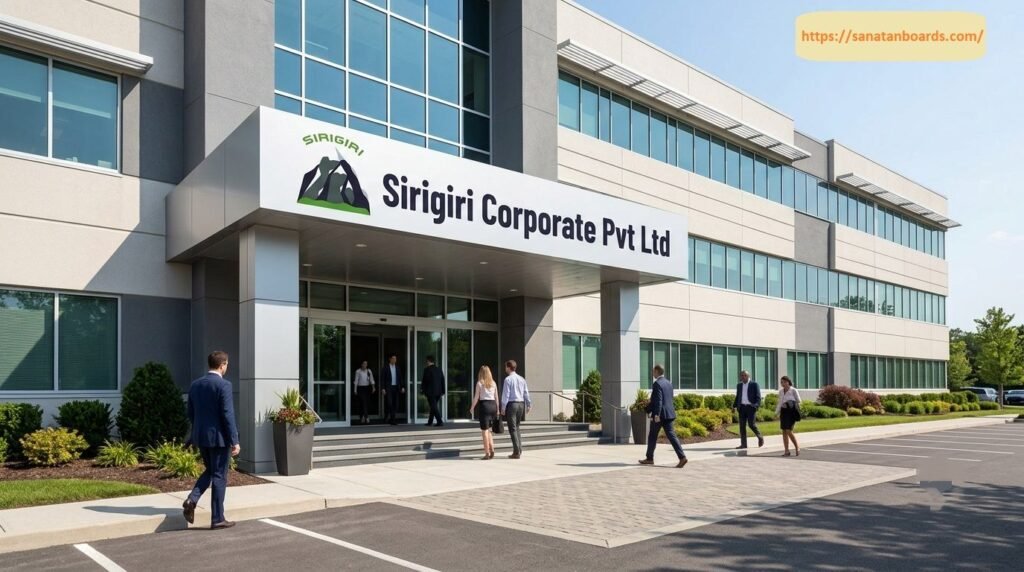
Introduction
In the evolving world of agriculture, the success of a fertilizer company is not determined only by the ability to manufacture a product. It depends on how effectively the company combines product knowledge, quality consciousness, safety, customer confidence, responsible communication and continuous improvement.
Sirigiri Corporate Pvt Ltd represents the journey of an enterprise working in the agricultural and industrial product space from its base in Karnataka. The company is associated with fertilizer products and has developed a market identity around agricultural solutions. One of its documented products is Liquid Foliar Spray Fertilizer, for which a Material Safety Data Sheet was prepared in 2022. (https://sirigiricorporate.com/)
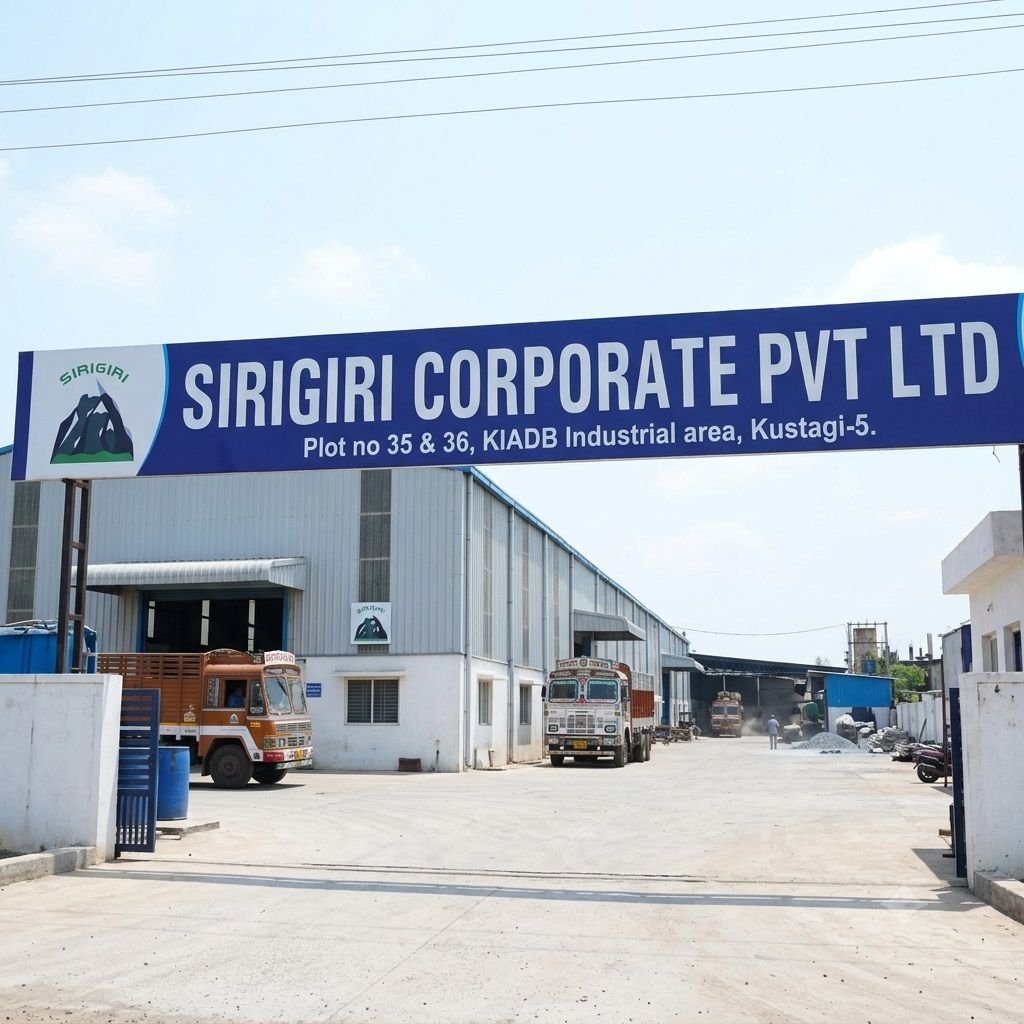
The documented MSDS identifies the company at Plot No. 35 & 36, KIADB Industrial Area, Kustagi–583277. The document identifies the product as Liquid Foliar Spray Fertilizer and provides safety information, hazard identification, precautionary statements, handling guidance and related information.
The year 2022 can therefore be viewed as an important stage in Sirigiri Corporate’s quality journey. The development and formalization of product safety documentation represented more than paperwork. It created an opportunity to organize information, strengthen professional communication and demonstrate greater responsibility toward customers, workers, distributors and other stakeholders.
The following story presents that journey as a business-growth narrative. Where exact financial or operational statistics are not publicly documented, the story focuses on realistic organizational improvements rather than claiming unsupported numerical results.
Chapter 1 – The Beginning of a Quality-Oriented Journey
Every successful company begins with an idea.
For Sirigiri Corporate Pvt Ltd, the larger idea was connected with agriculture, industrial knowledge and the need for better solutions for farmers and agricultural users. The agricultural sector is one of the most demanding business environments because the final performance of a product is closely connected with soil conditions, crop varieties, climate, application methods, water availability and farmer practices.
A fertilizer manufacturer therefore cannot depend only on selling a product. It must develop trust.
Trust becomes especially important when the product is a liquid agricultural formulation intended for foliar application. Farmers, distributors and agricultural professionals need to understand how the product should be handled, stored and applied. They also need confidence that the manufacturer takes product information and safety seriously.
Sirigiri Corporate Pvt Ltd’s documented journey with Liquid Foliar Spray Fertilizer provides an example of this transition from simply having a product to building a more structured product-information system.
The company’s MSDS was prepared in March 2022. The document identifies the product as Liquid Foliar Spray Fertilizer and records Sirigiri Corporate Pvt Ltd as the supplier.
The significance of this step becomes clearer when one considers the nature of foliar fertilizer.
Foliar application involves supplying nutrients through plant foliage. Agricultural guidance explains that nutrients dissolved in water can be absorbed through leaves, while also emphasizing that spray concentration must be properly controlled because excessive concentrations can damage foliage.
Therefore, product information is not merely a marketing tool. It is part of responsible product communication.
For Sirigiri Corporate, establishing a formal MSDS for the Liquid Foliar Spray Fertilizer created a documented reference point. The MSDS contained product identification, supplier information, hazard identification and precautionary statements. It specifically identified hazards such as skin irritation, serious eye damage and possible respiratory irritation.
This kind of documentation can influence a company’s internal culture.
Once employees know that a product has to be documented properly, they begin to look at manufacturing, packaging, storage and distribution differently. Questions become more systematic:
What is the product?
How should it be handled?
What precautions are necessary?
What information should reach the customer?
What should employees do in case of exposure?
How should the product be stored?
How should safety information be communicated?
Such questions gradually become part of a quality-oriented organization.
The 2022 documentation can therefore be viewed as a milestone in Sirigiri Corporate’s broader professional journey.
The company was not merely producing an agricultural product. It was developing the discipline required to communicate information about that product in a formal and structured manner.
This is where quality management begins.
Quality is not only an inspection conducted after production. Quality is a mindset that begins before production and continues until the customer has received, understood and properly used the product.
For a growing company, this mindset can become one of its strongest competitive advantages.
Sirigiri Corporate’s journey demonstrates how documentation can become a bridge between manufacturing and customer confidence.
The company could use its product documentation to create stronger communication with dealers and customers. Sales personnel could explain the product more professionally. Distributors could receive clearer information. Workers could become more aware of handling requirements. Customers could have a formal reference document instead of relying entirely on verbal instructions.
The certification and documentation process therefore became part of an organizational learning experience.
The company’s growth story was beginning to move from product-centered thinking toward system-centered thinking.
And this change would become increasingly important as the company sought to build a stronger identity in the agricultural market.
#SirigiriCorporate
Chapter 2 – Understanding the Importance of Product Safety
The second stage of Sirigiri Corporate’s journey was the recognition that agricultural products require responsible communication.
A fertilizer may be designed to support plant nutrition, but it is still a chemical or formulated agricultural product that must be handled correctly.
This is especially important for liquid products.
Liquid formulations can be exposed to workers during manufacturing, filling, transportation, storage and application. Therefore, information concerning hazards and precautions becomes an important part of responsible manufacturing.
The MSDS prepared for Sirigiri Corporate’s Liquid Foliar Spray Fertilizer included hazard identification and precautionary information. Among the documented hazard statements were skin irritation, serious eye damage and possible respiratory irritation.
The document also included precautions such as avoiding breathing vapours or spray, washing exposed body parts thoroughly after handling and using the product only outdoors or in a well-ventilated area.
For an organization, such information creates a stronger safety culture.
Imagine a growing business where employees previously depended on informal instructions. One worker might explain handling requirements to another, and that information might change slightly each time it was communicated.
Formal documentation reduces that uncertainty.
A written safety document becomes a common reference.
This is particularly valuable when new employees join the organization. Instead of relying entirely on verbal training, the company can introduce workers to formal product documentation.
This also improves communication with business partners.
Distributors and dealers often want to know what they are selling. A professionally prepared MSDS gives them a formal document that can be maintained in their own records.
The same principle applies to institutional customers.
When organizations evaluate suppliers, documentation can influence their perception of professionalism. A supplier capable of providing structured product information demonstrates a different level of organizational maturity from one that relies only on informal descriptions.
This is where certification-related work can contribute indirectly to business growth.
Certification does not automatically create sales. However, the systems, records and discipline associated with quality can help a company become more organized.
For Sirigiri Corporate, the MSDS represented one such organized record.
The document identified the product, supplier and safety characteristics. It also created a formal identity around the Liquid Foliar Spray Fertilizer.
Over time, such documentation can become part of a larger product-information system.
Product names can be standardized.
Technical descriptions can become more consistent.
Safety information can be preserved.
Customer communication can become more professional.
Training can become easier.
Distribution partners can receive consistent information.
These improvements may appear small individually, but together they can change the way an organization operates.
The transformation is especially meaningful for agricultural companies because their customers may have very different levels of technical knowledge.
One customer may be a farmer.
Another may be a dealer.
Another may be an agricultural consultant.
Another may be a distributor.
Another may be an institutional buyer.
Each stakeholder requires information in a different context.
A professional organization learns to maintain the technical truth of the product while communicating it clearly to different audiences.
This is one of the foundations of quality management.
The quality philosophy associated with ISO 9001 emphasizes consistency, customer focus, process control and continual improvement. Even when a company is discussing a specific product document such as an MSDS, these principles can influence the way the organization manages information.
For Sirigiri Corporate, the 2022 documentation stage therefore represented an opportunity to establish better habits.
The company could begin treating documents as controlled business assets rather than administrative paperwork.
That mindset can affect everything from purchasing to production, packaging, storage, sales and customer support.
The result is not necessarily visible immediately.
There may be no dramatic change in the first month.
But gradually, the organization becomes more disciplined.
Employees know where information is stored.
Customers receive clearer documents.
Product communication becomes consistent.
Management can review information more effectively.
And the organization begins developing a professional identity.
This is how safety documentation becomes part of business growth.
It protects people, supports communication and strengthens the credibility of the company.
For Sirigiri Corporate, that was an important step toward becoming a more structured agricultural enterprise.
#LiquidFoliarSprayFertilizer
Chapter 3 – The Product: Liquid Foliar Spray Fertilizer
At the center of Sirigiri Corporate’s documented certification journey was the Liquid Foliar Spray Fertilizer.
The agricultural industry continuously searches for efficient methods of nutrient delivery. Foliar application is one method used in crop nutrition because plants can absorb certain nutrients through their leaves.
Agricultural references describe foliar application as spraying fertilizer solutions containing one or more nutrients onto plant foliage. They also emphasize the importance of controlling spray concentration.
This creates an important relationship between product formulation, application instructions and customer education.
A fertilizer company therefore has two responsibilities.
The first is to provide a product with defined characteristics.
The second is to communicate information that helps users handle and apply it appropriately.
Sirigiri Corporate’s MSDS contributed to the second responsibility.
The document created a formal identity for the Liquid Foliar Spray Fertilizer and provided information concerning hazards and precautions.
For the company, this could also become a foundation for broader product development.
Once a product is formally documented, management can begin asking deeper questions.
What is the intended application?
Who are the target users?
What storage conditions are appropriate?
What packaging is suitable?
What safety instructions must be communicated?
What information should appear on product literature?
How can customer complaints be recorded?
How can batch information be tracked?
How can product performance be reviewed?
These questions turn a product into a controlled business process.
This is one of the major differences between a small informal operation and a professionally managed manufacturing organization.
In an informal operation, knowledge may exist primarily in people’s minds.
In a structured organization, knowledge is increasingly converted into documents, procedures and records.
That transformation makes the company less dependent on individual memory.
Suppose an experienced employee leaves the organization.
If all product knowledge exists only with that person, the company loses valuable knowledge.
But if the knowledge has been documented, trained and controlled, the organization retains continuity.
This is why documentation can contribute to sustainable growth.
For Sirigiri Corporate, the 2022 MSDS became one such knowledge asset.
The document recorded the supplier information and product identification and contained a formal hazard and precautionary framework.
This also helped strengthen the company’s ability to communicate with external stakeholders.
A customer asking for product safety information could be provided with a structured document.
A distributor could maintain it for reference.
An employee could use it during training.
A quality professional could review it.
A purchaser could include it in supplier documentation.
A regulatory or institutional review could be supported by a formal product record.
The value of the document therefore extended beyond its original purpose.
It became part of the company’s professional identity.
The importance of this becomes even clearer when considering the competitive fertilizer market.
Public marketplace information now lists Sirigiri Corporate among fertilizer manufacturers and suppliers, with products including bio fertilizer and NPK fertilizer.
This indicates that the company’s business identity has extended beyond a single product.
As a company develops a broader product portfolio, documentation becomes even more important.
Each product can require different specifications, handling requirements, packaging information and customer instructions.
A structured documentation culture therefore creates scalability.
The same quality discipline used for one product can be applied to another.
This is how a single MSDS can contribute to a larger quality-management philosophy.
The product becomes the starting point.
Documentation becomes the foundation.
Customer feedback becomes the input.
Process improvement becomes the mechanism.
And organizational growth becomes the outcome.
For Sirigiri Corporate, the Liquid Foliar Spray Fertilizer represented more than a commercial item.
It represented a practical example of how agricultural knowledge, manufacturing discipline and product safety could be combined into a more professional business system.
#ISO9001Certification
Chapter 4 – The Promoter’s Role in Building Organizational Confidence
Behind every growing company is a leadership team that makes decisions, accepts risks and creates direction.
Sirigiri Corporate’s public business information identifies Shankar Hallad as Managing Director.
The story of organizational growth therefore cannot be separated from leadership.
A certification or documentation exercise can succeed only when management gives it importance.
Employees follow what leadership prioritizes.
If management treats quality as paperwork, employees will likely treat it as paperwork.
If management treats quality as a business principle, employees begin to understand its importance.
For an agricultural enterprise, leadership has to balance multiple responsibilities.
The company must understand markets.
It must understand agricultural needs.
It must manage production.
It must maintain supplier relationships.
It must communicate with customers.
It must manage employees.
It must address product quality.
It must respond to competition.
And it must remain conscious of safety.
A quality-oriented leader therefore creates an environment where these responsibilities are connected.
The 2022 MSDS can be interpreted as one visible expression of that approach.
The document did not simply name the product. It established formal information around the product and identified specific precautions.
Leadership can use such documentation to encourage employees to think systematically.
Instead of asking only, “Did we produce the product?”, the organization begins asking:
“Did we produce it consistently?”
“Did we document it correctly?”
“Did we communicate its safety requirements?”
“Did we preserve the necessary records?”
“Did we respond to customer concerns?”
“Did we identify opportunities for improvement?”
This is the beginning of a quality culture.
A promoter’s role is especially important during this stage because organizational systems often require investment before they generate visible returns.
Documentation requires time.
Training requires time.
Record keeping requires discipline.
Process review requires management attention.
Sometimes employees initially perceive these activities as additional work.
Leadership must explain why they matter.
When employees understand that good documentation protects both the customer and the company, resistance gradually decreases.
The organization starts to see quality as protection rather than burden.
This can influence business growth in several ways.
First, consistency improves.
Second, errors can become easier to identify.
Third, customer communication becomes clearer.
Fourth, employee responsibilities become more defined.
Fifth, management receives better information for decision-making.
Sixth, the organization becomes more prepared for future certifications, audits and institutional business requirements.
This is particularly relevant as Sirigiri Corporate expands its product range.
Public business listings show the company associated with fertilizer products such as NPK fertilizer and bio fertilizer.
A growing portfolio requires greater organizational control.
A company selling multiple products cannot depend on one generic quality process.
Each product may have different technical characteristics.
Each may require different storage and handling.
Each may need different product literature.
Each may have different customer expectations.
Therefore, the management philosophy developed around one product can become a template for the wider organization.
The promoter’s contribution is to make that transition possible.
Leadership sets expectations.
Managers establish processes.
Employees execute them.
Customers provide feedback.
Quality systems convert feedback into improvement.
This creates a cycle.
The company learns.
The company improves.
The company becomes more reliable.
And reliability builds trust.
Trust supports growth.
This is why the story of Sirigiri Corporate is not simply the story of an MSDS document.
It is a story about the evolution of organizational thinking.
The document became evidence that the company was willing to formalize product information.
That willingness can become a foundation for stronger systems in production, quality assurance, customer service and business development.
In this way, leadership and documentation work together.
One provides direction.
The other provides structure.
Together, they help transform an entrepreneurial business into a more systematic organization.
#QualityManagement
Chapter 5 – Quality Management as a Business Philosophy
Courtesy: Sirigiri Corporate Pvt. Ltd.
Quality management is often misunderstood as inspection.
A company produces something, checks it and then decides whether it is acceptable.
Modern quality management goes much further.
It asks why defects occur.
It examines processes.
It studies customer expectations.
It evaluates risks.
It controls information.
It measures performance.
It encourages corrective action.
And it promotes continual improvement.
For Sirigiri Corporate, the journey associated with the 2022 product documentation created an opportunity to think along these lines.
The Liquid Foliar Spray Fertilizer was formally documented through an MSDS. The document contained product identification and safety information, including hazard classifications and precautionary statements.
Such documentation can become part of a wider quality system.
Consider the manufacturing process.
Raw materials enter the organization.
They are checked.
They are stored.
They are measured.
They are processed.
The formulation is prepared.
The product is tested.
The finished material is packaged.
Labels are applied.
The product is stored.
It is distributed.
The customer receives it.
Each stage represents an opportunity for variation.
Quality management attempts to control that variation.
The same philosophy can apply to documentation.
If product information changes, the organization needs to know which version is current.
If safety information is updated, the old version should not accidentally remain in use.
If customer instructions change, sales personnel should communicate the new information.
If a complaint reveals a recurring issue, management should investigate the cause.
These are examples of process thinking.
The MSDS recorded Version 1.0, with a revision and print date of 19 March 2022.
That version information is important because it establishes document control.
Document control is one of the foundations of a mature quality organization.
Without version control, different employees may use different information.
With version control, the company can identify which document is current.
This simple principle can have significant consequences.
Imagine a distributor using an outdated product document while the company has already issued a revised version.
The distributor could communicate incorrect information.
A customer could receive inconsistent instructions.
The company could appear unreliable.
Document control reduces that risk.
Therefore, even a technical document can teach a company important lessons about organizational discipline.
This is where ISO 9001 thinking can become valuable.
A quality-management system encourages organizations to understand processes rather than viewing quality as the responsibility of only one department.
Production has responsibility.
Purchase has responsibility.
Stores has responsibility.
Quality has responsibility.
Sales has responsibility.
Customer service has responsibility.
Management has responsibility.
Everyone contributes to quality.
For Sirigiri Corporate, this philosophy could support future growth.
As the organization develops additional agricultural products, the same process-based thinking can be applied.
Supplier evaluation can become more systematic.
Incoming materials can be controlled.
Production records can become more consistent.
Finished-product inspection can be strengthened.
Customer complaints can be categorized.
Corrective actions can be recorded.
Employee training can be documented.
Management reviews can identify improvement opportunities.
These practices create organizational memory.
Instead of solving the same problem repeatedly, the company can learn from previous experience.
That is one of the most valuable benefits of a quality culture.
The organization becomes capable of learning.
And learning organizations are better prepared for growth.
Sirigiri Corporate’s journey illustrates how a product-level document can contribute to a company-level philosophy.
The MSDS began as a safety document.
But its broader value lies in the discipline behind it.
Information was identified.
Hazards were considered.
Precautions were stated.
A version was established.
Supplier details were recorded.
The product received a formal documentary identity.
These practices can become building blocks for a wider management system.
Quality then stops being a certificate hanging on the wall.
It becomes the way the company operates.
That is the real meaning of quality-driven growth.
#FertilizerIndustry
Chapter 6 – Building Customer Trust Through Professional Documentation
Customer trust is one of the most valuable assets of any manufacturing company.
It cannot be purchased directly.
It has to be earned.
Every product delivery creates an opportunity to strengthen or weaken that trust.
If the product arrives consistently, trust increases.
If information is accurate, trust increases.
If complaints are handled professionally, trust increases.
If the company provides documentation when requested, trust increases.
For agricultural businesses, this relationship is particularly important.
Farmers and distributors make decisions based on expected crop performance, product suitability, application requirements and supplier reliability.
A manufacturer therefore needs more than a good product.
It needs good communication.
The MSDS prepared for Sirigiri Corporate provided a structured source of safety information for the Liquid Foliar Spray Fertilizer.
That document could support conversations between the company and its customers.
Instead of depending entirely on informal explanations, the company could refer to formal product information.
This creates confidence.
Suppose a distributor asks about handling precautions.
The company can provide the documented information.
Suppose a customer asks about exposure precautions.
The document contains relevant safety statements.
Suppose a new employee needs to understand basic product hazards.
The document becomes a training reference.
This is how documentation creates value across multiple departments.
Sales teams can use it.
Quality teams can use it.
Production teams can use it.
Warehouse teams can use it.
Customer service teams can use it.
Distributors can use it.
The document therefore becomes a common communication language.
This can be especially useful as a company expands geographically.
A local business may initially depend heavily on direct communication between its management and customers.
But as the company reaches more markets, direct communication becomes difficult.
Documentation provides scalability.
A customer hundreds of kilometres away can receive the same core product information as a customer located near the manufacturing facility.
That consistency strengthens the brand.
Sirigiri Corporate’s public business listings describe it as a manufacturer and supplier of fertilizer products, with information indicating a broader domestic market orientation.
As a company reaches a wider market, consistency becomes increasingly important.
A strong brand is not only a logo.
It is the customer’s repeated experience of consistent quality and communication.
The 2022 MSDS was one element of that communication system.
It also communicated something about the company’s attitude.
The company was willing to document hazards.
It was willing to provide precautions.
It was willing to identify the supplier.
It was willing to maintain a formal product document.
These actions demonstrate responsibility.
In a competitive agricultural market, responsibility can become a differentiating factor.
Many customers compare products on price.
But professional buyers often consider other factors as well.
Is the supplier reliable?
Does the company provide technical information?
Are documents available?
Can questions be answered?
Is the supplier responsive?
Does the company demonstrate quality consciousness?
A company that can answer these questions positively can develop stronger relationships.
This is where quality certification and documentation can support commercial development without making unrealistic promises.
A certificate itself does not guarantee sales.
But the organizational discipline surrounding quality can make sales processes stronger.
Salespeople become better informed.
Product literature becomes more professional.
Customer queries can be answered systematically.
Technical information becomes easier to share.
Complaints can be tracked.
Feedback can reach management.
The company begins to learn from the market.
That learning is essential.
A customer complaint should not automatically be seen as failure.
It can be an opportunity.
If ten customers ask the same question, the company has learned that its communication needs improvement.
If several customers report the same product issue, the company has identified an opportunity for technical investigation.
If distributors repeatedly request a particular document, the company can add it to its standard documentation package.
Quality management converts such observations into improvement.
Thus, the journey from MSDS to customer trust is not accidental.
It follows a logical path.
Document the product.
Communicate accurately.
Listen to customers.
Record feedback.
Analyze problems.
Improve processes.
Communicate improvements.
Repeat.
This cycle can help a company grow sustainably.
For Sirigiri Corporate, the 2022 MSDS became one part of this broader journey toward professional customer relationships.
#AgriculturalGrowth
Chapter 7 – Expanding from One Product to a Broader Business Vision
A company rarely remains exactly the same as it was when it started.
As experience grows, opportunities emerge.
New customers arrive.
New products are developed.
New markets become accessible.
New technologies influence production.
New agricultural challenges create demand for new solutions.
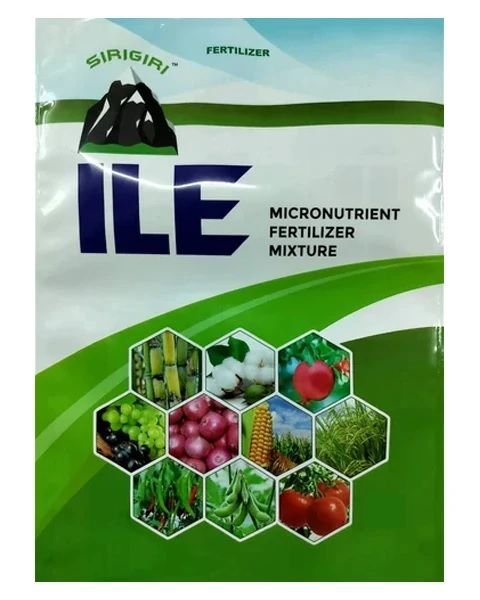
Sirigiri Corporate’s public product information indicates involvement in multiple fertilizer categories, including NPK fertilizer and bio fertilizer.
This broader portfolio makes the company’s quality journey even more significant.
A single-product company can sometimes manage information informally.
A multi-product company cannot do so easily.
Every additional product introduces new requirements.
Different products may have different raw materials.
Different products may require different processing conditions.
Different products may have different packaging.
Different products may have different customer applications.
Different products may require different technical documents.
Therefore, the company needs a common management framework.
This is where the principles learned through the Liquid Foliar Spray Fertilizer documentation can become valuable.
The first lesson is identification.
Every product should have a clear identity.
The second lesson is documentation.
Relevant technical and safety information should be recorded.
The third lesson is consistency.
Employees should work with controlled information.
The fourth lesson is responsibility.
Safety requirements should be communicated.
The fifth lesson is improvement.
Customer feedback should be used to strengthen the system.
These principles can be applied across a portfolio.
Consider an agricultural product development team.
It identifies a market requirement.
The technical team develops a formulation.
Testing begins.
Performance data is reviewed.
Safety considerations are examined.
Packaging is selected.
Product information is prepared.
Production procedures are established.
Employees are trained.
The product is introduced.
Customer feedback is collected.
The process is then reviewed.
This is essentially a quality-management cycle.
The company’s certification experience can encourage this discipline.
It can also improve internal communication.
Research and development can communicate with production.
Production can communicate with quality.
Quality can communicate with sales.
Sales can communicate with customers.
Customer feedback can return to management.
The organization becomes a network of connected processes rather than isolated departments.
This transformation is often one of the most important changes during business growth.
A small company may depend on individuals.
A growing company must increasingly depend on systems.
Individuals remain important, but systems provide continuity.
If one employee is absent, another employee should be able to understand the process.
If a new worker joins, training should be possible.
If a customer asks for documentation, it should be retrievable.
If management wants to review a problem, records should exist.
If a supplier changes, the impact should be evaluated.
This is organizational maturity.
The journey of Sirigiri Corporate therefore demonstrates an important principle:
Growth requires structure.
Without structure, growth can create confusion.
More products can mean more errors.
More customers can mean more complaints.
More employees can mean inconsistent practices.
More distributors can mean inconsistent communication.
A quality system helps manage these risks.
For the company, the 2022 MSDS was an important example of structured product information. The document identified the Liquid Foliar Spray Fertilizer, recorded supplier information and provided hazard and precautionary details.
The next stage is to apply the same discipline throughout the organization.
That is how a company evolves.
The certificate or document is the starting point.
The real achievement is embedding the principles behind it into daily operations.
When quality becomes part of purchasing, manufacturing, packaging, sales and customer service, the organization becomes stronger.
This is the broader business vision that can emerge from a certification journey.
Sirigiri Corporate’s agricultural identity provides an opportunity to build a company where scientific thinking, manufacturing discipline and customer understanding work together.
The future is therefore not limited to one product.
It is about developing an agricultural business capable of learning, adapting and improving.
#AgricultureInnovation
Chapter 8 – Employees, Training and the Development of a Quality Culture
No company can build quality through documents alone.
People make quality possible.
Employees operate machinery.
They handle raw materials.
They monitor processes.
They package products.
They maintain records.
They interact with customers.
They respond to problems.
They protect workplace safety.
Therefore, the success of any quality-oriented organization depends on employee understanding.
The MSDS of Sirigiri Corporate’s Liquid Foliar Spray Fertilizer provides an excellent example.
The document includes hazard identification and precautionary statements, including warnings concerning skin irritation, serious eye damage and possible respiratory irritation.
This information has practical relevance for employees.
A worker handling the product should understand why protective measures matter.
A warehouse employee should understand safe storage and handling expectations.
A packaging employee should understand the importance of correct labeling.
A sales employee should understand how to communicate product information responsibly.
A customer-service employee should know where to find safety information.
Thus, quality training is not restricted to the quality department.
Every employee contributes.
Training also improves confidence.
A worker who understands a process is more likely to perform it consistently.
A worker who understands why a requirement exists is more likely to follow it.
A worker who knows how to report an abnormality is more likely to prevent a small problem from becoming a large one.
This creates a culture of prevention.
Prevention is one of the most valuable concepts in quality management.
Instead of waiting for a customer to complain, the organization tries to prevent the problem.
Instead of waiting for an accident, the organization identifies hazards.
Instead of waiting for documentation errors, the organization controls documents.
Instead of waiting for repeated complaints, the organization analyzes trends.
This is the difference between reactive and proactive management.
Sirigiri Corporate’s journey toward structured product documentation can support such a culture.
Management can establish training around product identification, handling, safety, quality checks, documentation and customer communication.
New employees can be introduced to company procedures.
Experienced employees can receive refresher training.
Training records can demonstrate that employees have been informed.
Competency can be evaluated.
Feedback can be collected.
These practices strengthen the organization.
Training also contributes to employee development.
Employees begin understanding not only their individual tasks but also how their work affects the customer.
A production worker realizes that an incorrect batch record can create problems for sales.
A packaging worker realizes that incorrect labeling can confuse a customer.
A warehouse worker realizes that poor storage can affect product quality.
A sales employee realizes that inaccurate claims can damage customer trust.
Everyone becomes connected to the final outcome.
That is a quality culture.
For Sirigiri Corporate, developing such a culture can be particularly valuable as the business expands.
A growing organization needs employees who can take responsibility.
Management cannot personally supervise every activity.
Systems and trained employees must carry the organization forward.
This is where leadership becomes important again.
Management must recognize good performance.
It must encourage employees to report problems.
It must avoid creating a culture where employees hide mistakes.
Instead, problems should become learning opportunities.
If an error occurs, the organization should ask:
What happened?
Why did it happen?
Was the procedure unclear?
Was training inadequate?
Was the equipment unsuitable?
Was information missing?
Was supervision insufficient?
How can recurrence be prevented?
These questions transform mistakes into improvement.
Over time, employees begin to think like problem solvers.
They become more involved.
They contribute ideas.
They suggest improvements.
They become partners in the company’s growth.
This can be one of the most valuable outcomes of quality management.
The organization becomes stronger because knowledge is distributed among its people.
For Sirigiri Corporate, the 2022 documentation stage can therefore be viewed as a foundation for employee awareness.
The Liquid Foliar Spray Fertilizer was no longer simply a product.
It became a documented product with defined safety information.
And documented products create opportunities for documented training.
Training creates competency.
Competency creates consistency.
Consistency creates customer confidence.
Customer confidence supports sustainable growth.
Thus, people remain at the center of the quality journey.
#MSDSCertification
Chapter 9 – Continuous Improvement and the Road Ahead
A successful company never reaches a final point called “perfect.”
Markets change.
Agricultural practices change.
Technology changes.
Customer expectations change.
Environmental concerns change.
Competition changes.
Therefore, companies must change as well.
This is why continual improvement is one of the most important principles of quality management.
Sirigiri Corporate’s 2022 documentation provides a starting point.
The MSDS was recorded as Version 1.0 and included a revision/print date of 19 March 2022.
That information itself demonstrates an important principle: product documentation can be controlled, reviewed and updated when necessary.
Continuous improvement means asking whether existing information remains adequate.
Is the product description still accurate?
Are handling instructions clear?
Are employees properly trained?
Are customers asking new questions?
Are distributors facing difficulties?
Have new application methods developed?
Has packaging changed?
Have regulatory expectations changed?
Has the product portfolio expanded?
Each question can lead to improvement.
The agricultural sector provides many examples of why this matters.
Modern agriculture increasingly focuses on precision nutrient management, efficient application and better utilization of agricultural inputs.
Research continues to examine foliar application and liquid fertilizer strategies in different crops and environments. Recent agricultural research, for example, has investigated liquid fertilizer application for improving rice productivity in coastal saline ecosystems.
This evolving environment creates opportunities for companies like Sirigiri Corporate.
The company can strengthen its technical capabilities.
It can collect field feedback.
It can improve product information.
It can develop new formulations.
It can work with agricultural professionals.
It can study customer needs.
It can improve packaging and logistics.
It can strengthen testing and quality control.
Each improvement adds value.
Continuous improvement also applies internally.
Suppose the company notices that customers frequently ask for the same technical information.
The solution could be a better product brochure.
Suppose distributors frequently ask for safety documentation.
The company could establish a standard documentation package.
Suppose employees make repeated record-keeping errors.
The company could simplify the form or provide additional training.
Suppose customer complaints are difficult to analyze.
The company could create a structured complaint register.
This is how small improvements accumulate.
One improvement may appear insignificant.
But hundreds of improvements over several years can transform an organization.
Quality management therefore becomes a journey rather than an event.
The certificate date is an event.
The quality culture is the journey.
For Sirigiri Corporate, the documented 2022 MSDS can be viewed as one milestone in that journey.
The company can build upon it by strengthening its management system.
It can establish documented procedures.
It can improve supplier controls.
It can strengthen testing.
It can improve traceability.
It can train employees.
It can review customer complaints.
It can conduct internal audits.
It can set measurable objectives.
It can review performance.
It can identify risks and opportunities.
And it can continually improve.
This approach also strengthens resilience.
Business conditions can change unexpectedly.
A resilient company is not one that never experiences problems.
It is one that can identify problems quickly, respond effectively and learn from them.
Documentation supports resilience because it preserves organizational knowledge.
Training supports resilience because employees understand processes.
Quality systems support resilience because responsibilities are defined.
Customer feedback supports resilience because the company remains connected to the market.
Leadership supports resilience because management provides direction.
Together, these elements create a stronger business.
The future of Sirigiri Corporate can therefore be viewed not merely in terms of selling more fertilizer but in terms of becoming a more capable agricultural organization.
Its long-term opportunity lies in combining product development with quality management.
The Liquid Foliar Spray Fertilizer represents one chapter.
Future products can become additional chapters.
Each product can be documented.
Each process can be improved.
Each customer interaction can create learning.
Each employee can contribute.
Each certification can strengthen the system.
That is the road ahead.
#ProductSafety
Chapter 10 – From Certification to Sustainable Business Growth
The final chapter of Sirigiri Corporate’s story brings together the lessons of the entire journey.
The company began with products and an agricultural business vision.
It moved toward formal product documentation.
In 2022, the Liquid Foliar Spray Fertilizer received documented MSDS coverage. The MSDS identifies Sirigiri Corporate Pvt Ltd, the Kustagi industrial-area address and the product, and includes safety and hazard information.
The certification listing records the document with an issue date of 19 March 2022 and non-expiry validity.
These facts represent the documented foundation of the story.
The broader growth story comes from understanding what such documentation can mean for an organization.
Quality begins with responsibility.
A manufacturer accepts responsibility for its product.
A company accepts responsibility for its employees.
Management accepts responsibility for customer trust.
The organization accepts responsibility for continuous improvement.
This philosophy can influence every part of the business.
A quality-oriented agricultural company can seek to become more reliable in production.
It can become more professional in documentation.
It can become more responsive to customers.
It can become more systematic in employee training.
It can become more disciplined in supplier management.
It can become more consistent in product communication.
It can become more capable of developing new products.
This is the real meaning of growth after certification.
Growth is not only an increase in sales.
Growth can also mean maturity.
A company becomes more mature when its processes become clearer.
It becomes more mature when employees understand their responsibilities.
It becomes more mature when management decisions are supported by information.
It becomes more mature when customers receive consistent service.
It becomes more mature when mistakes are analyzed rather than hidden.
It becomes more mature when improvement becomes continuous.
Sirigiri Corporate’s broader public business presence shows association with fertilizer manufacturing and products including bio fertilizer and NPK fertilizer.
This provides an example of how a business can develop beyond one product.
But diversification also creates responsibility.
Every new product should receive the same attention to quality.
Every new customer should receive professional service.
Every new employee should understand company expectations.
Every new market should be approached responsibly.
The lessons of the 2022 Liquid Foliar Spray Fertilizer documentation can therefore be carried forward.
The first lesson is documentation.
If something is important, record it.
The second is safety.
If a product has hazards, communicate them clearly.
The third is consistency.
Customers should receive reliable information.
The fourth is training.
Employees should understand both what they do and why they do it.
The fifth is customer focus.
The purpose of quality is ultimately to create value for the customer.
The sixth is continual improvement.
A process that works today can often be improved tomorrow.
The seventh is leadership.
Management must demonstrate commitment through action.
These principles can create sustainable growth.
A company built around these ideas is better positioned to handle changing markets.
It can respond to customer expectations.
It can introduce new products.
It can develop stronger partnerships.
It can pursue institutional opportunities.
It can improve operational efficiency.
And it can strengthen its reputation.
The story of Sirigiri Corporate Pvt Ltd is therefore not simply about one certification document.
It is about a transition in organizational thinking.
A product became documented.
Documentation created awareness.
Awareness created discipline.
Discipline supported quality.
Quality strengthened communication.
Communication supported trust.
Trust created opportunities.
And opportunities created the possibility of sustainable growth.
The company’s journey continues.
There will be new agricultural requirements.
There will be new customers.
There will be new technologies.
There will be new products.
There will be new challenges.
But the fundamental lesson remains unchanged:
Quality is not a destination. Quality is a continuous journey.
For Sirigiri Corporate, the 2022 documentation of its Liquid Foliar Spray Fertilizer can be remembered as one important milestone on that journey.
From the industrial area of Kustagi to wider agricultural markets, the company’s future potential lies in continuing to combine technical knowledge, responsible product communication, customer focus and systematic quality management.
The greatest achievement of certification is not the certificate itself.
The greatest achievement is what the organization becomes because of the discipline created around quality.
That is where sustainable growth begins.
And that is where the next chapter of Sirigiri Corporate’s story can be written.
#SustainableAgriculture
Conclusion
Sirigiri Corporate Pvt Ltd’s documented 2022 MSDS journey demonstrates how formal product documentation can become part of a broader quality culture. The Liquid Foliar Spray Fertilizer was supported by a structured safety document containing product identification, supplier information, hazard classification and precautionary statements.
From there, the organization has an opportunity to build stronger systems around production, employee training, customer communication, product development, documentation and continuous improvement.
The company’s growth should therefore be understood not only through commercial expansion but also through organizational maturity.
The real legacy of quality is a business that learns continuously, communicates responsibly, protects its people, understands its customers and improves its products and processes year after year.
For Sirigiri Corporate Pvt Ltd, the 2022 quality-documentation milestone can thus be viewed as one foundation for a larger vision: to build a more professional, responsible and continuously improving agricultural enterprise.
#FertilizerManufacturing #CropNutrition #AgriculturalSolutions #QualityAssurance #AgriBusinessGrowth
Take the Next Step Today
Don’t wait to enhance your business’s quality and efficiency. Partner with Sanatan Dharma Accreditation Boards and experience the transformation that comes with expert consultancy and training. Contact us today to learn more about how we can help you achieve your business goals. Reach out via phone at +91-8668266780, visit our website at sanatanboards.com, or email us at info@sanatanboards.com Let us be your guide on the journey to excellence and innovation.





