
Maheshwari Gypsum
Table of Contents
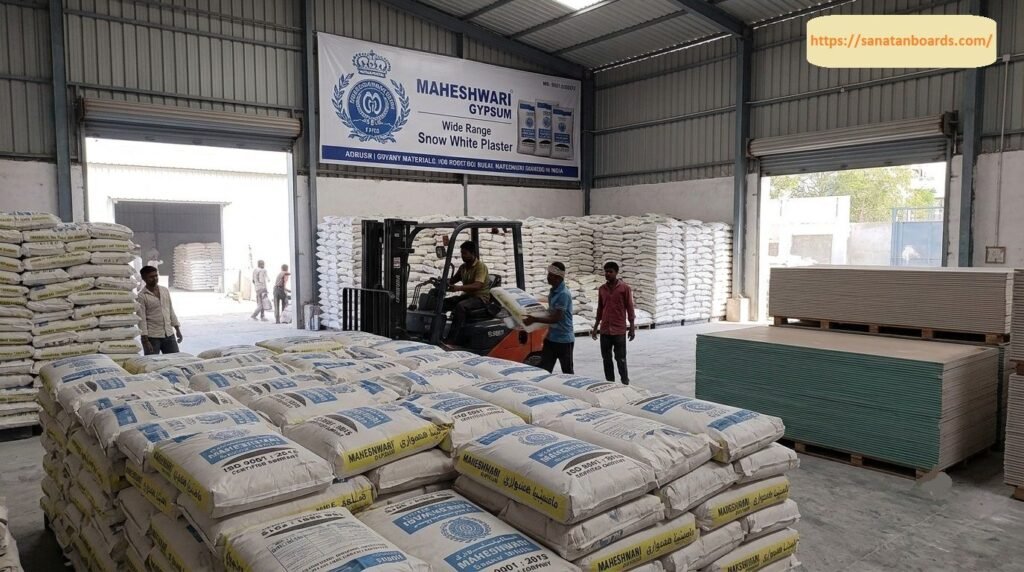
Introduction
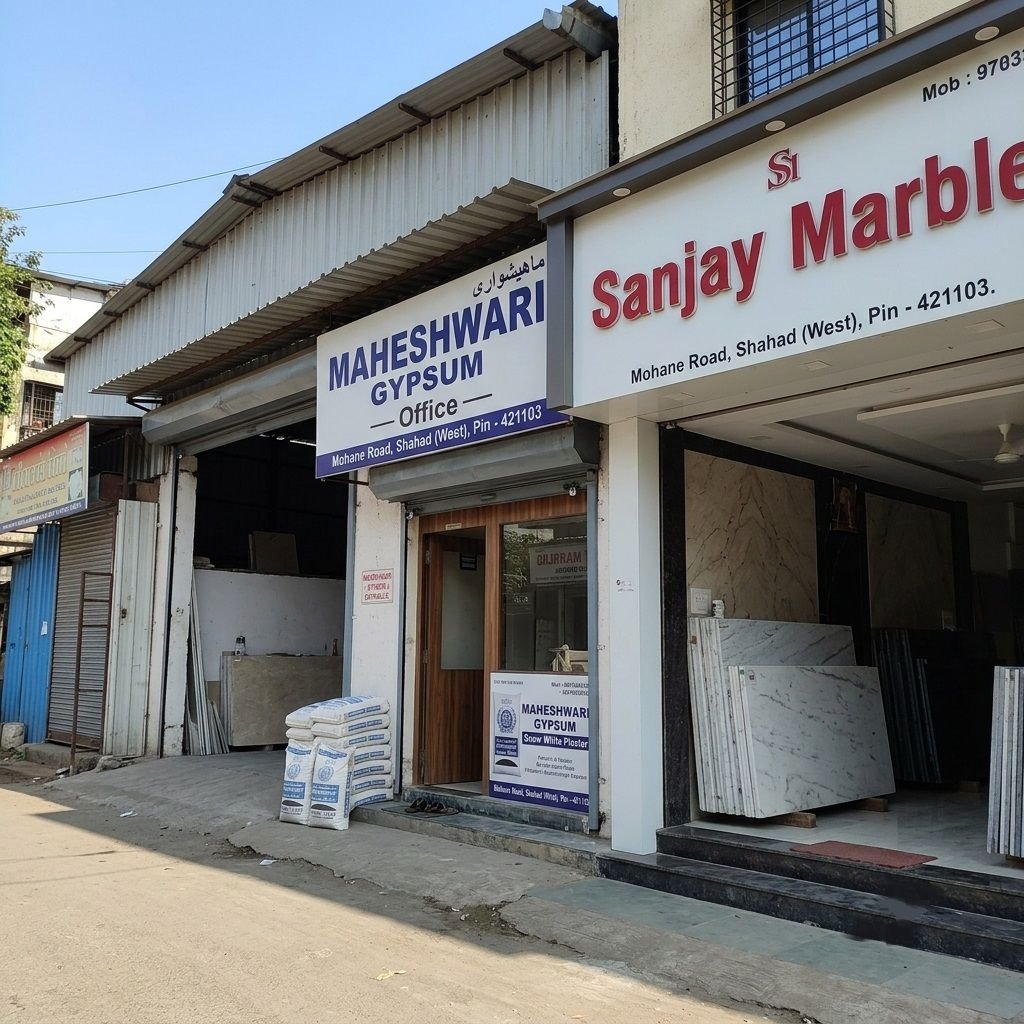
In every successful industrial journey, there are moments when a company moves beyond simply selling a product and begins building a system of trust around that product. For Maheshwari Gypsum, located next to Sanjay Marble on Mohane Road, Shahad (West), one such important milestone was the development and certification of its Material Safety Data Sheet documentation in 2022.
Gypsum is a widely used mineral material, and safety information surrounding gypsum products can be important for people involved in handling, storage, processing, transportation, and application. Technical safety documentation for gypsum commonly identifies the material, explains potential hazards, describes safe handling and storage, and provides information on exposure controls and protective measures.
The certification therefore represented more than a document kept in a file. It could serve as part of a broader professional approach to product information, customer communication, workplace awareness, and business discipline.
For Maheshwari Gypsum, the 2022 milestone can be viewed as the beginning of a new chapter—one in which quality and safety documentation became increasingly connected with customer confidence and long-term business development.
The following ten chapters present a detailed business-growth story of Maheshwari Gypsum and its promoter, focusing on the transformation that can follow when a growing business begins placing greater emphasis on documentation, consistency, responsibility, customer confidence, and professional systems.
Chapter 1 – The Beginning of Maheshwari Gypsum
Every business begins with an idea, but the businesses that survive and grow are built through years of practical decisions. Maheshwari Gypsum represents this kind of entrepreneurial journey.
Located on Mohane Road in Shahad (West), near Sanjay Marble, Maheshwari Gypsum operates in a business environment where construction materials, industrial products, building requirements, and material suppliers interact closely. The location places the business within an active commercial and industrial ecosystem where customers often look for accessibility, availability, dependable service, and confidence in the materials they purchase.
For a promoter, starting and developing a gypsum-related business involves much more than purchasing and selling material. Customers want to understand what they are buying, how it should be handled, where it should be stored, and what precautions may be necessary during use. As a business grows, these questions become increasingly important.
The promoter’s role therefore gradually expands. In the beginning, the promoter may focus primarily on purchasing, selling, customer relationships, transportation, pricing, and daily operations. With time, however, the promoter begins to recognize that sustainable growth depends on creating a dependable business system.
This is where quality documentation becomes valuable.
A professional company must be able to communicate product information clearly. A Material Safety Data Sheet, or MSDS, is one such form of documentation. Safety data sheets for gypsum products commonly contain information concerning product identity, composition, potential hazards, handling, storage, exposure controls, personal protective equipment, and first-aid measures.
For Maheshwari Gypsum, developing such documentation represented a step toward greater formalization.
The journey can be imagined as a gradual transformation.
At first, the business is driven by personal relationships. Customers know the promoter. Suppliers know the promoter. Orders are discussed directly. Problems are solved through phone calls and personal attention.
As the company develops, however, personal relationships need to be supported by systems.
A customer who receives professional documentation experiences a different level of communication. Instead of depending entirely on verbal explanations, important product-related information can be presented in an organized form.
This is particularly relevant for industrial and construction-related materials.
The promoter of Maheshwari Gypsum could therefore look at documentation not merely as a certification requirement but as a business-development tool. A properly prepared document creates a formal reference point for employees, customers, distributors, contractors, and other stakeholders.
The year 2022 became significant in this journey.
The Material Safety Data Sheet Certificate issued for Maheshwari Gypsum provided a formal milestone that could be associated with the company’s commitment to organized product information. Its non-expiry validity also meant that the certification represented an enduring reference point, subject of course to maintaining the accuracy and relevance of the underlying product information.
The value of such a milestone is not limited to the certificate itself.
For a growing enterprise, certification can encourage a change in mindset. Instead of asking only, “Can we sell this product?” the organization begins asking additional questions:
Can we explain the product properly?
Can we provide appropriate safety information?
Can our customers understand handling requirements?
Can our employees communicate consistently?
Can our documentation support professional business relationships?
These questions gradually contribute to organizational maturity.
The promoter’s journey consequently becomes a journey from informal business management toward structured business management.
This transformation is rarely completed in a single day. It develops through repeated actions—better documentation, clearer communication, more consistent processes, improved customer service, and stronger attention to responsibility.
Maheshwari Gypsum’s 2022 certification milestone can therefore be understood as one part of a larger entrepreneurial story.
It symbolizes a business recognizing that trust is not created only through price or availability. Trust is also created through information, transparency, consistency, and responsibility.
The foundation had been established.
The next challenge was to convert that foundation into a stronger and more professional business culture.
#MaheshwariGypsum
Chapter 2 – The Promoter’s Vision for Professional Growth
Behind every small and medium-sized enterprise is a person or group of people willing to accept uncertainty and responsibility. The promoter of Maheshwari Gypsum can be viewed as the central force behind the company’s development—a person responsible not only for business decisions but also for maintaining relationships with customers, suppliers, workers, and other stakeholders.
Entrepreneurship in the construction-material sector can be demanding. Market conditions can change, customer requirements can vary, transportation costs can influence pricing, and competition can require businesses to continuously improve their service.
In such an environment, the promoter needs a long-term vision.
A business cannot depend indefinitely on personal relationships alone. As customer expectations become more professional, the business itself must become more professional.
The 2022 MSDS certification milestone therefore fits naturally into this broader vision.
The purpose of safety documentation is not simply to create paperwork. A safety data sheet is designed to provide structured information that can help users understand a material and its safe handling requirements. Typical gypsum SDS documentation identifies the product and may address hazards, precautions, storage, exposure controls, personal protection, and emergency measures.
For a promoter, this creates an opportunity to improve communication.
Imagine a customer who has been purchasing gypsum products for years. Previously, questions regarding the product may have been answered informally. After professional documentation is introduced, important information can be referenced in a standardized format.
This creates consistency.
Consistency is one of the most important foundations of business growth.
If one employee describes a product differently from another employee, confusion can arise. If storage instructions are communicated differently on different occasions, customers may become uncertain. If product information exists only in the promoter’s memory, the organization remains heavily dependent on one individual.
Documentation begins reducing this dependency.
The promoter can delegate responsibilities more confidently because employees have access to structured information.
This is an important step in business evolution.
In the early stage of an enterprise, the promoter often performs multiple roles. The promoter may handle sales in the morning, speak with suppliers in the afternoon, solve transportation issues later, and answer customer questions at night.
As the business grows, this model becomes difficult to sustain.
Professional systems allow knowledge to move from the individual to the organization.
Maheshwari Gypsum’s certification journey can therefore be seen as part of that transition.
The promoter’s vision gradually changes from simply maintaining daily business activity to building a company capable of functioning through processes.
This approach can also improve customer confidence.
When customers see that a business takes product information and safety documentation seriously, they may perceive the organization as more organized and dependable. This perception is especially relevant when dealing with professional buyers, contractors, industrial customers, or organizations that maintain their own documentation systems.
The certification can also become part of the company’s professional identity.
Instead of presenting itself simply as a supplier, Maheshwari Gypsum can position itself as an organization that understands the importance of product responsibility.
That distinction matters.
In competitive markets, many companies may offer similar products. What differentiates businesses is often the complete customer experience: responsiveness, documentation, reliability, communication, consistency, and after-sales support.
The promoter’s role consequently becomes one of continuous improvement.
Every customer interaction becomes an opportunity to identify weaknesses.
Every question becomes an opportunity to improve documentation.
Every complaint becomes an opportunity to improve a process.
Every successful delivery becomes an opportunity to strengthen the system.
This mindset creates a culture in which growth is not measured only by revenue.
Growth can also mean better processes.
It can mean fewer misunderstandings.
It can mean faster communication.
It can mean better record keeping.
It can mean greater confidence among employees.
It can mean customers receiving clearer information.
These improvements may not always appear immediately on a balance sheet, but they can contribute to the long-term resilience of a business.
For Maheshwari Gypsum, the 2022 milestone can therefore be viewed as a reflection of the promoter’s evolving business philosophy.
The company was not merely dealing in a material.
It was developing an identity based on professionalism.
And once professionalism becomes part of an organization’s identity, the next challenge is to carry that identity into everyday operations.
#GypsumIndustry
Chapter 3 – Certification as a Foundation for Better Documentation
Documentation is one of the quiet foundations of a professional organization.
Customers usually see the final product, the invoice, the delivery, and the service. They do not always see the documents, records, procedures, checks, and internal decisions that support those visible outcomes.
Yet these invisible systems can have a major effect on how efficiently a business operates.
For Maheshwari Gypsum, the 2022 Material Safety Data Sheet certification created an opportunity to strengthen this invisible infrastructure.
The importance of MSDS or SDS documentation is particularly relevant when dealing with materials that may generate dust during handling or processing. Authoritative technical references identify gypsum as calcium sulfate dihydrate and provide information on exposure routes and precautions.
This means product documentation should be treated seriously.
A professional safety document helps establish a common language.
Instead of employees relying entirely on verbal explanations, the company can maintain a formal source of information.
This can help in several areas.
First is customer communication.
A customer may ask about product characteristics, storage, handling, or precautions. Having organized documentation enables the company to respond systematically.
Second is employee awareness.
Employees involved in loading, unloading, storage, packaging, dispatch, or customer communication can become more familiar with the material they handle.
Third is supplier and business-partner communication.
Professional buyers sometimes expect suppliers to provide technical or safety documentation. Having such information readily available can make interactions smoother.
Fourth is internal discipline.
Once an organization starts maintaining formal documents, it becomes easier to identify which information is available and which information needs improvement.
This creates a positive cycle.
Documentation creates awareness.
Awareness creates questions.
Questions lead to process improvements.
Process improvements create stronger documentation.
The cycle continues.
The promoter can use this process to gradually build a more mature organization.
The certification itself should not be presented as a guarantee that every aspect of the company’s operations is perfect. Instead, it can be understood as a milestone in the company’s quality and documentation journey.
This distinction is important.
A certificate is a representation of a particular scope or activity. Sustainable growth depends on what the organization does after receiving it.
The real value appears when the principles represented by the certification become part of daily work.
For Maheshwari Gypsum, this could mean ensuring that product-related information remains organized, accessible, and communicated appropriately.
It could mean reviewing documents whenever product characteristics or applicable requirements change.
It could mean training relevant employees to understand the information rather than simply keeping the document in a file.
It could mean making customer communication more consistent.
These actions convert certification from a static achievement into a living business practice.
The promoter’s responsibility is central here.
If leadership treats documentation as unnecessary paperwork, employees will probably do the same.
If leadership treats documentation as part of professional responsibility, employees are more likely to follow.
Leadership therefore establishes culture.
The 2022 milestone can be interpreted as a point at which Maheshwari Gypsum strengthened the relationship between product knowledge and business professionalism.
This has another benefit: organizational memory.
Businesses change. Employees join and leave. Suppliers change. Customer expectations evolve. Promoters may not always be available.
A documented organization retains knowledge.
That knowledge can support continuity.
For a growing enterprise, continuity is essential.
The company should not have to restart its knowledge-building process every time a person leaves.
Documentation becomes a bridge between the past and the future.
The same principle applies to customer relationships.
A professional customer expects information to remain consistent even if a different employee answers the phone tomorrow.
A documented approach helps achieve that consistency.
Therefore, the 2022 certification milestone can be viewed as the beginning of a more disciplined documentation culture at Maheshwari Gypsum.
It provided an opportunity to establish a stronger relationship between product information, employee awareness, customer confidence, and operational consistency.
From this point onward, growth was no longer simply about doing more business.
It was also about becoming better organized while doing that business.
#MaterialSafetyDataSheet
Chapter 4 – Building Customer Confidence Through Transparency
Customer trust is one of the most valuable assets a business can possess.
It is also one of the most difficult assets to measure.
A customer may not immediately tell a supplier that professional documentation influenced a purchase decision. Instead, trust develops gradually through repeated experiences.
The product arrives as expected.
The information is clear.
Questions receive answers.
Problems are addressed.
Documentation is available.
Communication remains consistent.
Over time, these experiences create confidence.
For Maheshwari Gypsum, the 2022 certification milestone created an additional opportunity to strengthen this confidence.
Transparency begins with information.
A customer purchasing gypsum-related material may need to understand how the product should be handled and stored. Safety data sheets commonly include information about hazards, precautions, handling, storage, exposure controls, personal protection, and first-aid measures.
Providing appropriate documentation therefore supports a more transparent relationship.
The promoter can explain that the company is not merely interested in completing a sale. It also recognizes the importance of responsible product communication.
This distinction can influence how customers perceive the organization.
Consider two suppliers offering comparable products.
One provides only the material.
The other provides the material along with organized technical and safety information when appropriate.
The second supplier creates an additional layer of professionalism.
This does not automatically mean that every customer will choose that supplier. Price, availability, quality, delivery time, location, relationships, and many other factors influence purchasing decisions.
But professional documentation can contribute to the overall customer experience.
For Maheshwari Gypsum, this becomes particularly valuable when dealing with customers who themselves operate structured businesses.
Larger contractors, industrial users, procurement departments, and organizations with internal safety procedures may require supporting documentation from suppliers.
A company that can respond professionally to such requirements may find it easier to participate in more formal business relationships.
The promoter can therefore begin viewing documentation as a bridge between the company and more organized customers.
This can contribute to market development.
Instead of relying only on traditional buyers, the business can gradually explore relationships with customers who value documentation, consistency, and professional communication.
Again, this is not an automatic outcome of certification.
Certification creates an opportunity.
Management must use that opportunity.
The promoter can also strengthen customer service by maintaining organized records of frequently asked questions.
For example, if customers repeatedly ask about storage conditions, handling precautions, packaging, or material characteristics, the company can develop clearer communication practices around those topics.
This creates a learning organization.
Customers teach the company what information matters.
Employees identify operational difficulties.
The promoter converts these lessons into better processes.
The result is a company that becomes more responsive over time.
Transparency also affects internal trust.
Employees feel more confident when they have access to clear information.
Sales personnel can communicate with customers more consistently.
Dispatch personnel understand the importance of appropriate handling.
Management can monitor documentation requirements.
The entire organization becomes connected through information.
This is one of the less visible effects of professional certification.
It does not necessarily transform the company overnight.
Instead, it can gradually influence how people think.
A salesperson begins thinking about customer information.
A warehouse employee begins thinking about safe handling.
A manager begins thinking about document control.
The promoter begins thinking about systems rather than individual transactions.
Together, these small changes contribute to organizational maturity.
For Maheshwari Gypsum, the 2022 milestone can therefore be seen as part of the journey toward a more transparent business identity.
The company could increasingly communicate a simple message:
“We understand the importance of the product we supply, and we take responsibility for communicating relevant information clearly.”
That message is valuable because trust is rarely created through advertisements alone.
Trust is created through behavior.
It is created when promises are supported by actions.
It is created when documentation matches communication.
It is created when customers receive consistent service.
The certification became one more piece of evidence supporting this professional approach.
And as customer confidence increased, the company gained a stronger foundation from which to pursue long-term relationships.
#MSDSCertificate
Chapter 5 – Strengthening Internal Discipline and Operational Practices
Courtesy: POP INDIA
Business growth creates complexity.
When a company is small, a promoter may personally supervise almost everything. As operations expand, however, personal supervision becomes increasingly difficult.
This is where internal discipline becomes important.
Maheshwari Gypsum’s certification milestone in 2022 provided an opportunity to strengthen the organization’s internal approach to documentation and product information.
The first major change can be seen in the mindset surrounding responsibility.
Employees begin to understand that every activity affects the next activity.
Purchasing affects storage.
Storage affects product condition.
Handling affects safety.
Documentation affects communication.
Communication affects customer confidence.
Customer confidence affects relationships.
The business therefore becomes a connected chain rather than a collection of separate tasks.
This is an important quality-management principle.
A company grows stronger when each stage of work supports the next.
For a gypsum-related business, proper material handling can be particularly relevant because dust exposure can be an important consideration. NIOSH identifies inhalation, skin contact, and eye contact as exposure routes for gypsum and provides occupational exposure information.
Such information reinforces the importance of responsible workplace practices.
The promoter can use the certification milestone as an opportunity to encourage employees to take documentation seriously.
Instead of treating safety information as something required only for customers, employees can understand its practical relevance.
This creates a more responsible working environment.
Operational discipline also improves communication.
For example, if a customer asks for a product document, employees know where to locate it.
If a business partner requests technical information, the response can be faster.
If an employee needs clarification, the relevant information can be referenced.
If a new employee joins the organization, training becomes easier.
These improvements may seem small individually, but together they can reduce unnecessary confusion.
The promoter can also introduce simple internal reviews.
The company can periodically ask:
Are our product documents current?
Are employees familiar with the relevant information?
Are customer questions being recorded?
Are storage and handling practices consistent?
Are records easy to retrieve?
Are responsibilities clearly assigned?
Such questions encourage continuous improvement.
A professional organization does not wait for a problem before reviewing its processes.
Instead, it looks for potential weaknesses in advance.
This proactive attitude is valuable for long-term growth.
It can also reduce dependence on individual employees.
If one person knows everything about product documentation, the company becomes vulnerable when that person is unavailable.
If information is properly organized, organizational knowledge becomes more resilient.
This is particularly important for small and medium enterprises.
Many businesses struggle not because their products are poor but because their processes remain informal for too long.
The transition from informal management to structured management is therefore a major stage in business maturity.
Maheshwari Gypsum’s certification journey can be placed within this transition.
The company had an opportunity to build stronger habits around documentation, communication, and responsibility.
These habits can influence other areas of the business as well.
Once employees become accustomed to organized documentation, they may naturally begin improving invoices, stock records, customer records, delivery records, supplier information, and internal checklists.
One improvement leads to another.
This is how quality culture develops.
It does not begin with a giant transformation.
It begins with discipline.
A document is filed correctly.
A customer question is recorded.
A product detail is verified.
A safety instruction is communicated.
A process is reviewed.
An error is corrected.
Over time, these actions become normal behavior.
The organization becomes more predictable.
Predictability is valuable in business because customers want to know what to expect.
When a company consistently delivers the same standard of communication and service, confidence grows.
For Maheshwari Gypsum, the 2022 milestone therefore had the potential to influence more than documentation.
It could contribute to a culture in which employees understood that professional business operations depend on small acts of discipline repeated every day.
That discipline becomes the foundation upon which sustainable growth can be built.
#QualityManagement
Chapter 6 – Expanding Professional Business Relationships
A company’s growth is often closely connected to the quality of its relationships.
Customers, suppliers, transporters, contractors, distributors, consultants, and business partners all influence an organization’s development.
For Maheshwari Gypsum, the 2022 certification milestone could strengthen the company’s professional image when communicating with such stakeholders.
Professional business relationships require clarity.
A supplier wants clear requirements.
A customer wants accurate information.
A transporter wants appropriate instructions.
An employee wants defined responsibilities.
A business partner wants confidence that the organization understands its obligations.
Documentation supports this clarity.
When a company maintains structured product information, communication becomes easier.
Safety data sheets are specifically designed to communicate information about products and their safe use. Current SDS resources for gypsum products demonstrate the broad range of information that such documents may contain, including product identification, hazards, handling, storage, and protective measures.
This creates a professional reference point.
Maheshwari Gypsum could therefore use its documentation capability as part of its broader business communication strategy.
The promoter can explain the company’s commitment to responsible product information.
Sales representatives can provide appropriate documentation when required.
Customers can maintain the information within their own records.
Business partners can better understand the material they are receiving.
This can be particularly useful when approaching organizations that maintain formal procurement procedures.
In many professional procurement environments, buyers evaluate suppliers on multiple dimensions.
Price matters.
Availability matters.
Delivery matters.
Product quality matters.
But documentation and supplier professionalism can also matter.
A business that understands these expectations can prepare itself for more structured opportunities.
The certification milestone therefore creates a platform from which Maheshwari Gypsum can continue developing.
The company does not have to limit itself to the customer relationships it already has.
It can gradually explore new segments where professional documentation is valued.
This might include construction-related organizations, industrial users, contractors, project suppliers, material dealers, or other businesses whose procurement processes require supporting documents.
However, sustainable expansion requires caution.
Growth should not come at the cost of quality.
If customer numbers increase while internal systems remain weak, the company can become overloaded.
Therefore, the promoter’s challenge is to expand systems alongside business relationships.
This means improving documentation, employee training, communication, inventory management, and customer-service practices together.
The certification can become part of this development strategy.
It can serve as evidence of the company’s willingness to adopt professional practices.
It can also become a talking point during business discussions.
The promoter can communicate a broader business philosophy:
Quality is not only about the material.
Quality is also about information.
Quality is about consistency.
Quality is about responsibility.
Quality is about customer confidence.
This philosophy can differentiate the organization in a competitive market.
The promoter may also find that certification encourages a stronger professional network.
Consultants and certification professionals become part of the company’s learning environment.
Customers may ask more technical questions.
Employees may become more aware of industry expectations.
Suppliers may provide more detailed information.
Each interaction becomes a source of knowledge.
The organization becomes increasingly connected to a larger professional ecosystem.
This is one of the ways certification can contribute indirectly to business development.
It does not create customers automatically.
Instead, it can improve the company’s readiness to work with customers who expect formal processes.
The difference is important.
Business growth ultimately depends on many variables, including market demand, pricing, product quality, service, competition, location, operational efficiency, and customer relationships.
Certification is one component of that larger picture.
For Maheshwari Gypsum, however, the 2022 milestone created a useful foundation.
It allowed the company to present itself as a business that recognizes the importance of structured product information and responsible communication.
The promoter could build upon this foundation through better service, stronger relationships, improved processes, and continued attention to customer requirements.
Over time, this approach could help the company become not simply a material supplier but a more professional business partner.
That change in identity is often an important step in the growth of an enterprise.
#ISO9001
Chapter 7 – The Human Side of Growth
Behind every document, product, order, and delivery are people.
Business growth is therefore ultimately a human story.
The promoter of Maheshwari Gypsum may have started with a relatively simple objective: build a sustainable business, serve customers, maintain supplier relationships, and create a reliable source of livelihood.
As the organization developed, that objective could become broader.
The company could become a place where employees learn professional practices.
Customers could receive better information.
Suppliers could experience more organized communication.
The promoter could spend less time solving repetitive problems and more time planning future development.
This is one of the important effects of system building.
A good system gives people clarity.
Employees know what is expected.
Managers know what to monitor.
Customers know where to obtain information.
The promoter gains better visibility into operations.
The 2022 certification milestone could contribute to this human development by encouraging greater awareness of product safety and documentation.
Employees who understand why documentation matters are more likely to treat it responsibly.
They may become more careful while handling material.
They may communicate more clearly with customers.
They may recognize when information needs to be escalated to management.
This creates ownership.
Ownership is an important quality in a growing organization.
Employees should not feel that quality belongs only to the promoter.
Quality should become everyone’s responsibility.
For example, a warehouse worker may be the first person to notice a storage issue.
A salesperson may be the first person to hear a customer’s concern.
A delivery employee may discover that a customer needs additional documentation.
An office employee may notice that a document is outdated.
If employees feel responsible for identifying and reporting such issues, the organization becomes stronger.
The promoter’s leadership therefore becomes critical.
Leadership is not simply giving instructions.
It is creating an environment in which employees understand why the instructions matter.
The certification journey can be used as an educational opportunity.
The promoter can explain what the MSDS represents.
Employees can be shown how to locate relevant information.
Customer-facing staff can learn how to communicate appropriately.
Managers can understand the importance of maintaining accurate documentation.
Through such activities, certification becomes part of organizational learning.
This can also improve employee confidence.
A worker who understands the material being handled may feel more capable.
A salesperson who can answer customer questions professionally may feel more confident.
An office employee who can quickly retrieve documents becomes more effective.
Small improvements in confidence can accumulate across the organization.
The human side of growth also includes the promoter’s personal development.
Entrepreneurs often begin businesses with technical or commercial skills, but managing a growing organization requires additional capabilities.
Leadership.
Delegation.
Communication.
Financial planning.
Process management.
Customer relationship management.
Risk awareness.
Strategic thinking.
The more the company grows, the more the promoter must evolve.
The 2022 certification milestone can therefore be viewed as part of the promoter’s own professional development.
It represents a willingness to recognize that business maturity requires more than experience.
It requires systems.
It requires documentation.
It requires learning.
It requires continuous improvement.
This transformation may also influence the company’s reputation within the local business community.
A business that operates professionally can gradually become known for reliability.
Such a reputation is not created by a single certificate.
It is built through years of consistent behavior.
Every customer interaction contributes.
Every delivery contributes.
Every response to a complaint contributes.
Every document contributes.
Every commitment fulfilled contributes.
The promoter’s challenge is therefore to ensure that the certification milestone becomes a starting point rather than an endpoint.
If the organization continues learning, the benefits can extend beyond documentation.
The company can develop a culture in which employees actively search for ways to improve.
That culture is one of the strongest foundations for sustainable growth.
Maheshwari Gypsum’s story is therefore not simply about a certificate issued in 2022.
It is about people learning to work in a more structured way.
It is about a promoter moving from day-to-day management toward organizational leadership.
It is about employees understanding responsibility.
It is about customers receiving better communication.
And it is about building a company whose future does not depend solely on the efforts of one individual.
That is the deeper meaning of professional growth.
#QualityCertification
Chapter 8 – From Certification to Continuous Improvement
Certification creates a milestone.
Continuous improvement creates a journey.
For Maheshwari Gypsum, the 2022 certification should therefore be understood as a point from which further improvements can be developed.
A common mistake businesses make is to treat certification as the final objective.
Once the certificate is received, the file is closed.
The document is framed.
The achievement is announced.
Then normal operations resume.
But the greater value comes when the organization continues improving after certification.
For Maheshwari Gypsum, this could involve periodically reviewing product documentation, customer requirements, employee awareness, and operational practices.
Safety data sheets themselves demonstrate why review is important. Product safety documentation may contain detailed information concerning composition, hazards, exposure controls, handling, storage, and emergency response.
Therefore, the company should maintain an attitude of accuracy and relevance.
Continuous improvement can begin with simple questions.
What did customers ask this year?
What problems occurred?
What information was difficult to locate?
What processes caused delays?
Where did communication break down?
What could employees do better?
What documentation needs review?
What new customer expectations are emerging?
These questions create a feedback loop.
The promoter can review the answers periodically and prioritize improvements.
Not every improvement requires significant investment.
Some may involve better filing.
Some may involve training.
Some may involve checklists.
Some may involve improved communication.
Some may involve assigning responsibility to a particular employee.
Small changes can create significant cumulative benefits.
Technology can also support this journey.
Digital document storage can make information easier to access.
Electronic customer records can improve communication.
Inventory systems can improve visibility.
Digital communication can speed up document sharing.
However, technology should support processes rather than replace them.
The company must first know what information it needs and who is responsible for maintaining it.
Then technology can make the process more efficient.
The promoter can also establish a culture of review.
Instead of asking only whether the business is growing, management can ask whether the business is becoming better.
These are different questions.
Revenue may increase while processes deteriorate.
Customer numbers may increase while service quality declines.
Orders may increase while employees become overloaded.
A sustainable company must balance growth with capability.
This is why continuous improvement matters.
Maheshwari Gypsum can use the experience gained through certification as a foundation for broader quality practices.
For example, the company can improve its supplier evaluation process.
It can establish clearer customer complaint procedures.
It can standardize sales communication.
It can organize technical documents.
It can strengthen employee training.
It can improve storage and handling practices.
It can monitor recurring problems.
Each improvement reinforces the others.
The organization gradually becomes more mature.
The promoter also gains better management visibility.
Instead of discovering problems only after customers complain, management can identify warning signs earlier.
This creates a proactive organization.
Proactive management is especially valuable for businesses operating in competitive markets.
Competitors can copy products.
Prices can change.
Customers can switch suppliers.
Markets can fluctuate.
But organizational discipline is harder to copy because it develops through culture.
A company with strong internal discipline can respond more effectively to change.
The 2022 certification milestone can therefore be understood as one of the building blocks of Maheshwari Gypsum’s long-term resilience.
The objective is not to claim that one certificate transformed the entire company.
Rather, the certification represents a formal moment in the company’s continuing effort to improve professionalism.
This distinction gives the story credibility.
Growth is rarely caused by one event.
It is created through hundreds of decisions made over many years.
Certification can influence some of those decisions.
It can create awareness.
It can establish documentation.
It can encourage discipline.
It can support customer communication.
It can strengthen professional identity.
But the organization must continue the work.
For Maheshwari Gypsum, the next stage of growth therefore lies in maintaining the momentum created by the 2022 milestone.
The certificate becomes the beginning of continuous improvement rather than the conclusion of the journey.
#ProductSafety
Chapter 9 – Creating a Stronger Future for Maheshwari Gypsum
Every entrepreneur eventually reaches a point where the question changes.
At the beginning, the question is:
“How do we survive?”
Later it becomes:
“How do we grow?”
After growth begins, the question becomes:
“How do we build something sustainable?”
For Maheshwari Gypsum, the certification milestone of 2022 can be connected to this third stage.
Sustainability in business means creating systems that can continue functioning despite changes in people, customers, suppliers, markets, and economic conditions.
The company’s future therefore depends not only on selling gypsum-related products but also on maintaining professional processes.
The promoter can build this future around several principles.
The first is consistency.
Customers should receive consistent information and service.
The second is responsibility.
Employees should understand the importance of safe and appropriate material handling.
The third is documentation.
Important information should be organized and accessible.
The fourth is customer orientation.
The company should listen to customer requirements and adapt when appropriate.
The fifth is learning.
The organization should continuously improve.
These principles can guide future expansion.
If Maheshwari Gypsum decides to increase its customer base, documentation can support that growth.
If it expands its product portfolio, structured product information can support the transition.
If it develops relationships with larger organizations, professional records can improve supplier credibility.
If it increases its workforce, documented processes can simplify training.
If the promoter delegates more responsibilities, systems can provide organizational control.
This is how documentation becomes strategic.
It is no longer just an administrative activity.
It becomes part of the company’s ability to scale.
The company’s location on Mohane Road, Shahad (West), also provides a practical base for maintaining relationships within its local commercial ecosystem. From this base, the business can continue developing its network through customer service and professional communication.
However, future growth must remain grounded in reality.
The company should not expand merely for the sake of expansion.
Growth should be supported by operational capability.
Before accepting significantly more business, management should consider inventory, working capital, staff capacity, logistics, documentation, customer support, and supplier reliability.
A professional system allows these questions to be answered more clearly.
The promoter’s role therefore changes again.
Instead of being the person who solves every problem, the promoter becomes the person who designs systems that prevent recurring problems.
This is a major entrepreneurial transition.
It requires delegation.
It requires trust.
It requires measurement.
It requires patience.
It also requires accepting that no organization is perfect.
There will always be complaints.
There will always be unexpected delays.
There will always be new requirements.
The objective is not to eliminate every problem.
The objective is to ensure that the organization learns from problems.
This learning culture can become a competitive strength.
Suppose a customer raises a concern.
The company can simply apologize and move on.
Or it can ask why the problem occurred.
Was the information unclear?
Was the product misunderstood?
Was the delivery process weak?
Was an employee insufficiently trained?
Was documentation unavailable?
The second approach creates learning.
That learning can prevent repetition.
This is the essence of continuous improvement.
For Maheshwari Gypsum, the 2022 certification milestone can therefore become part of a larger long-term vision.
The company can aim to become known for professional conduct, responsible product information, dependable communication, and customer-oriented service.
Such a reputation takes time.
It cannot be purchased.
It cannot be created through one advertisement.
It develops through repeated experiences.
Every year provides another opportunity to strengthen it.
The promoter can look back at 2022 as a milestone and ask:
What have we learned since then?
What has improved?
What still needs attention?
Where should the company go next?
These questions keep the organization moving forward.
The future of Maheshwari Gypsum is therefore not defined by one certificate.
It is defined by what the organization chooses to do with the discipline, awareness, and professional identity associated with that milestone.
The certificate provides a foundation.
Leadership provides direction.
Employees provide execution.
Customers provide feedback.
Continuous improvement provides momentum.
Together, these elements can support a stronger and more resilient enterprise.
#BusinessGrowth
Chapter 10 – The Legacy of Quality, Trust and Responsible Growth
A business legacy is not created in a single year.
It develops gradually through decisions that become habits, habits that become systems, and systems that become organizational culture.
For Maheshwari Gypsum, the 2022 Material Safety Data Sheet certification can be remembered as one such milestone.
The certificate represented a formal step toward organized product information and professional documentation.
But its deeper significance lies in what it can inspire.
It can inspire the promoter to think beyond daily transactions.
It can encourage employees to understand responsibility.
It can help customers receive clearer information.
It can strengthen relationships with professional business partners.
It can create a culture of documentation and continuous improvement.
These outcomes are not automatic.
They require leadership.
They require commitment.
They require consistent implementation.
That is why the real story of Maheshwari Gypsum is not the certificate itself.
The real story is the journey that surrounds it.
The company began with the fundamental ambition shared by many entrepreneurs: create a sustainable business by serving customers effectively.
Over time, the promoter recognized that sustainable growth requires more than product availability.
It requires trust.
Trust requires consistency.
Consistency requires processes.
Processes require documentation.
Documentation requires discipline.
Discipline requires leadership.
And leadership requires a long-term vision.
This chain connects the company’s certification milestone to its broader growth story.
Gypsum-related safety documentation provides an excellent example of how technical information can become part of responsible business communication. Standard safety data sheets identify the product and provide structured information related to hazards, handling, storage, exposure controls, and protective measures.
By recognizing the importance of such information, Maheshwari Gypsum could strengthen its professional approach.
The company can continue building upon this foundation.
It can maintain accurate documentation.
It can educate employees.
It can respond professionally to customers.
It can improve internal records.
It can evaluate suppliers.
It can monitor complaints.
It can strengthen logistics.
It can explore new business relationships.
Most importantly, it can remain committed to learning.
A growing organization must never assume that yesterday’s success guarantees tomorrow’s success.
Markets change.
Customer expectations change.
Technology changes.
Regulatory expectations change.
Competition changes.
Companies must change as well.
The promoter’s responsibility is therefore to maintain a balance between stability and adaptation.
The values remain stable.
The methods evolve.
Quality remains important.
The way quality is managed improves.
Customer trust remains important.
The way customer communication is delivered evolves.
Safety remains important.
The way information is documented and communicated becomes more sophisticated.
This is how an organization remains relevant.
Maheshwari Gypsum’s story can therefore be viewed as an example of entrepreneurial evolution.
The company is not defined only by its location on Mohane Road or by the products it supplies.
It is also defined by the standards it chooses to follow.
The 2022 certification milestone created an opportunity to demonstrate those standards.
The non-expiry nature of the supplied certificate information gives the milestone an enduring place in the company’s documented history, while ongoing management should still ensure that product information remains accurate and appropriate for its intended use.
The future will depend on continuous effort.
If the promoter continues to strengthen systems, if employees continue learning, and if customers continue providing feedback, the organization can keep moving toward greater professionalism.
The greatest achievement of any certification journey is therefore not the framed certificate on a wall.
It is the change in organizational thinking that happens behind it.
A company begins asking better questions.
It becomes more careful with information.
It becomes more organized.
It becomes more transparent.
It becomes more accountable.
It becomes more prepared for professional business relationships.
And gradually, those characteristics become part of its identity.
For Maheshwari Gypsum, the story of growth after the 2022 certification milestone is therefore a story of possibility.
It is a story about a promoter building not merely a business, but an organization.
It is a story about turning documentation into discipline.
It is a story about turning discipline into trust.
It is a story about turning trust into long-term relationships.
And it is a story about understanding that sustainable growth is not achieved by one major decision, but through thousands of smaller decisions made correctly over time.
From its base at Shahad (West), Maheshwari Gypsum can continue its journey with the same entrepreneurial spirit that brought it to the certification milestone.
The road ahead may bring new customers, new opportunities, new challenges, and new expectations.
But the principles remain clear:
Quality creates confidence.
Safety creates responsibility.
Documentation creates clarity.
Consistency creates trust.
Continuous improvement creates strength.
That is the lasting lesson of the Maheshwari Gypsum growth journey.
And that is how a certification milestone can become part of a much larger story—the story of a business steadily moving toward professionalism, reliability, customer confidence, and sustainable growth.
#ContinuousImprovement
Conclusion
Maheshwari Gypsum’s 2022 Material Safety Data Sheet certification represents an important chapter in its professional journey. While certification alone cannot be presented as the sole cause of business growth, it can serve as a foundation for stronger documentation, better communication, employee awareness, customer confidence, and continuous improvement.
For the promoter, the journey represents a transition from managing individual transactions to developing systems.
For employees, it represents greater awareness and responsibility.
For customers, it represents an opportunity to receive structured product information.
For the organization, it represents a step toward greater professionalism.
The future growth of Maheshwari Gypsum will ultimately depend on how effectively the company continues to apply these principles in its daily operations.
The certificate may mark the milestone.
But the continuing commitment to quality, safety, documentation, transparency, and improvement is what gives the milestone its lasting meaning.
#GypsumProducts #IndustrialSafety #QualityAssurance #CertifiedBusiness #SustainableBusinessGrowth
Take the Next Step Today
Don’t wait to enhance your business’s quality and efficiency. Partner with Sanatan Dharma Accreditation Boards and experience the transformation that comes with expert consultancy and training. Contact us today to learn more about how we can help you achieve your business goals. Reach out via phone at +91-8668266780, visit our website at sanatanboards.com, or email us at info@sanatanboards.com Let us be your guide on the journey to excellence and innovation.





