
High Queen Distiller & Bottlers Pvt Ltd
Table of Contents
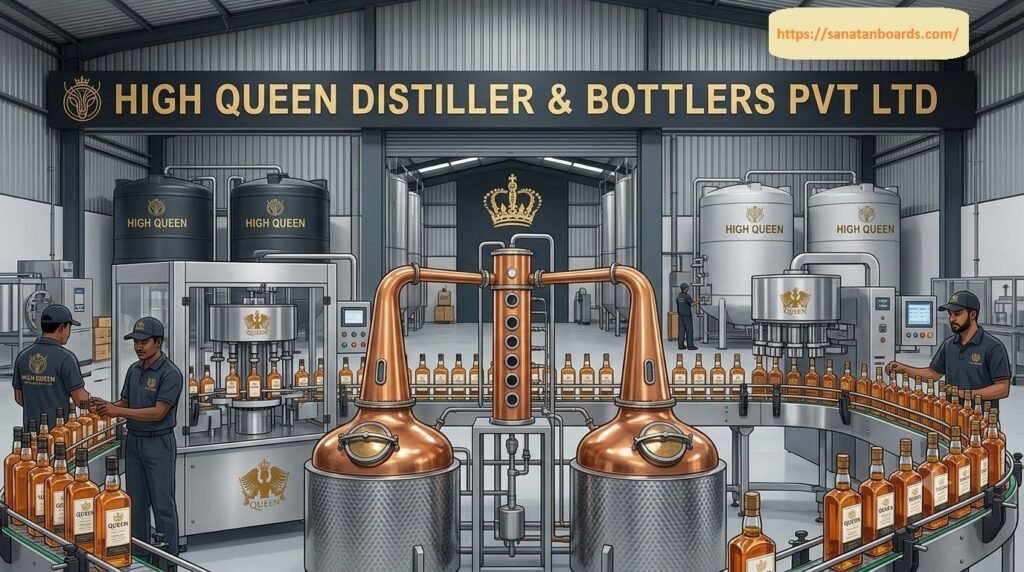
Chapter 1 – The Beginning of a Quality-Focused Journey
Every successful manufacturing company has a story that begins long before its products reach customers. Behind every bottle displayed on a shelf, every shipment leaving a facility, and every brand recognized by consumers, there are systems, people, processes, decisions, and years of learning. For High Queen Distiller & Bottlers Pvt Ltd, operating from Village Malakpur on Handesra Road near Lalru in the Derabassi area of S.A.S. Nagar, Punjab, the journey reflects the importance of combining manufacturing capability with responsible documentation and quality-oriented practices.
The company operates in a sector where consistency, product identity, process discipline, safety awareness, and regulatory documentation are especially important. Distilled beverage manufacturing involves a chain of interconnected activities. Raw materials must be handled appropriately, production processes must be controlled, products must be identified correctly, packaging must be managed systematically, and information relating to the product must be available to the relevant stakeholders.
High Queen Distiller & Bottlers Pvt Ltd developed its business around whiskey, with DOT identified as the brand name associated with the product. The product documentation describes the material as a mixture and identifies whiskey through several recognized descriptions, including blended whiskey, blended light whiskey, bourbon whiskey, corn whiskey, light whiskey, malt whiskey, rye whiskey, spirit whiskey, straight whiskey, and wheat whiskey. Ethyl alcohol is also identified among the product-related terminology.
In such an environment, quality is not simply about the appearance of the final bottle. Quality also includes the ability to understand and communicate what the product is, how it should be handled, what safety considerations apply, and how product-related information can be consistently maintained.
This was the environment in which the company’s certification journey became significant.
The year 2021 represented an important documentation milestone for High Queen Distiller & Bottlers Pvt Ltd. A Material Safety Data Sheet Certificate was issued in relation to its whiskey product. The certificate carries a non-expiry validity designation according to the supplied certification information.
The importance of such certification-related documentation extends beyond having a certificate available for display. A structured safety document provides a framework for communicating essential information concerning a material or product. For an organization working with alcohol-containing products, such information can be particularly valuable for employees, handlers, logistics personnel, business partners, and other relevant stakeholders.
The certification journey therefore became part of a larger story: the transition from simply producing a product to strengthening the systems through which the product was identified, documented, communicated, and managed.
For the promoter and management team, quality certification can be viewed as an investment in organizational discipline. It encourages businesses to ask important questions. Are procedures documented? Are responsibilities clear? Is product information controlled? Are employees aware of safety requirements? Can customer or business-partner queries be answered consistently? Are records maintained in a way that supports accountability?
These questions become increasingly important as a company develops.
Growth is often imagined as increased production, greater distribution, more customers, and stronger sales. Yet sustainable growth depends on infrastructure that can support expansion. A company may acquire new customers quickly, but without disciplined systems, increased activity can also increase errors, inconsistencies, and operational risks.
High Queen Distiller & Bottlers Pvt Ltd’s certification-related milestone in 2021 can therefore be understood as part of a broader quality journey. It provided an opportunity to strengthen the company’s approach toward documented product information and safety communication.
The DOT brand and whiskey product became more than commercial offerings. They represented products that needed clear identification and responsible handling throughout their lifecycle.
The story of growth that follows is consequently not limited to sales or financial performance. It is the story of organizational maturity: how quality awareness can influence documentation, employee responsibility, customer confidence, operational consistency, and the ability of a company to prepare itself for future opportunities.
The most important lesson is that certification should not be viewed merely as an endpoint. It is better understood as a structured milestone in a continuing process of improvement.
For High Queen Distiller & Bottlers Pvt Ltd, the 2021 certification milestone became one such chapter in that continuing journey.
#HighQueenDistiller
Chapter 2 – Understanding the Importance of Product Documentation
The growth of a manufacturing company depends heavily on the reliability of its internal and external information. While machinery, infrastructure, skilled employees, raw materials, packaging, and distribution are visible components of an organization, documentation forms an invisible infrastructure that connects these elements.
For High Queen Distiller & Bottlers Pvt Ltd, the importance of documentation became particularly relevant because of the nature of its product. Whiskey is a beverage product, but the organization must still maintain appropriate information concerning its composition, identification, handling, storage, safety considerations, and associated processes.
The Material Safety Data Sheet certification associated with the product helped place greater attention on structured safety information.
A Material Safety Data Sheet, traditionally known as an MSDS and increasingly represented through the term Safety Data Sheet in many regulatory systems, is designed to communicate important information about a material. Depending on the applicable requirements, such documentation can address product identification, hazards, composition, handling, storage, exposure considerations, emergency measures, transport information, and other relevant safety details.
For a business, maintaining such information creates a bridge between production and responsible communication.
The supplied certification details identify the product form as a mixture and the product name as Whiskey, with DOT listed as the brand name. Several whiskey-related synonyms are also included. Ethyl alcohol is identified in the product information.
Such detailed identification can be useful because product terminology can vary between departments, customers, logistics providers, technical personnel, and other stakeholders. A structured document helps reduce ambiguity.
For management, documentation can also become an important tool for internal control.
When employees understand that product information must be maintained accurately, documentation becomes part of organizational culture. Staff members become more conscious about records, labels, procedures, storage conditions, handling practices, and communication.
This can have an indirect impact on growth.
Imagine a company attempting to expand its customer base without standardized product documentation. Every new customer could generate repetitive questions. Different employees might provide different information. Product descriptions might vary across documents. Safety information could become difficult to retrieve. Such inconsistencies can consume time and create unnecessary uncertainty.
By contrast, a disciplined documentation system gives employees a common reference point.
For High Queen Distiller & Bottlers Pvt Ltd, this approach could support a more professional interaction with customers and business partners. When a company can provide organized product information, it demonstrates that the organization takes product identity and safety communication seriously.
This becomes particularly valuable when dealing with institutional buyers, distributors, logistics providers, auditors, suppliers, and other business stakeholders.
The 2021 certification milestone therefore had significance beyond the certificate itself. It represented a move toward formalizing information associated with the product.
Quality-oriented documentation also supports continuity.
Businesses depend on people, but systems should not depend entirely on individual memory. If a knowledgeable employee leaves the organization, properly controlled documents can help preserve organizational knowledge. New employees can learn from established procedures and records instead of rebuilding knowledge from the beginning.
This is one of the ways quality systems contribute to long-term growth.
The promoter’s role is equally important. Management must create an environment where documentation is considered part of the business rather than an administrative burden. When leadership treats quality records as meaningful operational tools, employees are more likely to follow the same philosophy.
Over time, this can influence the organization’s culture.
A quality culture encourages employees to ask whether an activity is being performed correctly rather than simply whether it is being completed. That distinction is important. Quantity-oriented organizations focus primarily on output. Quality-oriented organizations consider output, consistency, safety, customer requirements, and improvement together.
For High Queen Distiller & Bottlers Pvt Ltd, the certification milestone provided an opportunity to reinforce this broader perspective.
The company could use its product documentation as a foundation for stronger communication across departments. Production teams could understand the importance of accurate product identification. Packaging personnel could appreciate the importance of consistent information. Dispatch and logistics teams could access relevant handling information. Management could use documentation as part of reviews and decision-making.
In this way, documentation becomes an enabler of growth.
The company does not grow simply because it possesses a certificate. It grows when the principles represented by the certification become embedded in everyday activities.
That distinction defines the difference between certification as a paper exercise and certification as a management tool.
#HighQueenDistillerAndBottlers
Chapter 3 – Building Confidence Through Consistency
Customer confidence is one of the most valuable assets a company can develop. It is built gradually through repeated experiences: consistent products, reliable communication, professional service, proper documentation, dependable delivery, and responsible business practices.
For a company in the distilled beverage sector, consistency is especially important. Consumers expect a recognizable product experience, while distributors and business partners expect dependable supply and professional documentation.
High Queen Distiller & Bottlers Pvt Ltd’s certification-related journey created an opportunity to strengthen the foundations supporting such consistency.
The company’s product is identified as whiskey under the DOT brand. Product consistency begins with clear identification. When everyone within an organization uses consistent product descriptions and controlled documentation, the possibility of confusion is reduced.
Consistency can influence almost every stage of the product lifecycle.
At the beginning of the chain are raw materials and production inputs. The organization needs systems for receiving, identifying, checking, storing, and using materials. During production, processes must be performed according to established requirements. Following production, packaging and identification must be controlled. During storage and dispatch, products must remain traceable and properly handled.
Although the certification information supplied for High Queen Distiller & Bottlers Pvt Ltd specifically relates to a Material Safety Data Sheet Certificate, the underlying philosophy of quality documentation can support a wider culture of process discipline.
This is where the relationship between certification and business growth becomes visible.
A company that grows without process discipline may eventually experience operational complexity. More orders mean more production planning. More customers mean more communication. More distributors mean more documentation. More employees mean more training requirements. More product movement means greater coordination.
If the company’s systems do not evolve with this complexity, growth can become difficult to manage.
Quality systems help create repeatable methods.
Repeatability is valuable because it transforms individual effort into organizational capability. Instead of relying on one experienced person to remember every requirement, documented systems allow multiple employees to perform activities consistently.
For the promoter and management of High Queen Distiller & Bottlers Pvt Ltd, this represents an important business advantage.
A professional organization should be able to continue functioning effectively even when responsibilities change. Employees should know what is expected of them. Records should provide evidence of completed activities. Product information should be accessible. Corrective actions should be tracked when problems occur.
These practices create resilience.
Certification can also influence external perception. A certificate or structured product-safety document can demonstrate that the organization has invested effort in formalizing its approach. It does not automatically guarantee commercial success, but it can contribute to a professional image when supported by genuine implementation.
For business partners, professional documentation can simplify evaluation. Distributors and other stakeholders may feel more comfortable working with organizations that can clearly explain their products and provide appropriate information.
Trust then becomes part of the growth equation.
Trust reduces friction.
When customers trust a supplier, conversations become easier. When distributors trust product information, coordination becomes more efficient. When employees trust internal systems, they can work with greater clarity. When management trusts its records, decision-making becomes more structured.
This does not mean that documentation eliminates all business challenges. Markets change, competition changes, consumer preferences change, costs fluctuate, and regulatory expectations evolve.
However, a company with stronger systems is generally better positioned to respond.
High Queen Distiller & Bottlers Pvt Ltd’s 2021 certification milestone can therefore be seen as a foundation for organizational confidence. The company had an opportunity to convert certification requirements into everyday habits.
Those habits could include reviewing documents, maintaining accurate product information, training employees, monitoring processes, addressing issues, and encouraging accountability.
Over time, these practices contribute to a culture where quality becomes everyone’s responsibility.
The promoter’s leadership is central to this transition.
If quality is treated as the responsibility of one department, its impact remains limited. If management communicates that quality belongs to production, administration, packaging, stores, dispatch, sales, and leadership alike, it becomes part of the organization’s identity.
The growth of High Queen Distiller & Bottlers Pvt Ltd can therefore be understood through the lens of consistency.
The certificate was one milestone.
The larger achievement was the opportunity to build a business capable of delivering consistent products and information while preparing for future expansion.
That is how certification can move from documentation into business value.
#DOTWhiskey
Chapter 4 – The Role of the Promoter in Organizational Growth
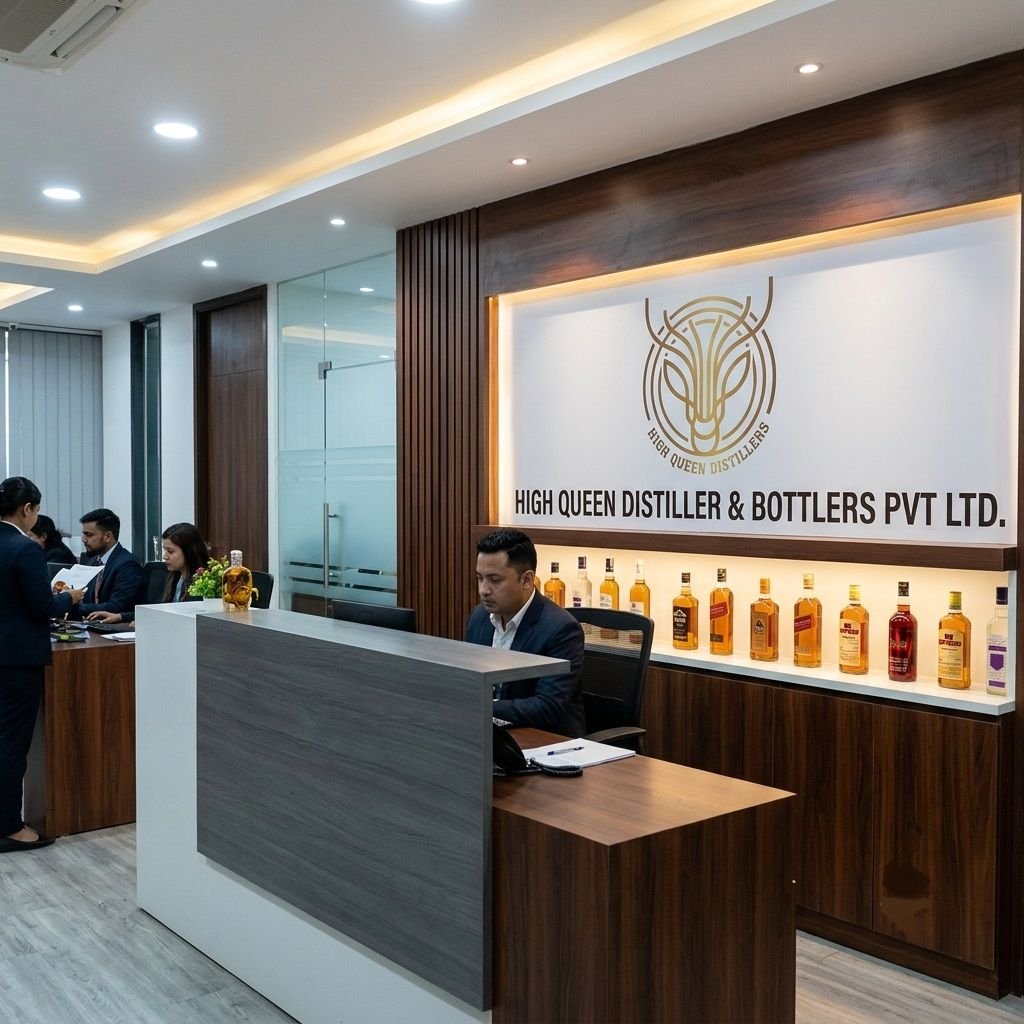
Behind every company is a set of decisions that shape its direction. Buildings, machinery, products, brands, and systems are important, but leadership determines how these resources are organized and developed.
For High Queen Distiller & Bottlers Pvt Ltd, the promoter and management team play an important role in transforming quality requirements into organizational practices.
Certification creates expectations, but leadership determines whether those expectations become part of the company’s daily culture.
A promoter who views certification merely as a formal requirement may focus on obtaining a certificate and completing associated documentation. A promoter who views certification as a business-development tool can use the process to examine operations more deeply. (highqueendistillers.com)
The second approach can create much greater value.
The certification journey encourages management to examine questions such as: Are responsibilities clearly defined? Are product-related documents controlled? Are employees adequately informed? Are procedures followed consistently? Are records available when needed? Are customer requirements understood? Are identified problems corrected systematically?
These questions encourage management to move from reactive decision-making toward structured management.
For a company operating in the whiskey and distilled beverage sector, this discipline can be particularly important because the business combines manufacturing, product identification, safety communication, packaging, storage, and distribution.
The promoter’s responsibility is therefore not simply to oversee production. It is to build an organization capable of managing complexity.
The 2021 certification milestone can be viewed as an opportunity for such development.
A strong management culture starts with communication. Employees need to understand why procedures exist. If employees see documentation as unnecessary paperwork, compliance becomes difficult. If they understand that documents protect product consistency, customer confidence, and workplace safety, the same procedures become meaningful.
Training therefore becomes an important component.
Employees joining the company need to understand their roles. Existing employees need periodic reinforcement. When processes change, affected employees need to know what has changed and why.
The promoter and management team can encourage this through regular meetings, training sessions, internal reviews, and clear accountability.
Another important leadership responsibility is resource allocation.
Quality cannot be achieved without appropriate resources. Employees require training. Documentation requires time. Equipment may require maintenance. Storage areas need to be managed. Records need to be maintained. Corrective actions require follow-up.
Management must recognize that these activities are investments rather than costs.
When a company invests in prevention, it can reduce the likelihood of avoidable problems later.
For example, unclear documentation can lead to repeated questions. Inadequate training can lead to process variation. Poor recordkeeping can make investigations difficult. Weak communication can create misunderstandings between departments.
A quality-oriented management approach attempts to identify such weaknesses before they become major problems.
This philosophy can support sustainable growth.
Growth should not mean simply doing more work. It should mean increasing the organization’s ability to handle more work effectively.
Suppose an organization doubles its business volume. If every process remains dependent on informal communication, the increased workload can create confusion. But if procedures, responsibilities, records, and communication channels are structured, the organization has a stronger platform for expansion.
This is why quality systems can be considered part of business infrastructure.
For High Queen Distiller & Bottlers Pvt Ltd, the 2021 MSDS certification milestone offered an opportunity to strengthen that infrastructure around product safety information and documentation.
The product—whiskey under the DOT brand—could be supported by clearer information management. Product descriptions, terminology, handling considerations, and safety communication could be standardized.
The promoter’s long-term role is to ensure that such practices continue.
Certification should not be treated as something that begins and ends on the certificate issue date. It should become part of continuous organizational development.
This involves reviewing performance, identifying improvement opportunities, responding to customer feedback, maintaining documents, and encouraging employees to report problems rather than hide them.
An organization that learns from its problems becomes stronger.
The promoter also has an important role in protecting the company’s reputation. In competitive markets, reputation is built over years but can be affected quickly by poor quality or inconsistent communication.
Quality-oriented leadership helps protect that reputation.
Ultimately, the growth story of High Queen Distiller & Bottlers Pvt Ltd is not only a story about a product or a certificate. It is a story about management’s willingness to create systems that can support the company’s future.
The promoter provides direction.
The employees provide execution.
The quality system provides structure.
Together, these elements create the foundation for sustainable organizational growth.
#WhiskeyCertification
Chapter 5 – From Certification to Operational Discipline
Courtesy: TRUMARK PACKAGING SOLUTIONS
Certification becomes valuable when it changes behavior. A certificate displayed on an office wall may demonstrate that a formal milestone has been achieved, but real organizational improvement occurs when the principles behind certification influence everyday operations.
For High Queen Distiller & Bottlers Pvt Ltd, the 2021 Material Safety Data Sheet certification provided an opportunity to strengthen operational discipline around its whiskey product.
Operational discipline means performing activities according to defined requirements rather than relying on assumptions.
In a manufacturing organization, this principle can apply to many areas: receiving materials, production activities, quality checks, documentation, storage, packaging, labeling, dispatch, maintenance, employee training, and customer communication.
Each activity is connected.
A weakness in one area can influence another.
For example, if product information is not properly controlled, packaging or dispatch personnel may struggle to access accurate information. If training is inconsistent, employees may perform similar tasks differently. If records are incomplete, management may find it difficult to identify why a problem occurred.
A quality-oriented system attempts to create a chain of accountability.
The Material Safety Data Sheet approach contributes to this chain by emphasizing the importance of organized product information.
For a product associated with ethyl alcohol and identified as a mixture, safety communication is an important consideration. Relevant personnel need access to appropriate information concerning handling and associated precautions.
This can support a more responsible working environment.
Operational discipline also improves communication.
Different departments often have different priorities. Production focuses on output. Quality focuses on conformity. Stores focuses on inventory. Dispatch focuses on timely movement. Sales focuses on customers. Management focuses on overall performance.
Without a common system, these priorities can conflict.
Quality management provides common principles that help departments coordinate.
For High Queen Distiller & Bottlers Pvt Ltd, the certification milestone could therefore support a more integrated approach to organizational activities.
One important component of operational discipline is recordkeeping.
Records provide evidence.
They help answer questions such as when an activity was completed, who performed it, what result was obtained, and whether any corrective action was required.
Good records also support learning.
When a problem occurs, historical records can help identify patterns. If similar issues appear repeatedly, management can investigate their underlying causes.
This moves the company away from repeatedly fixing symptoms and toward addressing root causes.
Root-cause thinking is one of the strongest contributions a quality culture can make to business performance.
Another element is corrective action.
No manufacturing company can realistically expect every activity to be perfect. Problems may occur because of equipment, materials, human error, communication, environmental conditions, or other factors.
The important question is how the organization responds.
A mature organization does not simply ask, “Who made the mistake?” It also asks, “Why did the system allow the mistake to happen, and how can we prevent recurrence?”
This creates a learning environment.
Employees become more willing to report issues when management focuses on improvement rather than blame. Early reporting allows problems to be addressed before they become larger.
Such a culture can indirectly reduce waste, delays, customer complaints, and operational disruption.
For a growing company, these benefits are important.
Growth creates pressure on systems. More orders can increase workload. New employees require training. New customers may require additional documentation. New distribution channels can create new logistical requirements.
Operational discipline allows the company to absorb this pressure more effectively.
The 2021 certification milestone therefore represents more than a technical document. It can be viewed as a catalyst for thinking about the company’s processes in a more structured way.
The DOT brand’s development within a disciplined operational environment can support greater confidence among stakeholders.
However, it is important not to claim that certification alone caused specific increases in revenue, production, market share, or profitability unless verified business data is available. The real value lies in the systems and confidence that certification can support.
High Queen Distiller & Bottlers Pvt Ltd’s growth story is consequently a story of capability.
The organization had an opportunity to strengthen its ability to manage information, people, processes, and product responsibilities.
When operational discipline becomes routine, the company becomes better prepared for the next stage of growth.
#MSDSCertification
Chapter 6 – Strengthening Customer and Business-Partner Relationships
A company’s growth is closely connected to the quality of its relationships with customers and business partners. Products create the initial connection, but reliability determines whether that relationship can continue.
For High Queen Distiller & Bottlers Pvt Ltd, the DOT whiskey product represents the commercial face of the organization. Behind that product is a network of stakeholders who depend on accurate information and dependable processes.
Certification can contribute to these relationships by strengthening confidence in the organization’s approach.
Customers and business partners increasingly expect suppliers to demonstrate professionalism. They may ask for product information, safety documentation, specifications, certificates, or other supporting records.
The ability to provide organized information can make communication more efficient.
The 2021 Material Safety Data Sheet certification associated with High Queen Distiller & Bottlers Pvt Ltd’s whiskey product therefore represented an important documentation asset.
It helped establish a structured reference for product-related safety information.
The value of such information becomes especially clear when products move through multiple hands.
A product may pass from manufacturing personnel to packaging teams, warehouse employees, transport providers, distributors, retailers, and ultimately consumers.
Each stage requires appropriate handling and communication.
A well-organized product information system supports continuity across these stages.
For business partners, documentation also provides evidence of seriousness.
A company that maintains product information systematically demonstrates that it recognizes responsibilities beyond manufacturing itself.
This can support professional relationships.
Customer confidence is also influenced by consistency. If the information provided by sales teams, technical teams, and documentation is aligned, the customer receives a clearer picture of the product.
Inconsistent information can create doubts.
Quality-oriented documentation reduces this risk by establishing controlled references.
The promoter can strengthen this culture by ensuring that employees do not rely on informal or outdated information when communicating with customers.
This is an important aspect of organizational maturity.
Another benefit is faster response.
Suppose a customer requests a particular document or product-related clarification. If information is stored systematically, employees can respond more efficiently. If information is scattered across individual files or depends on one employee, the response may be delayed.
As business volume increases, response time becomes increasingly important.
Therefore, documentation can indirectly support commercial efficiency.
The relationship between quality and sales should not be understood as a direct guarantee. Certification does not automatically generate customers. Instead, it creates supporting infrastructure that can help a company compete professionally.
For High Queen Distiller & Bottlers Pvt Ltd, the presence of structured certification documentation can form part of that professional image.
The company’s location in the Malakpur/Lalru area of Punjab places it within an industrial and commercial environment where connectivity, manufacturing activity, supply chains, and regional markets can create opportunities.
As opportunities develop, the organization needs systems capable of supporting them.
Business expansion often introduces new requirements. New partners may ask for documents that previous customers did not request. New markets may require different product information. Larger orders may require greater coordination.
A company with established documentation practices is better positioned to respond.
The promoter and management team can use this foundation to develop stronger stakeholder communication.
Regular feedback can also become a valuable source of improvement.
Customers may identify packaging concerns, documentation gaps, delivery issues, or information requirements. Instead of viewing feedback as criticism, a quality-oriented organization can treat it as data.
This approach creates a continuous improvement cycle:
Customer requirement → Business process → Product/service delivery → Feedback → Corrective action → Improvement.
When repeated over time, this cycle can strengthen the organization.
High Queen Distiller & Bottlers Pvt Ltd’s certification journey can therefore be connected to a broader philosophy of stakeholder confidence.
The MSDS certification does not represent every aspect of the company’s quality system, nor should it be interpreted as proof of specific commercial outcomes that have not been documented. Rather, it represents one important component of a professional approach to product information and safety communication.
The larger growth story emerges when this approach is combined with responsible management, employee awareness, consistent production, customer service, and continuous improvement.
Trust is accumulated through many small actions.
A correctly maintained document.
A timely response.
A consistent product.
A properly trained employee.
A clear procedure.
A responsible management decision.
Each action contributes to reputation.
Over time, reputation can become a competitive advantage.
For High Queen Distiller & Bottlers Pvt Ltd, the 2021 certification milestone provided another building block in this process of developing professional confidence among stakeholders.
#ISO9001Certification
Chapter 7 – Developing a Culture of Continuous Improvement
No successful organization remains static. Markets evolve, technology changes, customer expectations increase, employees change, and business risks develop.
Companies that remain competitive must therefore learn continuously.
For High Queen Distiller & Bottlers Pvt Ltd, the certification journey provided an opportunity to establish continuous improvement as a management principle.
Continuous improvement does not necessarily mean making dramatic changes every month. Often, it involves small improvements repeated consistently.
A document is clarified.
A procedure is simplified.
An employee receives additional training.
A recurring problem is analyzed.
A record is redesigned.
A communication gap is closed.
A process is reviewed.
Each improvement may appear small, but together they can significantly strengthen an organization.
The whiskey product under the DOT brand operates within a business environment where product consistency and responsible handling are important. Continuous improvement can therefore focus on multiple dimensions of the organization.
One area is documentation.
Documents should remain accurate and useful. Information should be reviewed periodically so that employees are not relying on outdated material. Controlled documents should be accessible to the people who need them.
Another area is employee competence.
People are central to quality. Even the strongest written procedure is ineffective if employees do not understand it.
Training should therefore be viewed as an ongoing investment.
Employees can benefit from orientation, job-specific training, safety awareness, documentation practices, quality awareness, and periodic refresher sessions.
For management, training also provides an opportunity to communicate organizational values.
Employees who understand why quality matters are more likely to take ownership of their responsibilities.
Another aspect of continuous improvement is measurement.
Organizations need information to understand whether processes are working effectively.
Depending on the company’s internal systems, management may monitor production performance, quality observations, customer feedback, documentation status, process deviations, training completion, maintenance activities, and other relevant indicators.
The purpose is not to collect numbers simply for reporting.
The purpose is to identify trends.
If a particular issue appears repeatedly, management can investigate. If a process consistently performs well, the organization can identify what makes it effective and apply similar thinking elsewhere.
This is how organizations learn from their own experience.
For High Queen Distiller & Bottlers Pvt Ltd, the 2021 certification milestone could therefore become a starting point for a broader improvement culture.
The promoter’s role is to create an environment in which employees feel responsible for improvement.
An employee working directly with a process may notice an inefficiency that management cannot see from a distance. Encouraging employees to report suggestions can unlock this knowledge.
Continuous improvement also requires discipline in handling nonconformities.
When an issue occurs, the organization should identify what happened, determine the underlying cause, decide on corrective action, implement the action, and evaluate whether the problem has been prevented from recurring.
This approach is much stronger than simply correcting the immediate error.
For example, if a documentation error is discovered, changing the document may solve the immediate problem. But asking why the error occurred may reveal a training gap, unclear responsibility, poor document control, or an ineffective review process.
Fixing that underlying cause creates a more durable improvement.
This way of thinking strengthens the company over time.
A quality certification can help create awareness of such structured thinking, but the real value comes from continued implementation.
For High Queen Distiller & Bottlers Pvt Ltd, the certificate issued in 2021 can therefore be seen as a milestone in a longer journey.
The organization has the opportunity to treat every year as a new stage of development.
The early years of a quality journey may focus heavily on documentation and compliance. As maturity increases, attention can shift toward performance, risk management, customer experience, efficiency, employee capability, and strategic improvement.
This progression is important.
A mature quality culture no longer asks only, “Are we following the procedure?”
It also asks, “Is this the best way to achieve our objective?”
That question drives innovation.
In this way, quality and growth become connected.
Quality provides stability.
Improvement provides progress.
Together, they create an organization capable of adapting to changing circumstances.
For High Queen Distiller & Bottlers Pvt Ltd, this philosophy can help ensure that the 2021 certification milestone remains relevant not simply as a historical achievement but as a foundation for ongoing organizational development.
#QualityCertification
Chapter 8 – The DOT Brand and the Importance of Professional Identity
A brand is more than a name. It represents the identity through which a product enters the marketplace and develops recognition among customers and business stakeholders.
For High Queen Distiller & Bottlers Pvt Ltd, DOT is identified as the brand name associated with its whiskey product.
The development of a professional brand depends on more than marketing. Product quality, consistency, packaging, communication, documentation, customer service, and business conduct all influence how stakeholders perceive an organization.
This is where quality certification can support brand development.
A certificate does not create a brand by itself. However, certification-related practices can reinforce the idea that the company takes product management seriously.
When product information is structured and controlled, employees have a clearer basis for communication. When safety information is documented, stakeholders can access appropriate information. When quality practices are implemented consistently, the organization can present a more professional identity.
For a whiskey brand, consumer expectations may include consistency of product experience, presentation, availability, and responsible handling.
At the business level, distributors and partners may also consider documentation and reliability when evaluating relationships.
The DOT brand therefore exists within a larger ecosystem of trust.
High Queen Distiller & Bottlers Pvt Ltd’s 2021 certification milestone can contribute to this ecosystem by strengthening the supporting documentation associated with the product.
The product is described as a mixture and identified with whiskey-related terminology, including several recognized categories and descriptions. Ethyl alcohol is also included in the product information.
Having clear product terminology is valuable because it creates consistency across records.
Professional identity also depends on internal alignment.
Employees should understand the company’s products and values. Sales personnel should have accurate product information. Production personnel should understand quality expectations. Documentation personnel should maintain controlled information. Management should ensure that the organization’s external claims are supported by appropriate records.
This creates a unified business identity.
A company becomes stronger when what it says externally matches what it practices internally.
The promoter plays a central role in establishing this alignment.
Leadership communication can reinforce messages such as:
- Quality is everyone’s responsibility.
- Product information must remain accurate.
- Safety must not be treated as optional.
- Customer requirements must be understood.
- Records must be maintained properly.
- Problems should be reported and corrected.
- Improvement should be continuous.
When these principles are repeated consistently, they become part of company culture.
Brand growth also requires patience.
Recognition rarely develops overnight. Companies must repeatedly deliver a satisfactory experience before customers begin associating a brand with reliability.
This is why systems matter.
A strong system supports consistency, and consistency supports trust.
For High Queen Distiller & Bottlers Pvt Ltd, the DOT brand can therefore be viewed as an outcome supported by a larger organizational structure.
The certification milestone in 2021 became part of that structure.
It is important to distinguish between verified facts and narrative interpretation. The supplied certification information confirms the 2021 issue date and the product-related MSDS certification details. It does not provide audited figures for sales growth, production growth, market share, employment expansion, or profitability. Therefore, this case story does not claim specific numerical commercial results.
Instead, the story focuses on how certification and quality practices can contribute to the conditions necessary for sustainable growth.
Those conditions include stronger documentation, better safety communication, clearer responsibilities, improved employee awareness, more professional stakeholder interaction, and greater operational discipline.
These foundations can help a company respond to opportunities when they arise.
If a distributor approaches the company, documentation is available.
If a customer requests product information, organized records can support a response.
If an employee requires guidance, procedures and training can provide direction.
If management identifies a recurring issue, records can help investigate it.
If the company considers expansion, established systems can provide a foundation for scaling.
This is the quiet contribution of quality systems to brand development.
They may not always be visible to consumers, but they influence the organization’s ability to deliver consistently.
The DOT brand’s journey is therefore connected to High Queen Distiller & Bottlers Pvt Ltd’s organizational maturity.
A strong brand requires a strong organization behind it.
Certification can become one component of that organizational strength when it is supported by genuine implementation and continuous improvement.
#QualityManagement
Chapter 9 – Preparing the Organization for Sustainable Growth
Growth is attractive to every business, but sustainable growth is more demanding.
A company can increase sales temporarily through aggressive marketing or market conditions, but long-term growth requires infrastructure.
High Queen Distiller & Bottlers Pvt Ltd’s certification journey can be viewed as part of the process of developing that infrastructure.
The company operates from Village Malakpur, Handesra Road, P.O. Lalru, Tehsil Derabassi, in S.A.S. Nagar (Mohali), Punjab. Its product is whiskey under the DOT brand, with certification-related product documentation issued in 2021.
This foundation provides the context for considering future growth.
A growing organization needs people.
As activities increase, employees need clearly defined roles. Training becomes increasingly important. Supervisors need to monitor performance. Communication between departments must become more structured.
A growing organization also needs information.
Documents, records, specifications, product information, customer requirements, and safety information must remain controlled and accessible.
A growing organization needs process stability.
The company should be able to produce and manage its products consistently even when volumes, customers, or employees change.
A growing organization also needs risk awareness.
Management must identify what could go wrong and consider preventive measures.
Quality systems support these needs by encouraging organizations to work systematically.
The MSDS certification related to the DOT whiskey product contributes specifically to the product-information and safety-communication side of this infrastructure.
The broader lesson is that certification can be part of a company’s readiness for growth.
Consider a hypothetical expansion in which the company gains additional business partners. Without organized documentation, the additional requests for product information could create administrative pressure. With stronger documentation systems, the company can respond more efficiently.
Similarly, if employee numbers increase, structured training can help maintain consistency.
If production activity expands, documented processes can help maintain control.
If customer expectations become more demanding, a quality culture can help the organization adapt.
This is why certification should be connected to business strategy.
Management can ask how the quality system supports strategic objectives.
Does it help reduce errors?
Does it improve communication?
Does it strengthen employee competence?
Does it improve customer confidence?
Does it provide evidence for business partners?
Does it support regulatory and safety responsibilities?
Does it help management identify improvement opportunities?
When these questions are considered regularly, quality becomes integrated into business planning.
The promoter can also use management reviews to evaluate whether the system remains appropriate.
Business environments change. A process that worked effectively at one stage may require improvement later.
Continuous review ensures that the organization does not become dependent on outdated methods.
Sustainable growth also requires reputation management.
Companies operating in consumer-facing industries must protect trust. Quality failures can damage relationships, while consistent performance strengthens them.
Documentation alone cannot protect reputation, but it can support the systems needed to manage quality responsibly.
For High Queen Distiller & Bottlers Pvt Ltd, the 2021 certification milestone can therefore be understood as one element of a broader business-development strategy.
The goal is not simply to possess a certificate.
The goal is to build organizational capability.
That capability includes the ability to understand requirements, manage processes, train employees, maintain records, communicate product information, respond to problems, and improve continuously.
When these capabilities are developed, the company becomes more resilient.
Resilience is particularly valuable because growth rarely occurs in a straight line.
Companies face changes in demand, supply chains, costs, competition, regulations, customer expectations, and technology.
A resilient organization can adapt without losing control.
The promoter and management team therefore have an ongoing responsibility to protect the foundations created through quality initiatives.
The certificate issued in 2021 should be viewed as a milestone rather than a conclusion.
Its greatest value comes from what the organization does with the discipline it represents.
The long-term growth story of High Queen Distiller & Bottlers Pvt Ltd will ultimately depend on its ability to combine product quality, responsible operations, customer understanding, employee capability, business strategy, and continuous improvement.
Certification provides one part of that foundation.
Management commitment provides another.
Employees provide another.
Customer trust provides another.
Together, these elements can create sustainable organizational strength.
#ProductSafety
Chapter 10 – The Continuing Journey of High Queen Distiller & Bottlers Pvt Ltd
Every certification marks a point in time, but a company’s journey continues after the certificate is issued.
For High Queen Distiller & Bottlers Pvt Ltd, the year 2021 represents an important point in its quality and product-documentation journey. The company received a Material Safety Data Sheet Certificate associated with its whiskey product, identified under the DOT brand, with the supplied certification record showing non-expiry validity.
The milestone can be viewed as part of a larger story of organizational development.
The company began with a product and a market opportunity. Over time, the importance of structured product information, safety communication, documentation, process control, and customer confidence became increasingly relevant.
Certification provided a formal framework around one part of that journey.
The real achievement, however, lies in implementation.
A company grows stronger when its people understand the importance of quality.
It grows stronger when procedures are followed consistently.
It grows stronger when records are maintained accurately.
It grows stronger when customer requirements are taken seriously.
It grows stronger when management responds to problems systematically.
It grows stronger when employees are encouraged to improve processes.
And it grows stronger when the organization treats certification as a continuing commitment rather than a one-time achievement.
For High Queen Distiller & Bottlers Pvt Ltd, the DOT whiskey product represents the visible result of a much larger system of activities.
Behind the product are people.
Behind the people are processes.
Behind the processes are management decisions.
Behind those decisions are values.
Quality is ultimately a reflection of these values.
The company’s 2021 certification milestone can therefore be understood as an expression of the organization’s willingness to formalize important product information and safety communication.
This can strengthen stakeholder confidence.
It can improve internal clarity.
It can support employee awareness.
It can contribute to more professional business communication.
It can provide a foundation for continuous improvement.
These benefits are particularly relevant as a company prepares for future growth.
Future growth may involve new customers, expanded distribution, improved processes, additional employees, new technologies, or broader market opportunities. The exact direction cannot be predicted from the supplied certification information, but the importance of preparedness remains universal.
An organization with structured systems is better positioned to evaluate opportunities.
The promoter’s responsibility is to ensure that growth never comes at the expense of quality.
Increasing production without maintaining control can create problems.
Expanding distribution without adequate documentation can create confusion.
Hiring employees without training can increase process variation.
Adding customers without improving communication can create service challenges.
Sustainable growth requires balance.
High Queen Distiller & Bottlers Pvt Ltd can continue strengthening that balance by maintaining its focus on quality, safety awareness, documentation, employee competence, customer satisfaction, and continuous improvement.
The company’s location in Punjab and its association with the Lalru/Derabassi industrial environment provide a platform from which future opportunities may emerge. However, successful expansion will depend on the organization’s ability to convert opportunities into controlled and sustainable operations.
The DOT brand can also benefit from this approach.
A brand becomes stronger when the organization behind it is dependable.
Customers may see the bottle and the brand name, but the company’s reputation is built through everything that happens before, during, and after the product reaches the marketplace.
The certification milestone therefore forms part of the unseen infrastructure behind the brand.
Looking back, the 2021 MSDS certification can be seen as a chapter in a continuing story.
The next chapters depend on implementation.
Will documentation remain accurate?
Will employees remain trained?
Will management continue reviewing processes?
Will customer feedback be used for improvement?
Will the company maintain a strong culture of responsibility?
These questions define the future.
The most meaningful interpretation of certification is not that the company has reached the end of its quality journey. It is that the company has established another foundation from which it can continue.
High Queen Distiller & Bottlers Pvt Ltd’s story is therefore a story of opportunity.
The opportunity to strengthen systems.
The opportunity to build trust.
The opportunity to improve communication.
The opportunity to develop people.
The opportunity to protect product integrity.
The opportunity to prepare for growth.
And ultimately, the opportunity to build an organization whose success is supported by disciplined processes rather than short-term circumstances.
The journey of quality never truly ends.
Every new customer brings new expectations.
Every new employee brings new learning opportunities.
Every new challenge tests organizational strength.
Every improvement creates a stronger foundation.
For High Queen Distiller & Bottlers Pvt Ltd, the 2021 certification milestone is therefore best understood not as the conclusion of a story, but as an important chapter in the continuing development of the company and its DOT whiskey product.
The certificate represents formal recognition of an important documentation and safety-information milestone.
The larger story is the organization’s continuing effort to transform quality principles into everyday business practices.
That transformation is what creates lasting value.
As the company moves forward, the strongest foundation will remain the same: disciplined operations, responsible product information, committed employees, management leadership, customer confidence, and continuous improvement.
These are the principles that can turn certification from a document into a culture—and a culture into sustainable organizational growth.
#PunjabManufacturing
#DistilleryIndustry #BottlingIndustry #SafetyDataSheet #QualityAssurance #CertifiedBusiness
Take the Next Step Today
Don’t wait to enhance your business’s quality and efficiency. Partner with Sanatan Dharma Accreditation Boards and experience the transformation that comes with expert consultancy and training. Contact us today to learn more about how we can help you achieve your business goals. Reach out via phone at +91-8668266780, visit our website at sanatanboards.com, or email us at info@sanatanboards.com Let us be your guide on the journey to excellence and innovation.





