The Yadava Dynasty was one of the prominent ruling powers in medieval India, particularly in the Deccan region. Among its notable rulers, King Ramachandra stands out for his administrative abilities and political influence. He ruled during the late 13th century and played a significant role in shaping the history of the Deccan plateau.
King Ramachandra governed from his capital at Devagiri (modern-day Daulatabad) and maintained a strong and prosperous kingdom. His reign witnessed cultural growth, development of infrastructure, and economic stability. However, his rule also coincided with increasing pressure from northern invaders, especially the Delhi Sultanate.
The Yadava dynasty itself was known for its contribution to regional culture, temple architecture, and the promotion of Marathi and Sanskrit literature. King Ramachandra’s reign marked both the peak and the beginning of the decline of the dynasty due to external invasions.
This topic is important for educational learning and knowledge purposes as it helps us understand medieval Indian political systems, regional dynasties, and the challenges faced by rulers during that period.
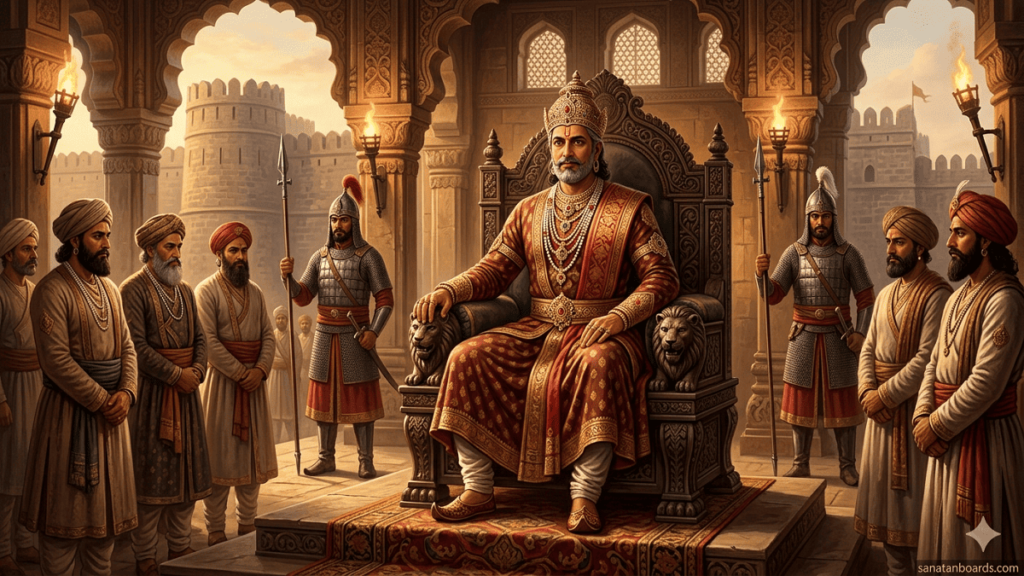
What Is Yadava Dynasty – King Ramachandra ?
YADAVA DYNASTY – KING RAMACHANDRA refers to the historical period and leadership associated with King Ramachandra, one of the most important rulers of the Yadava Dynasty in medieval India. This dynasty ruled primarily in the Deccan region, with its capital at Devagiri.
King Ramachandra ascended the throne during a time when the Yadava kingdom was already well-established. Under his rule, the kingdom experienced stability and prosperity. He focused on governance, revenue systems, and maintaining law and order. His administration was known for its efficiency and organization.
The Yadava dynasty itself traced its origins to ancient Yadava clans and gradually rose to power in the Deccan. By the time of Ramachandra, the dynasty had become a dominant regional force. The kingdom had strong military defenses and economic resources, which allowed it to resist external threats for a significant period.
However, the later phase of Ramachandra’s reign saw conflicts with the Delhi Sultanate, particularly during the expansion campaigns of Alauddin Khalji. These invasions marked a turning point, as they weakened the Yadava power.
Who Is Required Yadava Dynasty – King Ramachandra?
The study of YADAVA DYNASTY – KING RAMACHANDRA is important and required for various groups of learners and professionals, especially those interested in history and education.
Firstly, students studying medieval Indian history require knowledge of King Ramachandra to understand the political structure and regional kingdoms of the Deccan. His reign provides insights into governance, diplomacy, and military strategies used during that period.
Secondly, researchers and historians benefit from studying the Yadava Dynasty because it helps them analyze the rise and fall of regional powers. King Ramachandra’s interaction with northern empires offers valuable information about political transitions in India.
Thirdly, educators and academic institutions require this topic to teach students about cultural and administrative developments in medieval India. The Yadava dynasty contributed to art, architecture, and literature, making it a significant subject in educational curricula.
Additionally, competitive exam aspirants, such as those preparing for civil services or state-level exams, need to study this topic. Questions related to medieval dynasties and rulers frequently appear in such examinations.
Finally, general readers and history enthusiasts also require knowledge of this topic to gain a deeper understanding of India’s rich heritage and regional diversity.
When Is Yadava Dynasty – King Ramachandra Required?
YADAVA DYNASTY – KING RAMACHANDRA arises in multiple contexts, particularly in educational and analytical scenarios.
This topic is required when studying the timeline of medieval Indian history. The reign of King Ramachandra falls in the late 13th century, a period marked by regional kingdoms and the expansion of northern empires. Understanding this timeline helps learners connect historical events and transitions.
It is also required during the study of political conflicts and invasions in India. The interactions between the Yadava Dynasty and the Delhi Sultanate provide a clear example of how regional powers responded to external threats.
Another important situation where this topic is required is during the analysis of administrative systems in medieval India. King Ramachandra’s governance style offers insights into taxation, law enforcement, and state organization during that era.
The topic is also essential when learning about cultural and architectural development. The Yadava period contributed significantly to temple construction and regional literature, which are important aspects of Indian heritage studies.
Furthermore, this topic becomes relevant during competitive exam preparation, academic research, and curriculum development. It helps in answering questions related to dynasties, rulers, and historical events.
Lastly, it is required when comparing different dynasties across India. By studying King Ramachandra and his dynasty, learners can compare governance, military strength, and cultural contributions with other contemporary rulers.
Thus, the topic is required whenever there is a need to understand medieval India’s political, cultural, and historical framework.
Where Yadava Dynasty – King Ramachandra Is Required ?
Geographically, it is most relevant in the Deccan region of India, particularly in present-day Maharashtra. The capital city of Devagiri (Daulatabad) was the center of power for King Ramachandra and the Yadava Dynasty. This region serves as an important site for historical studies and archaeological research.
In educational institutions such as schools and universities, this topic is included in history textbooks and syllabi. It is required in classrooms where medieval Indian history is taught.
The topic is also relevant in libraries, research centers, and historical archives. Scholars studying Indian dynasties often refer to the Yadava period to understand regional governance and cultural development.
Museums and heritage sites also require this topic for documentation and presentation. Exhibits related to medieval India often include information about the Yadava dynasty and its rulers.
Additionally, this topic is required in competitive exam preparation platforms and coaching centers. It is commonly included in study materials for exams like UPSC, MPSC, and other government exams.
Digital platforms, including educational websites and blogs, also use this topic to provide knowledge to a wider audience. It helps in spreading awareness about India’s historical legacy.
Thus, the topic is required across physical locations like educational institutions and historical sites, as well as digital platforms that promote learning and knowledge.
How Yadava Dynasty – King Ramachandra Is Required ?
Firstly, it is required through historical study methods such as reading textbooks, research papers and historical records. These sources provide detailed information about King Ramachandra and his शासन (administration).
Secondly, the topic is required through comparative analysis. By comparing the Yadava Dynasty with other dynasties, learners can understand differences in governance, military strength, and cultural contributions.
It is also required through practical learning methods such as visiting historical sites like Daulatabad Fort. These experiences help learners connect theoretical knowledge with real-world evidence.
Another way this topic is required is through academic discussions, seminars, and presentations. Students and researchers present findings related to King Ramachandra and his dynasty to enhance collective understanding.
Digital learning tools, including online courses and blogs, also play a role in delivering this topic effectively. They make the information accessible to a broader audience.
Additionally, the topic is required through examination preparation. Students practice questions and revise concepts related to this dynasty to perform well in exams.
Thus, the topic is required through multiple learning methods, including reading, analysis, practical exploration, and digital education.
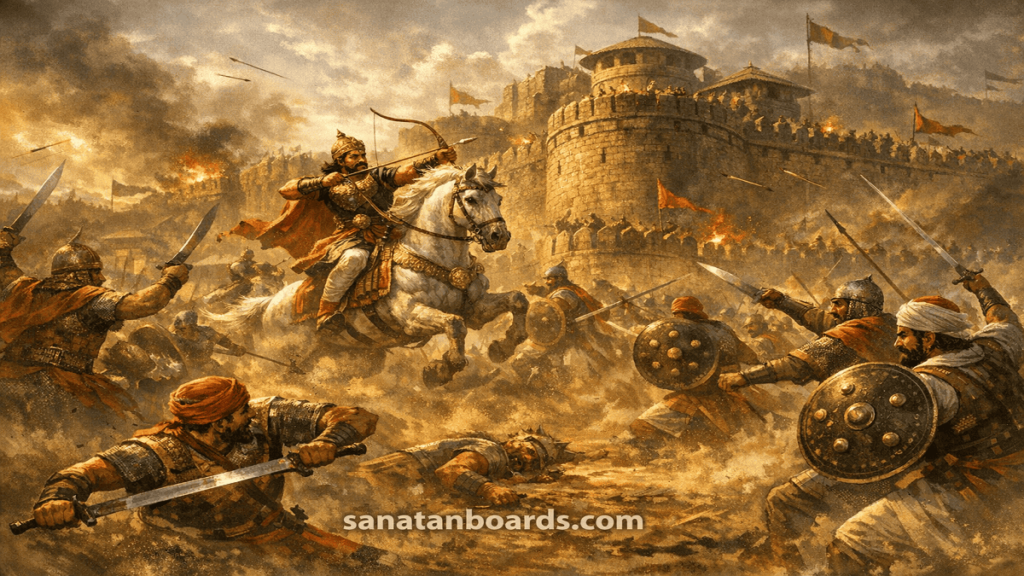
Case Study On Yadava Dynasty – King Ramachandra
Background of the Dynasty
The Yadava dynasty ruled the Deccan region, with its capital at Devagiri (modern Daulatabad in Maharashtra). By the time King Ramachandra came to power, the dynasty had already established itself as a major regional force. The kingdom was known for its fertile lands, trade routes, and cultural contributions.
Rise of King Ramachandra
King Ramachandra ascended the throne during a period of relative stability. He inherited a well-organized administrative system and a strong military. His leadership helped maintain peace and economic growth in the region. He focused on strengthening governance, improving revenue collection, and ensuring justice in his kingdom.
Administrative System
The administration under King Ramachandra was systematic and efficient. The kingdom was divided into regions governed by local अधिकारियों (officials). Revenue was primarily collected from agriculture, which was the backbone of the economy. The king ensured proper irrigation systems and land management, which supported farmers and increased productivity.
Economic Strength
The Yadava kingdom was economically prosperous. Trade flourished due to its strategic location in the Deccan plateau. Markets were active, and the kingdom had strong connections with neighboring regions. This economic stability allowed the king to maintain a strong army and support cultural activities.
Military Organization
The military of the Yadava dynasty was well-structured. It included infantry, cavalry, and defensive fortifications. Devagiri Fort was one of the strongest forts of that time. King Ramachandra relied on this military strength to protect his kingdom from external threats.
Challenge: Invasion by Alauddin Khalji
The major turning point in this case study is the invasion by Alauddin Khalji, a powerful ruler of the Delhi Sultanate. Initially, King Ramachandra attempted to resist the invasion. However, due to strategic disadvantages and the strength of the invading forces, he was eventually defeated.
After the invasion, Ramachandra accepted the authority of the Delhi Sultanate and agreed to pay tribute. This marked a significant shift in the power structure of the region.
Strategic Weaknesses
Despite strong administration and economy, the Yadava dynasty faced certain weaknesses:
- Lack of preparedness for large-scale invasions
- Limited alliances with other regional powers
- Over-reliance on defensive strategies
These factors contributed to the decline of the dynasty.
Outcomes and Impact
The defeat of King Ramachandra led to the weakening of the Yadava dynasty. It eventually lost its independence and became subordinate to the Delhi Sultanate. This transition marked the beginning of a new political era in the Deccan region.
Key Learnings
This case study highlights:
- Importance of strong leadership
- Need for strategic alliances
- Impact of external invasions
- Role of economic stability in governance
Conclusion
The case of King Ramachandra is a valuable example of how a powerful kingdom can rise, sustain, and eventually decline due to external pressures. It provides deep insights into medieval Indian political systems and leadership challenges.
White Paper On Yadava Dynasty – King Ramachandra
Abstract
This white paper analyzes the शासन (governance), economic policies, and military framework of King Ramachandra under the Yadava Dynasty. It also evaluates the causes of decline and historical significance.
Introduction
The Yadava dynasty was a dominant power in the Deccan region during medieval India. King Ramachandra’s reign represents both the peak and the turning point of the dynasty. This paper explores his contributions and the challenges faced during his rule.
Governance Model
The governance system under King Ramachandra was decentralized yet controlled. Local administrators managed regions, while the king maintained overall authority. Law and order were strictly enforced, and justice was delivered through structured systems.
Economic Policies
Agriculture was the main source of revenue. The state invested in irrigation and land development. Trade routes passing through the kingdom contributed to economic growth. Taxes were collected efficiently, ensuring financial stability.
Military Framework
The military system included strong fortifications, particularly Devagiri Fort. The army was trained and equipped to defend the kingdom. However, it lacked advanced strategies to counter large-scale invasions from northern powers.
External Threats
The expansion of the Delhi Sultanate posed a major threat. The invasion led by Alauddin Khalji exposed the vulnerabilities of the Yadava kingdom. Despite initial resistance, the kingdom could not sustain prolonged conflict.
Decline Factors
Key factors contributing to the decline include:
- Military limitations
- Lack of strategic alliances
- Underestimation of external threats
Historical Significance
The reign of King Ramachandra is significant for understanding:
- Regional power dynamics
- Transition from regional to imperial control
- Cultural and economic development
Conclusion
This white paper concludes that while the Yadava dynasty was strong internally, external pressures led to its decline .#yadavadynstyoftamilnadu King Ramachandra’s reign remains an important subject for historical analysis and #yadavadynastykingramchandra educational study.
Industry Application On Yadava Dynasty – King Ramachandra
1. Leadership and Management
Modern organizations study historical leaders to understand decision-making. King Ramachandra’s governance provides lessons in leadership, resource management, and crisis handling.
2. Political Science and Public Administration
The administrative system of the Yadava dynasty is relevant in public administration studies. It demonstrates how decentralized governance can function effectively.
3. Military Strategy
Defense institutions analyze historical battles to understand strategies. The invasion by Alauddin Khalji provides insights into military planning and risk management.
4. Economic Planning
The economic structure of the Yadava kingdom shows the importance of agriculture and trade. Modern economic planners can learn about sustainable resource management.
5. Cultural and Heritage Industry
Tourism and heritage industries benefit from historical topics. Sites like Daulatabad Fort attract tourists and promote cultural awareness. The legacy of the Yadava dynasty contributes to regional identity.
6. Education Industry
Schools, colleges, and online platforms use this topic for teaching history. It is part of academic curricula and competitive exam preparation.
7. Research and Academia
Historians and researchers use this topic to study medieval India. It helps in understanding political transitions and cultural developments.
8. Strategic Studies
Business and management fields use historical case studies to teach strategy. The rise and fall of the Yadava dynasty is a classic example of strategic success and failure.
Conclusion
The topic of King Ramachandra is not limited to history. #sanatandharmaaccreditationboardsinmumbai It has applications in leadership, education, #sanatandharmaaccreditationboardsintamilnadu economics, and strategic planning. Studying this topic helps bridge the gap between historical knowledge and modern practices.
SOURCE : PCB BABA
ASK FAQ
Who was King Ramachandra of the Yadava Dynasty?
King Ramachandra was a prominent ruler of the Yadava Dynasty in the 13th century, known for his strong administration and rule over Devagiri.
What was the Yadava Dynasty known for?
The Yadava Dynasty was known for its efficient governance, economic prosperity, cultural development, and strong fortifications in the Deccan region.
Why is King Ramachandra important in history?
King Ramachandra is important because his reign marked both the peak and decline of the Yadava dynasty due to invasions by the Delhi Sultanate.
Where was the capital of King Ramachandra’s kingdom?
The capital of King Ramachandra was Devagiri, present-day Daulatabad in Maharashtra.
What led to the decline of the Yadava Dynasty?
The decline of the Yadava Dynasty was mainly due to invasions by Alauddin Khalji and lack of strong military resistance.
Table of Contents
Disclaimer
This content is created strictly for educational learning and knowledge purposes only. The information provided about the YADAVA DYNASTY – KING RAMACHANDRA is based on historical records, interpretations, and secondary sources that may vary across historians and academic references. While every effort has been made to ensure accuracy, completeness, and clarity, this content should not be considered as the only authoritative source of information. Readers are encouraged to refer to textbooks, academic journals, and verified historical resources for deeper understanding and research. The content does not intend to mislead, misrepresent, or promote any biased historical perspective.