
The Mahakaleshwar Jyotirlinga, located in the holy city of Ujjain, is one of the most sacred temples dedicated to Lord Shiva. The term “Ujjain Mahakaal Network” refers to the spiritual, cultural, and digital systems that connect devotees, temple services, and religious activities associated with Mahakaal.
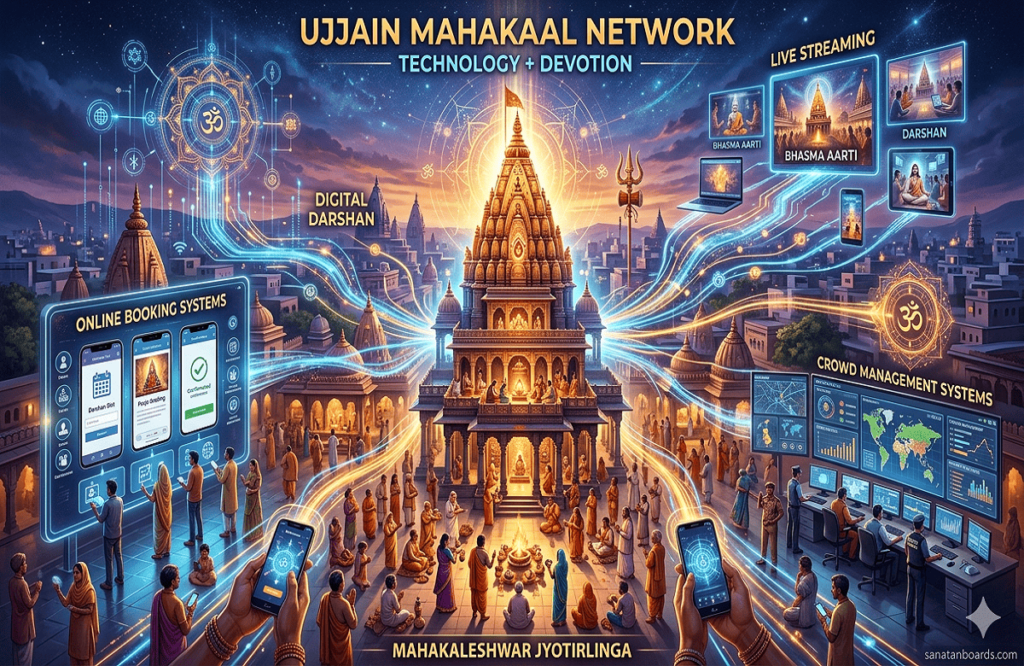
This network includes online platforms that provide live दर्शन (darshan), booking for the famous Bhasma Aarti, and updates about festivals and rituals. Through technology, devotees from all over the world can stay connected with the temple without physically visiting it. It helps manage large crowds efficiently and ensures smooth temple operations.
Apart from digital connectivity, the Mahakaal network also represents the strong spiritual bond among devotees. Festivals like Mahashivratri attract thousands of pilgrims, creating a vibrant religious environment in Ujjain. Local businesses, tourism, and cultural traditions are also part of this network, contributing to the city’s development.
What Is Ujjain Mahakaal Network ?
The Mahakaleshwar Jyotirlinga, situated in the ancient city of Ujjain, is one of the twelve sacred Jyotirlingas dedicated to Lord Shiva. The term “Ujjain Mahakaal Network” refers to a broad system that connects religious practices, temple management, digital services, devotees, and the local community centered around the Mahakaal temple.
Traditionally, the Mahakaal temple has been a major spiritual hub attracting lakhs of devotees every year. With increasing footfall, there was a need for better organization and accessibility. This led to the development of a structured “network” that combines both physical and digital elements. On the digital side, the network includes official websites, mobile apps, and online services that allow devotees to book darshan slots, reserve entry for the famous Bhasma Aarti, and receive real-time updates about temple schedules. These services help reduce crowd congestion and make the pilgrimage experience smoother and more convenient.
The Mahakaal Network also includes live streaming facilities, which enable devotees from across India and abroad to virtually participate in rituals and prayers. This became especially important during times when travel was restricted, allowing people to stay spiritually connected from their homes.
Beyond technology, the network also represents a strong cultural and social system. During major festivals like Mahashivratri and the grand Simhastha Kumbh Mela, the entire city becomes part of this network. Local administration, temple authorities, volunteers, and businesses work together to manage large crowds, ensure safety, and provide services like accommodation, transport, and food.
Economically, the Mahakaal Network plays a vital role in supporting tourism and local livelihoods. Shops, hotels, guides, and transport services all benefit from the steady flow of pilgrims. At the same time, it helps preserve and promote the rich traditions and heritage of Ujjain.
Who is required for Ujjain Mahakaal Network ?
The Ujjain Mahakaal Network is a large and well-organized system centered around the sacred Mahakaleshwar Jyotirlinga in Ujjain. To ensure its smooth functioning, many individuals and groups play important roles. This network is not managed by a single authority but is a collective effort of religious, administrative, technical, and social contributors.
Firstly, temple authorities and priests are the core of this network. They are responsible for conducting daily पूजा (worship), rituals, and special ceremonies like the famous Bhasma Aarti. Their knowledge of traditions ensures that all religious practices are performed correctly and respectfully.
Secondly, government and administrative bodies are essential. Local authorities, police, and municipal corporations manage crowd control, safety, cleanliness, and infrastructure. During major festivals like Mahashivratri and Simhastha Kumbh Mela, their role becomes even more important in handling lakhs of devotees efficiently.
Another important part of the network is the technical team. IT professionals and developers maintain online platforms, mobile apps, and live streaming services. They ensure that devotees can book darshan tickets, check schedules, and participate virtually in temple activities without difficulty.
Volunteers and social workers also play a key role. They help guide pilgrims, provide information, manage queues, and assist in emergency situations. Their service reflects the spirit of devotion and community support.
In addition, local businesses such as hotel owners, shopkeepers, transport providers, and tour guides are part of this network. They support pilgrims by offering accommodation, food, and travel services, contributing to both convenience and the local economy.
Lastly, the devotees themselves are an important part of the Mahakaal Network. Their participation, discipline, and faith help maintain the peaceful and spiritual environment of the temple.
When Is Ujjain Mahakaal Network Required?
The Ujjain Mahakaal Network becomes especially important during times when large numbers of devotees gather at the sacred Mahakaleshwar Jyotirlinga in Ujjain. Since the temple is one of the most important pilgrimage sites dedicated to Lord Shiva, it experiences heavy footfall throughout the year. Therefore, the network is required both on regular days and during special occasions to ensure smooth management and a better experience for devotees.
On a daily basis, the network is needed to manage routine temple activities such as darshan, पूजा (worship), and the famous Bhasma Aarti. Even on normal days, thousands of devotees visit the temple, making it necessary to have organized systems for entry, security, and scheduling. The digital part of the network helps devotees book their slots in advance, reducing waiting time and overcrowding.
The importance of the Mahakaal Network increases significantly during festivals and special religious events. During Mahashivratri, the temple witnesses a massive influx of pilgrims from across the country. At such times, proper coordination between temple authorities, police, and volunteers is required to manage crowds, maintain discipline, and ensure safety.
Similarly, during the grand Simhastha Kumbh Mela, which occurs once every 12 years, the entire city becomes part of the Mahakaal Network. Millions of devotees visit Ujjain, and the network plays a critical role in managing transportation, accommodation, sanitation, and emergency services.
The network is also required during special days like Mondays (considered auspicious for Lord Shiva), Shravan month, and other religious occasions when the number of visitors increases. Additionally, during unexpected situations such as heavy crowd surges or emergencies, the system helps maintain order and quick response.
In modern times, the Mahakaal Network is equally important for providing online services like live darshan and updates, especially for devotees who cannot travel to Ujjain. This ensures that spiritual connection remains uninterrupted.
Where Is Ujjain Mahakaal Network Required?
The Ujjain Mahakaal Network is mainly required in and around the sacred Mahakaleshwar Jyotirlinga, which is located in the holy city of Ujjain. This temple is one of the most important pilgrimage sites in India, and the network operates at multiple levels and locations to manage the large number of devotees visiting every day.
Firstly, the network is required inside the temple premises. Here, it helps in managing darshan queues, organizing rituals like the Bhasma Aarti, maintaining discipline, and ensuring security. Temple authorities, staff, and volunteers work together within this area to provide a smooth and peaceful experience for visitors.
Secondly, the network is required across the city of Ujjain. Since thousands of pilgrims travel to the temple, the entire city becomes part of this system. Areas such as roads, railway stations, bus stands, hotels, and marketplaces are all connected to the Mahakaal Network. Local administration and police manage traffic, crowd movement, cleanliness, and safety in these places.
The network is also important at key locations during major religious events and festivals like Mahashivratri and Simhastha Kumbh Mela. During these times, temporary facilities such as camps, medical centers, and help desks are set up across the city and nearby areas to support the huge number of devotees.
In addition, the Mahakaal Network extends beyond physical locations through digital platforms. Online services, mobile apps, and live streaming systems allow devotees from different parts of India and even abroad to connect with the temple. This means the network is also “present” virtually, making it accessible anywhere in the world.
How Is Ujjain Mahakaal Network Required?
The Ujjain Mahakaal Network is required to ensure smooth functioning, proper management, and a peaceful spiritual experience at the sacred Mahakaleshwar Jyotirlinga in Ujjain. Since thousands of devotees visit the temple daily, and lakhs during special occasions, this network is essential for handling operations in an organized and efficient way.
Firstly, the network is required for crowd management. With such a high number of visitors, it becomes difficult to maintain order without a proper system. The Mahakaal Network helps in organizing queues, controlling entry and exit points, and ensuring that devotees get darshan without confusion or overcrowding.
Secondly, it is required for smooth temple operations. Daily rituals, including the famous Bhasma Aarti, need proper scheduling and coordination. The network ensures that all religious activities are conducted on time and without disturbance, maintaining the sanctity of the temple.
Another important aspect is digital management. Through online booking systems, mobile apps, and live streaming services, devotees can book darshan slots and watch rituals remotely. This reduces physical crowd pressure and makes the system more accessible, especially for people who cannot visit in person.
The network is also required for safety and security. Police, emergency services, and surveillance systems work together to handle any risks, manage emergencies, and ensure the safety of pilgrims, especially during large festivals like Mahashivratri and Simhastha Kumbh Mela.
Additionally, it supports coordination among different groups such as temple authorities, government officials, volunteers, and local businesses. This teamwork ensures proper facilities like transport, accommodation, cleanliness, and medical help for visitors.

Case Study On Ujjain Mahakaal Network
Introduction
The Ujjain Mahakaal Network is a well-organized system developed to manage the activities and services of the Mahakaleshwar Temple in Ujjain, Madhya Pradesh. This temple is one of the most famous religious places in India and attracts thousands of devotees daily. During major festivals like Mahashivratri and the Kumbh Mela, the number of visitors increases to lakhs. Managing such a huge crowd requires proper planning, coordination, and modern technology. Therefore, the Mahakaal Network plays an important role in ensuring smooth functioning and a better experience for devotees.
Problem
Before the introduction of this network, the temple faced many challenges. The most common problem was overcrowding, especially during peak seasons and festivals. Devotees had to wait for long hours to get darshan, which caused inconvenience and frustration. There was also a lack of proper information about timings, rituals, and entry procedures. Safety and security were major concerns due to the large gatherings. In addition, there was poor coordination between different departments such as temple authorities, police, and local administration. These issues made the overall management difficult and less efficient.
Solution
To overcome these challenges, the Ujjain Mahakaal Network was introduced as a complete management system. One of the major improvements was the use of digital technology. Online booking systems were developed to allow devotees to reserve their darshan slots and participate in special rituals like the Bhasma Aarti. Live streaming services were also introduced so that people could watch temple rituals from their homes.
Another important step was better administrative coordination. Temple authorities, police, and municipal bodies started working together to manage crowds, control traffic, and maintain discipline. Infrastructure was also improved by creating proper queue systems, installing CCTV cameras, and setting up help desks and medical facilities. Volunteers were also included to guide devotees and provide assistance when needed.
Results
The implementation of the Mahakaal Network brought many positive changes. Crowd management became more effective, and waiting times were reduced significantly. Devotees could now plan their visits in advance using online services. Safety and security improved due to better monitoring and coordination. The overall experience of visitors became smoother and more comfortable. In addition, the system helped in promoting tourism and supported the local economy by increasing the number of visitors.
Conclusion
The Ujjain Mahakaal Network is a successful example of how traditional religious systems can be improved with the help of modern technology #ujjainmahakaalnetworkinujjain and proper management. It highlights the importance of planning, teamwork, and digital solutions in handling large public gatherings. This case study provides a valuable learning #ujjainmahakaalnetworkinchennai experience and can be used as a model for managing other religious or public places efficiently.
White Paper On Ujjain Mahakaal Network
Abstract
The Ujjain Mahakaal Network is an integrated management system designed to handle the operations, services, and large-scale crowd management of the Mahakaleshwar Temple in Ujjain, Madhya Pradesh. This white paper presents an overview of the network, its need, implementation, key components, and impact. It highlights how the combination of traditional religious practices and modern technology can improve efficiency, safety, and accessibility for millions of devotees.
Introduction
The Mahakaleshwar Temple is one of the most significant pilgrimage sites in India. It attracts a large number of devotees daily, with peak visits during festivals such as Mahashivratri and Kumbh Mela. Managing such a vast number of visitors poses serious challenges in terms of crowd control, safety, and service delivery. The Ujjain Mahakaal Network was developed to address these challenges through a structured and technology-driven approach.
Objectives
The main objectives of the Mahakaal Network are:
- To ensure smooth and efficient darshan for devotees
- To improve crowd management and reduce waiting time
- To enhance safety and security measures
- To provide digital access to temple services
- To support coordination between various authorities
System Components
The Ujjain Mahakaal Network consists of several key components:
- Digital Infrastructure
Includes online booking systems, mobile applications, and live streaming services for darshan and rituals. - Administrative Coordination
Involves temple authorities, local government, police, and municipal bodies working together for smooth operations. - Physical Infrastructure
Comprises queue management systems, CCTV surveillance, help desks, and medical facilities. - Human Resources
Includes priests, staff, volunteers, and security personnel who ensure proper functioning of daily activities.
Implementation Strategy
The network was implemented in phases, starting with digital services such as online booking and expanding to include physical infrastructure and administrative coordination. Training programs were conducted for staff and volunteers to adapt to the new system. Continuous monitoring and feedback mechanisms were also introduced to improve performance.
Impact and Benefits
The Mahakaal Network has significantly improved the management of temple activities. It has reduced overcrowding, minimized waiting time, and enhanced safety for devotees. Digital services have made it easier for people to access temple facilities from anywhere. The system has also contributed to the growth of tourism and the local economy.
Challenges
Despite its success, the network faces challenges such as managing extremely large crowds during peak events, maintaining technological systems, and ensuring continuous coordination among different departments.
Conclusion
The Ujjain Mahakaal Network demonstrates how modern #ujjainmahakaalnetworkinmumbai management practices and technology can be effectively integrated into traditional religious systems. It serves as a model for other pilgrimage sites and public #ujjainmahakaalnetworkinvasai places that require efficient crowd and service management.
Industry Application Of Ujjain Mahakaal Network
Introduction
The Ujjain Mahakaal Network is a well-structured system developed for managing large crowds, temple operations, and digital services at the Mahakaleshwar Temple in Ujjain. Although it is mainly used in a religious context, its concepts and strategies have wide applications in various industries. This system demonstrates how technology, management, and coordination can be combined to handle large-scale operations efficiently.
Application in Tourism Industry
One of the most important industry applications is in the tourism sector. The Mahakaal Network helps manage a high number of visitors by providing online booking, scheduling, and real-time updates. Similar systems can be used in tourist destinations, monuments, and heritage sites to improve visitor experience, reduce overcrowding, and increase satisfaction.
Application in Event Management
The network provides a strong model for event management industries. Large events such as concerts, exhibitions, and festivals require proper crowd control, security, and coordination. The use of digital ticketing, queue management, and live monitoring in the Mahakaal Network can be applied to ensure smooth execution of such events.
Application in Smart City Development
The Mahakaal Network supports the concept of smart cities by integrating digital services, surveillance systems, and efficient public management. Features like CCTV monitoring, traffic control, and public service coordination can be applied in urban planning to improve safety, cleanliness, and infrastructure management.
Application in IT and Digital Services
The use of online booking systems, mobile apps, and live streaming shows how IT solutions can improve service delivery. This model can be applied in industries like e-commerce, healthcare, and education where digital access and real-time information are important.
Application in Public Administration
Government organizations can use this system as a model for managing large public gatherings, such as elections, rallies, and public programs. It highlights the importance of coordination between different departments and efficient resource management.
Application in Security and Safety Management
The network uses surveillance systems, crowd monitoring, and emergency response strategies. These practices can be applied in industries like transportation, airports, and public infrastructure to enhance safety and risk management.
Conclusion
The Ujjain Mahakaal Network is not limited to religious management but serves as a practical model for various industries. Its application in tourism, event management, #Sanatandharmaaccreditationboardsinmumbai IT, smart cities, and public administration shows its wide relevance. It teaches how proper planning, technology, and teamwork can #Sanatandharmaaccreditationboardsinvasai improve efficiency and service quality in different sectors.
source : Traveller Rishabh
ASK FAQ
What is the Ujjain Mahakaal Network?
The Ujjain Mahakaal Network is a system used to manage temple operations, crowd control, and online services at the Mahakaleshwar Jyotirlinga, improving the overall experience for devotees.
How does the Mahakaal Network help devotees?
It helps devotees by providing online booking for darshan, live streaming of rituals, and better queue management, making visits more convenient and organized.
Why is the Mahakaal Network important in Ujjain?
The network is important because it manages large crowds, ensures safety, and improves coordination during festivals and daily temple activities in Ujjain.
What technologies are used in the Mahakaal Network?
It uses digital tools like websites, mobile apps, CCTV surveillance, online booking systems, and live streaming services to manage operations efficiently.
Where is the Mahakaal Network applied?
The network is applied inside the temple, across Ujjain city, and on digital platforms, helping both on-site and remote devotees stay connected.
Table of Contents
Disclaimer
This content is for educational and informational purposes only. It is not an official source and may not reflect the exact policies or operations of the Mahakaleshwar Temple authorities in Ujjain. Readers are advised to verify details from official sources before making any decisions.