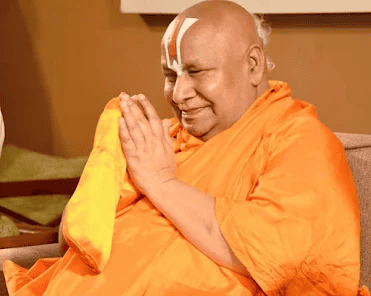
Sanatan Dharma Jagat Guru
The Universal Teacher in the Eternal Path
Introduction: Beyond the Title, Into the Cosmos
In the vast and intricate tapestry of Sanatan Dharma (often referred to as Hinduism), the concept of a “Jagat Guru” or “World Teacher” resonates with profound metaphysical, philosophical, and practical significance. Unlike the centralized, institutionalized spiritual authority found in some traditions, the idea of the Jagat Guru in Sanatan Dharma is multidimensional, fluid, and deeply symbolic.
It points not merely to a singular human personality but to the very principle of divine, conscious guidance that permeates the universe—the eternal teacher within and without. To explore “Sanatan Dharma Jagat Guru” is to embark on a journey through cosmology, epistemology, and devotion, understanding how this eternal path (Sanatan Dharma) perceives the source and flow of wisdom (Guru) for the entire cosmos (Jagat).
This exploration will unravel the concept in its layered manifestations: as the Cosmic Principle (Brahman/Consciousness as the ultimate teacher), as the Divine Manifestation (Ishvara, deities, and avatars who guide), as the Living Human Preceptor (the sadguru in human form), as the Inner Self (the Antaryamin), and as the Embodied Wisdom of Scriptures and Nature. Ultimately, we will see that in Sanatan Dharma, the Jagat Guru is not a monopolistic title claimed by one, but a role fulfilled by many channels, all directing the seeker toward the same Truth—the Sanatan, the Eternal.
I. The Foundation: Sanatan Dharma as the Perennial Wisdom
Before delving into the “Guru,” one must understand the “Dharma” it serves. Sanatan Dharma translates to the “Eternal Order” or “Perennial Path.” It is not a religion founded by a single prophet at a historical moment; it is the understanding of the timeless laws (rita) that sustain the cosmos, the individual, and society. Its tenets are discovered (not invented) by seers (rishis) in deep meditative states. It is thus apaurusheya (not of human origin). This framework is crucial because the ultimate Jagat Guru in this system is the Dharma itself—the inherent order and intelligence of existence.
The cosmos (Jagat) is seen as a dynamic, conscious, and pedagogical field. Life, with its cycles of joy and suffering, is itself a grand classroom. The changing seasons, the laws of karma (action and consequence), the very structure of the human mind and its tendencies—all are teaching instruments. Therefore, the primary Jagat Guru is the conscious universe unfolding according to Dharma. The Rig Veda (1.164.39) hints at this: “The One Truth, the sages call by many names.” That One Truth, the underlying Brahman, is the source and substance of all knowledge.
II. The Cosmic Guru: Brahman and the Guru Tattva
At the highest level of abstraction, the Jagat Guru is Brahman—the non-dual, infinite, unconditioned reality. In the Advaita Vedanta tradition, Brahman is pure consciousness (chit), existence (sat), and bliss (ananda). It is the substrate of all that is. Since all knowledge presupposes consciousness, Brahman is the very precondition of knowing. In this sense, it is the ultimate Guru, the silent witness and the source of all illumination. The Guru Gita, a sacred text sung by Lord Shiva to Parvati, declares: “The Guru is Brahma, the Guru is Vishnu, the Guru is Maheshwara (Shiva). The Guru is verily the Supreme Brahman. Salutations to that Guru.”
Closely related is the concept of Guru Tattva—the Guru Principle. This is the active, expressive aspect of consciousness that dispels darkness (gu = darkness, ru = dispeller). The Guru Tattva is the divine energy of grace and enlightenment that flows through various conduits. It is an eternal, cosmic function, not dependent on a single individual. When a seeker is ready, this principle activates and manifests in a form appropriate for the seeker’s understanding—be it a book, an insight, a life event, or a human master.
III. The Divine Guru: Ishvara, Deities, and Avatars
In the theistic streams of Sanatan Dharma, the Supreme Personal God (Ishvara) is the quintessential Jagat Guru. As the omniscient, compassionate ruler of the cosmos, Ishvara guides all beings through the labyrinth of samsara (the cycle of birth and death).
- Lord Shiva as Dakshinamurti: Perhaps the most iconic visual representation of the Jagat Guru is Shiva as Dakshinamurti—the youthful teacher sitting under a banyan tree, silently imparting the wisdom of the Upanishads to aged sages through the gesture of silence (chin mudra). He represents the guru who teaches not by verbosity but by radiating the profound silence of the Self. He is Adi Guru, the first guru of yoga, meditation, and tantra.
- Lord Vishnu as the Preserver-Teacher: Vishnu, in his role as sustainer of Dharma, descends as avatars (avatarana) to teach and protect. Lord Krishna in the Mahabharata is the archetypal divine guru. His discourse to Arjuna on the battlefield of Kurukshetra—the Bhagavad Gita—is the compact Jagat Guru manual for humanity. Here, God himself becomes the charioteer and teacher, providing a syncretic path of selfless action (karma yoga), devoted love (bhakti yoga), and transcendent knowledge (jnana yoga). Similarly, Lord Rama of the Ramayana is the Maryada Purushottam, the ideal human and king, teaching through the perfection of his conduct.
- The Goddess as Wisdom: The Divine Feminine, as Saraswati, is the goddess of knowledge, music, and arts. She is the personification of wisdom (Vidya) itself. As Gayatri, she is the mantra and the mother of the Vedas. In the form of Tripura Sundari in the Shakta tradition, she is the supreme consciousness from whom all knowledge emanates.
These divine forms make the abstract Guru Principle accessible, providing a focus for devotion and a model for the teacher-student (guru-shishya) relationship.
IV. The Human Guru: The Sadguru and the Parampara
While the divine is the source, the human guru is the indispensable earthly vessel. The Sadguru (true guru) is not a mere instructor of rituals or philosophy but a spiritual catalyst who has realized the Truth and has the capacity to awaken it in others. The Kularnava Tantra states, “Only by the guru’s grace can one attain liberation. There is no doubt about this.”
The human guru fulfills several critical roles:
- The Awakener (Bodha): The guru ignites the dormant spiritual yearning in the disciple.
- The Guide (Neta): The guru provides a tailored path (sadhana) considering the disciple’s temperament (adhikara).
- The Mirror (Darpana): The guru reflects the disciple’s true Self, free from ego and distortion.
- The Destroyer (Nashaka): The guru’s grace and instructions destroy ignorance and past karmic bonds.
This transmission occurs within the sacred institution of Gurukula (the guru’s family/ashram) and flows through an unbroken Parampara (lineage). From the Vedic rishis (Vasishta, Vishwamitra) to acharyas like Adi Shankaracharya (who consolidated Advaita Vedanta and established monastic orders), Ramanujacharya (exponent of Vishishtadvaita), Madhvacharya (Dvaita), to medieval saints like Sant Jnaneshwar, Mirabai, Sri Chaitanya Mahaprabhu, and modern-era giants like Sri Ramakrishna Paramahamsa, Swami Vivekananda, Sri Aurobindo, Ramana Maharshi, and Neem Karoli Baba—each has served as a Jagat Guru for their times and followers. They revived, reinterpreted, and made the eternal Dharma accessible to new generations.
It is vital to note that in Sanatan Dharma, multiple living gurus can simultaneously function as Jagat Gurus for their respective disciples and communities. There is no single, universally elected pope-like figure. The authority is decentralized, rooted in personal realization and the recognition of that realization by sincere seekers.
V. The Inner Guru: The Antaryamin and the Self
One of the most distinctive and democratizing teachings of Sanatan Dharma is the primacy of the Inner Guru (Antaryamin—the indwelling ruler). The divine as the Guru resides within the heart-cave (hridaya guha) of every being. The Upanishads repeatedly guide the seeker inward: “The Self is the lord of all beings, the king of all beings” (Brihadaranyaka Upanishad).
This is powerfully summarized in the axiom: “Guru Brahma, Guru Vishnu, Guru Devo Maheshwarah, Guru Sakshat Param Brahma, Tasmai Shri Gurave Namah.” (The Guru is Brahma, Vishnu, and Shiva. The Guru is verily the Supreme Brahman. Salutations to that Guru.) The final line of this famous verse, often omitted, is most significant: “Akhanda Mandalakaram, Vyaptam Yena Characharam, Tatpadam Darshitam Yena, Tasmai Shri Gurave Namah.” (Salutations to that Guru who has revealed that state which pervades the entire universe and all moving and non-moving beings.) The guru’s ultimate role is to point the disciple to the non-dual reality that is already within, to awaken the disciple to the fact that the true Jagat Guru is the Self (Atman), identical with Brahman.
Thus, the external human guru is a temporary necessity, a compass pointing to the true north that is within. Once the inner connection is established, the external guru’s formal role diminishes.
VI. The Scriptural and Natural Guru: Vedas, Smritis, and the World
Sanatan Dharma venerates its foundational texts as Guru.
- The Vedas (Shruti): Considered “heard” wisdom of cosmic origin, they are the primary, authoritative guru.
- The Itihasas and Puranas (Smriti): Epics like the Ramayana and Mahabharata, and the mythological narratives of the Puranas, are the “remembered” tradition. They teach Dharma through story, allegory, and history, making profound truths accessible to all.
- The Darshanas: The six philosophical systems (Nyaya, Vaisheshika, Samkhya, Yoga, Mimamsa, Vedanta) are gurus of logical inquiry and contemplation.
- The Bhagavad Gita: Often called the “manual for life,” it stands as a singular, universally respected Jagat Guru in textual form.
Furthermore, the entire natural world is a guru. The mountains teach stillness, the rivers teach relentless movement toward a goal (the ocean/liberation), the trees teach selfless giving, and the changing seasons teach the impermanence (anitya) of all phenomena. The famous phrase “Matru Devo Bhava, Pitru Devo Bhava, Acharya Devo Bhava, Atithi Devo Bhava” (Revere mother, father, teacher, and guest as God) extends the concept of the sacred teacher to one’s immediate environment and relationships.
VII. Contemporary Reflections: The Jagat Guru in the Modern Age
In today’s globalized, digital world, the concept faces new interpretations and challenges.
- The Global Guru: Figures like the Dalai Lama (though from the Buddhist tradition, which shares the guru concept) or Sri Sri Ravi Shankar, Sadhguru (Jaggi Vasudev), and Amma (Mata Amritanandamayi) function as transnational spiritual teachers, addressing universal human concerns of stress, meaning, and well-being, thus acting as Jagat Gurus for a global audience. They adapt ancient wisdom to contemporary language and problems.
- The Challenge of False Gurus: The history of Sanatan Dharma also warns of kudgurus (false teachers) motivated by ego, wealth, or power. Scriptures advise rigorous discrimination (viveka) and observation before accepting a guru. The true guru, says the Bhagavata Purana, is one who is free from greed, established in the Self, and whose sole purpose is the welfare of the disciples.
- Science as a Guru?: For the modern rational mind, the scientific method—with its emphasis on empirical observation, skepticism, and verification—can be seen as a form of guru, a path to knowledge about the material universe. Many modern Hindu thinkers, from Swami Vivekananda to Sri Aurobindo, have sought a synthesis, seeing science and spirituality as complementary explorations of one reality.
- The Democratization of Knowledge: The internet has made scriptural and philosophical knowledge widely available. This raises a question: Can a YouTube video or a book be a guru? Traditionally, the guru’s grace and the living transmission of energy (shaktipat) are considered vital. However, an initial spark of awakening can certainly come from any source. The ultimate guide, however, remains the inner compass calibrated by sincere practice (sadhana).
VIII. Synthesis: The One in the Many
So, who or what is the Sanatan Dharma Jagat Guru? It is a sublime hierarchy and a non-hierarchical unity.
- The Hierarchy of Gurus: For a seeker, the journey often begins with the parents (the first teachers), then the school teacher, then the scriptural guide, then the human sadguru, who then reveals the Inner Guru (Antaryamin), which is one with the Cosmic Guru (Brahman).
- The Non-Dual Reality: Yet, metaphysically, all these are manifestations of the one Guru Tattva—the light of consciousness. The human guru is sacred precisely because he or she has realized this non-duality and can serve as a transparent window to it. As the Advaita tradition holds, the guru is not the physical body but the consciousness operating through it.
The Sanatan Dharma Jagat Guru is thus a living system of enlightenment, not a fixed person. It is the eternal Dharma teaching through the cosmos, through divine forms, through enlightened beings, through scriptures, through life experiences, and ultimately, through the silence of one’s own heart. It is a call to recognize the teacher in everything and to see everything in the true Teacher—the timeless, boundless consciousness that is the source, the path, and the goal of this eternal journey.
Conclusion: The Eternal Dialogue
The quest for the Jagat Guru is, in essence, the quest for meaning, truth, and liberation (moksha). Sanatan Dharma, in its infinite generosity and wisdom, provides not a single answer but a symphony of guidance. It assures the seeker that the universe is not indifferent but is structured as a compassionate pedagogy. Whether one looks up to the silent Dakshinamurti, listens to the charioteer Krishna, sits at the feet of a realized master, contemplates the Vedas, or turns inward in deep meditation, one is engaging with the same eternal Guru.
In the end, the title “Jagat Guru” is not a crown to be claimed, but a function to be humbly served. It is the role played by any agency that dispels the darkness of ignorance and reveals the everlasting light of the Self. In that revelation, the disciple, the guru, and the knowledge merge into the one, non-dual reality—the true and only Sanatan Dharma Jagat Guru. The dialogue between the seeking soul and this eternal teacher is the very heartbeat of the spiritual journey, a dialogue that echoes through time, assuring every generation that the light of wisdom is forever accessible to the sincere heart.
Top 100 name of Sanatan Dharma Jagat Guru
Sanatan Dharma (Hinduism) has had numerous Jagat Gurus (World Teachers) and spiritual leaders throughout history. These gurus have been highly revered for their wisdom, teachings, and contributions to the preservation and propagation of Sanatan Dharma. Below is a list of some of the most prominent Jagat Gurus and spiritual leaders from different eras:
Courtesy: Akhand Bharatmata
Ancient & Vedic Era Gurus
- Vedavyasa – Compiler of the Vedas and author of the Mahabharata
- Vashishtha – Guru of Lord Rama
- Vishwamitra – Creator of the Gayatri Mantra
- Bharadwaja – A great Rishi and scholar
- Atri – One of the Saptarishis
- Angiras – Vedic sage and scholar
- Gautama Maharishi – Founder of Nyaya philosophy
- Kapila Muni – Founder of Samkhya philosophy
- Patanjali – Author of Yoga Sutras
- Kanada Rishi – Founder of Vaisheshika philosophy
Classical Era Gurus
- Adi Shankaracharya – Proponent of Advaita Vedanta
- Ramanujacharya – Proponent of Vishishtadvaita
- Madhvacharya – Proponent of Dvaita Vedanta
- Vallabhacharya – Founder of Pushti Marg
- Nimbarkacharya – Proponent of Dvaitadvaita philosophy
- Chaitanya Mahaprabhu – Founder of Gaudiya Vaishnavism
- Swami Vidyaranya – Mentor of the Vijayanagara Empire
- Raghavendra Swami – Prominent Dvaita Vedanta scholar
- Bodhidharma – Founder of Zen Buddhism, associated with Hindu traditions
- Jagadguru Ramanandacharya – Guru of Kabir and Tulsidas
Bhakti Movement Saints (Jagat Gurus of Bhakti Yoga)
- Sant Kabir Das – Bhakti saint and poet
- Goswami Tulsidas – Author of Ramcharitmanas
- Sant Surdas – Devotee of Lord Krishna
- Meerabai – Devotee of Krishna and poetess
- Sant Eknath – Bhakti saint from Maharashtra
- Samarth Ramdas – Guru of Shivaji Maharaj
- Sant Tukaram – Varkari saint and poet
- Sant Namdev – Bhakti saint and composer of Abhangas
- Guru Ravidas – Bhakti saint promoting social equality
- Sant Dnyaneshwar – Author of the Dnyaneshwari (Marathi Bhagavad Gita)
Courtesy: Aaj Tak
Modern & Contemporary Jagat Gurus
- Swami Vivekananda – Key figure in introducing Hinduism to the West
- Swami Dayananda Saraswati – Founder of Arya Samaj
- Paramahansa Yogananda – Author of “Autobiography of a Yogi”
- Swami Sivananda – Founder of Divine Life Society
- Swami Prabhupada – Founder of ISKCON (Hare Krishna Movement)
- Sri Ramakrishna Paramahamsa – Guru of Swami Vivekananda
- Sri Aurobindo – Mystic and philosopher
- Mata Amritanandamayi (Amma) – Hugging saint and humanitarian
- Sri Sri Ravi Shankar – Founder of Art of Living Foundation
- Sadhguru Jaggi Vasudev – Founder of Isha Foundation
Dashanami & Other Prominent Gurus
- Swami Chinmayananda Saraswati – Founder of Chinmaya Mission
- Swami Rama – Himalayan master and spiritual scientist
- Swami Kripalu – Kundalini Yoga master
- Swami Bhaktivedanta Tripurari – Prominent Gaudiya Vaishnavacharya
- Swami Karpatri Maharaj – Vedic scholar and spiritual leader
- Jagadguru Kripalu Maharaj – Founder of Jagadguru Kripalu Parishat
- Swami Brahmananda Saraswati – Shankaracharya of Jyotirmath
- Swami Ramdev – Yoga and Ayurveda promoter
- Swami Nithyananda – Controversial but influential spiritual teacher
- Sri Anandamayi Ma – Hindu saint and mystic
Notable Gurus from Shaivism & Shaktism
- Basava (Basavanna) – Founder of Veerashaivism (Lingayat tradition)
- Avvaiyar – Tamil Shaivite saint
- Bhagwan Nityananda – Siddha Guru
- Swami Muktananda – Founder of Siddha Yoga
- Shri Shri Nigamananda Paramahansa – Great Tantric master
- Sri Ramana Maharshi – Proponent of self-inquiry (Jnana Yoga)
- Swami Lakshman Joo – Kashmiri Shaivism master
- Sri M – Living master and yogi
- Siddhar Thirumoolar – Shaivite Siddha
- Baba Lokenath – Bengali saint and spiritual master
Jagat Gurus & Saints from Sikh Tradition (Influenced by Sanatan Dharma)
- Guru Nanak Dev Ji – Founder of Sikhism
- Guru Angad Dev Ji – Promoter of Gurmukhi script
- Guru Amar Das Ji – Promoter of Langar system
- Guru Ram Das Ji – Founder of Amritsar
- Guru Arjan Dev Ji – Compiler of Guru Granth Sahib
- Guru Hargobind Ji – Warrior saint
- Guru Har Rai Ji – Healer and spiritual guide
- Guru Har Krishan Ji – Youngest Guru
- Guru Tegh Bahadur Ji – Martyr for religious freedom
- Guru Gobind Singh Ji – Founder of Khalsa
Prominent Gurus in Tantra, Siddha, and Nath Traditions
- Gorakhnath – Founder of the Nath sect
- Matsyendranath – Guru of Gorakhnath
- Baba Balaknath – Siddha yogi
- Baba Keenaram – Aghori master
- Mahavatar Babaji – Immortal yogi
- Trailanga Swami – Vedic saint and yogi
- Lahiri Mahasaya – Kriya Yoga master
- Swami Yukteswar Giri – Guru of Yogananda
- Tirumala Nayaka – Siddha saint
- Sadhvi Ritambhara – Hindu saint and spiritual leader
Jagat Gurus from Different Hindu Sects
- Shankaracharyas of Puri, Dwarka, Sringeri, and Jyotirmath
- Swami Avdheshanand Giri – Leader of Juna Akhara
- Swami Rameshwarananda Giri – Vedic scholar
- Shri Shri Vishwesha Tirtha Swamiji – Pejawar Math leader
- Shri Raghaveshwara Bharathi – Head of Ramachandrapura Math
- Mahant Narendra Giri – Akhil Bharatiya Akhara Parishad leader
- Swami Smaranananda – Current head of Ramakrishna Mission
- Jagadguru Bharathi Teertha – Shankaracharya of Sringeri Math
- Jagadguru Rameshwaranand Saraswati – Hindu preacher
- Shri Chidanand Saraswati – Parmarth Niketan leader
Honorable Mentions
91-100. Various other Shankaracharyas, saints, and spiritual teachers who have upheld Sanatan Dharma.
This is a broad and diverse list covering various sects, traditions, and time periods.

Table of Contents





