
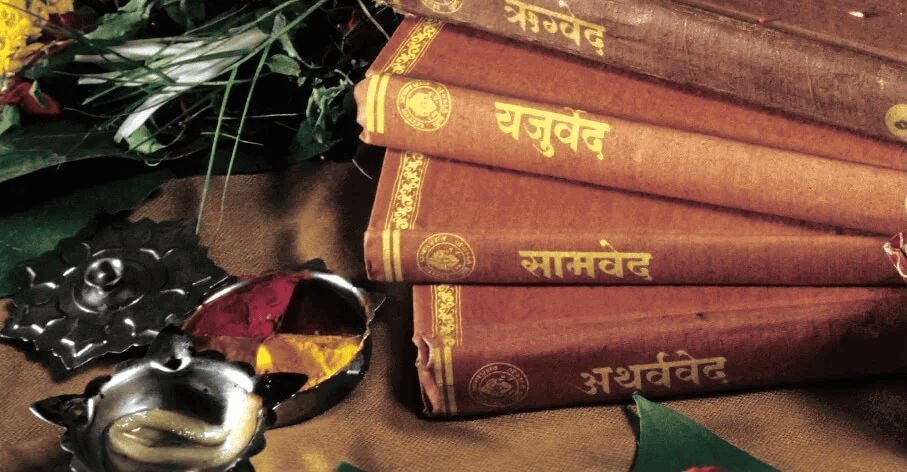
Sanatan Dharma 4 Vedas
An Exposition of Eternal Truth and Primordial Wisdom
Introduction: The Eternal Path and Its Foundational Scriptures
Sanatan Dharma, often termed Hinduism in the modern era, is not merely a religion but a comprehensive, holistic way of life and a cosmic worldview. The term itself, derived from Sanskrit, translates to “the eternal law,” “the eternal order,” or “the eternal path.” It signifies a truth that is timeless, unbounded by a single founder, specific historical event, or rigid doctrinal boundaries. It is understood as the perennial philosophy underlying existence, a recognition of a universal, immutable principle (Dharma) that sustains the cosmos, society, and the individual.
At the very heart of this vast, intricate, and profoundly deep tradition lie the Vedas, the primordial and most authoritative scriptural corpus. The Four Vedas—Rig, Yajur, Sama, and Atharva—are not “books” in the conventional sense but are revered as Shruti: “that which is heard.” They are considered apauruṣeya (impersonal, authorless), divine revelations “seen” by ancient sages (Rishis) in states of deep meditation, and thus embody the foundational layer of cosmic knowledge itself. This essay delves into the essence of Sanatan Dharma through the lens of its foundational texts, exploring the content, philosophy, ritualistic significance, and enduring spiritual legacy of the Four Vedas.
I. Sanatan Dharma: The Contextual Universe of the Vedas
To understand the Vedas, one must first appreciate the Sanatan Dharmic worldview they seed and sustain. This worldview is characterized by several key concepts:
- Dharma: The central pivot. It is duty, righteousness, moral law, and the intrinsic order of all things. It is context-specific (svadharma for an individual) and universal (sanatan for the cosmos).
- The Cyclic Concept of Time: Time is cyclical (Kalachakra), consisting of vast epochs (Yugas) that repeat in a pattern of creation, preservation, and dissolution (Srishti, Sthiti, Pralaya).
- The Pursuit of Purusharthas: The four legitimate goals of human life: Dharma (righteousness), Artha (prosperity, means of life), Kama (pleasure, desire), and Moksha (liberation from the cycle of rebirth).
- The Concepts of Karma and Samsara: The law of cause and effect (Karma) governs action and binds the eternal soul (Atman) to the cycle of birth, death, and rebirth (Samsara).
- Moksha: The ultimate goal, liberation from Samsara, achieved through realization of the identity of the individual soul (Atman) with the ultimate reality (Brahman).
- Brahman: The impersonal, transcendent, all-pervading ultimate reality, the ground of all being.
- The Deities: The Vedas present a sophisticated, polytheistic, yet ultimately monistic pantheon. Natural forces and cosmic principles are personified as deities (Devas) like Agni (Fire), Indra (atmospheric power, king of gods), Varuna (cosmic order, waters), Surya (Sun), and Ushas (Dawn). These are not separate gods in a Western sense but manifestations of the one Brahman, facets of the single divine reality.
The Vedas are the source from which all subsequent Dharmic thought—the philosophical systems (Darshanas), the epics (Ramayana, Mahabharata), the Puranic lore, and the Agamic traditions—eventually flows. They are the root.
II. The Vedas: Nature, Structure, and Preservation
The term “Veda” comes from the Sanskrit root vid, meaning “to know.” Thus, Veda is sacred knowledge, particularly of the transcendent. They were composed in an archaic form of Sanskrit, known as Vedic Sanskrit, and were transmitted with impeccable accuracy for millennia through an unparalleled oral tradition before being committed to writing. This was achieved through elaborate mnemonic techniques, precise pronunciation, and a sophisticated system of recitation (Pathas) involving multiple redundant methods (like the Samhita, Pada, Krama, Jata, and Ghana paths) to ensure not a single syllable was lost or altered.
Each Veda is traditionally divided into four parts:
- Samhita: The core text, a collection of mantras (hymns, chants, incantations). This is what is typically referred to as “the Veda” (e.g., Rig Veda Samhita).
- Brahmanas: Prose texts that provide detailed explanations of the rituals (Yajnas), their procedures, symbolism, and mythological justifications. They are essentially ritual handbooks and theological exegesis.
- Aranyakas: The “forest treatises,” composed for hermits and ascetics. They transition from the external ritualism of the Brahmanas to more internal, symbolic, and meditative interpretations.
- Upanishads: Also called Vedanta (“end of the Vedas”), these are philosophical and mystical texts that form the foundational bedrock of Hindu philosophy. They move entirely beyond ritual to explore the nature of reality (Brahman), the self (Atman), and the path to liberation (Moksha). The famous Mahavakyas (“Great Sayings”) like Tat Tvam Asi (“Thou art That”) come from the Upanishads.
III. The Rig Veda: The Veda of Hymns
The Rig Veda (“Knowledge of Verses”) is the oldest and most fundamental of the Vedas. Composed approximately between 1500-1200 BCE (though tradition holds it as timeless), it consists of 1,028 hymns (Suktas) organized into ten books (Mandalas). It contains about 10,600 verses.
- Content and Themes: The hymns are dedicated to various Devas, celebrating their power, seeking their blessings, and contemplating the mysteries of the cosmos. Key deities include:
- Indra: The warrior god, wielder of the thunderbolt (Vajra), destroyer of darkness and chaos (represented by the serpent Vritra), and bringer of rain.
- Agni: The god of fire, the mediator between humans and gods, central to all rituals as the sacrificial fire.
- Varuna: The upholder of cosmic order (Rta), the moral law, associated with the sky and oceans.
- Soma: Both a sacred ritual drink (extracted from a plant) and the deity personifying it, representing ecstasy, immortality, and divine inspiration.
- Philosophical Depth: Beyond ritual invocation, the Rig Veda contains profound philosophical hymns. The famous Nasadiya Sukta (10.129), the “Hymn of Creation,” speculates on the origin of the universe from a state of non-being, pondering the primal mystery. The Purusha Sukta (10.90) describes the cosmic being (Purusha) whose sacrifice creates the universe and the four-fold varna (social order) of Brahmin, Kshatriya, Vaishya, and Shudra. The concept of Rta, the cosmic order and truth underlying all phenomena, is central.
- Significance: The Rig Veda is not just a religious text but a window into the worldview, society, and intellectual ferment of ancient India. It establishes the primary poetic, theological, and philosophical vocabulary of Sanatan Dharma.
IV. The Yajur Veda: The Veda of Sacrificial Formulae
The Yajur Veda (“Knowledge of Sacrificial Formulas”) is a ritual-centric text. It provides the prose formulae (Yajus) to be uttered by the priests (the Adhvaryu) during the performance of the elaborate sacrificial rituals (Yajnas). While the Rig Veda offers the hymns (recited by the Hotri priest), the Yajur Veda gives the liturgical manual for the actions.
- Content and Structure: It is divided into two major branches:
- Shukla (White) Yajur Veda: The formulas (Mantras) and the explanatory Brahmana portions are separate and distinct. The Vajasaneyi Samhita is the most known.
- Krishna (Black) Yajur Veda: The Mantras and the Brahmana explanations are mixed together. The Taittiriya Samhita is a prominent example.
- Focus on Ritual (Yajna): The Yajur Veda elevates ritual to a cosmic science. Every action, utensil, and chant is symbolic. The sacrifice is seen as a microcosmic re-enactment of cosmic processes, a means of maintaining the equilibrium of the universe (Loka Sangraha), sustaining the gods, and ensuring prosperity, victory, and cosmic order. It systematizes the detailed procedures for complex rituals like the Ashvamedha (horse sacrifice), Rajasuya (royal consecration), and Somayajna.
- Significance: It represents the practical, liturgical arm of Vedic knowledge, turning the poetic vision of the Rig Veda into a precise, action-oriented sacred technology.
V. The Sama Veda: The Veda of Melodies
The Sama Veda (“Knowledge of Melodies”) is essentially a musical compilation. It consists almost entirely (except for about 75 original verses) of selections from the Rig Veda that have been set to specific, intricate melodies for chanting.
- Content and Purpose: Its verses are meant to be sung by the special class of priests called the Udgatri during Soma sacrifices. The text provides notations (though the exact ancient tunes are part of the oral tradition). The transformation of the Mantra into song (Saman) was considered to have a heightened spiritual potency, capable of elevating consciousness and pleasing the deities.
- The Art of Chanting: The Sama Veda is the origin of Indian classical music. Its chanting involves a complex system of modulation, pitch, and rhythm. The emphasis is on the sonic vibration (Shabda Brahman – the idea that sound itself is divine) as a direct means of accessing spiritual realms.
- Significance: It highlights the importance of sound, music, and aesthetic devotion (a precursor to Bhakti) in the Vedic framework. It demonstrates how Sanatan Dharma views art and spirituality as inseparable.
VI. The Atharva Veda: The Veda of Everyday Life
The Atharva Veda (“Knowledge of Atharvan”) is distinct in character from the first three (often called the Trayi, or triple knowledge). It is named after Atharvan, a legendary sage associated with fire and priestly duties. It is sometimes considered a later compilation, incorporating more folk traditions.
- Content: It contains hymns, but also a large number of spells, incantations, charms (Bhaishajyani), and philosophical speculations. It deals extensively with the mundane, practical, and personal concerns of life:
- Healing and Medicine: Charms for curing diseases, for long life, and for herbal remedies. It is considered a foundation for Ayurveda.
- Protection: Spells for protection against enemies, evil spirits, snakes, and negative influences.
- Domestic and Social Life: Hymns for marriage, childbirth, prosperity in agriculture, success in trade, and harmony in the community.
- Cosmology and Philosophy: It also contains profound philosophical hymns, including some that are precursors to later monistic ideas. The concept of Vratya (a spiritually powerful ascetic) and the praise of Prāna (the vital life force) are notable.
- Significance: The Atharva Veda democratizes and grounds Vedic wisdom. It shows that Sanatan Dharma addresses not just grand cosmic rituals but also the immediate, earthly anxieties and aspirations of human beings. It bridges the high philosophy of the Rig Veda with the practical magic and folk spirituality of common life.
VII. From Ritual to Philosophy: The Aranyakas and Upanishads
As mentioned, each Veda culminates in its Upanishads, accessed via the Aranyakas. This movement represents the inner journey of Sanatan Dharma.
- The Aranyakas serve as the bridge. Composed for those who have retired to the forest (Aranya), they begin the process of internalizing the sacrifice. The external fire ritual (Agnihotra) becomes the inner offering of the senses into the fire of self-control. They symbolize the transition from the active householder life (Pravritti Marga) to the contemplative life of renunciation (Nivritti Marga).
- The Upanishads mark the philosophical pinnacle. Texts like the Brihadaranyaka, Chandogya, Katha, and Mandukya Upanishads shift the quest entirely inward. Key doctrines established here include:
- Brahman: The non-dual, attributeless (Nirguna) ultimate reality.
- Atman: The true Self, the innermost essence of the individual, which is identical to Brahman (Ayam Atma Brahma – “This Self is Brahman”).
- Maya: The cosmic illusion or creative power that projects the phenomenal world of multiplicity from the unity of Brahman.
- The Paths to Liberation: While emphasizing knowledge (Jnana) as the primary means, they also introduce ideas of meditation (Dhyana) and devotion (to a personal Ishvara, or Saguna Brahman).
The Upanishads effectively “democratize” liberation, making it accessible not only to ritual-performers but to any sincere seeker of truth, regardless of social status (as seen in stories like that of Satyakama Jabala).
VIII. The Vedas in the Living Tradition of Sanatan Dharma
The Vedas are not dead scriptures but living forces that continue to shape Hindu consciousness.
- Ritual Foundation: Vedic mantras form the core of all Hindu sacraments (Samskaras) – from birth (Jatakarma) and initiation (Upanayana) to marriage (Vivaha) and death (Antyeshti). The Gayatri Mantra (Rig Veda 3.62.10), dedicated to Savitr (the Sun as stimulator), is a central daily prayer for millions.
- Philosophical Bedrock: All six orthodox (Astika) schools of Hindu philosophy (Nyaya, Vaisheshika, Samkhya, Yoga, Mimamsa, Vedanta) accept the authority of the Vedas, though they interpret them differently. Vedanta, in particular (advocated by Adi Shankara, Ramanuja, Madhva), is a direct systematization of Upanishadic thought.
- Cultural and Linguistic Heritage: The Vedas are the fountainhead of Sanskrit literature, Indian arts, sciences (including mathematics, astronomy, and linguistics), and social ideals. The concepts of Dharma, Karma, and Moksha permeate Indian life.
- Modern Relevance and Interpretation: In the modern era, reformers like Swami Dayananda Saraswati (Arya Samaj) called for a “return to the Vedas,” interpreting them as monotheistic and rejecting later Puranic developments. Others, like Sri Aurobindo, provided a spiritual and integrative interpretation, seeing the Vedic journey as an allegory of the soul’s ascent to divine consciousness. Contemporary Hindu identity is deeply intertwined with the symbolic authority of the Vedas.
Conclusion: The Eternal Resonance
The Four Vedas collectively represent the full spectrum of the Sanatan Dharmic vision. The Rig Veda offers the poetic, questioning, and celebratory vision of the cosmos. The Yajur Veda provides the architectural blueprint for connecting the human and divine through ritual action. The Sama Veda embodies the transformative power of sound and devotional emotion. The Atharva Veda extends this wisdom to heal, protect, and enrich daily human life. Together, they move from the external (ritual) to the internal (philosophy), from the cosmic to the personal.
Sanatan Dharma, as the “eternal law,” finds its first and most authoritative articulation in this Vedic corpus. The Vedas do not demand blind faith but encourage inquiry (“Let noble thoughts come to us from every side” – Rig Veda 1.89.1). They encompass a journey from the worship of natural forces as deities, through the disciplined science of sacrifice, to the ultimate realization of the unity of the individual self with the absolute reality.
They are not a closed canon but an open-ended, perennial spring of wisdom that has nurtured, challenged, and inspired the Indian spiritual and intellectual tradition for over three millennia. In understanding the Vedas, one does not merely study ancient texts; one encounters the living, breathing roots of a worldview that sees the divine in the cosmos, in ritual, in song, in healing herbs, and, most profoundly, within the depths of the human soul itself. They remain, in their essence, the timeless (Sanatan) knowledge (Veda) of that which truly is.
Top 100 name of Sanatan Dharma 4 Vedas
Sanatan Dharma recognizes the 4 Vedas, which are the oldest and most sacred scriptures of Hinduism. Each Veda consists of multiple sections, including Samhitas (hymns), Brahmanas (rituals), Aranyakas (forest texts), and Upanishads (philosophical teachings). Below is a list of 100 names associated with the 4 Vedas.
1. Rigveda (ऋग्वेद) – The Veda of Hymns
- Rigveda
- Riksamhita
- Veda of Praise
- Agni Veda
- Mantra Veda
- Prathama Veda (First Veda)
- Richa Veda
- Chhandas Veda (Poetic Meter Veda)
- Adi Veda (Ancient Veda)
- Brahma Veda
Courtesy: Satya Sanatan Dharm
Important Sections of Rigveda
- Shakala Samhita
- Bashkala Samhita
- Aitareya Brahmana
- Kaushitaki Brahmana
- Aitareya Aranyaka
- Kaushitaki Aranyaka
- Aitareya Upanishad
- Kaushitaki Upanishad
- Devata Veda (Deity Veda)
- Indra Veda (Indra is a major deity in Rigveda)
2. Yajurveda (यजुर्वेद) – The Veda of Rituals
- Yajurveda
- Yajussamhita
- Ritual Veda
- Karma Veda (Veda of Action)
- Taittiriya Samhita
- Vajasaneyi Samhita
- Black Yajurveda (Krishna Yajurveda)
- White Yajurveda (Shukla Yajurveda)
- Shrauta Veda (Veda of Sacrifices)
- Adhvaryu Veda (Priest’s Veda)
Important Sections of Yajurveda
- Satapatha Brahmana
- Taittiriya Brahmana
- Maitrayani Samhita
- Kanva Samhita
- Kapishthala Samhita
- Taittiriya Aranyaka
- Brihadaranyaka Upanishad
- Isha Upanishad
- Shatapatha Brahmana (Detailed Rituals)
- Rudra Veda (Shatarudriya Hymns of Lord Shiva)
3. Samaveda (सामवेद) – The Veda of Melodies & Chants
- Samaveda
- Samasamhita
- Music Veda
- Sangeet Veda (Veda of Music)
- Udgita Veda (Veda of Chants)
- Chhandogya Veda (Metered Veda)
- Gandharva Veda (Art of Music)
- Stotra Veda (Veda of Prayers)
- Udgatri Veda (Veda of Singing Priests)
- Sama Vani (Divine Melodic Speech)
Courtesy: Spiritual Sadhana
Important Sections of Samaveda
- Kauthuma Samhita
- Jaiminiya Samhita
- Ranayaniya Samhita
- Chhandogya Brahmana
- Tandya Mahabrahmana
- Jaiminiya Brahmana
- Talavakara Brahmana
- Chhandogya Upanishad
- Kena Upanishad
- Rishi Veda (Veda of Rishis)
4. Atharvaveda (अथर्ववेद) – The Veda of Knowledge & Mysticism
- Atharvaveda
- Atharvangirasa Veda
- Brahma Veda (Veda of Spiritual Knowledge)
- Shanti Veda (Veda of Peace)
- Bheshaja Veda (Veda of Medicine)
- Ayurveda (Derived from Atharvaveda)
- Tantra Veda (Root of Tantra Shastra)
- Dhanurveda (Science of Warfare)
- Shapoddhara Veda (Veda of Curses & Their Removal)
- Graha Veda (Veda of Astronomy)
Important Sections of Atharvaveda
- Shaunaka Samhita
- Paippalada Samhita
- Gopatha Brahmana
- Prashna Upanishad
- Mundaka Upanishad
- Mandukya Upanishad
- Stambhana Veda (Veda of Protection)
- Vidya Veda (Veda of Knowledge)
- Vishachikitsa Veda (Veda of Curing Poisons)
- Bhuta Veda (Veda of Spirits & Exorcism)
Other Names & Associated Texts Derived from the Vedas
- Vedatrayi (Three Vedas – Rig, Yajur, Sama)
- Chaturveda (Four Vedas together)
- Shruti Veda (Revealed Knowledge)
- Vedanga Veda (Study of Vedic Grammar & Linguistics)
- Brahmodya Veda (Mystical Discussions in the Vedas)
- Pravargya Veda (Sacred Fire Ceremony)
- Purusha Sukta (Cosmic Hymn of Rigveda)
- Gayatri Veda (Veda of the Gayatri Mantra)
- Saraswati Veda (Hymns to Goddess Saraswati)
- Dharma Veda (Moral & Ethical Laws)
Modern Interpretations & Related Scriptures
- Bhagavad Veda (Bhagavad Gita as the essence of the Vedas)
- Yoga Veda (Yogic teachings within the Vedas)
- Advaita Veda (Philosophy of Non-Dualism in the Upanishads)
- Smriti Veda (Laws & Dharmashastras derived from Vedas)
- Nyaya Veda (Logical & Philosophical Aspects)
- Vedantic Veda (Summary of Upanishadic Teachings)
- Jyotish Veda (Astrological Sciences in Vedas)
- Artha Veda (Economic & Social Wisdom)
- Moksha Veda (Teachings on Liberation)
- Omkara Veda (Primordial Sound of the Vedas)
Conclusion
The 4 Vedas are the foundational scriptures of Sanatan Dharma. They cover everything from hymns, rituals, philosophy, medicine, music, warfare, and liberation. Over time, many names have been associated with them based on their content, interpretations, and applications.

Table of Contents